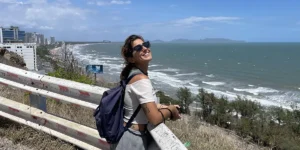
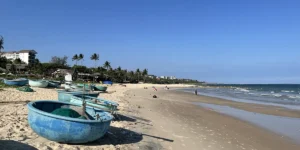
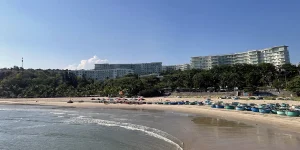
Vung Tau is the closest coastal destination to Ho Chi Minh City. After three visits of varying length, I’ve found it consistently rewards travelers who plan the small things well. While our guide on things to see in Vung Tau covers the full overview of the destination. This article is a tight set of Vung Tau travel tips that fill the gaps most general guides leave open.
These are the practical decisions that shape how a short trip actually feels on the ground — transport choice, timing, which attractions to skip if you’re tight on time, and what to eat.
Table of Contents
1. Vung Tau Works Great as a Buffer-Day Destination

If you built buffer days into a North-to-South Vietnam trip and now find yourself back in Ho Chi Minh City with free days before your flight, Vung Tau is one of the easiest ways to use them. The city sits roughly 75 miles (120 km) southeast of Saigon in Ba Ria–Vung Tau Province. It’s close enough for a one-night trip and small enough that you won’t feel rushed.
We have put together a complete daytrip itinerary in Vung Tau that maps out exactly how to move between the coast, the best viewpoints, and the local food spots without rushing. It turns a spontaneous trip into a seamless experience.
That said, it’s not a destination most travelers fly into Vietnam specifically to see. Instead, think of it as a coastal pause that pairs well with Saigon. It doesn’t compete with bigger draws like Phu Quoc or Con Dao.
Personal Opinion:
I genuinely like Vung Tau. It’s affordable, the logistics are simple, and the city doesn’t ask much of you. That’s exactly what makes it useful when you have leftover time and don’t want another big planning effort. For a fuller take, see my dedicated review answering the question is Vung Tau worth visiting.
2. Take the Ferry from Ho Chi Minh City
Several routes connect Saigon to Vung Tau. Coach buses run by FUTA (Phuong Trang) and Hoa Mai use the Long Thanh–Dau Giay Expressway. Private cars are also available. However, the high-speed ferry is the most pleasant option for first-time visitors. Greenlines DP operator runs this route — with departures from 📍Bach Dang Pier in central Ho Chi Minh City.
The crossing takes around 90 minutes to two hours and arrives at the 📍Ho May Tourism Area Pier in Vung Tau. More importantly, it skips the traffic that can make the road journey unpredictable, especially on weekends. As a bonus, the river-and-coast views give you something to look at instead of a highway.
Bus tickets typically run 150,000–200,000 VND ($5.7–$7.6 / €4.9–€6.5) one way. Ferry tickets sit higher, at around 310,000 VND ($11.8 / €10.0) one way. Schedules and prices change — one of the most practical things to know before visiting Vung Tau is to always confirm ferry availability in advance, especially around public holidays.
Personal Opinion:
The ferry is what I take every time. Avoiding the expressway alone is worth the extra cost. Beyond that, arriving directly into the touristic center of Vung Tau is more convenient than being dropped at a bus station on the edge of town.
3. Rent an Electric Scooter, Not a Motorbike
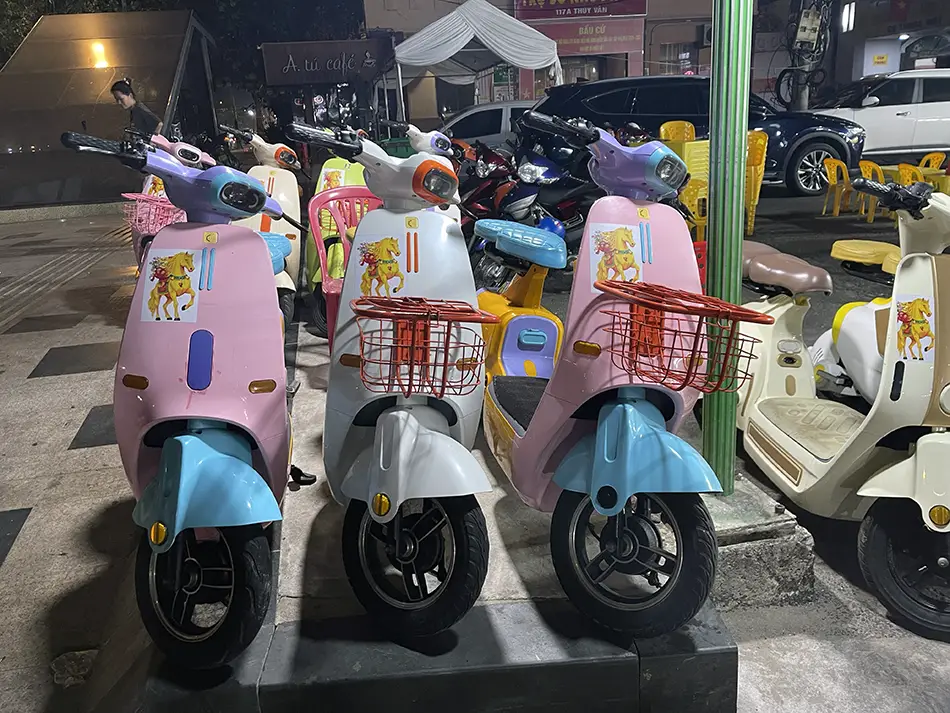
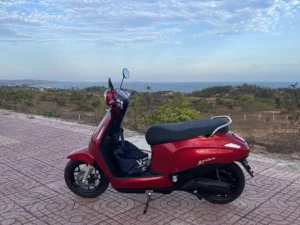
As of 2026, Vung Tau has a strong rental market for electric scooters. These don’t require a Vietnamese motorbike license. For travelers without an international permit valid for motorbikes in Vietnam, this solves a real legal and practical problem.
The scooters available are reasonably well-maintained and top out at modest speeds. They handle the flat coastal roads of central Vung Tau easily.
Traffic in Vung Tau is also noticeably calmer than in Ho Chi Minh City or Hanoi. As a result, it’s one of the more forgiving Vietnamese cities to ride in for the first time. Basic road sense and a helmet are enough.
If you take only one of these tips for visiting Vung Tau on board, make it this one — the scooter unlocks the whole city in a way taxis simply don’t.
4. Choose Your Day of the Week Carefully
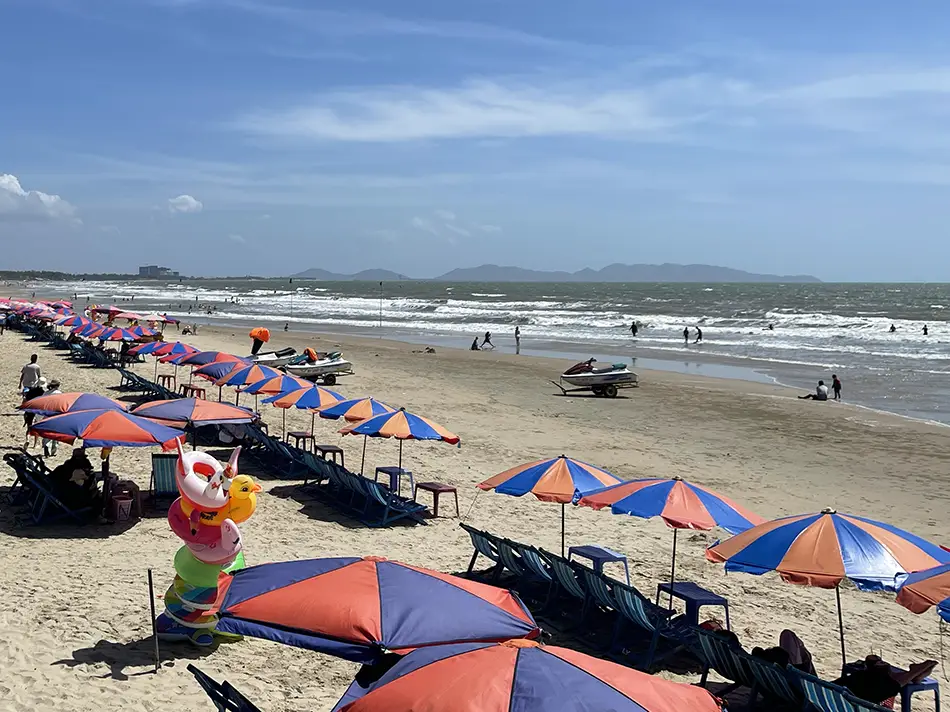
Vung Tau is the default weekend escape for Saigon residents. That single fact shapes the entire experience. On weekdays, the beaches are quiet, the seafood streets are calm, and hotel prices drop. On weekends, the same places fill with domestic visitors. The larger seafood restaurants then run at full volume well into the night.
Both versions of Vung Tau are worth seeing, just for different reasons. For a relaxed trip, weekdays are clearly better.
However, you might be curious about how a Vietnamese megacity unwinds on its days off. In that case, a Saturday night at one of the big seafood halls is honestly fascinating to watch — almost anthropological. You can still find quiet corners on weekends. That said, the main attractions and restaurant streets will be packed. A common mistake first-time visitors make is booking the weekend and then being surprised that the quiet coastal town from the photos looks nothing like what they find.
5. If You’re Short on Time, Pick Either the Christ the King Statue or the Lighthouse
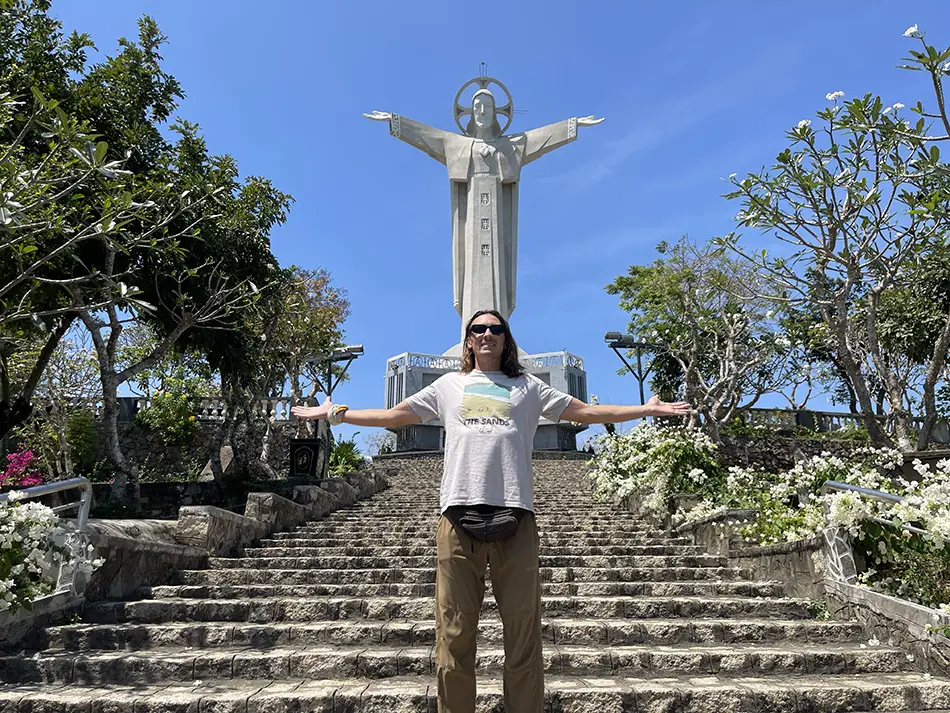
The Christ the King Statue (Tượng Chúa Kitô Vua) sits on Small Mountain (Núi Nhỏ). The Vung Tau Lighthouse is on the same hill. These are the two most-promoted viewpoints in the city, and most general guides recommend both.
In practice, they offer overlapping views of the coastline and city. The statue requires a climb of around 847 steps and is free to enter, with another 133 spiral steps inside if you want to reach the shoulders. The lighthouse is a shorter walk. If your schedule is tight, doing both is a poor use of time — pick one and spend the saved hours elsewhere.
6. The Ba Ria–Vung Tau Museum Is Worth a Stop
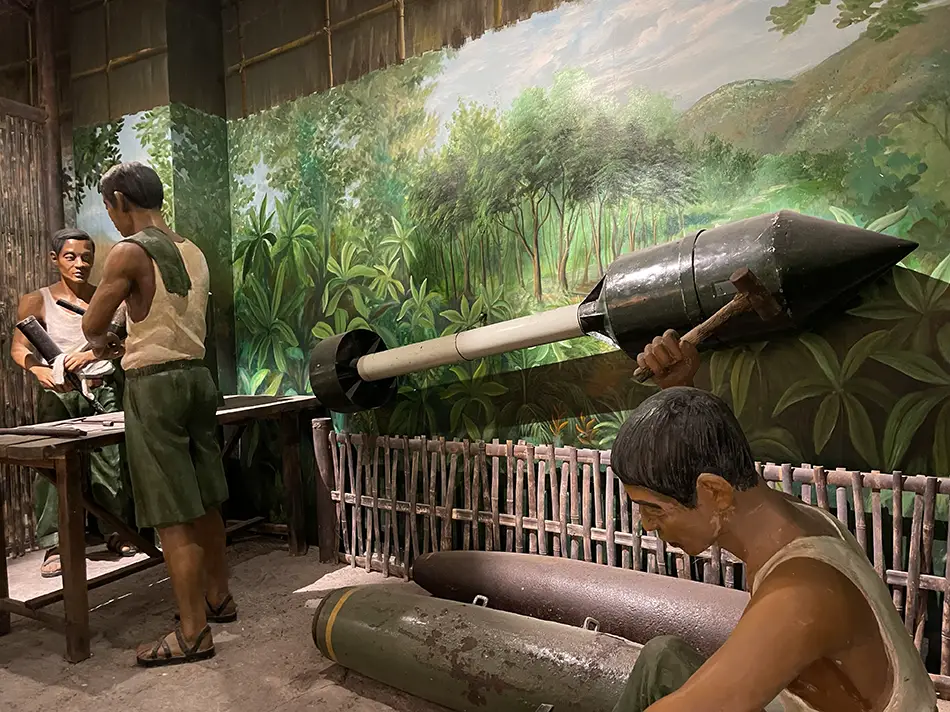
📍The Ba Ria–Vung Tau Museum is rarely covered in international travel guides. That’s a missed opportunity. The collection covers regional history from prehistoric times through the colonial period to the present, spread across a modern, well-organized building.
Beyond the standard exhibits, the museum houses partial replicas of the Con Dao prison cells and the Long Phuoc Tunnels, giving you a sense of those sites without the trip out to the islands or the drive inland.
A preserved sea cow (dugong) sits among the maritime exhibits and is one of the more unusual things on display in any Vietnamese provincial museum.
Operating hours and ticket details vary, so check before going.
Personal Opinion:
I’m not generally drawn to museums, and I still found this one interesting. The historical sections give context that makes the rest of the city easier to read — the lighthouse, the colonial-era White Palace (Bạch Dinh), and the fishing villages.
7. Plan Your Food Before You Arrive
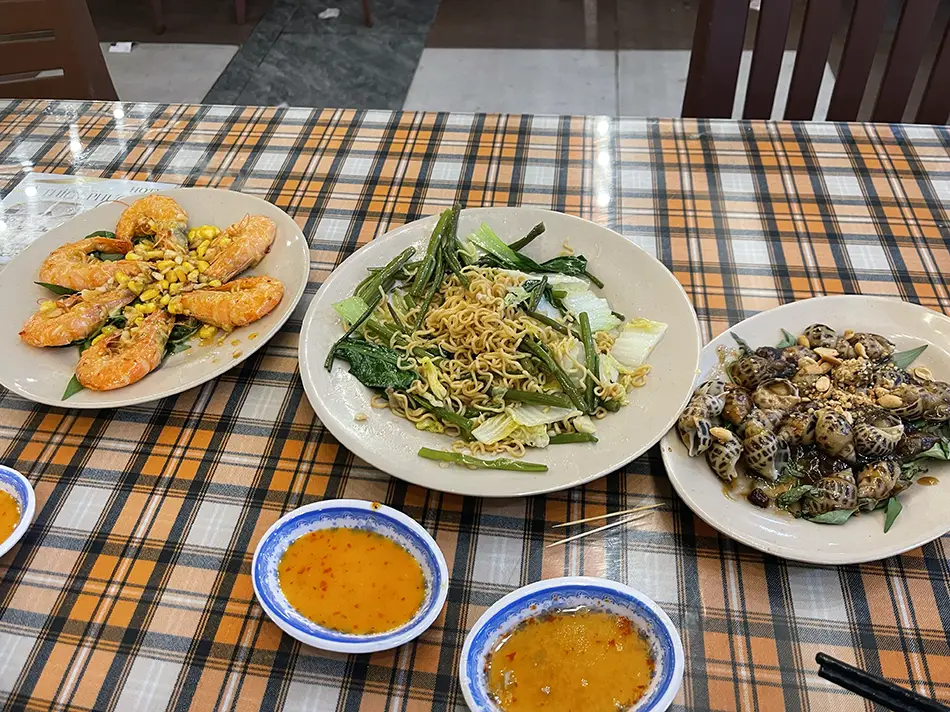
Food is one of the strongest reasons to visit Vung Tau. Walking around the streets and markets is half the fun — many of the best snacks and seafood plates show up exactly when you weren’t looking for them. That said, some of the city’s signature dishes are tied to specific restaurants and family-run spots that won’t appear by accident. Making a shortlist before you arrive, paired with open-ended walking once you’re there, tends to give the best results.
The dishes worth tracking down include bánh khọt (small crispy rice-flour pancakes with shrimp), bánh bông lan trứng muối (salted egg yolk sponge cake), oyster porridge (cháo hàu), bánh canh ghẹ (thick tapioca noodle soup with crab).
To make planning easier, we have an interactive food PDF as part of our best dishes to try in Vietnam guide on the site. It lists the worth trying with notes on where to find them.
Personal Opinion:
My three favorites dishes in Vung Tau are hàu né (grilled oysters), bánh khọt, and the raw fish salad (gỏi cá mai).
8. Time Your Visit to Hon Ba Island with the Tides
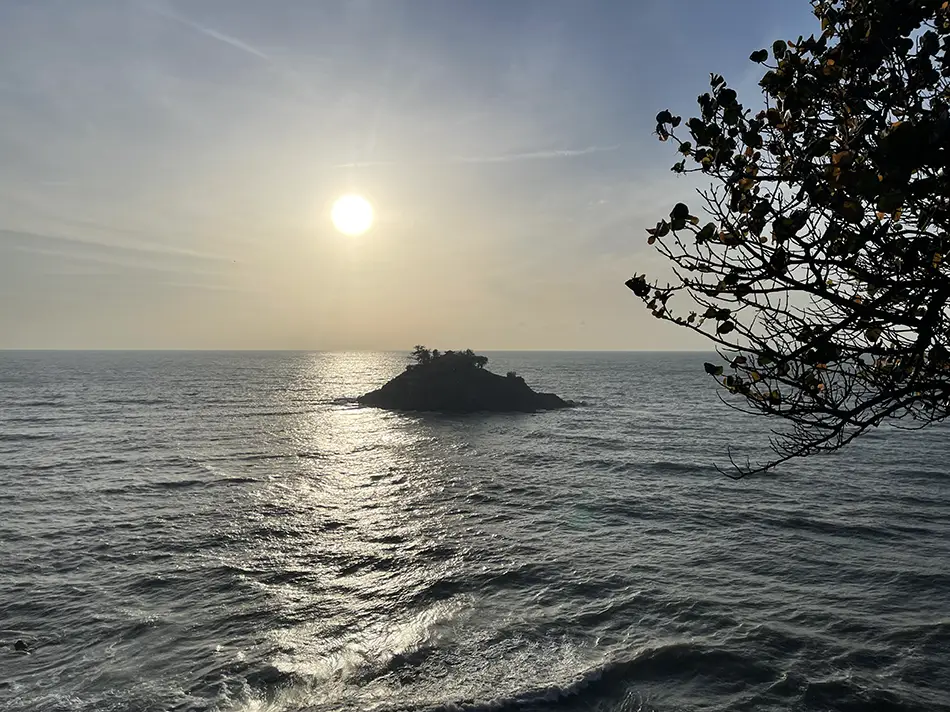
📍Hon Ba is a small island sitting just off the coast at the foot of Small Mountain. There’s a modest temple on top. What makes it interesting is access. At low tide, a rocky path emerges from the seabed and you can walk out to the temple. At high tide, the path disappears and the island is unreachable on foot.
A local site publishes the low-tide schedule for Hon Ba a month in advance. That’s the only practical way to plan around it. Check the schedule before locking in your dates if Hon Ba matters to you. The windows are short, and not every day works.
Final Note
The Vung Tau travel tips above are the ones that have actually changed how my trips went. The ferry over the bus. The scooter over the taxi. The museum people skip. The island that’s only accessible half the time.
None of them require much planning. Together, though, they’re the difference between a generic weekend by the sea and a trip that uses the city well. For the broader picture of what to see and do, the main Vung Tau guide that covers the rest.