In Vietnam guidebooks, Vung Tau usually appears as a weekend escape for Ho Chi Minh City residents and the foreigners who work there, while other guides describe it as an oil-industry town. When I combined those two descriptions before my first trip in 2020, I pictured something incoherent — oil rigs with tourists picnicking at their base — and arrived with no real idea what to expect.
Today, after multiple trips across different seasons and with my most recent stay in April 2026, I can say that the question of whether Vung Tau is worth visiting is more nuanced than the simple “yes” or “no” most articles offer. This review is meant to help you build accurate expectations and decide whether the city deserves a slot in your Vietnam itinerary.
What I found, returning year after year, is that Vung Tau is genuinely unusual — different from most Vietnamese coastal cities in its vibe, its urban layout, and the rhythm of its residents. That said, “unusual” doesn’t mean “right for everyone,” and the rest of this review explains where the city delivers, where it disappoints, and who should actually go.
Last updated after my most recent visit in April 2026:
Is Vung Tau worth visiting? This honest review gives you realistic expectations and shows how to use the city as a logistics stop toward Mui Ne or Con Dao.
Planning the full trip? See our things to do in Vung Tau guide.
Links with📍open directly on Google Maps.
Table of Contents
The Logistical Advantage Most Guides Ignore
Before getting to attractions, I want to cover a topic almost no other article addresses: Vung Tau is a useful logistics hub on two specific routes, and that alone can justify a stop.
On the Ho Chi Minh City to Mui Ne route
If you take a sleeper bus from Ho Chi Minh City (HCMC) to Mui Ne during the day, the first 40 minutes are spent crawling out of central Saigon — and not in the comfortable sleeper bus you booked. Daytime sleeper buses are banned from central HCMC, so operators take you to the city outskirts in a regular sitting bus first. It’s not painful, but it eats time.
Instead, you can swap that segment for a more pleasant alternative. Take the Greenlines DP high-speed ferry from 📍Bach Dang Pier, right in central District 1 near Bitexco Tower, directly to Vung Tau. The crossing takes roughly 1h 45m to 2h, costs around 360,000 VND ($13.7/€11.7) one way. Spend a day or two in Vung Tau, then continue to Mui Ne by bus from there.
If you are only planning to stay for the day, we have designed a Vung Tau Day Trip from Ho Chi Minh that handles the pacing for you. It covers how to arrive by ferry, explore the highlights, and catch an afternoon bus to your next destination without feeling rushed.
On the Ho Chi Minh City to Con Dao route
This is the more adventurous option. Most travelers fly from HCMC to Con Dao, but you can also reach the archipelago by sea — and Vung Tau is the gateway. The route is operated by the Thang Long high-speed ferry, a relatively new three-deck vessel run by Phu Quoc Express, with capacity for over 1,000 passengers. The crossing takes about 4h to 5h.
As of 2026, the schedule and pricing are as follows:
- Standard schedule (year-round): Vung Tau → Con Dao at 7:30 AM on Tuesday, Thursday, Saturday. Return from Con Dao at 1:00 PM on Wednesday, Friday, Sunday.
- Summer expansion (April 15 – June 15, 2026): Daily service except Mondays — 7:30 AM departure from Vung Tau, 1:00 PM departure from Con Dao .
- Fares: 790,000–1,100,000 VND ($30.0–$41.8 / €25.6–€35.6) depending on seat class.
- Service is suspended in rough weather, typically September through February. Check status before committing.
One honest warning:
The open sea between Vung Tau and Con Dao can get rough. If you’re prone to motion sickness, fly. Otherwise, the ferry is the cheaper and far more atmospheric option.
What I Actually Like About Vung Tau
If I had to summarize Vung Tau’s appeal in two words, they would be views and food.
Views
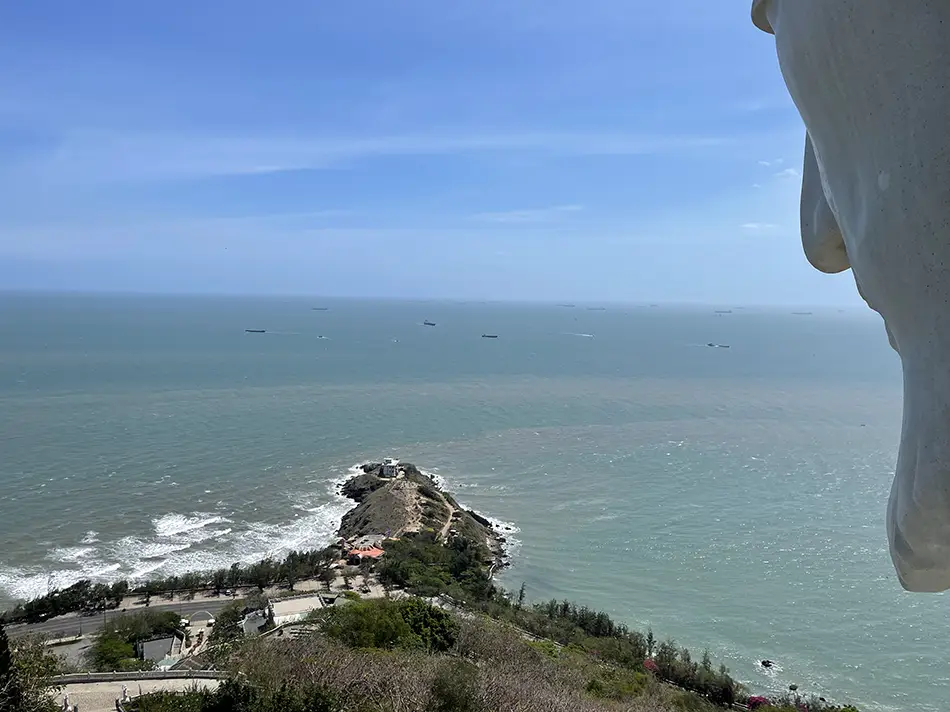
The city offers a wide range of viewpoints, and what changes from one to the next isn’t really the scenery — it’s the atmosphere around you. Some examples:
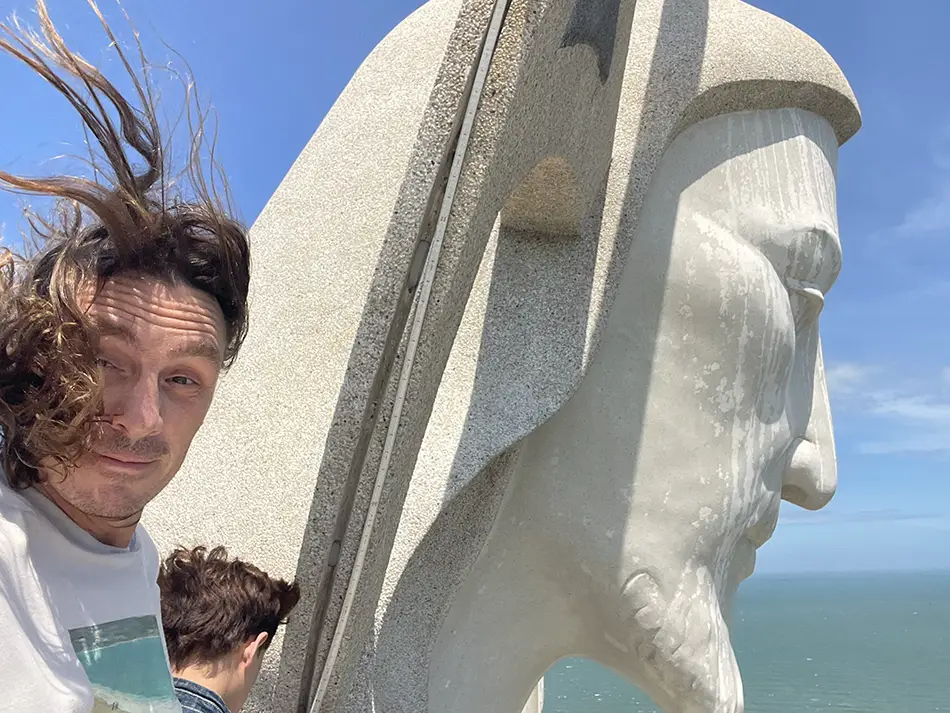
- From the shoulder of one of Asia’s largest Christ statues. The Christ of Vung Tau (Christ the King) stands 32 m (105 ft) on Small Mountain (Nui Nho). To reach the base, you climb roughly 800–847 stone steps. Then, inside the statue itself, a narrow spiral staircase of 133 steps leads up to two small viewing platforms on the shoulders, each holding only a handful of people at a time.
- From Vung Tau Lighthouse. Sitting on the neighboring hill, the lighthouse is the place to come when you want the Jesus statue itself to become part of the panorama.
- From an unfinished building on Nghinh Phong Cape. A rough but atmospheric café occupies the second floor of an abandoned construction site at the cape. It has views of sunrise and the coastal cliffs, and it’s the only place in Vung Tau where the location itself feels mildly transgressive in the best way.
- From the 📍Ho May Park cable car on Big Mountain (Nui Lon). A solid sky-level experience on paper. In practice, the gondola windows are rarely cleaned of sea salt, which dulls every photo and most views. Worth knowing before you pay for the ticket.
- From a sunset café on Big Mountain. Several cafés (📍OrientKafe) sit on the slope above the bay. Late afternoon here is one of the easiest “wow” moments the city offers.
My personal top three, in order: the abandoned-building café on the cape, the shoulder of the Jesus statue, and the sunset café on Big Mountain. The cable car would have made the list if the gondolas were maintained.
Food
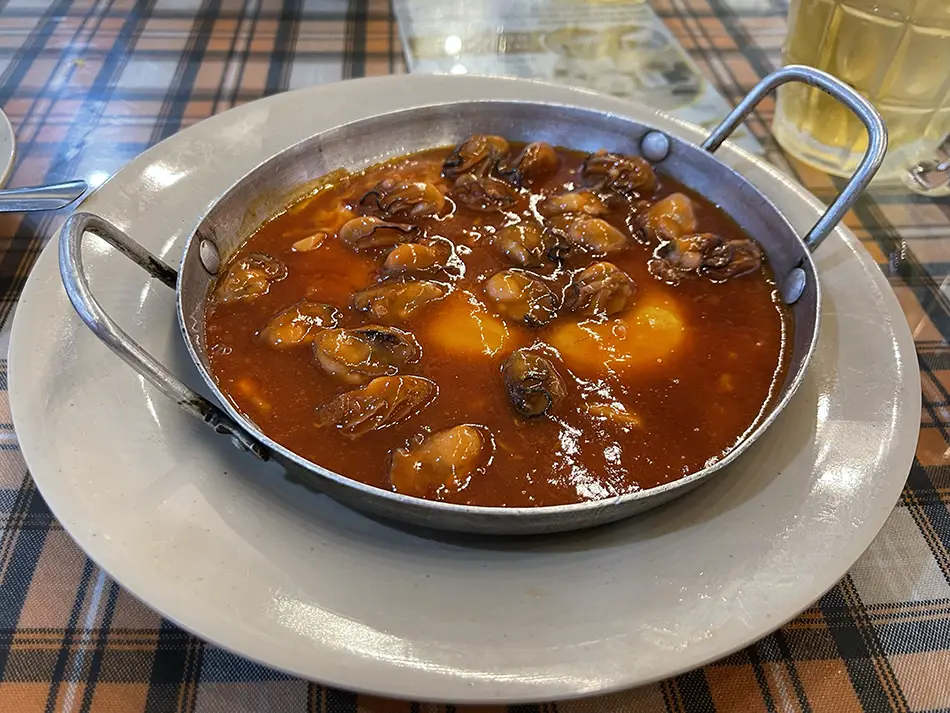
This is where Vung Tau outperforms expectations. The food scene is distinct from the rest of Vietnam — there are several dishes you’ll only find done well here. We have a separate guide covering best food to try in Vung Tau, but two stand out for me personally.
The first is Hau Ne — sizzling oysters with egg in a savory sauce, served with baguette for dipping. It’s the kind of dish I could eat daily. I’ve tried it in several places and the best version I’ve had is at a spot literally called He Hau Ne.
The second is Ca Mai salad. The name is misleading — it isn’t really a salad but a roll-your-own kit with raw fish, fresh herbs, and a light sauce, eaten the same way you’d eat fresh Vietnamese rolls elsewhere. The fish itself contributes more texture than flavor, and the combination of unusual herbs is what makes the dish memorable. I tried it once for 100,000 VND ($3.8/€3.2) and it scored highest on novelty for me out of everything I sampled in Vung Tau’s coastal restaurants.
Banh Khot — small, crispy savory pancakes topped with shrimp — is the local classic that everyone mentions. Despite a simple recipe, the result varies dramatically between venues depending on the batter, the herbs served alongside, and the dipping sauce. It’s worth trying in two or three different places for comparison.
The Ba Ria–Vung Tau Provincial Museum

I’m not a museum person. My priority is usually nature and ordinary local life. Even so, I recommend this museum without hesitation, and most international travelers skip it.
The Ba Ria–Vung Tau Provincial Museum opened in 2020 at 4 Tran Phu Street, right along the seafront. Entry costs 40,000 VND ($1.5/€1.3) — cash only — and the building has four floors of exhibits. The collection holds over 28,000 artifacts and covers the region’s history from the prehistoric Oc Eo culture through French colonization and the Vietnam War to modern oil and gas.
Oc Eo, worth a quick note, was an ancient maritime trading civilization that flourished in southern Vietnam and the Mekong Delta from roughly the 1st to 7th centuries AD. It’s considered one of the cultural foundations of mainland Southeast Asia.
The first thing you see at the entrance is a set of preserved dugongs — an acquired-taste exhibit, to put it mildly. After that, however, the museum delivers more than the standard provincial-museum format. Beyond the expected ethnography and historical artifacts, two immersive recreations make this place stand out:
- A small but walkable replica of the Long Phuoc tunnels, similar in concept to the Cu Chi tunnels but inside the museum.
- A reconstruction of the famous Tiger Cages from Con Dao prison.
Plan on roughly 1 to 1.5 hours if you read the displays. The signage is in Vietnamese and English. The museum closes for lunch from 11:30 AM to 1:30 PM, so plan around that. Stairs are steep and the elevator isn’t always operational, which is worth knowing if mobility is a concern.
For 40,000 VND ($1.5/€1.3), this is one of the best value attractions in Vung Tau.
The City Atmosphere
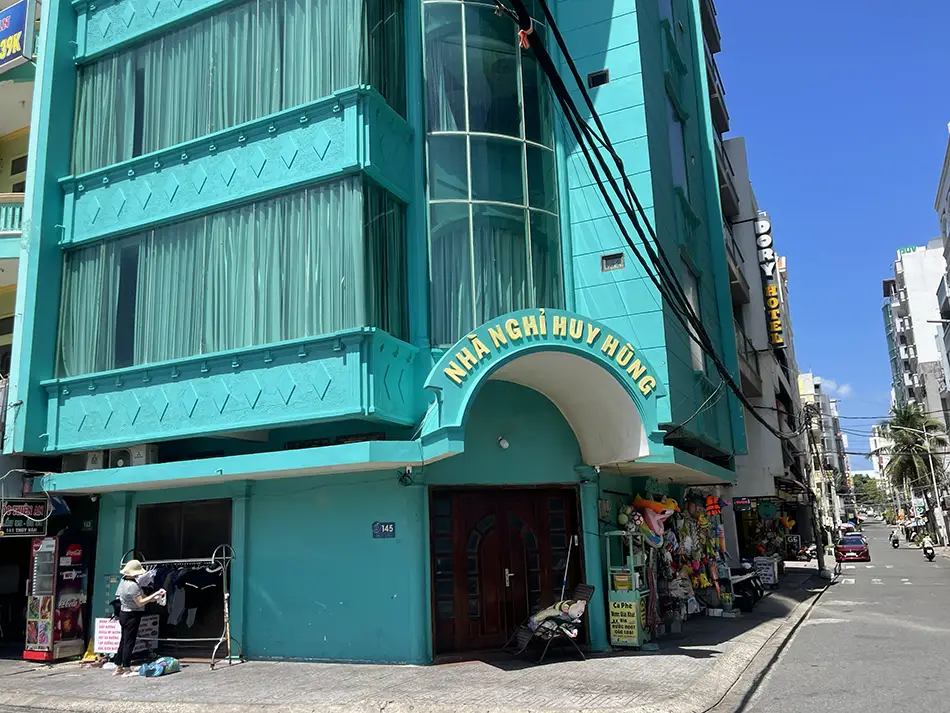
If you visit on a weekday — which I strongly recommend, since weekends bring heavy domestic-tourist crowds — Vung Tau has a noticeably different feel from most Vietnamese coastal cities.
I’ve been visiting Vietnam for about 10 years and have made it to roughly 70% of the country’s coastal cities. Most of them follow the same template: high-rises along the first line, a straight beachfront promenade, and not much variation. Da Nang stands out for its bridges and landmarks, but it still fits the formula. Vung Tau doesn’t.
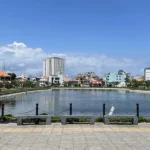
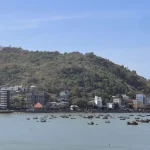
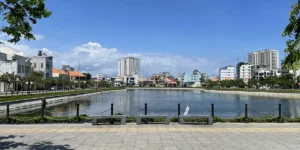
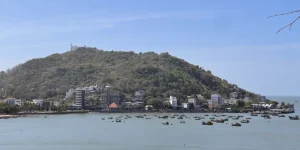
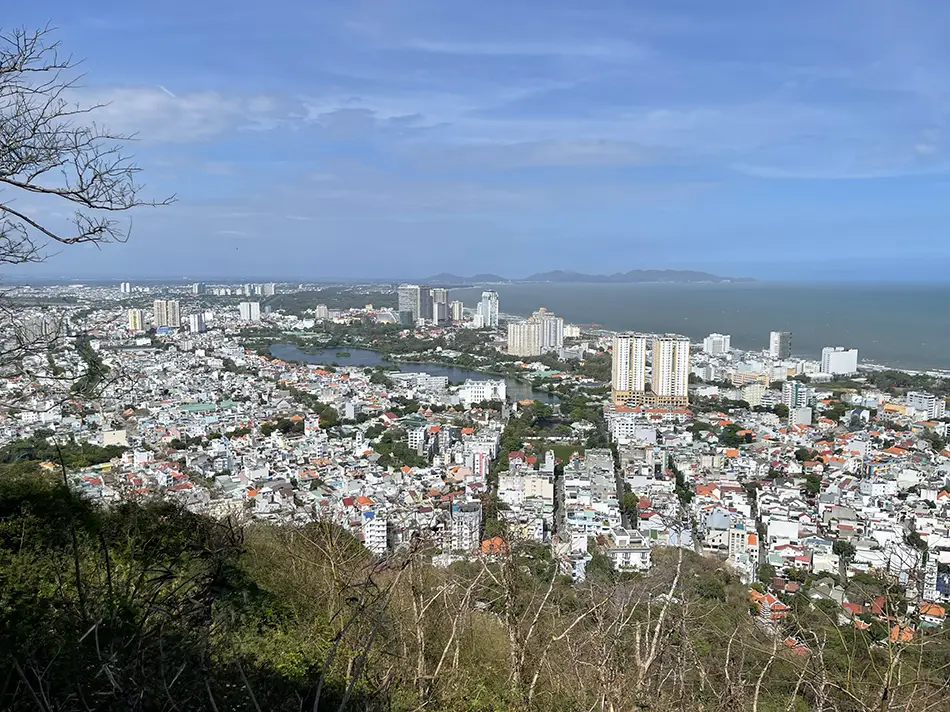
The tourist part of Vung Tau sits on a peninsula and stays mostly low-rise. New developments are appearing as of 2026, but they’re concentrated along Back Beach further from the cape, in a separate developer zone. The historic touristic core — the area around the two mountains, the lake, and the curving coastal road — has kept its scale. Driving around the cape on that road, with sea on one side and the mountain rising on the other, is the kind of small pleasure that doesn’t exist in most Vietnamese beach cities.
The city is also notably clean by Vietnamese standards. After the constant roadside trash bags of HCMC, the contrast is immediate.
What Not to Expect from Vung Tau
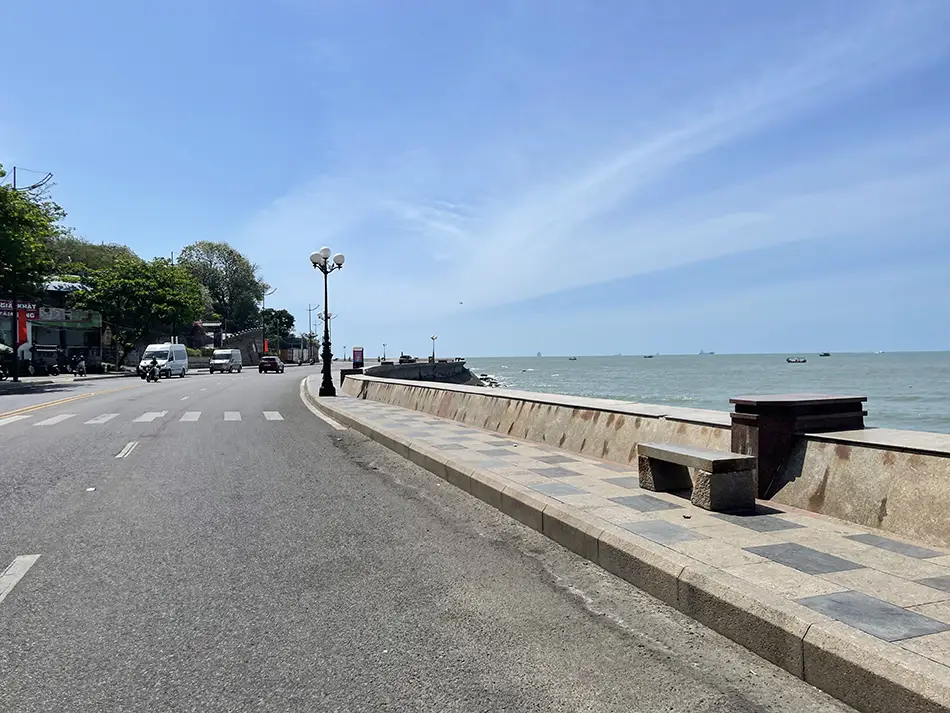
To avoid disappointment, set expectations correctly. Vung Tau doesn’t have any “wow” landmarks on the level of Ha Long Bay, the Hoi An ancient town, or the Phong Nha caves. The biggest tourist accomplishment here is probably climbing the steps to the Jesus statue and working your way through the local food list.
If your Vietnam itinerary is short and you’re trying to hit the major must-see destinations — HCMC, Hanoi, Hoi An, Da Nang, Ha Long Bay, Phu Quoc — you can reasonably skip Vung Tau on a first visit. That said, between Nha Trang and Vung Tau, I would personally choose Vung Tau every time, for the slower pace and the chance to observe ordinary coastal life.
A Note on Vung Tau Beaches
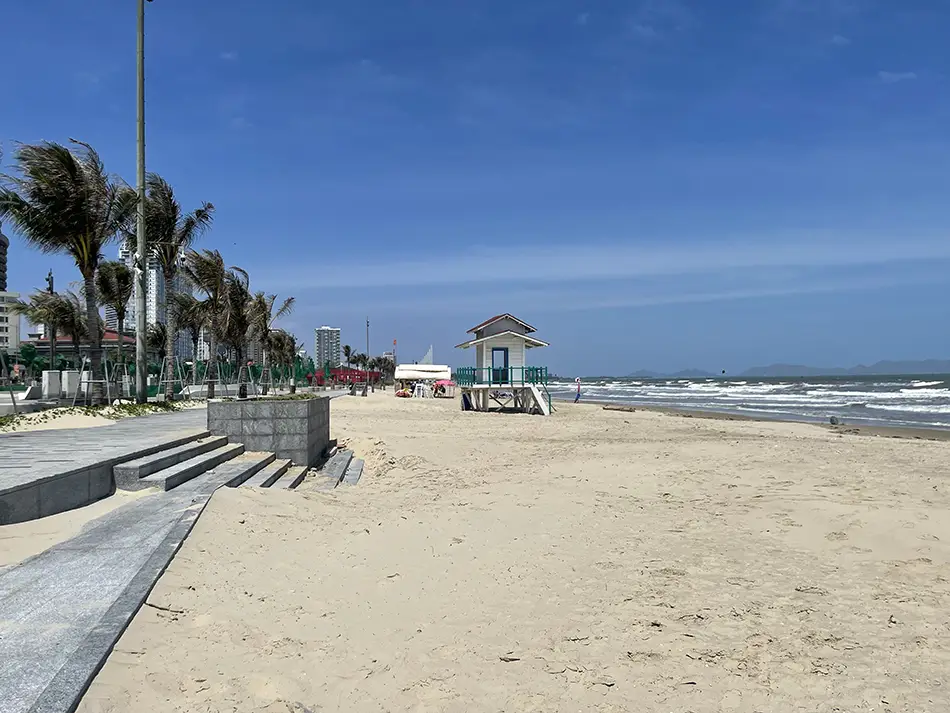
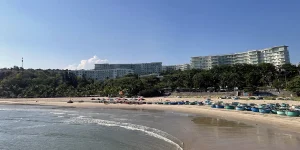
Vung Tau is the closest beach destination to Ho Chi Minh City, which is what gets it on most itineraries. The beaches here are real and long, but they don’t compete with Da Nang or Hoi An, let alone the islands of Con Dao or Phu Quoc. So if your priority is a great beach, you should know this upfront.
Front Beach (Bai Truoc) is small and worth visiting at least once for one specific reason. Around sunset it fills with locals coming to swim — and then, unusually, many stay in the water after dark, swimming under the streetlights. I haven’t seen this pattern at any other Vietnamese beach.
People of all ages come to cool off after a hot day, and if you enjoy observing how +people in different countries actually live, this is one of the most authentic moments the city offers.
Back Beach (Bai Sau) is much longer and has the standard infrastructure: a beachfront park with whale sculptures, new developments under construction, and one genuinely striking new landmark — Tam Thang Tower (Tháp Tam Thắng), opened in September 2025 as part of the Thuy Van seafront redesign. After dark it lights up in shifting colors and is genuinely worth seeing at night.
The water in front of it, however, is cloudy, and the waves are often strong enough to make comfortable swimming difficult. So if you’re badly missing the sea, Back Beach will do. If you’re an experienced beachgoer, you’ll find it disappointing.
My Honest Take: Vung Tau vs. Other Vietnamese Coastal Destinations
- Vung Tau vs. Phu Quoc: Phu Quoc wins on every beach metric — water clarity, sand quality, snorkeling, island day trips. Vung Tau wins on accessibility from HCMC and on price.
- Vung Tau vs. Nha Trang: Nha Trang has clearer water and more developed beach infrastructure, but it also has more aggressive tourism. Vung Tau feels more like a real working city you happen to be visiting.
- Vung Tau vs. Mui Ne: Mui Ne wins on sand dunes and kitesurfing. Vung Tau wins on food variety and on getting there from central HCMC without losing half a day to traffic.
- Vung Tau vs. Da Nang/Hoi An: No contest in favor of Da Nang and Hoi An. They’re better for almost any traveler priority — beach, culture, food, infrastructure. Vung Tau is only worth choosing over them if HCMC is your base and you don’t have time to fly north.
So, Is Vung Tau Worth Visiting? Final Verdict
If you’re chasing luxurious beaches, the answer is no — go to Phu Quoc, Con Dao, or Da Nang instead. If you’re on a tight Vietnam itinerary collecting must-see destinations, you can also safely skip it.
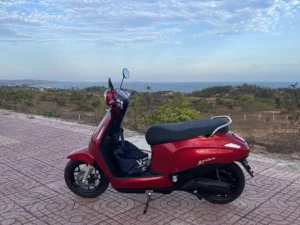
However, if you’re already based in or staying in HCMC, or if you’re interested in the kind of slow, observational travel that picks up the texture of a real coastal Vietnamese city, then Vung Tau is genuinely worth visiting. Rent an electric scooter — no license required — ride along the coastal road, turn into the residential streets on the cape, stop at small cafés with sea views, and walk around the city’s central lake. After a couple of days of that, you’ll understand why this place doesn’t feel like the rest of coastal Vietnam.
That, more than any single landmark, is what makes Vung Tau worth a visit. For a few more practical advices that can make the difference on the ground — ferry vs bus, which day to go, tide timing for Hon Ba — see our Vung Tau travel tips.