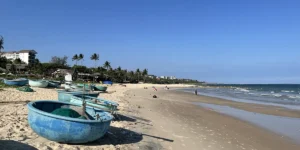
Mui Ne sits on Vietnam’s southeast coast, roughly 200 kilometers (125 miles) east of Ho Chi Minh City. For backpackers traveling through the country, it serves as a natural stop between Saigon and the central coast or the highlands.The town draws budget travelers with its sand dunes, cheap seafood, and a kitesurfing scene that runs from November through April. However, backpacking Mui Ne comes with a few quirks worth understanding before arrival, starting with what “Mui Ne” actually means.
What most travelers call Mui Ne is technically Ham Tien, a long coastal strip lined with hostels, guesthouses, restaurants, and tour offices along Nguyen Dinh Chieu Street. Mui Ne proper is a smaller fishing village a few kilometers further east.
In practice, everyone — bus companies, booking platforms, other travelers — uses “Mui Ne” to refer to the entire tourist strip. This guide follows that convention but flags the distinction where it matters for navigation.
This guide covers four backpacker hostels, five budget dining spots, and local transport tricks that most Mui Ne guides overlook — based on multiple visits over the past decade, with ground data last updated in April 2026. For a full overview of attractions and activities, see our complete guide to things to do in Mui Ne.
All 📍location links open directly in Google Maps.
Table of Contents
How to Get to Mui Ne on a Budget
Most backpackers arrive from Ho Chi Minh City (Saigon), Da Lat, or Nha Trang. The method of arrival matters for the budget because markups on transport vary widely depending on where tickets are purchased.
From Ho Chi Minh City
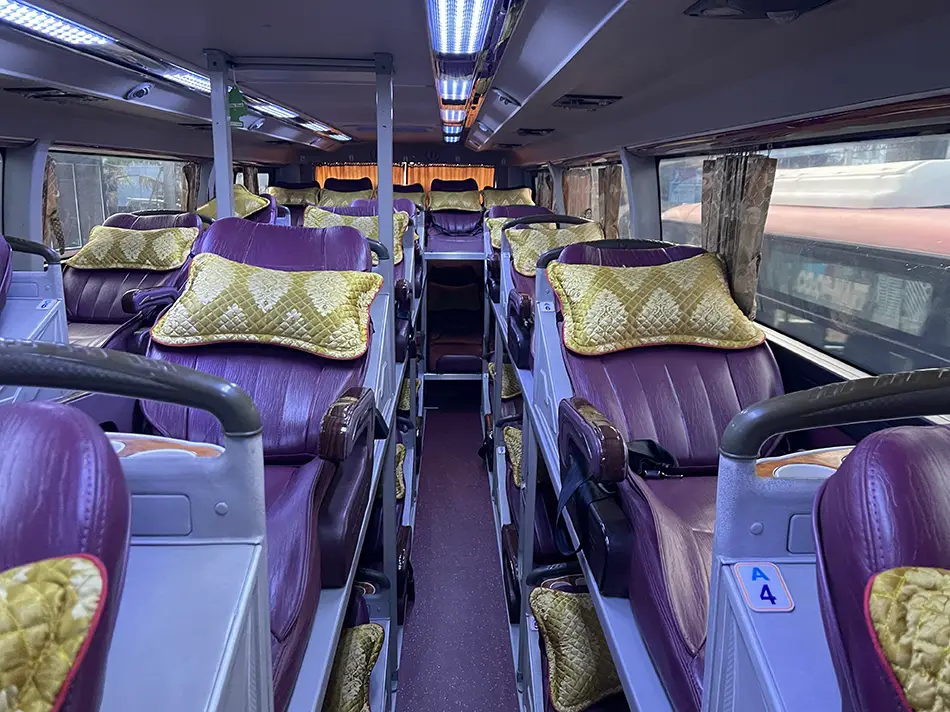
Sleeper buses are the standard backpacker option. The journey takes four to five hours via the Dau Giay–Phan Thiet expressway. Tickets cost between 130,000 and 250,000 VND ($4.9/€4.2–$9.5/€8.1), depending on the bus company and vehicle type.
Several reputable operators run this route, including Hanh Cafe, Nam Hai, and Tam Hanh. For a full breakdown of schedules, pickup points, and ticket prices, see our detailed guide on how to get from Ho Chi Minh City to Mui Ne.
From Da Lat
Sleeper buses connect Da Lat to Mui Ne in about four hours. Phuong Trang (Futa Bus) and other operators run morning and afternoon departures. Ticket prices are similar to the Ho Chi Minh route, typically around 150,000–200,000 VND ($5.7–$7.6/€4.8–€6.4). The road winds through highland passes with steep gradients, so motion-sensitive travelers should plan accordingly.
Booking directly through Futa Bus website is the most reliable way to avoid overpaying.
From Nha Trang
The bus ride from Nha Trang to Mui Ne takes roughly four to five hours. Phuong Trang (Futa Bus), Hanh Cafe, and Nam Hai Limousine all run direct services, with multiple daily departures. Tickets typically fall in the 150,000–250,000 VND ($5.7–$9.5/€4.8–€8.1) range depending on the vehicle type.
Insider Tip
Booking buses through your hostel in any of these cities almost always comes with a significant markup — sometimes double the direct price. Walking to the bus company’s own office on 📍Pham Ngu Lao Street in Saigon, or finding their local office in Da Lat and Nha Trang, consistently produces the cheapest tickets. The few minutes of effort often save 50,000–100,000 VND per ticket.
Things to Do in Mui Ne on a Budget
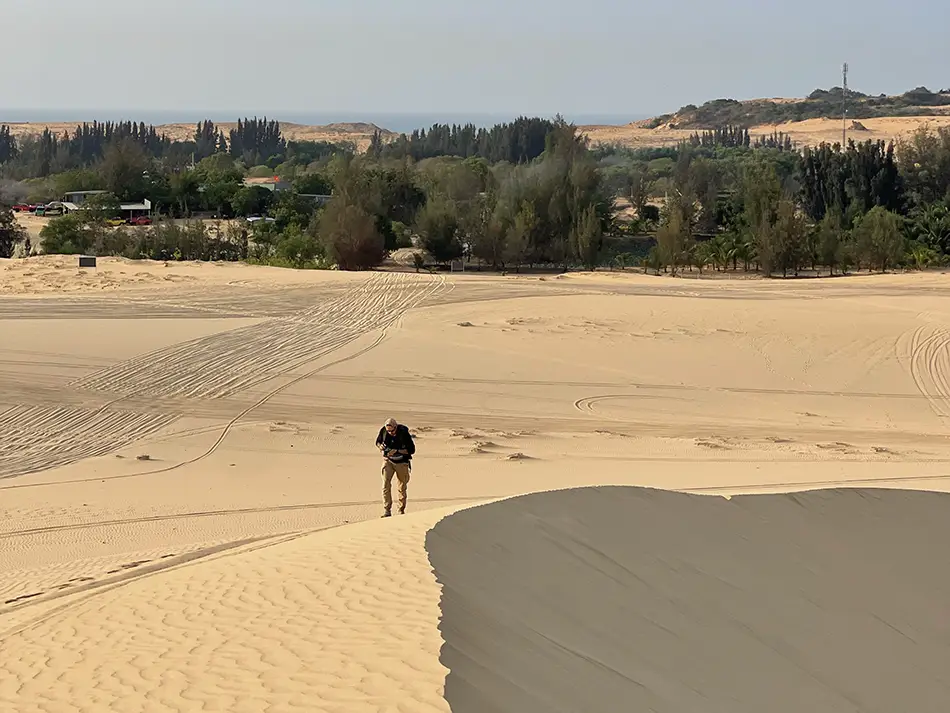
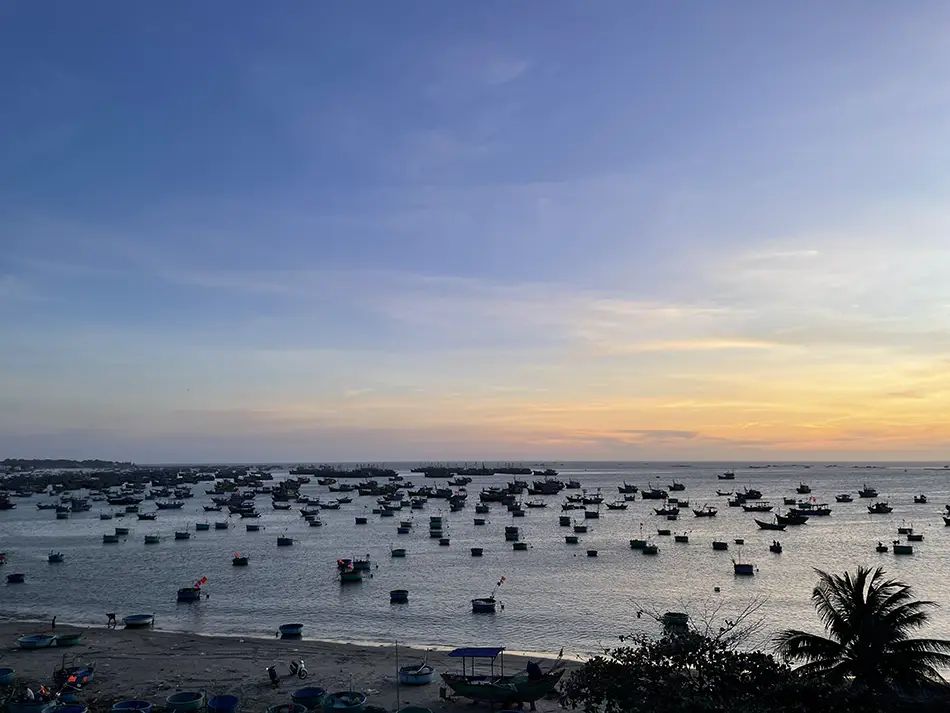
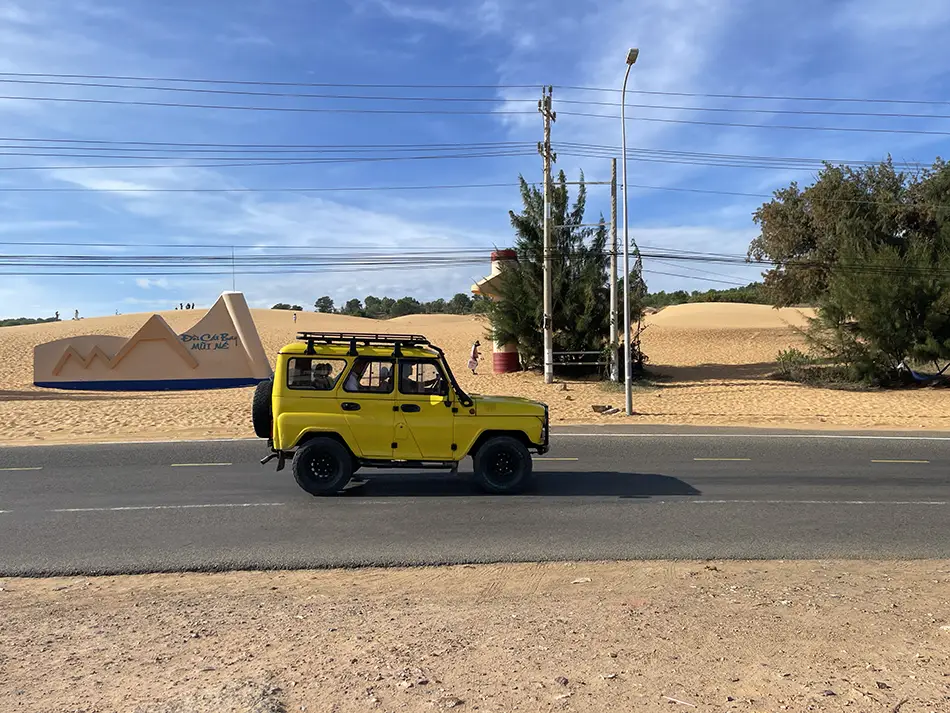
Mui Ne’s most backpacker-friendly attractions are the White Sand Dunes (Bau Trang), the Red Sand Dunes (Doi Cat Do), Fairy Stream (Suoi Tien), and the fishing village. All four are typically covered in a single sunrise or sunset jeep tour. A shared tour costs around 250,000 VND ($9.5/€8.1) per person, while a private jeep for up to five or six passengers runs roughly 650,000 VND ($24.7/€20.9) total.
Beyond the classic backpacker circuit, Mui Ne has more to offer for those with extra time. Ke Ga Lighthouse — the oldest in Southeast Asia — sits south of the tourist strip. Ta Cu Mountain, home to a 49-meter (160-foot) reclining Buddha statue, lies further inland.
For a full breakdown of activities and lesser-known spots, see our complete guide to things to do in Mui Ne.
Getting Around Mui Ne
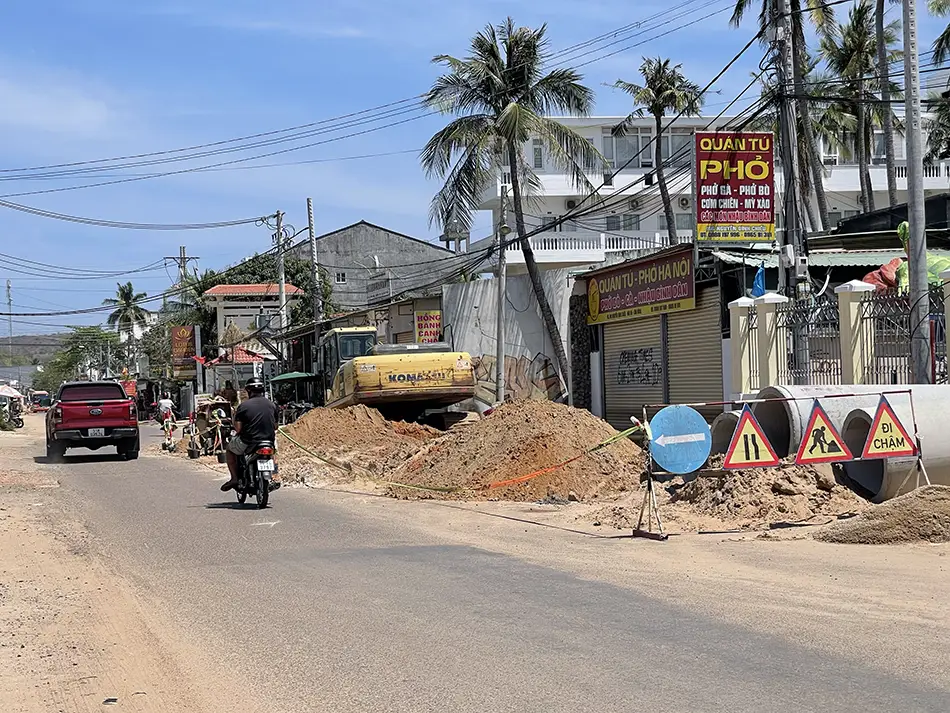
NDC — the main road through the tourist area — runs roughly 10 kilometers (6 miles) along the coast. Most hostels, restaurants, and tour offices sit along this road or just off it.
Local Buses
Two public bus routes serve the tourist area. Bus Route 1 and Bus Route 9 both run from Phan Thiet City through Ham Tien along Nguyen Dinh Chieu Street, passing Fairy Stream, the fishing village, and the Red Sand Dunes. Tickets cost 16,000–20,000 VND ($0.6–0.8/€0.5–0.6) per ride, with buses running every 20 to 30 minutes from roughly 6:00 AM to 7:00 PM. There are no clearly marked stops along the tourist strip — standing on the main road and waving is the standard approach.
Neither route reaches the White Sand Dunes, which sit roughly 25 kilometers (16 miles) northeast of the tourist strip and require a tour, motorbike, or private vehicle.
Taxis and Ride-Hailing
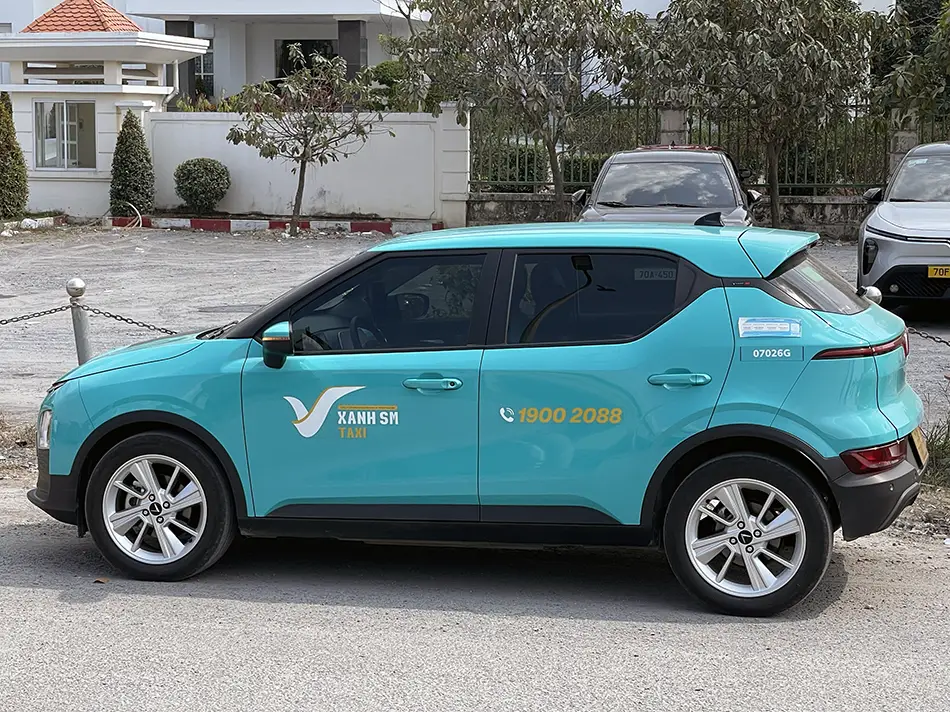
Xanh SM (Green SM), Vietnam’s all-electric taxi service, operates in Mui Ne using VinFast vehicles. Rides can be booked through the Xanh SM app. Grab also works for both car and motorbike rides, though availability for both services can be limited outside the main strip.
Traditional taxis are available from larger hotels.
Motorbike Rental
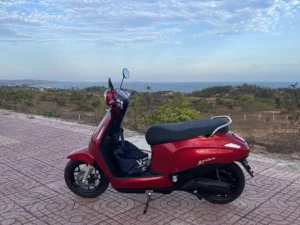
Renting a motorbike costs 100,000–200,000 VND ($4–8 / €3–6.5) per day from shops and hotels along the strip. However, Vietnamese law requires an international driving permit for foreigners. Police set up checkpoints near popular attractions, particularly the sand dunes, and fine riders who lack one. For details on renting safely, navigating local traffic, and the best scenic rides around the area, see our ultimate Mui Ne motorbike guide.
Where to Stay: Backpacker Hostels in Mui Ne
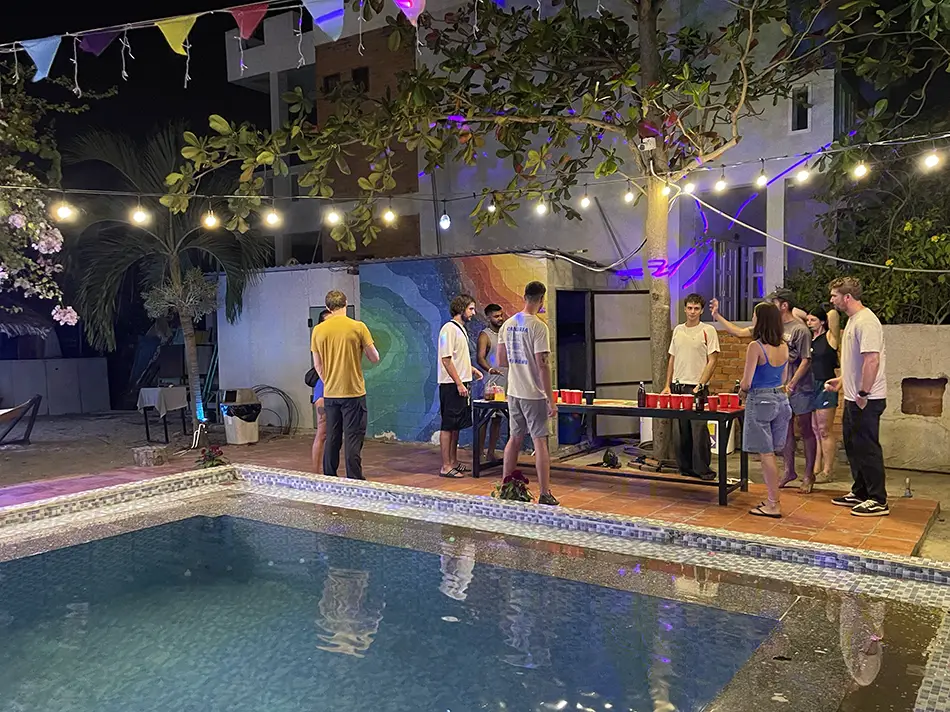
The backpacker hostel scene in Mui Ne centers around a few main spots, most located within a short walk of Ham Tien Market and each other. Dorm beds generally fall between 100,000 and 200,000 VND ($3.8–$7.6/€3.2–€6.4) per night, while private budget rooms at nearby guesthouses start around 300,000–400,000 VND ($11.4–$15.2/€9.7–€12.9).
iHome Mui Ne
📍iHome sits directly on the seafront and draws a young, social crowd. The emphasis is on communal atmosphere rather than sleeping comfort — the property includes a small pool, billiard tables, shuffleboard, darts, and dozens of other games. A bar operates on-site, and evening activities pull in travelers staying elsewhere along the strip.
Insider Tip
The accommodation itself reflects the party-first approach. Dorm beds are separated by bamboo partitions with no sound insulation, which means light sleepers will struggle. In addition, dorm prices here hover close to what a basic private room costs at neighboring guesthouses, so the value proposition depends entirely on whether the social scene matters to you.
Eva Hut Hostel
📍Eva Hut is also located near the seafront, separated from the water only by a promenade. However, as with iHome, there is no real beach here outside of low tide — waves hit a concrete seawall the rest of the time. The atmosphere is quieter than iHome, with a billiard table, a bar, and a lounge area. There is no pool, but the hostel occasionally organizes bonfires. Overall, a calmer option for budget travelers who want a social environment without the nonstop activity.
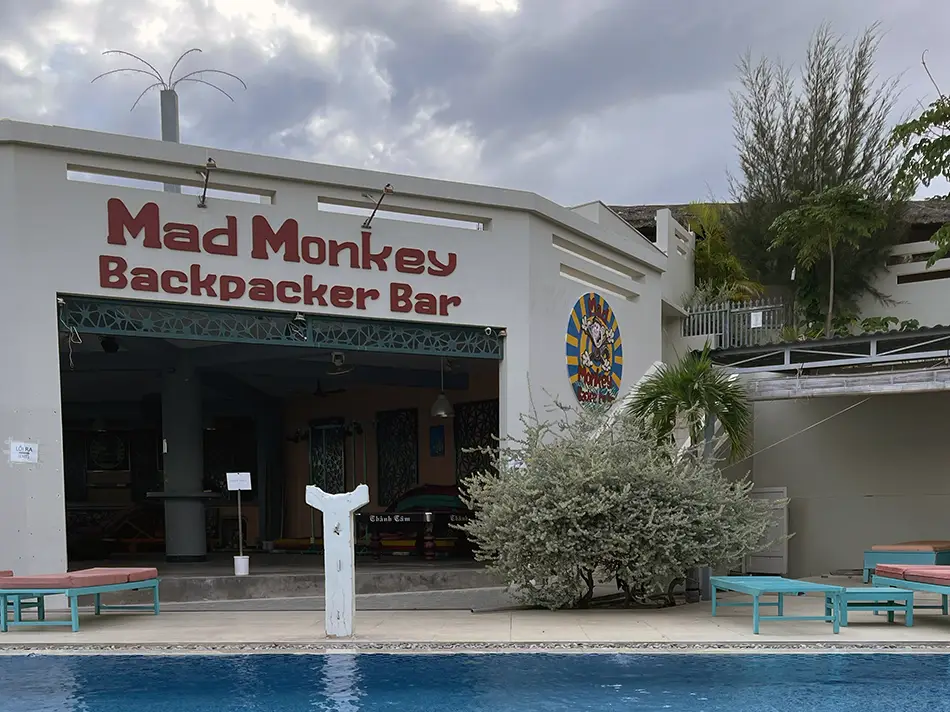
Mui Ne Hills Backpacker Hostel
📍Mui Ne Hills once served as the central meeting point for young travelers in Mui Ne. The property is large, with dorm rooms, budget private rooms, and even upscale bungalows spread across the grounds. Several swimming pools are on-site.
The biggest practical drawback is location: the hostel sits on a hillside, away from the coast and the main strip, accessed by a narrow lane too tight for taxis. Guests arriving with luggage face a steep uphill walk. Getting to restaurants, cafes, and sights on foot from here requires real effort, particularly in Mui Ne’s heat.
<strong>Ground Observations</strong></strong><br>Over the past few years, Mui Ne Hills has lost significant popularity and is visibly declining. The animation programs that once filled the pools are gone, and recent guests frequently note issues with cleaning and maintenance.
Fairy Hills Hostel
📍Fairy Hills is the newest addition to the backpacker hostel map. It offers dormitory beds with single-level bunks separated by partitions, a large swimming pool, and some of the lowest nightly rates in the area.
Ground Observations. The main trade-off is location. Fairy Hills sits away from the central activity zone of Ham Tien where most food courts and bars cluster. On the other hand, it is closer to the Red Sand Dunes — close enough to walk. For travelers who prioritize savings and proximity to the dunes over nightlife access, it works well.
Eating on a Budget in Mui Ne
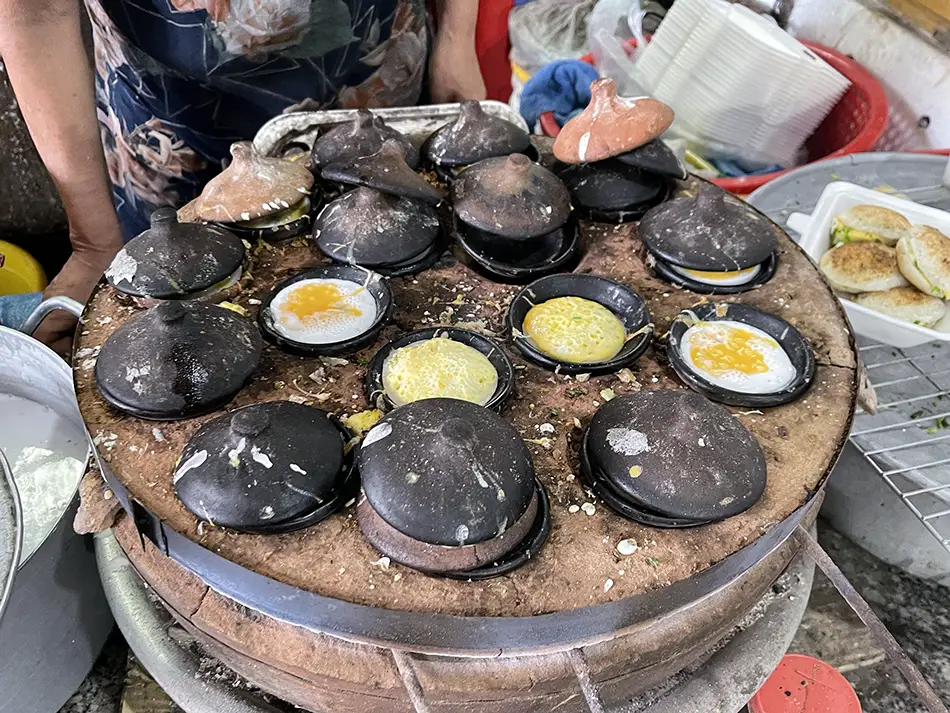
Mui Ne has hundreds of small restaurants along and behind Nguyen Dinh Chieu Street. The price gap between tourist-facing establishments and local spots is dramatic — a seafood dinner at a restaurant with an English-language menu can easily cost 200,000–400,000 VND ($7.6–$15.2/€6.4–€12.9) per person. The same style of meal at a local place off the main strip often runs 50,000–80,000 VND ($1.9–$3.0/€1.6–€2.6).
For morning food, 📍Ham Tien Market (Cho Ham Tien) and 📍Mui Ne Market (Cho Mui Ne) both open at dawn and offer street food, fresh fruit, and prepared dishes at local prices. The markets wind down by late morning.
A few spots have earned a loyal following among budget travelers and local expats:
- 📍XaLa Quán (The Oyster Garage) — a ten-minute walk from iHome and Eva Hut, serving fresh oysters at 5,000 VND ($0.2/€0.2) each with grill options available. Seating can be arranged on-site, though many grab a takeaway portion and eat on the promenade with a sea view.
- 📍Khue 259 (24/7 Pho Shop) — open around the clock, with bowls of pho at 40,000 VND ($1.5/€1.3). A reliable late-night option listed in our best places to eat in Mui Ne guide.
- 📍Quán Cơm Nghinh Phong — well known among the local expat kitesurfing community. Chicken with rice and a small soup go for 30,000 VND ($1.1/€1.0), and the pancakes have become a staple breakfast.
- 📍Phap Duyen — vegetarian versions of classic Vietnamese dishes for 25,000–45,000 VND ($1.0–$1.7/€0.8–€1.4).
- 📍Bia Hoi — locally famous for crocodile BBQ, but also serves quail egg and ground meat pans for 40,000 VND ($1.5/€1.3).
The simplest rule for finding cheap food in Mui Ne:
If the restaurant has a sign in English, keep walking. Hundreds of small Vietnamese-language restaurants tucked into side streets still serve full meals for 30,000–50,000 VND ($1.1–$1.9/€1.0–€1.6). Some of the best finds are single-dish places — hole-in-the-wall kitchens that prepare one specialty and do it well.
Most Common Budget Mistakes in Mui Ne
Even experienced backpackers lose money in Mui Ne on a few predictable patterns.
- Booking through the hostel front desk. Tours and bus tickets sold at hostel reception almost always carry a markup — sometimes double the price offered at the operator’s own office.
- Eating on the tourist strip. Restaurants with English-language menus and beachfront seating charge three to five times more than local places one street behind them.
- Ignoring the local bus. Many travelers default to taxis or motorbike taxis for trips to the Red Sand Dunes, Fairy Stream, or the fishing village. Bus Route 1 and Bus Route 9 cover all three.
How Many Days to Spend in Mui Ne
One intense day with a sunrise jeep tour covers most of the mainstream attractions. Adding a second day opens up lesser-known spots further from the strip — the cape sunset viewpoint, a Buddhist temple tucked inland, or a ride out to Ke Ga Lighthouse. For more ideas beyond the tourist core, see our off-the-beaten-path guide to Mui Ne.
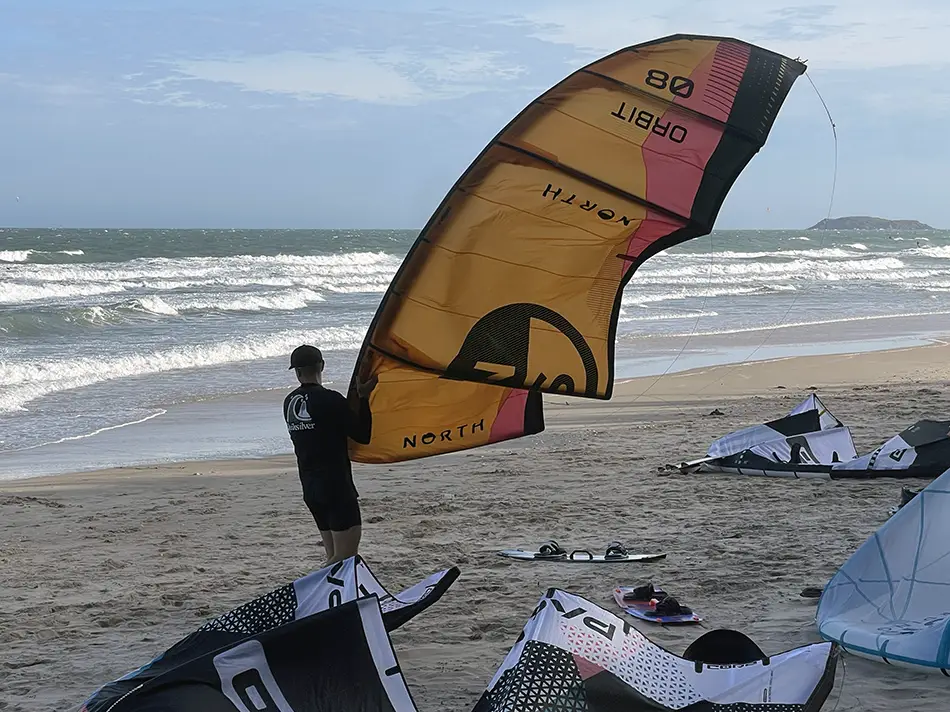
Surfing and kitesurfing lessons in Mui Ne require a longer stay of three to five days. However, both are seasonal — wind conditions for kitesurfing peak between November and March, while surfing waves are strongest from August through November. Planning around the wrong season means paying for lessons with poor conditions.
Backpacking Mui Ne: Final Notes
Mui Ne remains one of the cheaper stops on the Vietnam backpacking circuit. A full day — including a dorm bed, three meals at local spots, a bus ride or two, and a shared jeep tour — can realistically come in under $30–$35 (€25–€30).
The main thing backpacking Mui Ne requires is a bit of effort in avoiding the tourist-price default: booking direct, eating local, and using the bus.