The Mui Ne Red Sand Dunes sit just northeast of town, where a stretch of rust-colored sand rises above the coastline and shifts tone with every passing hour. Known locally as Đồi Hồng, this natural formation draws visitors for its unusual landscape, easy access, and coastal views that open up from the higher points deeper into the dunes.
This guide covers what to expect on the ground, how to get there, what the so-called “sandboarding” actually involves, and when the crowds thin out enough to enjoy the place.
Where the Red Sand Dunes Are and How to Get There
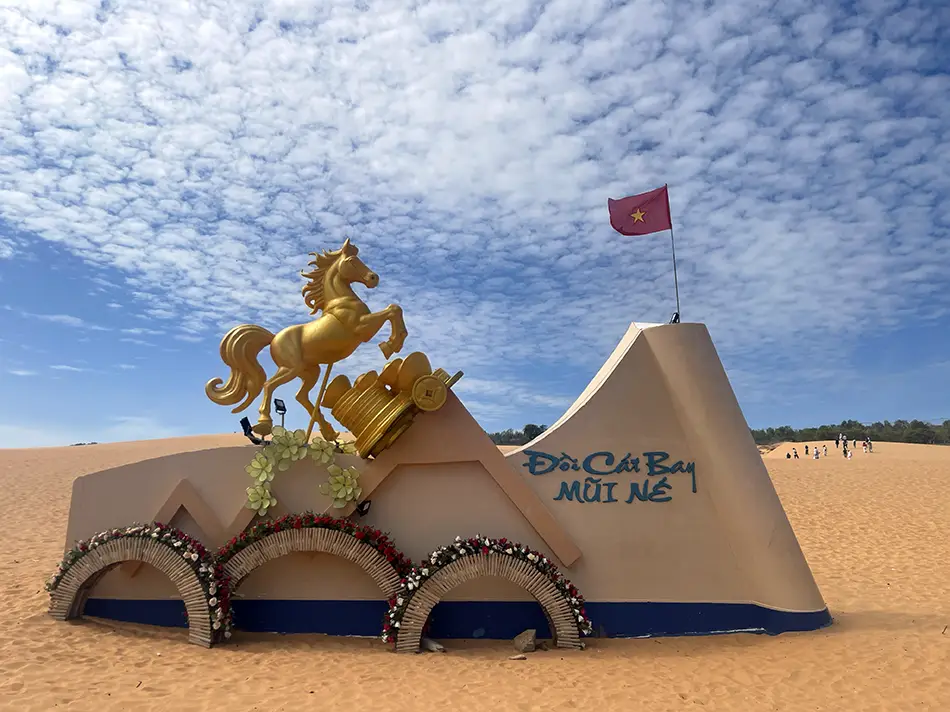
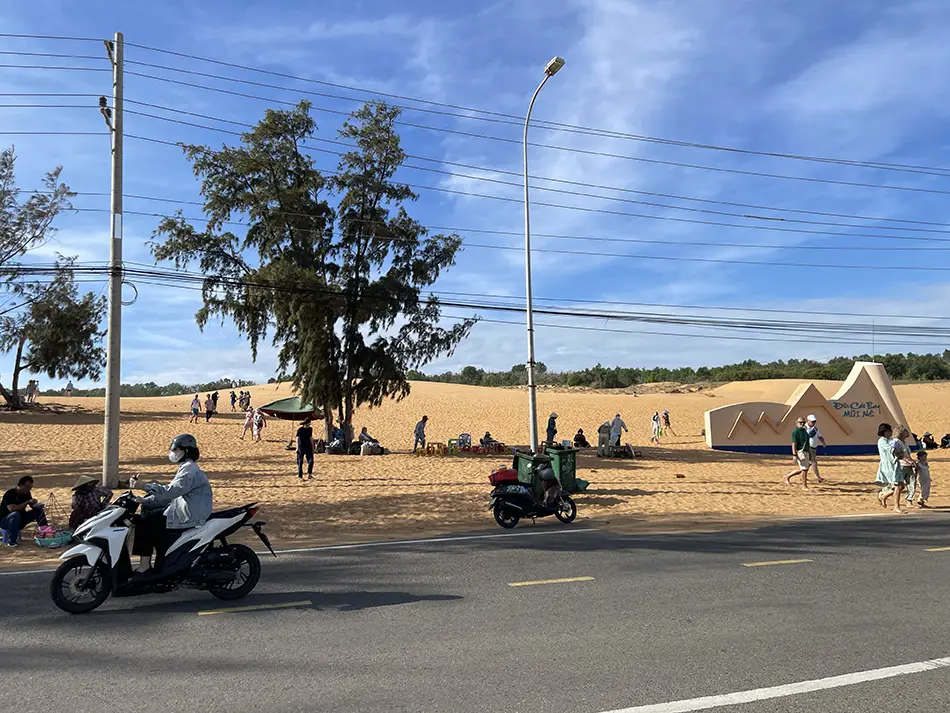
The Red Dunes are located about 10 to 15 minutes by motorbike or taxi from the main hotel area in Mui Ne. The road heads east along the coast, past the fishing harbor, and the dunes are visible from the roadside as you approach.
A motorbike rental is the most common way independent travelers reach the dunes. Taxis from central Mui Ne cost roughly 200,000 VND ($7.6/€6.4) one way. A cheaper option is the local bus — Bus 1 and Bus 9 run past the dunes along the coast. The routes have no fixed stops, so boarding works by flagging the bus down from the roadside. When approaching the dunes, ask the driver to let you off — the drop-off point is right across the street. The fare is around 12,000 VND ($0.5/€0.4).
Some visitors assume the distance is short enough to walk from town. In practice, the road climbs uphill, offers almost no shade, and the heat makes the trip far more tiring than the distance on a map suggests.
Most organized jeep tours that cover the main Mui Ne attractions — White Sand Dunes, Fairy Stream, the fishing village — include the red dunes as one stop.
What the Red Dunes Actually Look Like
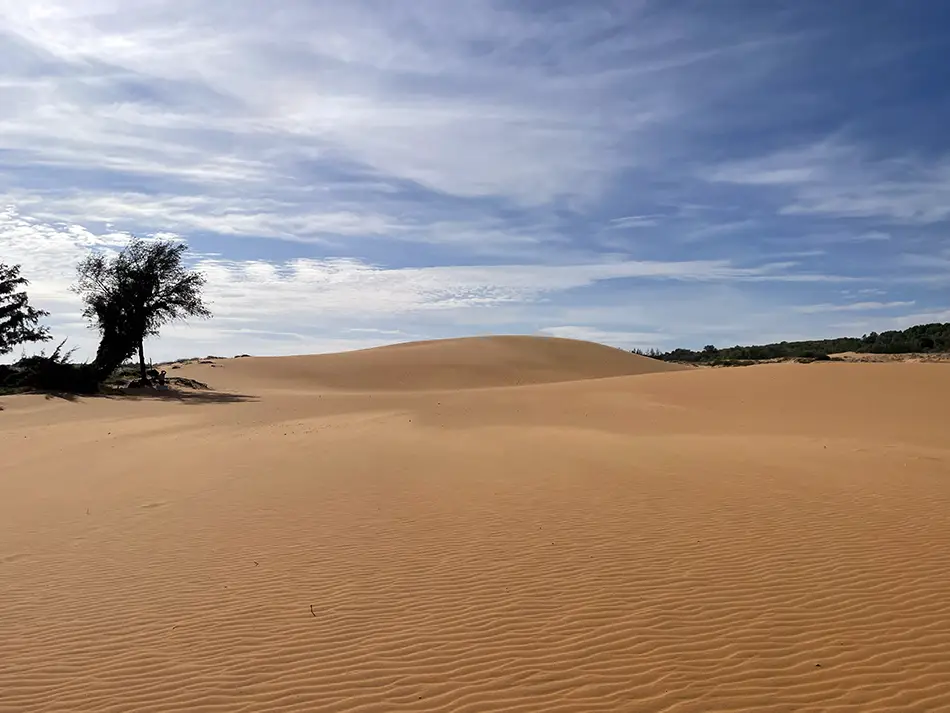
Many guides describe the red dunes as a vast, Sahara-like desert. The reality is more modest. The dune area is relatively small and compact, nothing close to the scale of the White Sand Dunes. The sand itself is less red than most heavily edited photos suggest — it leans closer to burnt orange or golden amber for much of the day.
That said, the colors do shift depending on the light. In the morning, the sand appears pale yellow. Around noon it turns a warm orange. By late afternoon, particularly in the hour before sunset, the dunes take on the deeper reddish tone that gives them their name.
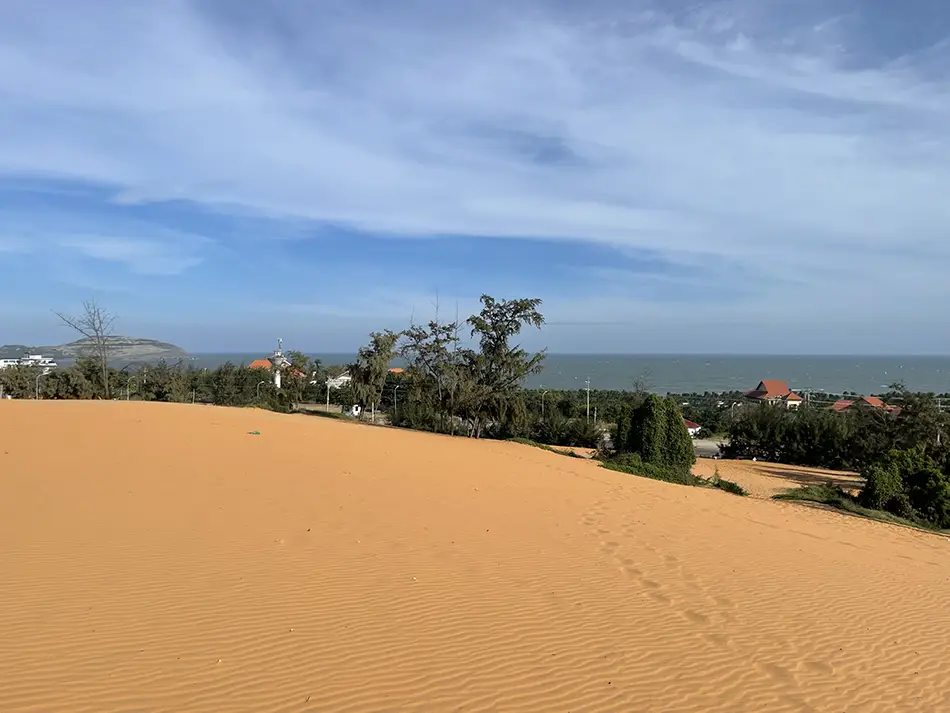
The real draw, beyond the sand color, is the view from the higher points. Walk past the main cluster of visitors near the entrance and the dunes open up to a panorama of the coastline, the sea, and parts of the nearby fishing village.
Sandboarding at the Red Dunes — What It Really Is
Almost every travel article about the red dunes mentions “sandboarding” as the main activity. The term is misleading. There are no actual sandboards here — no bindings, no standing rides, nothing resembling the sport as practiced on dunes elsewhere in the world.
What happens in practice is sand sledding. Local vendors offer plastic sheets or thin metal sleds for rent. The rider sits down and slides from the top of a dune slope to the bottom. The experience lasts a few seconds per run and works best on steeper sections where the sand is loose enough to slide.
Sled rental costs around 10,000 to 20,000 VND ($0.4/€0.3 to $0.8/€0.6). However, agreeing on the price before starting is essential. Some visitors report being asked for significantly more money after the ride than was initially suggested. A clear upfront conversation avoids these situations.
Best Time to Visit the Red Dunes in Mui Ne
The red dunes are an open, unshaded area with no ticket booth or operating hours. Visitors can arrive at any time.
Sunset is when the sand color is at its deepest red, and it is also by far the busiest period. The dunes become crowded enough during the final hour of daylight that finding a quiet spot for photographs or simply sitting takes effort. Tour groups, independent visitors, and local vendors all converge at roughly the same time.
For a quieter visit, early morning works well. The sand is cooler underfoot, the light is soft and even, and the dune area is mostly empty. Sunrise does not produce the same dramatic red tones as sunset, but the trade-off in comfort and space is significant.
Midday visits are possible but less pleasant. The sand gets extremely hot, there is no shade on the dunes, and the overhead light flattens the color contrast that makes the landscape interesting. Anyone visiting around noon should wear proper footwear rather than sandals.
Entrance Fee and Parking

Entering the red sand dunes is free. There is no ticket office or admission charge — unlike the White Sand Dunes, which sometimes charge a small entry or parking fee.
At the red dunes, however, parking attendants may ask for a small fee to watch your motorbike or car. The amount varies and is often informal, so carrying some small notes helps.
Red Dunes VS White Sand Dunes
Mui Ne visitors often debate whether to see just one set of dunes or both. The two sites are quite different in character.
The White Sand Dunes (Bau Trang) sit about 30 kilometers (18.6 miles) northeast of Mui Ne, roughly a 40-minute to one-hour drive. They cover a much larger area, with tall pale dunes that stretch to the horizon. A lotus-covered lake sits among the dunes, and ATV and jeep rides are the primary activities. The White Sand Dunes are best visited at sunrise.
The red dunes, by contrast, are compact, close to town, and easier to visit independently. They offer better coastal views and work best in late afternoon. The sand sledding activity is simpler and cheaper here, and the whole visit can fit comfortably into an hour or two.
Most travelers with a full day in Mui Ne visit both, typically starting with the White Sand Dunes at sunrise and ending at the red dunes for sunset.
Visiting the Red Dunes at Night
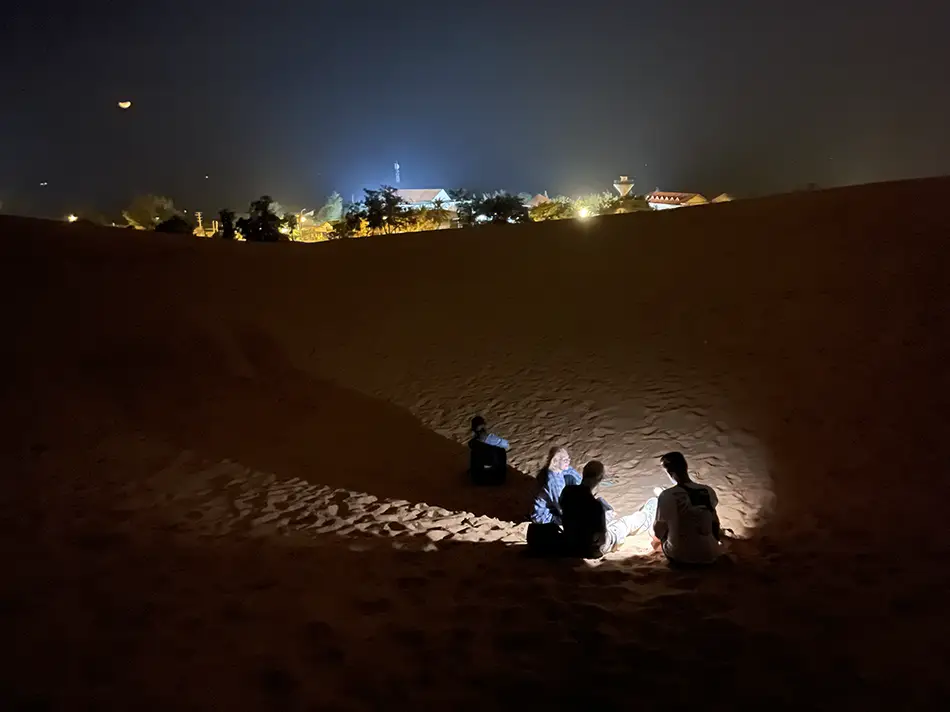
Night visits are not something most guides mention, yet the dunes are open around the clock with no gates or barriers. On full moon nights, the sand takes on a silver tone under the moonlight — a completely different mood from the usual sunset crowds.
Moonless nights work too, as light pollution from the hotels along the coast keeps the area from going fully dark. The scattered lamps of fishing boats out at sea add to the view, while the sky overhead is still clear enough to pick out stars.
That said, the dunes are home to snakes and scorpions, so a flashlight and closed shoes are essential. Sticking to open sandy areas and watching each step carefully makes the experience safer, especially when walking deeper into the dunes away from the road.
Practical Tips
The sand reflects heat and sunlight intensely. Sunscreen, a hat, and sunglasses are not optional. Carry water, as there are no permanent facilities on the dunes themselves, though mobile vendors near the base sell drinks, snacks, and ice cream.
Sand gets into everything. A small towel or wet wipes help clean hands, feet, and phone screens. Protect camera equipment and phone charging ports from wind-blown grit, particularly on breezy afternoons.
Vendors and local children near the entrance can be persistent in offering sled rentals and photo assistance. A polite decline is usually enough, but be prepared for repeated approaches, especially during peak sunset hours.
Final Thoughts on the Mui Ne Red Sand Dunes
The red sand dunes are not the most dramatic landscape in Vietnam, and anyone expecting towering Sahara-style formations will need to adjust their expectations.
What the Doi Hong dunes do offer is a genuinely unusual coastal scenery, easy access from town, and a sunset view that is hard to match elsewhere in the Mui Ne area.
Combined with a morning trip to the White Sand Dunes, a walk through Fairy Stream, and a stop at the fishing village, the red dunes round out a full day of exploring one of southern Vietnam’s most distinctive stretches of coastline.
or a broader and more personal take on what Mui Ne is like as a destination — beyond the main sights — our Mui Ne travel review covers the town from a visitor’s perspective.