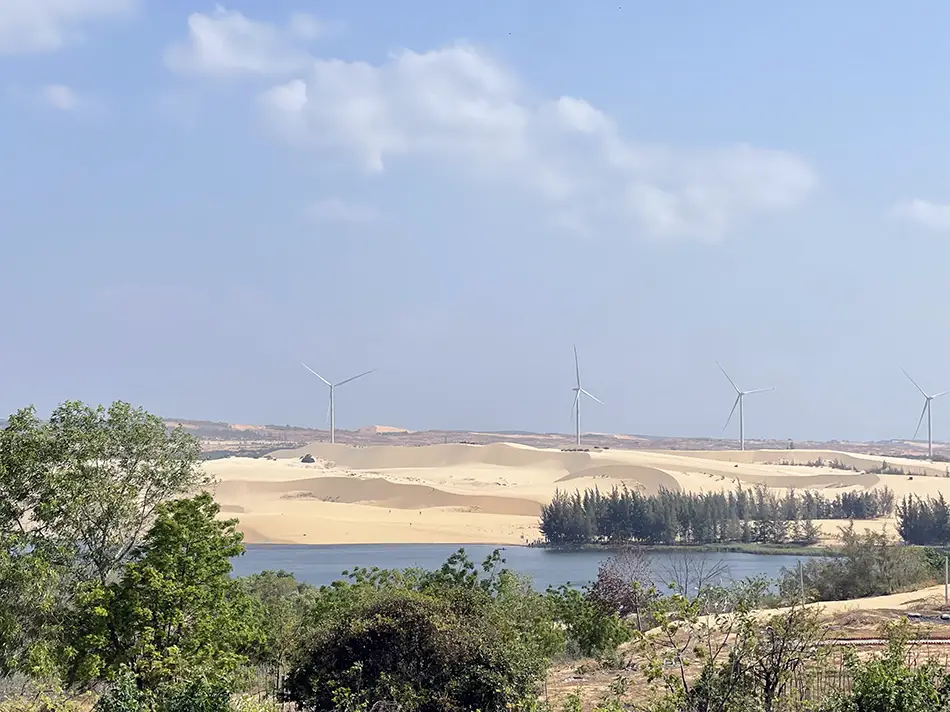
The White Sand Dunes in Mui Ne are one of the most unusual landscapes in southern Vietnam — a sprawling expanse of pale sand that looks more like North Africa than Southeast Asia. These dunes sit within the Bau Trang (White Lake) area, where freshwater lotus lakes border the edge of a rolling sand desert.
For travelers passing through Mui Ne, the white dunes are a stark contrast to the palm-lined coast just an hour’s drive away.
This guide covers how to get to the White Sand Dunes, what to expect, what it costs, and how to avoid the common traps that catch most visitors off guard.
Last updated in April 2026. For broader planning, read our full guide to things to do in Mui Ne.
Table of Contents

Location and Distance from Mui Ne
Despite the name, the White Sand Dunes are not actually in Mui Ne. They belong to Hoa Thang Commune in Bac Binh District, roughly 25 miles (40 kilometers) from central Mui Ne and about 40 miles (65 kilometers) from Phan Thiet city center. The drive takes around 40 to 50 minutes by motorbike or Jeep along a mix of paved roads and sandy stretches.
This distinction matters because travelers staying in the Ham Tien area — the main tourist strip along Nguyen Dinh Chieu street — sometimes assume the white dunes are a short walk or ride away. They are not. Getting there requires planning and transport, unlike the Red Sand Dunes (Doi Cat Do), which sit just a few minutes from town near the Mui Ne fishing village.
White Sand Dunes vs. Red Sand Dunes: What Is the Difference
Mui Ne is associated with two separate sand dune formations, and the names cause regular confusion. The Red Sand Dunes are a smaller, more accessible set of golden-orange hills close to the coast. They are free to visit and popular at sunset, when local vendors rent out plastic sleds for sand sliding. Getting there is also simpler — a local public bus running along the coast stops within walking distance, so no tour or motorbike is needed.
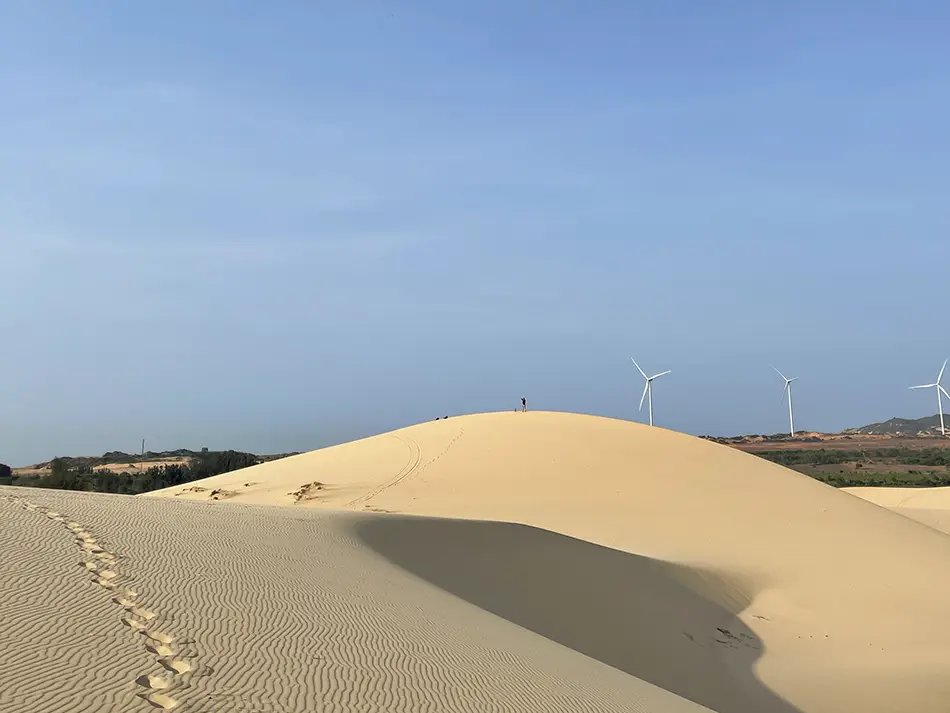
The White Sand Dunes are a completely different site — larger, more remote, and more dramatic. The sand here is finer and lighter in color, and the dunes stretch across a wider area. Between the dune ridges lie two freshwater lakes, Bau Ong and Bau Ba, which fill with lotus flowers during the summer months. Most organized tours visit both the red and white dunes in a single half-day loop, but they are separate destinations in different directions from Mui Ne.
One persistent myth deserves correction. Travel content across the internet frequently describes the Mui Ne dunes as a place where “the desert meets the sea.” In reality, neither the red nor the white dunes have any point of contact with the ocean. Both formations sit inland, separated from the coastline by roads, vegetation, and considerable distance. The scenery is striking on its own terms — it does not need the exaggeration.
How to Get to the White Sand Dunes from Mui Ne
There are two main ways to reach the 📍White Sand Dunes: by organized Jeep tour or by self-driving on a rented motorbike. Each has trade-offs.
Jeep Tour
The most common option is a half-day Jeep tour that departs from hotels along the Mui Ne tourist strip. These tours typically cover four stops — Fairy Stream (Suoi Tien), the Mui Ne fishing village, the White Sand Dunes, and the Red Sand Dunes — in a loop lasting four to five hours.
Sunrise tours depart around 4:00 to 4:30 AM. Sunset tours leave around 1:30 to 2:30 PM. Tour operators line Nguyen Dinh Chieu street, and prices for a shared Jeep start as low as 150,000 VND ($5.7/€4.8) per person. Couples often skip the shared option and book a private Jeep instead, which makes for one of the easier romantic things to do in Mui Ne on short notice.
However, the cheapest group tours come with a catch. Operators frequently route the Jeep through a restaurant stop between attractions, where travelers are presented with low-quality food at sharply inflated prices. The tour organizers receive a commission from these restaurants. This is a well-established practice in the area. Bringing a snack and water from town avoids the situation entirely.
How to Book a Jeep Tour
There are three main ways to book, and each comes with different trade-offs on price, convenience, and transparency.
The first option is booking online in advance through a platform like GetYourGuide. This works well for travelers who prefer having everything confirmed before arrival. The selection of Jeep tours is solid, prices are reasonable, and cancellation policies are usually flexible. On the other hand, online prices tend to be higher than what local agencies charge on the ground.
The second option is booking directly with a travel agency in Mui Ne. Dozens of small tour offices line Nguyen Dinh Chieu street, and they consistently offer the lowest prices. In most cases, walking in the afternoon and booking a sunrise tour for the next morning is perfectly fine — availability is rarely an issue unless the visit falls on a Vietnamese public holiday. This approach also makes it easier to ask specific questions about what is and is not included in the price.
The third option is booking through a hotel or guesthouse. This saves the effort of walking around town looking for an agency. However, hotel bookings typically come at a markup, and the details of what the tour includes are often vague. Confirming the exact itinerary, the number of stops, and whether entrance fees or activity costs are covered before agreeing to the price helps avoid misunderstandings on the day.
Self-Driving by Motorbike
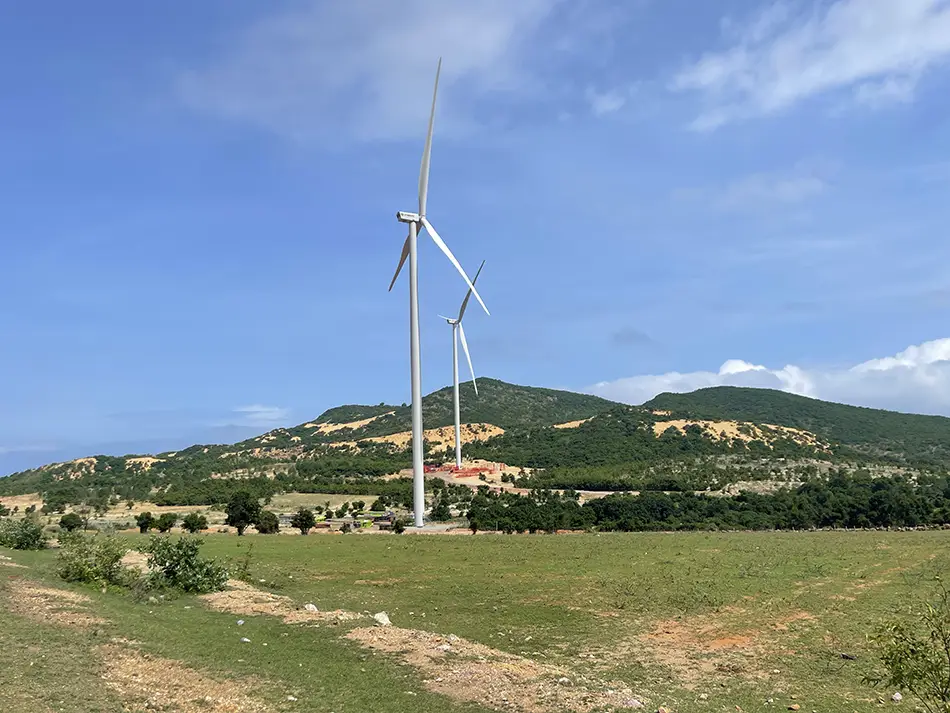
Renting a motorbike and riding to the White Sand Dunes independently is a viable alternative, and it turns the journey itself into part of the experience. The route follows the coast past fishing boats, wind turbines. Along the way, the road passes a viewpoint opposite Turtle Island (Hon Ba), which is worth a stop.
A loop route is possible, approaching the dunes from one direction and returning by another. There are nuances to this route — road conditions vary, fuel stations are scarce near the dunes, and police checkpoints along the way are common. We cover the full details, including route options, checkpoint locations, and what to watch for, in our separate guide to renting a motorbike in Mui Ne.
The motorbike rental itself typically costs around 150,000 to 200,000 VND ($5.7–7.6/€4.8–6.5) per day, plus fuel. The round trip to the dunes and back burns through roughly 80,000 VND ($3.0/€2.6) worth of fuel at current prices. Fill up before leaving Mui Ne — there are no gas stations near the dunes.
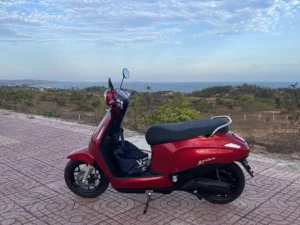
Traveling by motorbike opens up one more option. A lesser-known 📍stretch of white sand dunes sits further down the same coastal road, past the main tourist area. This spot sees far fewer visitors and none of the commercial activity found at the main site — no ATV vendors, no camel photo touts, no crowds. For travelers who prefer a quieter setting, it is worth the extra ten minutes of riding.
What to Do at the White Sand Dunes
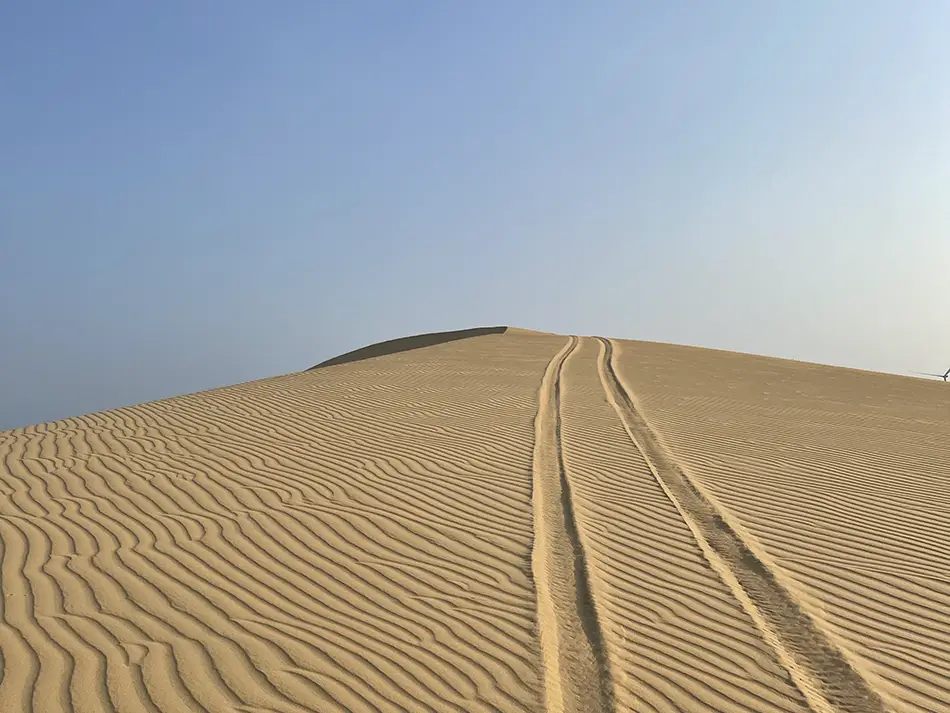
The dunes themselves are open terrain. Once past the entrance, visitors can walk the ridgelines, sit on the slopes, or simply watch the light shift across the sand. Beyond that, there are a few paid activities available on site.
Sand Sliding
Plastic boards are rented out near the top of the main dune for about 50,000 VND ($1.9/€1.6). Riders sit or lie face-down on the board and slide from the crest to the base. The slope is moderate and the activity is low-risk, though climbing back up through soft sand takes more effort than the ride down.
ATV and Jeep Rides on the Dunes
All-terrain vehicle (ATV) rides across the sand are the most promoted activity at the White Sand Dunes. A ride with a driver costs around 300,000 VND ($11.4/€9.7) per person. Driving an ATV independently costs 600,000 to 800,000 VND ($22.8–30.4/€19.3–25.8) for roughly 20 to 30 minutes. Dedicated off-road Jeeps that climb the higher dune peaks cost around 800,000 VND ($30.4/€25.8) per vehicle.
Opinions on the ATV experience are mixed. Some travelers enjoy the thrill. Others report that ATV operators on site can be abrupt, and that in the guided version the driver controls the vehicle entirely, leaving passengers with little sense of participation. It is worth knowing this before committing.
Lotus Lakes
Between the main dune formations, the freshwater lakes Bau Ong and Bau Ba sit in a shallow valley. During the lotus blooming season — roughly June through September — the lakes turn pink and green with floating lotus pads and flowers. Outside of this window, the lakes are still pleasant but visually much less dramatic. If seeing the lotus in bloom matters, timing the visit for the summer months makes a difference.
How Much It Costs
The White Sand Dunes have a small entrance fee of approximately 15,000 VND ($0.6/€0.5) per person, plus a motorbike parking fee of around 10,000 VND ($0.4/€0.3). All activities on the dunes are priced separately and paid directly to vendors on site.
Here is a summary of the main costs:
- Entrance fee: 15,000 VND ($0.6/€0.5)
- Motorbike parking: 10,000 VND ($0.4/€0.3)
- Sand sliding board: 50,000 VND ($1.9/€1.6)
- ATV with driver: 300,000 VND ($11.4/€9.7)
- ATV self-drive (20–30 min): 600,000–800,000 VND ($22.8–30.4/€19.3–25.8)
- Off-road Jeep up the dunes: 800,000 VND ($30.4/€25.8)
- Shared group Jeep tour: from 150,000 VND ($5.7/€4.8) per person
- Private Jeep tour (4–6 passengers): 600,000–800,000 VND ($22.8–30.4/€19.3–25.8) per vehicle
Prices are subject to change and some variation between vendors is normal. Tourists are frequently quoted higher prices than locals, particularly for ATV rides. Asking for prices before boarding and confirming the duration of the ride in advance reduces the chance of surprises.
Best Time to Visit
Time of Day
Early morning is the best time to visit the White Sand Dunes, and it is not just about the sunrise photos. By mid-morning the sand heats up significantly, and by midday the temperature on the exposed dunes becomes genuinely uncomfortable. There is almost no shade anywhere on site. Sunrise tours that arrive around 4:00 to 4:30 AM offer the coolest temperatures and the softest light.
Sunset visits are possible and the light quality is similarly good for photography. That said, the heat accumulated during the afternoon makes the late-day experience less pleasant than the early-morning alternative.
Time of Year
The dry season around Mui Ne and Phan Thiet runs from November through April, with lower humidity and minimal rain. This is also the peak tourist season. The wet season from May through October brings occasional showers, but Mui Ne receives far less rainfall than most of Vietnam, so rain rarely disrupts a visit.
For travelers who want to see the lotus lakes in bloom, summer — particularly June through August — is the window. The trade-off is higher temperatures and more humidity during those months.
What to Bring
The dunes are a fully exposed, sandy environment with no infrastructure beyond a few vendor stalls near the entrance. A few practical items make the visit significantly more comfortable: sunscreen, a hat, sunglasses, and at least one liter of water per person. Sand gets into everything, so a ziplock bag or case for phones and camera lenses helps protect electronics from windblown grit.
Footwear is a consideration. The sand near the road can be hot, but further up on the dunes themselves it is often cool enough to walk barefoot, especially in the early morning. Flip-flops work but are harder to walk in on steep slopes. Lightweight closed shoes are more practical for anyone planning to climb the higher dunes.
A Note on Responsible Travel
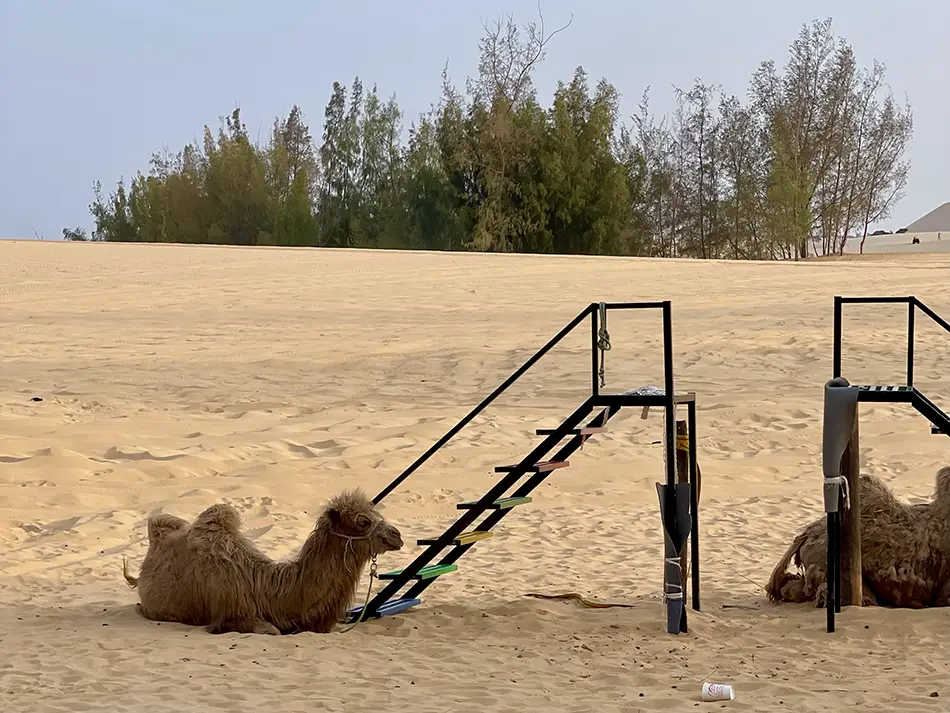
Vendors at the White Sand Dunes offer photo opportunities with camels. These animals are kept in the heat on the exposed sand and used solely as props for tourist photographs. Paying for camel photos supports a practice that raises serious animal welfare concerns and has no place in responsible travel. Skipping this particular activity costs nothing and avoids contributing to the problem.
Final Thoughts
The White Sand Dunes in Mui Ne are worth the trip from town, but they reward travelers who arrive early, bring their own supplies, and manage their expectations around the paid activities on site. The landscape — pale dunes rolling into lotus-fringed freshwater lakes — is genuinely unlike anything else in southern Vietnam.
Whether by Jeep tour or motorbike, the visit works best as a morning outing, finished before the heat takes over by late morning. For help fitting this stop into a wider trip, see our Mui Ne travel itinerary.