Fairy Stream in Mui Ne is one of the more divisive attractions of this coastal resort town. On one hand, it is actively promoted as a unique natural wonder — a shallow stream winding through sculpted red sand cliffs, lush forest, and towering dunes. On the other hand, the on-the-ground experience often falls short of that image, and inflated expectations leave many visitors genuinely disappointed.
This guide covers Fairy Stream (Mui Ne) — what makes it popular, what the location is actually like, and how the experience on the ground often differs from expectations. Updated based on a visit in April 2026.
For a broader overview of the area, see our Things to Do in Mui Ne guide.
Table of Contents
What Is Fairy Stream?
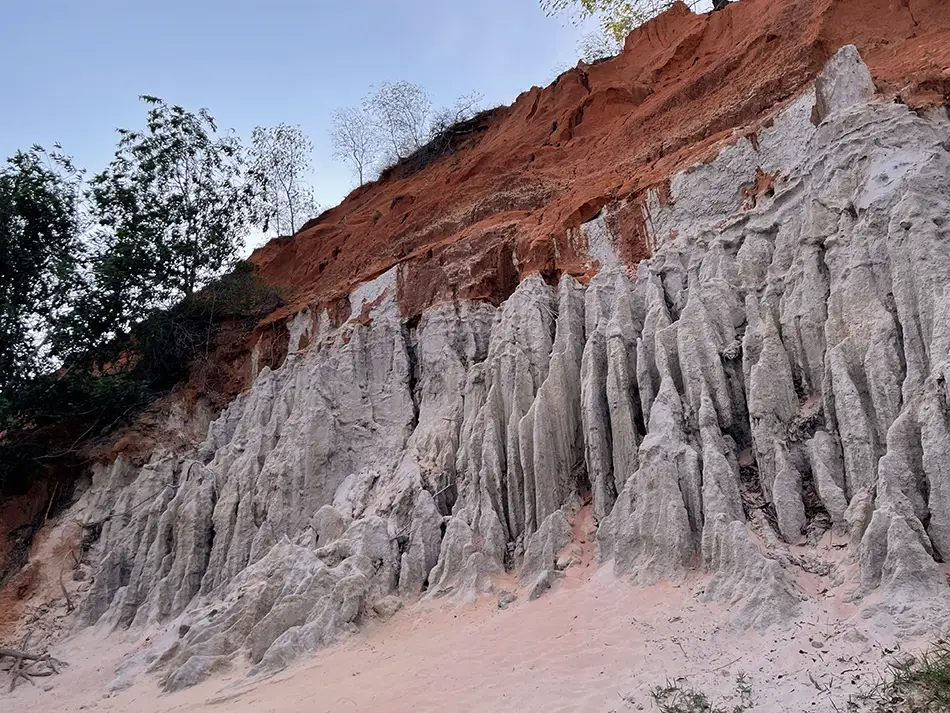
Fairy Stream — locally known as Suối Tiên — is a shallow natural waterway located in Mui Ne, near Phan Thiet City. It stretches roughly 1.1 miles (1.8 km) from its source near Duong Village before meeting the sea, crossing Huynh Thuc Khang Street on the eastern edge of the resort corridor.
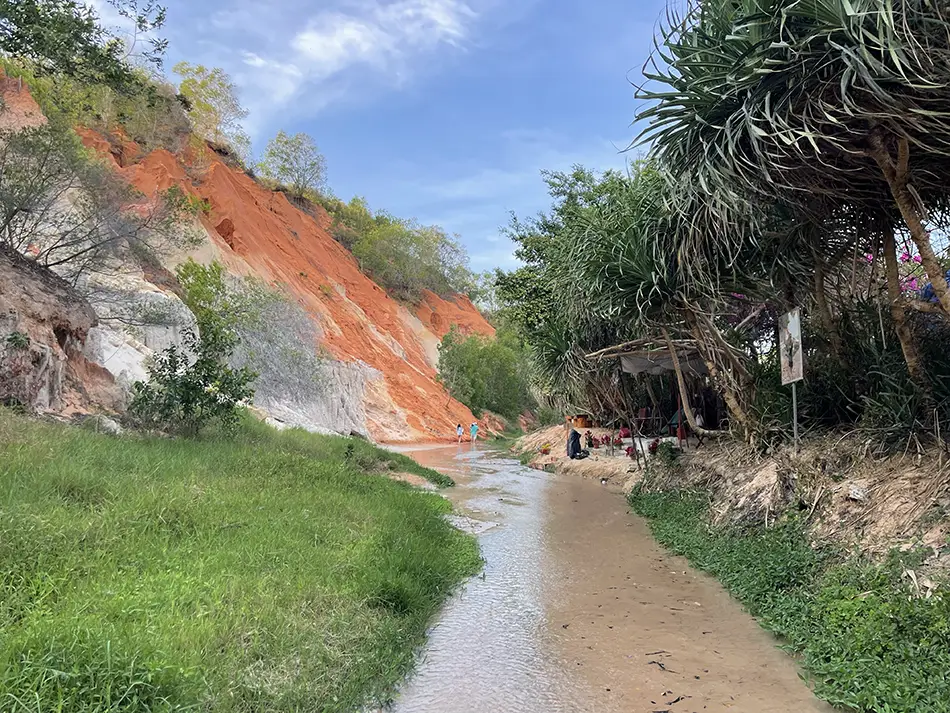
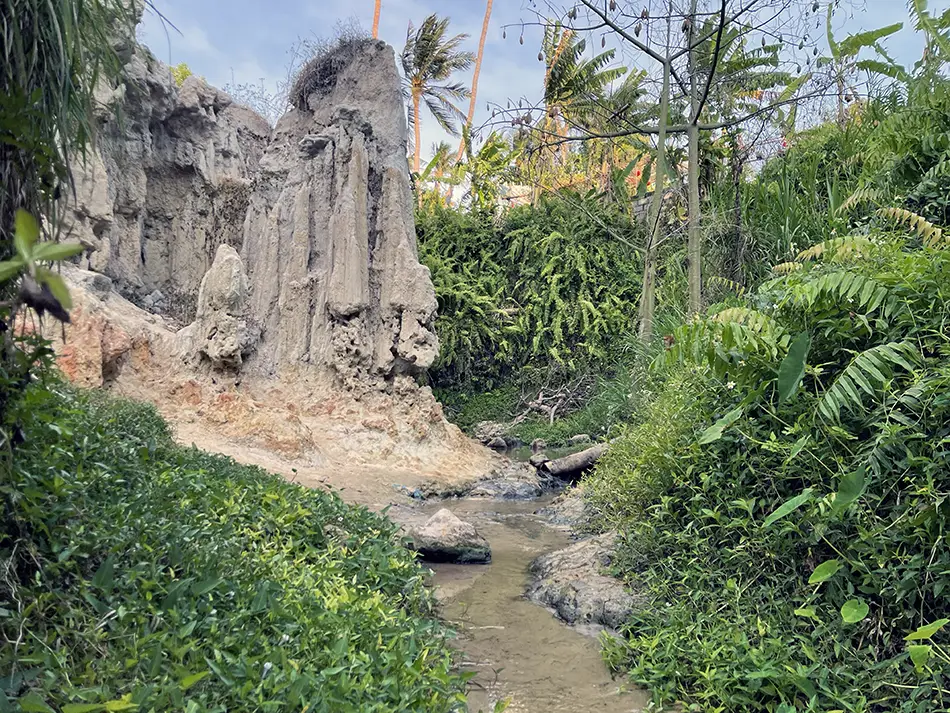
The geological story is straightforward. Over centuries, wind and rain eroded a mixture of clay and fine sand into layered formations along the stream’s banks. The result is a narrow red-and-white sandstone canyon that multiple guides compare to a miniature Grand Canyon — though that comparison is generous, and we’ll get to that.
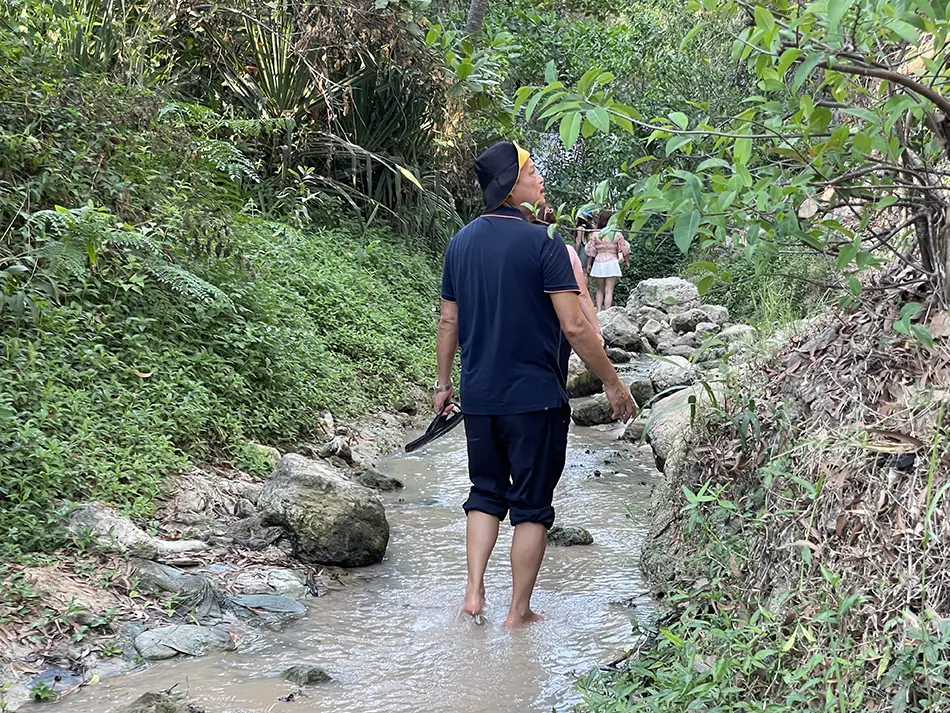
What draws travelers here is the combination of elements in a single short walk: the shallow water underfoot, the sculpted sand formations rising on one side, and bamboo and palm forest on the other. The water level rarely exceeds ankle depth along most of the route, reaching the knee only in isolated spots. That makes Fairy Stream genuinely accessible for all ages — no hiking gear, no physical fitness requirements, no equipment.
The stream’s water carries a distinctly grey tint from the sediment along its bed. Some sources describe it as reddish-orange, which may reflect conditions during or after the rainy season when more iron-rich sediment runs through. In the dry months, the color is closer to muddy brown.
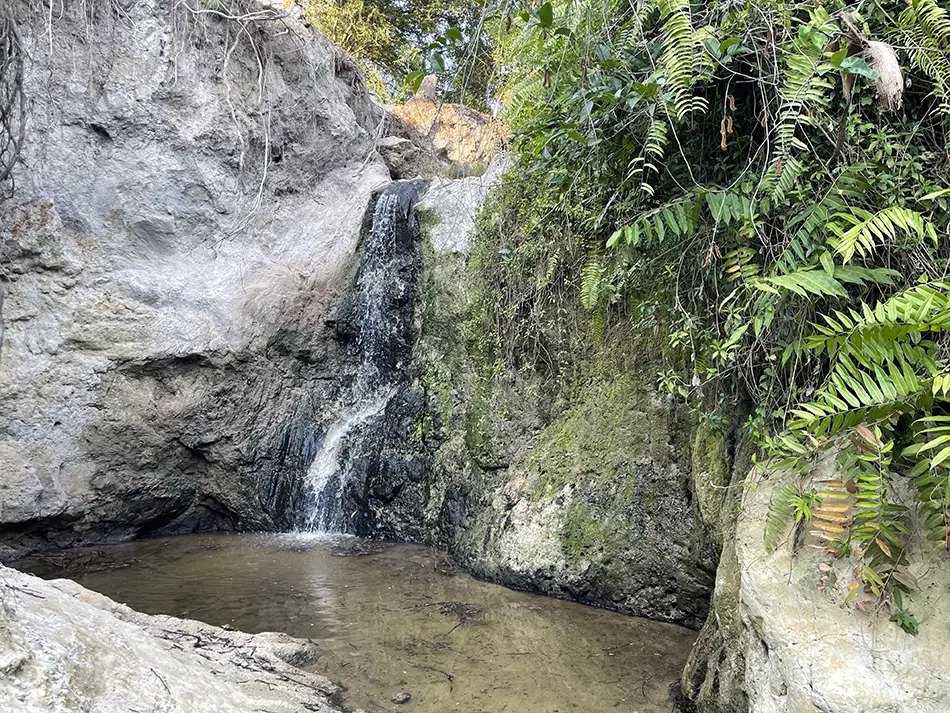
Beyond the canyon section, the stream ends at a small waterfall and a shallow pool. In the rainy season (roughly April–November), the waterfall runs with some force and the pool fills. In the dry months, it slows to a trickle or stops entirely.
On paper, the whole experience — walk in, reach the waterfall, walk back — takes about 45 to 60 minutes at a relaxed pace.
The Full Walk in 2026: What You Encounter Step by Step
Entrance and Tickets
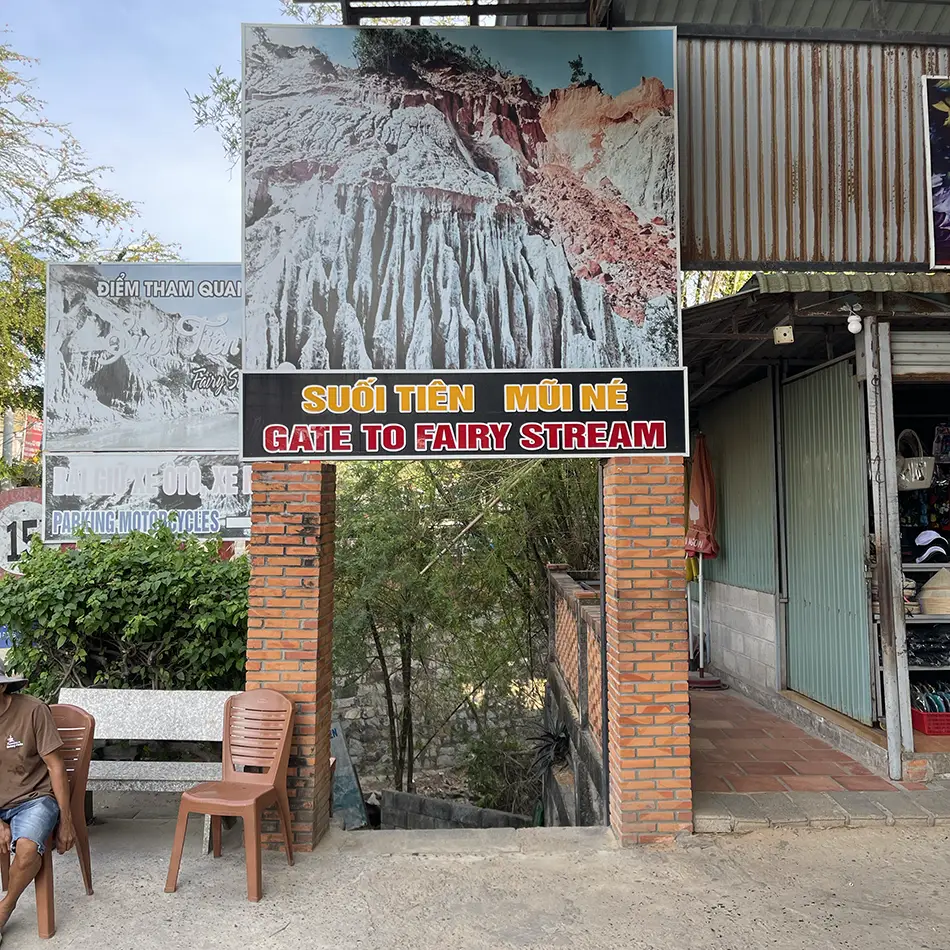
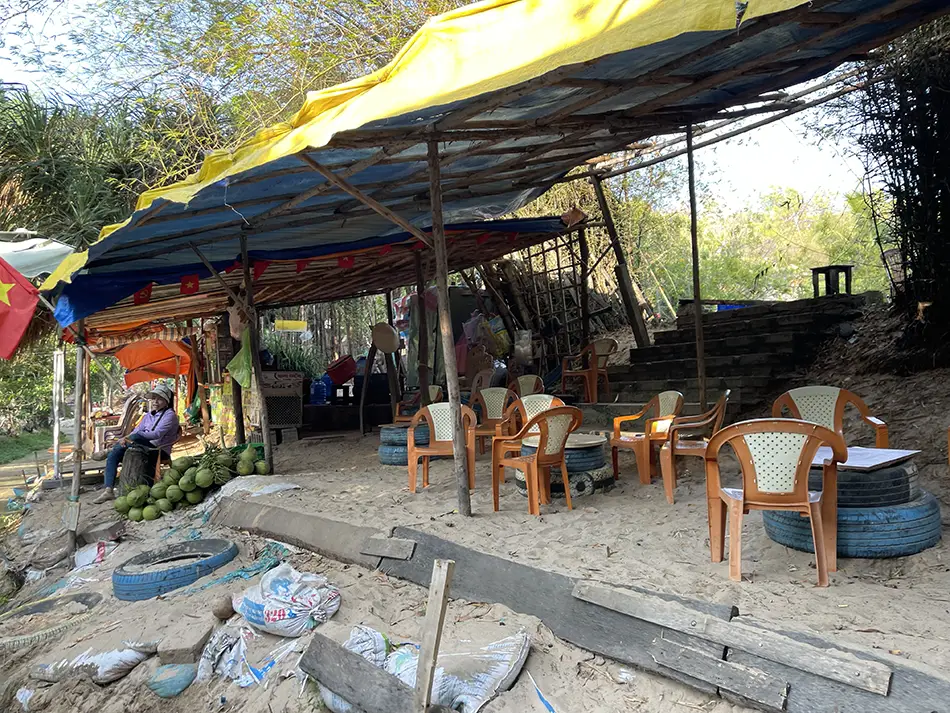
You arrive at the 📍entrance on Huynh Thuc Khang Street, either by motorbike, taxi, or as part of a jeep day tour. The entrance sits just past a small bridge. There is a cafe at the top of the stairs before you descend to the stream. Most visitors leave their shoes directly on the steps — that is the standard practice, and it works fine. No one manages shoes formally, and nothing gets lost.
The ticket booth sits further along the stream near the sand formations. The official entrance fee is 15,000 VND ($0.6/€0.5) per adult and 6,000 VND ($0.2/€0.2) per child. However, the person meant to collect the fee is frequently absent — particularly on weekdays.
The Lower Section
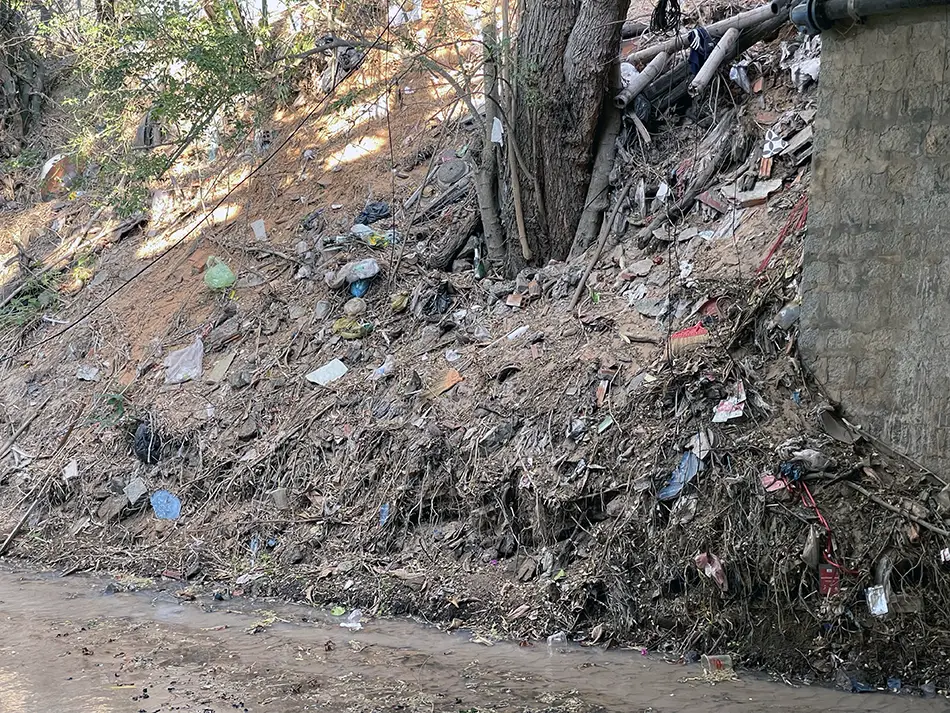
You step into the water and start moving upstream. The first section slightly smells. Plastic waste lines both banks, and in places the stream bed itself contains debris. Sand construction bags used to reinforce the walls have deteriorated over time, and you step around strips of torn plastic sheeting as you walk. Several pipes emerge from the canyon walls at intervals and discharge directly into the water. What they carry is unclear.
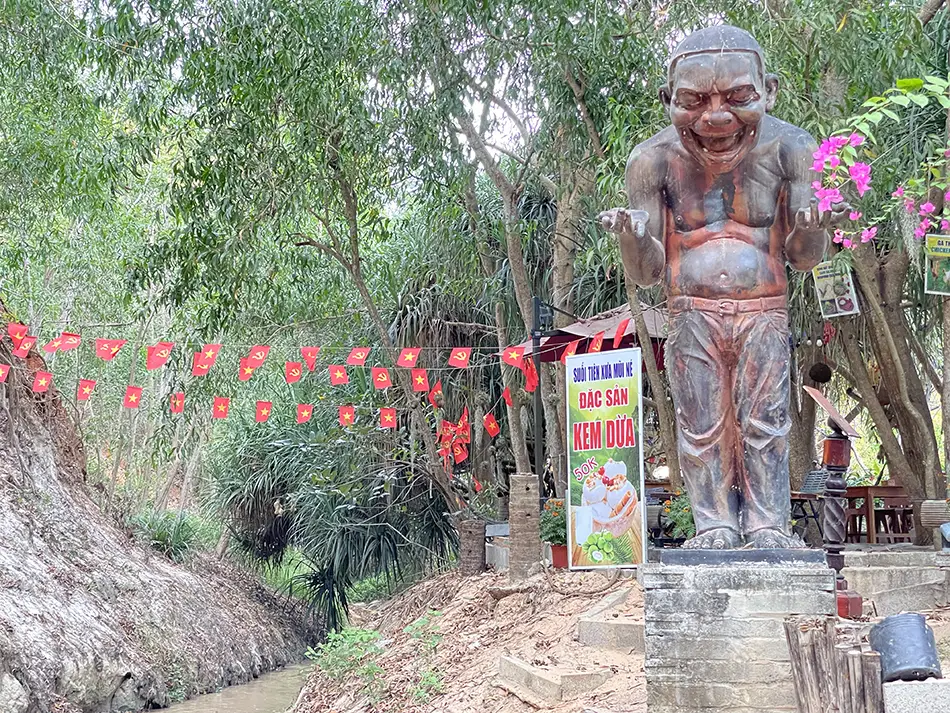
Within the first few minutes, you reach a stretch of commercial stalls built into the stream’s edge. Vendors here offer to drape pythons around your neck for a photo, charge 50,000 VND ($2/€1.6) or more, and invite you into small adjacent enclosures housing animals in poor conditions. If you are traveling with children, this is worth noting before you arrive. Vietnamese-style grill cafes on plastic chairs follow shortly after.
The Canyon Section
Past the commercial zone, foot traffic thins and the banks quiet down. The stream bed transitions to larger stones here, which are harder on bare feet than the soft sand at the start — wear footwear you do not mind getting wet if your feet are sensitive.
Shortly after, the red sandstone canyon section opens up. For approximately 650 feet (200 meters), the walls on one side rise into layered orange-red formations with interesting shapes — this is the stretch that appears on every photo in every guide. It is genuinely photogenic, but it is short. Beyond this section, trees close in on both sides, the formations end, and the remaining walk is considerably less interesting.
The End of the Stream
At the end of the stream sits a small waterfall, roughly 6 feet (2 meters) high, with a shallow pool at its base. Most visitors turn around here. The canyon section, in other words, is real. The walk to reach and leave it has its share of drawbacks.
Is Fairy Stream Mui Ne Worth Visiting?
The canyon section is worth seeing — it takes 30 minutes each way and the entrance fee is negligible. However, go in knowing that the stream itself is not clean, the walk is commercially developed in ways that affect the experience, and the visible part of the famous red canyon is a 200-meter stretch in the middle of a longer, less compelling route.
The rainy season months — roughly April–May and September–November — bring more water through the stream and activate the cascade at the end. That said, the water quality and waste issues are present year-round.
Go early in the morning, before 9:00 AM, to avoid heat and crowds. Weekends draw large numbers of both local and international visitors, which makes the narrow canyon section congested.
Getting to Fairy Stream
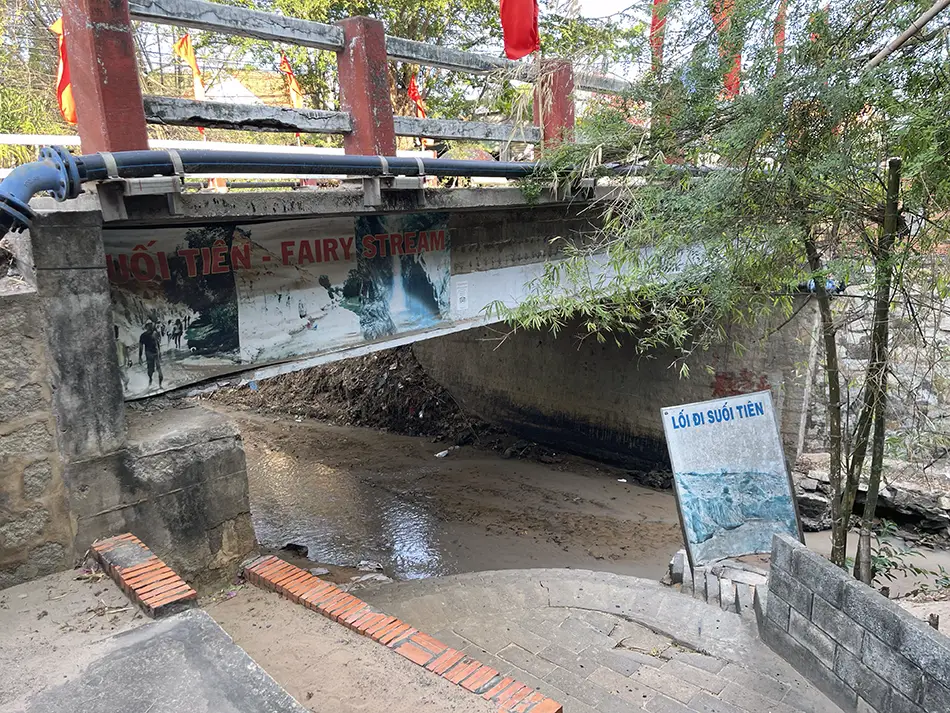
The stream entrance is at 📍40B Huynh Thuc Khang Street. From the center of Mui Ne, take Nguyen Dinh Chieu Street toward the Mui Ne Fishing Village.
Public bus routes 1 and 9 both run along this stretch of road and stop near the entrance — route 1 connects from Phan Thiet City center, while route 9 connects from Phan Thiet Railway Station. Fares are distance-based and typically amount to a few thousand dong for a short hop along the strip.
The bus stops on demand — either tell the driver ‘Fairy Stream’ or watch your position on the map and signal when you are close.
Where to eat after the visit
Directly across the street from the entrance stairs sits 📍Hai Bang Restaurant, also known as Madame Phun Restaurant. It is a well-established spot, particularly popular among Russian package tourists, and serves decent Vietnamese food at reasonable prices — a straightforward option if you are hungry after the walk. For a broader selection, see our guide to the best restaurants in Mui Ne.
Nearby Attractions Worth Combining
Fairy Stream sits within easy reach of Mui Ne’s other main natural sites:
- The Red Sand Dunes (Đồi Cát Đỏ) are approximately 3.7 miles (6 km) away and take 10 minutes by motorbike.
- The White Sand Dunes (Bàu Trắng) are farther north, around 16 miles (26 km).
- Mui Ne Fishing Village is about 3.7 miles (6 km).
A practical half-day sequence from east to west: Red Sand Dunes in the early morning, Fairy Stream mid-morning, then the fishing village for lunch with fresh seafood. That order keeps you moving with the sun behind you and the busiest sites before crowds peak.
FAQ: Fairy Stream Mui Ne
The one-way walk from the entrance to the waterfall takes approximately 25–30 minutes at a normal pace. Budget an hour total for the round trip, including time to stop at the canyon section.
The red canyon section is visually distinctive and not replicated elsewhere in the region. However, the overall walk involves significant litter, commercial interruptions, and water quality issues. Set realistic expectations and you will not be disappointed; go expecting a pristine nature walk and you will be.
All guides recommend going barefoot, and the soft sand at the entrance section makes that a reasonable choice. That said, if you have water shoes, coral sandals, or old sneakers you do not mind soaking, they are genuinely more practical — the mid-section has sharp rocks that are harder on bare feet, and the debris on the stream bed argues against going barefoot toward the back half of the walk.
The official ticket price is 15,000 VND ($0.6/€0.5) for adults and 6,000 VND ($0.2/€0.2) for children. The collection point is inside the stream, not at the entrance, and it is frequently unstaffed.
The rainy season months — April to May and September to November — bring more water through the stream and activate the waterfall at the end. The dry season walk is still possible but the waterfall is likely dry. Arrive before 9:00 AM regardless of season to avoid crowds and midday heat. Avoid weekends if possible.
Fairy Stream is a real natural feature with a genuinely photogenic canyon section — that much is true. However, the canyon is a short stretch inside a longer walk that has other things going on around it. The gap between what gets promoted and what you actually encounter is wide enough to matter when planning your time.
That said, the entrance fee is negligible, the walk takes under an hour, and the red sand formations are unlike anything else in the area. If you are already in town and the timing works, there is no strong reason to skip it.
For most travelers putting together a Mui Ne itinerary, however, this place works better as a casual add-on than as a destination in its own right. Adjust your expectations accordingly, and you are unlikely to leave disappointed.