If you are planning a trip and wine is part of your travel DNA, you are in the right place. The best wine travel destinations 2026 has to offer span five continents, from the ancient clay-vessel cellars of Georgia to the high-altitude vineyards above the clouds in Argentina. Wine tourism has grown steadily in recent years, and this year the options are broader and more accessible than ever.
This guide covers wine holiday destinations around the world with honest, practical information. It describes what each place actually looks and feels like, identifies the signature wines, and suggests activities for when you are not in a tasting room.
Each destination is split into two parts: the broader travel experience and the wine-specific highlights. Some of these regions are long-established wine destinations, while others are gaining more attention among wine-focused travelers.
One note before you start planning:
Wine travel works best when you research the harvest season for your chosen region. Visiting in harvest gives you access to winery events and a livelier atmosphere, but it also means higher prices and larger crowds. Off-season visits offer quieter tasting rooms and sometimes better access to winemakers.
1. Tuscany, Italy
Art, food, and medieval hill towns
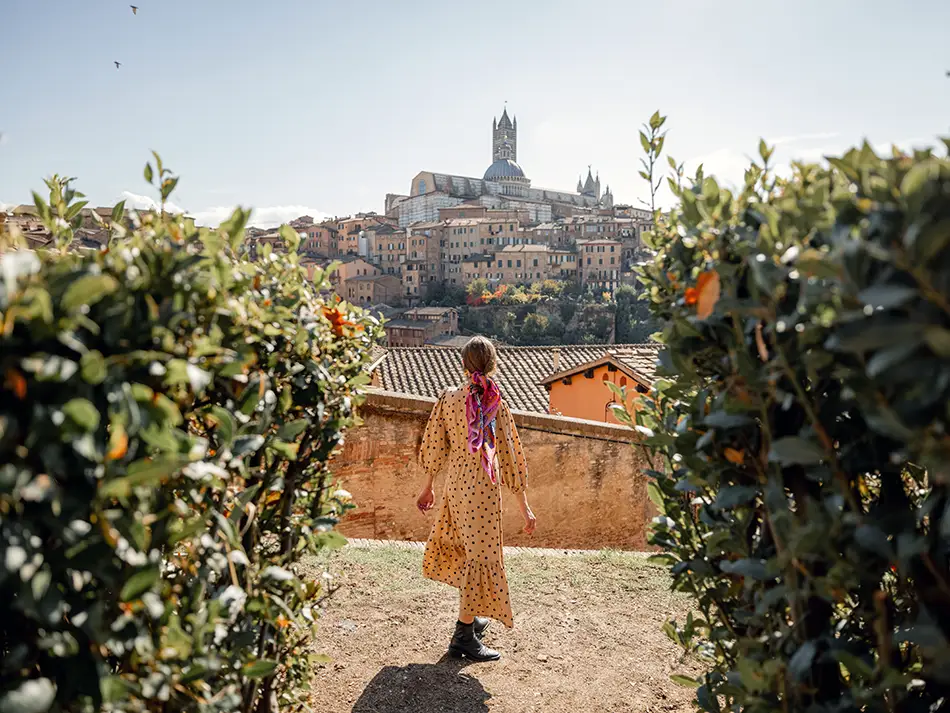
Tuscany (Toscana) sits in central Italy and covers about 8,900 square miles (23,000 sq km). It remains one of the most visited regions in Europe. Travelers arrive for the medieval hilltop towns and Renaissance art, as well as countryside landscapes of cypress trees and rolling fields.
Cities like Florence (Firenze) and Siena anchor the region. However, dozens of smaller towns like San Gimignano, Montepulciano, and Montalcino are also worth exploring at a slower pace. A week here gives you a solid mix of architecture and food markets. You can also easily fit in day trips into the hills.
Travel logistics are reasonable. Florence Airport (Amerigo Vespucci) operates international and European flights, and reaching most rural wine estates typically requires a car, as public transport coverage is limited outside major towns. Roads are narrow in places, and summer (June to August) brings heat above 95°F (35 °C) and significant crowds.
Chianti, Brunello, and Super Tuscans
Tuscany produces some of the most recognized wines in the world. Chianti Classico, made primarily from Sangiovese grapes, comes from a defined zone between Florence and Siena. At its best, it is a structured, food-friendly red with firm tannins, cherry fruit, and earthy notes.
Brunello di Montalcino, from the slopes around Montalcino town, is one of Italy’s most prestigious wines, released only after years of aging. Vino Nobile di Montepulciano and Super Tuscans (blends that fall outside traditional classifications) round out a wide range of styles.
Most estates offer guided tours and tastings that cost between $20 and $80 (€18 to €75) per person, depending on the wines poured.
Cellar tours at larger producers like Antinori or Frescobaldi require advance booking, especially in high season. Smaller family estates in the Chianti Classico zone often allow walk-in visits on weekday mornings. Combine wine tasting with olive oil tasting at many estates for a more complete experience.
Wine regions to visit within Tuscany include Chianti Classico, Montalcino, Montepulciano, and Bolgheri on the coast.
2. Douro Valley, Portugal
Terraced river valley and Porto
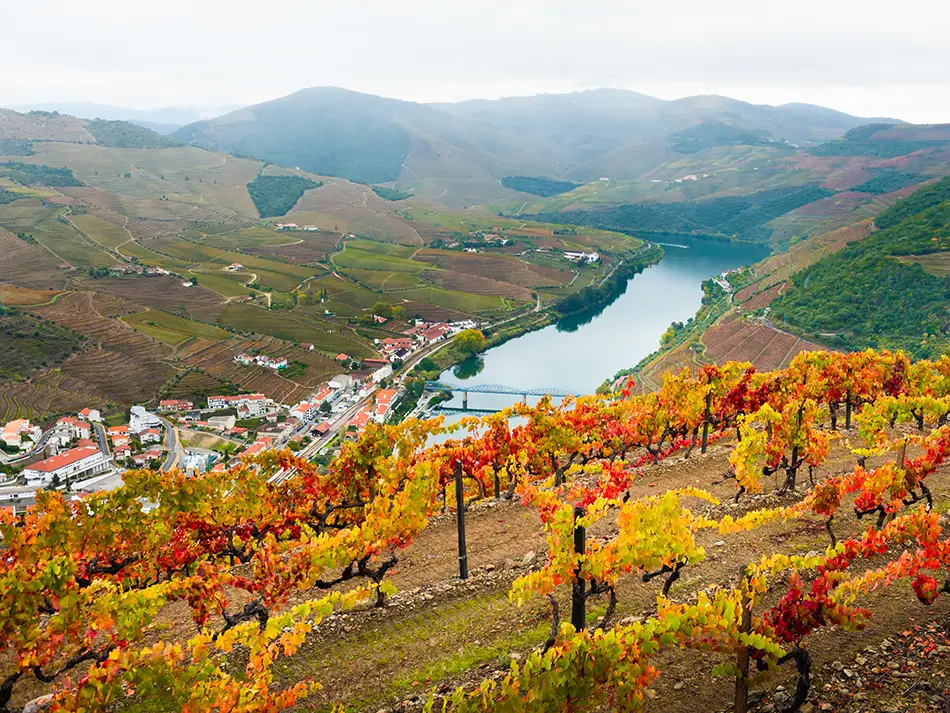
The Douro Valley (Vale do Douro) runs inland from Porto in northern Portugal, following the Douro River east toward the Spanish border. UNESCO listed it as a World Heritage Site in 2001.
The defining feature is the terraced vineyard system carved into steep schist slopes, which took generations to build and requires significant manual labor to maintain. The valley is hot and dry in summer, and temperatures can exceed 100°F (38°C), especially in the Upper Douro.
Porto sits at the mouth of the river and remains one of Europe’s most compact, walkable cities. Its historic center, the riverside Ribeira district, and the port wine lodges in Vila Nova de Gaia make it a strong starting point for a Douro wine vacation.
Many visitors choose river cruises from Porto into the Douro Valley. These trips typically last from one to several days, and many itineraries include winery visits and tastings.
Port wine styles and Douro DOC table wines
Port wine (vinho do Porto) is the Douro’s most famous product: a fortified wine made by adding grape spirit during fermentation to stop the process and retain natural sweetness. Styles range from young, fruit-forward Ruby to aged Tawny, which spends years in small barrels and develops nutty, dried fruit character. Vintage Port, produced only in declared years, is among the most collectible wines in the world.
Beyond Port, the Douro also produces excellent unfortified table wines. Douro DOC (Denomination of Origin Controlled) reds and whites have gained significant international attention over the past decade.
Indigenous grape varieties like Touriga Nacional, Touriga Franca, and Tinta Roriz serve as the foundation for both Port and table wine production. Estate visits typically cost $15 to $50 (€14 to €47). These experiences often include a cellar walk and a tasting of two to four wines. Booking ahead is essential for most wineries during the harvest season, which typically runs from September to early October.
3. Bordeaux, France
Chateaux, appellations, and Saint-Emilion
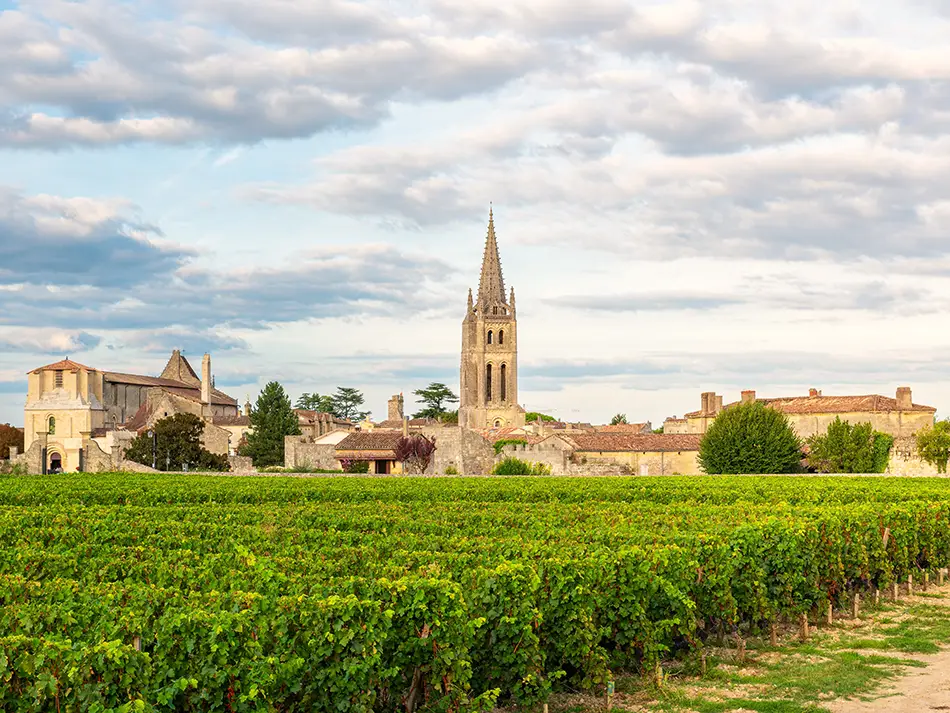
Bordeaux sits in southwest France at the point where the Dordogne and Garonne rivers meet to form the Gironde estuary. The city of Bordeaux has a compact historic center and a lively food and cultural scene. The wider wine region covers over 280,000 acres (113,000 hectares) of vineyards divided into more than 60 appellations (defined wine zones).
On the left bank of the Gironde, the Medoc peninsula holds many of the most famous estates. On the right bank, Saint-Emilion, a UNESCO-listed medieval town, is both a wine destination and a tourist landmark. The Entre-Deux-Mers zone between the two rivers produces large volumes of dry white wine.
The 1855 Classification and en primeur
Bordeaux is the global benchmark for Cabernet Sauvignon and Merlot-based blends. The 1855 Classification, created for the Paris Exposition Universelle, ranked leading Médoc estates (along with one from Graves) into five growth levels based largely on market prices, and the system still exists today with only minor changes.
First Growths (Premiers Crus) including Chateau Latour, Chateau Margaux, Chateau Lafite Rothschild, Chateau Mouton Rothschild, and Chateau Haut-Brion command the highest prices on the global market. However, Bordeaux also produces large quantities of approachable, everyday wine at accessible price points.
For serious wine enthusiasts, spring marks the annual Bordeaux en primeur (futures) season. This event brings buyers and critics together to taste barrel samples before the wines are officially released.
Visits to Bordeaux wineries are typically paid and require advance booking, with most châteaux offering guided tours rather than free self-guided access. The Cite du Vin, a modern wine museum in Bordeaux city, offers an interactive introduction to wine culture for $22 (€20) and is a good starting point before visiting estates.
4. Mendoza, Argentina
Andes foothills and wine lodge stays
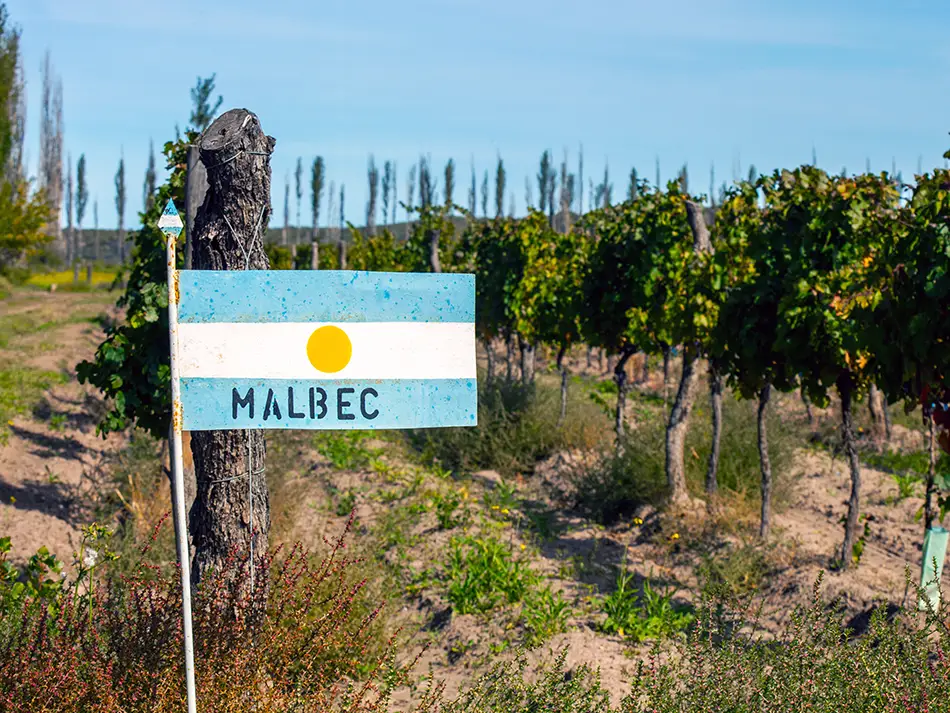
Mendoza sits at the foot of the Andes in western Argentina, about 750 miles (1,200 km) from Buenos Aires. The city itself is grid-planned with wide tree-lined avenues and a strong cafe culture. The surrounding wine country is flat to gently rolling at elevations between 2,300 and 4,900 feet (700 to 1,500 meters), with the snow-capped peaks of the Andes providing a consistent backdrop. The climate is dry and sunny with significant daily temperature swings between hot afternoons and cool nights, which helps grapes retain acidity.
The main wine areas of Lujan de Cuyo and Maipu are within 45 minutes of the city center. Wine lodges (bodegas with accommodation) have developed into a significant sector, and several offer multi-day stays combining vineyard access, cooking classes, horseback riding, and guided Andes treks.
Malbec from Lujan de Cuyo to Valle de Uco
Mendoza produces roughly 70% to 75% of Argentina’s total wine output, depending on the vintage year. Malbec is the signature variety: a thick-skinned red grape that arrived from France in the 19th century and found a better home in the Argentine climate than it had in its origin region of Cahors.
Local Malbec typically shows dark fruit, violet notes, and a plush texture that varies by subzone. Lujan de Cuyo tends to produce more structured versions, while Valle de Uco, further south and higher still, is producing some of Argentina’s most critically acclaimed wines.
Wine tasting at Mendoza bodegas varies widely. Large producers like Catena Zapata, Zuccardi, and Achaval Ferrer offer structured tours with multiple tasting levels from about $15 to $120 (€13 to €110). Smaller boutique producers in Valle de Uco often require advance booking.
Bike tours through the Maipu vineyards are a popular choice for self-guided exploration. Rentals and maps typically cost around $10 to $20 (€9 to €18). Keep in mind that Mendoza can be extremely hot in January and February during the Southern Hemisphere’s midsummer. Because of this, spring (October to November) or the autumn harvest season (March to April) are much better times to visit.
5. Napa Valley, USA (California)
A high-end wine corridor with real costs
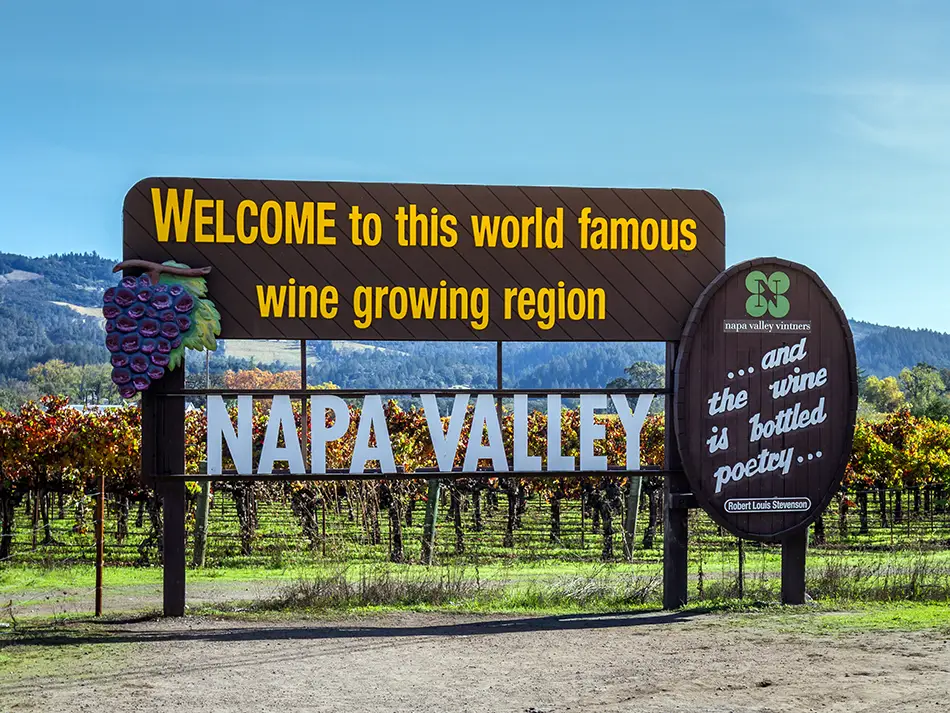
Napa Valley sits about 50 miles (80 km) north of San Francisco in northern California. It is a narrow valley roughly 30 miles (48 km) long, framed by the Mayacamas and Vaca mountain ranges.
The town of Napa at the valley’s southern end has developed a solid restaurant and hotel scene over the past decade. Further north, the towns of Yountville, St. Helena, and Calistoga offer upscale accommodation and dining concentrated in a small area.
Cabernet Sauvignon across 16 sub-appellations
Napa Valley is best known for Cabernet Sauvignon, with wines that consistently rank among the most expensive and critically praised in the world.
The 1976 Judgment of Paris tasting, where California wines from Napa Valley outperformed top French wines in a blind tasting, brought global recognition to the region. The valley has 16 recognized sub-appellations, including Stags Leap District, Oakville, and Rutherford, each with slightly different soil and climate conditions.
Chardonnay and Merlot are also widely produced. Beyond Cabernet, a handful of producers experiment with Rhone varieties and Italian grapes.
Over 400 wineries operate in Napa Valley. Large producers like Robert Mondavi, Stag’s Leap Wine Cellars, and Opus One offer structured visitor programs. Michelin-starred restaurants including The French Laundry in Yountville draw food and wine travelers from around the world.
Overall, Napa is one of the most polished and expensive wine travel destinations in the world. Infrastructure is excellent: the roads are maintained and most wineries offer clearly structured visitor experiences. The downside is the cost: tasting fees at many wineries typically range from about $50 to $200 (€46 to €185) per person, accommodation is expensive even by California standards, and weekend traffic on Highway 29 during summer can be significant.
6. Stellenbosch, South Africa
Cape Dutch architecture and mountain valleys
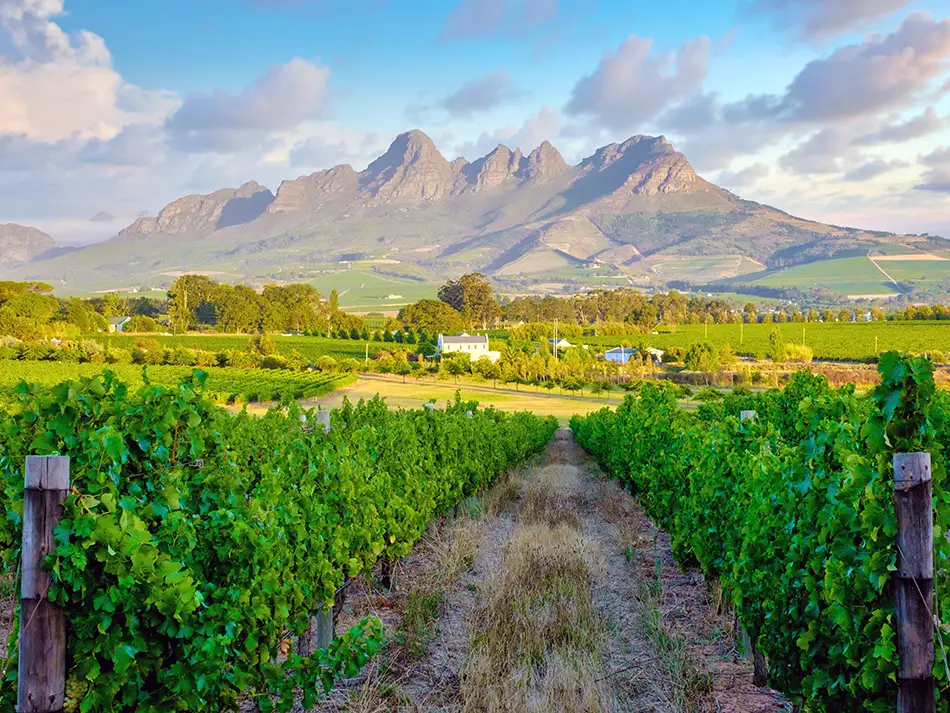
Stellenbosch lies about 30 miles (50 km) east of Cape Town in the Western Cape province of South Africa. The town was founded in 1679 and is one of South Africa’s oldest European settlements, with well-preserved Cape Dutch (Kaaps-Hollands) architecture along oak-lined streets. It also has a large university, which gives it an active cultural and social scene. The Stellenbosch Wine Region (Stellenbosch Wynland) extends into several surrounding mountain valleys including Simonsberg and Helderberg.
The combination of Cape Town’s urban attractions and the Stellenbosch wine country makes this pairing one of the more versatile wine tourism destinations in the world. The currency of South Africa has been weak against major currencies for several years, which makes Stellenbosch notably good value for international visitors.
Bush vine Chenin Blanc and Bordeaux-style blends
Stellenbosch is one of the most established and internationally recognized wine regions within the Cape Winelands. It produces Bordeaux-style red blends, Cabernet Sauvignon, Shiraz, and Chenin Blanc.
Chenin Blanc is South Africa’s most widely planted white variety. While historical references locally call it Steen, the grape appears in many styles ranging from dry and mineral to rich and oaked.
The wine scene here is genuinely innovative. Younger winemakers work with old bush vine Chenin Blanc while exploring minimal-intervention techniques. At the same time, they continue to respect and practice more classic production styles.
Estates like Kanonkop, Meerlust, and Warwick are established benchmarks. Newer names like Mullineux and Leeu Estates have drawn international critical attention. Tasting room fees are low by global standards, typically $5 to $20 (€4.50 to €18), and many estates include food pairings or cheese boards at modest additional cost.
7. Rioja, Spain (Haro)
Haro’s station quarter and Logrono tapas
La Rioja is a small autonomous community in northern Spain, roughly 60 miles (100 km) south of the Basque Country. The regional capital is Logrono, a compact city with a well-known tapas (pintxos in local Basque usage) street called Calle Laurel.
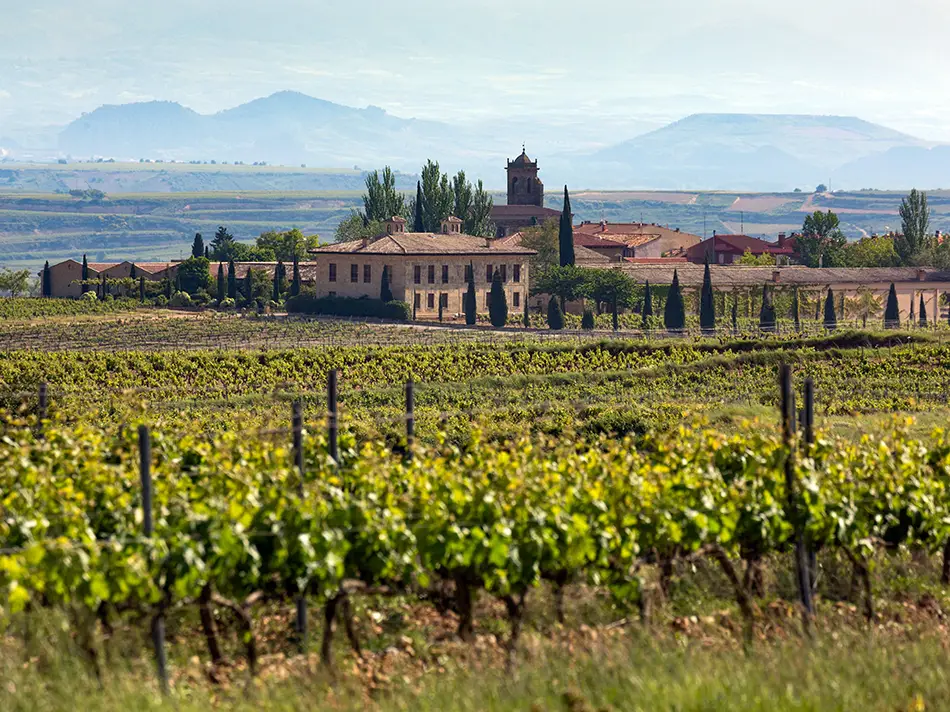
Haro, a smaller town in the western Alta Rioja zone, is considered the historic center of the Rioja wine trade. Several of the region’s oldest bodegas are clustered together in Haro’s Barrio de la Estacion (Station Quarter), built when the railway connected the region to export markets in the 19th century.
The Rioja region sits in a river valley between two mountain ranges: the Sierra de la Demanda to the south and the Cantabrian Range to the north, which together moderate the climate and shelter the vineyards from extremes.
Tempranillo, oak aging, and Crianza to Gran Reserva
Rioja holds the Denominación de Origen Calificada (DOCa) status, one of Spain’s highest wine classifications, and primarily produces red wines based on Tempranillo. This medium-bodied variety is known for its moderate tannins and distinct red fruit character.
The region classifies its wines based on the time they spend aging in oak barrels and bottles. Crianza wines age for at least one year in oak, while Reserva wines require two years of aging with at least one in oak. Gran Reserva wines must age for five years, including at least two in oak. This aging system traditionally creates a style with vanilla and spice notes often associated with American oak. However, modern producers now widely use both American and French oak across the region.
The region is also experiencing a shift toward modern-style wines with more fruit expression and shorter oak contact, particularly from newer producers in Rioja Alavesa and Rioja Alta.
8. Colchagua Valley, Chile
Santa Cruz, the Wine Train, and Andean views
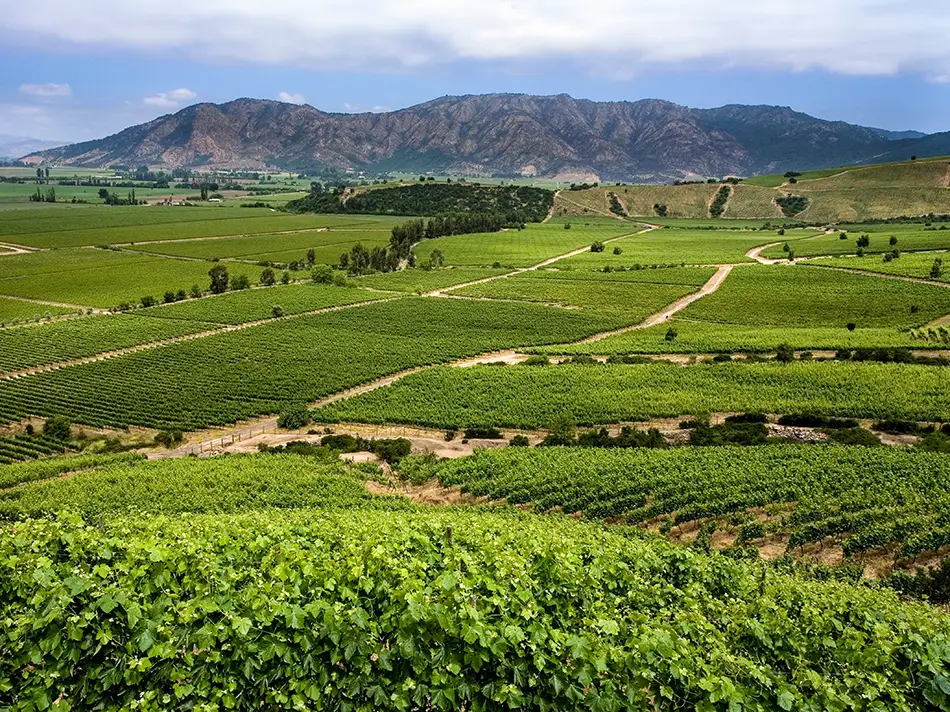
The Colchagua Valley (Valle de Colchagua) is located in central Chile, about 110 miles (180 km) south of Santiago. It sits within the larger Rapel Valley wine zone. The town of Santa Cruz is the regional center and home to the Museo de Colchagua, a well-known private museum featuring collections on Chilean history, pre-Columbian cultures, and natural history. The valley landscape is dry and agricultural, with the Andes visible to the east.
The Tren del Vino is a seasonal tourist train that runs between San Fernando and Santa Cruz, typically operating on weekends during the harvest season from March to April, using restored historic train carriages. Several of Chile’s most-discussed luxury wine estates are located in Colchagua, offering multi-day stays and a range of experiential activities.
Carmenere and luxury vineyard experiences
Colchagua Valley is known for Carmenere. This grape variety, originally from Bordeaux, was largely wiped out in Europe after the phylloxera crisis in the 19th century and was identified in Chile in the 1990s after being mistaken for Merlot.
It produces full-bodied reds with dark fruit and a distinctive green herb note that is reduced or absent in well-ripened examples. Cabernet Sauvignon, Merlot, Syrah, and Malbec are also widely planted.
The estate VIK, near Santa Cruz, is one of the most internationally visible wine projects in Chile, having appeared on lists of the world’s best wineries. It offers accommodation, guided tastings, horse riding, and hiking sold as full experience packages.
Other estates like Montes, Casa Lapostolle, and Viu Manent offer tastings from $15 to $60 (€14 to €55) with significantly lower commitment. Colchagua is increasingly appearing on wine travel bucket lists, though it remains less visited by international tourists than Mendoza or Napa.
9. Kakheti, Georgia
Ancient monasteries and Caucasus landscapes
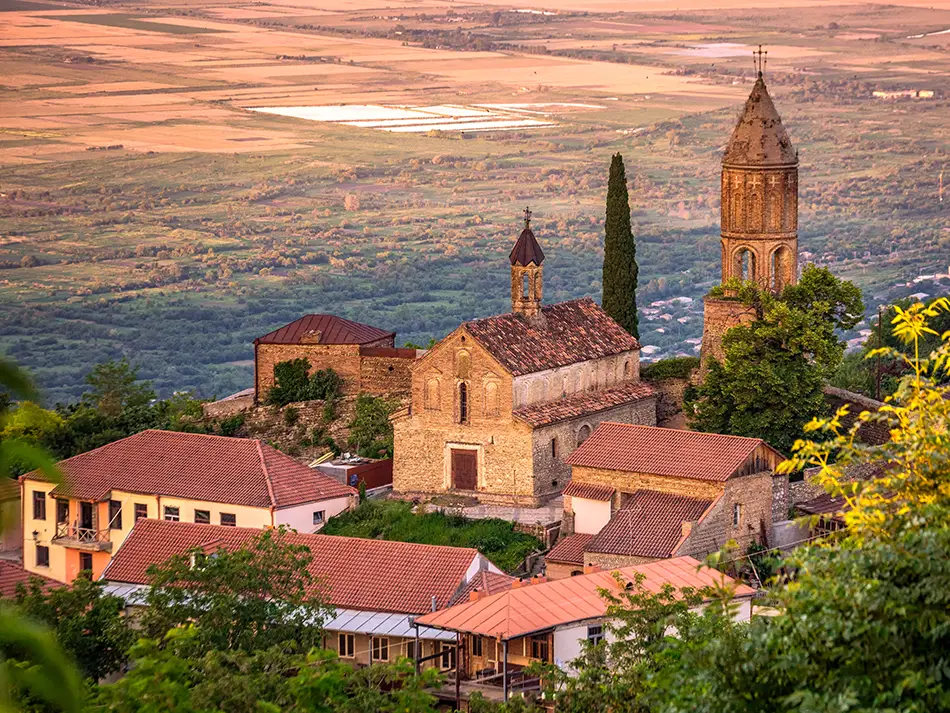
Kakheti is the eastern region of Georgia, located between the Greater Caucasus mountains to the north and the Gombori Range to the south. It borders Azerbaijan to the east. The regional capital is Telavi.
The landscape is a mix of broad valley plains, oak forests, and river gorges, with medieval fortresses, Orthodox monasteries, and ancient towns across the area. The territory of modern-day Georgia has been continuously inhabited since prehistoric times and has a long agricultural history.
Qvevri winemaking and 8,000 years of tradition
Georgia is considered by researchers to be the cradle of winemaking, with evidence of grape cultivation and fermentation dating back approximately 8,000 years.
The distinctive method used here is qvevri (kwev-ree) wine: grapes are fermented and aged in large clay vessels buried underground, without temperature control or added sulfites. The result for white wines is an amber-colored, tannin-rich style unlike anything produced in a conventional winery.
Rkatsiteli is the most planted white variety, used in both conventional and qvevri styles. Saperavi produces some of the most intensely colored red wines in the world. Wine is often sold directly at family farms at low prices, and informal home visits can be arranged in areas such as the Alazani Valley and around Kvareli. These visits often evolve into a traditional supra (feast), where the wine flows alongside the best dishes in Georgia, showcasing the country’s famous hospitality.
10. Salta, Argentina (High-Altitude Vineyards)
Colonial city, gorge roads, and the Train to the Clouds
The province of Salta sits in northwestern Argentina, close to the borders with Bolivia and Chile. The city of Salta has a well-preserved colonial center with Baroque-style architecture and a compact historic area around Plaza 9 de Julio.
The landscape changes dramatically as you travel from the city into the surrounding valleys and quebradas (ravines): red rock formations, pre-Columbian archaeological sites, cactus-covered hillsides, and high-altitude salt flats define the terrain. The Tren a las Nubes (Train to the Clouds) is a high-altitude tourist railway reaching about 13,800 feet (4,220 meters) at the Polvorilla Viaduct, and is one of Argentina’s most iconic train experiences.
Torrontes and high-altitude Malbec from Cafayate
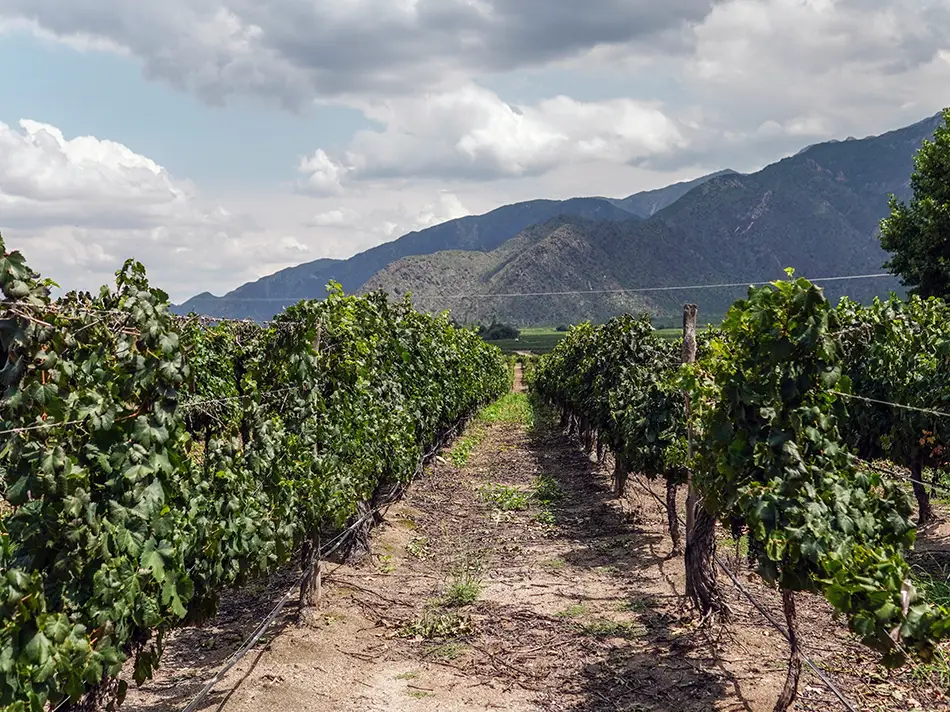
The Cafayate area within Salta produces wines at altitudes between 5,400 and 10,200 feet (1,700 and 3,100 meters), making them among the highest-elevation vineyards on Earth. The intense UV radiation, wide day-night temperature swings, and low rainfall create a unique growing environment.
Torrontes is the signature white variety of the region: aromatic, with floral and citrus character, though lower in acidity than many other aromatic whites. It is almost impossible to find grown at this quality level outside Argentina.
Malbec grown at these altitudes tends to be more structured and acidic than Mendoza Malbec, with darker fruit and a firmer tannin profile.
Several wine lodges in Cafayate offer stays with vineyard access, including the Patios de Cafayate Wine Hotel operated by Pena Flor. Tasting room visits at producers like Bodega El Esteco and Nanni typically cost $10 to $25 (€9 to €23). For travelers with an interest in rare terroirs and who want to combine wine with a genuinely adventurous landscape, Salta offers experiences that no European wine region can replicate.
11. Tokaj, Hungary
Quiet river confluence and volcanic tuff cellars
The Tokaj wine region (Tokaj-Hegyalja) sits in northeastern Hungary, close to the borders with Slovakia and Ukraine, in the foothills of the Zemplén Mountains. The town itself is small and quiet, located at the confluence of the Tisza and Bodrog rivers, which create the humid microclimate that enables the region’s most famous wine style. The surrounding area is rural and less developed for tourism than many Western European wine regions, with more limited infrastructure and services.
Tokaj is probably one of Europe’s most underrated wine travel destinations in terms of the ratio of quality and historical significance to the number of international visitors.
Tokaji Aszu, noble rot, and dry Furmint
Tokaj’s greatest wine is Tokaji Aszu, a sweet wine produced from grapes affected by Botrytis cinerea, commonly called noble rot. When conditions are right the botrytis mold dehydrates the grapes, concentrating their sugars and creating a complex network of flavors including apricot, honey, ginger, and dried citrus.
The Tokaj region also produces dry wines from Furmint, the main variety, which are gaining recognition for their high acidity and mineral complexity.
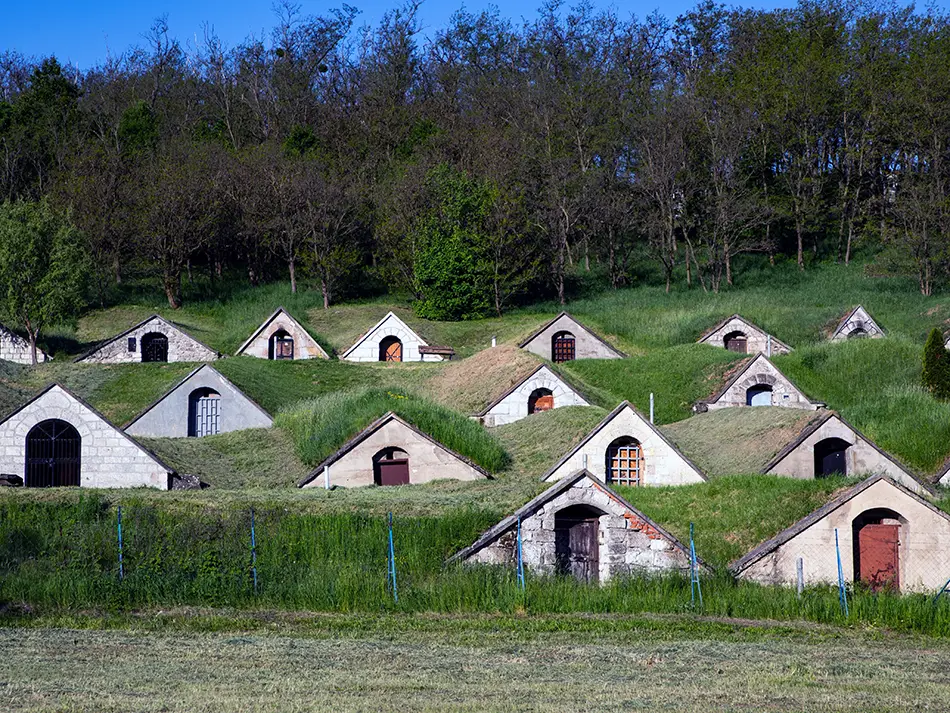
Several historic cellars cut into the volcanic tuff hillsides are open for tours, including the Royal Tokaj Company and Disznoko. Tasting fees are modest by Western European standards, typically $10 to $35 (€9 to €33).
12. Burgundy, France
The Cote d’Or and the villages that define world Pinot Noir
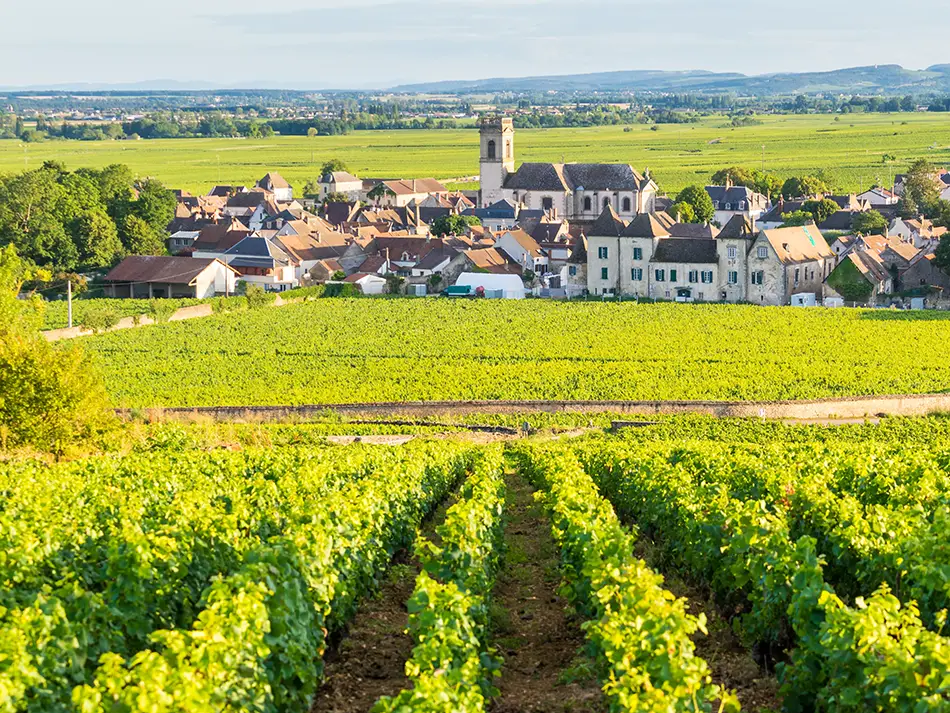
Burgundy (Bourgogne) runs in a north–south band through eastern France, about 200 mi (320 km) southeast of Paris. The main wine strip, the Côte d’Or, stretches between Dijon in the north and Santenay in the south — a compact corridor of small villages, each corresponding to a well-known wine appellation. Dijon serves as a practical base with a well-preserved historic center.
The Côte d’Or vineyards are best explored by car or bicycle. The Route des Grands Crus runs through the main wine villages along vineyard roads.
Pinot Noir, Chardonnay, and the Grand Cru hierarchy
Burgundy is a reference region for Pinot Noir and Chardonnay. The structure of the region is based on terroir, with vineyard sites classified into four levels: regional, village, Premier Cru, and Grand Cru. There are 33 Grand Cru vineyards, representing a small share of total production. One of the best-known is Romanée-Conti in Vosne-Romanée, which produces only a few thousand bottles per year.
Red wines from the Côte de Nuits and white wines from the Côte de Beaune are the core styles. Chablis, located in the northern part of Burgundy, produces Chardonnay with a more linear, high-acidity profile compared to the richer styles further south.
Wine prices are high, access to top producers is limited, and accommodation costs increase sharply during peak travel periods.
Planning Your 2026 Wine Trip
These destinations cover a wide range of travel styles, budgets, and levels of wine experience. If you are a first-time wine traveler, regions with strong tourism infrastructure such as Napa Valley, Stellenbosch, or Tuscany are among the most accessible entry points. More experienced travelers looking to go beyond the standard circuit can explore places like Kakheti, Tokaj, and Salta, where the experience is less crowded and more regionally distinct.
The best wine travel destinations 2026 has to offer are not just about what is in the glass. Culture, landscape, food, and history shape each region just as much as the wine itself.
Timing plays a key role. Harvest season, typically late August through October in the Northern Hemisphere and late February through April in the Southern Hemisphere, brings the most activity in the vineyards. Shoulder seasons such as spring and late autumn offer a quieter atmosphere and more relaxed tasting experiences.
With the right planning, a wine trip can go beyond a single region and give a broader view of how different environments shape wine.