Vung Tau sits about 125 km (78 mi) southeast of Ho Chi Minh City in Ba Ria–Vung Tau province. Close enough for a weekend escape from the city, far enough to have developed its own food identity. Most visitors arrive expecting a seafood town. What they find, if they move past the waterfront restaurant strips, is something more specific. The city offers a coastal cuisine built around a handful of dishes. In fact, these flavors do not exist in quite this form anywhere else in Vietnam.
People come to Vung Tau for its beaches, hills, and capes, and there is plenty to fill a trip beyond the table. However, eating through the local specialties is a major draw. For domestic tourists especially, this culinary journey remains one of the most rewarding things to do in Vung Tau.
What Makes Vung Tau Food Different
Fishing is a major industry here. Boats return to port daily, and the catch reaches local restaurants that same morning. This proximity to the water heavily influences local cooking. As a result, seafood like squid and crab appears more frequently in everyday dishes than in inland areas of southern Vietnam.
The French colonial period also left a permanent mark on the local diet. Consequently, the baguette is no novelty here. It serves as a breakfast staple, worked into several of Vung Tau’s most popular morning dishes. These preparations feel entirely Vietnamese rather than borrowed.
Strong coffee culture runs alongside it, with roadside cafés opening before sunrise to serve the fishing and oil industry workers who populate the city.
On weekends, Saigonese families arrive in large numbers specifically to eat. This consistent demand has created a highly competitive food scene. As a result, restaurants rely heavily on repeat domestic visitors and word-of-mouth reputation.
1. Bánh Khọt — Vung Tau’s Most Famous Dish
What Bánh Khọt Is and How It’s Made
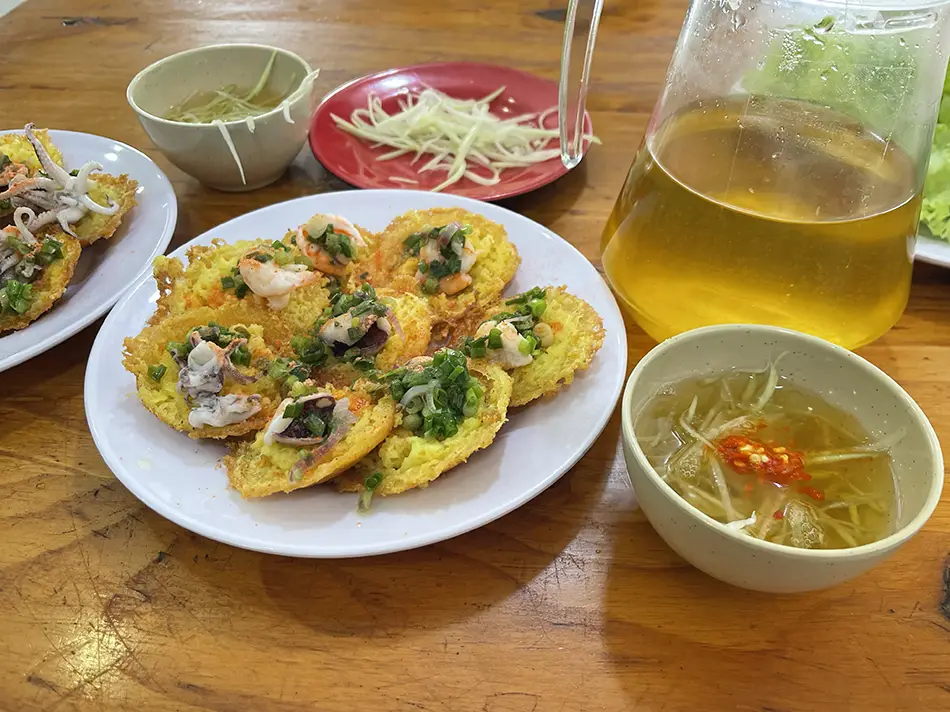
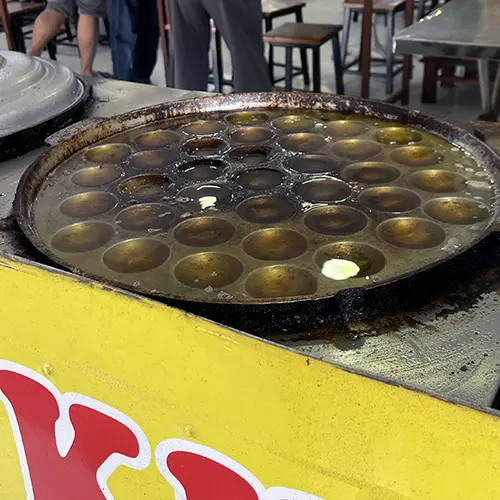
Bánh khọt are small, round savory pancakes made from a rice flour batter and fried individually in cast-iron molds. Vung Tau’s version differs from many others in Vietnam: the batter typically contains no turmeric, which keeps the pancakes pale rather than yellow. They are cooked in oil-filled molds, giving them a noticeably crisp exterior rather than a soft, steamed texture.
Each pancake is topped with a single shrimp, a scatter of dried shrimp powder, and a drizzle of scallion oil. Squid and mantis shrimp versions are also available at many spots, offering a variation on the classic shrimp topping. The pancakes arrive at the table hot from the mold, eight pieces to a plate. The kitchen fries continuously, ensuring the dish never sits on the plate in advance.
How to Eat Bánh Khọt (The Wrapping Ritual)
Every table receives a large plate of raw greens — typically lettuce, mustard leaves, perilla, mint, basil, and shredded green papaya with carrot. A small bowl of nước chấm (sweetened fish sauce with chili and lime) comes alongside.
The method is simple. First, take a large mustard leaf or piece of lettuce and add a few herb sprigs with a little papaya. Place a warm pancake on top before folding and rolling the whole thing into a bundle. Finally, dip it in the fish sauce.
The greens cool the pancake slightly while adding a bitterness that cuts the oil. Without them, the dish feels heavy. With them, however, each bite hits a perfect balance.
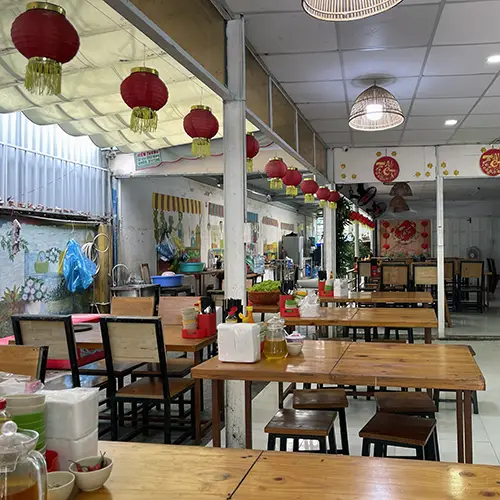
Where to Find the Best Bánh Khọt in Vung Tau
- 📍Bánh khọt Gốc Vú Sữa (14 Nguyễn Trường Tộ)
This legendary open-air stall is the definitive local landmark for the dish, consistently verified by decades of high-volume foot traffic and traditional charcoal-fire cooking methods that modern restaurants rarely replicate. It gets very crowded. - 📍Bánh khọt Cô Ba Vũng Tàu (1 Hoàng Hoa Thám)
Widely recognized across Vietnamese culinary directories as the premium standard for quality, this establishment is trusted for its rigorous food safety standards and its expansive, garden-style seating that accommodates large groups without sacrificing authentic flavor.
Subjective Opinion
In my last visit I ate at 📍Quán Bánh Khọt Cây Đa. The restaurant is a long-established local spot.
The owner gave me an informal demonstration of how to assemble the rolls — a small gesture that made the whole thing click into place.
The greens were refilled without asking, multiple times, which matters because you need a lot of them. The pancakes were properly crispy and the shrimp fresh. They were also oily — noticeably so — which is the honest reality of the dish. It is not a light meal.
2. Gỏi Cá Mai — Raw Fish You Build Yourself
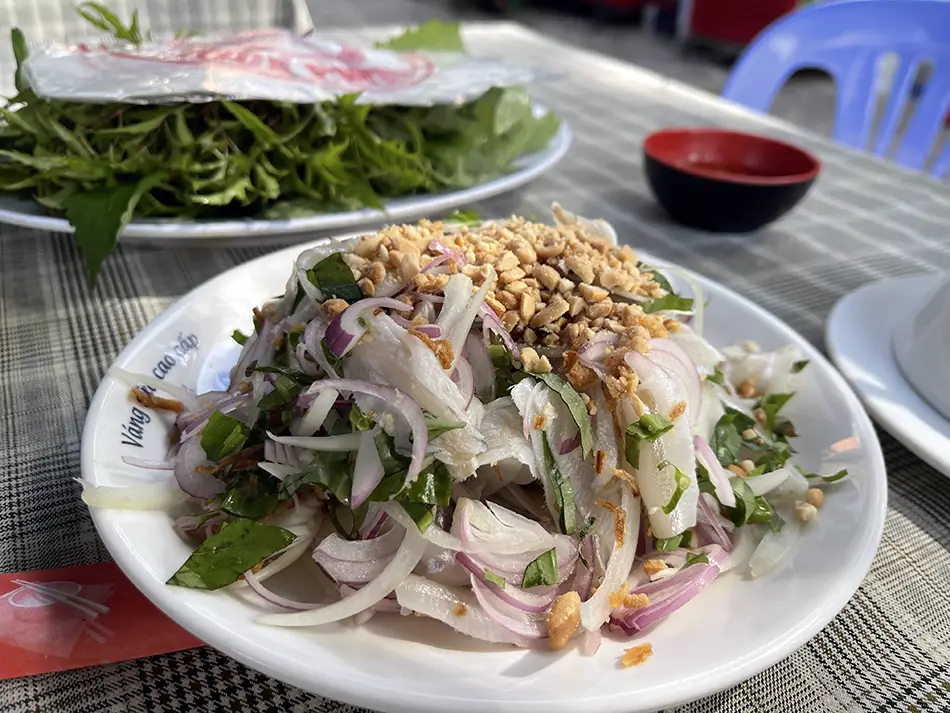
Gỏi cá mai is one of the most misrepresented dishes in Vung Tau food guides. Writers routinely describe it as a fish salad, which suggests a bowl of dressed ingredients. However, it is an interactive set — similar in format to a spring roll station — where diners assemble each bite from scratch.
Cá mai is a small coastal fish, scaleless, about the length of a finger, similar in appearance to a white sardine or anchovy but milder and with firmer flesh. The fish is filleted, deboned — a labor-intensive process — and cured in lime juice or vinegar until the flesh turns white, a process similar to ceviche. It is then mixed with sliced onion, roasted rice powder (bột thính), crushed peanuts, and aromatics. The curing significantly reduces the fishiness and gives the dish a clean, lightly sour flavor.
The table receives a bowl of the cured fish mix, a large pile of herbs (perilla, mint, Vietnamese balm, lettuce), rice paper, and a dipping sauce built from fish sauce, lime, garlic, chili, and crushed peanuts.
Where to try Gỏi Cá Mai in Vung Tau
- 📍Quán ăn Mai Vườn Xoài (34/5 Hoàng Hoa Thám)
Tucked away in a small alley, this long-standing establishment is widely regarded by culinary critics as the gold standard for the dish, specifically praised for its secret dipping sauce recipe and meticulously deboned, translucent fish.
Subjective Opinion
I tried gỏi cá mai at 📍Quán Gỏi Cá Ba Hưng for 100K VND ($3.8 / €3.3) per portion.
The fish-to-onion ratio at this particular restaurant leaned toward onion — something worth noting. The fish itself was present but the sharpness of the onion dominated within the mix. The dish came alive, however, once rolled in rice paper with a generous amount of the fresh herbs and dipped in the sauce.
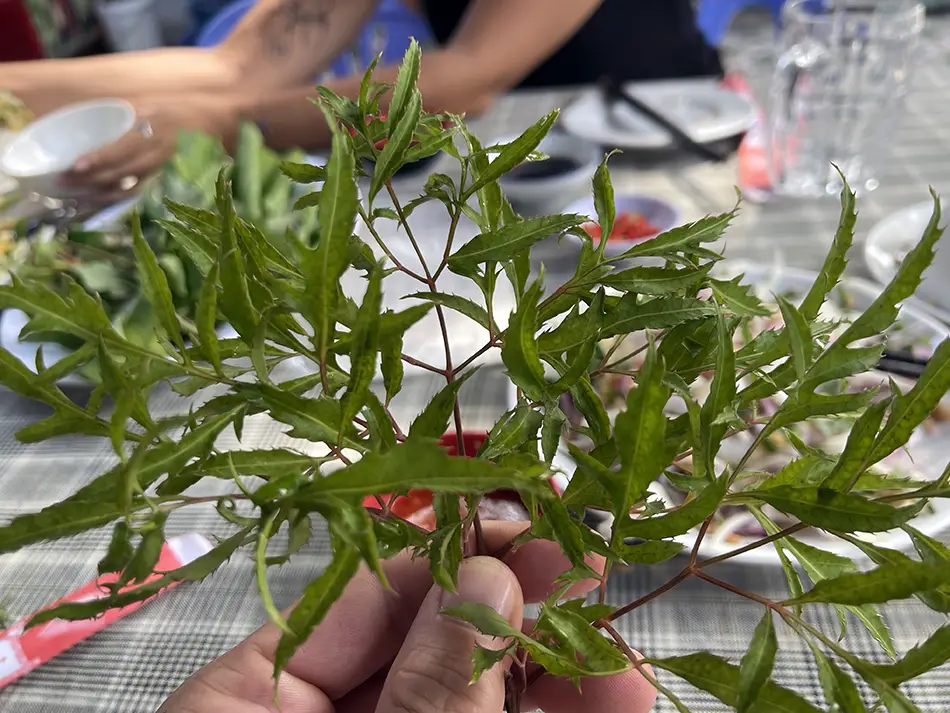
Among the herbs was đinh lăng — Vietnamese ginseng in name, though botanically unrelated — a leaf I had not encountered before. Its flavor is distinctive, adding a slightly bitter, aromatic note that lifts the whole roll.
Of everything eaten in Vung Tau, this dish had the highest novelty score. There is nothing quite like it.
If this kind of novelty is what you travel for, our guide to the 35 best dishes to try in Vietnam has plenty more.
Hàu Né and Cháo Hàu — Two Ways to Eat Oysters
Vung Tau has a strong oyster tradition, with a few preparations standing out as local favorites.
3. Hàu Né.
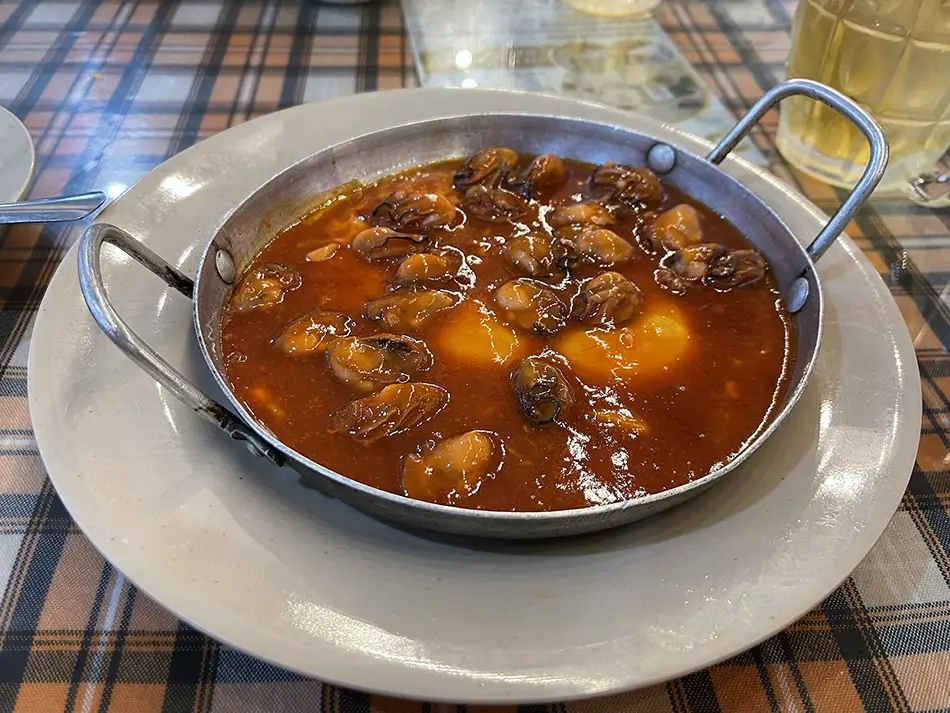
The name refers to the sizzling cooking style, and the dish arrives in a hot cast-iron pan. Plump oysters are cooked in a savory sauce, often tomato-based, with eggs cracked directly into the pan until just set. It comes with bánh mì for tearing and dipping into the sauce and yolk. Filling, savory, and direct.
Where to try Hàu Né in Vung Tau
- 📍Hàu Né Tâm Nguyễn (4 Lê Lợi)
Locals trust this widely cited spot for its consistent quality, even after it moved from the original Hoàng Diệu location to a larger, more comfortable space on Lê Lợi street. - 📍Hàu Né Long Sơn (3 Hoàng Diệu)
Local review platforms frequently recommend this spot, and diners trust its “farm-to-table” sourcing from nearby Long Son oyster rafts, which ensures exceptionally plump and fresh oysters.
Subjective opinion
I tried it at 📍Hàu Né Tâm Nguyễn, a large open-air restaurant near the park across from Front Beach. The size of the portion was decent.
Oysters were cooked through without turning rubbery. It reminded me of shakshuka — the same idea of eggs poached in a hot savory sauce — cooked in an entirely Vietnamese way.
One pan plus bread came to 45,000 VND (~$1.80 / €1.65).
4. Cháo Hàu
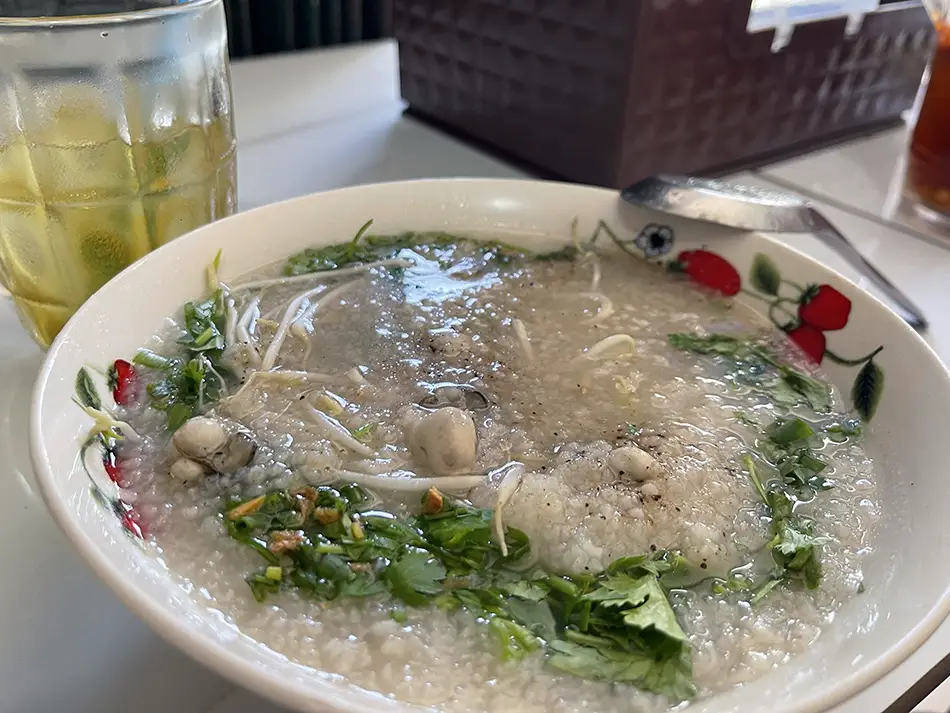
Cháo Hàu is oyster porridge — slow-cooked rice with fresh oysters, fragrant with ginger and scallion, topped with crispy fried shallots and a drizzle of fish sauce. The texture is thick and silky, closer to a congee than a soup. In Vung Tau, it is a morning dish — the kind locals return to after an early walk along the seafront or before the working day begins.
It is comfort food in the most practical sense: warm, filling, and inexpensive enough to eat daily. The oysters are added late in the cooking process to keep them tender, carrying a natural salinity that needs little seasoning beyond what arrives at the table.
Subjective opinion
I tried a bowl in a small local spot downtown(📍Cháo Hàu Bích Lam Trần Đồng), paying 45K VND ($1.7 / €1.5).
The oysters carried a distinct brininess and the texture of the porridge was noticeably slimy in a way that is part of the dish rather than a flaw. It is an interesting bowl, honest in flavor, and worth trying once.
5. Bánh Canh Ghẹ — Crab Noodle Soup
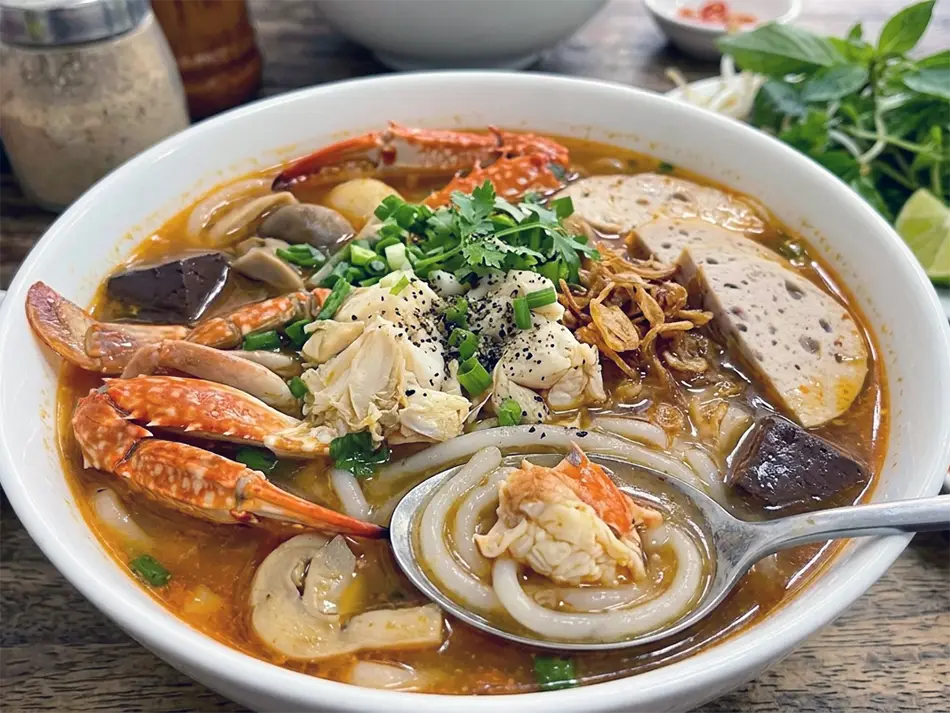
Bánh canh ghẹ is one of Vung Tau’s most recognizable bowls and the one most likely to stop a traveler in their tracks at a street-level noodle shop. The noodles are thick, chewy, and made from rice or tapioca flour — closer to udon in texture than to the thin rice noodles common in pho. A base of crab shells, simmered to extract a natural sweetness and often thickened slightly with starch, gives the broth a rich, lightly viscous consistency.
Kitchens use locally caught blue swimmer crab, known as ghẹ. The meat is pulled from the shell, sometimes mixed with crab roe, and added to the bowl along with crab-paste dumplings, crispy shallots, and fresh herbs. A squeeze of lime goes in at the table.
Where to try Bánh Canh Ghẹ in Vung Tau
- 📍Bánh Canh Ghẹ Ngọc Lâm (73 Lê Lai)
Vietnamese culinary forums widely cite this establishment for its exceptionally rich, thick broth simmered from fresh seafood and its commitment to using hand-peeled crab meat delivered daily from local markets. - 📍Bánh Canh Ghẹ Anh Vy (109 Võ Thị Sáu)
A consistent favorite among local foodies, this spot is trusted for its chewy, transparent noodles and a signature dipping sauce that perfectly complements the generous portions of whole crab or crab cakes served in every bowl.
6. Hủ Tiếu Mực — Squid Noodle Soup
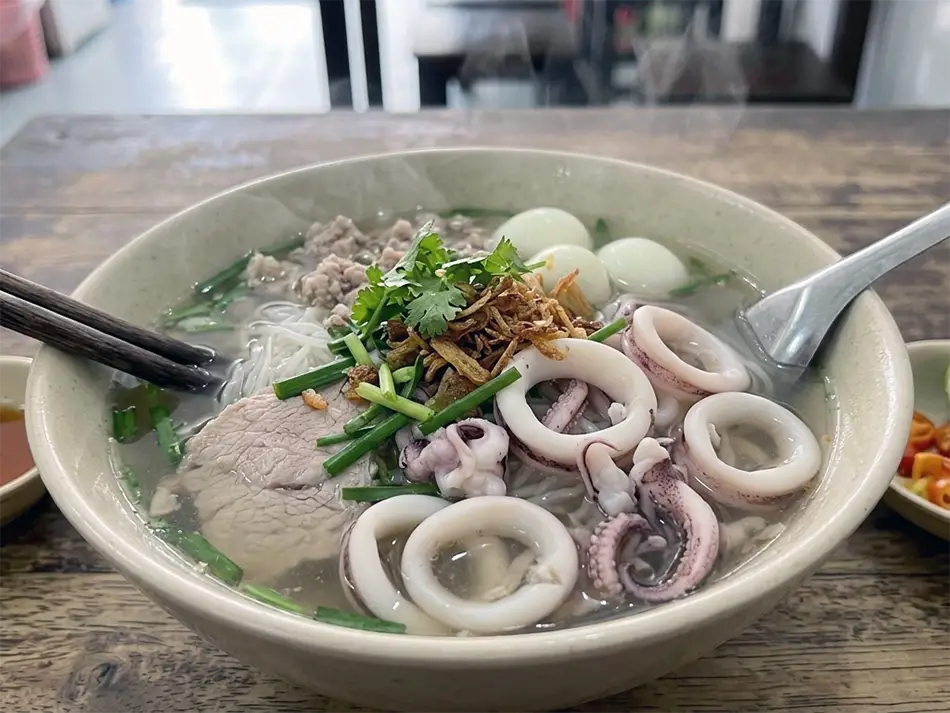
Hủ tiếu is a noodle soup found across southern Vietnam, but in Vung Tau a local variation highlights fresh squid alongside the usual pork-based broth. The broth is clear and light, built from pork bones but finished clean rather than rich. The noodles are thin and slightly translucent. Rings of squid, one or two quail eggs, green onion, cilantro, and white pepper go in at service.
What separates the Vung Tau version is the squid itself — often very fresh — which holds its texture well without turning rubbery. Common condiments include green chili salt and soy sauce, which can be added to taste or used as a dipping sauce for the squid.
Where to try Hủ Tiếu Mực in Vung Tau
- 📍Hủ Tiếu Mực Ông Già Cali (113 Hoàng Hoa Thám)
As the most iconic brand in the city with a presence spanning years, this establishment is the primary reference point for its consistently high standards of hygiene and its signature “snappy” fresh squid that has earned it thousands of verified local and tourist reviews. - 📍Thuan Phuc Seafood Noodle (73 Hoàng Hoa Thám)
Vietnamese culinary experts widely cite this restaurant as the top choice for a premium experience. Diners trust the kitchen for its unique dry-style noodles and its commitment to high-quality seafood toppings like large cuttlefish and savory meatballs.
7. Bánh Bông Lan Trứng Muối — The Salted Egg Sponge Cake
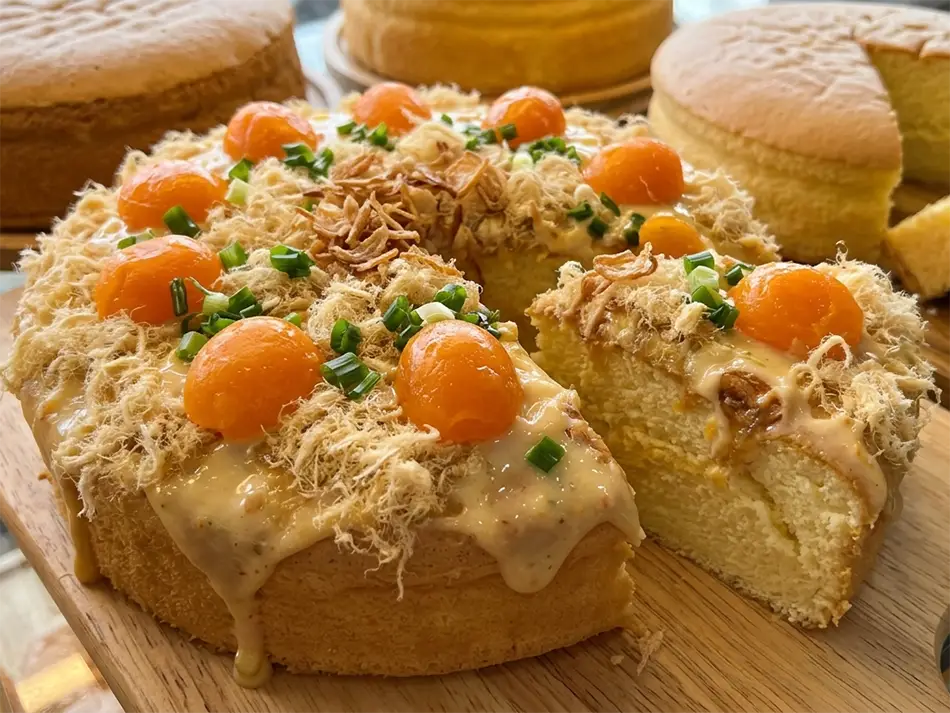
Bánh bông lan trứng muối is one of Vung Tau’s most recognizable food specialties. The cake is small — roughly cupcake-sized — with a soft, airy sponge base made from wheat flour, eggs, butter, and milk. On top sits a salted duck egg yolk (trứng muối), sometimes accompanied by shredded pork floss and a thin layer of processed cheese.
The salted yolk has a sandy, richly fatty texture that contrasts with the sweetness of the sponge beneath it. The combination is distinctive and strongly associated with Vung Tau, though it is now found across Vietnam.
Prices run around 30K VND ($1.1 / €1) per cake. They are sold at numerous bakeries throughout the city, and from street carts near the main beaches. For many domestic visitors making the trip from Ho Chi Minh City to Vung Tau for the weekend, they are a popular takeaway — it’s common to see people leaving with boxes of them.
Where to try Bánh Bông Lan Trứng Muối in Vung Tau
- 📍Gốc Cột Điện (17B Nguyễn Trường Tộ)
This 1960s-era landmark is universally cited as the founding shop of the specialty, trusted by generations for its traditional cast-iron molds and charcoal-firing technique that produces a signature smoky aroma.
[PHOTO: Bánh bông lan trứng muối — small golden sponge cakes topped with salted egg yolk and pork floss, displayed at a Vung Tau bakery | alt text: Bánh bông lan trứng muối — Vung Tau’s famous salted egg sponge cake at Gốc Cột Điện bakery]
8. Lẩu Cá Đuối — Stingray Hotpot
Lẩu cá đuối — stingray hotpot — is widely highlighted in travel guides as one of Vung Tau’s must-try communal dinner dishes. The preparation is genuinely local: stingray cooked in a broth of sour bamboo shoots, tamarind, and herbs, served at the table in a simmering pot with vermicelli, rice crackers, fresh herbs, and chili.
Eco Reminder
Most travel guides don’t mention this, but stingrays belong to the broader group of sharks and rays, one of the most threatened groups of marine animals globally. Around one-third of these species are classified as Vulnerable, Endangered, or Critically Endangered, with overfishing as the primary cause.
The decision to order is yours, but it’s worth knowing before you do.
Fresh Seafood in Vung Tau — and How to Eat Without Getting Overcharged
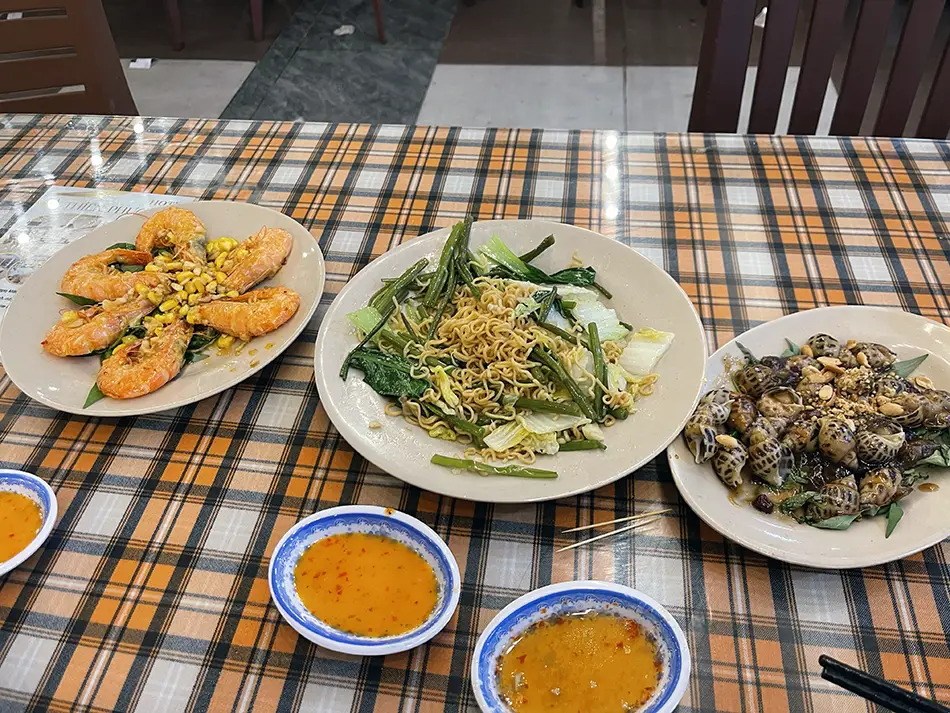
Vung Tau has a deserved reputation for fresh seafood. It also has a reputation among travelers for occasional overcharging at seafood restaurants, particularly along the waterfront. Both things are true simultaneously.
If a seafood restaurant quotes you a price per kilogram for live shellfish or whole fish, ask the exact weight before they cook it. The most common complaint is discovering the “market price” at the table is significantly higher than expected.
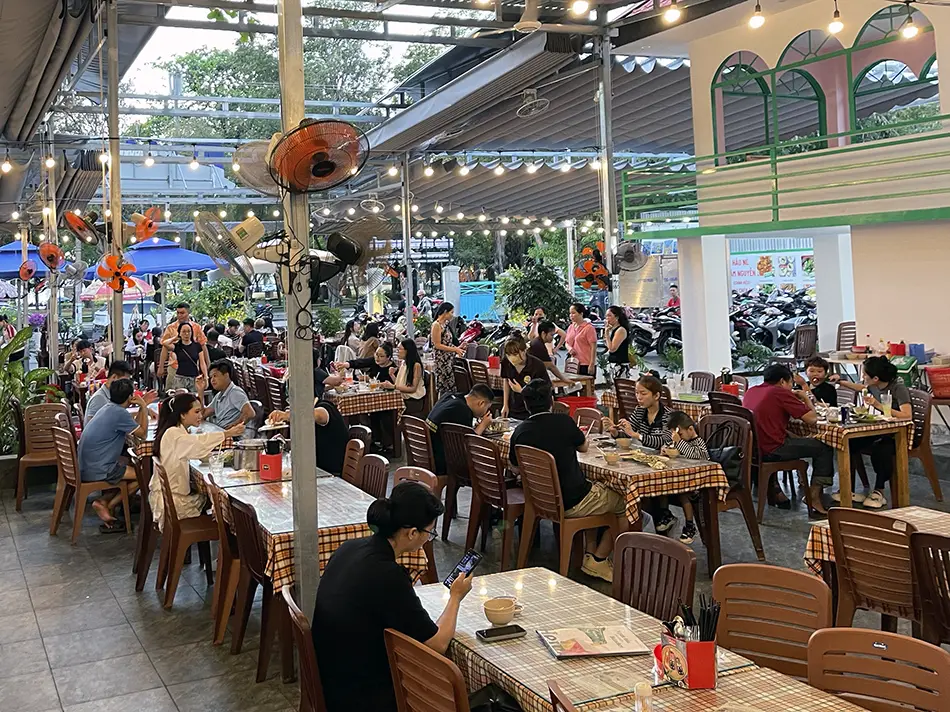
The best strategy is to eat where locals eat after dark. The restaurants that fill up with Vung Tau families on a Tuesday evening are not running tourist pricing.
Insider Tip
If you want a ground-tested starting point, 📍Hàu Né Tâm Nguyễn — just across the park from Front Beach — is worth knowing about. It is a large, well-run local seafood spot that fills with Vung Tau families after sunset and sees very few foreign visitors
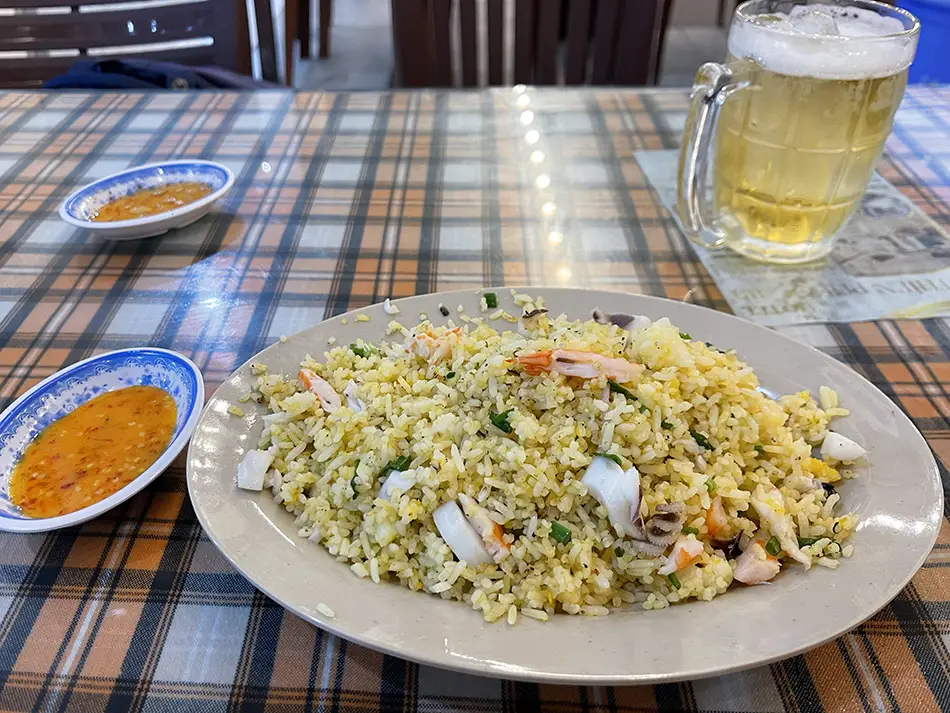
Beyond the signature oyster dish, I ordered shrimp, seafood rice, and snails across two visits — all between 45,000 and 90,000 VND (~$1.80–$3.60 / €1.65–€3.25) per plate.
The snails came stir-fried with butter, the seafood rice was straightforward and filling, and the shrimp were the standout — grilled over high heat, slightly charred at the edges.
The menu runs to around 20 pages covering clams, hotpot options, and more. Food arrives fast.
How Much Does Food Cost in Vung Tau?
The price gap between local restaurants and tourist-facing seafood spots on the waterfront can be significant for the same quality of ingredients. A realistic breakdown by category:
Street food and local noodle shops: 40–80K VND ($1.5–$3 / €1.3–€2.6) per dish. This covers a plate of bánh khọt, a bowl of hủ tiếu mực, or oyster porridge.
Local seafood restaurants (away from the waterfront): 50–150K VND ($1.9–$5.7 / €1.6–€4.9) per plate. Shrimp, snails, clams, crab dishes, and squid fall in this range.
Established seafood restaurants (waterfront, Ganh Hao-tier): 150–500K+ VND ($5.7–$19+ / €4.9–€16.5+) per dish for premium items such as whole crab, lobster, or large prawns. Prices are not always listed and should be confirmed before ordering.
Realistic daily food budget for Vung Tau: A traveler eating two full meals and a snack at local spots should spend 200–350K VND ($7.6–$13.3 / €6.6–€11.5) per day without difficulty. One meal at a waterfront seafood restaurant can double or triple that.
🚨Vung Tau Night Market (Important Update)
The night market on Hạ Long Street, referenced in many older travel guides as a good cheap-eating destination in Vung Tau, is no longer operating as of April 2026.
A development project has occupied the site. I asked around locals during my visit and they confirmed no replacement had opened. If you find a guide or blog still listing the Vung Tau night market as active, it is out of date.
When to Eat What in Vung Tau
Vung Tau’s food culture is structured around time of day in a way that matters practically. Several dishes are only available in the morning and are sold out by noon.
Morning (6 a.m. – 11 a.m.): Bánh khọt shops open early and most are busiest between 7 and 10 a.m. Hủ tiếu mực is a breakfast dish — dedicated shops often close by midday. Hàu né is a morning staple and restaurants serving it open at daybreak. Cháo hàu (oyster porridge) is also a morning dish at most local spots.
Midday (11 a.m. – 2 p.m.): Bánh canh ghẹ (crab noodle soup) is at its best at lunch when the broth is freshest. Gỏi cá mai is available through the afternoon at dedicated restaurants. This is also the best window for a sit-down meal at a local rice restaurant (cơm bình dân) where full plates of grilled fish, stir-fried vegetables, and soup come in at 50–80K VND ($1.9–$3 / €1.6–€2.6)
Evening (5 p.m. – late): Seafood restaurants fill after sunset. This is the time for shrimp, snails, grilled squid, and shared platters with cold beer. Local restaurants are at their most alive from 6 p.m. onward. Street snacks — grilled corn, and sweet soups — appear near the beaches as the temperature drops.
While these timings reflect the city’s long-standing culinary traditions, the surge in tourism has shifted the landscape, leading many iconic shops to adapt their hours and make traditional morning specialties accessible throughout the entire day to meet traveler demand.
Planning Your Time Around Vung Tau Food
One day in Vung Tau is enough to eat well if it is structured. Start with crispy mini rice pancakes in the morning — arrive before 9 a.m. at the more famous spots to avoid waiting. Follow it with a bowl of squid noodle soup at a local shop nearby. Save the afternoon for the raw fish roll set.
A weekend gives room to add the salted egg sponge cake from 📍Gốc Cột Điện, a morning bowl of oyster porridge, and a proper crab noodle soup at lunch.
For everything else the city has to offer beyond the table, see our complete guide to the best things to do in Vung Tau.