Finding the Best things to see in Vietnam is often the first step for those researching a trip or specifically visiting the country in 2026. This guide collects the most iconic sites to help you shape a functional itinerary.
While these landmarks are the most famous one, remember that this list is not everything. Minor, less-known destinations often provide the most personal stories, so consider exploring off the beaten path locations as well.
Natural Attractions in Vietnam
Ha Long Bay–Cat Ba Archipelago
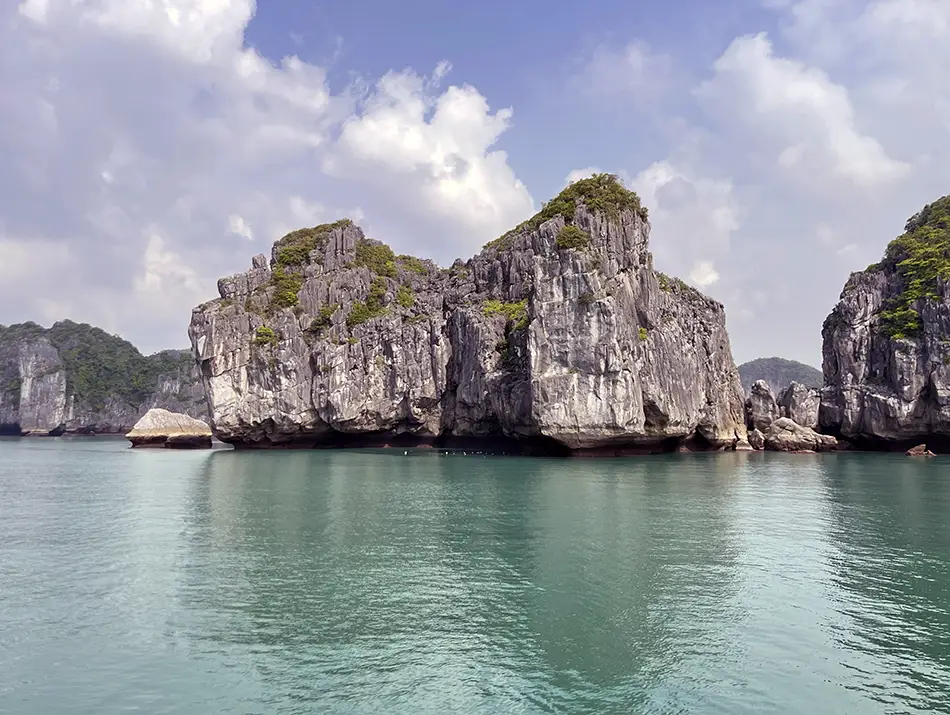
This maritime region is one of the most famous Vietnam World Heritage Sites due to its vertical limestone towers. These karst formations rise directly from the water and create a dense maze of over 1,600 islands. The scale of the landscape is vast, and the way the light interacts with the frequent morning mist creates a visual experience that is hard to find elsewhere.
Visitors typically explore the area on overnight cruise ships or day boats. You can kayak into hidden lagoons or visit large caverns filled with rock formations. It is important to know that the main shipping lanes are very busy, and water pollution is a visible issue in some of the more popular harbors.
For a quieter experience, many travelers now head toward Lan Ha Bay which shares the same geography but has fewer large vessels.
- Boat cruise price range: VND 1,200,000–10,000,000 ($45.5–381 / €39–324.5) depending on duration and luxury level. Cheaper day trips are widely available starting from Cat Ba Island.
Phong Nha–Ke Bang Caves
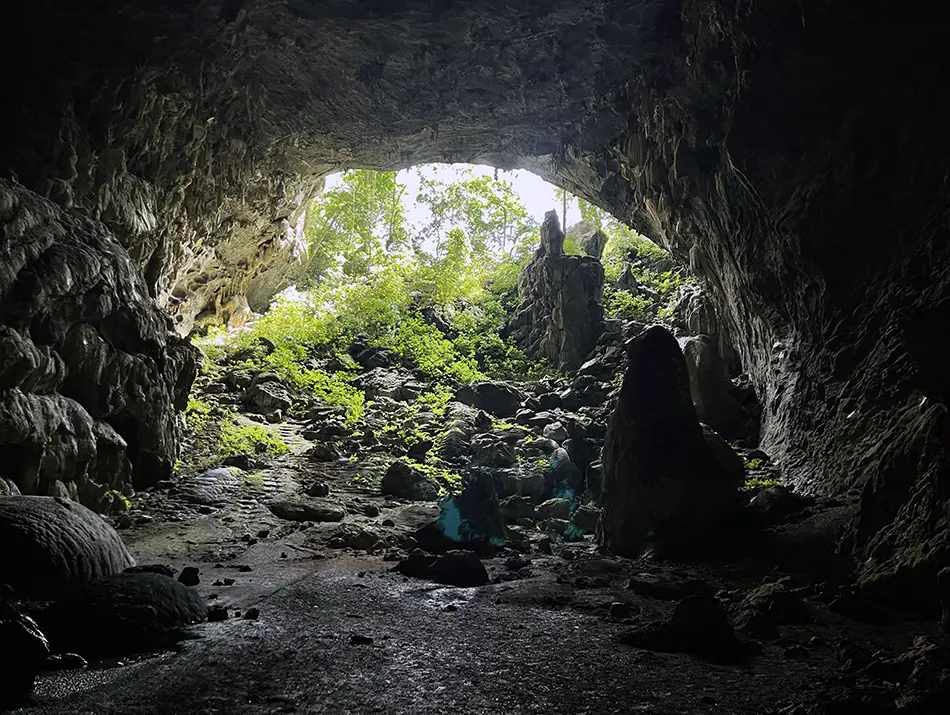
This national park contains some of the most extensive cave systems on the planet. It is a key location among Vietnam tourist attractions for those who enjoy geology and underground exploration. The park holds the world’s largest cave along with many others that feature underground rivers and massive stalactites.
A visit here offers various levels of physical activity depending on the cave you choose. You can take boat trips into the river caves or join multi-day trekking expeditions into the deeper jungle. Many sites such as Paradise Cave are easily accessible by land using electric buggies and wooden walkways.
The local village has a growing number of hostels and small hotels for those staying several nights.
Trang An Landscape Complex
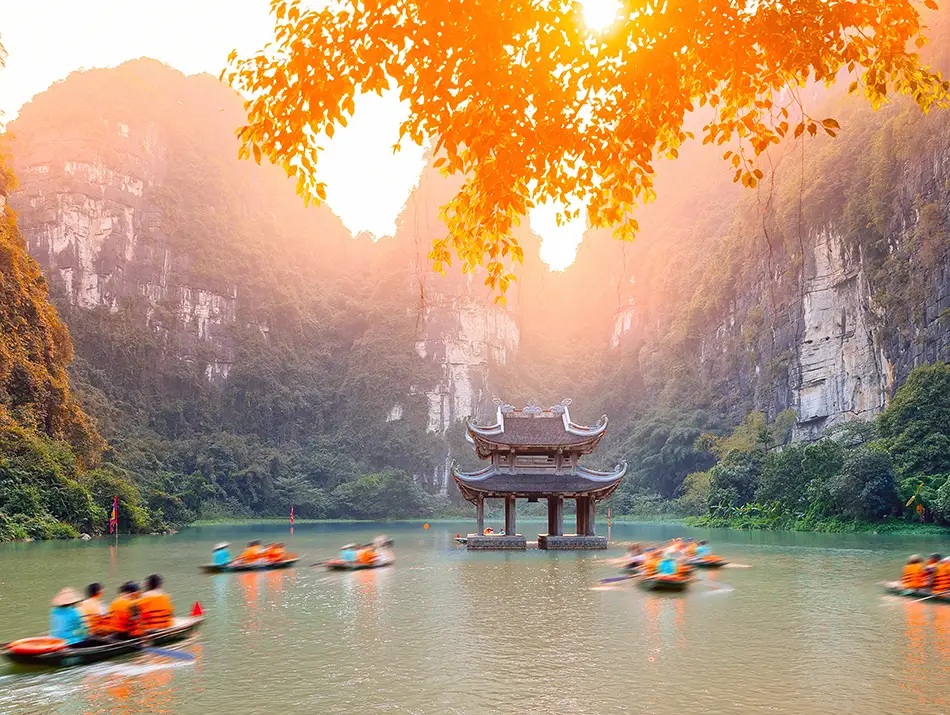
Trang An is a unique flooded landscape where limestone peaks are surrounded by slow-moving rivers. It is one of the most recognizable natural attractions in Vietnam because of its dual status as a cultural and natural heritage site. Ancient temples are built directly into the cliffs and caves, showing a long history of human residence.
The primary way to see this area is by sitting in a small paddle boat steered by a local rower. You will pass through low-roofed caves where you must duck your head to avoid the rock ceiling. The tours usually last between 2 and 3 hours.
- Located near: Ninh Binh City
- Entry ticket: VND 250,000 ($9.5 / €8)
- 📍Trang An on Google Maps
Ban Gioc Falls
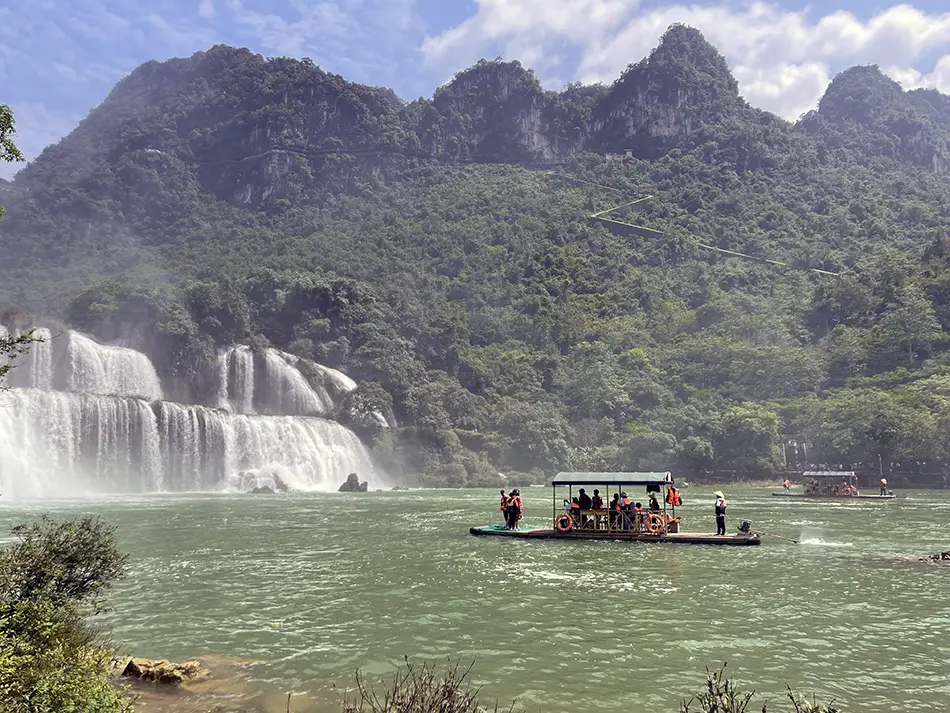
These are Must-See Landmarks in Vietnam because they represent one of the largest border-spanning waterfalls in the world. The water drops over multiple tiers and is framed by green karst hills. The site is shared with China, and you can see travelers on the opposite bank only a short distance away across the river. To reach the base of the falls, you can board a bamboo raft that takes you into the mist created by the falling water.
While it can be visited as a long day trip from Hanoi, it is also a popular overnight option. Staying longer allows you to explore the surrounding Non Nuoc Cao Bang UNESCO Global Geopark and the nearby Nguom Ngao Cave, a massive limestone system with unique orange-tinted stalactites located just a few kilometers from the falls.
Choosing an overnight stay in a local homestay or resort also provides a more relaxed pace to experience the rural landscape and ethnic minority culture of the region.
- Located in: Ban Gioc
- Entry ticket: VND 45,000 ($1.5 / €1.5)
- 📍Ban Gioc Waterfall on Google Maps
Fansipan
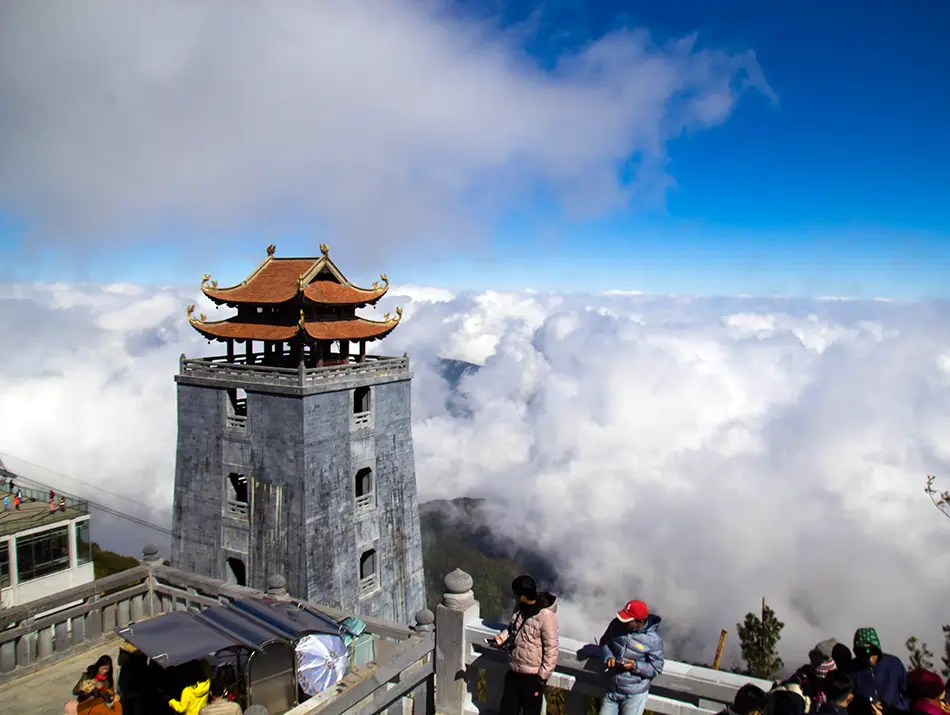
Rising to 10,326 feet (3,147 meters), this peak is the highest point in the region and a staple among the top attractions in Vietnam. It serves as the signature peak of the Hoang Lien Son (Hoàng Liên Sơn) range. The summit area features a complex of modern Buddhist temples and large statues that look out over the surrounding clouds.
Most visitors reach the top via a high-altitude cable car system that takes about 15 minutes. While the ride offers wide views of the rice terraces below, the summit is frequently covered in thick fog. It is common for travelers to reach the top and find zero visibility.
For those seeking a physical challenge, the summit can also be reached as a hike. This typically requires a guided trek lasting between one and two days starting from the Tram Ton pass.
The temperature at the peak is significantly lower than in the valley so heavy clothing is necessary even in the summer months.
- Located in: Sapa
- Cable car ticket: VND 850,000 ($32.5 / €27.5)
Con Dao National Park
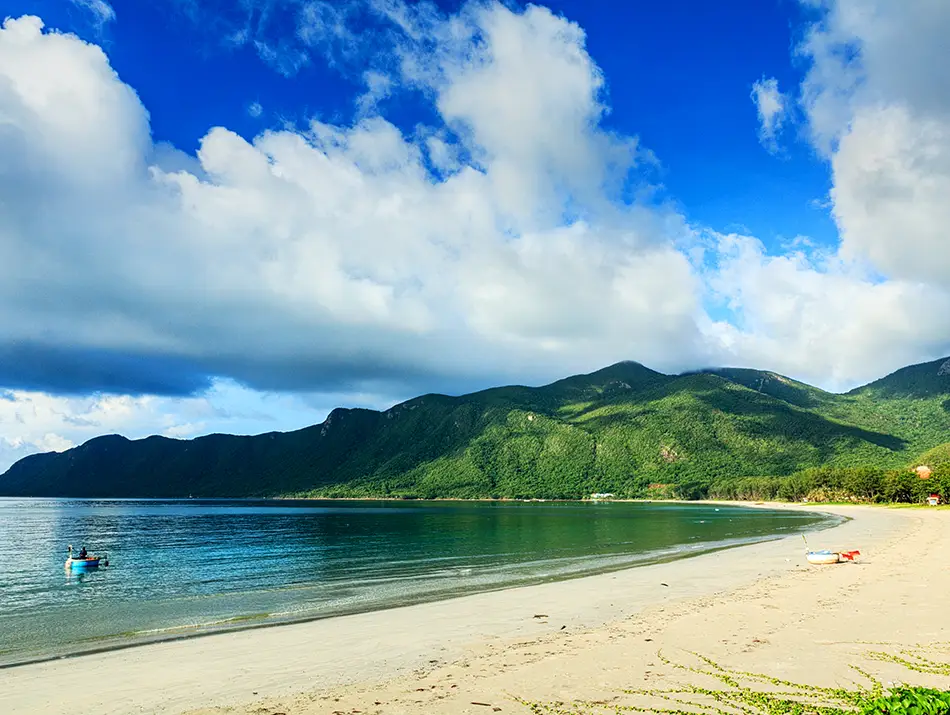
This island group is a vital marine sanctuary and one of the primary Vietnam tourist attractions for nature enthusiasts. It is known for its coral reefs and as a nesting ground for green sea turtles. The islands have managed to stay less developed than other coastal areas, preserving a quiet environment with clear water and coastal forests.
You can visit the beaches to watch the turtle conservation efforts or go snorkeling in the protected waters. Access to the island is mostly by small planes or a ferry ride. The nightlife and shopping options are very limited, as the focus here is strictly on quiet nature and history.
- Ferries depart from: Vung Tau, Soc Trang (Tran De)
Terraced Rice Fields of Sapa and Mu Cang Chai

These vertical farms are the result of a long collaboration between humans and the natural environment. Ethnic minority groups carved these steps into the steep mountain slopes over many generations to grow rice. They are considered essential natural attractions in Vietnam due to the way they transform the rugged landscape into a structured, green pattern.
Trekking is the standard way to experience these fields. You will walk along narrow dirt paths that can become very slippery after rain. The appearance of the terraces changes with the seasons, appearing as pools of water in the spring and turning yellow during the autumn harvest.
Be aware that the main trails in Sapa are very commercialized, with many local vendors following tourists for long distances to sell handicrafts.
- Located in: Lao Cai and Yen Bai Provinces
Human Made Attractions in Vietnam
Hoi An Ancient Town
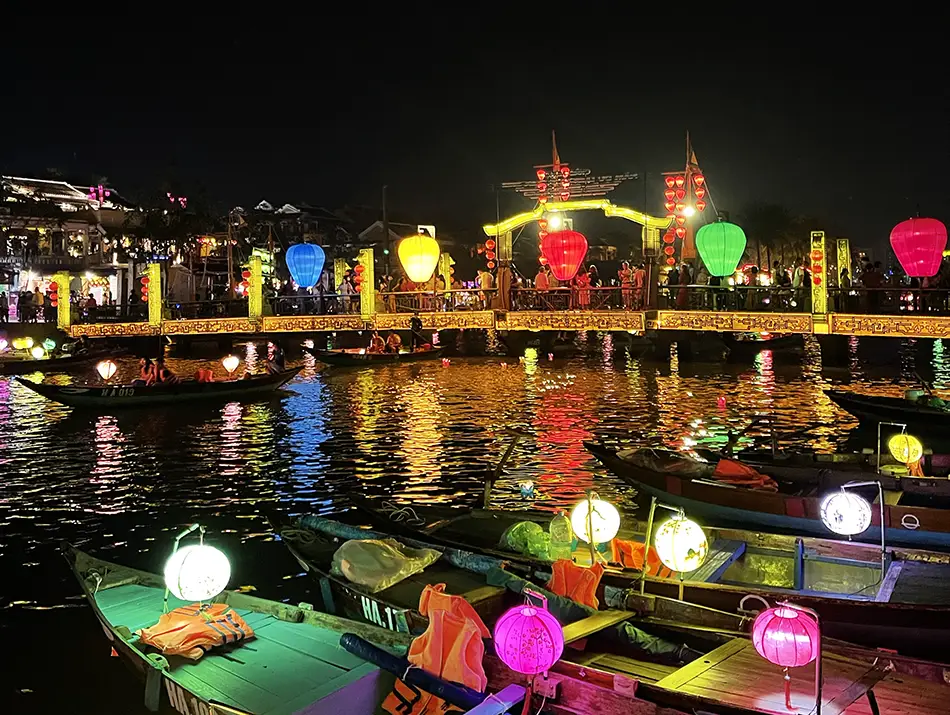
Hoi An Ancient Town is a remarkably well-preserved example of a Southeast Asian trading port from the 15th century. The architecture is a mix of Vietnamese, Chinese, and Japanese styles. It is a highlight of the Vietnam World Heritage Sites because the original street plan and many of the wooden buildings remain intact today.
Walking through the car-free streets allows you to see old assembly halls and a covered bridge from the 1500s. At night, the town is lit by thousands of traditional lanterns. However, the town has become extremely popular, and the crowds during the evening hours can make it difficult to move through the narrow alleys. For a quieter experience with fewer crowds, visiting on the weekdays is recommended.
- 📍Hoi An Ancient Town on Google Maps
Complex of Hue Mausoleums
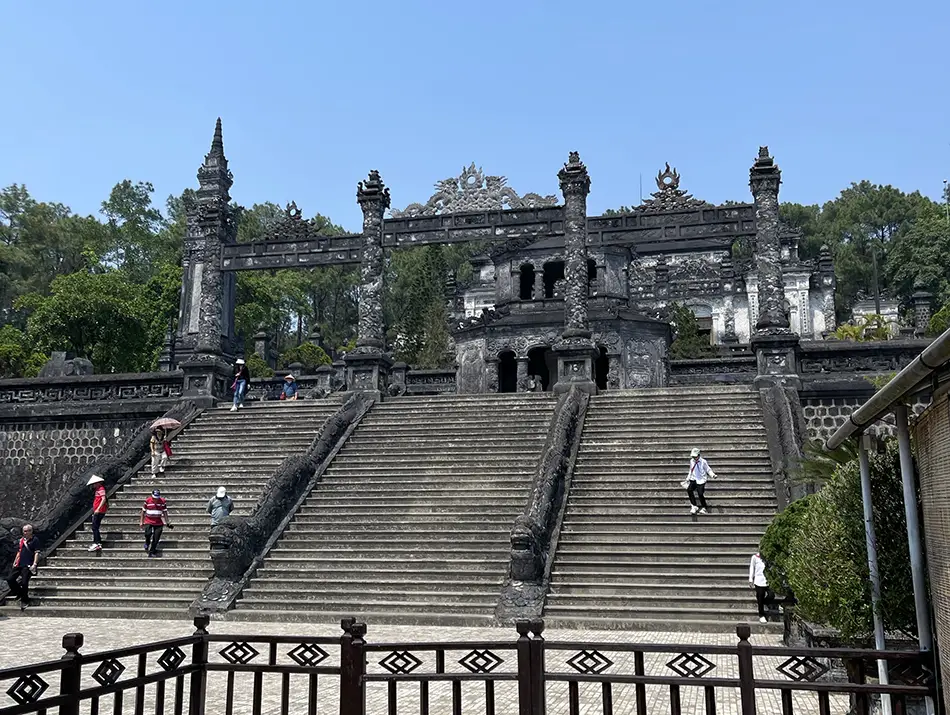
This imperial complex served as the political and cultural center of the Nguyen Dynasty. The site includes the walled citadel and the elaborate tombs of former emperors. It is one of the most significant Vietnam tourist attractions for those interested in the royal history of the 19th and early 20th centuries.
You can walk through the massive gates and see the remains of the Forbidden Purple City. Each royal tomb is located in a different area outside the city center, often surrounded by lakes and pine forests.
- Located in: Hue
- Entry ticket: VND 200,000 ($7.5 / €6.5) for the Citadel; combo tickets (Citadel + 3 Tombs) are available for VND 530,000 ($20 / €17)
- 📍Hue Imperial City (The Citadel) on Google Maps
My Son Sanctuary
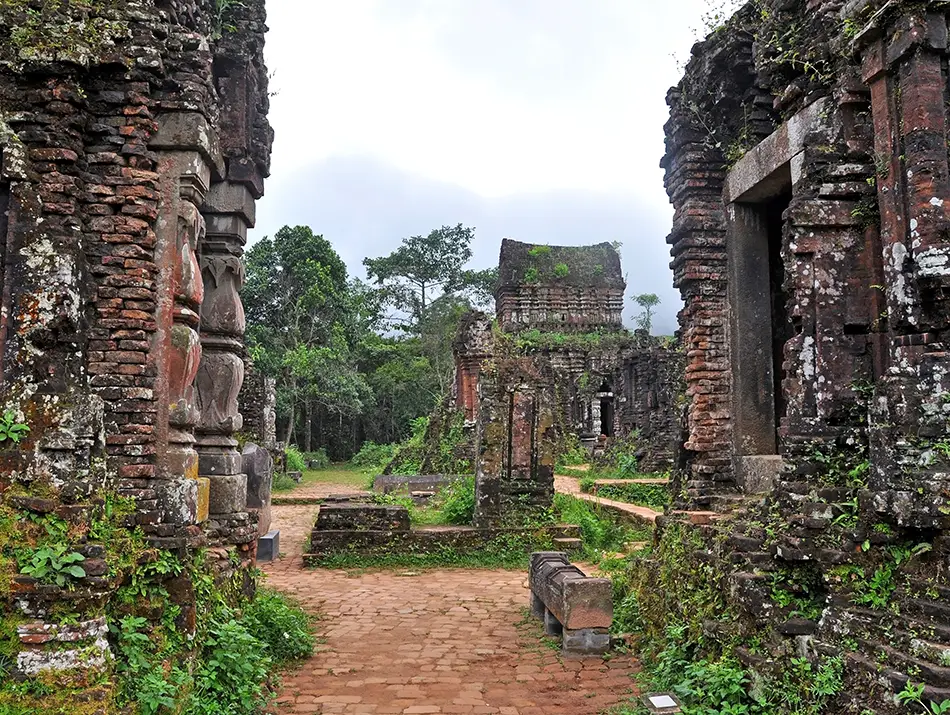
My Son is a cluster of abandoned Hindu temples built by the Champa civilization between the 4th and 14th centuries. These brick towers are set in a green valley and represent one of the most important architectural sites in Southeast Asia. It is a key stop for those visiting the historical attractions in Vietnam.
When you visit, you can see the detailed carvings on the red bricks and the evidence of past archaeological work. The site is much smaller than Angkor Wat in Cambodia, and many of the structures were heavily damaged by aerial bombing during the war. There is very little shade at the site, so the heat can be intense by mid-morning.
- Located near: Hoi An
- Entry ticket: VND 150,000 ($5.5 / €5)
- 📍My Son Sanctuary on Google Maps
Imperial Citadel of Thang Long
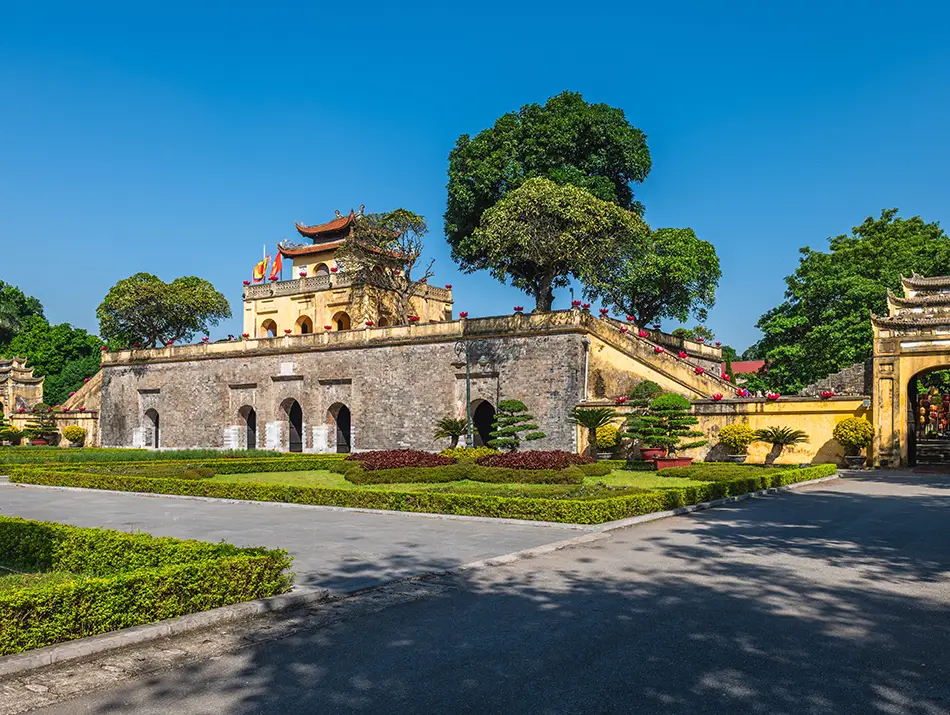
This central seat of power has been used for over 1,000 years. It is a unique historical site because archaeologists have found layers of different dynasties buried directly on top of each other. It is an essential stop among the Must-See Landmarks in Vietnam for anyone visiting the capital city.
The experience involves walking through large stone gates and visiting underground bunkers used during modern wars. You can also view archaeological pits where old ceramics and building foundations are still being excavated. The site is less visual than the citadel in Hue, as fewer above-ground buildings have survived the centuries, requiring more reading of the informational plaques to understand the context.
- Located in: Hanoi
- Entry ticket: 30,000 VND ($1/€1)
- 📍Thang Long on Google Maps
Vinh Moc Tunnels
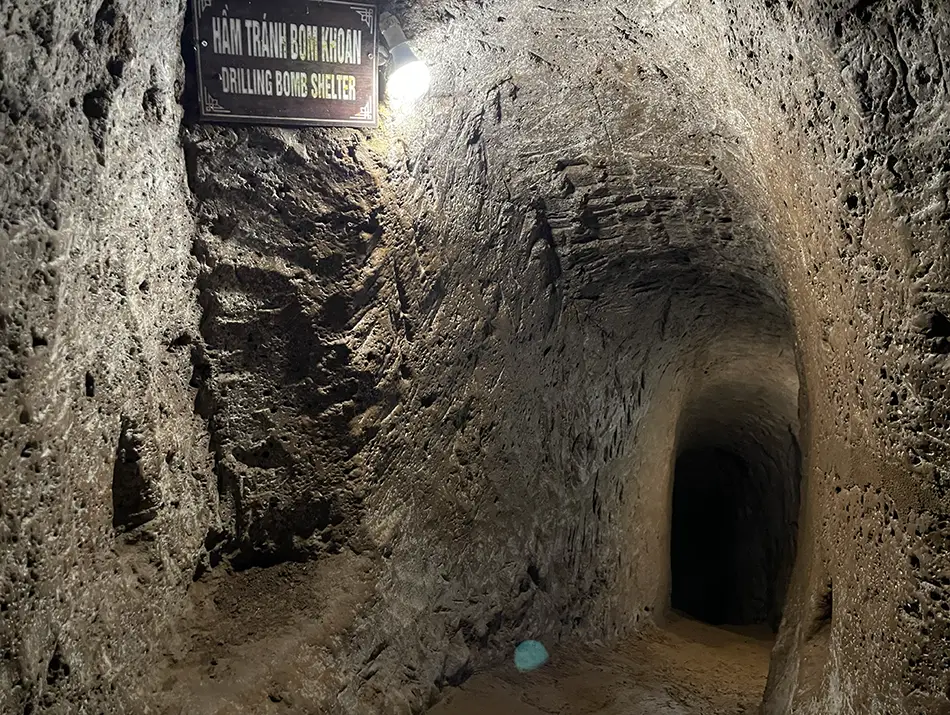
These tunnels were built as an underground village to protect a local community from heavy bombing during the 1960s. Unlike other tunnel systems used for combat, these were designed for families to live in. They are part of the historical attractions in Vietnam located near the former Demilitarized Zone (DMZ).
You can walk through the three levels of tunnels, which reach depths of nearly 100 ft (30 m). Inside, you will see small rooms that served as kitchens, clinics, and living spaces. The air is very humid and the ceilings are low, which can feel very claustrophobic. The site is a 2 hour drive from the nearest city, making it a long day trip.
- Located near: Dong Ha
- Entry ticket: 40,000 VND ($1.5/€1.4)
- 📍Vinh Moc Tunnels on Google Maps
War Remnants Museum
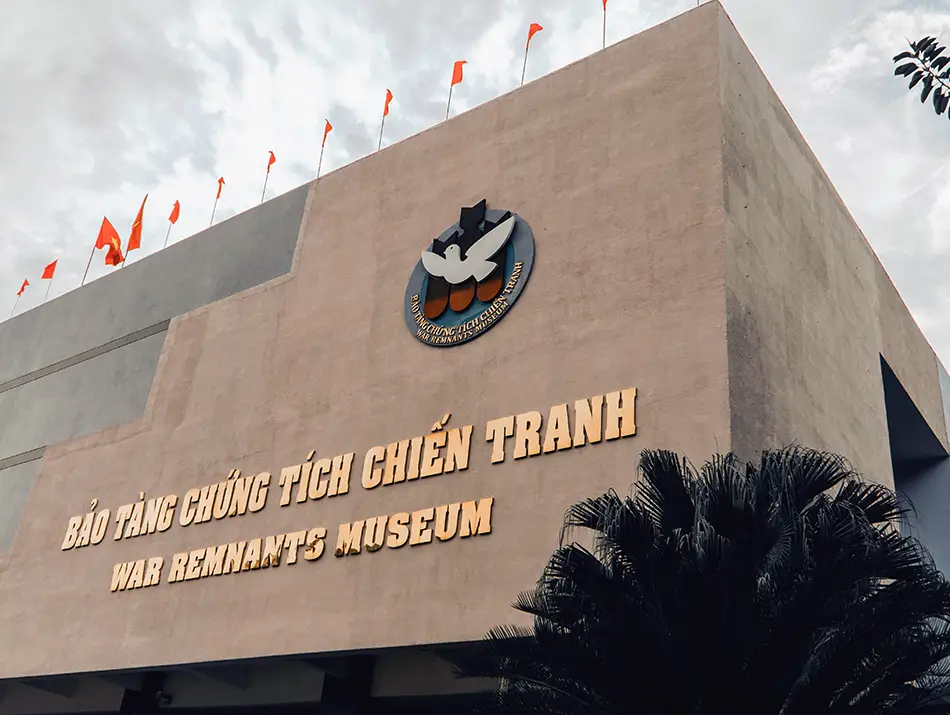
This museum provides a documented history of the modern conflicts in the region. It is one of the most visited Vietnam tourist attractions in the southern part of the country.
Outside the building, you can see tanks and aircraft from the 20th century. Inside, the galleries show the international anti-war movement and the long-term effects of the conflict on the landscape. The content is very heavy and includes graphic photographs, so it may not be suitable for all visitors.
- Located in: Ho Chi Minh City
- Entry ticket: 40,000 VND ($1.5/€1.4)
- 📍War Remnants Museum on Google Maps
The Golden Bridge
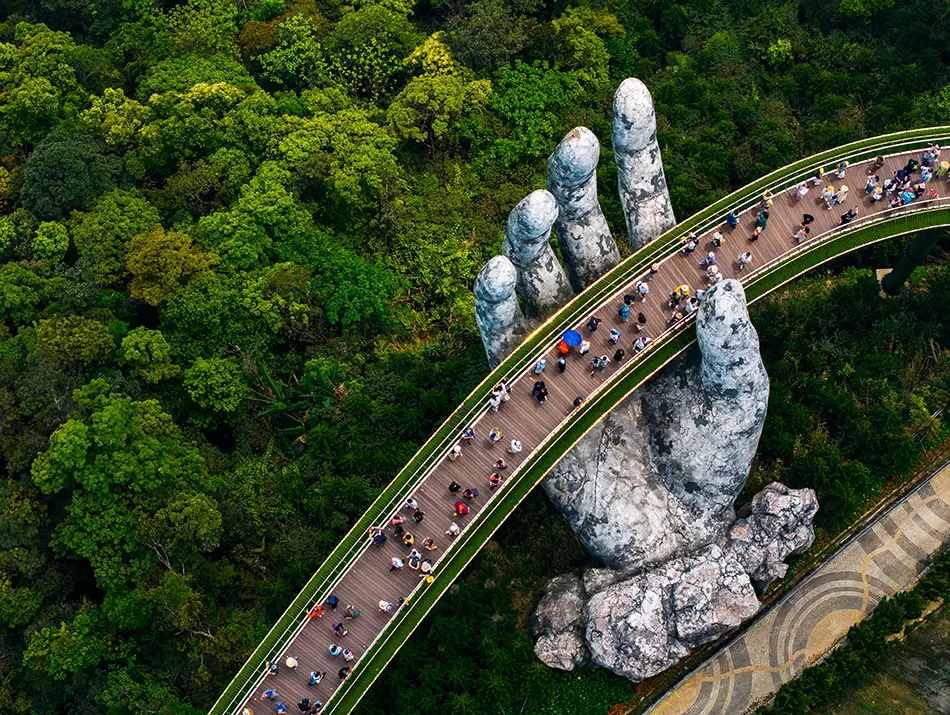
Located high in the mountains at the Ba Na Hills theme park, this walkway is supported by two massive stone-colored hands. It is one of the most photographed Landmarks in Vietnam due to its unusual design. The bridge is 490 ft (150 m) long and sits at an altitude of about 4,600 ft (1,400 m).
To reach the bridge, you must take a long cable car ride through the forest. On a clear day, you can see the coastline in the distance. However, the bridge is part of a large theme park, so it is almost always crowded with hundreds of people taking photos. The weather changes rapidly, and the hands are often completely obscured by thick clouds for hours at a time.
- Located near: Da Nang City
- Entry ticket: VND 900,000 ($34.5 / €29) as part of the theme park ticket.
- Other beautiful bridges in Vietnam here
- 📍Ba Na Hills on Google Maps
The Crazy House
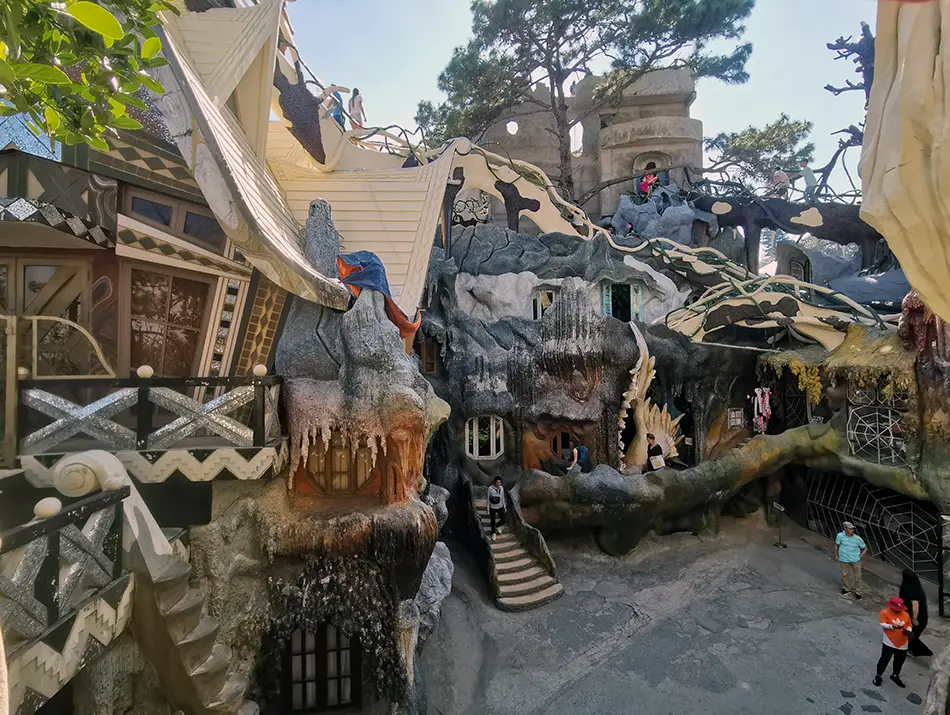
This building is an example of expressionist architecture that resembles a giant tree with organic, flowing shapes. It is a unique landmark among the things to see in Vietnam because it rejects standard geometric rules. The design includes spiderweb windows and rooms themed after different animals.
Visitors can walk along narrow, high-altitude bridges that connect the different parts of the house. It is an active guesthouse, so some areas are restricted, but the majority of the labyrinthine hallways are open to the public. The stairs are often very steep and uneven.
- Located in: Dalat City
- Entry ticket: VND 60,000 ($2.5 / €2)
- 📍The Crazy House on Google Maps
Bitexco Financial Tower
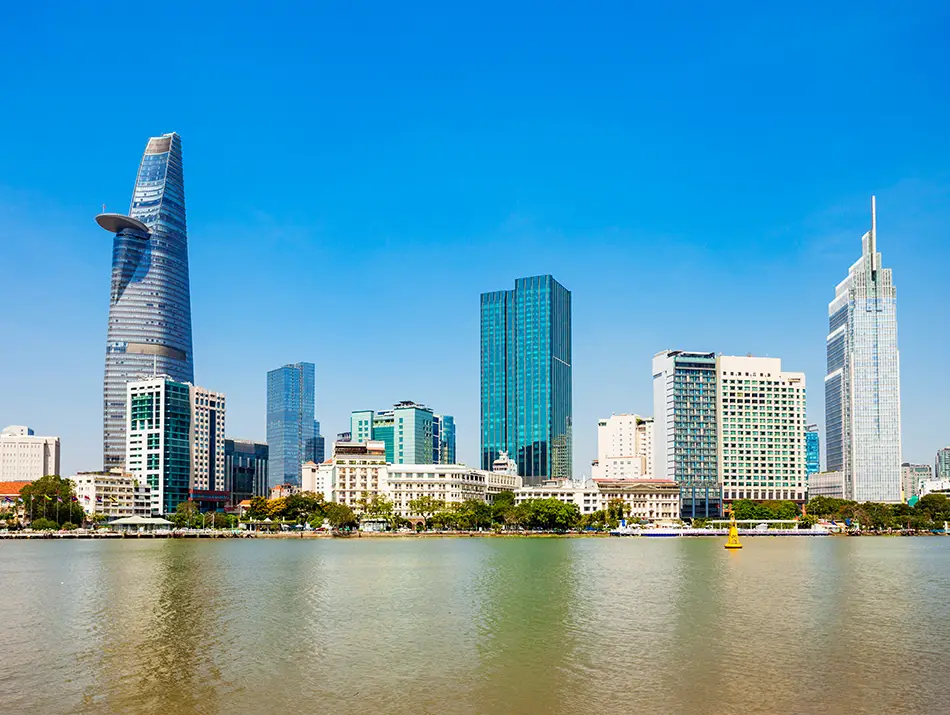
This skyscraper is a symbol of modern urban development in the south. The design is inspired by the lotus flower, which is the national blossom. It features a prominent helipad that extends from the 52nd floor, making it a distinct feature of the city skyline among other Vietnam tourist attractions.
The building contains a skydeck that provides a 360-degree view of the city and the river. You can see the contrast between the old colonial buildings and the new high-rise developments. While it is no longer the highest building in the city, its central location and significantly more affordable entry price make it a favorite for many tourists over Landmark 81, which remains the tallest building in Vietnam.
- Located in: Ho Chi Minh City
- Entry ticket: VND 240,000 ($9 / €8)
- 📍Bitexco Financial Tower on Google Maps
These places are the most talked-about things to see in Vietnam and form the backbone of many first-time itineraries.
Still, they should not be treated as a single checklist. A more rewarding approach is to select the top attractions that resonate with your interests and build a slower travel plan around them.
Spending more time in fewer regions often reveals context, daily rhythms, and lesser-known sites that rarely appear on standard lists of Vietnam tourist attractions.