Most people come to Mui Ne for the same three things: the sand dunes, the kite-surfing wind, and the seafood sunsets — and if you want the full picture of what the area has to offer, our guide to the most popular attractions in Mui Ne covers all of it.
What the brochures tend to bury in the footnotes is that just an hour’s drive south, a jungle mountain rises out of the coastal plain carrying one of the most extraordinary Buddha statues in all of Southeast Asia — a 161-foot (49-meter) reclining figure nestled into the forest, presiding in silence over a reserve that few foreign visitors ever properly explore.
Ta Cu Mountain (Núi Tà Cú) is that place — part of the TTC World Ta Cu tourist area, a managed ecotourism site that combines a cable car system, a historic pagoda complex, and a protected forest reserve. Where Mui Ne is loud with sunscreen and beach bars, Ta Cu is quiet, fragrant with incense, and — if you arrive at the right time — almost eerily empty.
A NOTE ON EXPERTISE
I can safely say I’m one of the foreign visitors who has climbed Ta Cu Mountain the most times. In 2023, training for a marathon, I used this trail as a conditioning benchmark — returning every two weeks for three months, totaling more than ten ascents. I know it in morning mist and midday heat, on empty weekdays and chaotic public holidays.
As with all our travel guides, I write objectively — but personal recommendations are clearly marked where they matter.
Table of Contents
What Is Ta Cu Mountain Famous For?
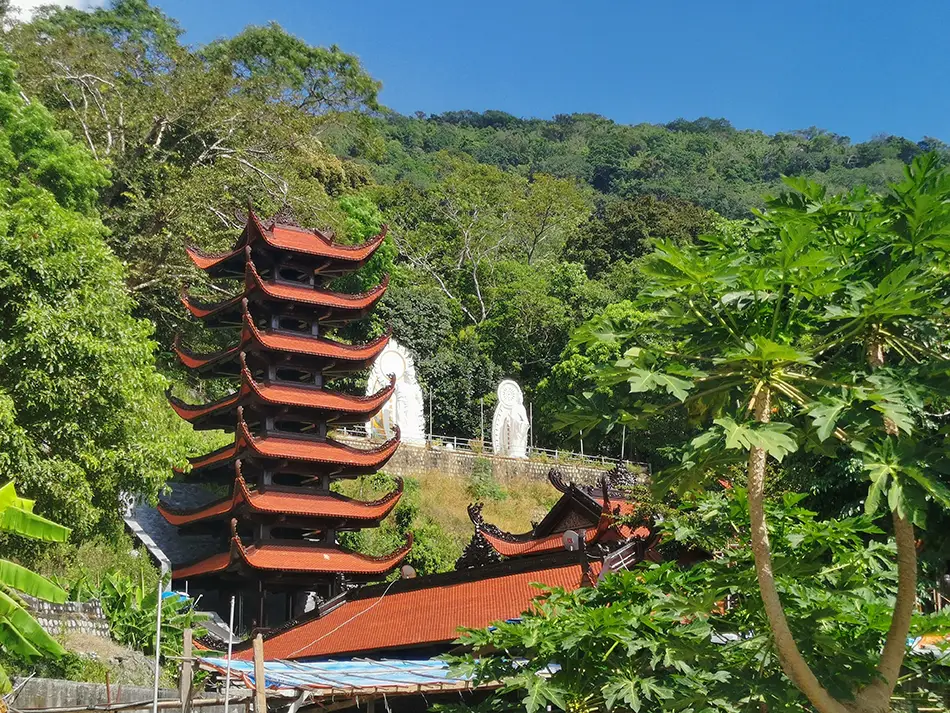
Ta Cu Mountain stands at 2,129 feet (649 meters) above sea level and sits in Thuan Nam commune. It lies roughly 17–19 miles (28–30 km) south of Phan Thiet city, about 34 miles (55 km) from the center of Mui Ne, and around 98 miles (157 km) north of Ho Chi Minh City. The mountain is a former volcano, its flanks now blanketed in dense tropical forest that has been designated a national nature reserve.
The name
“Tà Cú” comes from the Cham language — spoken by the people who inhabited this coastline long before Vietnamese settlement. Ta means mountain, cú means old. Quite simply: the old mountain. Geologists believe the massif is millions of years old.
The pagodas
In 1872, a monk named Tran Huu Duc left Central Vietnam and trekked south through forests and mountains in search of a place to meditate. He found it on this mountain. After seven years of solitary practice, local people discovered his cave. From that small beginning grew one of the most revered pilgrimage sites in southern Vietnam.
Today the mountain hosts two pagodas:
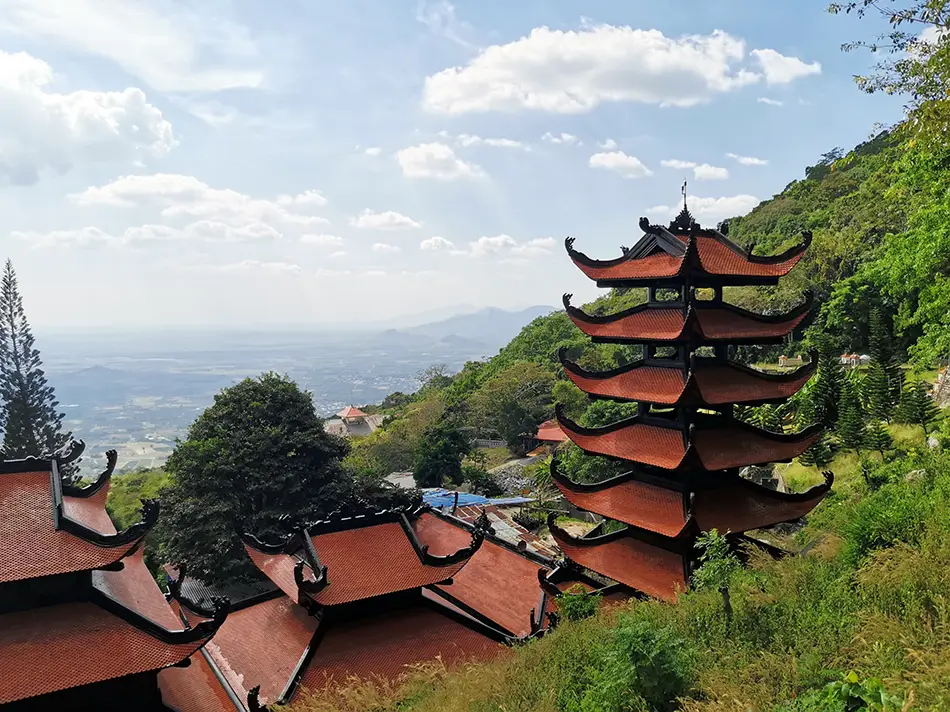
Linh Son Truong Tho Pagoda — also called the Upper Pagoda — sits at around 1,378 feet (420 meters) in altitude. Its name, meaning “spiritual mountain of long life,” was reportedly bestowed by Emperor Tu Duc in 1880 after the monk Tran Huu Duc cured the ailing Queen Mother Tu Du. The architecture follows the Bac Tong style, honoring not only the Buddha but also Bodhisattvas, Arhats, and figures from Confucian and Taoist traditions.
The Long Doan Pagoda (Lower Pagoda), built by Tran Huu Duc’s disciples after his death in 1887, sits further down the slope. Together the two form what locals simply call “the Mountain Pagoda complex.”
The History of The Reclining Buddha
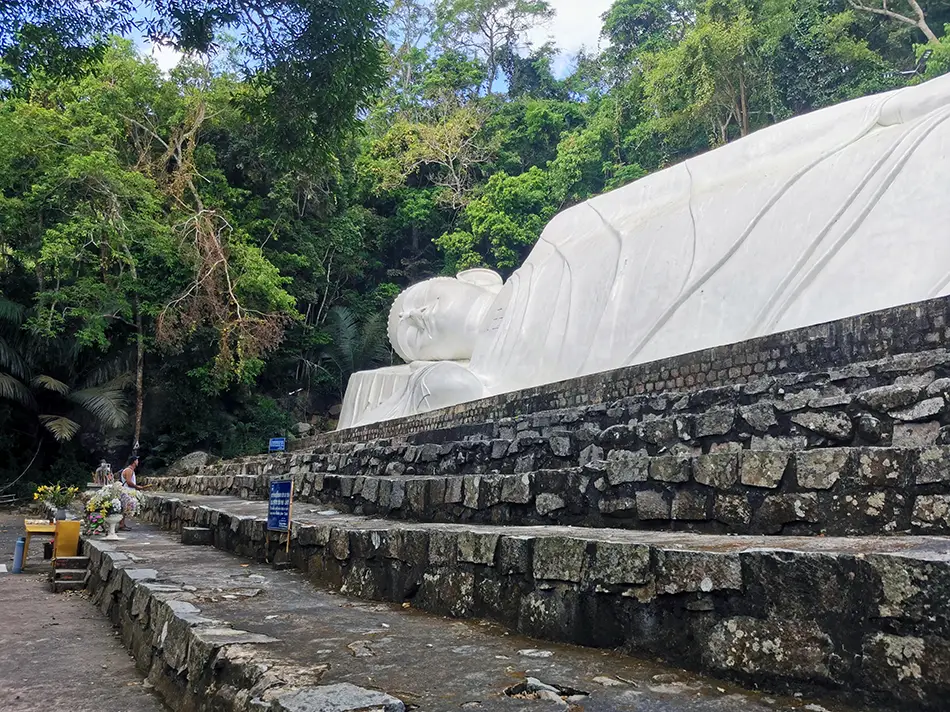
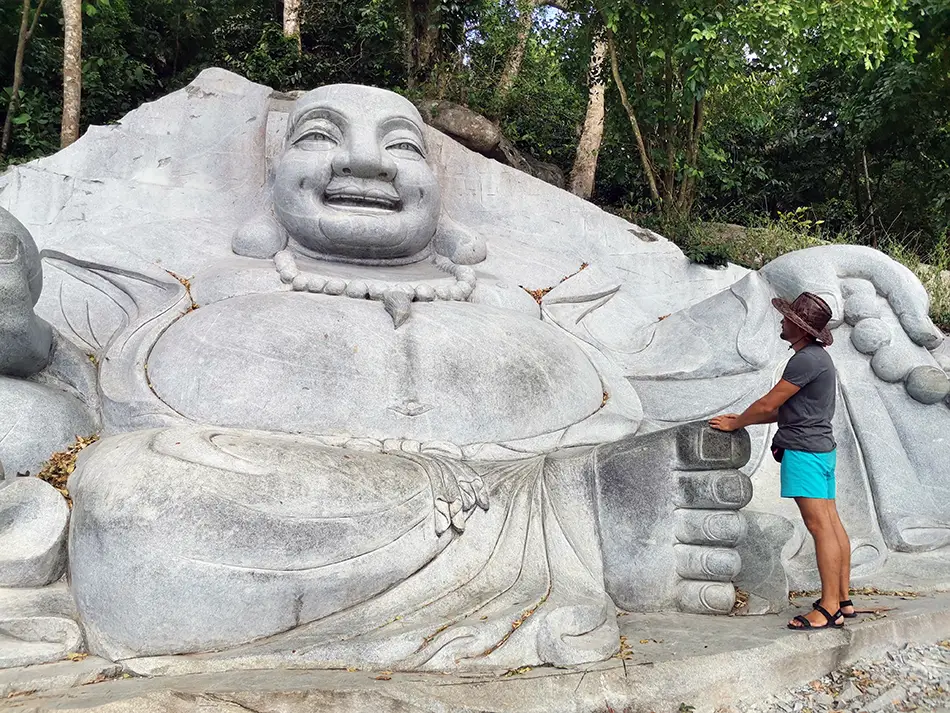
The mountain’s centerpiece — and the reason most visitors make the journey — is the Reclining Buddha, a 161-foot (49-meter) white statue depicting the moment of the Buddha entering Nirvana: lying on his right side, serene and monumental, set against the green jungle canopy.
Construction began in 1958 and continued through the 1960s — a remarkable logistical feat given the mountain terrain and the era. The statue is built from concrete rendered white.
On 2 January 2006 it was officially recognized by the Vietnamese Book of Records as the largest reclining Buddha in Vietnam. On 2 March 2013, the Asian Book of Records certified it as the longest reclining Buddha statue atop a mountain in Asia.
Hiking VS Cable Car: How to Get Up Ta Cu Mountain
There are two ways up, and the honest answer is that the right choice depends entirely on what you’re after.
Personal take:
Hiking Ta Cu is a genuinely rewarding adventure — solitary, atmospheric, and physically satisfying. The cable car is an easy, pleasant ride suited to families, those short on time, or visitors who want the spiritual experience without the exertion.
The cable car
The TTC World Ta Cu cable car runs ~1 mile (1,600 meters) up the mountain flank in gondola-style cabins, offering views over the jungle canopy. The ride takes approximately 10 minutes each way. The cable car operates daily from 6:00 AM to 5:00 PM
As of 2025–2026, the round-trip cable car ticket for adults costs approximately 250K VND ($10 / €8). The park entrance fee is charged separately.
The jungle hike
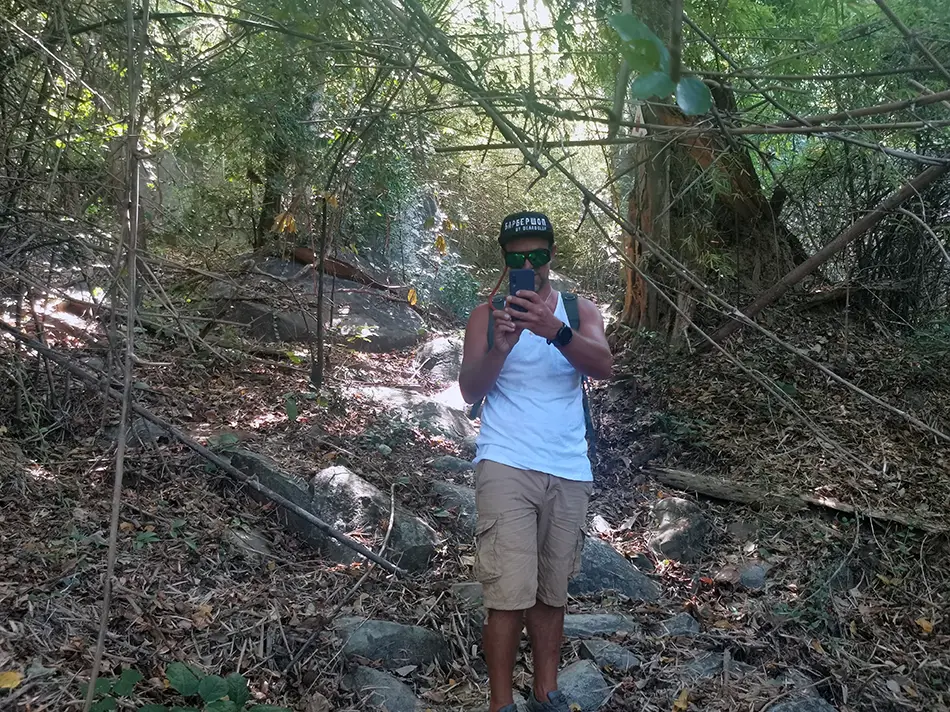
The hiking trail runs roughly 1.4 miles (2,290 meters) from the base to the pagoda area. Allow 40 to 80 minutes going up, depending on your fitness level. The terrain changes meaningfully along the route, which makes it more interesting than a straightforward staircase.
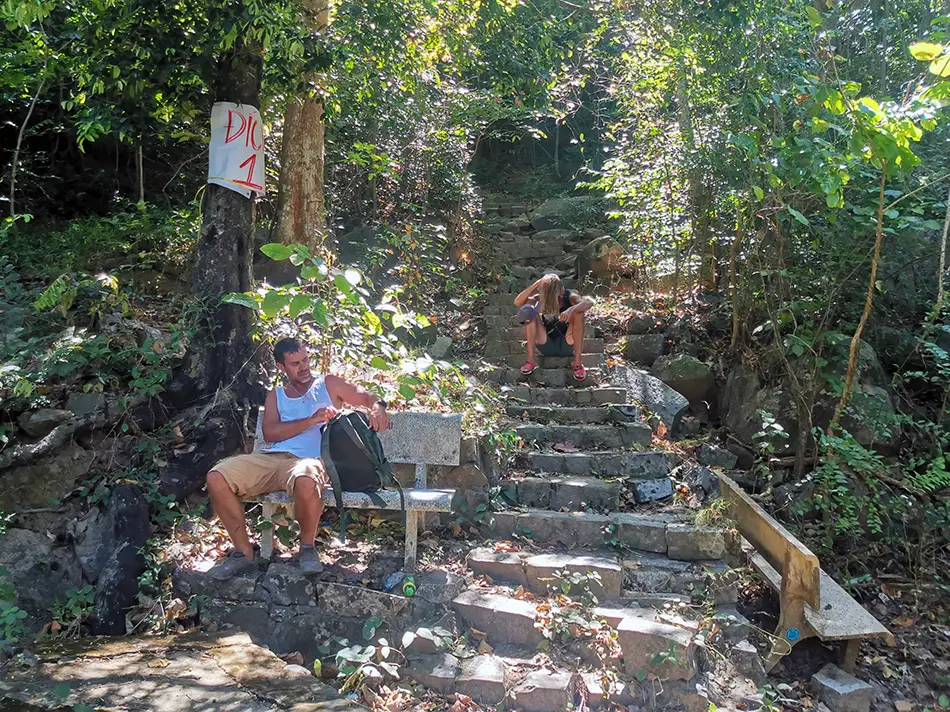
The trail — a mix of stairs, broken stairs, and dirt path — begins in open sun with the cable car gondolas floating above, before plunging into dense tropical jungle. The canopy closes overhead, the temperature drops a few degrees, and the gradient steepens considerably for a stretch before easing again into a more comfortable forest walk. Lianas hang from the trunks. The path winds through small volcanic rock formations and past the occasional crumbling rest bench.
On an ordinary weekday, the hiking trail is nearly deserted. In more than ten ascents spread across different seasons and days of the week, I consistently found myself alone on the path for long stretches — a rarity at most tourist destinations in Vietnam, and one of the things that makes this hike genuinely special.
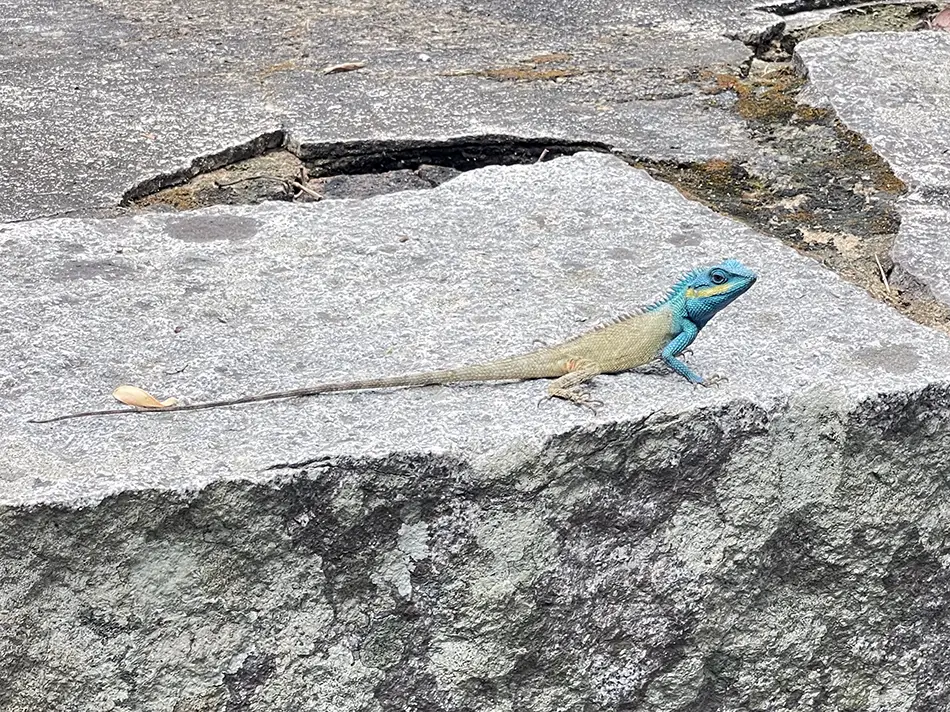
The jungle is alive around you. Lizards are a near-certainty, and small snakes occasionally cross the path — nothing aggressive, but worth watching where you step. Many guides mention monkeys — but after ten-plus personal ascents, I have not encountered a single one.
Good to Know
Just outside the park entrance gates sits a small cafe serving simple local dishes at very reasonable prices. On a normal day you might walk past without a second glance — but after a proper hike up Ta Cu, you will appreciate that plate of food no less than anything served at the best restaurants in Mui Ne.
What’s Up There: A Walk Around the Top
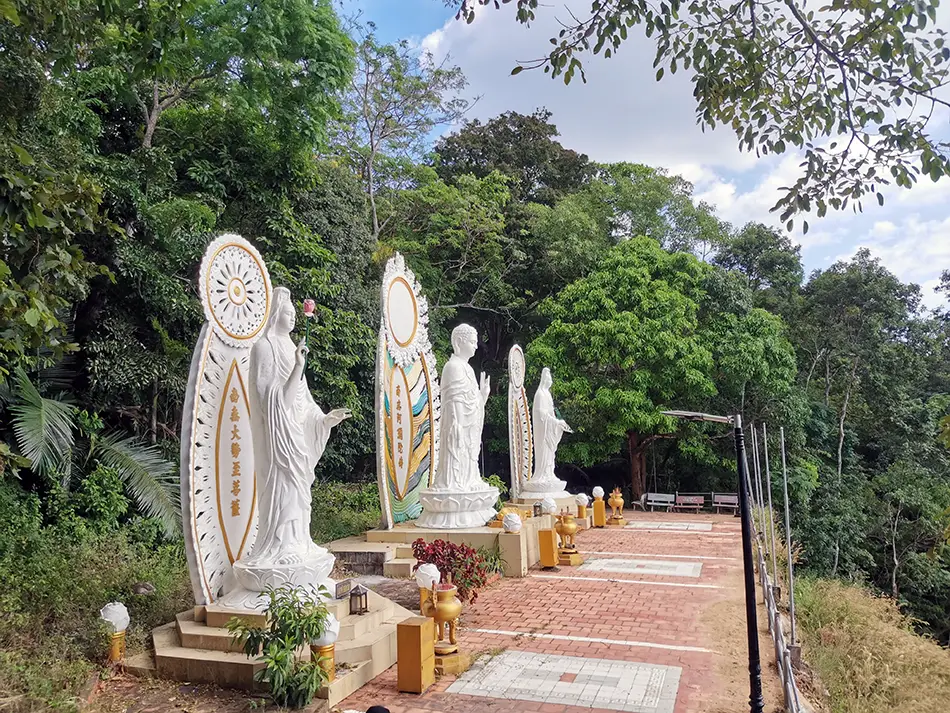
The complex at the top is larger and more textured than most visitors expect. From the cable car arrival station, a path leads uphill through a series of terraces and courtyards, past scattered Buddha statues of varying sizes and age, through the shaded grounds of Linh Son Truong Tho Pagoda and its sister complex Long Doan.
The pagoda interiors are cool and dim, heavy with sandalwood smoke. Monks sometimes move quietly between the buildings. You can light incense at the communal braziers and place your sticks in the large sand urns in front of the shrines — a small but meaningful gesture of respect whether you’re Buddhist or not. The grounds feel genuinely devotional rather than touristic, particularly on weekdays.
From the pagodas, stone steps continue upward to the Reclining Buddha — a short but noticeably steep final climb of around 10 minutes.
The hidden cave — what almost nobody finds
Very few travel guides mention this. Remarkably, many of the Vietnamese visitors who make it to the top are also unaware of it: there is a cave near the Reclining Buddha with its own legend, its own altar, and its own particular brand of low-key adrenaline.
The cave is known as Hang To — where, according to one version of the legend, Monk Tran Huu Duc lived in seclusion.
The story goes that he found a stone platform deep inside, sheltered from rain and sun, with a natural spring flowing year-round. He drank from that spring, survived on wild herbs and fruit, and rarely descended the mountain.
As the legend has it, during his years of meditation he tamed a white tiger that guarded the cave entrance — and after the monk’s death, the tiger stayed sorrowfully near his grave. How much of this is history and how much is devotional storytelling, nobody can say for certain.
Finding the cave:
Once you have reached the Reclining Buddha statue, turn right and walk to the end of the platform. You will see a cluster of large boulders. Look for worn patches and scuff marks on the rock surfaces — these are your trail markers. Follow them to a barely-there footpath.
The cave entrance appears unassuming, almost invisible. Inside, near the entrance, there is a small altar. Do not stop here.
If you pass the altar and continue inward — crouching slightly — the cave opens into something that is harder to describe than to experience. Structurally it appears less like a natural cavern and more like a vast vertical shaft into which enormous boulders have fallen, creating a labyrinth of tight passages and voids between the rocks. You can descend through these gaps, further and further, squeezing between stone walls in the dark.
IMPORTANT SAFETY NOTE:
There are no guides, no lighting, no staff, and no safety infrastructure in this cave. It is entirely unsupervised.
Bring a powerful flashlight (or two). Do not enter alone. Understand that you proceed entirely at your own risk — if something goes wrong, no one is likely to come looking.
How to Get to Ta Cu Mountain from Mui Ne
Option 1: Organized tour of the Ta Cu Mountain
The simplest approach is an organized day tour from Mui Ne. Ta Cu is rarely sold as a standalone — it is almost always combined with other stops in the area. Common combinations include Phan Thiet sightseeing (fish sauce production, the local market, the historic water tower), a boat ride out to Ke Ga Lighthouse, and a stop at Po Sha Inu Cham Towers — ancient Cham ruins dating back to the 8th–9th century, set on a hilltop with a nice view over Phan Thiet.
Tours typically depart around 7:30–8:00 AM with hotel pickup. Prices range from around 650K VND ($25 / €22) for a basic transfer-only option — cable car and guide not included — up to 3M VND ($120 / €100) for a full-day, all-inclusive multi-stop tour with a guide. What makes sense depends on how you’re planning to explore the area, how much context you want, and what your budget is.
Booking can be done directly through the many tour offices in Mui Ne. For those who prefer to sort things in advance and want the reassurance of verified reviews, we recommend browsing on GetYourGuide — booking through our link supports the project at no extra cost to you.
Option 2: Scooter from Mui Ne
This is the popular option among independent travelers who want to hike. Two viable routes exist.
The fast route follows National Highway 1A south through Phan Thiet. This is the same road busses take on the way from Ho Chi Minh to Mui Ne. The quality is good. The ride takes approximately 60–75 minutes. The downside: it’s a busy road shared with trucks and inter-city buses — functional but not scenic.
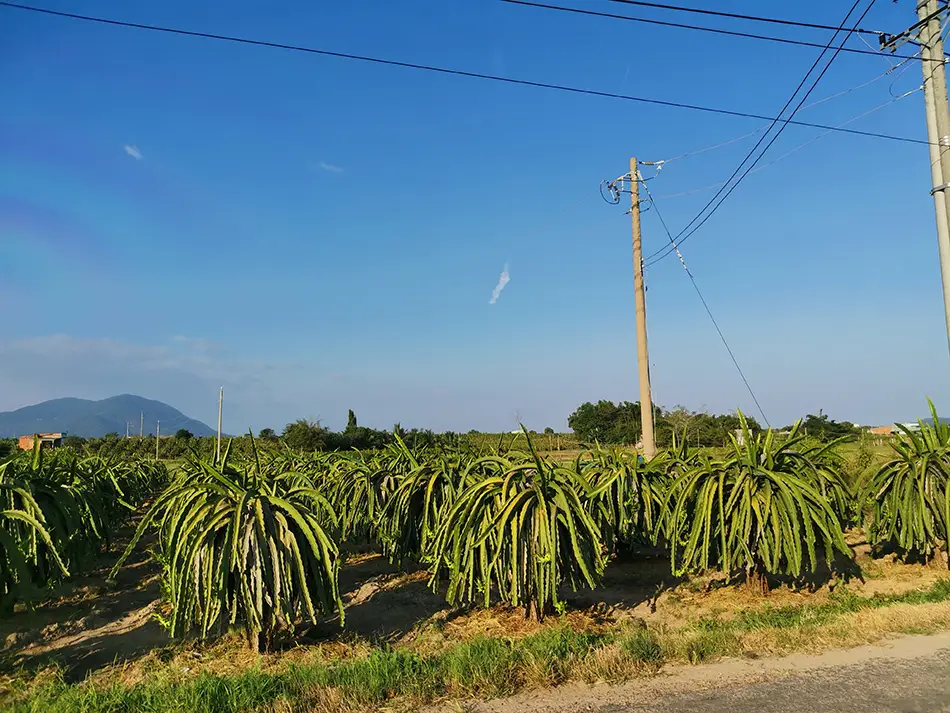
The scenic coastal route is considerably more enjoyable and only adds 30–40 minutes. The easiest way to navigate from Mui Ne is to put Ke Ga Lighthouse in your map and follow the coastal road there. After the lighthouse, continue a little further and turn right towards the mountain. You’ll find yourself on a quiet rural road with dragon fruit plantations on both sides — their cactus-like plants on characteristic trellises, striking in both daylight and at dusk when farmers string lights to encourage flowering.
Since you’re passing right by it, combining the trip with a stop at Ke Ga Lighthouse is a natural choice. Built by the French in 1899 on a small rocky island just off the cape, it is the tallest and oldest lighthouse in Vietnam. Reaching it requires a short boat ride from the shore and can be easily organized with local people once on the beach.
📍 RECOMMENDED ROUTE
Leave Mui Ne early on the 1A highway to reach Ta Cu before the midday heat, hike up, explore the summit, then return via the coast road, stopping at the dragon fruit farms and Ke Ga Lighthouse. We have a separate guide covering scooter rental in Mui Ne, including the practical details on licenses, police stops, and insurance — worth reading before you set out.
Entrance Fees & Ticket Prices (2026)
Prices below reflect the most recent available information. Always confirm at the ticket window on arrival, as fees at Vietnamese ecotourism sites are subject to periodic revision.
| ITEM | PRICE (VND) | NOTES |
|---|---|---|
| Park entrance fee — Adult | 50K VND ($2 / €1.5) | Required for all visitors |
| Cable car — Round trip, Adult | 250K VND ($10 / €8) | Includes up + down; ~10 min each way |
| Guided tour from Mui Ne | ~650K–3M VND ($25–120 / €22–100) | Typically includes transport + cable car + guide + extra stops |
What to Bring & How to Prepare
Footwear:
Proper walking shoes or trainers with grip are essential for the hike. The volcanic rock sections can be slippery when damp. Flip-flops are fine for the cable car option but will make the stone steps to the Buddha uncomfortable.
Clothing:
Breathable, lightweight clothing is the right call for the hike. Keep in mind that Ta Cu is an active religious site — knees and shoulders should be covered in the pagoda and Buddha areas. The good news is there are toilets on the summit grounds, so you can hike up in whatever is comfortable and change into something appropriate before exploring the temple complex.
Sunscreen and a hat are more important than most people expect — the section at the mountain base before the canopy closes is fully exposed.
Water: Bring more than you think you need. The trail has no water points along the route, and the heat under the jungle canopy is more deceptive than it looks. There is a small shop at the park entrance if you need to stock up before heading in.
For the cave: A flashlight. Wear shoes you don’t mind getting dusty. Do not go alone.
3 Common Mistakes at Ta Cu Mountain
- Thinking it’s just the Buddha
Not quite. The upper area has plenty to explore — pagodas, smaller statues, courtyards, and quiet corners that reward a slower pace. Budget at least an hour for a proper walk around. - Assuming the cable car avoids effort
You’re not actually reaching the top of the mountain. The pagodas and the Reclining Buddha sit at a lower elevation, and there is no marked trail to the true highest point. - Rushing the visit
The cable car gets you partway, but steep stairs are unavoidable regardless. Anyone with mobility limitations should factor this in before visiting.
Is Ta Cu Mountain Worth the Trip?
Go if:
• You want a quiet jungle hike near Mui Ne
• You’re interested in Buddhist sites and pagodas
• You enjoy semi-off-the-radar places
Skip if:
• You’re only looking for viewpoints
• You don’t want stairs or light physical effort
• You expect a “wow” landscape like Ha Giang or Sapa
Ta Cu vs Other Day Trips from Mui Ne
- White Sand Dunes best for: landscapes + sunrise
- Ta Cu Mountain best for: hiking + culture
- Ke Ga Lighthouse best for: short scenic island visit
Ta Cu Mountain is worth visiting if you come with the right expectations and approach. It is genuinely rewarding for hikers who enjoy a moderate jungle trail with a meaningful destination at the end. It works equally well for anyone drawn to Buddhist art, pilgrimage culture, and sacred architecture. And if you’re based in Mui Ne and want something beyond the beach — this is the most obvious answer.
That said, if temples aren’t your thing and you’re planning to simply arrive, ride the cable car, and leave — the 68 miles (110 km) round trip may not feel worth it. There are more dramatic viewpoints in Vietnam. What Ta Cu offers is atmosphere and specificity, not raw spectacle.