Understanding the Impact: Beyond the Buzzwords
Before we dive into the narrow streets of Hanoi or the limestone karsts of Ha Long Bay, we need to strip away the marketing fluff. In 2026, “eco” and “green” are often used as simple stickers to hide the same old mass-tourism habits. If we want to talk about sustainable travel in Vietnam, we have to look at the engine under the hood.
It’s not about buying a “green” package, it’s about ensuring that the way we move, eat, and interact actually leaves the country better than we found it.
The Three Pillars of the Sustainable Journey
Think of sustainable travel as a tripod. If one leg is shorter than the others, the whole thing topples over.
- Environmental Integrity (The Planet): This is the most visible pillar. It’s about more than just “not littering.” It’s about carbon footprints, water conservation in drought-prone regions like Central Vietnam, and ensuring that your presence doesn’t disrupt the delicate biodiversity of jungles or coral reefs.
- Social Equity (The People): Travel should never be a “human zoo.” This pillar ensures that tourism respects local traditions rather than turning them into a performance. It asks: Are the people in this village being exploited for a photo, or are they empowered stakeholders in this experience?
- Economic Justice (The Profit): For travel to be sustainable, the money must stay where the footprints are. This means choosing a family-run homestay over a multinational hotel chain where profits “leak” out of the country.
Sustainability vs. Responsibility: What’s the Difference?
It’s easy to get these confused, but the distinction is vital for a traveler: Sustainability is the destination. It’s the big-picture goal of ensuring that Vietnam’s beauty and culture remain intact for the next century. Responsibility is the vehicle. It is the action you take today. You cannot control the national policy on plastic waste, but you can take responsibility by carrying a reusable bottle.
The 2026 Shift:
In the past, the mantra was “Leave No Trace.” Today, we aim for “Leave a Legacy.” It’s no longer enough to just do no harm; we want our presence to actively improve a place—whether that’s through supporting a local conservation project or helping a traditional craft survive.
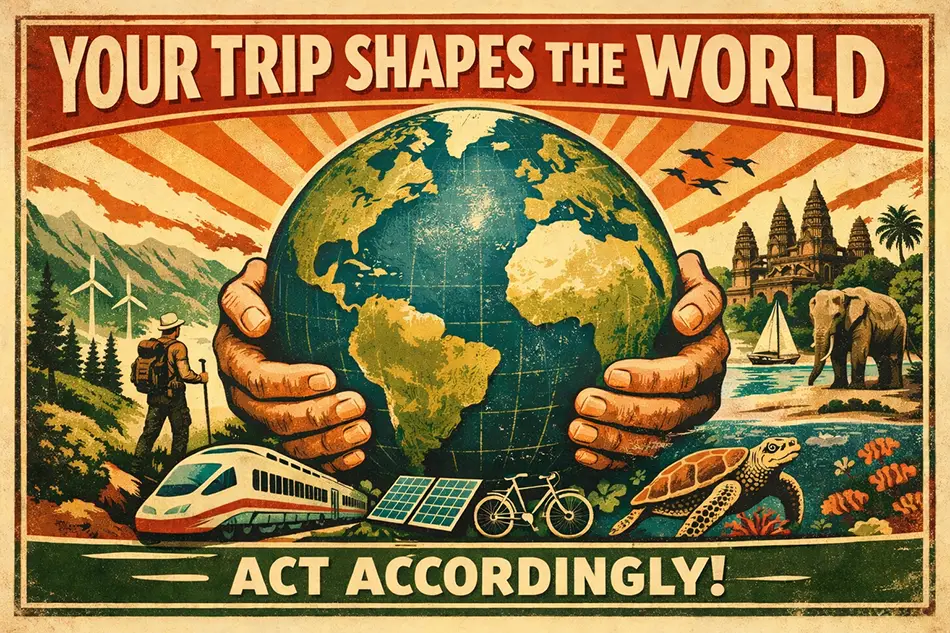
Universal Travel Habits: Making Responsibility Second Nature
When we talk about sustainable travel habits, it often sounds like a list of sacrifices. In reality, it’s about making small, strategic adjustments to the way you move and consume. You don’t need to be a martyr for the planet; you just need to be a slightly more observant guest. In 2026, where the world is more connected—and more crowded—than ever, these are the habits that actually move the needle.
Managing the Plastic Flow
Let’s be honest: you will end up with plastic. Whether it’s an emergency water bottle because you were parched at a temple or a bag for a fragile souvenir, it happens. The goal of a responsible traveler isn’t a “zero-waste” utopia—which is nearly impossible while moving through transit hubs—but rather minimizing the flow.
- The Lightweight Carry: Keep a single, crumpled lightweight tote bag in your pocket. It’s the easiest way to refuse the nesting-doll layers of plastic bags offered at every pharmacy and market.
- Refill Over Replace: Treat your water bottle like your phone—refill it whenever you see a station. Most hotels, homestays, and modern cafes now provide large 20-liter dispensers or filtered taps. This is safer than bottled water that has been sitting in hot plastic in the sun, and it’s much easier on the local landfill. To find stations near you, use RefillMyBottle (the most popular network in Southeast Asia) or myMizu.
- The Solid Kit: Swap liquid shampoo and toothpaste for solid bars and tablets. This doesn’t just master the “pack light” philosophy. It removes the temptation to use those plastic-wrapped hotel “minis” that clutter up bathroom counters across the country.
The Ethics of the Hotel Room
We tend to be a bit more reckless with resources when we aren’t the ones paying the utility bill. But in many developing regions, the grid is under massive seasonal strain.
- The AC Check: It’s tempting to leave the air conditioning blasting so the room is “crisp” when you return from a humid hike. But that one unit running for eight hours while you’re out is a massive, invisible energy drain.
- Laundry Logic: Do you really need fresh towels every morning? Probably not. If you’re staying 2 or 3 nights, keep the same set. It saves thousands of liters of water and keeps harsh industrial detergents out of the local water system.

The Power of the “Moving Slow”
Sustainable travel often starts with slowing down. Fast, checklist-style itineraries encourage short stays, frequent flights, and convenience-driven choices that increase emissions and push travelers toward the most crowded, tourist-oriented spaces.
When you stay longer in one place, your impact naturally softens. Slower travel creates space for better choices — socially, economically, and environmentally — turning travel from consumption into participation.
- Stay Longer, See More: When you rush, you use the most carbon-intensive transport (planes) and eat at the most “touristy” (and often wasteful) spots. If you stay in one town for four days instead of two, you start to find the local market, the family-run coffee shop, and the hidden paths.
- The Ground Perspective: Whenever you can, take the train or the bus. It’s not just “greener”—it’s better for your soul. You see the transition of the landscape, the backyard gardens, and the real life that happens between the famous landmarks.
Voting with Your Wallet
Every dollar you spend is a vote for the kind of world you want to see. Travel constantly puts you at small decision points, and those choices shape local economies more than most travelers realize.
Take something as simple as ordering a drink: do you support a multinational corporation selling over-sweetened, aggressively marketed sugary beverages designed for global scale, or a local family serving fresh Vietnamese kumquat tea made from locally grown fruit, lightly sweetened and rich in natural flavor and vitamins? The experience may look similar on the surface, but the impact is not.
One choice reinforces extractive, global systems; the other keeps money circulating within the community you are visiting.
- Eat Local, Stay Local: A meal at a global fast-food chain supports a corporation. A meal at a street-side stall supports a family.
- Ask the Question: When booking a tour, ask: “Is my guide from this community?” or “How do you handle waste on this boat?” You don’t need a deep audit; just asking the question signals to business owners that their customers value responsibility. This “market pressure” is often more effective than any government regulation.
If you want to master the foundational principles that apply to any destination, you can dive deeper into our Guide to Sustainable Travel Habits in the Travel Academy, where we break down the science of low-impact exploration.
Sustainable Travel in Vietnam: Essential Habits for the Responsible Guest
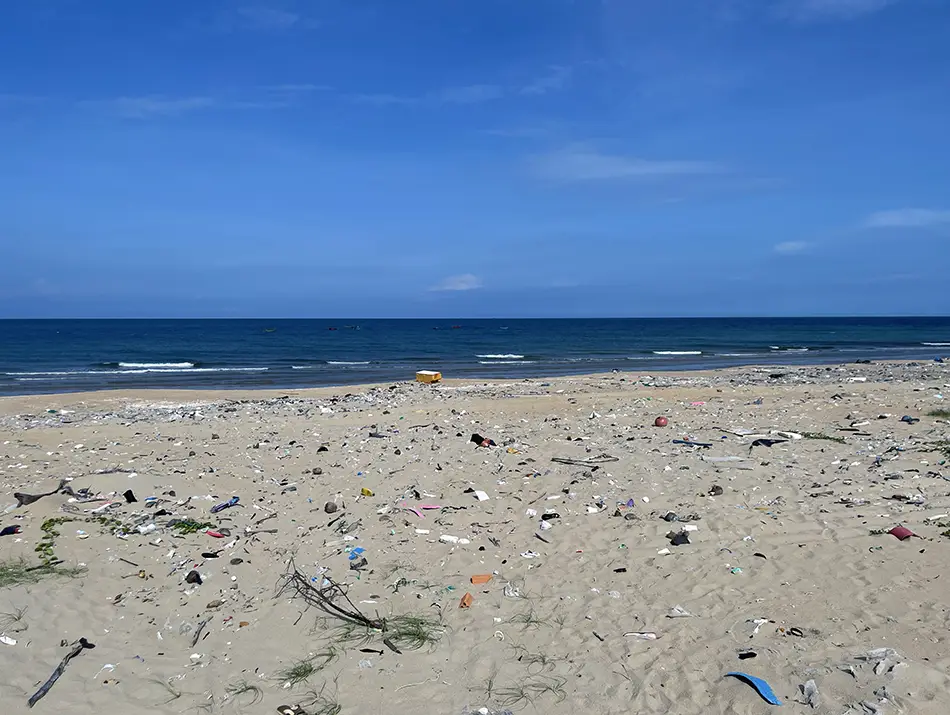
Vietnam is currently in the middle of a massive legislative shift to ban single-use plastics—starting with a total ban on thin plastic bags and hotel “minis” in January 2026—but on the street, old habits die hard. The convenience of a 5-cent plastic bag still often outweighs the looming environmental deadline.
If you visit iconic spots like Phu Quoc or Da Nang after a storm, you’ll see the “hidden” side of this crisis: miles of sand carpeted in colorful plastic fragments and ghost nets. This isn’t just an eyesore; it’s a disaster for the marine life that keeps Vietnam’s seafood industry alive.
- The “No Bag” Habit: Vendors will instinctively reach for a bag for everything—even a single banana. A friendly wave of your hand and a quick “Không túi, cảm ơn” (No bag, thank you) is usually all it takes to stop the cycle.
- Street Food Awareness: When eating at a stall, look for places using ceramic bowls and metal spoons rather than plastic disposables. If you see a mountain of discarded plastic under the tables, it’s a sign that the stall’s waste management is likely just “the nearest gutter.”
Ethical Interaction in the Highlands

If you head north to places like Ha Giang or Sapa, you are not just visiting a landscape—you are entering someone’s home and daily social fabric. In these highland communities, your behavior is highly visible and quickly absorbed, especially by children.
Because the traditional, hand-embroidered clothing worn by local ethnic minorities is so vibrant and intricate, it is easy to mistake a routine walk through a village for a tourist performance. In reality, you are witnessing a deep-rooted daily identity, not a staged event. Since this is real life rather than a show, respecting privacy and dignity is paramount.
- Photography with Consent: Before snapping a photo of someone in their traditional dress, always ask a simple: “Photo ok?”. A nod and a smile go much further than a long-lens shot from across the street.
- The “No-Candy” Rule: It is heartbreakingly common to see children begging for sweets or money. While it feels kind to give, it creates a cycle of dependency that encourages kids to skip school to wait for tourists. To help, consider staying at a Community-Based Tourism (CBT) homestay where your money goes into a communal fund, or donate directly to a local school.

The Unspoken Dress Code: Respecting the Social Fabric
In Vietnam, how you dress is often interpreted as a direct reflection of your respect for the people you are visiting. While the heat and humidity might tempt you to wear as little as possible, ethical travel is about finding the balance between your comfort and local decorum.
- Temples and Pagodas (The Non-Negotiables): When visiting any religious site, your shoulders and knees must be covered. This applies to everyone, regardless of gender. A “temple kit”—a lightweight sarong or a large scarf tucked into your daypack—is a traveler’s best friend. It can be wrapped around your waist or draped over your shoulders in seconds.
- Rural and Highland Etiquette: While cities like Saigon and Da Nang are quite modern, rural villages and ethnic minority communities remain conservative. Walking through a village in swimwear or very short shorts is considered deeply disrespectful. Choosing modest clothing—like linen trousers or longer skirts—signals that you value their culture over your tan.
- The “Shoes-Off” Rule: You will notice piles of shoes outside homes, certain small shops, and even some cafes. Always look at the floor before entering; if there are shoes at the door, leave yours there too. It’s a small gesture that shows you’ve moved beyond being a tourist and are acting as an observant guest.
The “Green Wheels” Movement
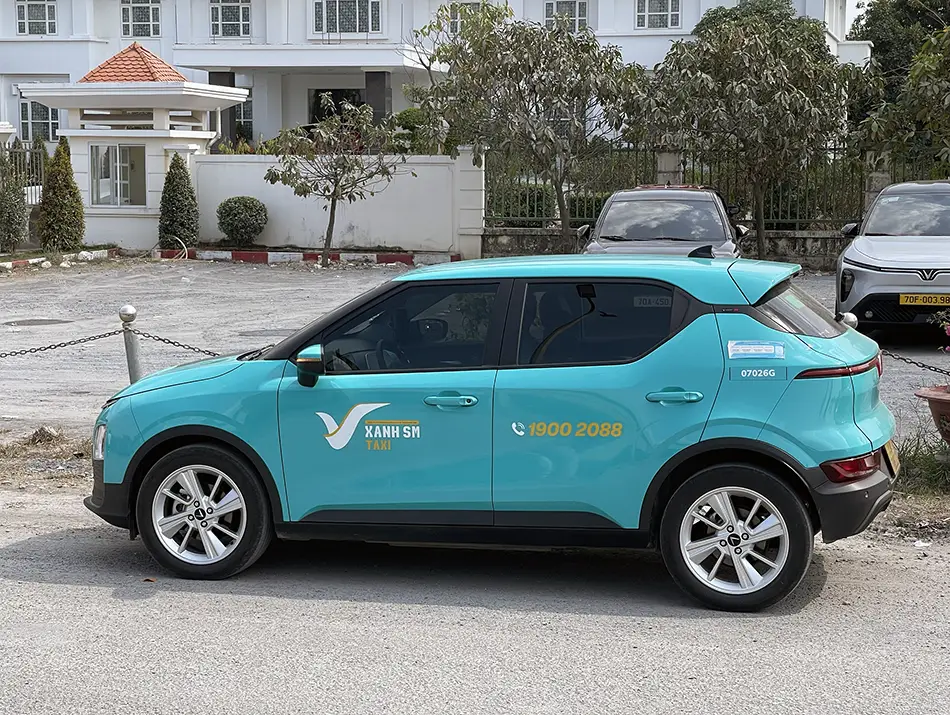
Switching to electric transport is perhaps the easiest step toward sustainable travel in Vietnam. You will see bright, cyan-blue electric taxis and motorbikes called Xanh SM in every major city. These rides are quiet, scent-free, and priced competitively with old fossil-fuel models. Since the user-friendly hailing app works just like the ones you use at home, there’s no reason to settle for an exhaust-heavy exhaust ride. Download it here: App Store / Google Play.
Don’t Forget About the Sea
Vietnam’s coastline is the crown jewel of its tourism industry, but it is also under the most intense pressure. From the turquoise waters of Phu Quoc to the emerald peaks of Lan Ha Bay, the ocean is the hero of your trip—but it’s an fragile one.
In 2026, with only about 1% of Vietnam’s coral reefs considered to be in “healthy” condition, and our behavior in the water is the difference between preservation and collapse.
- Sunscreen Secrets: Most standard sunscreens contain oxybenzone, which bleaches coral reefs. If you’re diving or snorkeling, look for “Reef Safe” versions (non-nano zinc based), or better yet, wear a long-sleeved rash guard to minimize the amount of cream you need.
- The “No Touching, No Taking” Rule: It sounds simple, but the temptation to step on a “rock” (which is actually living coral) is high. Stepping on a reef can kill a colony that took decades to grow. If you are snorkeling, be mindful of your fins. Kicking up sand or hitting the reef causes physical trauma to the ecosystem. Always maintain neutral buoyancy and stay in designated deep-water areas.
- Zero Marine Souvenirs: In 2026, fines for damaging or removing coral from Marine Protected Areas have increased significantly. The biological cost is even higher—once removed, a piece of coral is just a dead rock.
The “Avoid List”: Activities that Harm Vietnam

In 2026, some of the most “Instagrammable” activities in Vietnam carry a heavy ethical price. To be a responsible traveler, you need to know when to say “no” to these specific traps:
1. Captive Wildlife for Selfies and Shows
If an animal is being used as a prop, there is almost always a hidden cycle of abuse behind it.
- The “Selfie” Animals: Avoid taking photos with leashed monkeys on Monkey Island (Nha Trang), pythons at Mekong Delta rest stops, or slow lorises in Sapa. These animals are often snatched from the wild and drugged to stay “calm” for tourists.
- Circus-style Shows: Avoid animal performances at Dam Sen Park (Ho Chi Minh) or Bao Son Paradise (Hanoi). The training methods for these shows involve fear and physical punishment.
2. Harmful Elephant Interactions in the Highlands
For years, riding elephants in Dak Lak (Central Highlands) was a staple. In 2026, the world has moved on, but some operators still offer these “rides” or “forced bathing.”
- Why avoid it? Carrying heavy chairs causes permanent spinal damage to elephants. Even “bathing” experiences can be stressful if the elephant is forced to interact with crowds all day.
- The Alternative: Go to Yok Don National Park. They have pioneered Vietnam’s first truly ethical model where you simply trek into the forest and watch the elephants from a distance—no riding, no touching, just observation.

3. Civet (Weasel) Coffee Farms
Marketed as a luxury delicacy, this coffee is made from beans excreted by civets. While the “legend” says wild civets choose the best beans, the reality is an industrial process of confinement.
- The Location: Mostly concentrated in the highlands of Da Lat (Lam Dong) and Buon Ma Thuot (Dak Lak).
- Why avoid it? To meet tourist demand, thousands of civets are captured from the wild and kept in tiny, barren wire cages. They are force-fed an unnatural, caffeine-heavy diet of coffee cherries, leading to severe malnutrition, pacing (zoochosis), and self-mutilation from stress.
- The “Wild” Lie: Almost all coffee sold as “wild-collected” is actually from caged animals. It is nearly impossible to collect enough wild droppings to sustain a commercial shop.
4. “Orphanage Tourism”
It is a natural instinct to want to help children, but “volunteering” for a day at an orphanage is one of the most damaging things a tourist can do.
- The Truth About the Sites: Many “orphanages” in tourist hubs like Hanoi, Saigon, and Hoi An are actually profit-driven businesses. Research shows many of these children have living parents but are kept in institutions to elicit donations from well-meaning travelers.
- The Impact: The constant rotation of strangers in and out of their lives causes severe attachment disorders. If you want to help, donate to reputable NGOs like Blue Dragon Children’s Foundation rather than visiting a facility.
5. Illegal and Destructive Souvenirs
Vietnam’s markets are vibrant, but some items are stolen from the ecosystem or are outright illegal to transport.
- The Ocean List: Never buy coral jewelry, seashells, or anything made of tortoiseshell (Hawksbill turtle). These are often sold in coastal towns like Nha Trang and Phu Quoc.
- The Forest List: Avoid “Snake Wine” (which fuels the illegal wildlife trade) or any items made from exotic skins, ivory, or rare “red” woods from the Central Highlands. You risk heavy fines at the airport—both in Vietnam and your home country.
The Journey Forward
Traveling responsibly in Vietnam isn’t a series of sacrifices; it is a series of better choices. These small, daily habits—from the way you order your morning coffee to the taxi you hail—are what turn a standard holiday into a meaningful exchange. By embracing these shifts, you become a part of the growing movement toward sustainable travel in Vietnam.
As you roam through the bustling cities and quiet highlands of this incredible country, remember that you are more than a visitor; you are a guest in a place with a deep and vibrant history. Every choice you make in 2026 is an opportunity to ensure that Vietnam stays as beautiful for the next generation as it is for you today.
So, pack your solid soap, keep your tote bag handy, and take the time to sit down and enjoy the view. Vietnam is ready for you—travel like you mean it.