Travelers increasingly choose destinations based on the backdrops of their favorite stories. This trend, known as Set Jetting, turns standard vacations into immersive explorations of cinematic history. While many films use digital effects, the industry continues to rely on physical locations to provide a sense of scale and authenticity. From the arid deserts of the Middle East to the volcanic islands of the Pacific, these sites offer a tangible connection to the screen.
Visiting these famous movie locations allows for a deeper understanding of how directors utilize natural and historical landscapes. This guide focuses on destinations around the world that remain accessible to the public. You can stand where historical dramas were filmed or walk through the environments of major science fiction sagas.
Some locations are remote, while others are situated within bustling historic cities. Weather patterns, seasonal crowds, and varying entry requirements can impact the experience. This list provides a look at the most significant sites, detailing their cinematic history and the practicalities of visiting them.
Can you identify these iconic sets before the reveal?
We’ve hidden the film titles behind spoilers to put your movie knowledge to the test.
1. Petra, Jordan
Movie List
Indiana Jones and the Last Crusade (1989), Transformers: Revenge of the Fallen (2009)
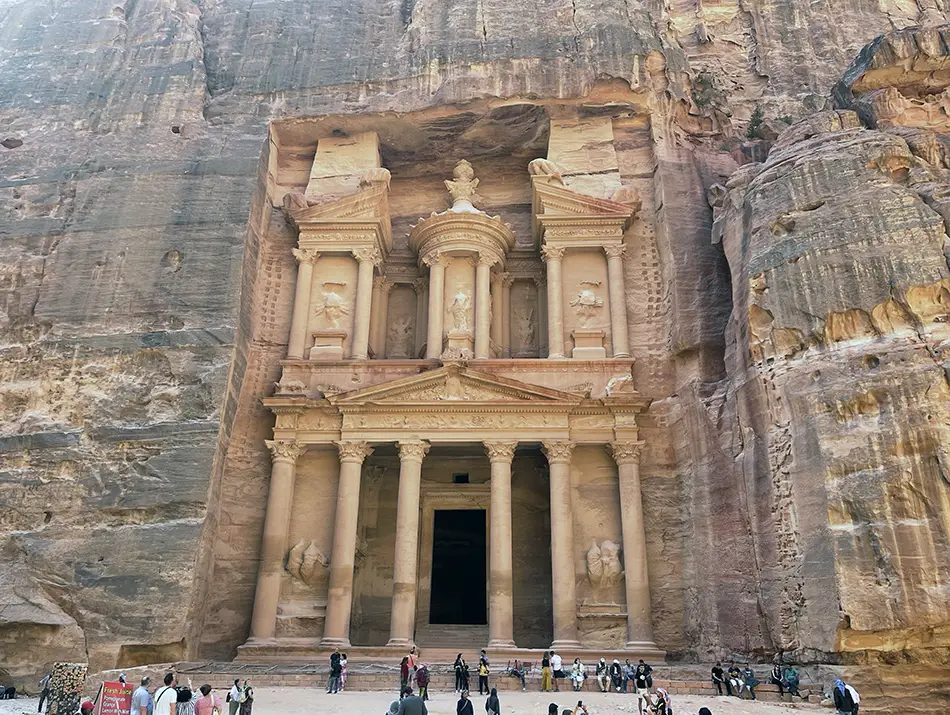
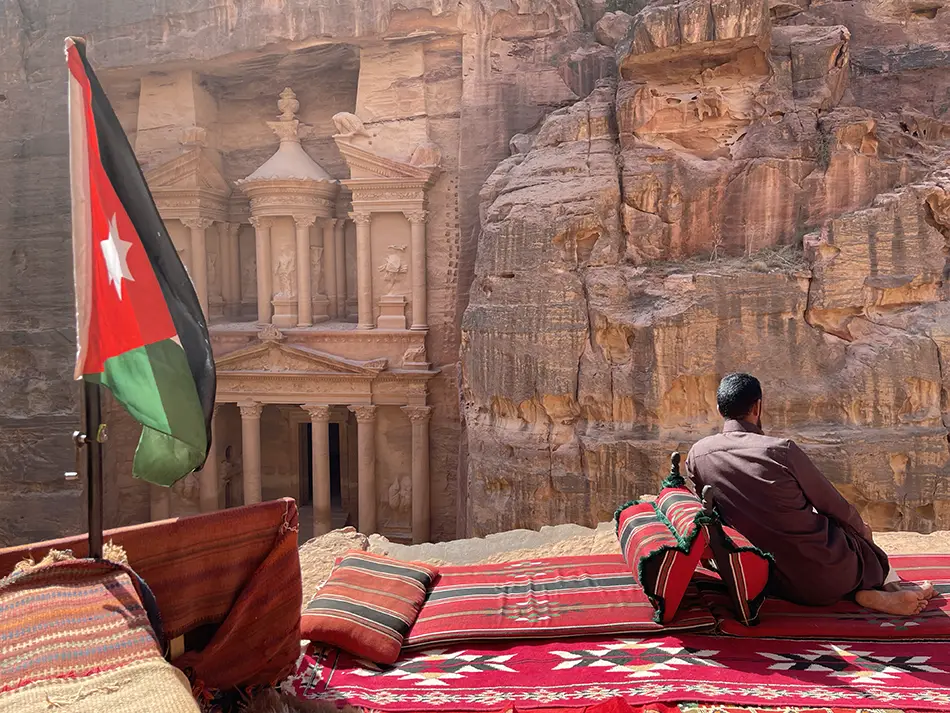
An ancient Nabataean city carved into rose-red sandstone cliffs in southern Jordan, Petra was used as the “Canyon of the Crescent Moon” in the third Indiana Jones film. Its most iconic structure, Al-Khazneh (The Treasury), appears at the end of the canyon approach.
Getting there means walking the Siq, a narrow, winding gorge roughly 0.75 miles (1.2 km) long that opens suddenly onto the facade. That reveal is deliberate — the city was designed this way, and it hasn’t lost its impact in two thousand years. Standing about 131 feet (40 meters) high, Al-Khazneh was likely a royal tomb, not a functioning treasury, despite the name.
Beyond it, the full site includes a Roman-style colonnaded street, and a Byzantine church with mosaic floors, and multiple high-altitude viewpoints reachable by staircase.
Beyond it, the archaeological site includes a Roman-period colonnaded street and the remains of a Byzantine church complex featuring ancient mosaic floors. Multiple elevated viewpoints around the site can be reached via hiking paths and stair sections.
Screen vs. Reality
In Indiana Jones, the film depicts a massive hollow temple filled with traps and the Holy Grail. In fact, the Treasury is widely believed to have been a royal Nabataean tomb carved into the rock face. Behind the ornate facade lies a relatively small, undecorated chamber with no hidden tunnels.
Fan Interaction
Souvenir stalls near the entrance often reference Indiana Jones and the Last Crusade, and local guides are quick to point out the exact filming location at the Treasury facade.
Exact Scene Filmed:
Indiana Jones: The exterior of the temple housing the Holy Grail.
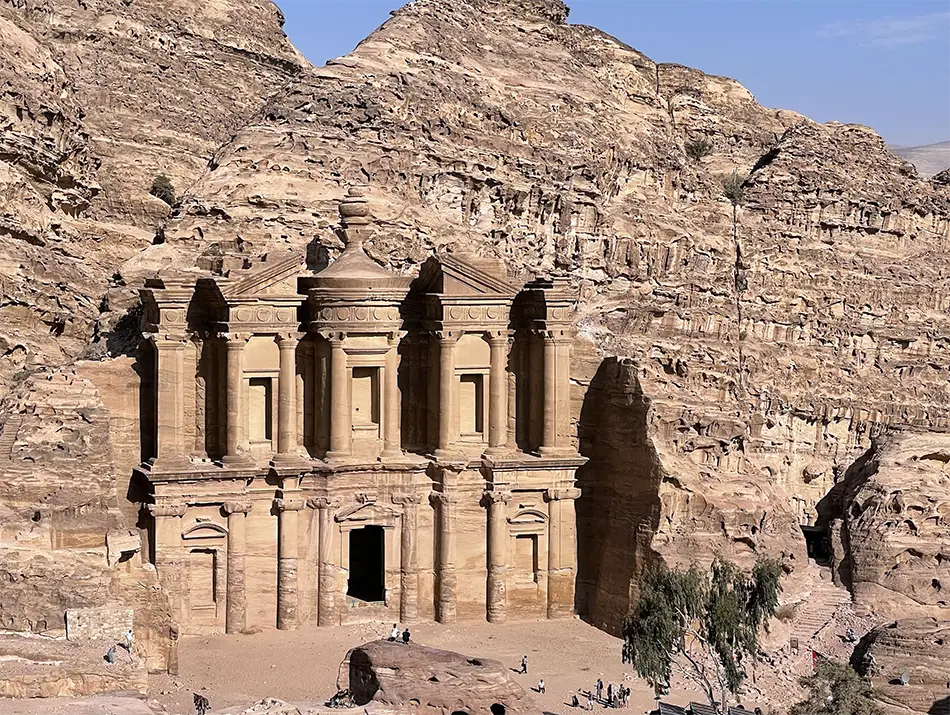
Transformers: Revenge of the Fallen: Entrance to The Tomb of the Primes was filmed at Ad-Deir (The Monastery)
2. Dubrovnik, Croatia
Movie List
Game of Thrones (2011 to 2019), Star Wars: The Last Jedi (2017)
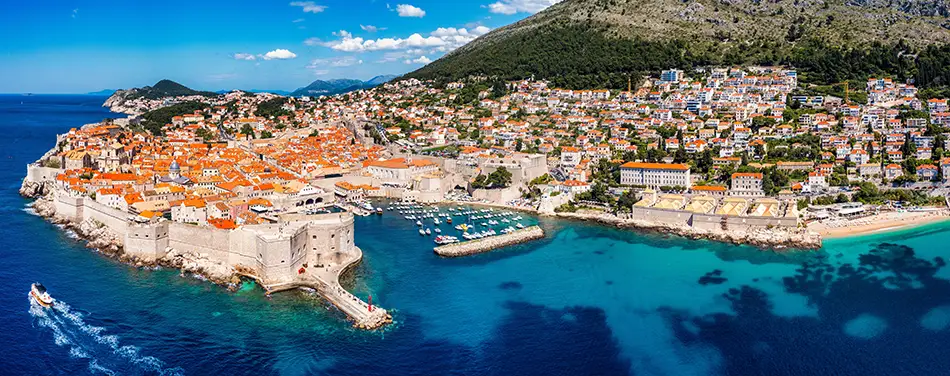
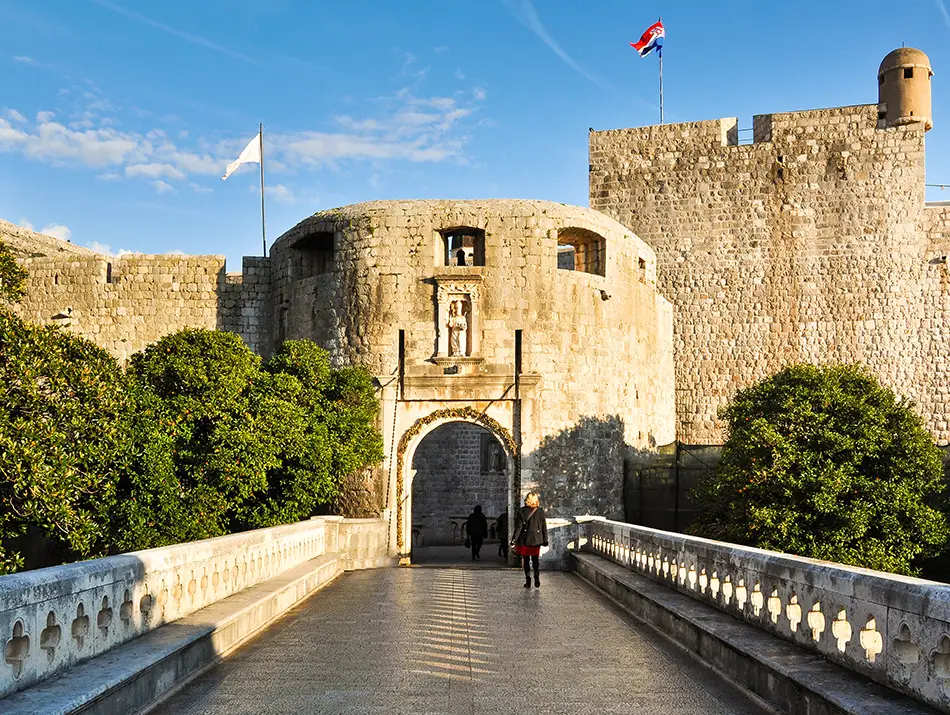
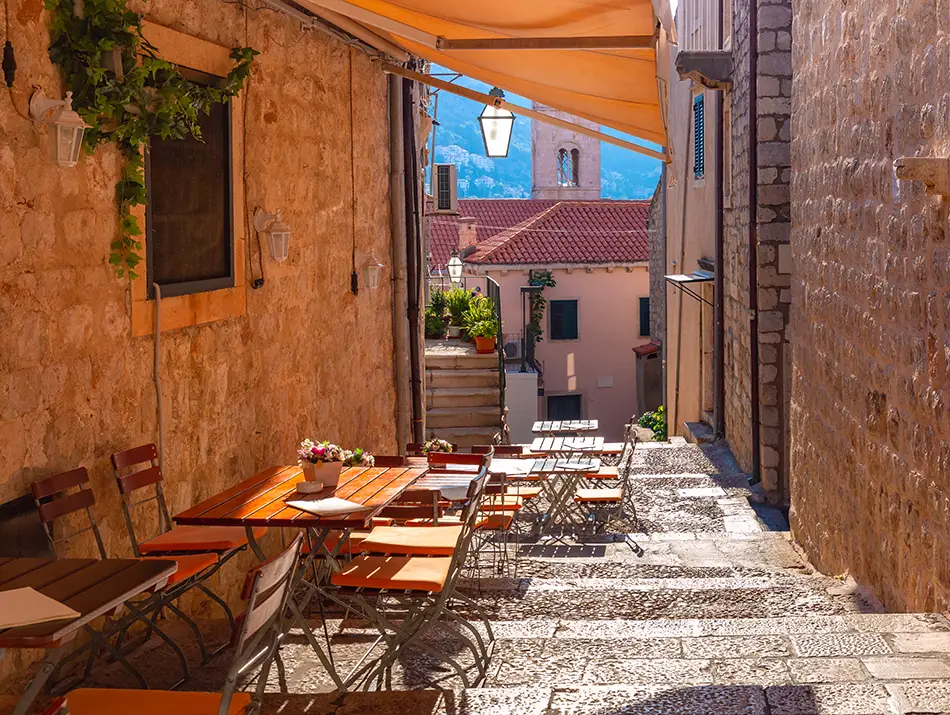
Dubrovnik is a medieval walled city on Croatia’s Adriatic coast. Its stone streets, limestone walls, and sea-facing fortress towers made it a logical choice for the fictional capital of Westeros. It filled that role for most of the series run.
Walking the city walls gives you the same elevated views used repeatedly in the show. Several specific locations are easy to find with a basic location guide. These include the Jesuit Stairs (Jezuitske stube), which were used for Cersei’s Walk of Atonement. In addition, Fort Lovrijenac served as the exterior of the Red Keep.
Game of Thrones tours run frequently through the old town. Prices range depending on length and operator. They add context but are optional, since most key spots are within easy walking distance of the city walls.
Screen vs. Reality
King’s Landing appears as a massive metropolis. In reality, the Old Town is compact and can be walked end-to-end in 15 minutes. Many of the larger towers seen in the show were expanded using CGI.
Fan Interaction
Numerous “Game of Thrones” shops in the Old Town contain official Iron Throne replicas. Several local guides were actually extras in the Battle of the Blackwater and share behind-the-scenes photos.
Exact Scene Filmed
Game of Thrones: The Red Keep Exterior (Lovrijenac Fortress), Walk of Penance (the Jesuit Stairs), and market scenes (St. Dominic Street).
Star Wars: The Last Jedi: The casino city of Canto Bight.
3. Wadi Rum, Jordan
Movie List
Lawrence of Arabia (1962), The Martian (2015), Dune (2021), Rogue One: A Star Wars Story (2016)
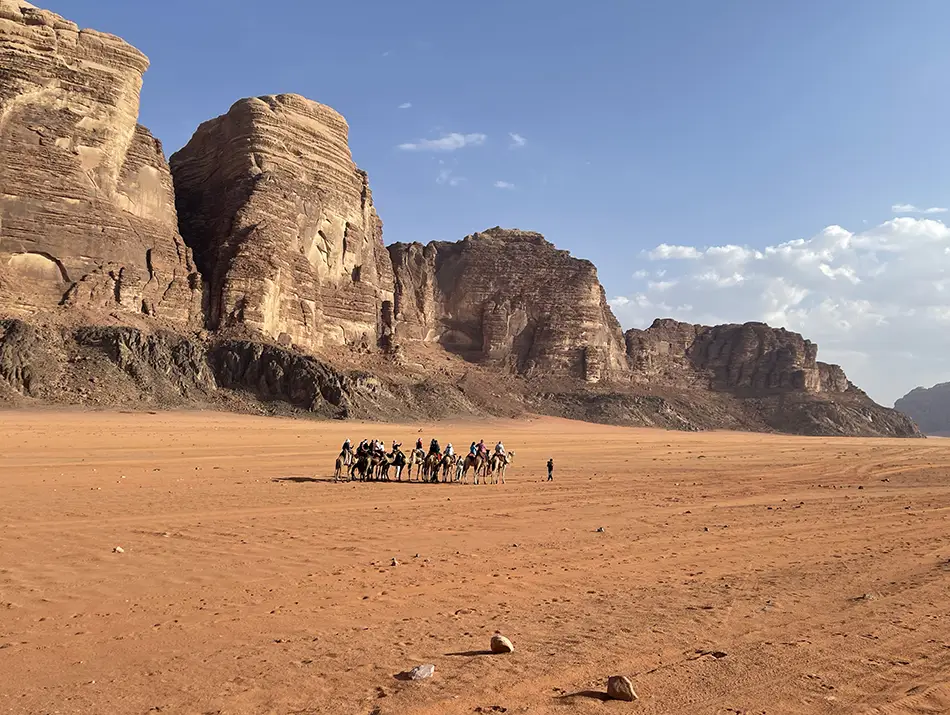
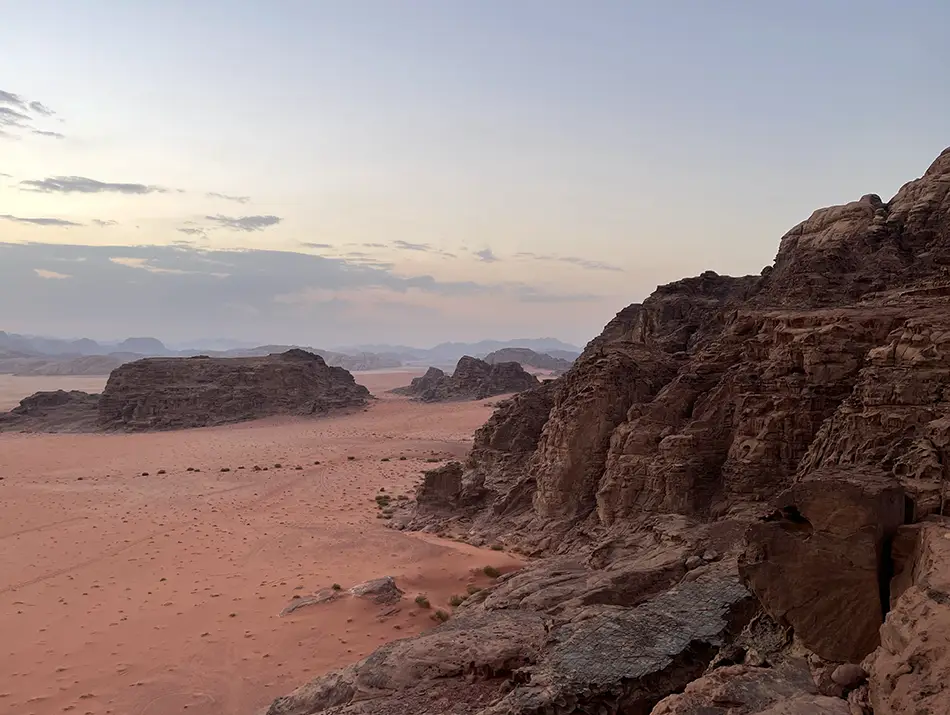
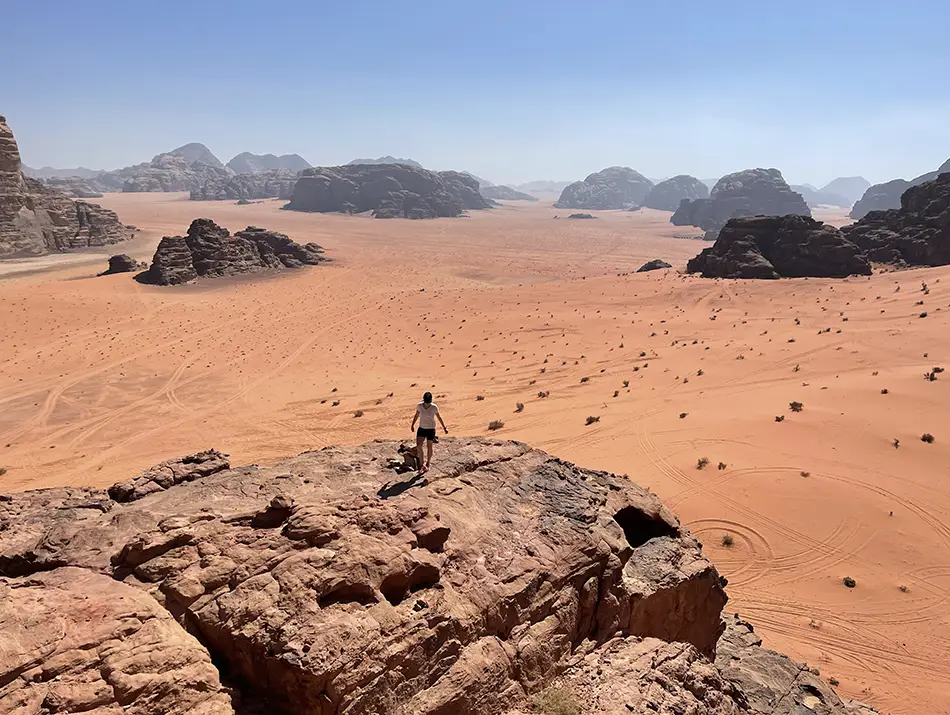
Wadi Rum is a protected desert valley in southern Jordan, known for its red sand, sandstone formations, and near-total silence. It has served as a stand-in for Mars, Arrakis, and the deserts of early 20th-century Arabia across multiple major productions. Today, it is one of the Middle East’s most recognizable set jetting destinations, drawing visitors far beyond a traditional movie scenes pilgrimage. Even travelers with no interest in cinema arrive for the landscape itself.
The desert experience here is genuine, not staged. That also means there is little shade and minimal infrastructure once you are out in the valley. Summer temperatures can be extreme, making visits between October and April significantly more manageable.
Overnight stays in desert camps are widely available at varying price points, ranging from basic Bedouin tents to high-end geodesic dome accommodations with transparent ceilings designed for stargazing.
Screen vs. Reality
Often depicted as a barren, lifeless planet (Mars) or the deep desert of Arrakis. In practice, it is a well-developed eco-tourism hub with luxury “bubble” camps and permanent Bedouin settlements.
Exact Scene Filmed
The Martian: The “Hab” site and rover travel scenes.
Dune: The deep desert of Arrakis.
Rogue One: The moon Jedha.
4. Hobbiton Movie Set, New Zealand
Movie List
The Lord of the Rings and The Hobbit trilogies
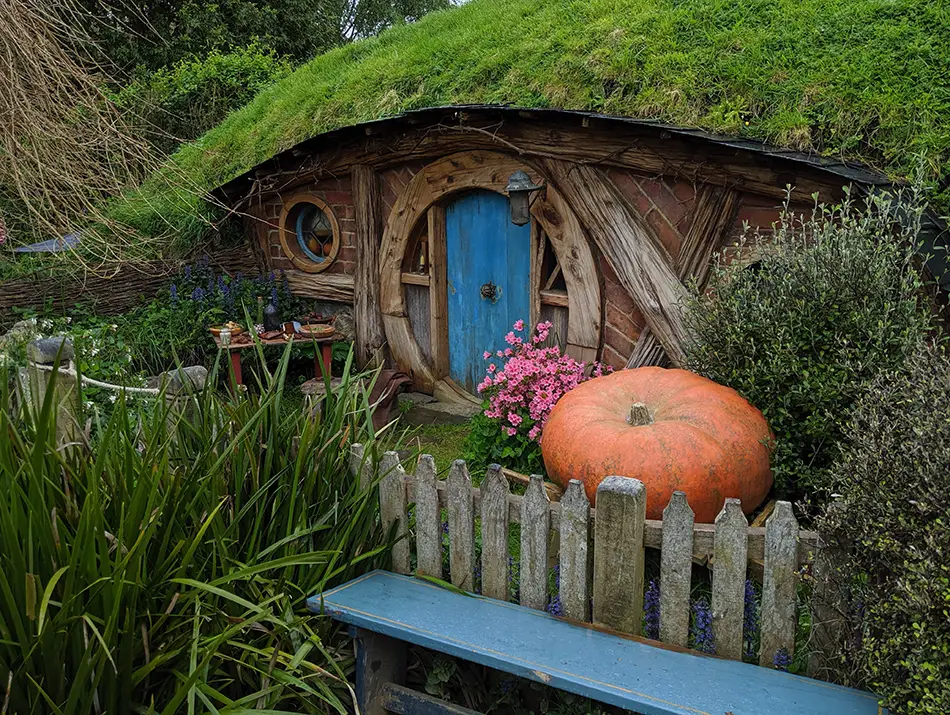
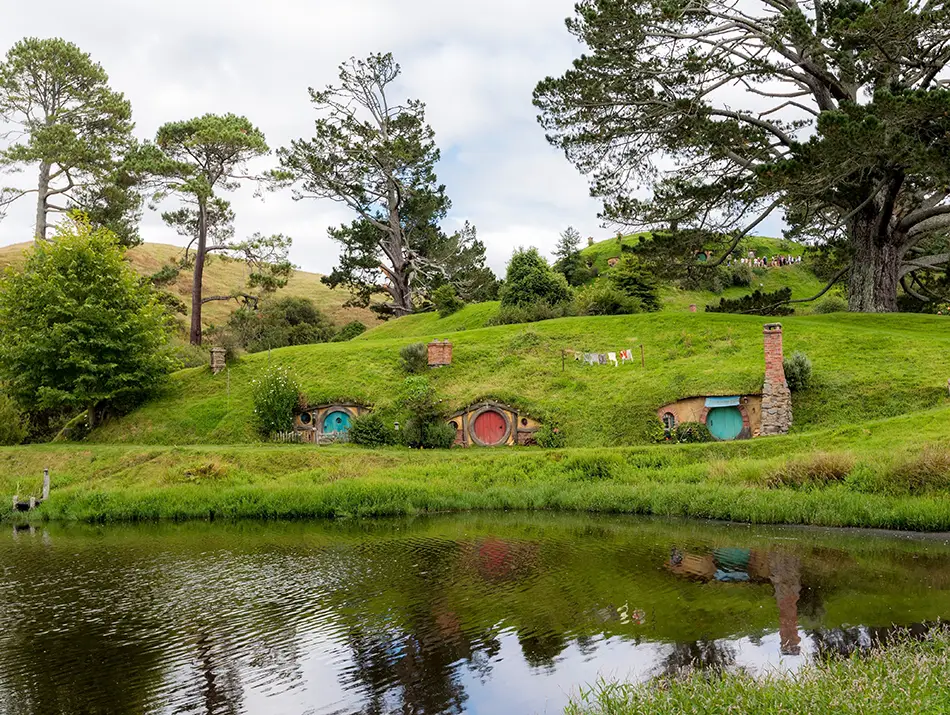
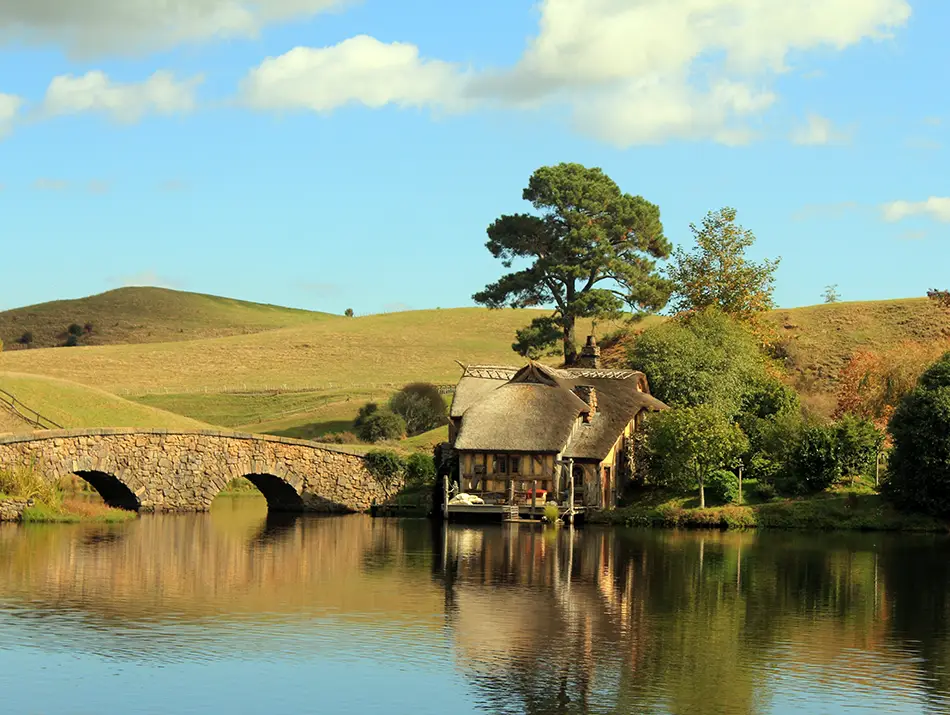
Hobbiton Movie Set is located near the town of Matamata on New Zealand’s North Island. As one of the most visited set jetting destinations in the world, it attracts travelers specifically seeking a tangible connection to The Lord of the Rings and The Hobbit. Unlike most production sets, which are dismantled after filming wraps, the 44 Hobbit Holes here were rebuilt using permanent materials and have remained in place ever since.
Guided tours run daily, leading visitors along the narrow paths of the Shire past working gardens, hanging laundry lines, and the round doors of each hole. The varying sizes of the facades create the forced-perspective effect used during filming.
Screen vs. Reality
In the films, the Shire appears as a vast, rolling country. In reality, the set is contained within a 12 acre (4.8 hectare) section of a working sheep farm.
Fan Interaction
You can visit the Green Dragon Inn at the end of the tour. The pub serves exclusive beverages—Traditional English Ale, Amber Ale, Apple Cider, and Ginger Beer—brewed specifically for Hobbiton.
Exact Scene Filmed
Bilbo’s 111th Birthday Party, Samwise Gamgee’s return home, and others.
Can You Walk Inside Hobbiton or Just View It?
Since December 2023, visitors can finally walk inside two fully themed “interior” Hobbit Holes on Bagshot Row. Other holes remain exterior facades only.
5. Skellig Michael, Ireland
Movie List
Star Wars: The Force Awakens (2015), Star Wars: The Last Jedi (2017)
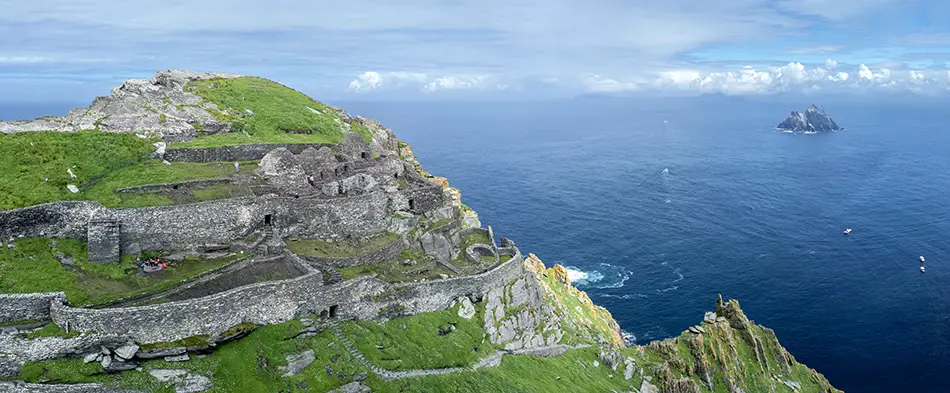
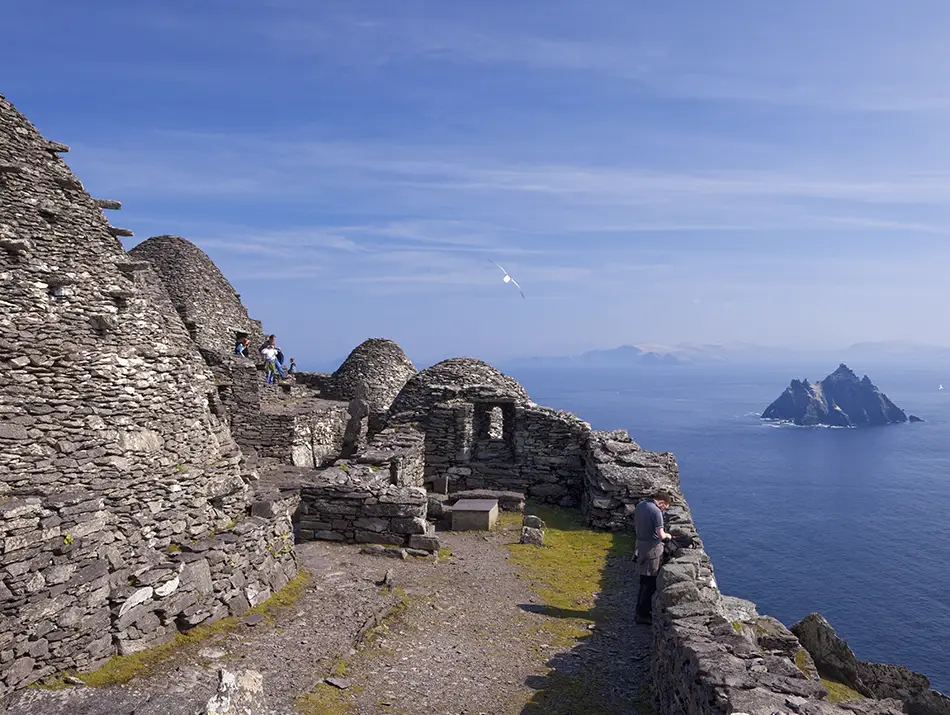
Skellig Michael is a steep, rocky island about 8 miles (13 km) off the coast of County Kerry in southwest Ireland. It served as the remote location where Luke Skywalker was found in The Force Awakens. It looks exactly as otherworldly in person as it does on screen.
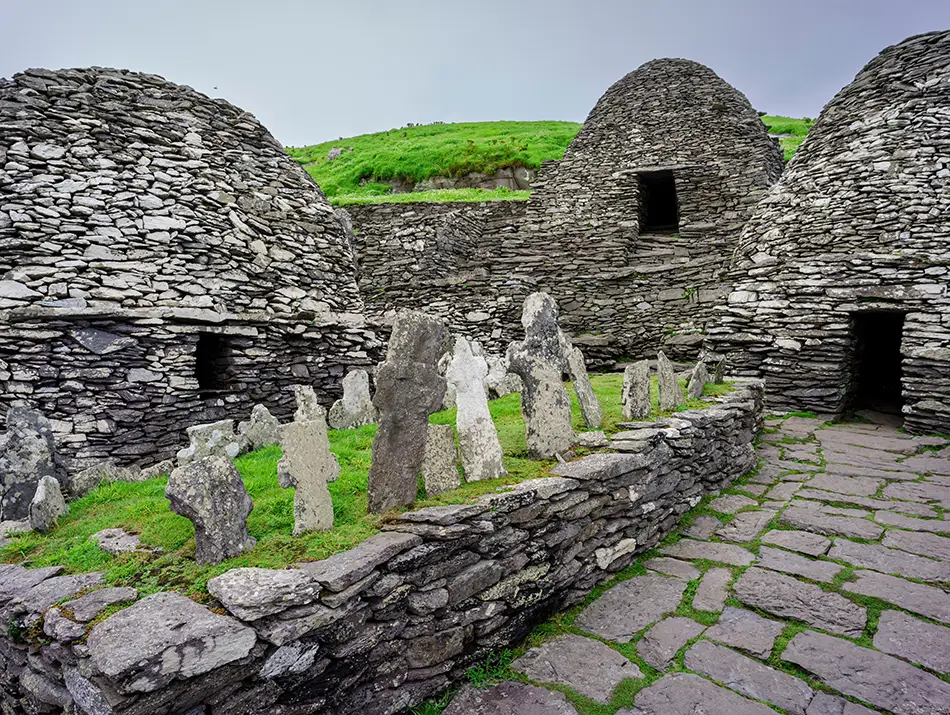
The island was a functioning monastic settlement from around the 6th century through the 12th century. The beehive stone cells built by the monks are still standing near the summit.
Access is by boat only, departing from the nearby town of Portmagee or Ballinskelligs. On the island, the only path to the monastery involves climbing 600 uneven stone steps with no handrails and significant exposure. This is a physically demanding visit. It is not suitable for young children, anyone with mobility limitations, or anyone prone to seasickness.
Screen vs. Reality
It appears as the lonely planet Ahch-To. In contrast, it is home to thousands of puffins and razorbills, making it a loud and densely populated bird sanctuary during the summer.
Production Fact
The “Porgs” in The Last Jedi were created because the island was heavily populated with puffins. Since the crew could not remove the birds from the shots, they digitally transformed them.
Fan Interaction
The nearby village of Portmagee on the mainland features “The Bridge Bar,” where the cast and crew, including Mark Hamill, spent their evenings. You can see signed photos on the walls.
Exact Scene Filmed
Luke Skywalker’s Jedi Temple and retreat.
6. Aït Benhaddou, Morocco
Movie List
Lawrence of Arabia (1962), Gladiator (2000), Game of Thrones (2011 to 2019), Kingdom of Heaven (2005), Prince of Persia (2010) and many others
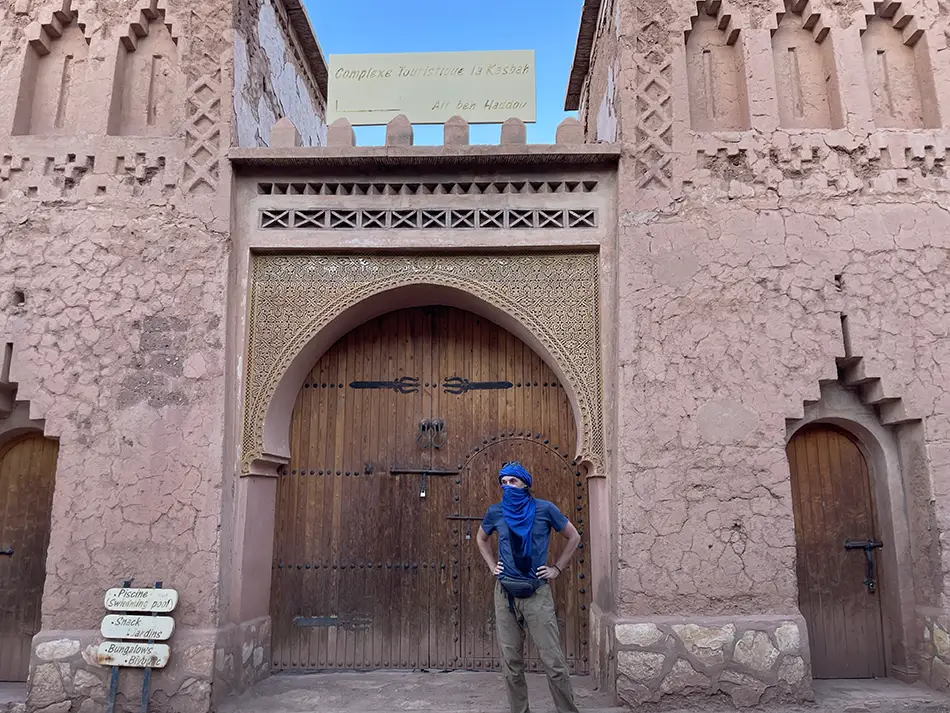
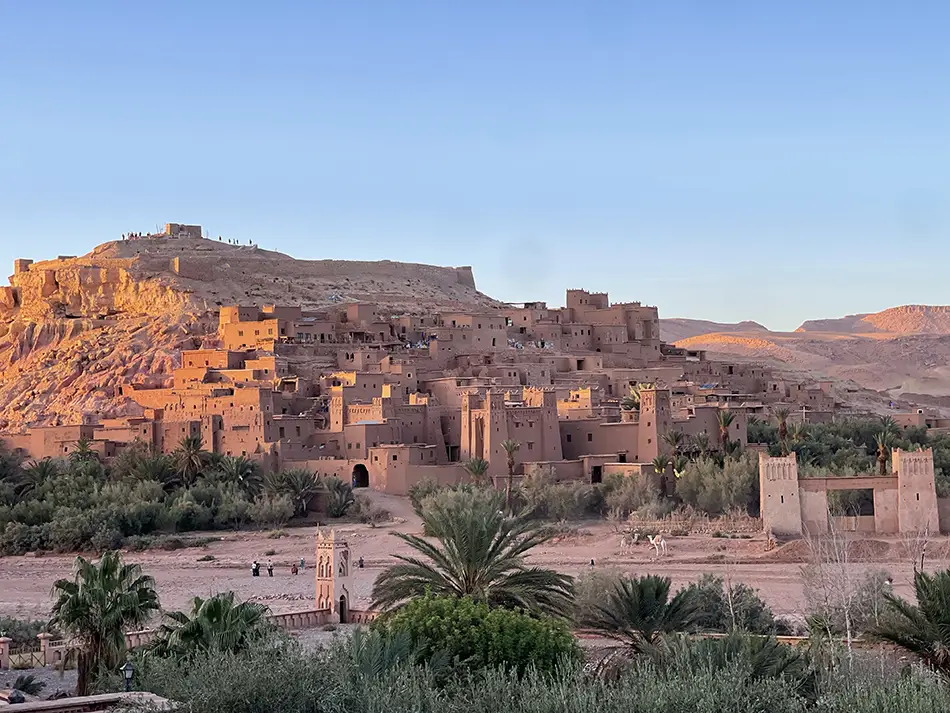
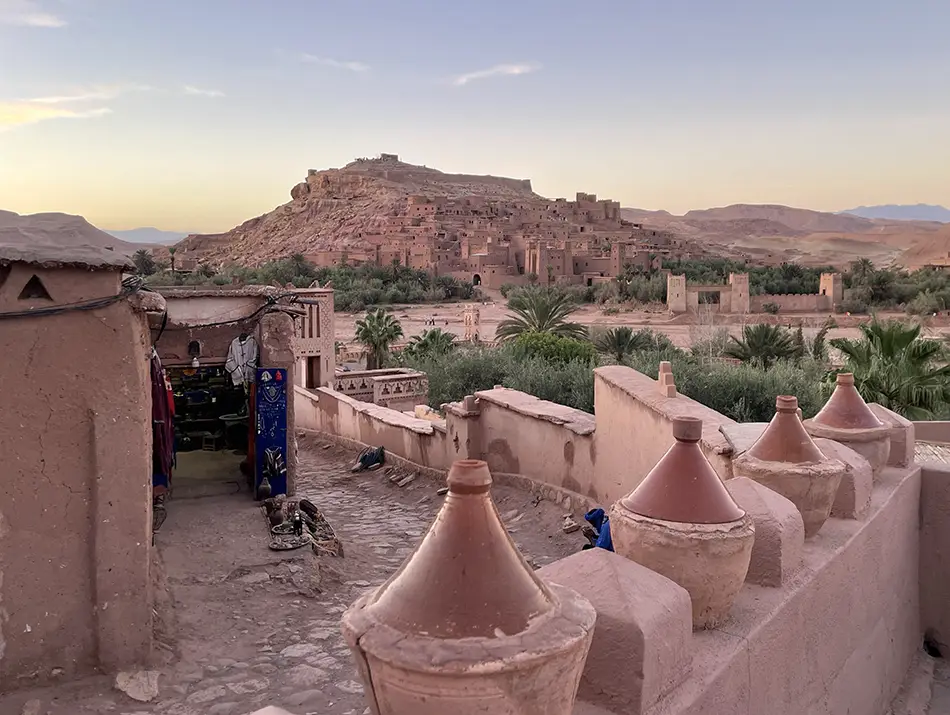
Aït Benhaddou is a fortified earthen village, known in Arabic as a ksar, located along the historic caravan route between the Sahara and Marrakech. A UNESCO World Heritage Site, it has appeared in so many productions that it is often described as one of the most iconic movie filming locations to visit worldwide.
Built from sun-dried mud brick, known as pisé, the tiered structure of the ksar — with its towers and defensive walls — creates a silhouette that reads as both ancient and cinematic. Despite its screen fame, a small number of families still live within the walls.
Screen vs. Reality
In films, Aït Benhaddou often appears as a vast ancient metropolis stretching into the desert. On site, the ksar is compact and easily walkable, and its perceived scale is frequently enhanced through framing and digital effects.
Exact Scene Filmed
Gladiator: The Moroccan slave market and training arena.
Game of Thrones: The city of Yunkai.
Can You Walk Inside or Just View It?
You can walk through the entire village at your own pace. In addition, several of the former houses are open to visitors and now function as shops or small museums.
This ancient ksar is a legendary backdrop—see the full list of films that have brought these walls to life.
7. Angkor Archaeological Park, Cambodia
Movie List
Lara Croft: Tomb Raider (2001), Two Brothers (2004)
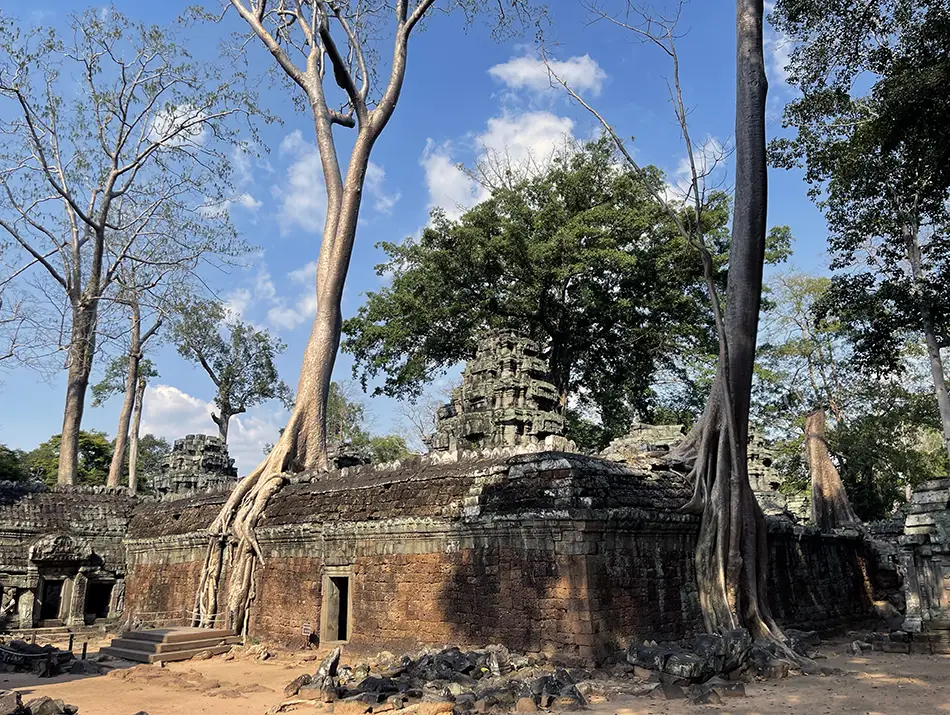
Angkor Archaeological Park is a 12th-century Hindu temple complex near the town of Siem Reap in northwestern Cambodia. It is the largest religious monument in the world by land area and a UNESCO World Heritage Site. It is also one of the most recognizable real movie locations around the world.
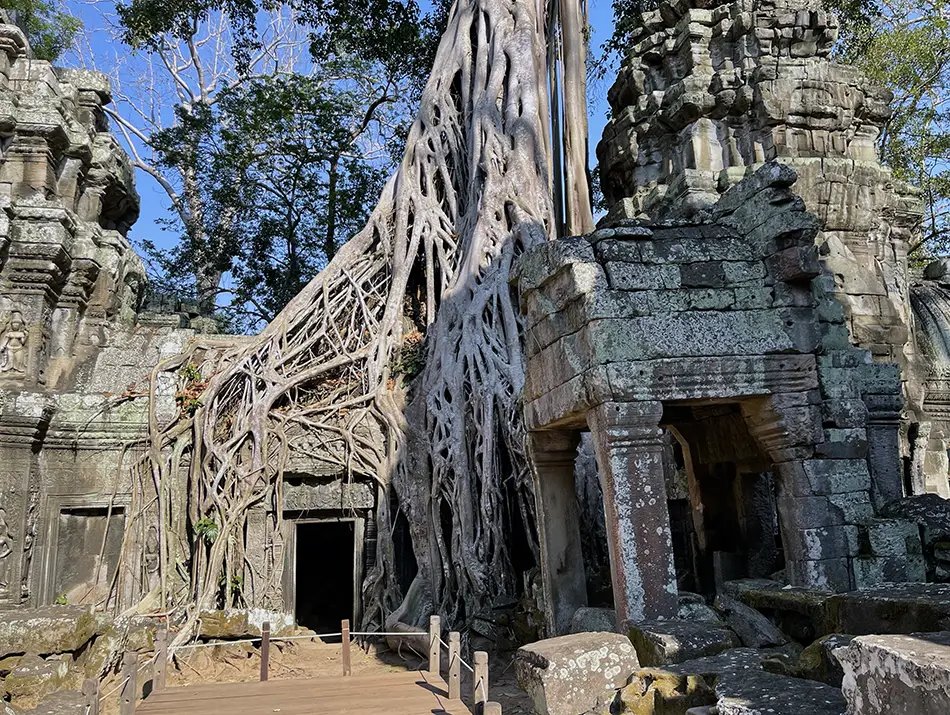
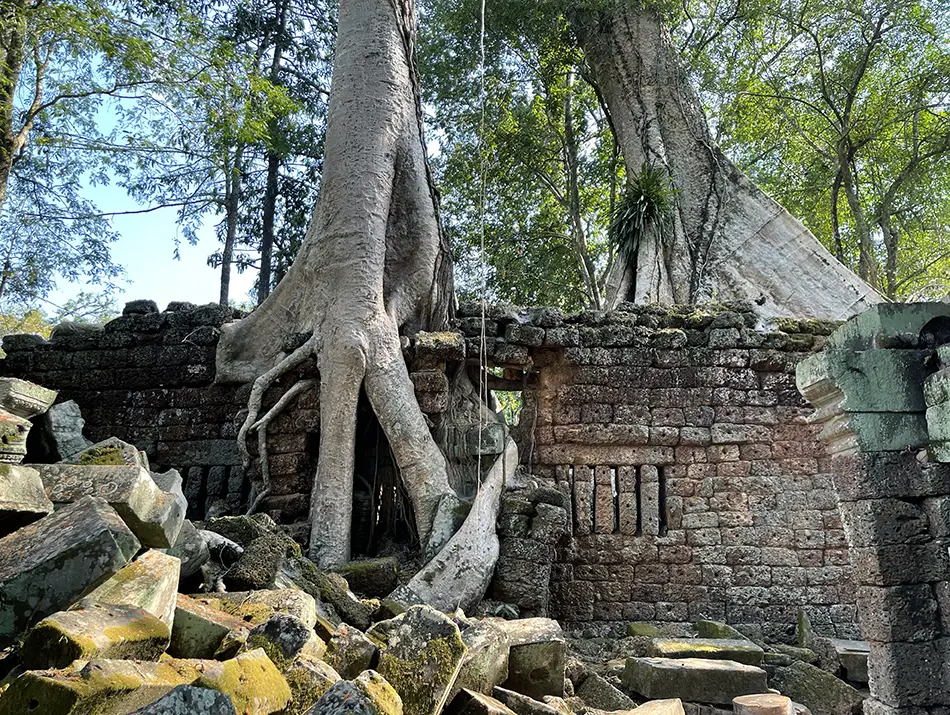
The specific site used in Tomb Raider was Ta Prohm. The temple has been deliberately left partially unrestored. As a result, large strangler fig and silk-cotton tree roots grow through and over the stone walls and galleries.
Because of this overgrowth, Ta Prohm remains immediately recognizable from the film. However, the same dramatic vegetation that defines its appearance also contributes to structural instability in certain sections.
Screen vs. Reality
Tomb Raider portrays an isolated jungle setting. Today, a paved loop road surrounds the temple are.
Fun Fact
Angelina Jolie famously adopted her first son, Maddox, from Cambodia 2 years after.
Exact Scene Filmed
Lara Croft: Tomb Raider: The temple where Lara retrieves the first half of the Triangle of Light (Ta Prohm).
8. Savoca and Forza d’Agro, Sicily, Italy
Movie List
The Godfather (1972), The Godfather Part II (1974)
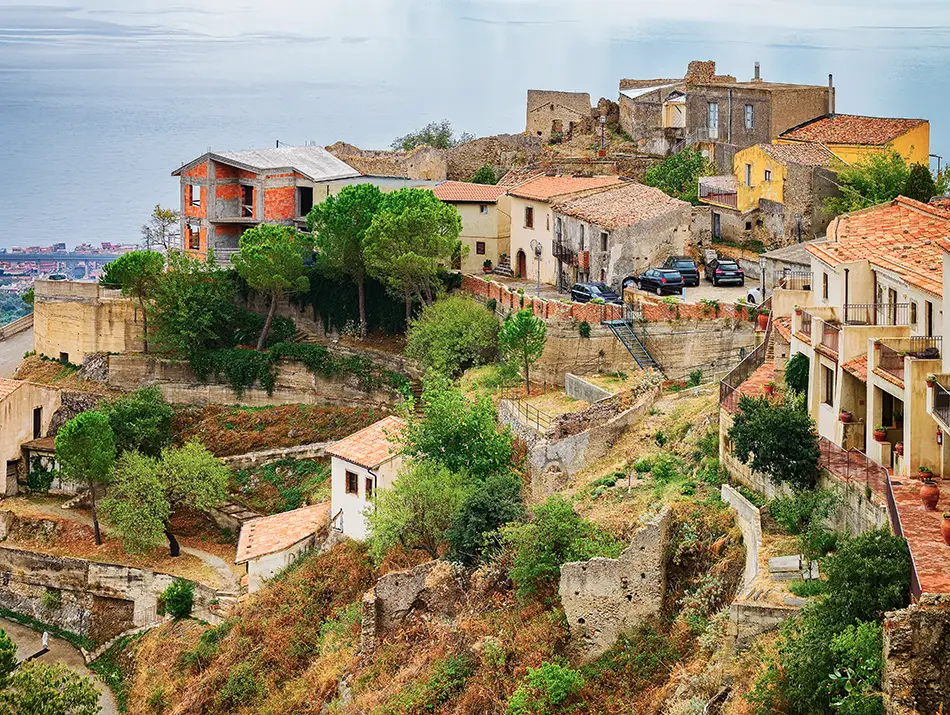
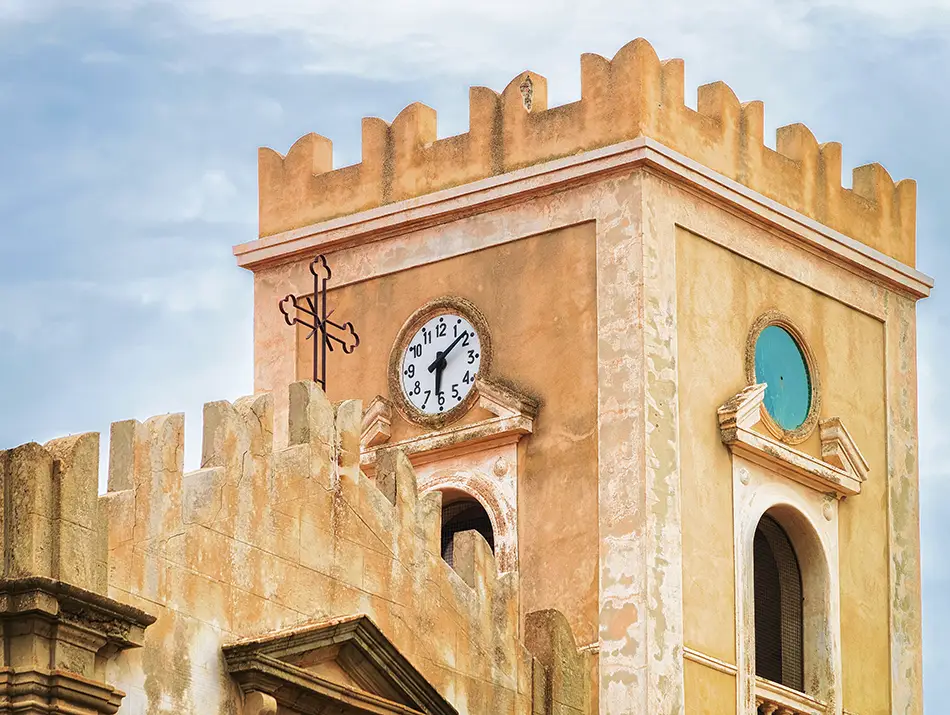
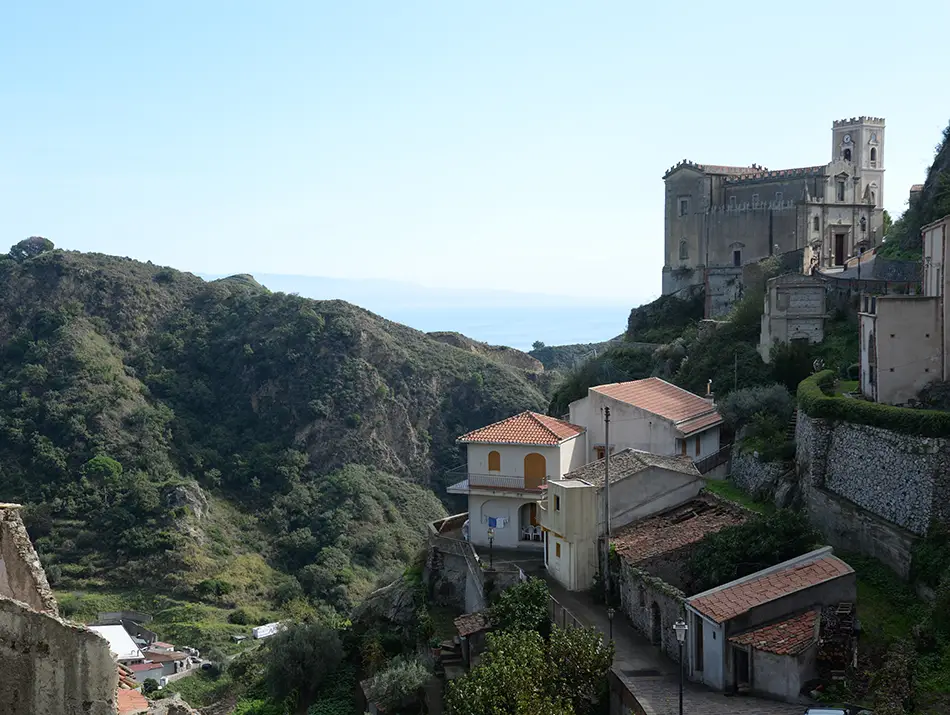
The original Godfather film shot its Sicilian scenes across these two small hill towns in the Messina province of northeastern Sicily. Savoca is the more visited of the two. It is best known for Bar Vitelli, a real bar where Michael Corleone meets Apollonia’s father and formally asks for permission to court her, following traditional Sicilian custom. The bar has remained in operation and still displays Godfather memorabilia on its walls.
Outside the bar, the town is quiet and largely unchanged from how it appeared in 1971. The Church of San Nicolo above the bar was used for the wedding scene. Forza d’Agro, a short drive away, provided additional exterior shots. Both towns are set on steep hillsides with narrow streets and limited parking, so arriving by car requires patience.
Fun Fact
Francis Ford Coppola chose Savoca because the actual town of Corleone was too developed and modern-looking even in the early 1970s.
Exact Scene Filmed
The Godfather: Bar Vitelli and the wedding march (Church of San Nicolò).
9. Maya Bay, Thailand
Movie List
The Beach (2000)
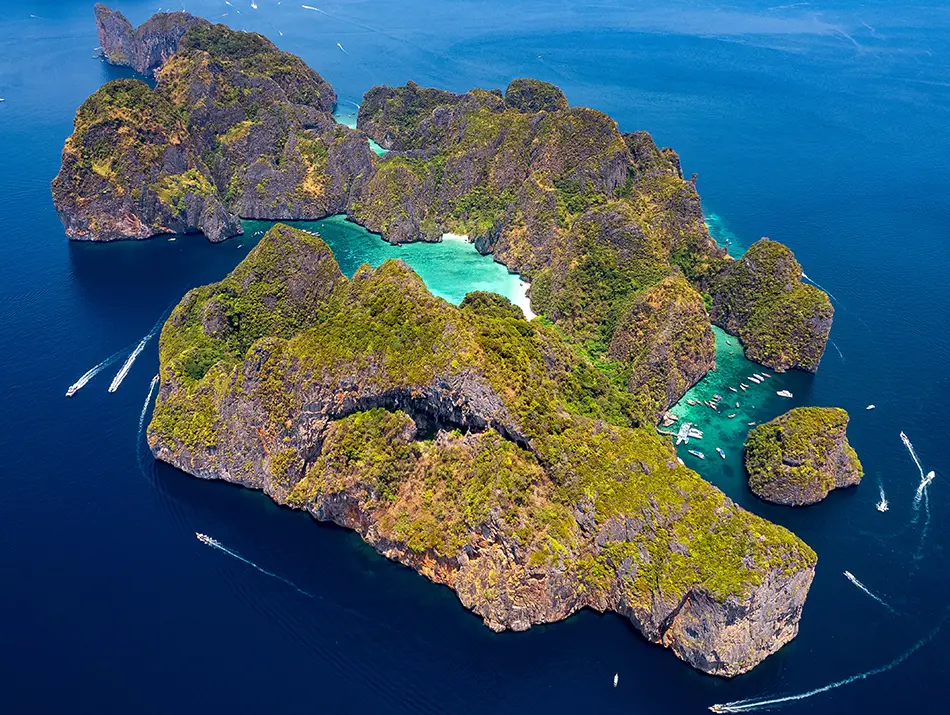
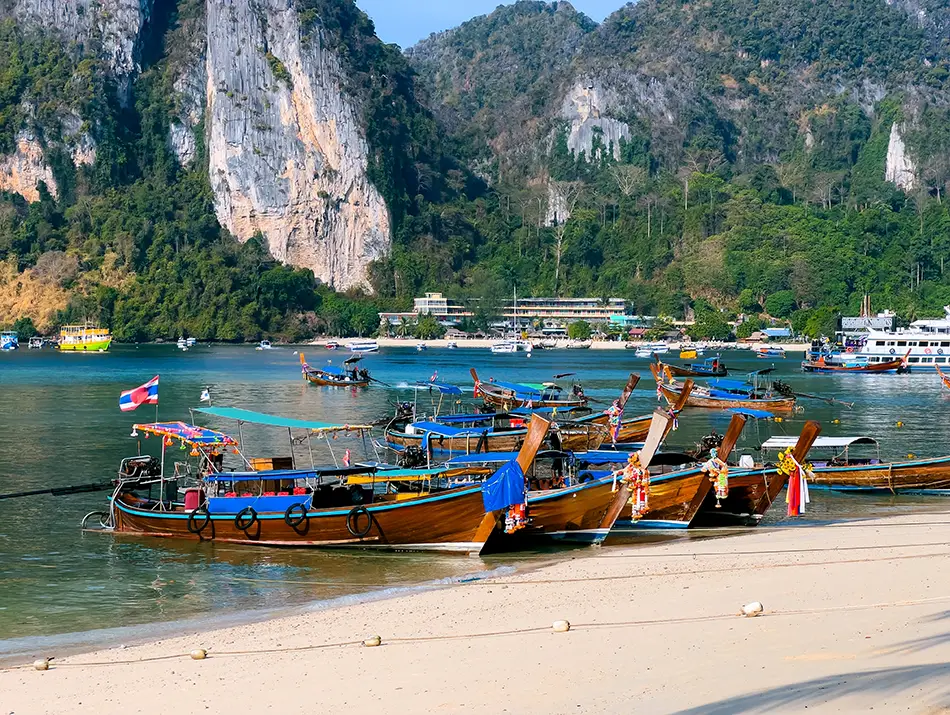
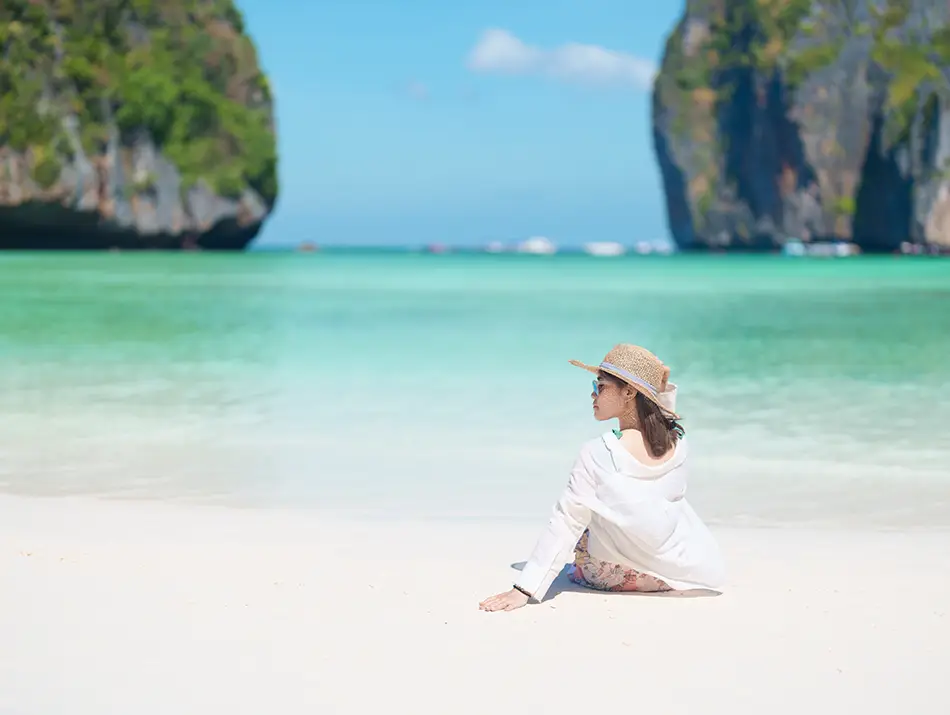
Maya Bay is a cove on the island of Koh Phi Phi Leh in Thailand’s Krabi province. It became internationally famous after serving as the central location in The Beach. Surrounded by towering limestone cliffs, the enclosed bay created the isolated atmosphere that defined the film’s visual identity and later placed it among the best movie locations for travelers seeking real-life cinematic scenery.
However, Maya Bay also became one of the clearest examples of how set jetting can overwhelm fragile environments. Years of uncontrolled tourism following the film’s release caused severe damage to coral reefs and marine life. As a result, Thai authorities closed the bay entirely from 2018 to 2022 to allow the ecosystem to recover.
Screen vs. Reality
The film depicts it as a secret paradise, but after the fame it became over-crowded.
Production Fact
The production team was sued for using heavy machinery to regrade the natural sand dunes and planting non-native palm trees to create a “more tropical” look.
10. Monument Valley Navajo Tribal Park, USA
Movie List
Stagecoach (1939), The Searchers (1956), Forrest Gump (1994), My Darling Clementine (1946), and numerous others
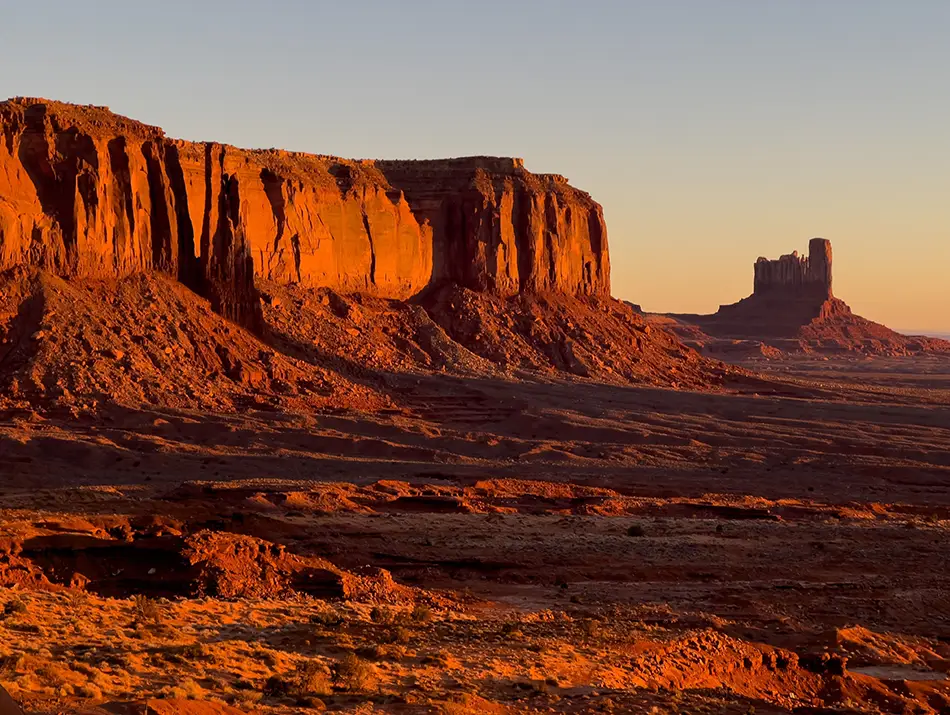
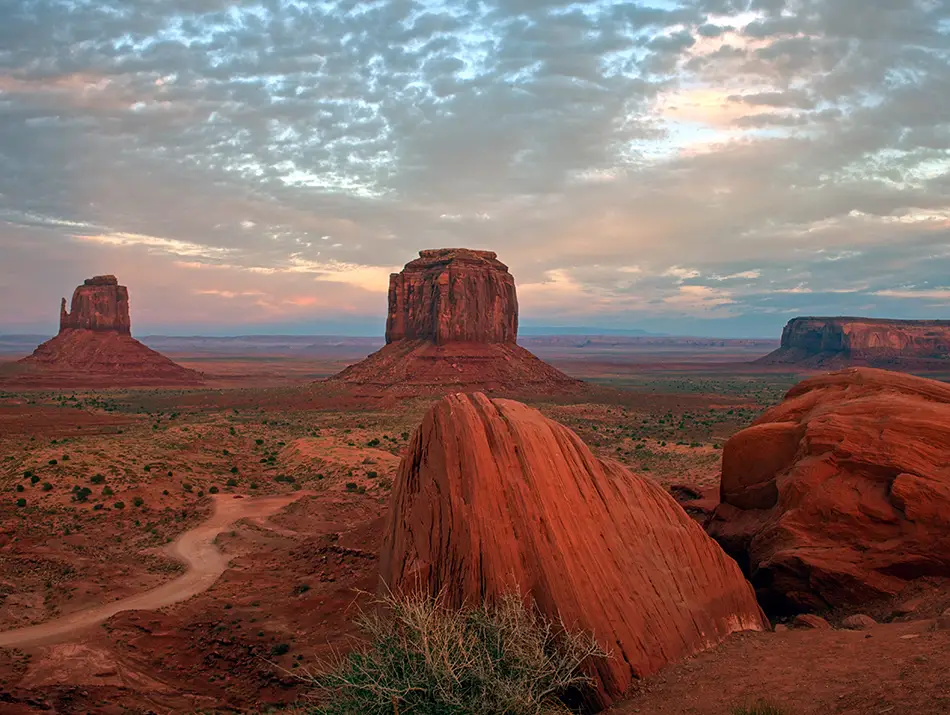
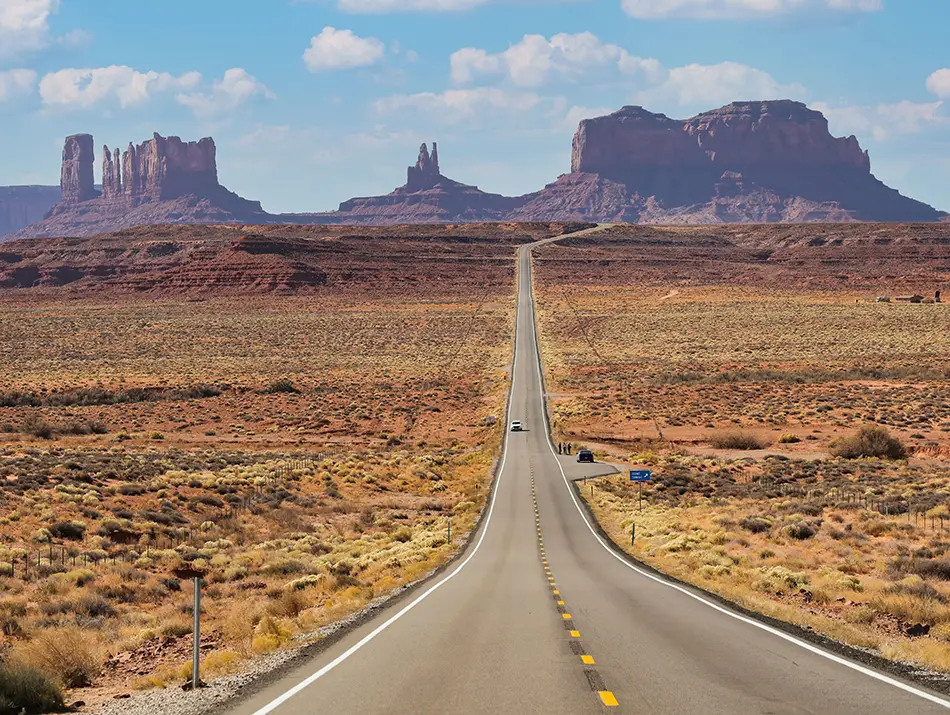
Monument Valley Navajo Tribal Park straddles the border between Utah and Arizona. It is one of the most photographed landscapes in the American West. The iconic formations, including the West and East Mitten Buttes and Merrick Butte, have appeared in John Ford’s Westerns and later road movies. Most recently, they served as the turnaround point for Forrest Gump’s cross-country run.
The most widely photographed viewpoint, Forrest Gump Point, is located outside the park along US Route 163 and is accessible at no charge. The valley is open year-round, though summer heat can be extreme and the road becomes difficult after heavy rain.
Production Fact
Director John Ford loved the location so much that he filmed nine Westerns here. The Navajo people grew so fond of him that they gave him the name “Natani Nez,” meaning “Tall Leader.”
Exact Scene Filmed
Stagecoach and The Searchers: Classic Western exteriors using Monument Valley’s desert backdrops.
Forrest Gump: Forrest’s long run ending along US Route 163 with views of the valley
Back to the Future Part III: Some Old West segments filmed in and around Monument Valley, including the drive-in set
11. Alnwick Castle, England
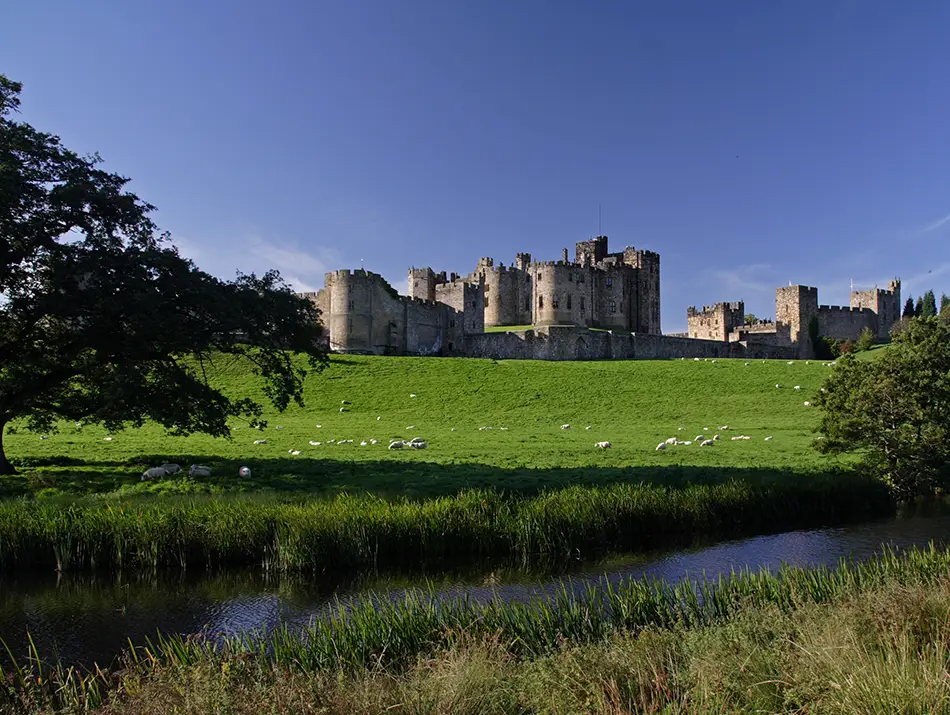
Movie List
Harry Potter and the Philosopher’s Stone (2001), Harry Potter and the Chamber of Secrets (2002), Robin Hood: Prince of Thieves (1991), Downton Abbey (2010–2015)
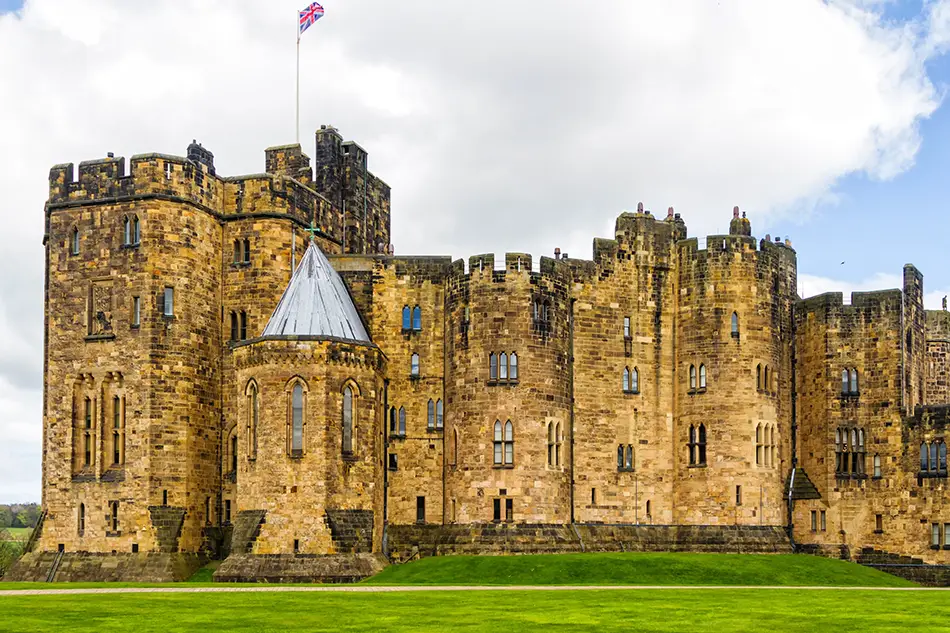
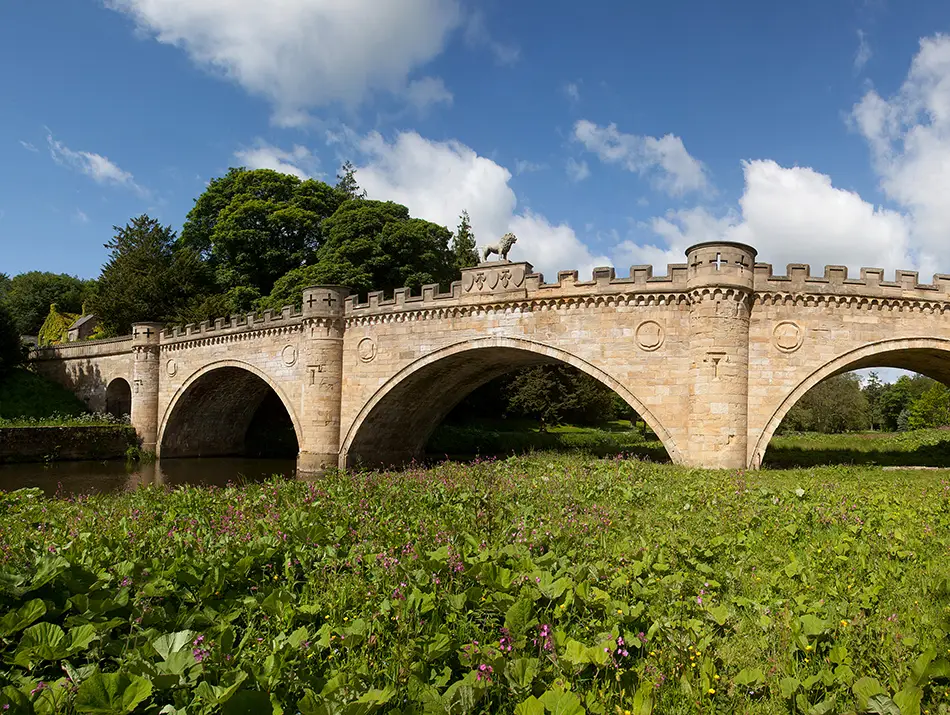
Alnwick Castle is a working castle in Northumberland, in northeast England. It has been the seat of the Percy family, Dukes of Northumberland, for over 700 years. The filmmakers used its Outer Bailey for Harry Potter’s first flying lesson and several other Hogwarts exterior scenes in the first two films.
The castle currently offers “broomstick training” sessions in the Bailey during the visitor season. These take place on or near the same ground used during filming and are designed as family-oriented demonstrations rather than extended activities. The interiors are also open to visitors, featuring state rooms, art collections, and rotating exhibitions that explore its long history beyond its film appearances.
Screen vs. Reality
Hogwarts is shown as a dramatic mountain fortress. Outside the cinematic setting, Alnwick sits within a town and is bordered by manicured grounds instead of the “Forbidden Forest.”
Exact Scene Filmed
Harry Potter and the Sorcerer’s Stone: First flying lesson.
Also Seen In
Downton Abbey: Brancaster Castle.
Robin Hood: Prince of Thieves: Exterior castle shots.
Can You Walk Inside or Just View It?
You can walk through the courtyards and the State Rooms.
12. Kauai, Hawaii, USA
Movie List
Jurassic Park (1993), Jurassic World (2015)
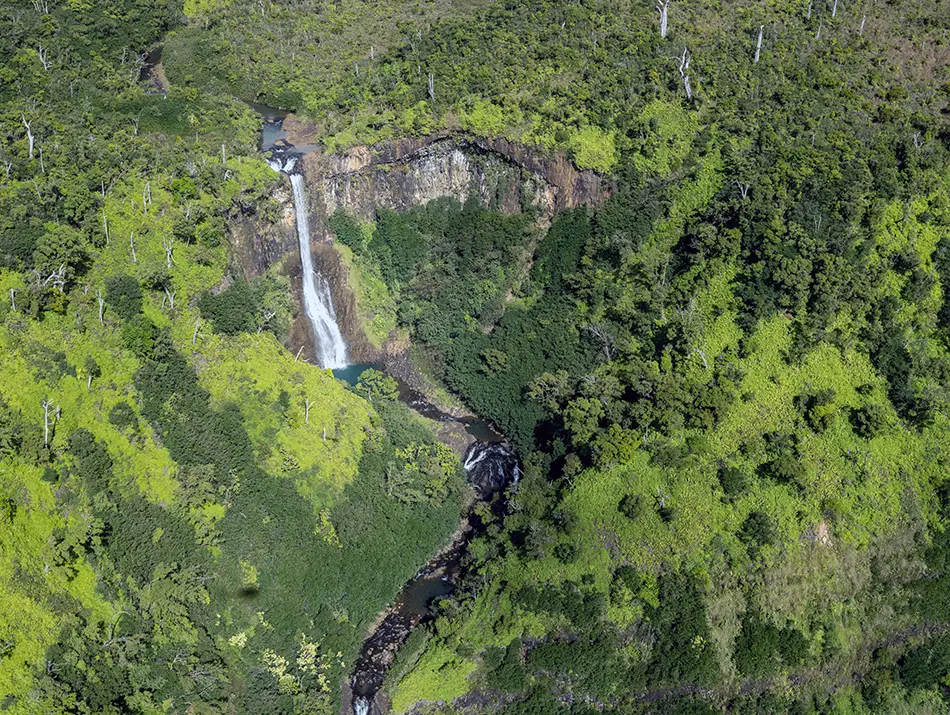
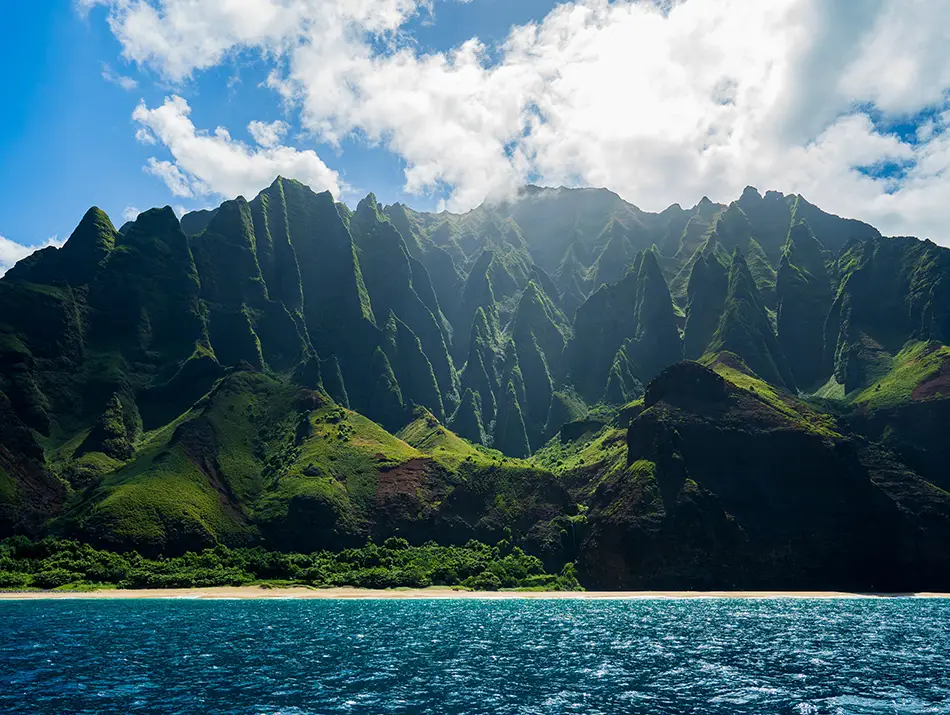
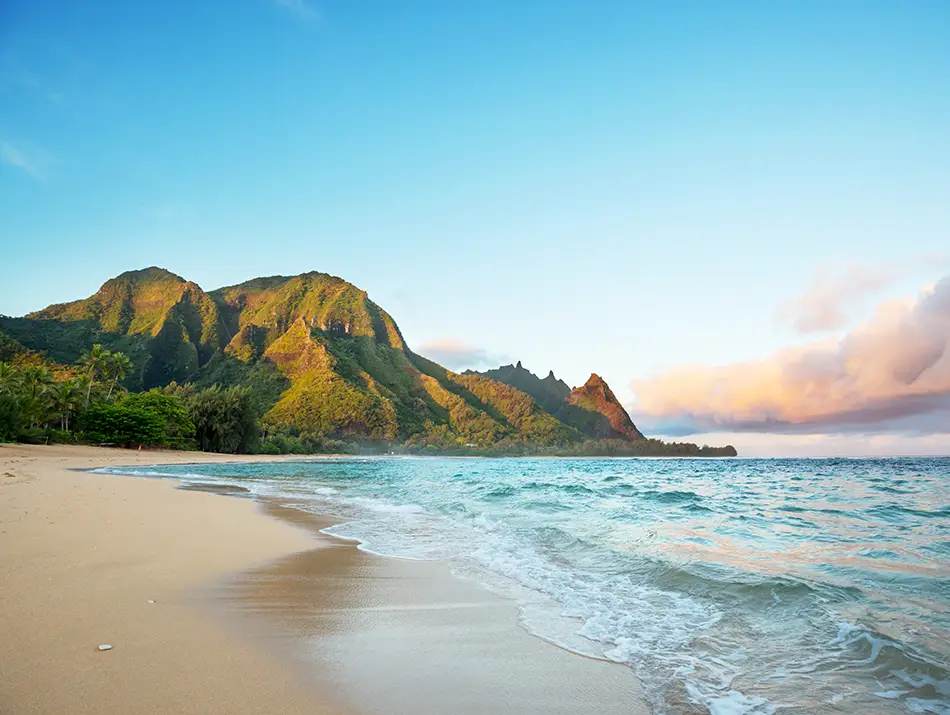
Rain-forested landscape of Kauai island was used to depict Isla Nublar in both the original Jurassic Park and the 2015 reboot. The Hanapepe Valley and the Na Pali Coast area contributed several key scenes. These include helicopter arrival sequences and the establishing shots of the dinosaur habitats.
The Manawaiopuna Falls, also known as Jurassic Park Falls, are located in the Hanapepe Valley. They are accessible only by helicopter and are a commonly cited highlight for film location visitors. Helicopter tours of the island typically run from $250 to $400 (€210 – €340) per person. They cover multiple areas including the Na Pali Coast.
Kauai is the least developed of Hawaii’s four main visitor islands. That keeps it quieter than Maui or Oahu but also means fewer amenity options outside the main towns of Lihue and Princeville.
Production Fact
During the filming of the first Jurassic Park, a massive hurricane hit the island, destroying most of the sets. The crew had to take shelter in the ballroom of their hotel.
Fan Interaction
At the Allerton Garden, you can stand between the massive Moreton Bay Fig trees where the Raptor eggs were found. The guides often have “replica” eggs for photos.
Exact Scene Filmed
Jurassic Park: The helicopter arrival (Manawaiopuna Falls) and the Raptor nest (Allerton Garden).
13. Namib Desert, Namibia
Movie List
Mad Max: Fury Road (2015), Fallout (2024 TV series)
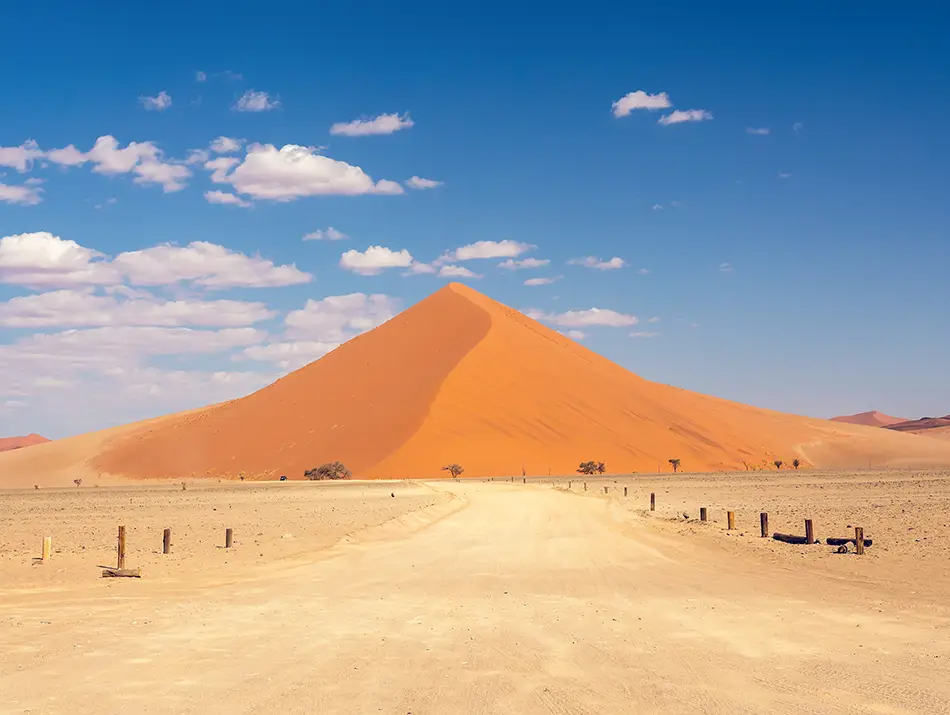
The Namib Desert is one of the oldest deserts on Earth. It stretches along much of Namibia’s Atlantic coastline and extends inland across vast dune systems. Its sweeping dunes, dry riverbeds, and abandoned settlements have made it a recurring backdrop for post-apocalyptic storytelling. For those drawn to set jetting beyond mainstream destinations, the region ranks among the best movie locations for experienced travelers willing to venture far from urban centers.
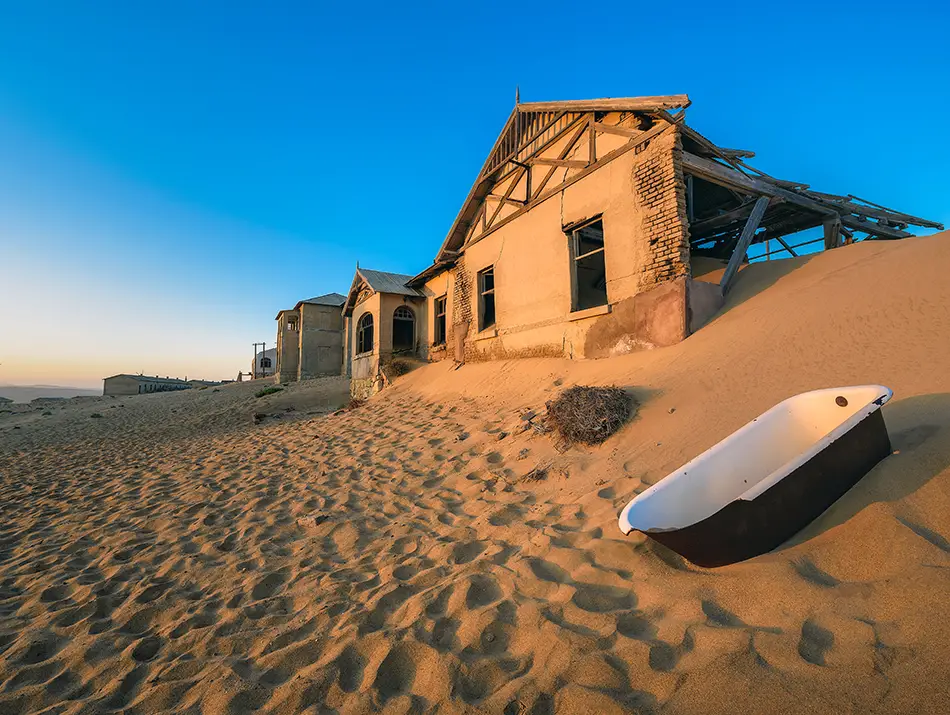
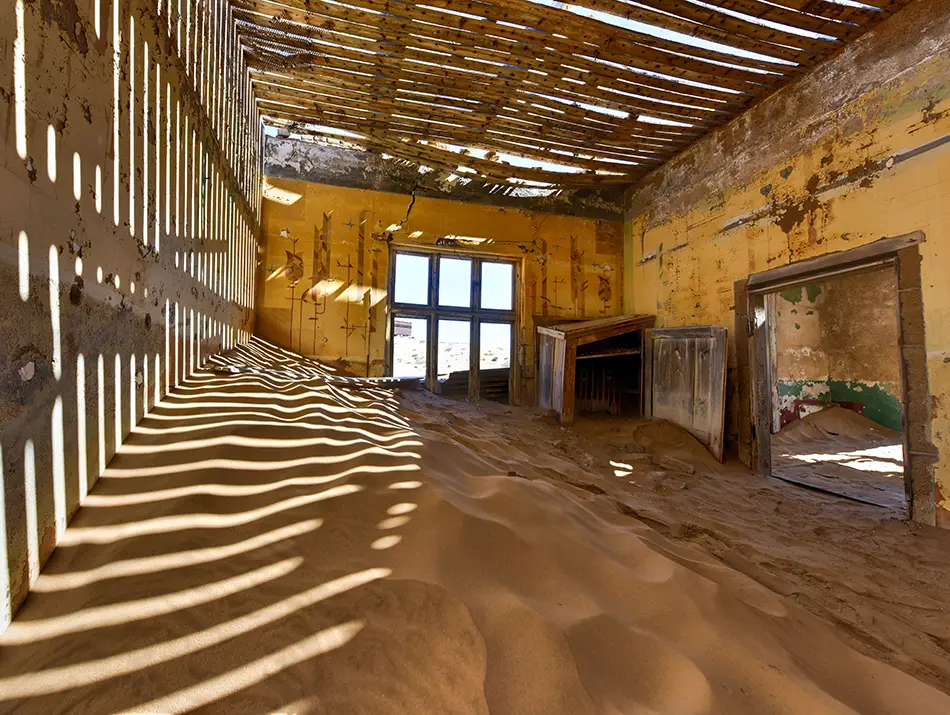
The area near Swakopmund and the Sossusvlei dune complex was used extensively in Mad Max: Fury Road for large-scale desert chase sequences. Further south, the abandoned diamond-mining town of Kolmanskop — where sand has filled the interiors of early 20th-century houses — served as a filming location for wasteland scenes in Fallout, its natural desert encroachment requiring little cinematic enhancement.
Production Fact
The production of Mad Max was so large that it temporarily boosted the local economy of the town of Swakopmund, but it also faced criticism for potentially damaging the sensitive “lichen fields” in the desert.
Fan Interaction
Local 4×4 tour operators in Swakopmund often know the exact coordinates of “The Canyon” where the War Rig was blocked.
Exact Scene Filmed
Mad Max: Fury Road: Major high-speed desert chase sequences.
Fallout: Wasteland sequences, including the sand-filled ghost town of Kolmanskop.
Planning Your Movie Pilgrimages
The experience of visiting film sets is rarely identical to what is seen on screen. In some locations, such as the stone villages of Sicily or the monastic ruins of Skellig Michael, the physical environment is so preserved that you can genuinely feel like a part of the movie scene. These sites rely on their natural scale and permanent structures to maintain a sense of cinematic reality that remains consistent even when the cameras are gone.
However, other destinations may offer a more surprising reality. You will often be surprised by how the magic of cinema can make a small, cramped alleyway in Dubrovnik look like a vast metropolis, or how a single facade in Petra can be edited to appear as a massive labyrinth.
Many of these real movie locations around the world rely heavily on specific camera angles and post-production to create their on-screen persona. While Set Jetting provides a tangible link to these stories, the most valuable part of the journey is observing the objective features of the landscape and understanding the technical craft required to transform a physical place into a fictional world.