Poshanu Cham Towers near Mui Ne are a compact group of ancient Hindu temple structures built by the Cham civilization. They stand on Ong Hoang Hill, around 9 miles (15 km) from Mui Ne’s resort strip. While most visitors come to Mui Ne for the sand dunes or kite surfing, this site provides a quiet, inland perspective on the spiritual and military history of the region.
The complex is relatively small compared to the sprawling My Son Sanctuary in Da Nang, but it serves as a central hub for the modern Cham community who still perform rituals here. It is an active religious site where you might see local fishermen praying for safe voyages or families leaving offerings on the ancient stone altars.
Side experiences at the site include:
- A small outdoor photo exhibition
- Military-era concrete bunkers on the hilltop behind the temples
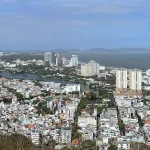
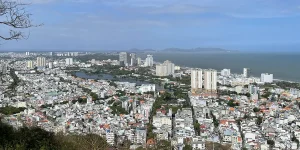
- A tower further uphill with views over Phan Thiet and the bay
- A few souvenir stalls near the entrance selling Cham-inspired crafts and simple drinks
Visitor information
- Opening hours: Daily from 7:00 AM to 5:00 PM
- Entrance price: 15,000 VND (0.57 USD / 0.48 EUR)
- 📍Poshanu Cham Towers on Google Maps
*Prices and hours are current for early 2026 and may change during public holidays.
History of Poshanu Towers
Cham civilization and religious function
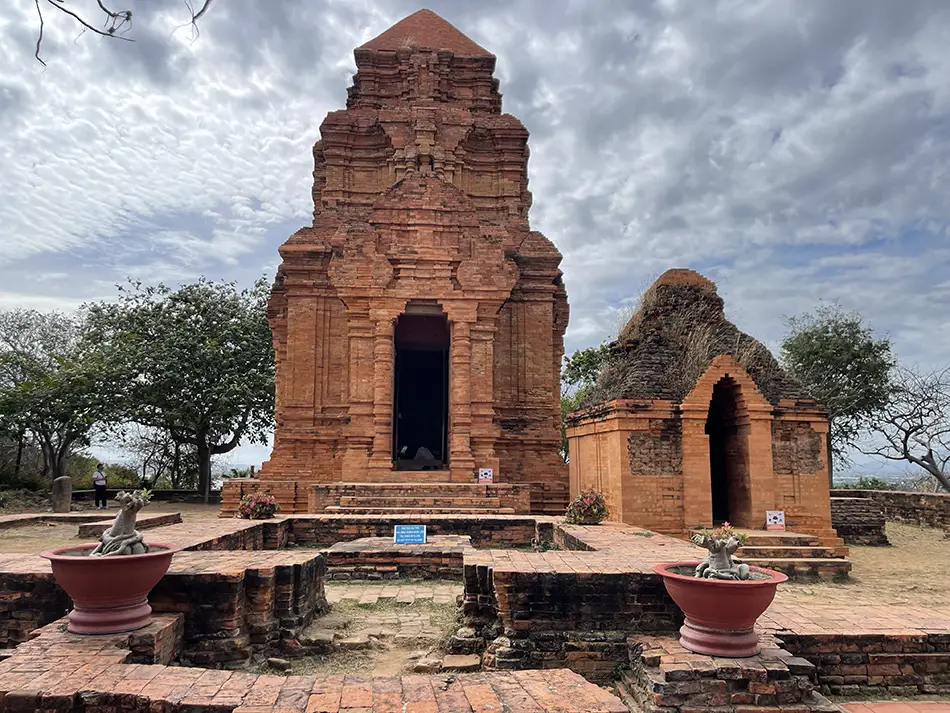
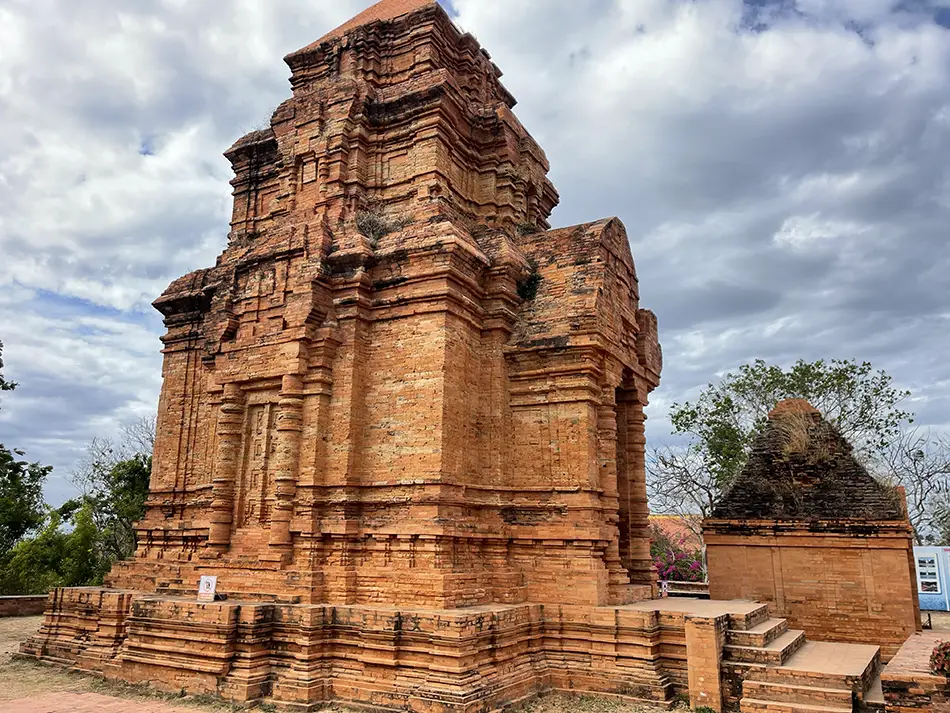
The Poshanu Cham Towers near Mui Ne were constructed between the late 8th and early 9th century by the Kingdom of Champa, a maritime civilization that controlled parts of central and southern Vietnam for centuries. The towers were dedicated primarily to the Hindu god Shiva, who was widely worshipped in Champa.
Originally, this was a larger temple complex. Today only three brick towers remain. The main tower is about 49 feet (15 meters) high. The brickwork is precise, with minimal visible mortar. Cham builders used a technique that still raises questions among historians, as the bonding method between bricks is not fully documented.
Inside the main tower, space is limited. Visitors can step in briefly. The interior once held a linga, a symbolic representation of Shiva. Even today, the structure remains a site of worship for the local Cham community, especially those who follow Balamon Cham, a localized form of Hindu tradition.
The decorative details are restrained compared to larger Cham sites such as My Son Sanctuary. However, carvings around the door frames and false doors show stylized floral and geometric patterns.
The Legends of Princess Poshanu
In the 15th century, the site was expanded to include worship of Princess Poshanu, the daughter of King Para Chanh. Local legend describes her as a figure who taught the Cham people how to cultivate rice, weave silk, and conduct themselves with grace. The site bears her name as a tribute to her service to the community.
The most famous story associated with her is a tragic romance. She fell in love with a Muslim lord named Po Sah Anne Par. Despite their different faiths, they married, but a misunderstanding fueled by her brother led to their separation. Poshanu spent the remainder of her life on the hill, and the community later built a temple to honor her spirit.
War period and hilltop bunkers
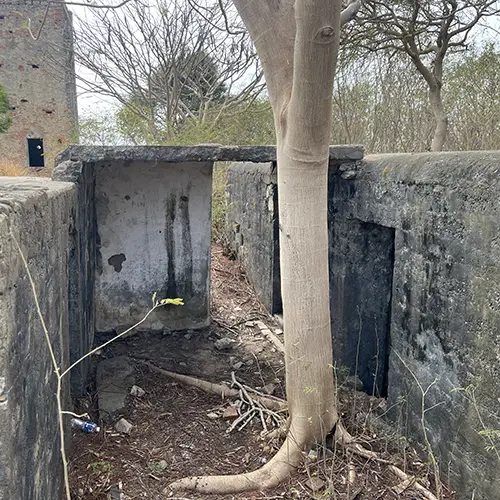
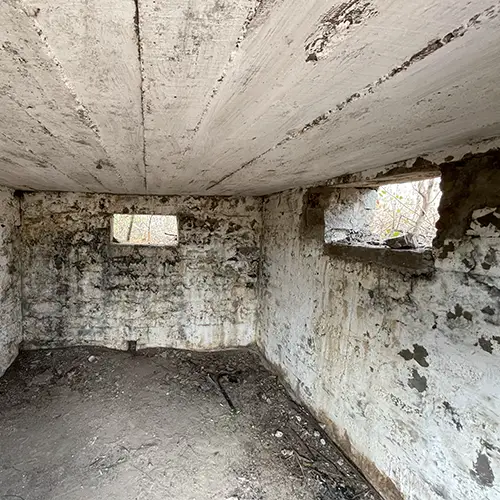
While the brick towers represent the ancient past, the hilltop also contains more recent history. Near the summit, you will find concrete bunkers and military outposts used by French and later American and South Vietnamese forces.
These structures were placed here due to the strategic view of the Phan Thiet shipping harbor and the surrounding plains. The concrete is weathered and receives little to no maintenance, but the bunkers are open and safe enough for travelers to step inside and see the narrow slits once used for surveillance.
Why Visiting Poshanu Cham Towers
For travelers searching for things to see in Mui Ne beyond beaches and sand dunes, the towers offer a layered experience in a compact area.
First, the main focus is the three Cham towers. You can walk around them freely and step briefly inside the largest one. The grounds are open, with low grass and paved paths. The elevated position provides partial views toward the coastline.
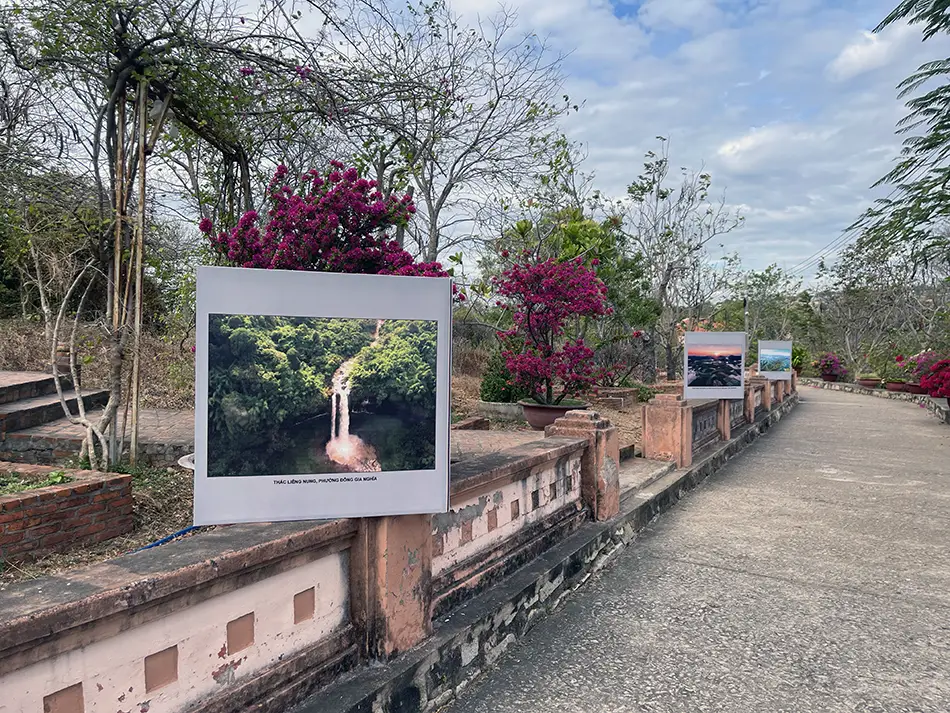
As of winter 2026, the walkway from the ticket gate to the towers includes a photo exhibition. The panels present images of natural and cultural attractions in Binh Thuan and nearby provinces. The installation functions as an introduction to the broader region rather than an in-depth museum display.
If you continue walking uphill behind the temples, you reach the former military bunkers. They are small, concrete structures with visible cracks and exposed surfaces. There is no formal safety barrier, so caution is advised when entering.
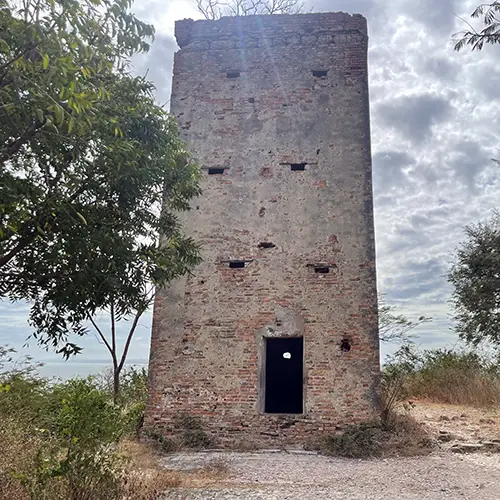
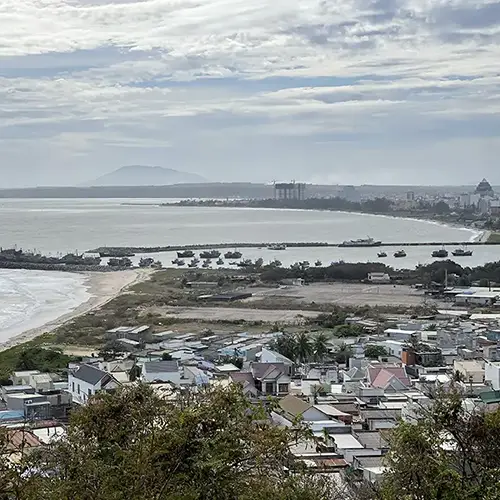
Further uphill stands the ruined Ong Hoang Tower (Lau Ong Hoang), a remnant of a French colonial villa complex built in the early 20th century. The structure later served as a military observation point due to its elevated position above Phan Thiet Bay. From here you can have a wide view over Phan Thiet city, the curved shoreline, and fishing boats in the bay. On clear days, visibility extends several miles along the coast.
Cultural Experiences at Poshanu Cham Towers in 2026
The Poshanu Cham Towers remain active during Cham cultural festivals. The most significant annual event is Kate Festival, usually held in September or October according to the Cham calendar. In 2026, Kate is expected to take place in early October, though exact dates are confirmed locally closer to the event.
During Kate Festival, Cham families gather at the towers for ceremonies, traditional music performances, and ritual offerings. Visitors may observe processions, colorful costumes, and drum performances known as ginang and baranung.
Another important event is Ramuwan, often described as the Cham equivalent of Ramadan. It usually occurs in the spring. While ceremonies are more community-focused, some observances may be visible at Cham religious sites in the province.
Best Time to Visit Cham Towers in Mui Ne
The region has a long dry season from November to April. During this period, skies are usually clear and rainfall is low. Temperatures often range between 77°F and 91°F (25°C to 33°C).
Since the site is exposed and shaded areas are limited, visiting early in the morning around 7:00 to 9:00 AM or later in the afternoon after 3:30 PM is more comfortable. Midday sun can be intense, especially from March to May.
Opening hours: 7:00 AM to 5:00 PM daily.
How to Get to the Towers from Mui Ne
Mui Ne Cham Towers are located along National Highway 1A, closer to Phan Thiet than to the main Mui Ne beach strip.
Options include:
- Motorbike rental. Common in Mui Ne. Travel time is about 20 to 25 minutes depending on traffic.
- Taxi or ride-hailing apps. Available throughout the resort area.
- Public bus. Bus Number 1 and Bus Number 9 run along the coastal road between Mui Ne and Phan Thiet. You can ask the driver to stop at the turn for the towers (Thap Cham). While this is the cheapest option, the buses can be crowded and do not always follow a strict schedule. From the bus stop, it is a 10-minute walk uphill to the entrance.
Road access is straightforward, but crossing the highway requires attention due to steady traffic.
Nearby Attractions
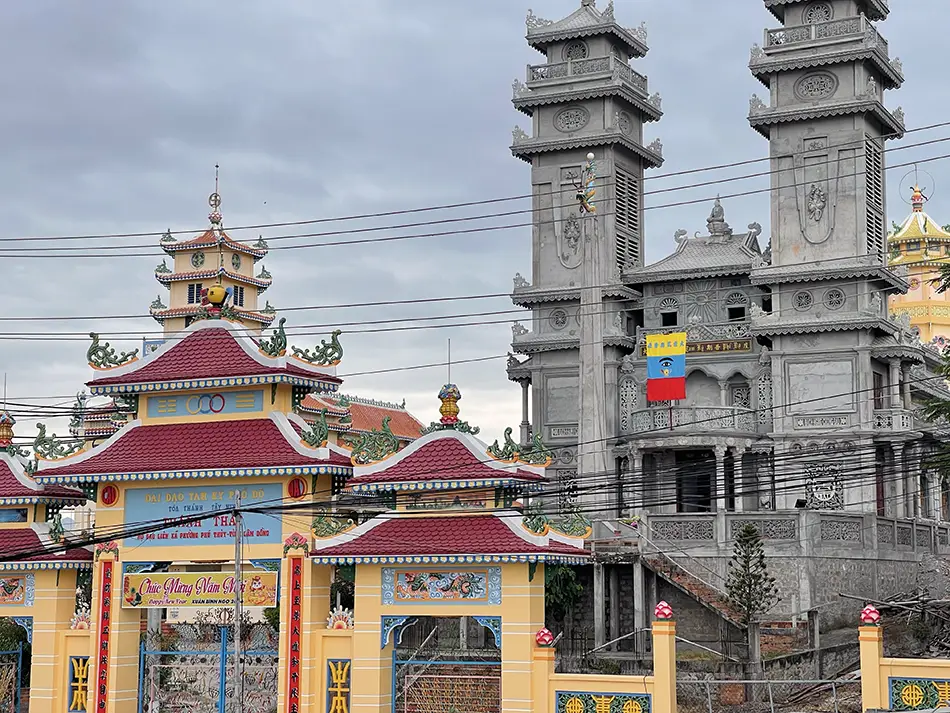
Directly across the highway from the Cham towers stands a temple of the Cao Dai faith, a Vietnamese syncretic religion combining elements of Buddhism, Christianity, Taoism, and Confucianism. The building features bright colors and prominent eye motifs symbolizing divine vision. As of 2026, a new temple structure is under construction next to the original complex.
A 📍Buddhist temple is also located nearby, adding to the area’s concentration of religious landmarks.
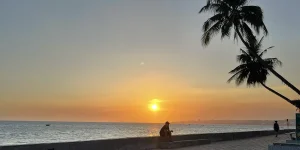
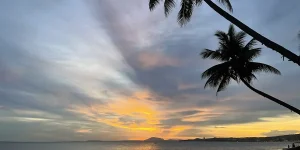
On the road back toward Mui Ne, there is a hilltop coastal road frequently used by locals as a sunset gathering point. The location does not have an official name. Almost every clear evening, local residents park motorbikes along the roadside, bring small chairs, and set up informal coffee and snack stands. 📍Google Maps location.
This sunset road is not signposted, yet it is one of the most active local evening spots in the area.
Seasoned Traveler Review on Visiting Poshanu Towers
Personal Opinion:
If you are planning to visit the Cham Towers in Nha Trang or even have My Son on your Vietnam bucket list, then this place can probably be skipped. However, if this is your only opportunity to see Cham architecture, I would definitely visit.
Even though I am not a fan of history or architecture, I personally find something mesmerizing in the very distinctive construction style that the Champa Empire used. There is something interesting about it.
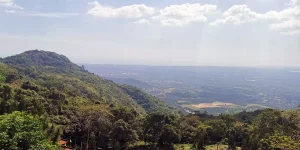
Also, for those who are not moved by the architecture itself, the uphill views are quite impressive. I recommend visiting if your Mui Ne itinerary lasts at least two to three days. It makes a good stop on the way to Ta Cu Mountain and Ke Ga Lighthouse, and only takes 30 minutes to get some unique, if subtle, impressions.
Final Thoughts
The Poshanu Cham Towers near Mui Ne offer a quiet break from the beach, providing a look at both the ancient Champa kingdom and the military history of the 20th century. While the site is compact, the combination of architecture and coastal views makes it a notable stop on the list of Mui Ne attractions.
For other destinations across the country, explore our full Vietnam travel guides page.