This Mui Ne travel itinerary is based on multiple visits across different seasons. It focuses on how to structure 1, 2, or 3 day trips without wasting time or missing key stops. You’ll get clear day by day plans, realistic pacing, and practical sequencing of attractions so each day flows logically.
Mui Ne (Mũi Né) started as a quiet fishing village that caught international attention during a 1995 lunar eclipse, because it sat in the perfect viewing corridor. That exposure kickstarted a slow but steady transformation: big beach resorts, hundreds of guesthouses, and two villa districts that locals call the Vietnamese Beverly Hills. Today, most visitors arrive with a Mui Ne travel itinerary built around sand dunes, seafood, and water sports.
That said, Mui Ne is not a tropical paradise in the postcard sense. The beaches are narrow, the sand isn’t white, and the water is far from turquoise. Litter is common in the wilder stretches.
What Mui Ne actually offers is something different and, for many travelers, more interesting: a place where you can combine beach time with genuine fishing-village culture that hasn’t been completely sanitized for tourists. The key is arriving with the right expectations — and building the right itinerary.
*This article includes links to trusted experience booking platforms. If you book through them, we may earn a small commission at no extra cost to you.
Table of Contents
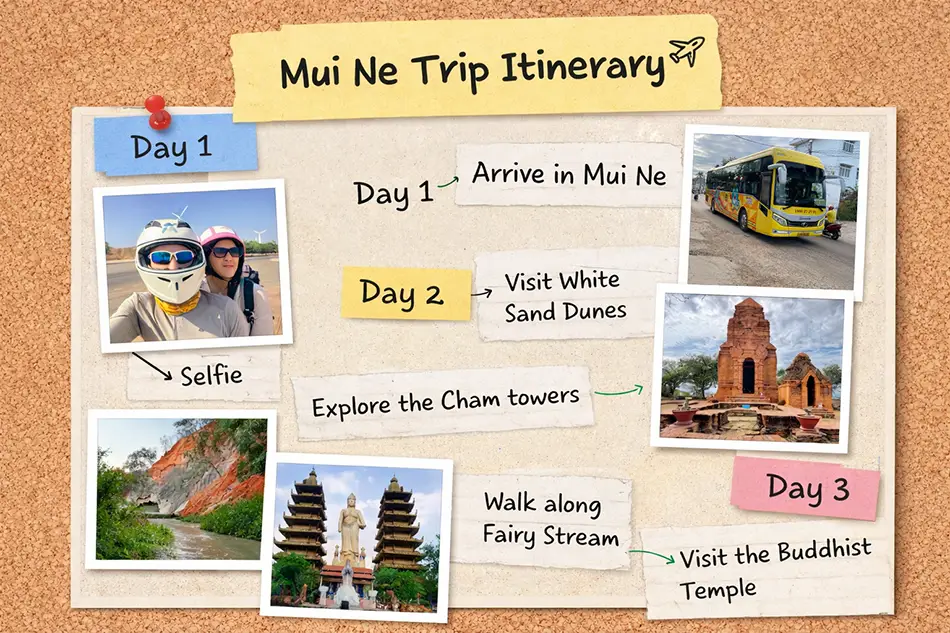
How Many Days Do You Need in Mui Ne?
- 1 day — enough for the main highlights: White Dunes at sunrise, Red Dunes, Fairy Stream, a seafood dinner, and the night view over the bay.
- 2 days — the optimal length for most travelers; covers all core attractions without feeling rushed
- 3 days — ideal if you want to move slower, explore off-the-beaten-path spots, or fit in a surfing or Muay Thai session
- 4+ days — makes sense if you’re taking kitesurfing lessons or simply want a low-key coastal base
What Mui Ne Actually Is: The Main Attractions
Most short visits are built around four sites:
White Sand Dunes (Bau Trang) — Located about 35 miles (56 km) north of Mui Ne center (near Bau Trang), these are the headline attraction. Two lakes sit at the base, and the landscape genuinely feels out of place for coastal Vietnam.
Red Sand Dunes — Much closer to town, and far more manageable in scale. The color is striking, especially in late afternoon light. Expect vendors and sand sleigh rentals rather than solitude. Worth a photo stop, but not a destination in itself.
Fairy Stream — A shallow red-and-white sandstone stream you wade through for under a mile (1.5 km) to a small waterfall. Water is ankle-to-knee deep. Takes around 60–90 minutes.
Fishing Village Viewpoint — An elevated lookout above the traditional round-boat harbor in Mui Ne village. It’s a 5-minute stop, but it provides real context for what this place is outside the resort strip.
For longer stays, the surrounding region adds three day trip destinations from Mui Ne:
- Ta Cu Mountain — Buddhist monastery in the jungle, giant reclining Buddha statue, and a cable car ride.
- Ke Ga Lighthouse and Cape — Vietnam’s oldest and tallest lighthouse, sitting on a small island.
- Cham Towers (Poshanu) — A small but well-preserved cluster of Hindu towers on a hill.
For a full list of things to do, explore our Ultimate Mui Ne Attractions Guide
Mui Ne Travel Itinerary Options
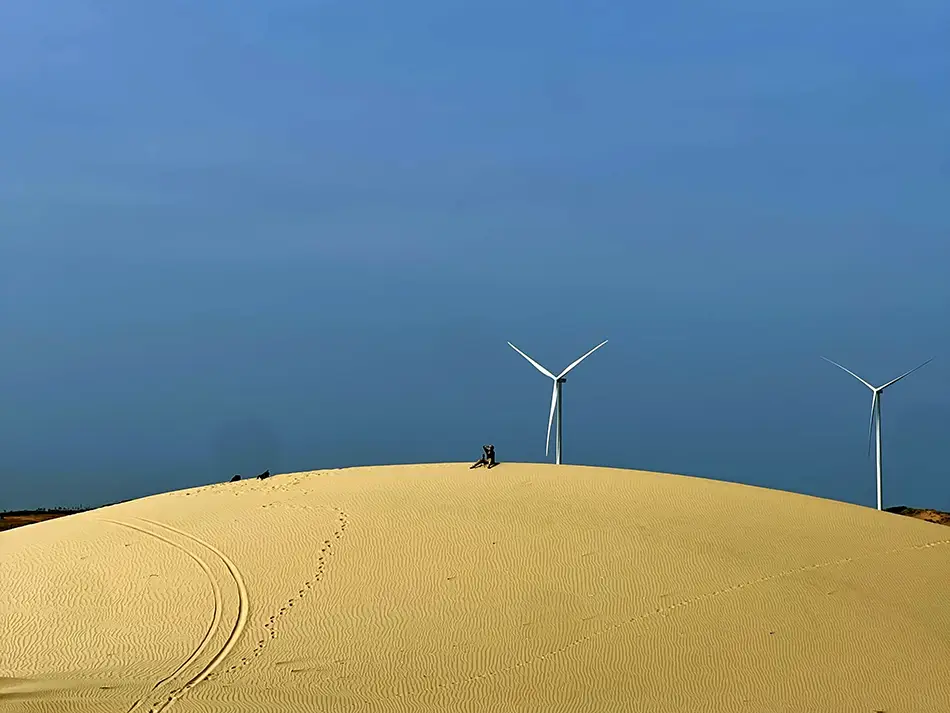
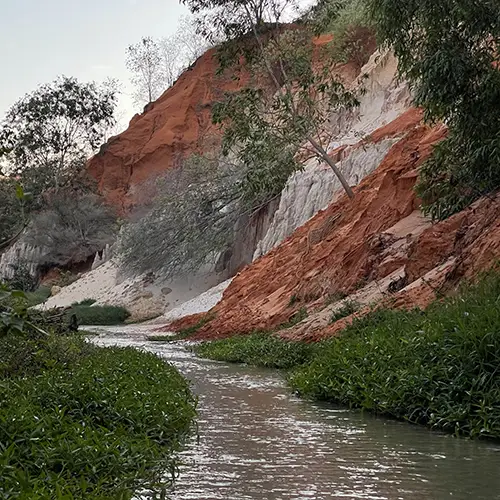
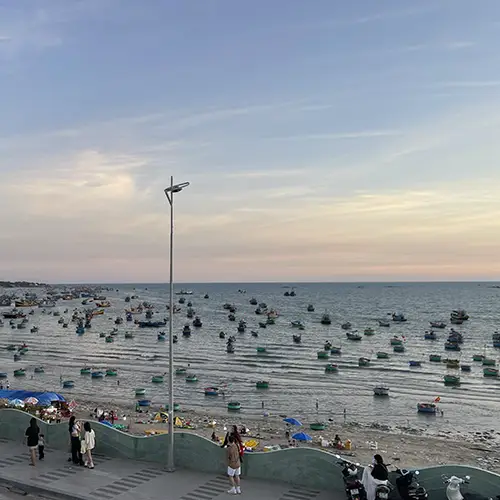
1 Day Trip to Mui Ne: The Essential Highlights
One day is doable, but it means an early start and a full day. The most efficient format is a pre-booked sunrise tour combined with self-guided afternoon time.
Morning (4:00–10:00 AM): Sunrise Dunes Tour
Sunrise white dune tours typically depart from Mui Ne hotels between 4:00–4:30 AM to catch first light around 5:30 AM. The early start is genuinely worth it — temperatures are manageable, the dunes are quiet, and the colors at sunrise are the best you’ll see. Most tours include:
- Transfer from your hotel
- White Sand Dunes with time to walk and photograph
- Stop at the Red Sand Dunes on the return
- Viewpoint above the fishing village harbor
Tours run 4–5 hours and have you back by 9:30–10:00 AM. Book through a travel agency on the main strip — Nguyen Dinh Chieu Street. This is where most hotels, restaurants, and agencies are concentrated. For a one-day visit where delays are costly, booking online in advance is the safer option. Well-reviewed sunrise dune tours you can book on Getyourguide.com
Afternoon (11:00 AM–4:00 PM): Fairy Stream + Beach
After the tour, rest, grab lunch, then head to Fairy Stream. You can get there by local bus (Route 11) or grab a taxi. Budget 90 minutes for the stream itself. The walk is easy, no guide needed — just take off your shoes at the entrance and follow the water.
Evening: Sunset + Night Bay View
For sunset, you have two strong options:
- A seafood dinner at Bo Ke — a strip of open-air seafood restaurants that is something of a Mui Ne institution, where you pick your fish, shellfish, or squid straight from the display and it goes directly to the grill.
- Cocktails at one of the beachfront bars — 📍Pineapple Beach Bar for a polished sunset atmosphere, or 📍The Current nearby for something a little less commercial and more lived-in.
After sunset (and most guides skip this entirely)
Take a motorbike or taxi up to the highway above town and look out over the bay. At night, hundreds of squid-fishing boats light up the water with bright lamps, and the effect makes it look like a city floating just offshore. It’s one of Mui Ne’s most striking views, and almost no tourists bother to look for it. (📍Approximate location)
Doing this day independently by motorbike is entirely possible.
Just be aware that Mui Ne traffic police are known to be strict — make sure your International Driving Permit is in order before you rent. For everything about renting a motorbike in Mui Ne — checkpoints, rules, and what to watch for — see our dedicated guide.
2 Days in Mui Ne: The Extended Itinerary
Two days is a packed itinerary, but it’s the most efficient way to cover everything in and around Mui Ne without leaving anything significant behind.
Day 1: Classic Attractions
Follow the full 1-day plan above:
- Sunrise at the White Sand Dunes (organized tour or self-guided)
- Red Dunes + Fishing Village Viewpoint
- Fairy Stream in the afternoon
- Seafood dinner or beachfront bar at sunset
- Night bay view from the highway
If Mui Ne nightlife interests you, the place has two decent spots: Mantra Club and Nirvana, both on the beach side. Neither is Saigon-level, but they’re fun, unpretentious, and genuinely popular with a mixed local-and-traveler crowd.
Day 2: Southern Day Trip
The second day is best spent heading south along the coast toward Phan Thiet and beyond. Works equally well as an organized day tour or self-driven by motorbike or hired car.
Morning: Full Day Exploration Program
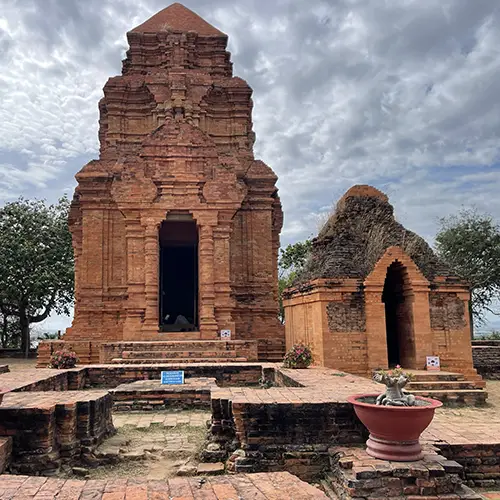
Poshanu Cham Towers — 15 minutes from Mui Ne on the edge of Phan Thiet. Three 8th–9th century Hindu towers in good condition, hilltop views over the coast, and far fewer visitors than My Son.
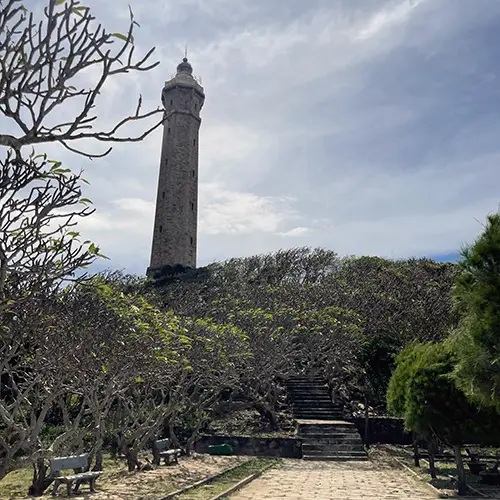
Ke Ga Cape and Lighthouse — A scenic coastal drive south brings you to Vietnam’s oldest lighthouse, French-built in 1899, sitting on a small island 300 meters offshore. Wade across at low tide or take a round wicker boat.
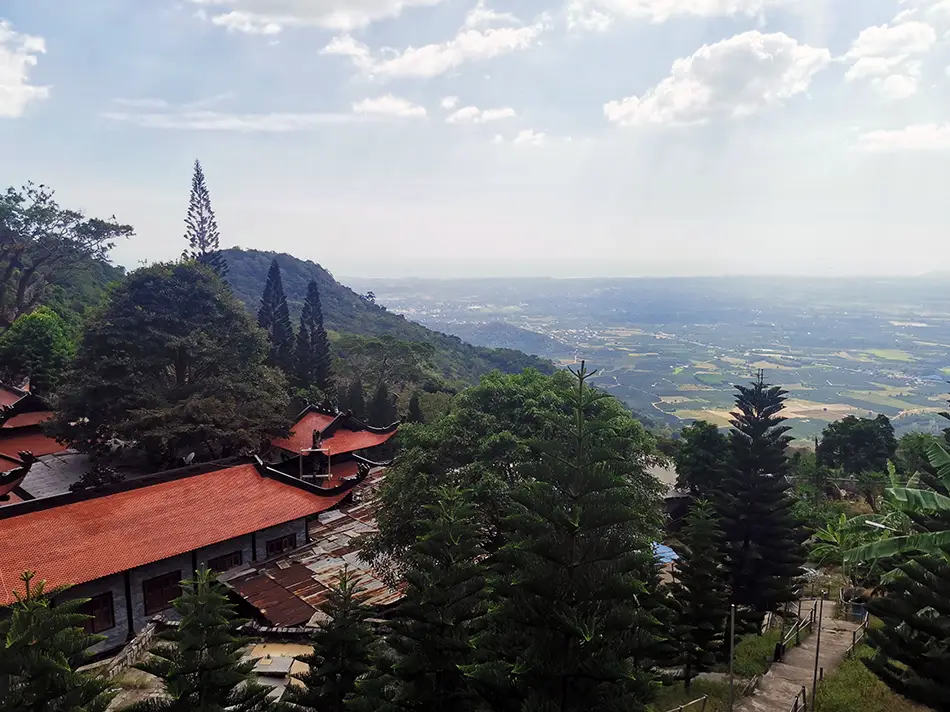
Ta Cu Mountain — The furthest point, about 60 km out, but worth it. A 49-meter reclining Buddha surrounded by jungle, with a cable car if you’d rather skip the hike. Factor in 2–3 hours.
Evening: Local Sunset Spot
On the way back from Ta Cu and Ke Ga, stop before you reach Mui Ne at a roadside pull-off on the coastal road above Phan Thiet. No tourism infrastructure, no name, no crowds — just local families parking up every evening to watch the sun go down over the bay. (📍Location)
Roadside vendors set up simple coffee and drink stands, the view stretches straight out over Phan Thiet, and you can watch from the road or walk down toward the water. One of the more genuine moments you’ll find in Mui Ne.
3 Days in Mui Ne: Unhurried and Complete Itinerary

Three days is the sweet spot for combining the main sights, some local discovery, and genuine downtime.
Day 1: Classic Attractions
Same as Day 1 above — dunes at sunrise, Fairy Stream in the afternoon, seafood and the night bay view.
Day 2: Off the Beaten Path
Start the morning with something active or restorative: a surf lesson if there’s swell, a 📍Muay Thai intro session with Mr. Trang (a well-known local coach), or simply a slow morning on the beach.
In the afternoon, head out to explore Mui Ne’s less-visited side:
- A small coastal 📍Miếu Bà Vàng shrine and cape north of the main strip — atmospheric, rarely crowded, and a good excuse to slow down
- 📍Wind generator viewpoints along the ridge — the turbines are dramatic against the coast and the views down to the water are genuinely good
- 📍Gai Garden cafe — a large property covered in cacti, palms, and artistic installations. Ginger tea with honey is a thing to offer here.
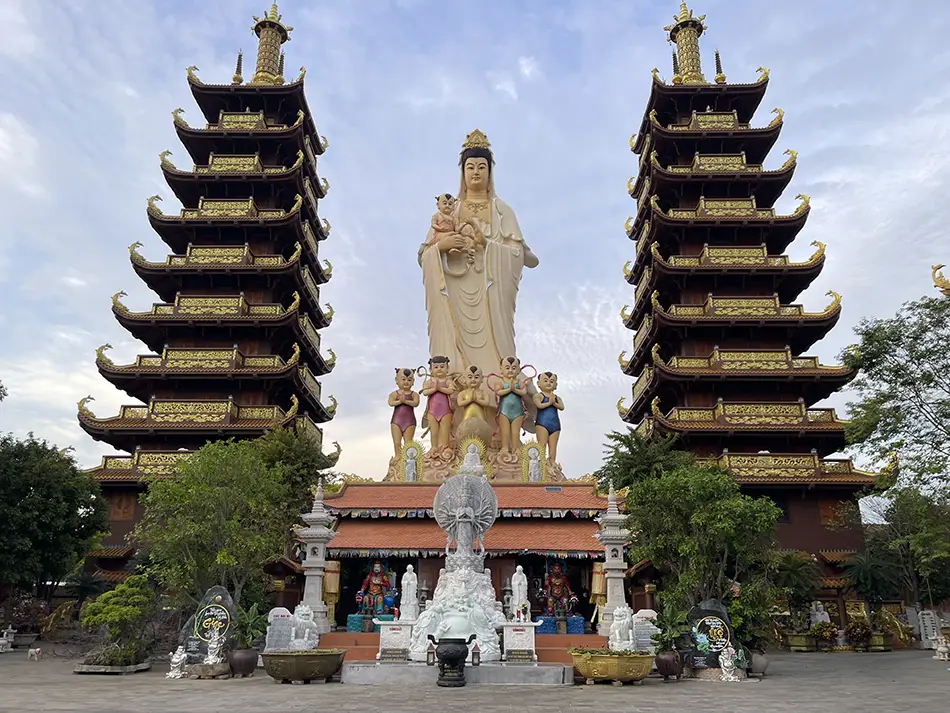
For sunset on Day 2, go to the 📍Chùa Thiện Quang temple. Arrive 30 minutes early to walk the grounds. The atmosphere is calm and genuinely spiritual. Then climb to the upper level and watch the sun drop behind the hills — palm plantations and local life spread out below. It’s one of the more memorable sunsets in the area, and almost entirely tourist-free.
A motorbike is the best way to run this day. A hired car with driver works too. Taxis are possible but will add up.
Day 3: Southern Day Trip + Local Sunset
Follow the second day structure from the 2-day Mui Ne itinerary (Cham Towers, Ke Ga, Ta Cu). If you’re going independently, two additions make the day richer: the 📍Buu Son temple adjacent to the Cham Towers — quieter than the towers themselves and often skipped — and the 📍Fish Sauce Museum, which gives real context to the region’s most economically important product. It’s small, free, and takes 20 minutes.
After dark: the highway night view over the bay (squid boats), and if the mood is right, Mantra or Nirvana.
Longer Stays in Mui Ne

A stay beyond three days makes sense in two scenarios: you’ve booked a kitesurfing course in Mui Ne (lesson packages are typically sold in 3, 5, or 10-hour blocks, spread across several days), or you simply want a quiet coastal base that’s notably cheaper and calmer than Nha Trang or Hoi An.
There’s no hard ceiling — for everything to do with extra time, see our full Mui Ne attractions guide.
One common mistake tourists make is putting the active fun off until tomorrow. Longer stays very often end up with less explored than a packed short trip — the slower pace has a way of working against you.
Best Time to Visit Mui Ne
November to April (Dry Season) is the most reliable period for beach weather. Skies are clear, rain is rare, and the dunes are at their best.
December to March is peak kitesurfing season. The northeast monsoon pushes consistent winds along the coast, making this stretch one of the most dependable kite windows in Southeast Asia. If kitesurfing is your reason for coming, plan around this window. If you’re here primarily for the beach, keep in mind that strong winds mean choppy water and sand in everything — not the most comfortable sunbathing conditions.
May to October brings heat, humidity, and occasional rain. The sea can be rougher and some operators reduce schedules. It’s not impossible to visit, but the experience is noticeably different.
One universal warning:
Regardless of season, the white sand dunes in midday heat are punishing. Schedule dune visits for sunrise or late afternoon, not 10 AM to 2 PM.
Quick Practical Tips
- Start early. The dunes and most outdoor sites are significantly better before 9 AM. Heat and crowds both peak by mid-morning.
- Carry cash. ATMs exist but many smaller restaurants, local cafes, and non-resort vendors don’t take cards.
- Book dune tours in advance if you’re on a tight 1-day schedule. Walk-in is fine for 2–3 day visits.
- Don’t book tours through your hotel or hostel. The markup is typically 20–40% above street price. Use agencies on the main strip or book directly online.
- Cover up for temples. Shoulders and knees should be covered. A light scarf or spare shirt solves this.
- Motorbike vs. taxi. A motorbike unlocks the most flexibility, but ensure your IDP is valid — police checks in Mui Ne are frequent and fines are real.
For more on the ground tips from experienced travelers, see our Mui Ne travel tips.
Frequently Asked Questions
You can cover the main highlights — white dunes, red dunes, Fairy Stream — in a single long day, especially with an organized tour. You won’t see everything, but you won’t feel shortchanged either if your time is genuinely limited.
To explore Mui Ne fully you will need 2–3 days. Two days covers the core itinerary. Three days allows you to slow down and see beyond the tourist circuit. One day is possible if you’re pressed for time.
For the 1-day itinerary where timing is critical, book online in advance. If you have 3 days, you can easily find and negotiate a tour on the street the evening before.
With the new expressway reducing travel time to about 3 hours, a day trip is possible but grueling (approx. 6 hours total driving). It is highly recommended to stay at least one night to catch the sunrise without leaving HCMC at 2:00 AM.

Final Thoughts
Mui Ne works best when you’re not trying to make it into something it isn’t. It’s not the most beautiful beach town in Vietnam, but it’s one of the more unusual ones — sand dunes, a living fishing culture, and reliable wind make it a destination that rewards two or three days of genuine exploration.
Whatever Mui Ne travel itinerary you end up with, the place tends to deliver most when you let it be what it is. Not sure if it’s right for you? We have a traveler’s subjective review that fully answers the question — Is Mui Ne Worth Visiting.