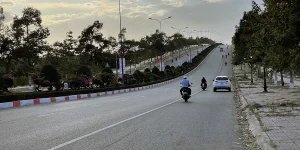
This article reflects the personal opinion of a traveller who has visited Mui Ne multiple times over more than a decade. It highlights the myths pushed by travel guides, the downsides of visiting in 2026, and the good stuff that makes Mui Ne worth visiting.
What’s the hype about Mui Ne all about?
It seems 2026 is shaping up to be a boom year for this coastal fishing village — a place that grew first into a popular resort town, and has now been anointed a “Trendy Destination You MUST Visit in 2026.” Let’s untangle that.
If you ask any AI chatbot the question you came here to answer — Is Mui Ne worth visiting? — you’ll get a confident, enthusiastic yes. You’ll also get a description that sounds more like the Maldives or Seychelles than anything resembling Vietnam.
The source of that confusion is surprisingly simple: Booking.com published a blog post on trendy destinations for 2026 — placing Mui Ne at the top of the list — and the tone strongly suggests it wasn’t written from first-hand experience. But because the website carries serious authority, local Vietnamese travel sites — even official tourism boards — rushed to reshare it.
The buzz fed the algorithms, the AIs picked it up, and the cycle spun out of control as other travel sites blindly parroted the same talking points back at each other.

So here’s my attempt to cut through it
And before you dismiss me as a hater: I love Mui Ne. I visit nearly every other year since 2016 and spend at least three months here chasing the wind and doing kitesurfing. There is something genuinely special about this place — just not what’s being advertised right now.
The problem is that people arrive with inflated expectations, get disappointed, and never come back. They don’t dig deep enough to find what actually makes Mui Ne worth the trip — or discover the best things to do in Mui Ne beyond the overpackaged highlights.
I’m going to structure this honestly: The Lies, The Bad, The Good. We’ll strip away the myths first, look at the real downsides, and then — I promise — land somewhere that helps you figure out whether Mui Ne is actually right for you.
The Lies
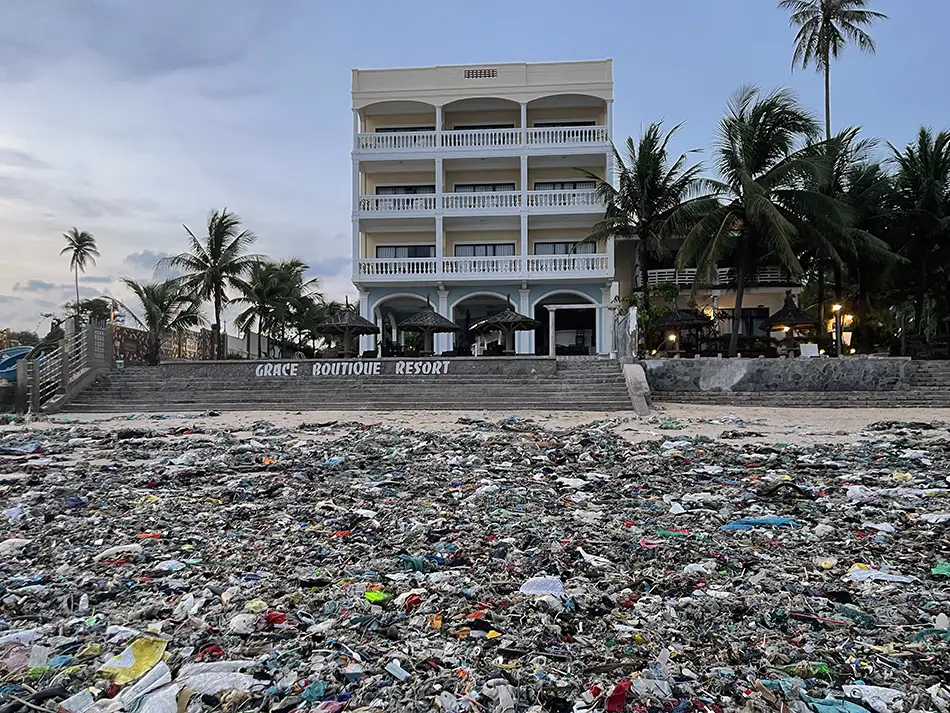
“Mui Ne has incredible beaches”
It doesn’t. Even compared to mainland destinations like Da Nang or Hoi An, the beaches here fall short. Stack them against Vietnamese islands like Phu Quoc or Con Dao, and there’s simply no comparison.
The beaches in Mui Ne are narrow — and getting narrower every year. I’ve watched it happen with my own eyes. In some stretches, concrete walls have replaced the sand entirely. The wilder beaches around the area are plagued with trash and sandflies.
Some hotels do maintain clean, pleasant stretches of beach — I won’t pretend otherwise — but in high season (roughly December through late March), strong winds kick in almost daily.
Mornings can be fine, by noon the sand is flying and lashing your legs hard enough that most people leave the beach entirely — you’ll see hotel sunbeds empty out within an hour. The sea itself isn’t particularly pretty for most of the year, and in the windy high season the waves come in as a heavy shorebreak, crashing directly on the sand and sending swimmers tumbling.
“The attractions are super unique”
Here’s what Booking.com actually wrote about one of Mui Ne’s star attractions:
“Mũi Né feels worlds away with its unique landscapes ranging from the surreal Red and White Sand Dunes to the peaceful Fairy Stream where travelers can wade through shallow waters surrounded by striking rock formations.”
Now let me show you what that “peaceful Fairy Stream” actually looks like:
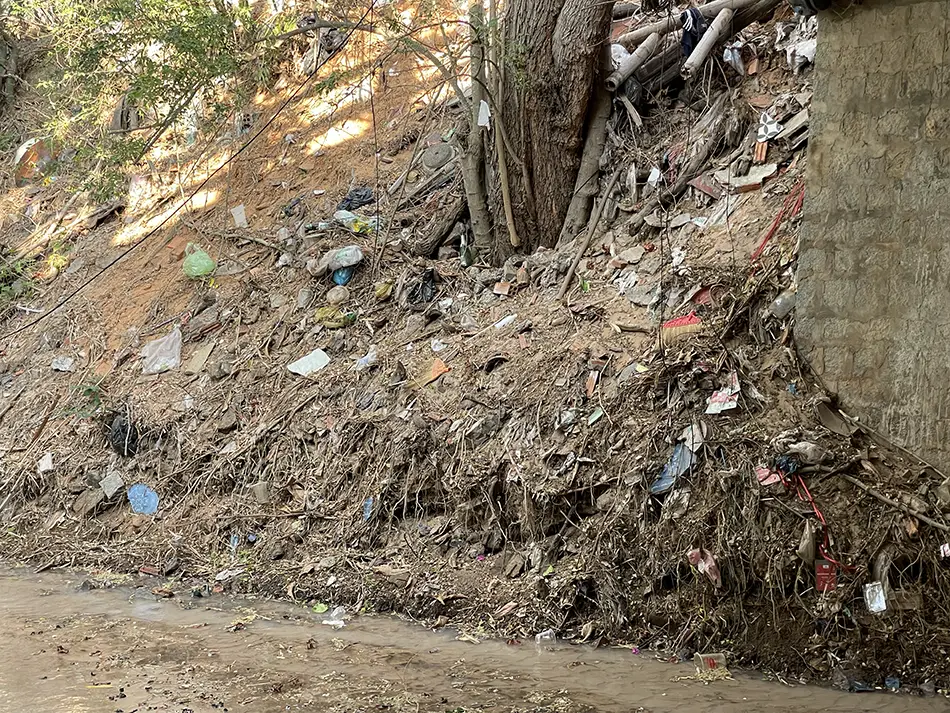
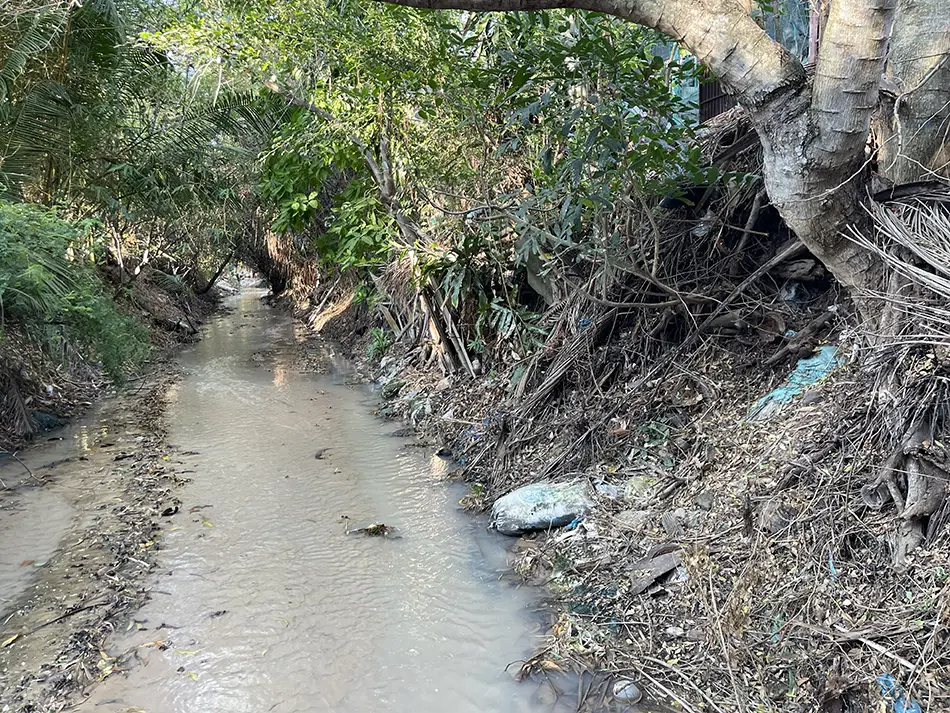
The White Sand Dunes are often sold as “Vietnam’s Little Sahara.” They’re interesting — I won’t completely dismiss them — but over the past decade the landscape has been visually carved up by dozens of wind turbines on the surrounding hills.
Quad bikes tear through constantly, and every morning a convoy of jeeps descends on the place. You can get a decent photo, but the ambiance is gone unless you arrive around midday, when it quiets down — though by then it’s absolutely roasting.
The Red Sand Dunes are realistically a 10–20 minute stop — most people take a few photos and leave. The view over the sea from above is genuinely nice, and the sandy selfies are there for the taking. But the crowds far outpace what the place can comfortably offer.
And that’s basically the full list of promoted attractions: beaches, sand dunes, Fairy Stream. Now you’ve seen them for what they actually are.
The Bad
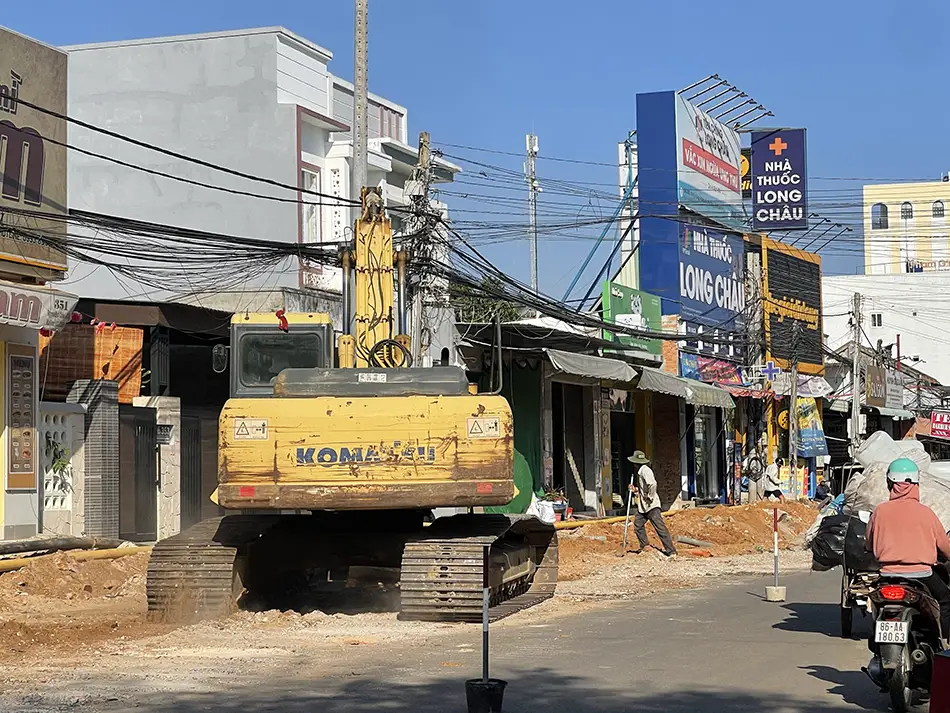
What none of those glowing articles mention is the state of the roads and sidewalks. As of March 2026, major construction is ongoing near the Fishing Village — traffic jams, sand, dirt, and noise are a constant.
I’ve been here from December 2025 to March 2026 and watched the pace of progress closely; I’d be surprised if it wraps up by the end of the year.
For those who like to walk, the stretch near the big hotels is still manageable. But in the area closer to the market — where many guesthouses and the two main hostels are — sidewalks simply don’t exist.
The Good

Here’s where it gets interesting. What makes Mui Ne genuinely special isn’t one big wow moment — it’s a slow accumulation of small, authentic ones, especially once you go off the beaten path.
Drive ten minutes away from the sea and you’re in a different world: small streets, fishermen going about their day, locals who rarely see tourists and aren’t performing for them. That kind of access to real, unhurried Vietnamese life is increasingly rare.
Day trips from Mui Ne are underrated. Ta Cu Mountain — with its enormous reclining Buddha and scattered pagodas — is a full, rewarding day out. If you have the energy, combining it with a visit to the Ke Ga lighthouse on a small nearby island rounds things out beautifully.
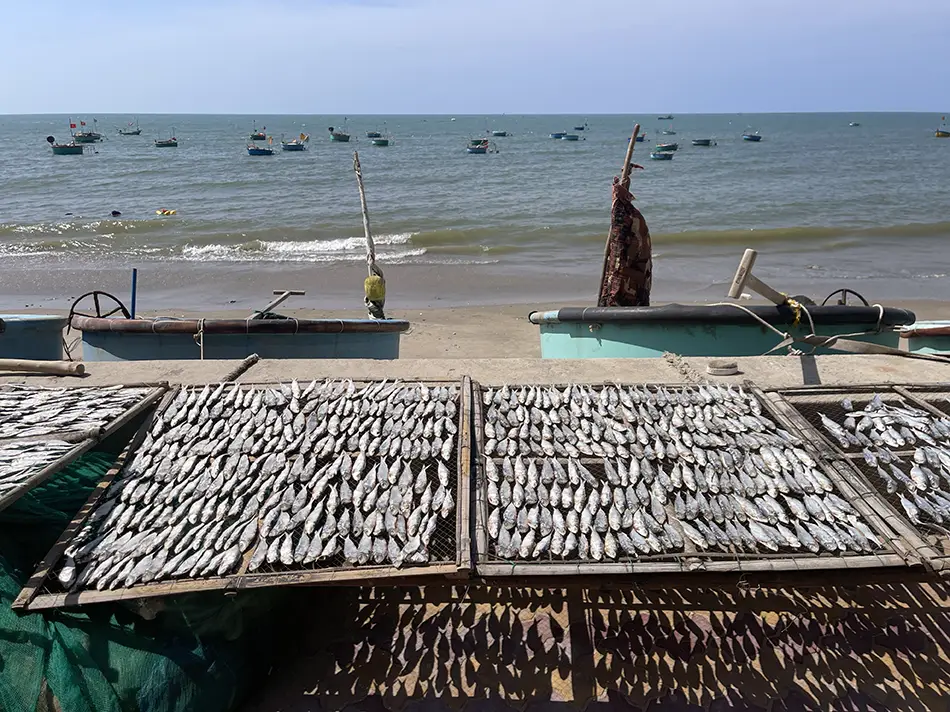
What is so special about Mui Ne?
The honest truth is that the best things to do in Mui Ne are precisely the things that major travel outlets keep overlooking in favour of the beaches — which, again, are not the destination’s calling card. For curious travellers who enjoy wandering, poking around, and finding what’s genuinely there rather than what’s been packaged for them, Mui Ne delivers.
For those who want polished and all-inclusive, the options are more limited: a nice hotel pool and the jeep tour at sunrise or sunset. There’s nothing wrong with that, but manage your expectations accordingly.
One more thing I can’t leave out: the wind. For watersports lovers — kitesurfers especially — this place is extraordinary. The conditions are world-class, the cost of living is remarkably low by Western standards, and the community of long-term expats and digital nomads who’ve settled here is proof enough. I break this down in detail in my Mui Ne digital nomad guide, including cost of living, best areas to stay, and seasonal wind conditions.
Is Mui Ne Worth Visiting? My Bottom Line
Who Mui Ne is actually for:
- Kitesurfers (Dec–March peak wind season)
- Long-stay travelers / digital nomads
- People who enjoy exploring beyond curated spots
Who might skip it:
- First-time Vietnam visitors chasing “perfect beaches”
- Luxury resort travelers expecting Maldives-level coastline
Mui Ne isn’t the glossy paradise Booking.com described, and it never claimed to be — that label was stuck on it by people who’ve never been here. But for the right kind of traveller, it’s something more interesting than that.
If you’re chasing pristine beaches and luxury resort vibes, you’ll leave disappointed. But if you’re the type who finds more value in a chaotic fishing harbour at dawn than a manicured infinity pool — if you’re a kitesurfer, a wanderer, a slow traveller who likes to peel back a place rather than just photograph its surface — then yes, Mui Ne is absolutely worth visiting.
Come with honest expectations, get off the main strip, and you’ll find a place with genuine character that most tourists scroll right past on their way to somewhere more photogenic.
That’s the Mui Ne I keep coming back to. And that’s the story that deserves to be told properly.