This guide is based on extensive experience traveling between Ho Chi Minh (Saigon) and Mui Ne across multiple trips and transport options. Updated March 2026. Includes real schedules, prices, and field-tested advice.
Links marked with 📍 open directly on Google Maps.
Mui Ne is one of the easiest coastal escapes from Ho Chi Minh (Saigon), which is why it’s often the first beach stop for travelers arriving in southern Vietnam. Compared to other routes in Vietnam, this route is short, well-developed, and served by frequent daily connections, so it’s easy to organize even at the last minute.
If you’re planning your route, understanding how to get to Mui Ne from Ho Chi Minh will help you choose the right balance between speed, comfort, and budget.
To understand whether Mui Ne fits your itinerary and what you can expect there, see our guide to the best things to do in Mui Ne.
Table of Contents
Getting to Mui Ne From Ho Chi Minh by Sleeper Bus

The most common way people arrive in Mui Ne is the sleeper bus. It’s easy and efficient, and since the Dau Giay – Phan Thiet Expressway opened, the journey now takes around 3 to 5 hours, covering roughly 137 miles (220 km).
What surprises most people is the range of comfort. Vietnam has really developed this segment well. You can end up on anything from a basic three-row sleeper with compact double-decker beds to a proper VIP limousine bus where the bed is closer to a small mattress, with curtains, USB charging, and significantly more space. And the key detail here is that the price difference between these options is usually not that big.
A simple way to understand what you are booking is to look at the number next to the bus name — for example Limousine 34 or Limousine 21. That number represents the total number of passengers. The lower it is, the more space you get per person, and the better the ride.
There are also seated buses on this route, but unless you specifically want to sit and work, the sleeper format is simply more efficient.
Transfer you should expect
During daytime hours, roughly between 06:00 and 22:00, sleeper buses are not allowed inside central Ho Chi Minh.
So even if you booked a sleeper, what often happens is — and we’ve seen this many times — that:
- You are picked up by what looks like a normal bus.
- People get confused.
- Some even panic.
In reality, this is just a transfer system. You are first taken by a shuttle bus to an outer terminal, where you then switch to your actual sleeper coach. This is completely standard for this route and part of how the bus companies operate within city restrictions.
How to buy a ticket to a Sleeper Bus From Ho Chi Minh to Mui Ne
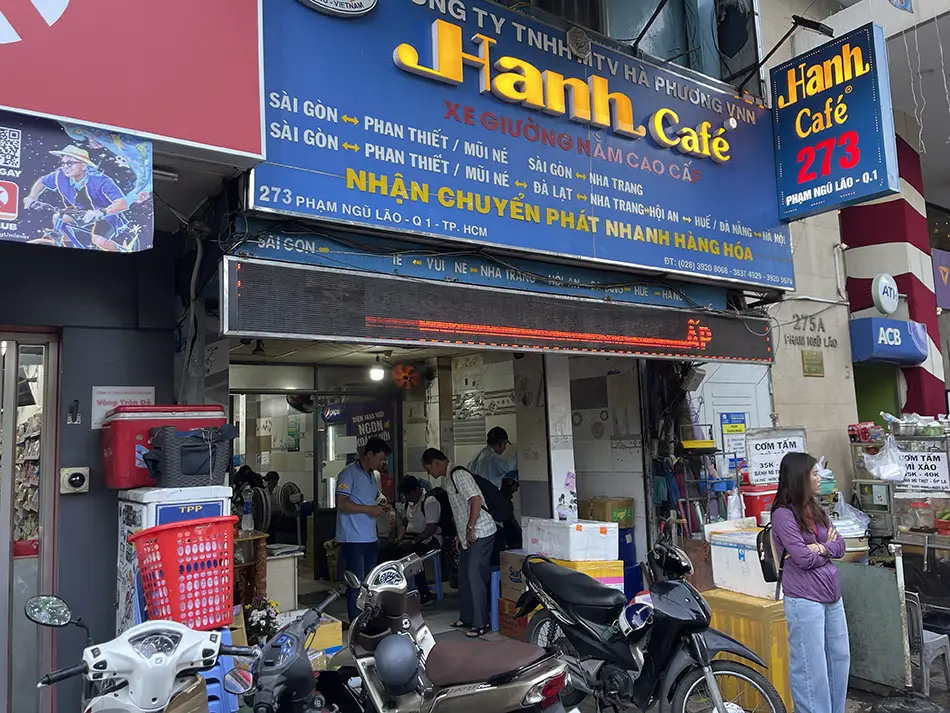
This is one of those routes where you don’t need to overcomplicate things.
The easiest and the cheapest way is simply to go to the 📍Pham Ngu Lao street in District 1, near Bui Vien walking street — this is essentially the very city center of Ho Chi Minh. Within a 500 meter (0.3 miles) radius, you will find multiple bus companies running Ho Chi Minh to Mui Ne routes.
You can walk in, ask what’s available, compare comfort levels, and choose based on your schedule. It’s very straightforward.
Reliable operators on this route:
Futa Bus (Phuong Trang) is generally a good and reliable company across Vietnam, but on this specific route it tends to add unnecessary time. Their terminal is located on the western side of the city, outside the natural route to Mui Ne, so you first need to transfer across Saigon before continuing.
If you prefer to organize everything in advance, you can use platforms like 12Go Asia, Baolau, or Vexere. These are useful for checking the bus schedule, availability, and making an online booking, but they usually add a commission, and not all operators are listed. Hotels can also arrange tickets for you, but in that case you often won’t know exactly which bus you are getting.
Typical price range:
- 160,000 – 350,000 VND ($6–$13.5 / €5–€11.5)
Saigon – Mui Ne Bus schedule (approximate):
- First departures around 06:00
- Last departures around 23:30
- Frequency every 30–60 minutes
Unless you are traveling during major Vietnamese holidays, you can almost always get a same-day ticket without issues.
Getting dropped off at your hotel in Mui Ne
If you are wondering how to get to your hotel in Mui Ne after arriving from Ho Chi Minh, the process is usually very simple.
During the ride, usually closer to Mui Ne, staff will ask for your hotel name. Since the main tourist area runs along Nguyen Dinh Chieu street, buses can easily stop along the way. In most cases, you will be dropped directly at your hotel or very close to it, and this is included in your bus ticket.
Some extra information on sleeper buses

There are a few small details that make a difference on this route and are rarely mentioned clearly.
- Most buses include one stop for food and toilets, usually somewhere in the second half of the journey, closer to Phan Thiet.
- Some companies will unload passengers in Phan Thiet and arrange a short onward transfer by shuttle to Mui Ne, which again is normal and part of the system.
- Air conditioning is often very strong. Even though blankets are provided, they are not always enough, so it’s worth having something warm with you.
- Based on repeated rides on this exact route, night departures are usually 1–1.5 hours faster due to lighter traffic.
- Delays can happen, especially during weekends and Vietnamese holidays, so avoid tight connections if you are heading further the same day.
Insider tip (personally tested multiple times):
If you are taking an evening or night departure, try to get a second-floor bed on the right-hand side (right when facing forward). As you approach Phan Thiet, you pass large dragon fruit plantations that are illuminated at night. From that angle, the view is noticeably better — it almost looks like a glowing grid stretching into the dark.
Private car transfer from Ho Chi Minh City to Mui Ne
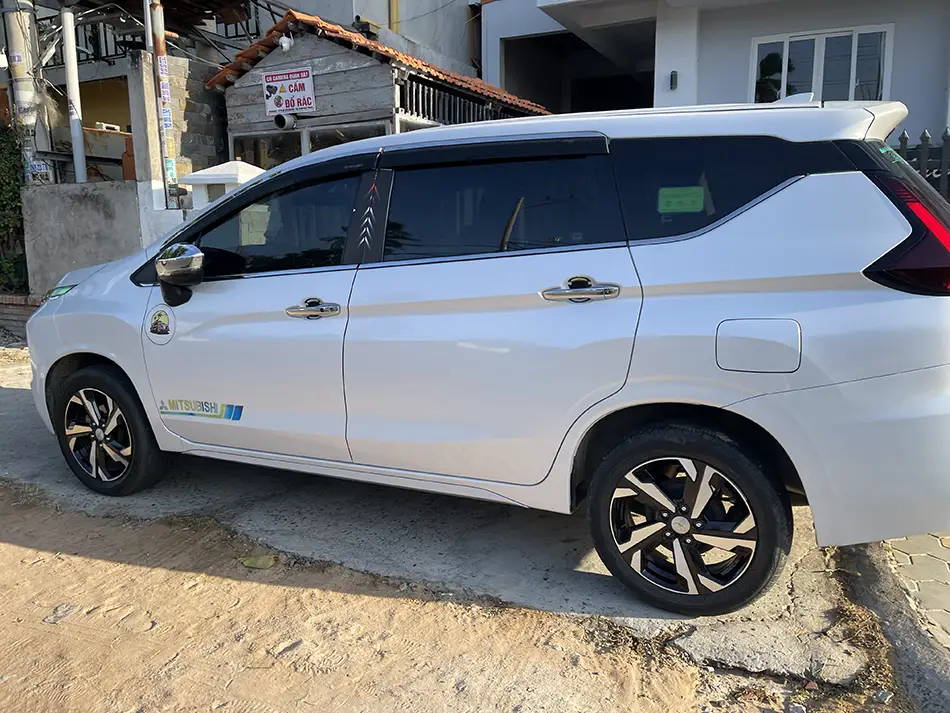
If you prefer more control over your journey, a private transfer is a very solid option. The travel time is slightly shorter than the bus in most cases, usually between 3 and 4 hours, depending on traffic and departure point.
Prices typically range between 1,700,000 – 3,000,000 VND ($64.5–$114 / €56–€100) per vehicle.
This option gives you a direct, door-to-door experience without transfers, and you can choose your departure time freely. It’s especially practical if you are traveling in a small group or carrying large luggage like surf or kitesurf equipment.
You can arrange it through your hotel, which is often the most balanced option in terms of price and reliability, or book through platforms like 12Go, or GetYourGuide.
Some travelers also use Facebook groups to find drivers, which works, but requires more caution when it comes to payments. The way it usually works is you join a Vietnam travel group, post your route and dates, and drivers will message you directly with offers. This can be convenient and sometimes cheaper, but you are dealing with individuals rather than a platform, so avoid paying in advance unless you are sure the provider is reliable.
Getting to Mui Ne by train
There is technically a train from Ho Chi Minh to Mui Ne, but in practice, it’s not the most efficient option.
The main issue is that Mui Ne itself does not have a central train station. You will arrive at 📍Binh Thuan Train Station, and from there you still need a taxi or transfer of around 40 to 60 minutes to reach the beach area.
So even though trains in Vietnam can be scenic and enjoyable, on this particular route they don’t offer a clear advantage. The travel time is not significantly better, prices are similar or higher compared to buses, and the additional transfer makes the overall journey less convenient.
You can still book tickets through Vietnam Railways or platforms like Baolau, but for most travelers, this is not the preferred option.
Getting to Mui Ne from Saigon by Motorbike
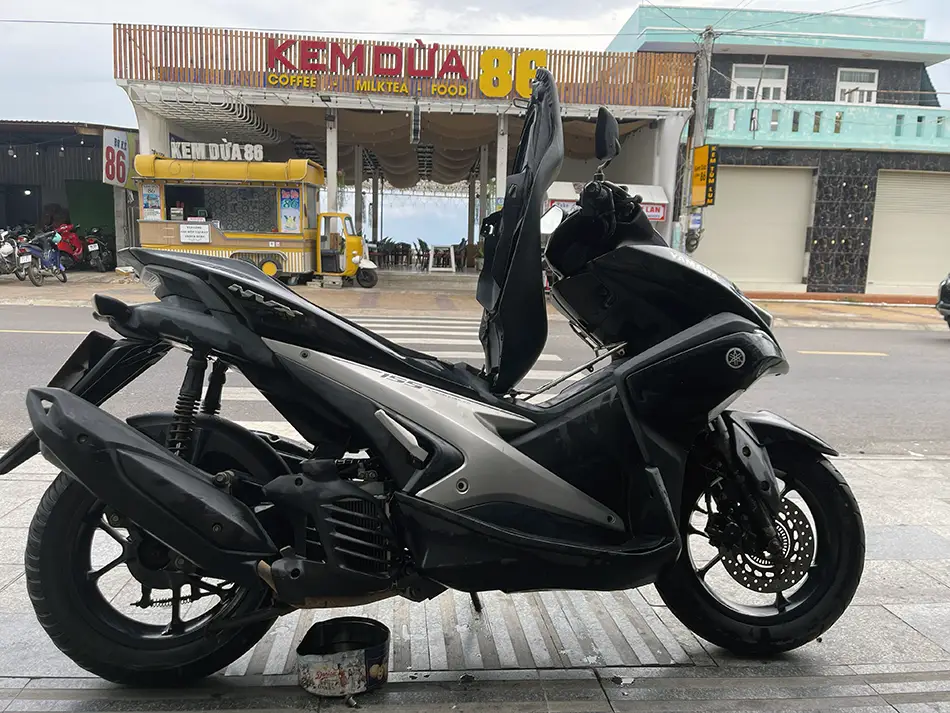
If you are planning to travel from Ho Chi Minh City to Mui Ne by motorbike, you are most likely at the beginning of a longer trip across Vietnam. It’s an intense way to start.
One important thing to understand immediately is that the expressway (CT01) does not allow motorbikes, so you will be using alternative routes.
The most direct option is QL1A, which is the fastest but also the busiest. Another option is to extend your route slightly and take QL55, which is more scenic and generally less stressful, especially closer to the coast. The ride takes at least 6 hours, but realistically more depending on stops and traffic.
One of the most valuable tips from experience is to leave early — ideally around 30 minutes before sunrise. Saigon is well lit, and leaving at that time allows you to escape the heaviest traffic before it builds up. It makes a significant difference to the overall experience.
Fuel is not an issue on this route, as gas stations are frequent, and navigation with Google Maps works reliably. Having an offline backup like Organic Maps is still a good idea. Once you arrive, check out our guide to scenic motorbike rides around Mui Ne.
Direct transfer from Ho Chi Minh Airport to Mui Ne
This is one of the most efficient options if you are arriving by plane and don’t want to deal with the city at all. Direct transfers from Tan Son Nhat Airport to Mui Ne are widely available and are especially popular among kitesurfers and travelers with large luggage. You can choose between shared minivans and private transfers.
Shared options usually start from around 450,000 VND ($17 / €15), while private transfers follow similar pricing to the city-based private cars.
The travel time is typically between 3.5 and 4.5 hours.
Booking can be done through the same platforms mentioned earlier. You can also contact your hotel in Mui Ne, if you have one pre-booked, and ask them to arrange the transfer.
The third option is to join Vietnam travel Facebook groups, post your arrival time and dates, and wait for drivers to contact you. In this case, you can also try to find other travelers to share a private car with. However, use this option with caution, as you are dealing with private drivers, and if something goes wrong, getting a refund can be difficult.

Final summary
If you are deciding how to get to Mui Ne from Ho Chi Minh, the answer is quite straightforward once you understand how the route works.
The sleeper bus remains the most practical option for most travelers, offering the best balance between price, comfort, and frequency.
Private transfers provide a smoother and more controlled experience, while trains and motorbikes serve more specific use cases rather than being the default choice.
In practice, this is a simple and well-organized route with frequent departures and easy onward drop-off, so once you choose your transport, the rest is easy to manage.
Useful resources upon your arrival in Mui Ne:
- Late-night food options – in case your bus takes too long and most restaurants are closed
- Mui Ne travel tips from a seasoned traveler – to make your visit even better