Why visit Phu Quoc Island
Phu Quoc is Vietnam’s largest island in the Gulf of Thailand, known for its beaches, warm water, and easy resort atmosphere. This guide highlights the best things to do on Phu Quoc Island so you can quickly understand what the destination offers.
It’s important to arrive with the right expectations. Those looking for untouched nature may find the rapid development surprising, and the island’s infrastructure can feel uneven at times, with luxury resorts standing alongside unpaved roads. Even so, Phu Quoc deserves its place among the best places to visit in Vietnam.
Table of Contents
Phu Quoc Island at a Glance
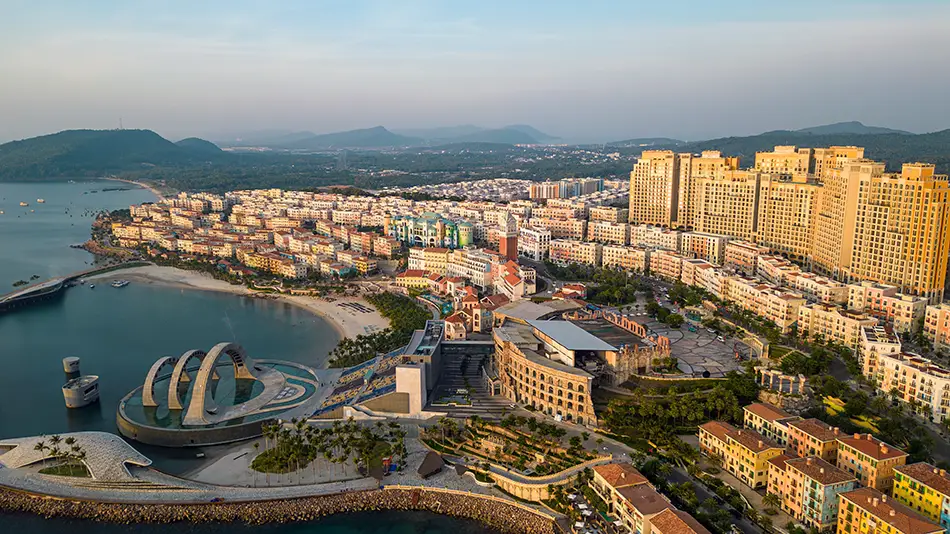
- Known For: White-sand beaches, sunset views, seafood, and the island’s growing resort and entertainment complexes.
- Best Time to Visit: The dry season runs from November to April.
- Getting There: Fly directly to Phu Quoc International Airport (PQC) from major Vietnamese cities or take a ferry from Ha Tien or Rach Gia.
- How Long to Stay: 3–4 nights for a quick visit, 5–7 to explore more fully.
Average Daily Spending:
- Budget: 900,000 VND ($35 / €33)
- Mid-Range: 2,500,000 VND ($98 / €91)
- Luxury: 6,500,000 VND ($255 / €236)
Before diving into practical details like where to stay and how to plan your trip, this guide first explores the best things to do and see on Phu Quoc, so you can quickly decide whether the island matches your travel style and interests.
Best things to See on Phu Quoc Island: Sights & Attractions
Phu Quoc Beaches
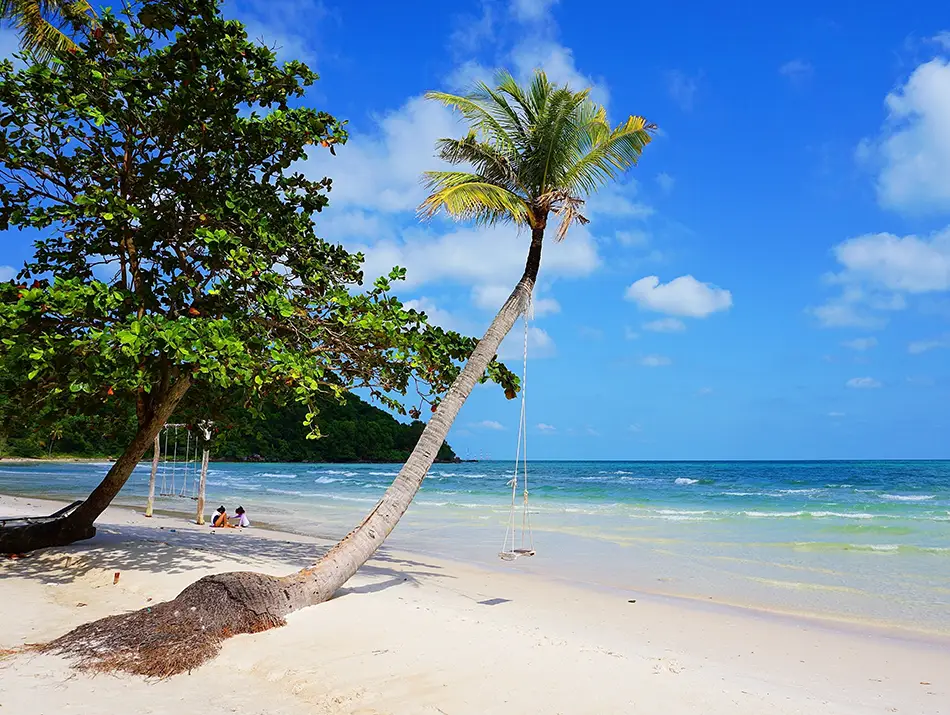
Phu Quoc’s coastline features several of the island’s most visited beaches. 📍Long Beach (Bãi Trường) is the main stretch, lined with resorts, beach clubs, and sunset-facing bars. 📍Khem Beach (Bãi Kem) sits in a sheltered bay with fine white sand, though much of its shoreline is fronted by upscale resorts, so public access is limited to designated entry points.
📍Sao Beach (Bãi Sao) remains popular for its calm, shallow water and classic palm-lined shore, but it can experience seasonal debris and changing water clarity depending on currents.
Starfish Beach (Rạch Vẹm)
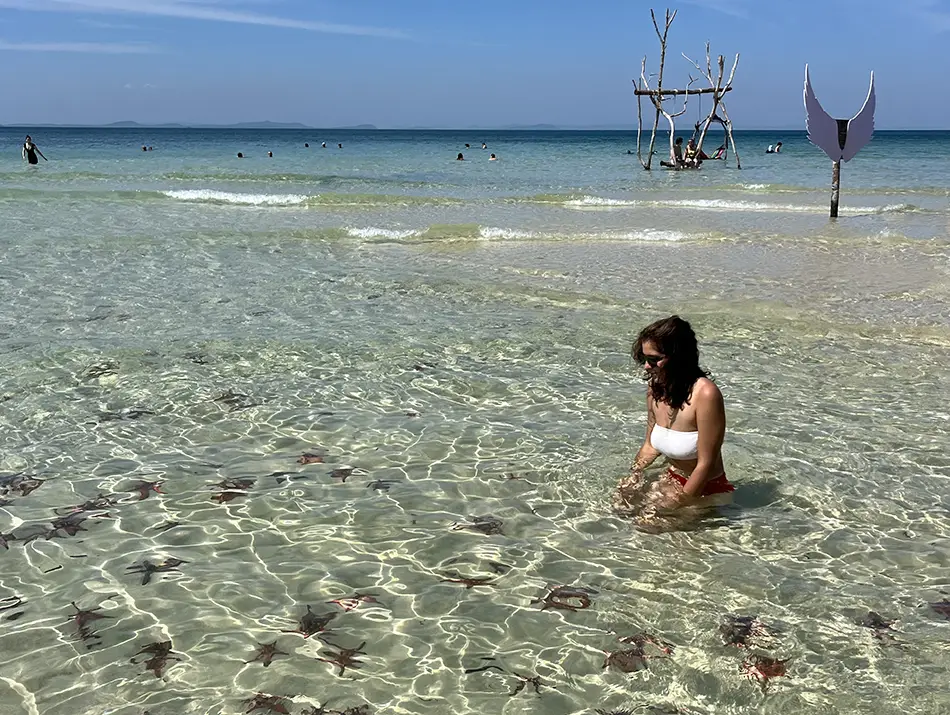
Starfish Beach is considered one of the best things to see on Phu Quoc, especially for travelers exploring the island’s quieter northern coast. This remote stretch of sand is known for the red sea stars that can often be seen resting in the shallow, clear water near the shore. The beach sits within the Rach Vem fishing village, where simple stilt restaurants line the coast and daily life moves at a slow, local pace.
The number of starfish varies by season and conditions, so sightings are never guaranteed. Visitors should observe them only from a distance. Touching or removing starfish from the water causes serious harm and should be avoided.
- How to get there: Reach it via the rough road to Rach Vem or by arranging a small boat transfer from nearby northern beaches.
- Combines with: Hiking Phu Quoc National Park.
- 📍Starfish Beach on Google Maps
Dinh Cau Rock Temple (Dinh Cậu)
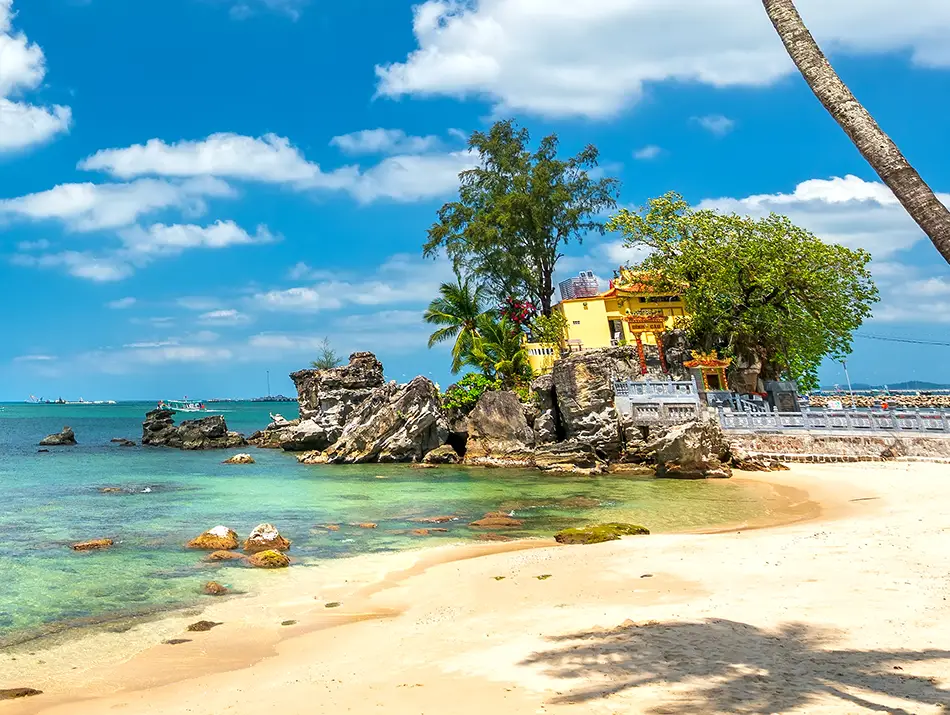
Dinh Cau Rock Temple stands on a unique seaside rock at the mouth of the Duong Dong River. The small shrine and lighthouse honor the goddess of the sea, where local fishermen traditionally pray for safe voyages. It’s an easy, central stop with coastal views and a strong sense of local culture.
- Open: 7:00 AM – 6:00 PM. Free entry.
- Travel Tip: Visit in the late afternoon to see the sunset and the fishing boats returning.
- 📍Dinh Cau Rock on Google Maps
Ho Quoc Pagoda (Chùa Hộ Quốc)
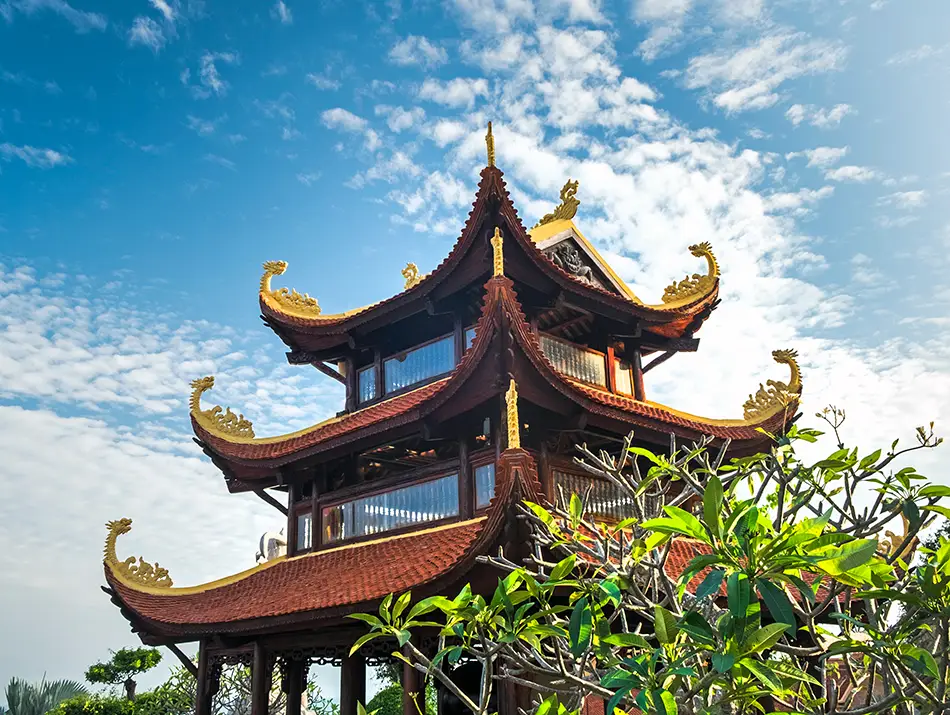
Ho Quoc Pagoda is a large Buddhist temple complex. It stands on a hillside overlooking the sea on the eastern coast. The pagoda features traditional architecture, including a grand staircase and large statues. It is an active monastery for monks.
Visitors explore the temple grounds and enjoy the panoramic ocean views. The tranquil atmosphere provides a break from the busier tourist areas. You can observe the intricate dragon carvings and the large jade Buddha statue inside the main hall.
- Working Hours: 6:00 AM – 6:00 PM.
- Combines with: Sao Beach or Phu Quoc Prison.
- 📍Ho Quoc Pagoda on Google Maps
Phu Quoc Prison History Museum (Nhà tù Phú Quốc)

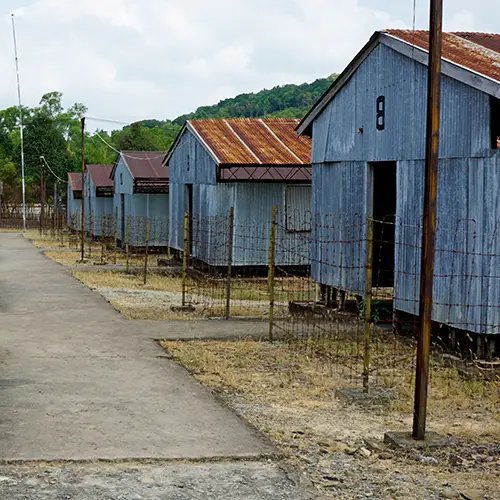
The Phu Quoc Prison History Museum is one of the island’s most important historical sites. The prison was originally built during the French colonial period and later used by the South Vietnamese government during the Vietnam War to hold thousands of prisoners. Today, the museum presents this history through reconstructed cells, barbed-wire enclosures, and displays that show the harsh conditions inmates endured.
Visitors walk through outdoor sections and simple exhibition rooms at their own pace. The site is somber but informative. It is best suited for travelers interested in Vietnam’s recent history.

- Hours and Prices: Open daily 7:30 AM – 5:00 PM. Entry is free.
- Time needed: 30–60 minutes.
- Combines with: Sao Beach, Khem Beach, or Ho Quoc Pagoda.
- Travel Tip: The exhibits include graphic content. It may not be suitable for young children.
- 📍Phu Quoc Prison History Museum on Google Maps
VinWonders Phu Quoc

VinWonders is Phu Quoc’s main daytime theme park, located in the island’s north within the Phu Quoc United Center complex. The park is divided into themed zones with roller coasters, water slides, shows, and the well-known Sea Shell aquarium. It’s a large park designed for several hours of activities, making it especially popular with families.
- Hours and Prices: 9:00 AM – 7:30 PM. A standard ticket is 950,000 VND ($37 / €35).
- How to get there: Located at Ganh Dau. Free shuttle buses run from Duong Dong and other points.
- Time needed: 4–6 hours.
- Travel Tip: Purchase tickets online in advance to avoid queues at the entrance.
- 📍VinWonders on Google Maps
Grand World Phu Quoc

Grand World is the island’s main evening entertainment district, designed as a “sleepless city” with themed streets, canal views, museums, shops, and nightly performances. Visitors come for light shows, gondola rides, street food, and photo stops like the Venice-style canals and the Bamboo Legend, a massive woven bamboo installation that becomes even more impressive when lit up after dark.
Unlike VinWonders, which focuses on rides and attractions, Grand World is primarily a place to walk, dine, and enjoy atmosphere—especially after sunset.
- Hours and Prices: Open 24/7. Entry to the outdoor areas is free. Individual attractions inside the complex, such as museums or boat rides, have separate fees.
- Time needed: 2–4 hours, more if visiting museums or taking a boat ride.
- Travel Tip: Visit after sunset when the lights, shows, and canal area are most atmospheric.
- 📍Grand World on Google Maps
Phu Quoc Night Market (Chợ đêm Phú Quốc)
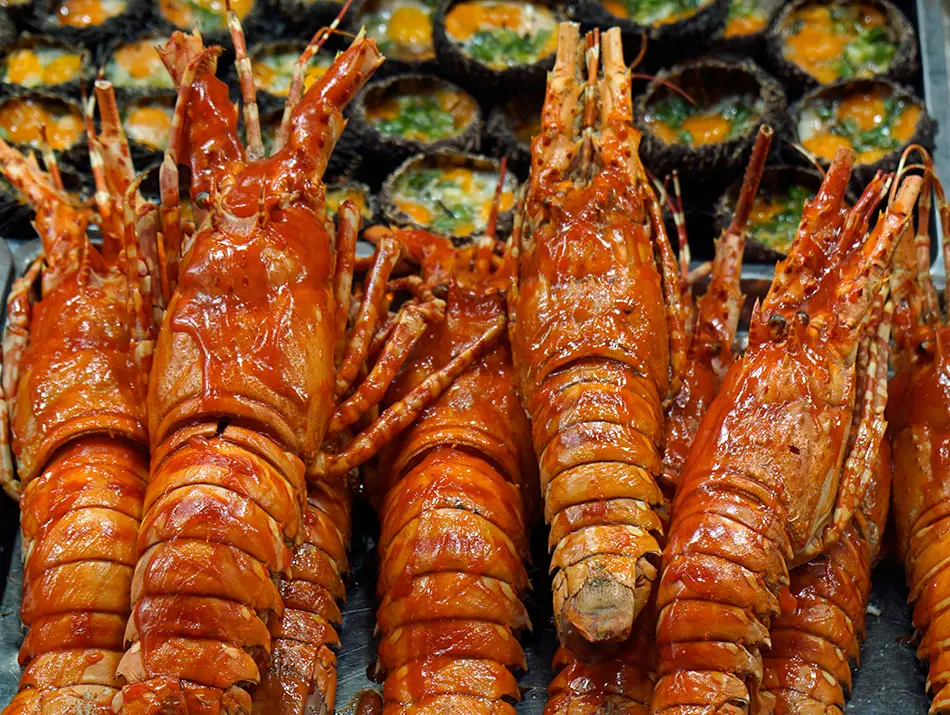
The Phu Quoc Night Market comes alive in the evening with dozens of food stalls and souvenir shops. This is a central spot to try local street food and fresh seafood. Large tanks display live fish, lobster, and sea urchins that you can choose for grilling. You can also shop for pearls, black pepper, and other local products.
- Hours: 5:00 PM – 11:00 PM.
- Combines with: A sunset visit to Dinh Cau Temple.
- 📍Night Market on Google Maps
Best things to Do on Phu Quoc Island: Activities & Experiences
Hon Thom Cable Car ride
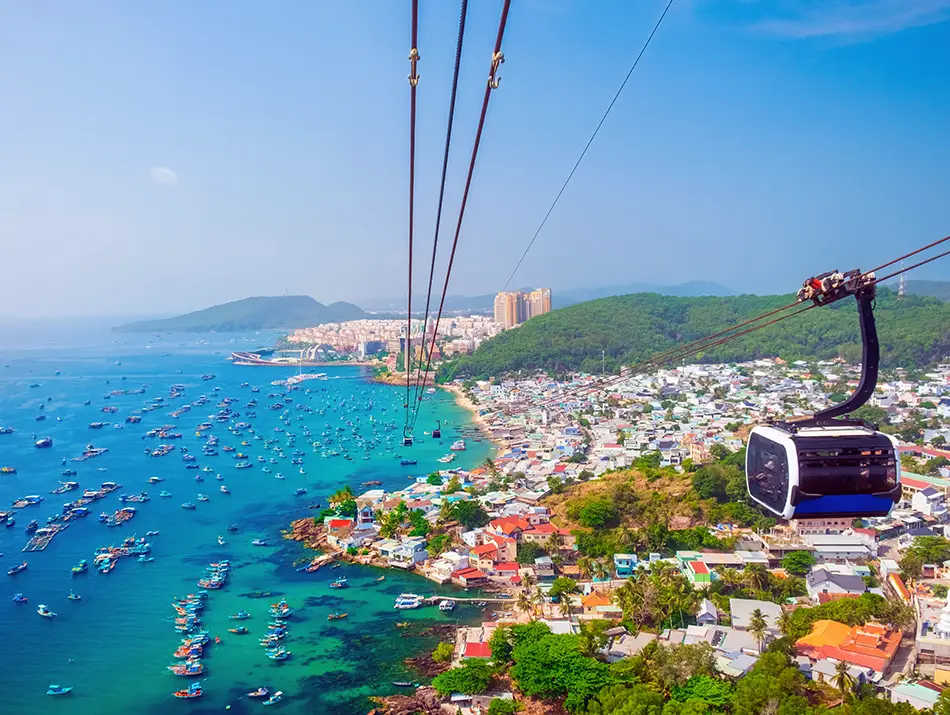
The Hon Thom Cable Car is one of the top attractions on Phu Quoc Island, known for being among the longest over-sea cable car routes in the world. The ride stretches nearly 5 miles (8 kilometers), connecting the southern tip of Phu Quoc with Hon Thom, also called Pineapple Island.
Along the way, you get wide aerial views of the An Thoi archipelago, where fishing boats and floating fish farms dot the water below. The journey ends on Hon Thom, at the entrance to Sun World Hon Thom Nature Park, where beaches and leisure areas mark the final stop.
- Hours and Prices: Runs 9:00 AM – 5:00 PM, with a lunch break. A round-trip ticket with water park access costs around 750,000 VND ($30 / €28).
- Time needed: 3–4 hours, including time at Sun World.
- Travel Tip: Sit on the right side of the car when leaving An Thoi for better views of the islands.
- 📍Cable Car station on Google Maps
Phu Quoc National Park
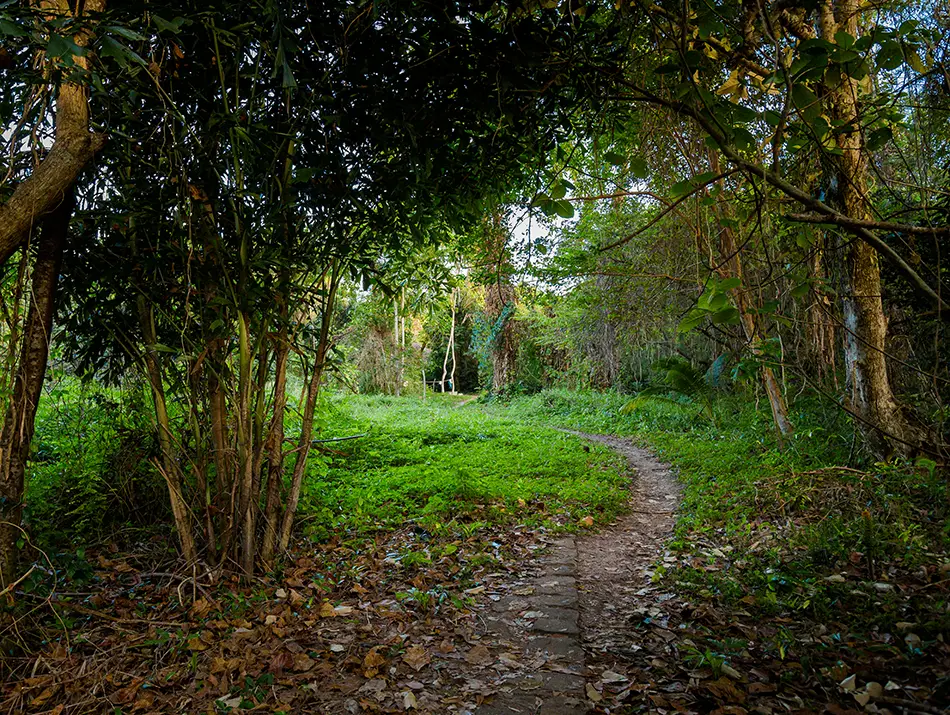
Phu Quoc National Park covers much of the island’s northern interior and offers an accessible taste of its tropical forest. Most of the park is protected, but there are a few designated entry points where visitors can take short, gentle walks under the canopy. Wildlife is present but not often seen, and the experience is more about shade, quiet, and forest atmosphere.
One of the simplest ways to explore is the “Into the Wild” Hike, a short guided route created for casual walkers rather than experienced hikers. It follows a flat forest path and is suitable for anyone wanting a safe, easy introduction to the park without navigating unmarked terrain. Another commonly used area is near Ganh Dau, where small paths and forest roads offer straightforward walking but are not formal trails.
- How to get there: Access points are along the main road toward Ganh Dau.
- Time needed: About 1–2 hours for the Into the Wild Hike or similar short walks.
- Combines with: Starfish Beach.
- Travel Tip: Use Organic Maps for offline navigation.
- 📍Trailhead location on Google Maps
Scuba Diving on Phu Quoc Island
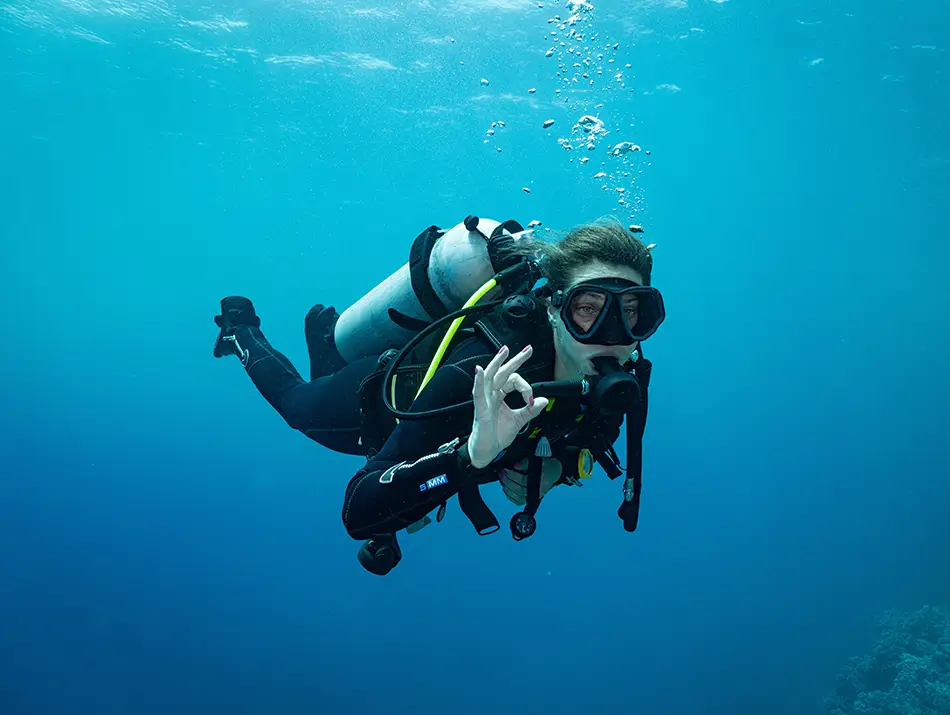
Scuba diving on Phu Quoc centers on two areas: the southern An Thoi archipelago and the northern reefs near Turtle Island. The sites are shallow and calm, making them suitable for beginners and recreational divers. Expect hard corals, small reef fish, and occasional cuttlefish.
Dive operators offer daily boat trips, Discover Scuba programs, and certification courses.
Prices: Trips run roughly 8:00 AM – 2:00 PM. Prices range from 1,000,000–2,500,000 VND ($40–98 / €37–91). Courses cost more and require additional days.
Local Production Tours: Fish Sauce & Sim Wine
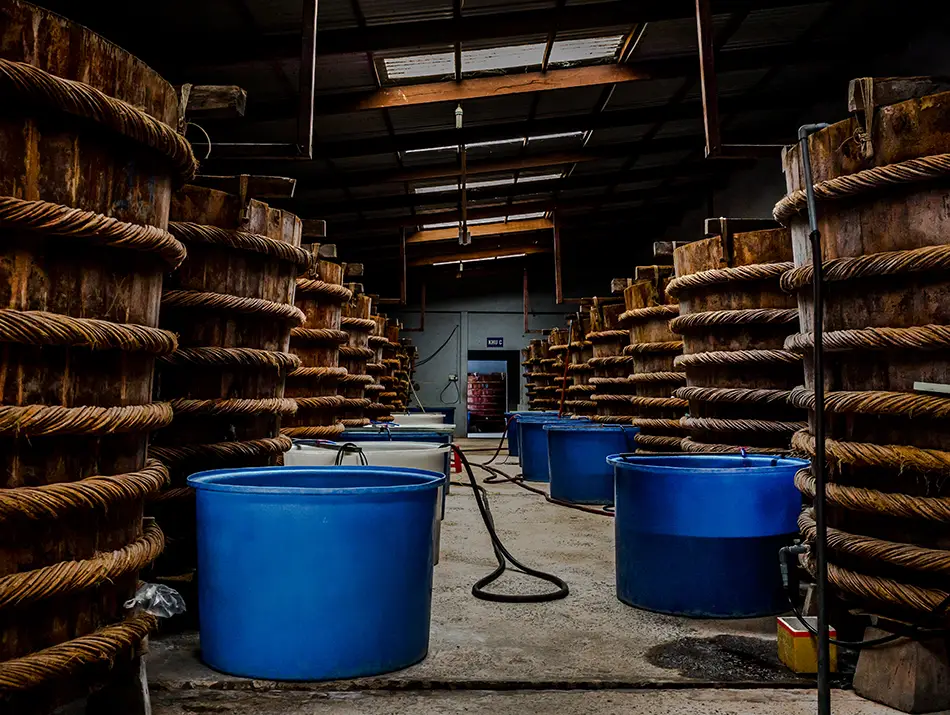
Phu Quoc’s traditional food producers offer quick, easy stops for travelers interested in local culture. Fish sauce houses in Duong Dong and An Thoi show the fermentation barrels used to make the island’s famous nước mắm, while 📍Sim Wine Distilleries explain how rose myrtle fruit becomes the sweet local wine most visitors sample.
- Hours and Prices: About 8:00 AM – 5:00 PM. Most visits are free.
- Time Needed: 20–30 minutes per stop.
Sea Walking (With Underwater Helmet)
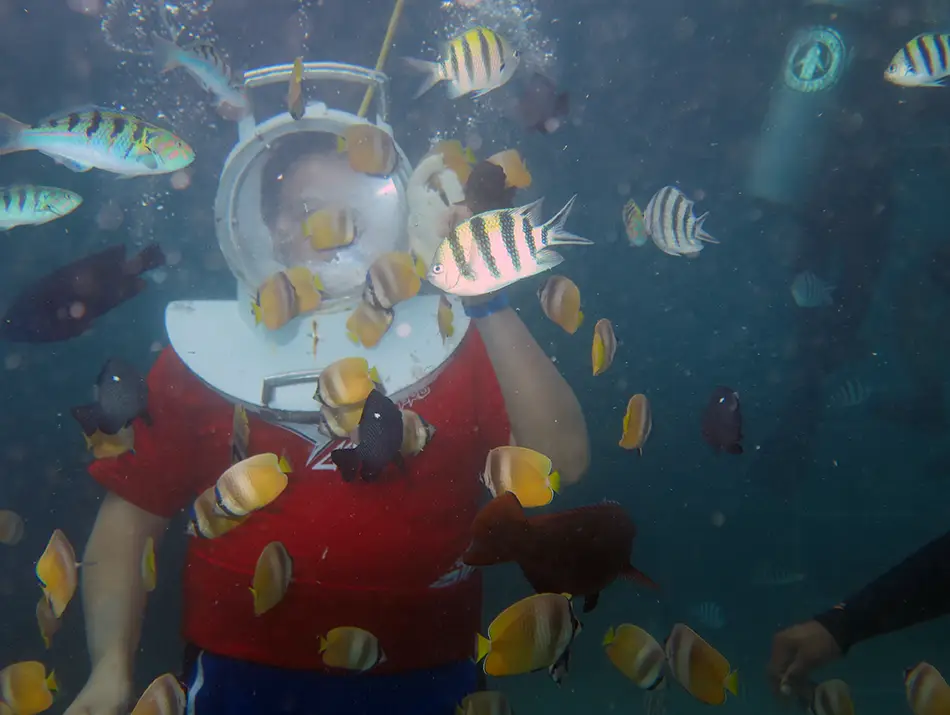
Sea walking is a beginner-friendly underwater activity available at several islands in the An Thoi archipelago. Participants wear a pressurized helmet that allows them to breathe normally while walking on the seabed. It is designed for non-swimmers and families who want to see coral and fish without diving or snorkeling skills.
The experience usually takes place at a shallow platform near Hon Gam Ghi or Hon May Rut. Staff guide visitors along a marked path over coral patches, with fish feeding stations to attract marine life. Tours are operated by licensed companies and include safety briefings and underwater supervision.
- Hours and Prices: Prices range from 950,000–1,500,000 VND ($38–$60 / €36–€55).
- Time needed: 20–30 minutes underwater, plus transfer and briefings.
- Travel Tip: Avoid touching coral, as even light contact can damage fragile reef structures.
Best Day Trips From Phu Quoc Island
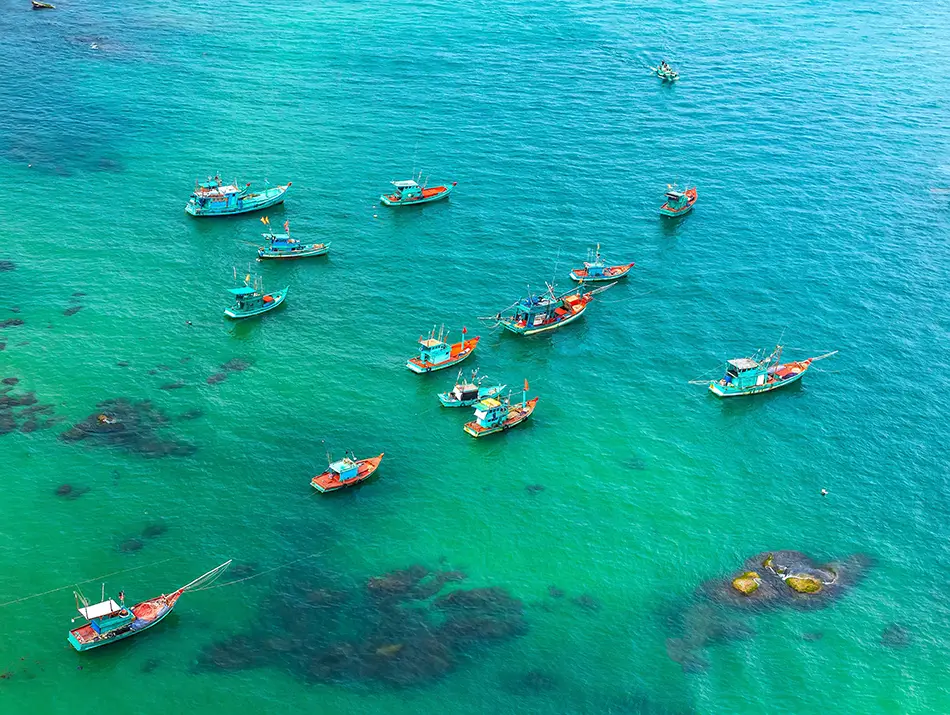
The best day trips from Phu Quoc focus on the small islands of the An Thoi archipelago. This cluster of uninhabited islets is known for calm water, shallow reefs, and quiet beaches. Boat tours usually combine swimming stops with simple beach time and snorkeling sessions.
One of the most visited islands is Hon Mong Tay, a small spot with a narrow white-sand spit and clear water. Hon May Rut Trong is another popular stop, offering a long sandy beach with swings, hammocks, and a few simple bars. Nearby Hon May Rut Ngoai provides a quieter atmosphere and a more natural setting.
All of these islands are uninhabited and have no overnight facilities, so visits are limited to daytime boat tours departing from An Thoi port.
Best Sunset Spots on Phu Quoc Island

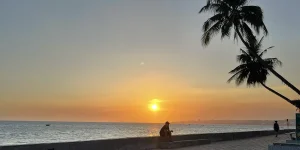
Phu Quoc’s west coast faces the open sea, giving the island reliable and often dramatic sunsets. One of the classic spots is 📍Dinh Cau Rock in Duong Dong, where people gather on the breakwater and temple steps to watch the sun sink behind the fishing boats. It’s busy but atmospheric and easy to reach if you’re staying in town.
For a calmer experience, the long stretch of Long Beach offers countless places to sit directly on the sand. Beach bars lay out cushions and low tables, but you can just as easily bring a towel and find your own spot. The further south you go, the quieter the shoreline becomes.
A newer and increasingly popular place for sunset is 📍Sunset Town in the island’s south. The promenade, pastel buildings, and 📍Kiss Bridge create one of Phu Quoc’s most photogenic sunset backdrops. Crowds gather on the bridge for golden-hour photos, and the sea-facing steps and plazas give wide, unobstructed views.
Food and Drinks

The local food on Phu Quoc Island is a highlight, with a strong focus on fresh seafood. One must-try dish is Herring Salad (Gỏi Cá Trích), made with raw herring, shredded coconut, onions, and herbs, all wrapped in rice paper.
Another local specialty is Bún Kèn, a fish-based noodle soup with a rich, coconut-curry broth that is unique to the island. You should also sample Sea Urchin (Nhum Biển), often grilled with scallion oil or eaten raw with wasabi.
Local Beverages
Phu Quoc offers several unique local drinks. The most famous is Sim Wine (Rượu Sim), a sweet alcoholic beverage made from the fruit of the local rose myrtle tree. You can visit distilleries to see how it’s made and sample different varieties.
For a non-alcoholic option, fresh Coconut Water (Nước Dừa) is sold everywhere and is incredibly refreshing. Another popular choice is Sugarcane Juice (Nước Mía), freshly pressed with a hint of citrus from a kumquat or lime.
Where to Eat & Drink on Phu Quoc
The Duong Dong Night Market is the epicenter of Phu Quoc’s food scene, offering a vibrant atmosphere and an endless variety of grilled seafood and local snacks. For a more authentic, local experience, explore the smaller eateries within Duong Dong town away from the main tourist strips.
Ham Ninh Fishing Village on the east coast is another excellent area for fresh seafood, where you can dine at stilt restaurants built over the water. These areas generally offer a mix of budget-friendly and mid-range options.
If you’re deeply into fresh seafood but want a more easily accessible weekend getaway from Ho Chi Minh City, check out our guide to Vung Tau as another great option.
Planning Your Trip to Phu Quoc island
Best Time to Visit
The ideal period to visit is the dry season, from November through April. During these months, the weather is sunny with low humidity, and the sea remains calm, perfect for swimming and snorkeling. This is also the peak tourist season, so expect higher prices and more crowded beaches.
The shoulder months of April and October can offer a good balance of decent weather and fewer visitors. Conversely, the monsoon season from May to October sees heavy rainfall, though often in short bursts. This period is best for budget travelers who don’t mind the rain.
How Long to Stay on Phu Quoc Island
A three to four-day trip allows enough time to see the island’s main highlights without rushing. This gives you a day to explore the south, including the cable car and Sao Beach.
You can dedicate another day to the north’s national park and more remote beaches. A final day can be spent relaxing or exploring Duong Dong town. A longer stay of five to seven days is justified for those who want to explore smaller islands, go diving, or simply enjoy a slower pace at their resort.
How to Get to Phu Quoc Island
Getting to Phu Quoc Island in Vietnam is straightforward. The most common method is by air. Phu Quoc International Airport (PQC) receives daily flights from Ho Chi Minh City (HCMC) and Hanoi.
Alternatively, you can travel by ferry from the mainland. High-speed ferries depart from Ha Tien and Rach Gia. The trip from Ha Tien is shorter, taking about 1.5 hours. The journey from Rach Gia takes approximately 2.5 hours. You can book tickets online or at the port, but advance booking is recommended during peak season.
Getting Around

Phu Quoc offers several easy ways to get around. Motorbike rentals give the most freedom for visiting beaches and rural areas, though some roads can be rough.
Taxis and Grab are widely available and useful for longer distances or evening travel. The island’s free VinBus shuttles connect the airport, Duong Dong, Bai Vong harbor, and the major northern attractions, which helps keep transport costs down.
For a smoother full-day itinerary, you can also hire a private car with a driver, but it’s the priciest option.
Is It Expensive to Visit Phu Quoc in 2026?
Phu Quoc fits most budgets, though prices are generally higher than on the mainland. So is Phu Quoc Island expensive? It can be, especially if you rely on taxis, beachfront dining, or large resorts — but traveling simply with local food and guesthouses keeps costs reasonable.
- VinWonders Phu Quoc (Adult Entry): VND 950,000 ($36 / €31)
- Hon Thom Cable Car (Adult Round-trip): VND 850,000 ($32.5 / €28)
- Standard 3-Star Hotel: VND 550,000–1,200,000 ($21–45.5 / €18–39.5) per night
- Budget Hostel Dorm Bed: VND 120,000–250,000 ($4.5–9.5 / €4–8) per night
- Meal at an Inexpensive Local Restaurant: VND 60,000 ($2.5 / €2)
- Bottle of Water (0.5 L) in a Supermarket: VND 10,000 ($0.5 / €0.5)
- Motorbike Rental (Economy Scooter): VND 150,000–180,000 ($5.5–7 / €5–6) per day
- Intercity Transport (Rach Gia to Phu Quoc via Ferry): VND 320,000–340,000 ($12–13 / €10.5–11)
Where to Stay on Phu Quoc Island: Accommodation Areas and Options
Phu Quoc offers a wide range of accommodation, from simple guesthouses to sprawling luxury resorts. The central hub is Duong Dong on the west coast. Long Beach is the most developed area, lined with beachfront resorts, bars, and shops catering to all budgets. For a quieter atmosphere, Ong Lang Beach to the north offers mid-range to high-end resorts in a more relaxed, natural setting.
At the southern end of the island, the area around An Thoi and Khem Beach is known for its upscale properties. Khem Beach in particular hosts some of Phu Quoc’s most luxurious resorts on a beautiful white-sand bay, offering a more secluded experience compared to the central coast.
Sustainable Travel in Phu Quoc
Phu Quoc’s rapid expansion has placed severe pressure on its coral reefs and waste management systems. As the island moves toward “Green Tourism” initiatives, your choices in transport and tour operators are the primary way to protect the “Pearl Island” from further environmental degradation.
- Support the Plastic-Free Island Goal: Phu Quoc is a focal point of the WWF Plastic Smart Cities program. Avoid all single-use plastics and carry a reusable bottle. You can locate refill stations at eco-conscious businesses and hotels via (RefillMyBottle or mymizu).
- Utilize Electric Transit: Phu Quoc has one of the most comprehensive electric vehicle networks in Vietnam. Use the Xanh SM app to book 100% electric taxis or motorbikes for island-wide travel. In the Grand World/United Center area in the north and Sunset Town in the south, free or low-cost electric shuttles are the standard mode of transport, significantly reducing noise and air pollution.
- Choose Responsible Snorkeling and Diving: Book trips with operators like OnBird Phu Quoc, who use scientific “reef-check” methods to avoid crowding. They prioritize small groups, monitor weather/tide conditions to protect coral health, and strictly enforce a “no-touch, no-fin” policy in shallow reef areas.
Activities to Avoid
- Walking on or Touching Coral Reefs: The reefs around the southern An Thoi archipelago are highly sensitive. Never stand on coral or touch it with your hands or fins, as this kills the polyps and introduces bacteria. Use life jackets to stay buoyant and maintain a safe distance.
- Visiting Unethical Animal Attractions: Avoid parks or “safaris” where animals are used for performances.
- Consuming Endangered Marine Life: Be wary of local seafood markets offering rare species like sea horses or certain types of sharks. Stick to sustainably caught local specialties like herring (cá trích).
- Buying “Natural” Souvenirs: Refuse to purchase items made from real coral, starfish, or large seashells. These are often harvested illegally and their removal disrupts the marine food chain and coastal protection.
- Removing or Touching Starfish: At places like Starfish Beach, never lift starfish out of the water or move them for photos. Starfish breathe through their skin. Even a few seconds in the air can cause them to suffocate and die. The natural oils and chemicals on your hands are also toxic to their delicate bodies. Observe them strictly from a distance while they are submerged.
Know Before You Go
Accessibility
Accessibility on Phu Quoc Island presents significant challenges for travelers with mobility issues. Most large, modern resorts offer accessible rooms and facilities like ramps and elevators. However, outside of these properties, infrastructure is limited.
Sidewalks are often uneven, broken, or non-existent. Many local restaurants, markets, and attractions, including temples and natural sites, are not wheelchair-friendly.
Family with Kids Tips
Phu Quoc has plenty of activities suited for families. VinWonders Phu Quoc is a major amusement and water park with rides, slides, and shows that keep children entertained for hours. The calm, shallow waters at Sao Beach and Starfish Beach are great for young swimmers.
The An Thoi cable car ride is another highlight, offering sweeping island views that kids usually love. Many resorts also provide kids’ clubs, playgrounds, and family-friendly pools, making it easy to balance relaxation with activities.
Without the Hype: Is Phu Quoc Island Worth Visiting?
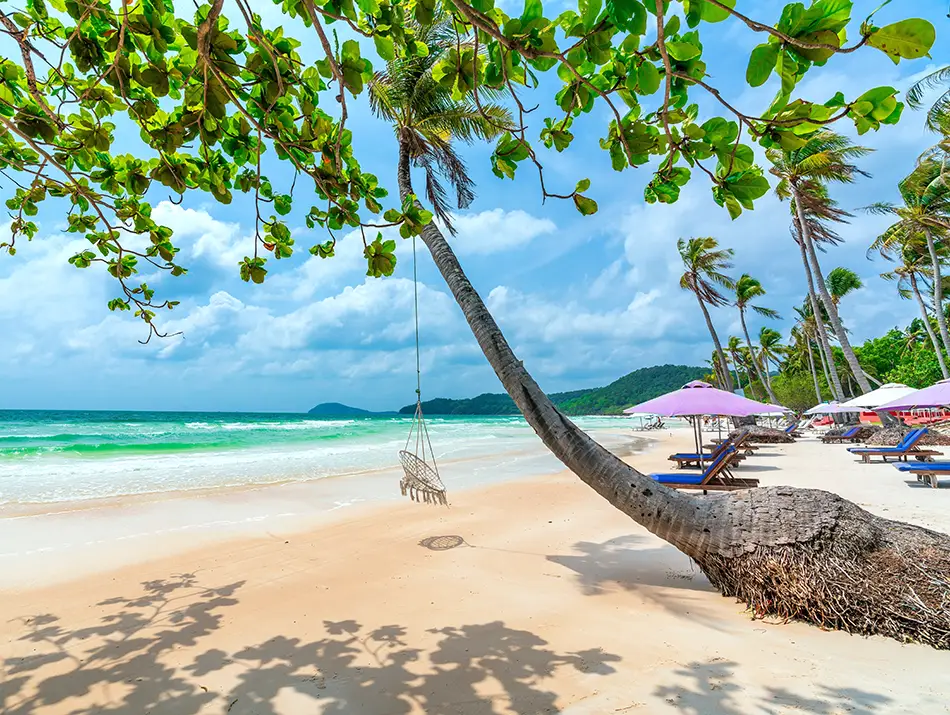
Phu Quoc offers beautiful beaches and luxury resorts alongside significant, sometimes chaotic, development. It is a destination that delivers a comfortable, convenient tropical getaway but may not fulfill fantasies of a deserted island paradise. The infrastructure is catching up with the tourism boom, which can lead to a less-than-seamless experience outside of resort compounds.
You’ll like Phu Quoc if:
- You want a mix of resort relaxation and accessible activities like theme parks and cable cars.
- You enjoy fresh seafood and vibrant night markets.
- You are looking for a straightforward beach destination with direct flight access.
You might skip it if:
- You are seeking pristine nature and an escape from commercial tourism.
- You are a budget backpacker looking for the lowest prices in Southeast Asia.
- You are sensitive to environmental issues like plastic waste and overdevelopment.
Good alternatives:
- Con Dao Islands: For a more rugged, historically rich, and less developed island experience in Vietnam.
- Da Nang / Hoi An: If you want to combine beautiful beaches with rich cultural and culinary scenes.
We hope this guide on the best things to do on Phu Quoc Island helps you decide if it fits your travel plans. For more inspiration, check out our other guides on our Vietnam Guides Page. We wish you smooth planning and an unforgettable trip.