Know Meknes Before You Go
Meknes is one of Morocco‘s four imperial cities — a UNESCO World Heritage Site since 1996 — built to its greatest scale under Sultan Moulay Ismail between 1672 and 1727. Unlike Fes or Marrakesh, it receives a fraction of their tourist traffic, which means fewer touts, lower prices, and a medina where it’s possible to wander without being followed. The best things to do in Meknes are concentrated around its imperial monuments, its remarkably low-key medina souks, and the wine country that surrounds the city.
Meknes divides into two main zones: the old medina with adjacent imperial quarter, and the French-built Ville Nouvelle (new town) to the west. All major sights lie within the medina and imperial district, walkable from each other. Accommodation runs cheaper than Fes, and the medina is generally hassle-free by Moroccan standards.
The city appeals to travelers who prioritize history and architecture over nightlife and beach access. It does not suit visitors looking for a resort experience, extensive shopping options, or English-language signage throughout its monuments. Many visitors base themselves in Fes and treat Meknes as a day trip.
Best Things to See in Meknes: Top Attractions and Activities
Bab el-Mansour Laalej and Lahdim Square
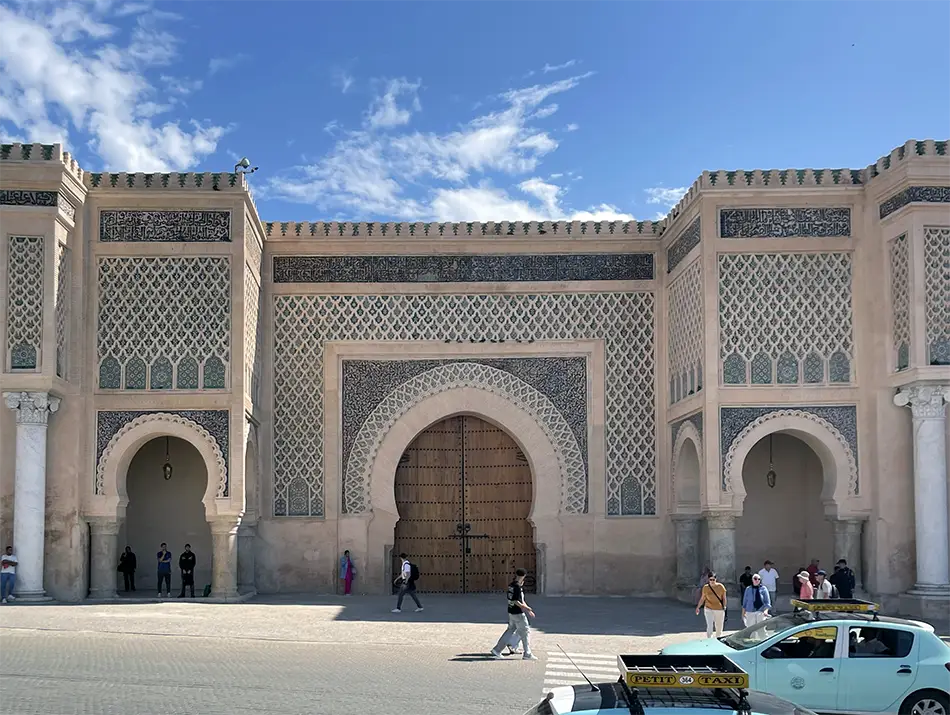
Bab el-Mansour stands as the most famous of the city’s many gates and serves as the main entrance to the Imperial City. Completed in 1731, the gate is decorated with intricate green and blue zellij (tilework) and flanked by two massive marble columns. Directly in front of the gate lies Lahdim Square, a large open space that acts as the city’s social heart. This area provides a natural starting point for exploring the various attractions in Meknes.
While the interior of the gate is occasionally used for art exhibitions, the primary experience is observing the exterior craftsmanship and the vibrant local life in the plaza. During the day, the square is a functional marketplace, but it transforms into a performance space with storytellers and musicians after dark.
- Travel Tip: Arrive just before sunset to see the late afternoon light hit the golden-hued stonework before the square fills for the evening.
- 📍Bab el-Mansour
Mausoleum of Moulay Ismail
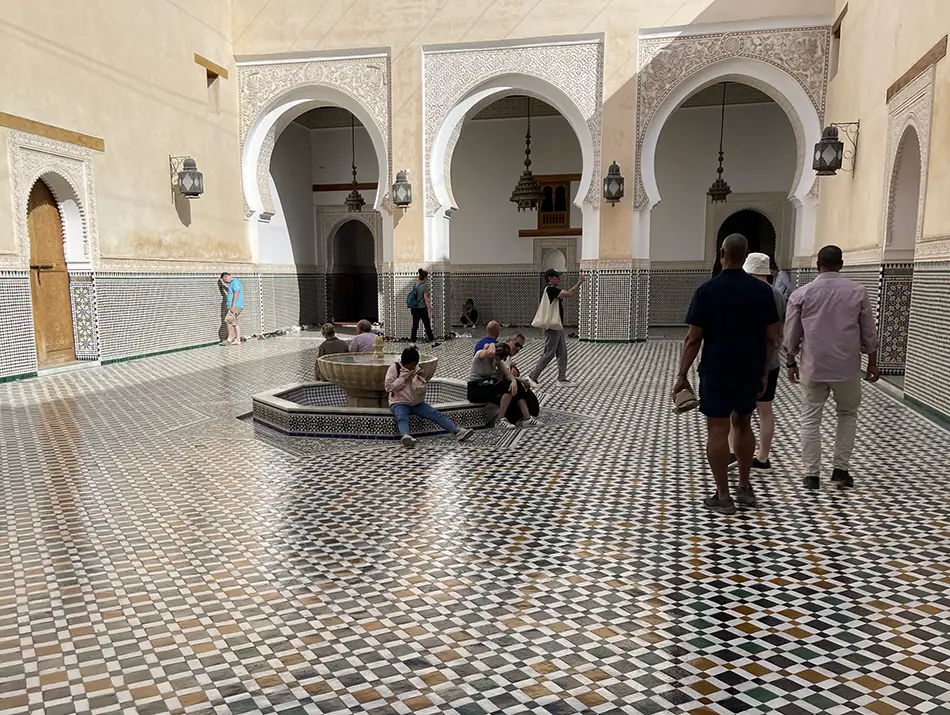
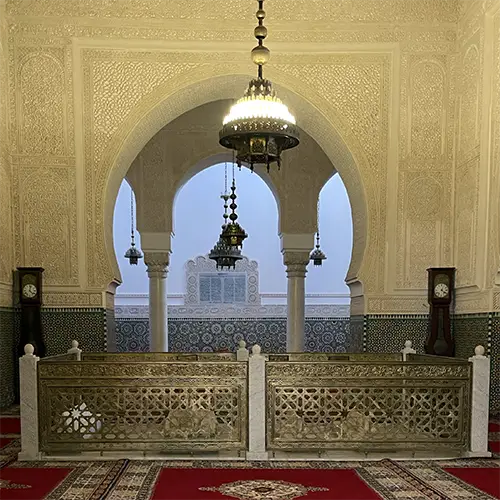
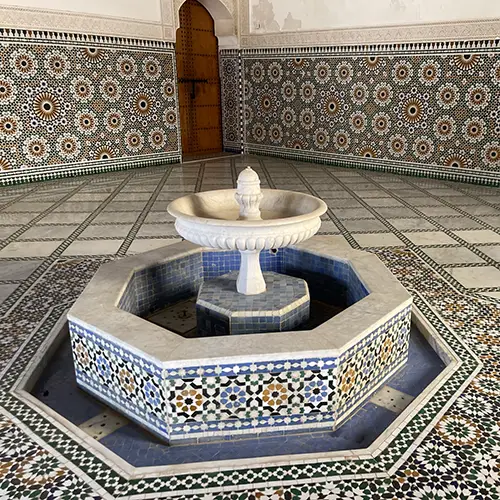
The Mausoleum of Moulay Ismail is the burial complex of Sultan Moulay Ismail, the ruler who made Meknes his imperial capital. It is one of the few religious landmarks in the country open to non-Muslims, though the actual tomb chamber is restricted to practitioners.
The interior features several serene courtyards and rooms adorned with fine plaster carvings and traditional mosaic tiles. This site is widely considered one of the essential things to see in Meknes due to its spiritual significance and architectural beauty.
Upon entering, guests are required to remove their shoes and carry them or leave them at the entrance. You can walk through the quiet, sun-drenched courtyards which offer a stark contrast to the busy streets outside. The central hall allows for a view of the sultan’s tomb from a respectful distance, where the intricate woodwork and brass chandeliers are clearly visible.
- Working hours: 09:00 – 18:30
- Entrance Fee: Free
- Travel Tip: Wear socks as the tiled floors can be quite cold or hot depending on the season.
- 📍Mausoleum of Moulay Ismail
Heri es-Souani (Royal Granaries and Stables)
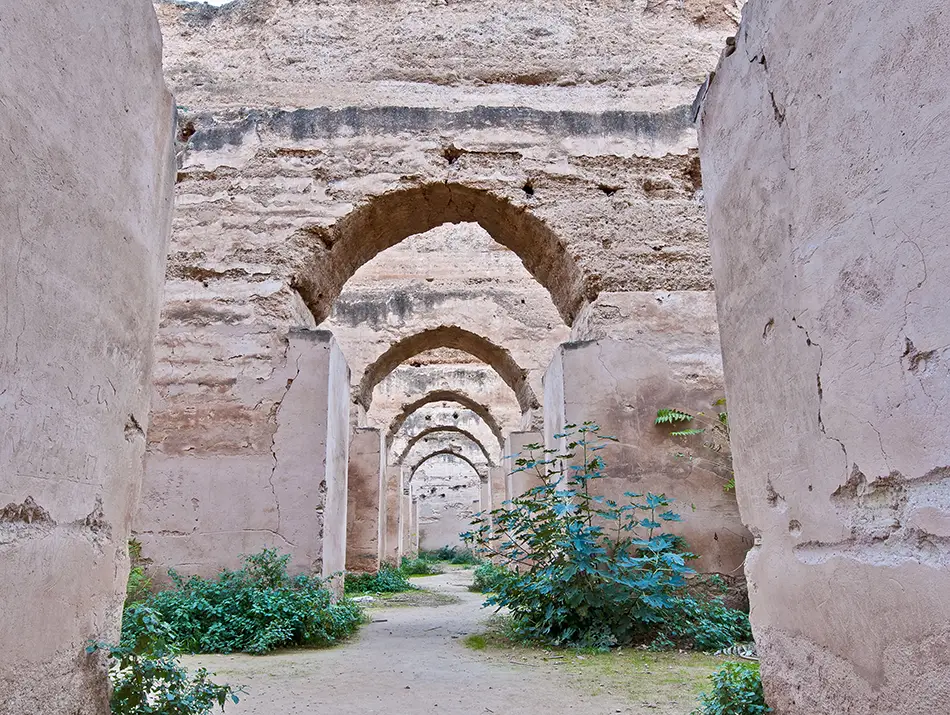
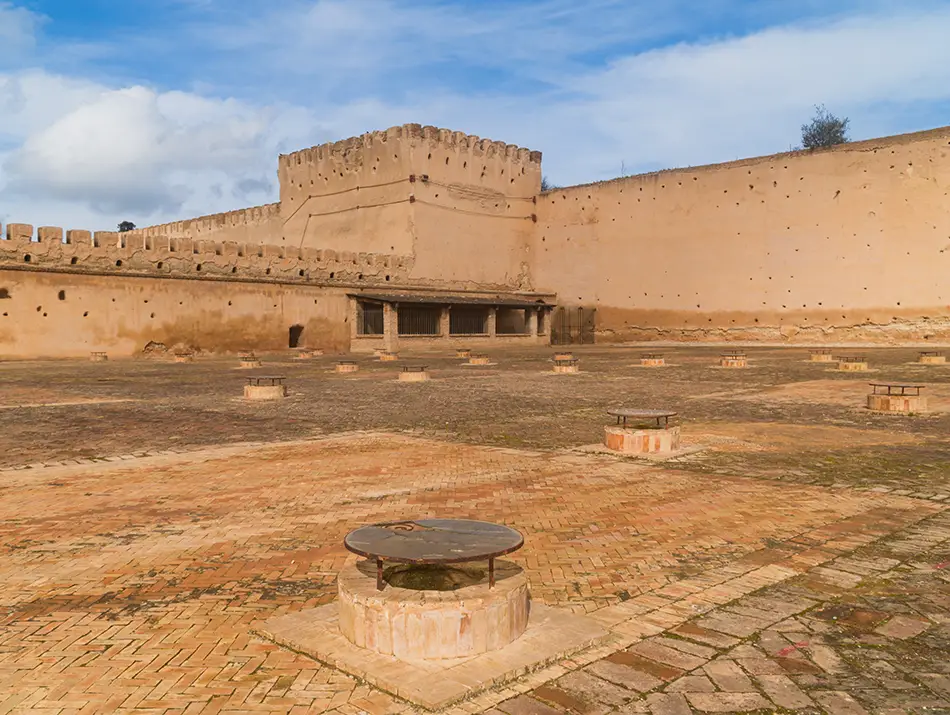
Heri es-Souani is a massive engineering marvel built to store grain and house thousands of royal horses. The structure features walls several feet thick to maintain a cool interior temperature, supported by a forest of stone arches. While the roof of the rear stables was destroyed by an earthquake, the standing ruins create a dramatic visual landscape. These ruins are among the most visited sights in Meknes for their scale and historical ingenuity.
The visitor experience involves walking through the high-vaulted granary rooms where the ventilation systems are still visible in the ceiling. Moving toward the back, you enter the open-air stable area where rows of stone pillars stretch toward the horizon. The site is vast and requires a fair amount of walking on flat but uneven ground. It provides a tangible sense of the Sultan’s military ambition and the resources required to maintain his cavalry.
- Working hours: 09:00 – 17:00
- Entrance Fee: 70 MAD ($7.50 / €6.50)
- Travel Tip: The walk from the city center is roughly 20 minutes. A petit taxi is a cheap alternative if the weather is hot.
- 📍Heri es-Souani
Sahrij Swani (Agdal Basin)
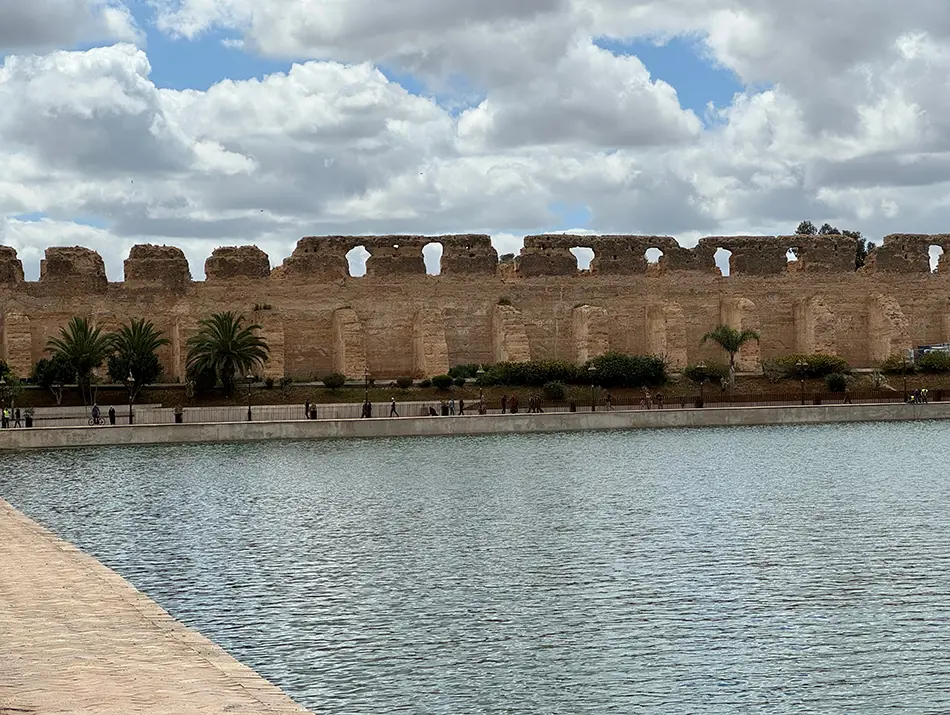
Sahrij Swani is a 4.7 hectares (11.7 -acre) stone reservoir located next to the royal granaries. This massive body of water was once the primary irrigation source for the Sultan’s gardens and a backup water supply for the city. Today, it serves as a public park and a cooling spot for the local population. This site is central to many Meknes activities focused on leisure and local culture.
Visitors can walk the entire perimeter of the basin on a wide paved path. It is a popular location for local families to gather, particularly in the late afternoon when the heat subsides. The view of the nearby ruins reflecting on the surface provides excellent photography opportunities. It is a quiet place to sit and observe the local pace of life away from the commercial districts.
- Entrance Fee: Free
- Combines with: Heri es-Souani
- Travel Tip: Visit on a Sunday afternoon to see the park at its liveliest with local families and street food vendors.
- 📍Sahrij Swani
Bou Inania Madrasa (Meknes)
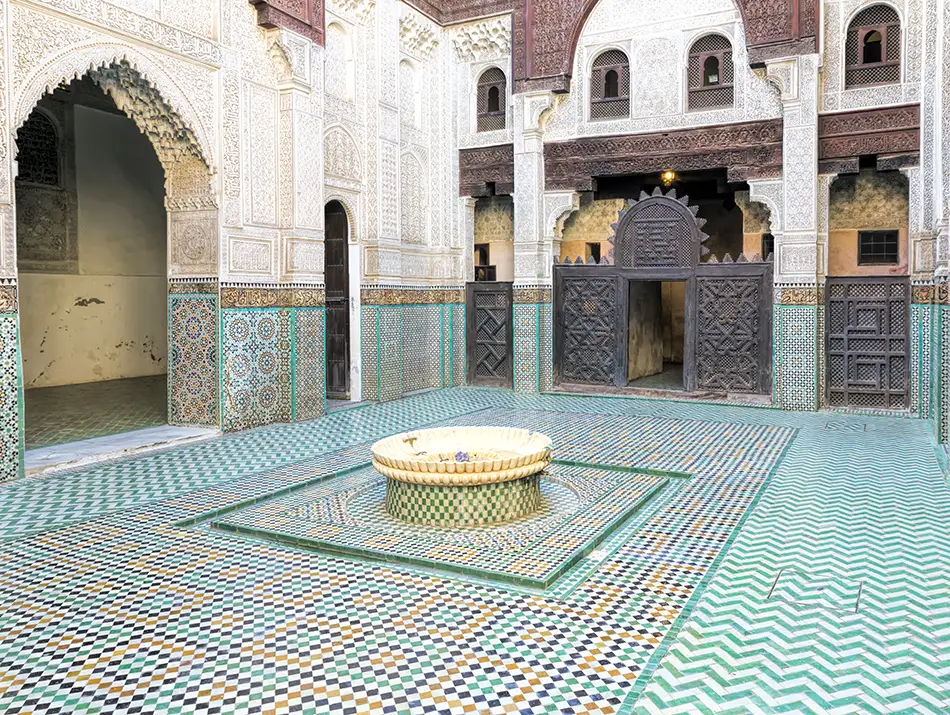
The Bou Inania Madrasa is a 14th-century Islamic college located in the heart of the medina. It is renowned for its dense ornamentation, including carved cedar wood, marble floors, and hand-cut zellij tiles. The central courtyard features a small fountain and is surrounded by high walls that block out the noise of the surrounding markets.
You can explore the ground floor’s ornate prayer hall before ascending a dark, narrow staircase to the upper levels. The second floor contains the small, austere rooms where students once lived while studying the Quran and sciences. From the upper level you can typically look out over the medina’s rooftops and surrounding minarets. The building is compact, allowing for a thorough visit in less than an hour.
- Working hours: 09:00 – 18:00
- Entrance Fee: 60 MAD ($6.5 / €5.5)
- Combines with: Medina Souks, Bab el-Mansour.
- 📍Bou Inania Madrasa
Kara Prison (Habs Qara)
⚠️Temporary Closed
Habs Qara is an extensive underground structure historically thought to be a prison or holding space under the imperial city. Descriptions vary and its exact original purpose is debated among historians. The structure is mostly empty today, leaving the scale and the atmosphere to tell the story. Exploring this subterranean site is one of the more unique things to do in Meknes.
Visitors descend a staircase into a series of low-ceilinged vaults that stay cool regardless of the outside temperature. There are no bars or cells; instead, the prison was a vast open space where captives were reportedly chained to the pillars. Small holes in the ceiling provided the only light and air. The experience is brief but evocative, providing a darker perspective on the Sultan’s reign.
- Working hours: 10:00 – 17:00
- Entrance Fee: Temporary Closed
- Combines with: Mausoleum of Moulay Ismail
- Travel Tip: Use your phone’s flashlight to better see the texture of the walls and the floor in the deeper sections.
- 📍Habs Qara
Best Things to Do in Meknes: Top Activities and Experiences
Olive Tasting at the Marche Couvert
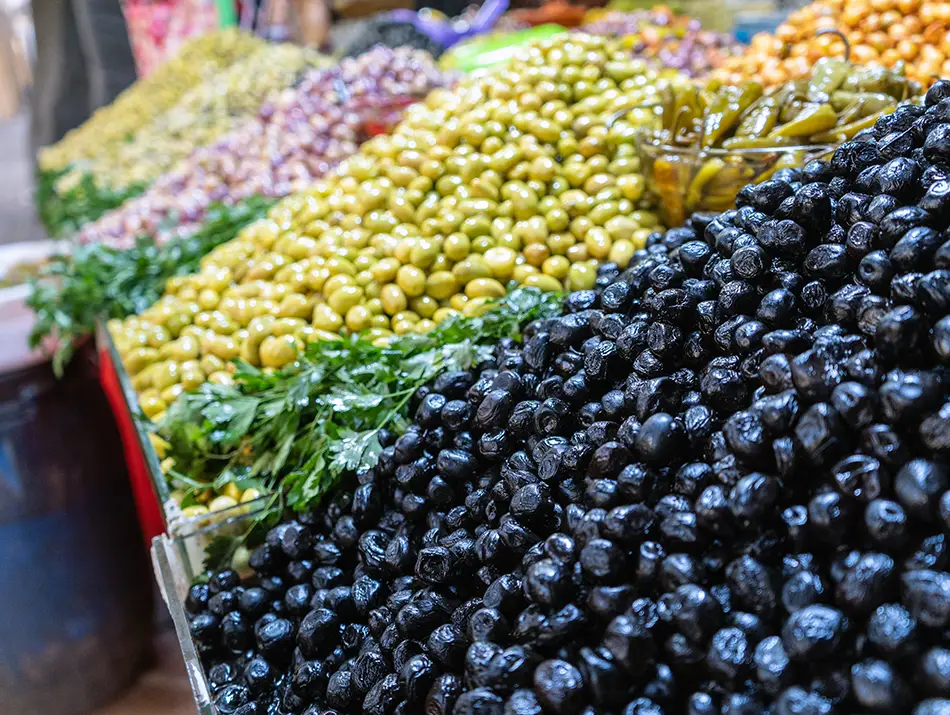
The Marche Couvert is the primary covered food hall of the Meknes medina, located just off the main plaza. This market is particularly famous for its dedicated olive section, where vendors display dozens of varieties in large plastic or wooden barrels. Because Meknes is a major agricultural hub for olive oil, the quality here is among the highest in Morocco. Participating in a tasting here is a best thing to do in Meknes for any visitor looking to experience the local larder.
The market experience is highly sensory, characterized by the sharp smell of brine and the vibrant colors of marinated fruits. You will find olives prepared with harissa, preserved lemons, wild herbs, and garlic. Vendors expect visitors to sample different varieties before choosing, which is considered a polite engagement with the seller’s craft.
The area is covered, providing a cool environment for a slow walk through the stalls where you can also find local honey and spices.
- Price: Free to visit
- Time Needed: 30 minutes
- Additional Info: Vendors are generally happy to let you sample a few types before you buy.
- 📍Marche Couvert
Experience Wine Tasting

The plateau around Meknes is the heart of Morocco’s wine industry due to its unique microclimate. Estates like Domaine de la Zouina or Château Roslane offer tours of their vineyards and production facilities.
Tasting the local “Gris” wine or robust reds is one of the more popular activities in Meknes for travelers seeking a modern Moroccan experience.
- Price: ~ 350 – 500 MAD ($35.00 – $50.00 / €32.00 – €46.00)
- Additional Info: You must book in advance; transport via grand taxi is the most reliable way to reach the estates.
Play at Royal Golf de Meknes
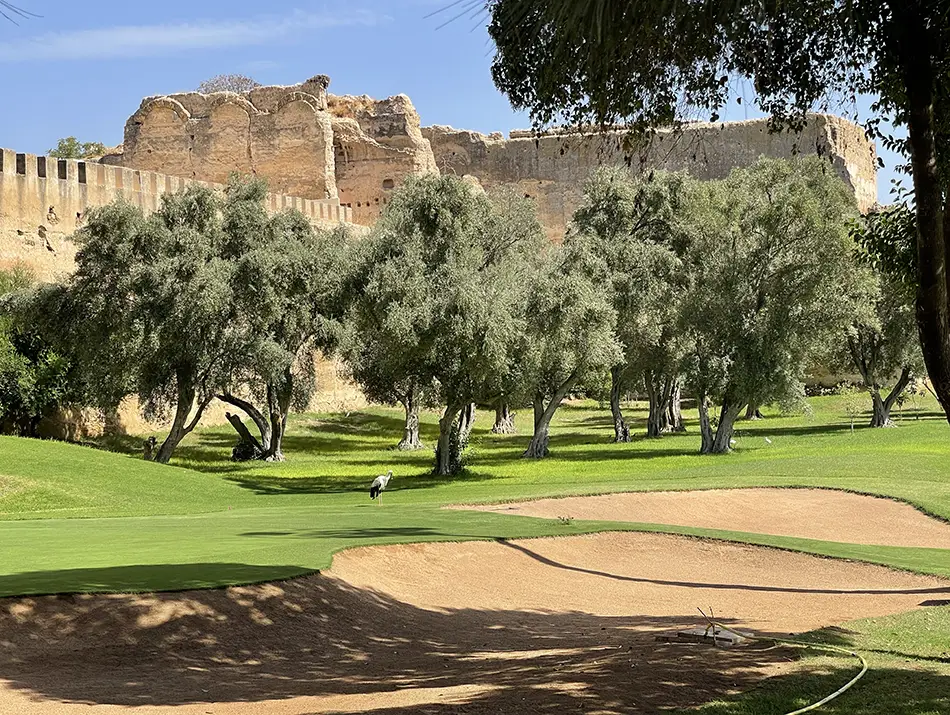
This 9-hole golf course is unique because it is situated within the historic ramparts of the Royal Palace. The grounds are filled with ancient olive and apricot trees, and the city’s minarets are visible from the fairways. It is one of the most unexpected experiences in Meknes for sports enthusiasts.
- Price: ~ 400 MAD ($43.00 / €37.00) for green fees
- Time Needed: 2 – 4 hours
- Additional Info: The club has a terrace that is excellent for a drink even if you are not playing.
- Royal Morocco Golf Federation Info
Best Day Trips from Meknes
Volubilis and Moulay Idriss Zerhoun
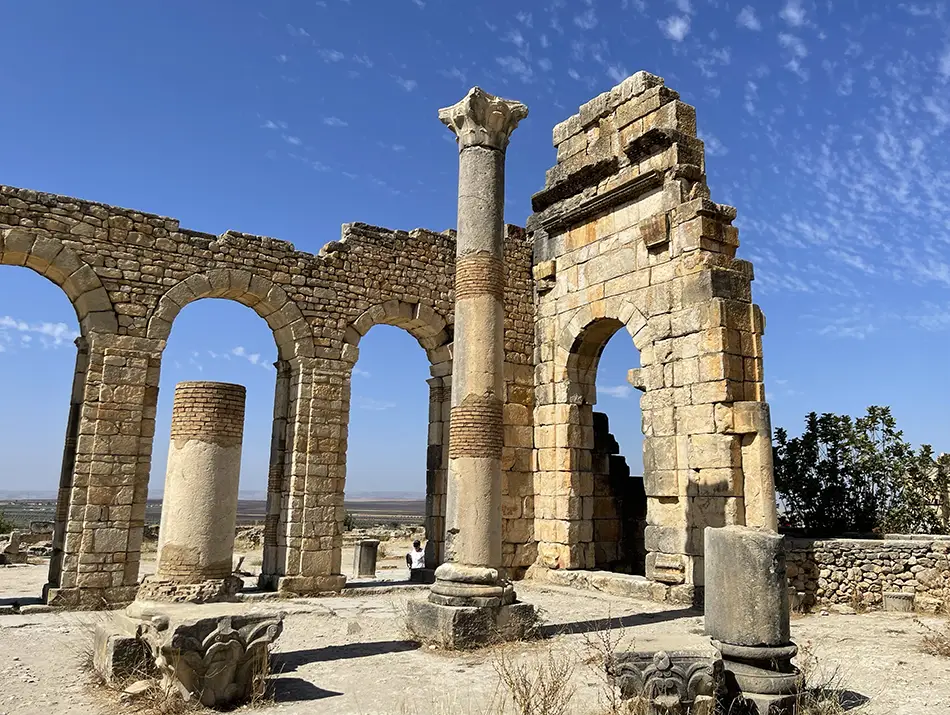
Volubilis is a UNESCO World Heritage site containing the most extensive Roman ruins in Morocco. It is located 19 miles (30 km) north of the city and features remarkably preserved floor mosaics and monumental arches. Nearby, the town of Moulay Idriss Zerhoun sits across two hills and serves as a major pilgrimage site. Combining these two locations is the standard day trip for anyone visiting Meknes.
- Self Organized or Guided
- Price: 100 MAD ($11 / €9) entry for Volubilis; ~450 MAD ($50 / €40) for a dedicated grand taxi for the day
- Total Time: 6 hours
- Transportation Time: 45 minutes each way
- Additional Info: Hire an official guide at the entrance of Volubilis to find the most hidden mosaics.
Without the Hype: Is Meknes Worth Visiting?
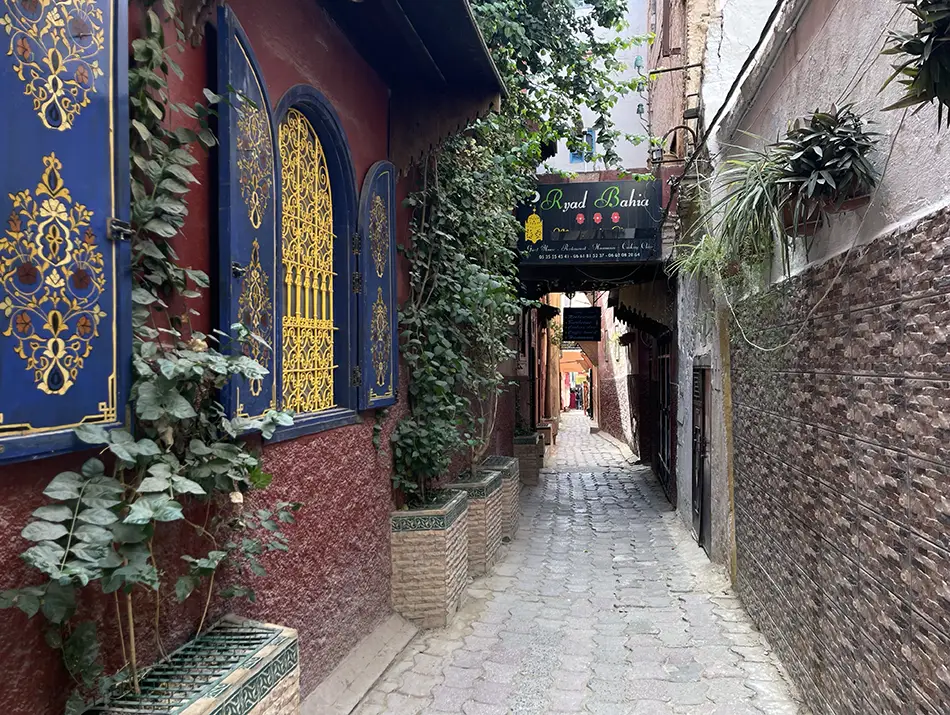
Meknes is a rewarding destination for travelers who prioritize history and atmosphere over a curated tourist experience. It feels significantly more authentic than other Imperial cities, though it currently faces some challenges. Large-scale restoration projects are ongoing in 2026, meaning some sections of the walls or gates might be obscured by scaffolding.
This city is best suited for those who enjoy walking and have a deep interest in the Alawite dynasty’s architectural legacy, or for those who want to break the travel between Fes and Rabat.
You’ll like Meknes if
- You want to see historic monuments without being constantly approached by unofficial guides.
- You are planning to visit Volubilis and want a convenient nearby base.
- You enjoy the “imperial” scale of architecture with massive walls and open squares.
You might skip it if
- You expect a wide array of luxury boutiques or high-end international dining.
- You are bothered by ongoing construction and renovation projects.
We hope that this guide on the best things to do in Meknes helped to decide whether it fits your travel interests. Be sure to check out our Morocco travel guides page for more regional information. We wish you smooth planning and an unforgettable trip.