


Know Fes Before You Go
Fes (Fez) is a landlocked imperial city in north-central Morocco, roughly 3 hours by train from Casablanca and 5 hours from Marrakech. The best things to do in Fes are concentrated in its medieval medina, Fes el-Bali, which is one of the largest car-free urban areas in the world and a UNESCO World Heritage Site.
Travelers who enjoy urban history, Islamic architecture, and craft culture will find it rewarding. While Fes excels in historical immersion, tourists seeking beaches or a high-energy modern nightlife scene may find the city’s traditional atmosphere and medieval infrastructure a significant departure from typical resort destinations.
Most travelers find that two to three days is enough to cover the main medina sights, provided this timeframe does not include day trips from Fes or half-day experiences like cooking classes.
Table of Contents
Best Things to See in Fes: Top Attractions and Sights
Blue Gate (Bab Bou Jeloud)
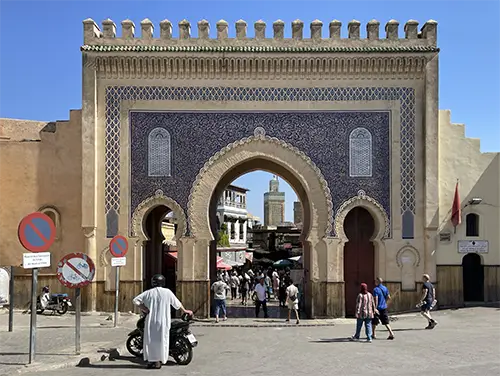
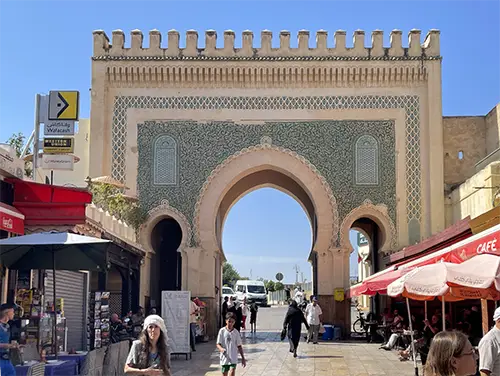
Bab Bou Jeloud serves as the main western entrance to the Medina. Built by the French in 1913, the gate features triple arches decorated with blue tiles on the exterior and green tiles on the interior. It marks the transition from the relatively modern city to the medieval labyrinth. Because it sits at a high point of the medina, it acts as a primary navigational reference for all visitors.
People gather here to photograph the ornate zellige tilework before entering the bustling market streets of Talaa Kebira and Talaa Seghira. The structure is probably one of the most instagrammable locations in Fes due to the vibrant colors and traditional geometry.
The area surrounding the gate remains active until late at night with local commuters and travelers. Dozens of casual restaurants line the inner square, offering views of the minarets through the central arch. This spot provides the most straightforward access to taxis and transport hubs outside the walls.
Bou Inania Madrasa
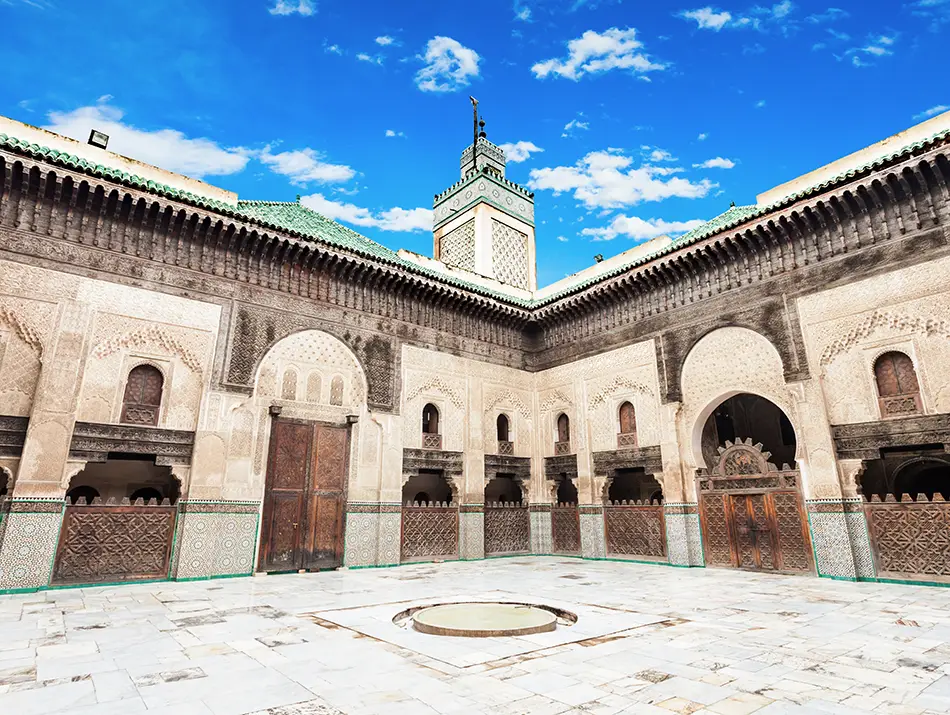
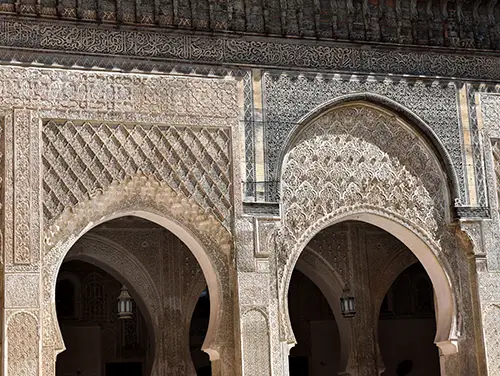
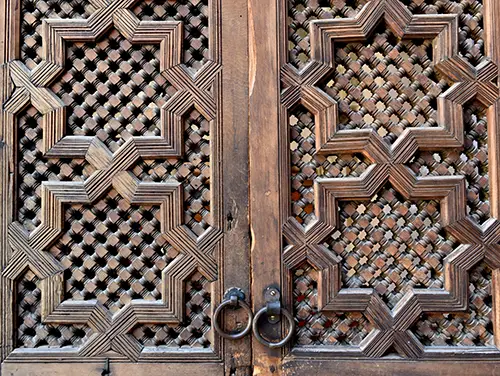
This 14th-century religious college remains one of the few active religious buildings in Morocco open to non-Muslim visitors. It represents the pinnacle of Merenid architecture, showcasing intricate cedar carvings and hand-chiseled stucco. The central courtyard features marble paving and a richly decorated prayer hall. Unlike most madrasas in Fes, Bou Inania also functioned as a congregational mosque with a minbar for Friday sermons.
Visitors can explore the courtyard to inspect the geometric patterns and Arabic calligraphy covering the walls. The heavy brass doors at the entrance lead into a space known for its exceptional acoustics and cooling shadows. Although the upper student cells are often closed to the public, the ground level offers a comprehensive look at Islamic decorative arts. Local guides frequently explain the mathematical precision used in the tile layouts here.
While this may not be the top attraction, it remains a place to visit in Fes for those who appreciate Islamic architecture.
- Working hours: 09:00 – 18:00 (Closed during prayer times)
- Entrance Fee: 20 MAD (≈ $2.2 / €1.9)
- Travel Tip: Visit during the mid-morning when the sun hits the courtyard floor to highlight the tile colors.
Al-Attarine Madrasa
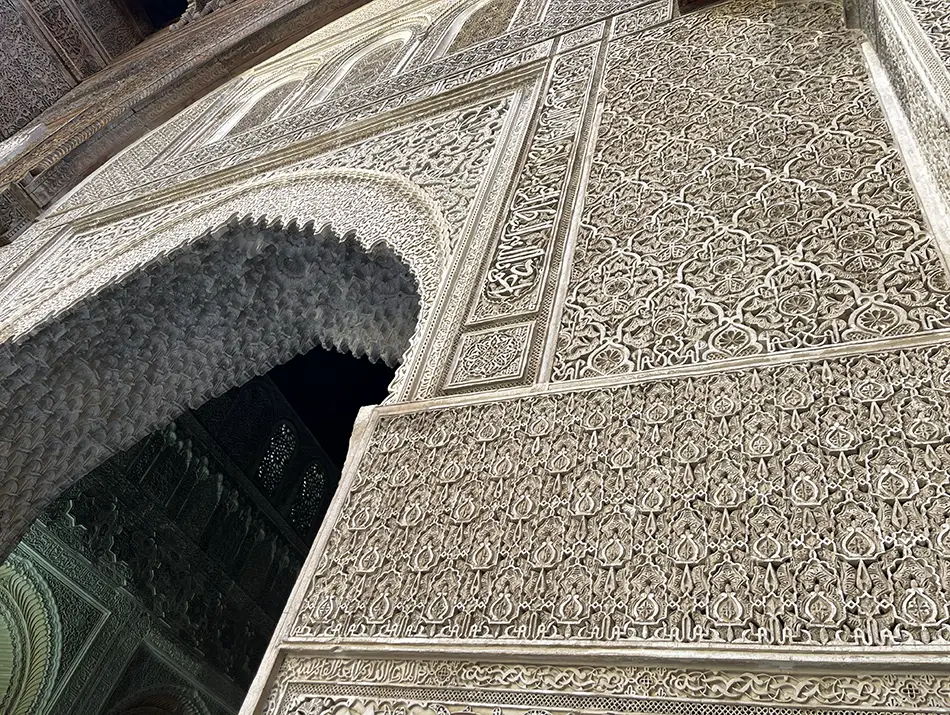
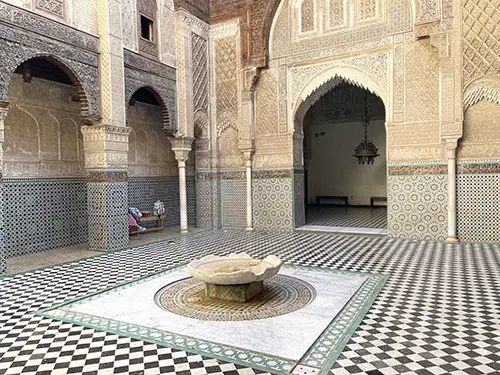
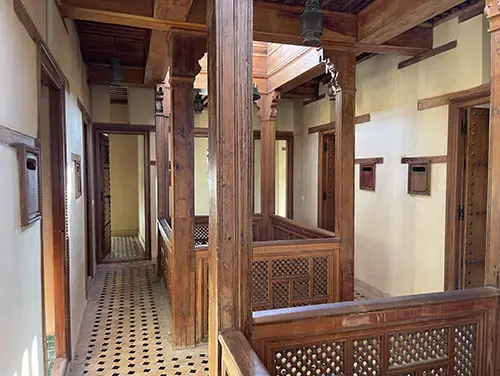
Located near the spice market, this madrasa was commissioned by Sultan Abu Said Uthman in 1323. The structure is smaller than Bou Inania but is widely considered more refined in its decorative detail. It features a compact courtyard centered around a traditional fountain and surrounded by pillars of carved marble. The name reflects its location in the Souk al-Attarine, the historic district of spice and perfume sellers.
Walking through the entrance reveals a quiet sanctuary away from the noise of the adjacent markets. Visitors can view the transition from floor tiles to intricate plasterwork and finally to the dark cedar wood ceilings. The upper floor contains small, austere rooms where students once lived while studying at the nearby Al-Qarawiyyin University. From the upper windows, guests can catch glimpses of the university’s green-tiled roof, which is otherwise restricted.
- Working hours: 08:00 – 18:00
- Entrance Fee: 20 MAD (≈ $2.2 / €1.9)
- Travel Tip: Look up while in the courtyard to see the contrast between the square opening and the sky.
Dar Batha Museum of Islamic Arts
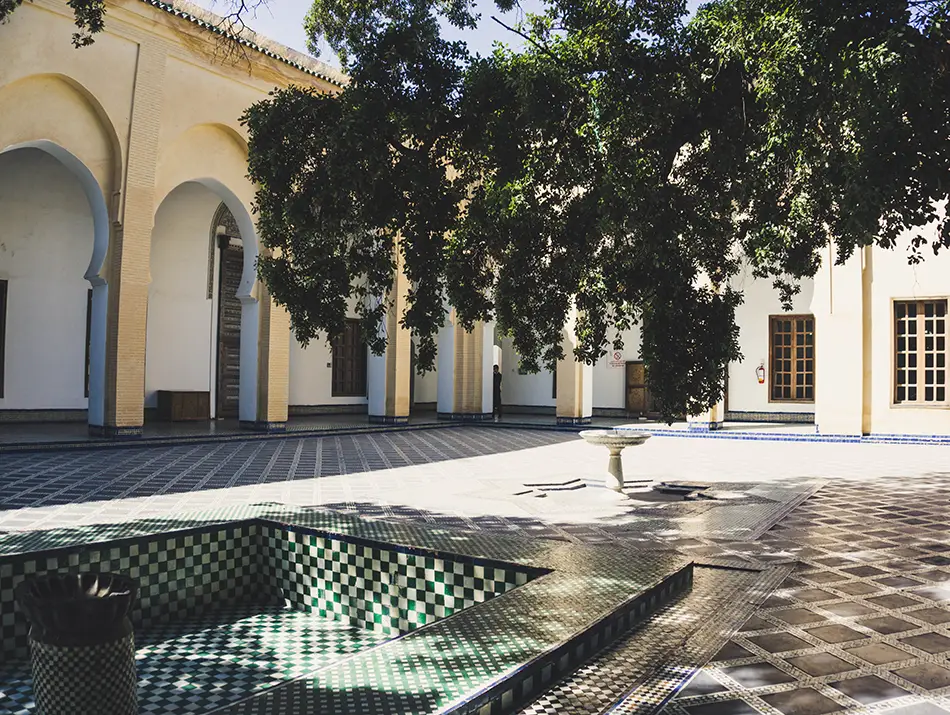
Dar Batha is a former royal palace converted into a museum dedicated to Moroccan traditional arts and crafts. The building itself is a 19th-century Hispanic-Moorish palace featuring a large Andalusian garden at its center. Its collection includes woodcarvings, ironwork, embroidery, and the famous “Fes Blue” ceramics. The quiet garden offers a stark contrast to the dense urban environment of the medina just outside the walls.
Visitors move through various rooms categorized by craft, observing historical tools and finished masterpieces. The ceramic collection is particularly detailed, showing the evolution of pottery techniques in the region over several centuries. After viewing the exhibits, guests can sit in the shaded garden among orange trees and fountains. This location often hosts small acoustic concerts or cultural events during city festivals.
- Working hours: 09:00 – 17:00 (Closed Tuesdays)
- Entrance Fee: 60 MAD (≈ $6.5 / €5.6)
- Combines with: Bab Bou Jeloud, Jnan Sbil Gardens
- Travel Tip: Check local listings as the museum occasionally closes for long-term renovations.
Nejjarine Museum of Wooden Arts & Crafts
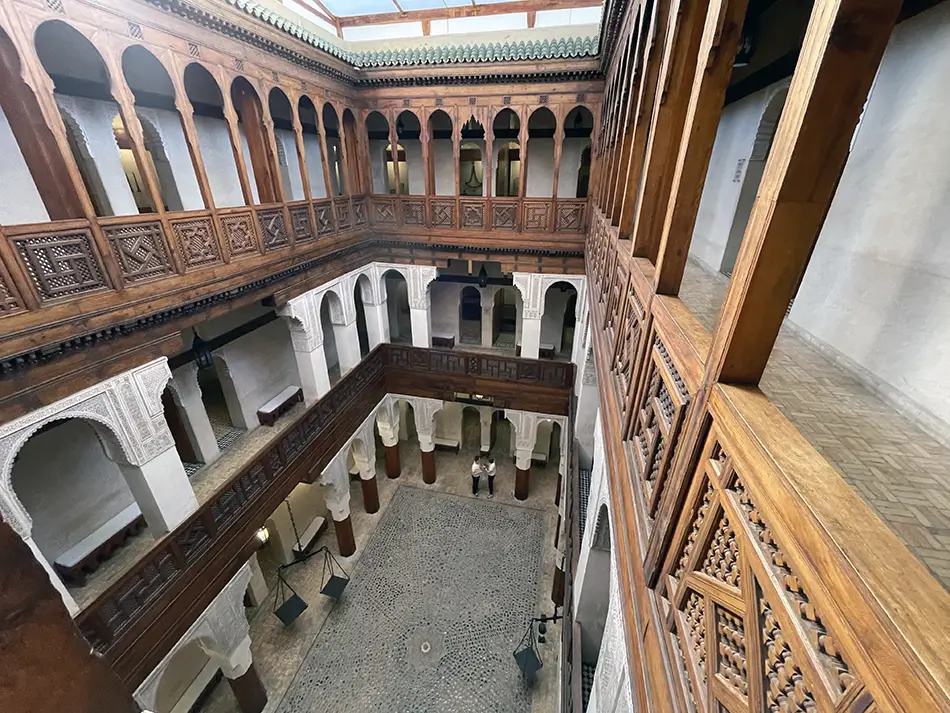
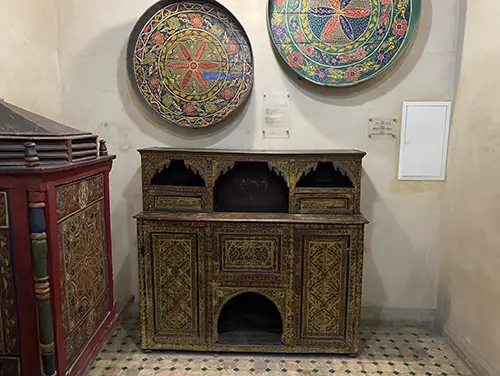
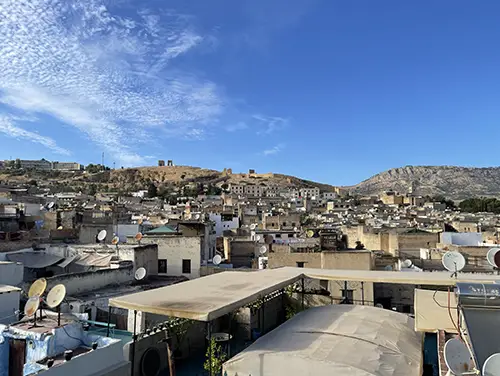
Housed in a restored 18th-century funduq (inn for traveling merchants), this museum showcases the history of woodworking in Morocco. The building is a masterpiece of symmetry with three levels of galleries overlooking a central courtyard. It originally served as a place for traders to store goods and sleep. Today, it protects a collection of antique doors, musical instruments, and wedding chests.
The experience begins with the massive, decorated entrance door leading into the courtyard. Visitors ascend the wooden stairs to view various artifacts, including heavy locks and traditional tools used by the Nejjarine (carpenters) guild. The top floor features a rooftop cafe that provides a direct view over the medina rooftops. This museum is one of the most well-maintained historic structures in the city.
- Working hours: 10:00 – 17:00
- Entrance Fee: 20 MAD (≈ $2.2 / €1.9)
- Travel Tip: The rooftop cafe is one of the quietest spots in the medina for a tea break.
Chouara Tannery
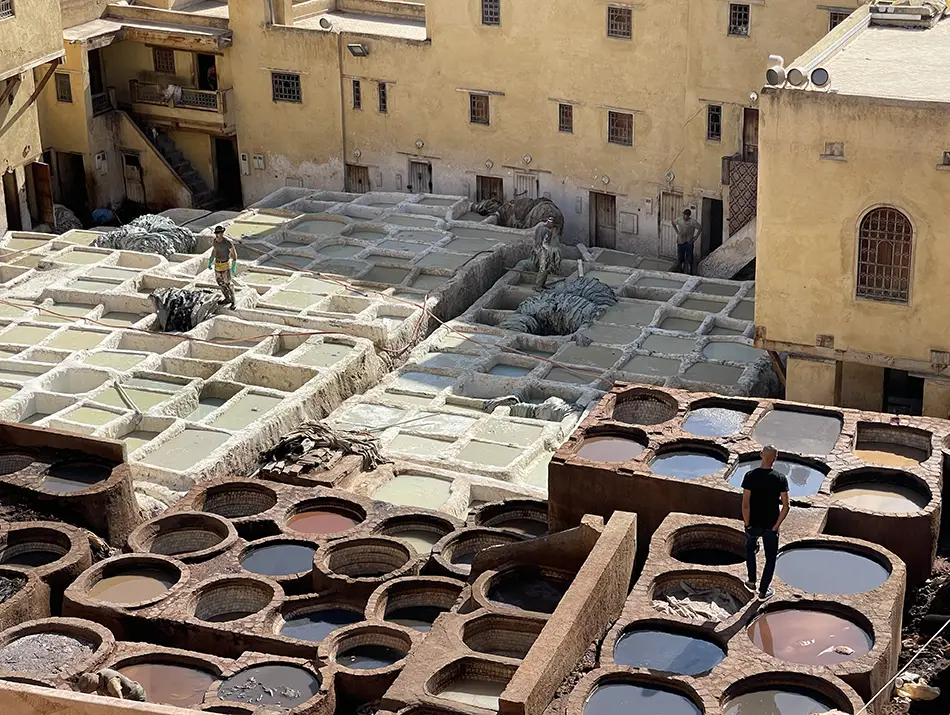
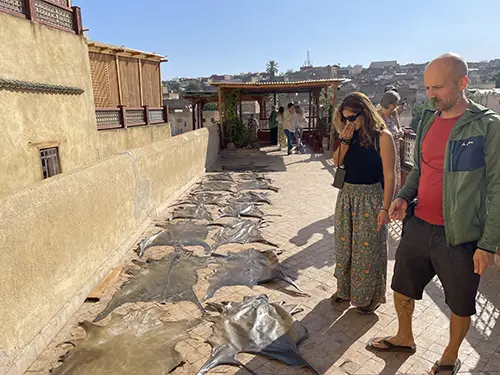
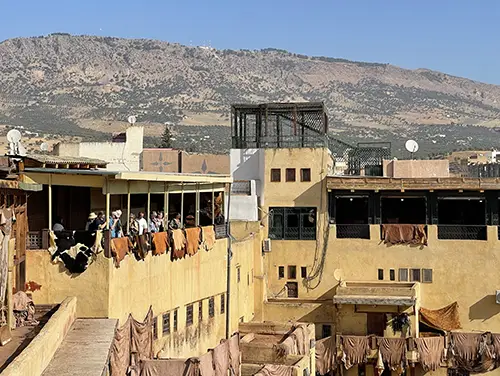
Chouara Tannery is the largest and oldest tannery in Fes, operating much as it did in the 11th century. It consists of numerous stone vessels filled with dyes and liquids used to process animal hides. The leather produced here is exported globally and used in local shops. Because of the organic materials used in the tanning process, the site has a very strong, distinct odor.
Viewing the tanning pits from the balconies of surrounding leather shops is widely considered one of the essential things to do in Fes. Shopkeepers usually provide a sprig of fresh mint to help mask the smell while explaining the different stages of production. You can watch workers stand waist-deep in the pits to hand-dye the skins using natural ingredients like saffron and indigo. It is common to see hundreds of hides drying on the nearby hillsides after they leave the pits.
- Working hours: 08:00 – 19:00
- Entrance Fee: Free (though shopkeepers expect a small tip or a purchase)
- Travel Tip: Visit in the morning when the pits are most active and the colors are freshest.
Ibn (Aben) Danan Synagogue
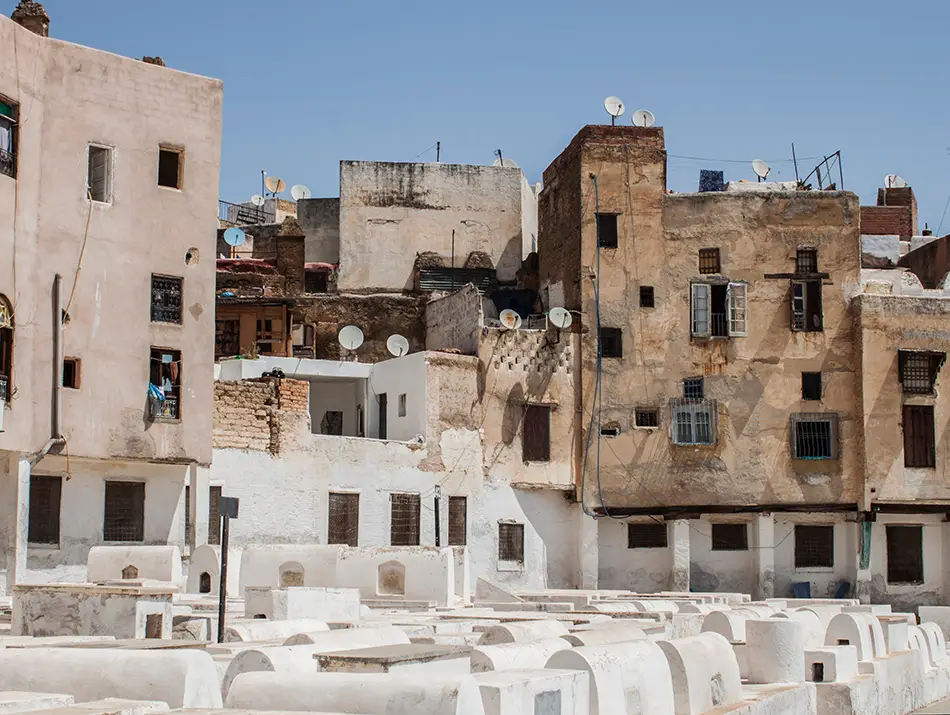
This 17th-century synagogue is located in the Mellah (Jewish Quarter) and represents the history of the Jewish community in Fes. It underwent a complete restoration in 1999 to preserve its unique architecture and ritual bath (mikvah). The interior features wooden ceilings, hanging oil lamps, and a Torah ark with decorative embroidery. It is one of the oldest and most intact synagogues in North Africa.
A visit involves descending into the basement to see the stone mikvah used for ritual purification. The main hall contains a collection of historical photos and documents detailing the life of the Fes Jewish community. Visitors can also climb to the roof for a view of the Jewish cemetery and the white tombs stretching across the hill. The surrounding Mellah district offers a different architectural style with outward-facing balconies, unlike the inward-facing homes of the medina.
- Working hours: 09:00 – 18:00
- Entrance Fee: 25 MAD (≈ $2.7 / €2.3)
- Combines with: Royal Palace, Jewish Cemetery
Royal Palace Gates
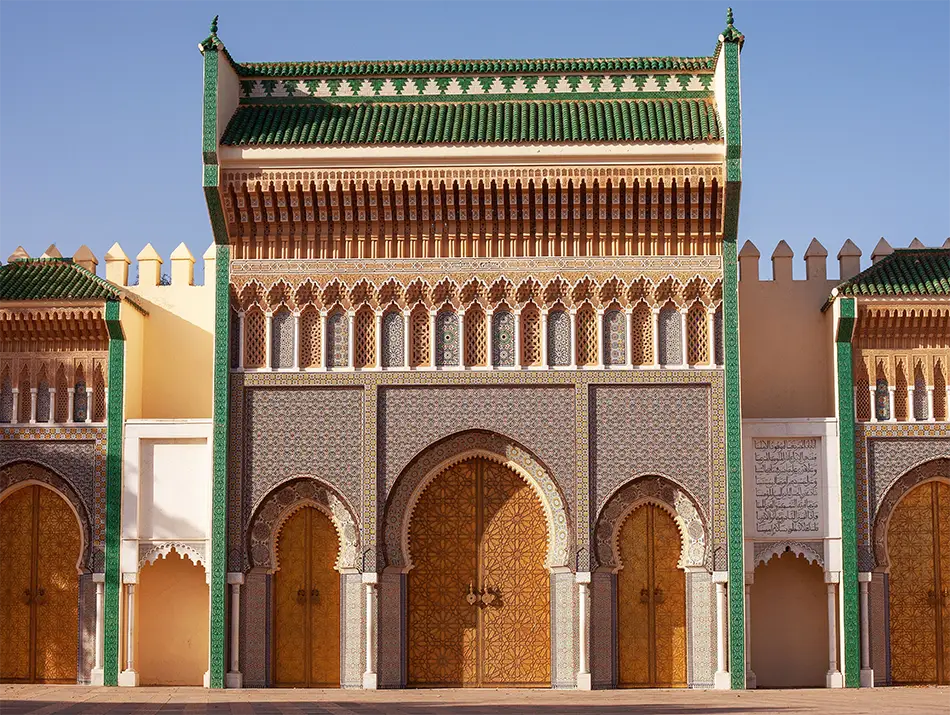
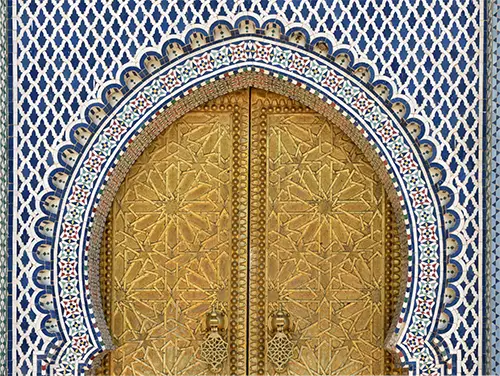
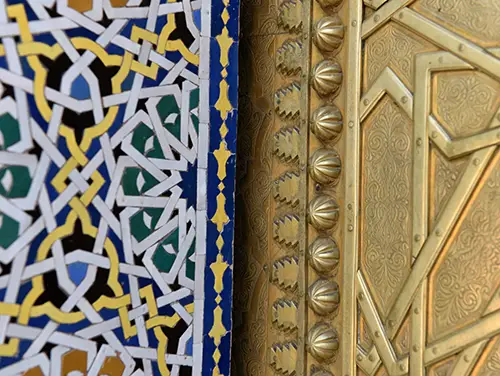
The Royal Palace of Fes covers 80 hectares (197 acres) but is not open to the public. However, its seven massive brass gates in Fes el-Jdid are a primary attraction for their craftsmanship. These doors are famous for their intricate geometric patterns and the surrounding lemon-yellow zellige tilework. The palace serves as a residence for the King of Morocco when he visits the city.
Visitors typically spend time in the large plaza (Place des Alaouites) taking photos of the golden-hued brass and the carved cedar wood above the gates. The scale of the plaza allows for a break from the claustrophobic alleys of the old medina. Guards are present but generally allow tourists to approach the perimeter of the gates. The surrounding neighborhood offers wide boulevards and a different atmosphere than the older sections of the city.
- Working hours: Exterior gates open 24 hours
- Entrance Fee: Free
- Combines with: Ibn Danan Synagogue, Mellah market
- Travel Tip: Visit in the late afternoon when the setting sun hits the brass, making the gates glow.
Seffarine Square
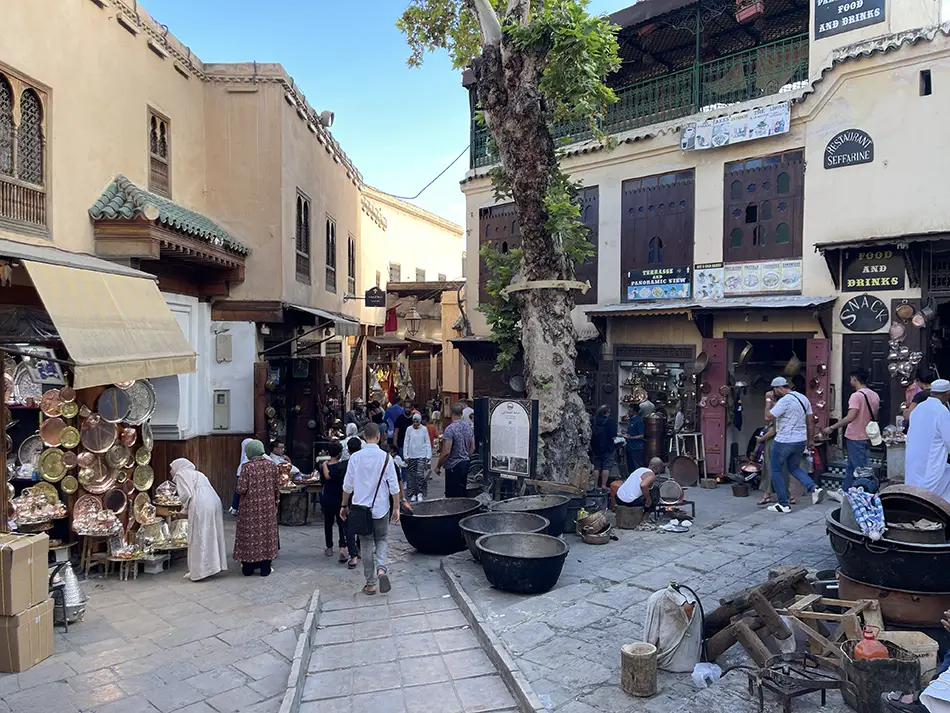
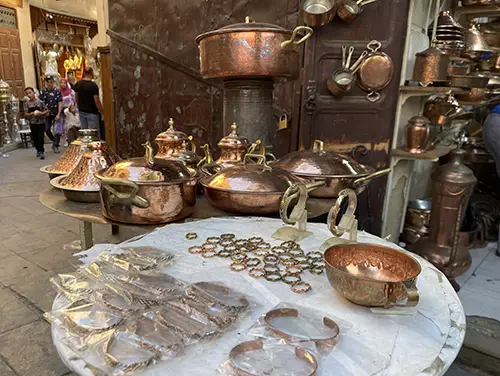
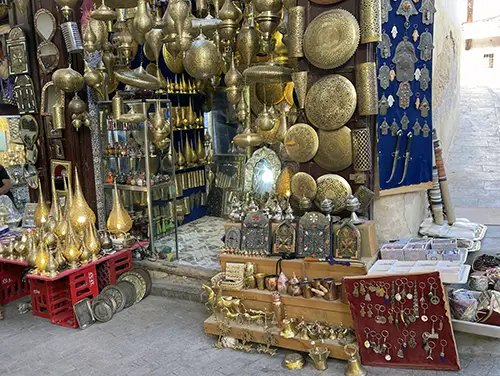
Seffarine Square is the historic home of the city’s coppersmiths and metalworkers. The air here is constantly filled with the rhythmic sound of hammers hitting metal. Large copper vats, teapots, and trays are stacked high in small workshops around the square. A large, ancient tree provides shade in the center where workers often take breaks.
Visitors can watch artisans shape raw metal into functional kitchenware and decorative items using traditional techniques. Most smiths are accustomed to tourists watching and will continue their work as you observe. Buying items here often requires bargaining directly with the person who made the piece.
- Travel Tip: This is the best place in the city to buy high-quality, handmade copper or brass kitchenware.
Jnan Sbil Gardens
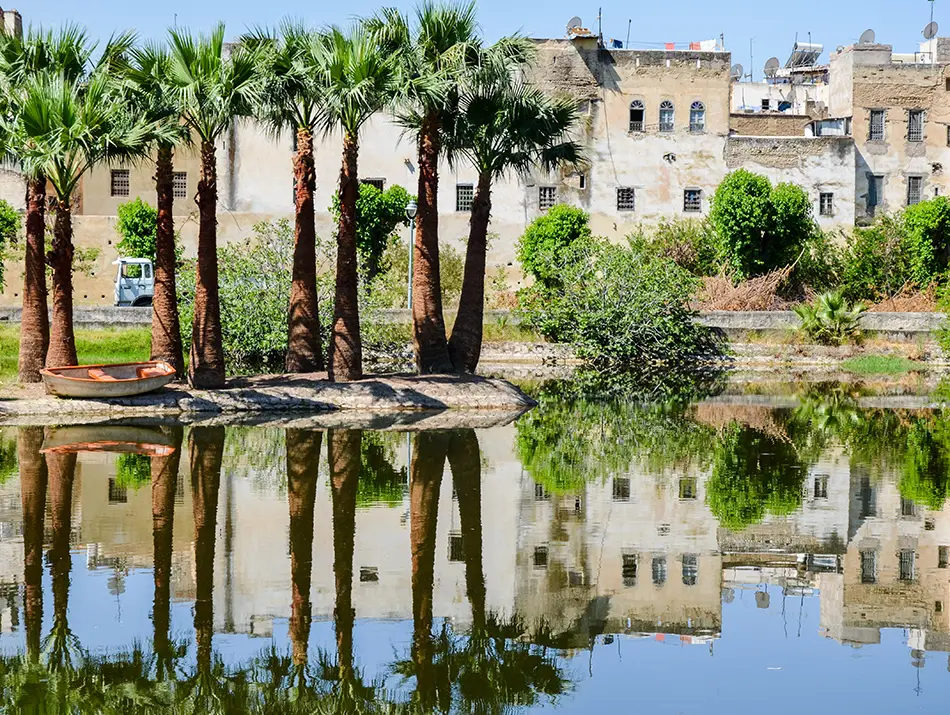
Jnan Sbil is the oldest public park in Fes, located between the medina and the Jewish Quarter. It features a wide variety of plant species, including palms, citrus trees, bamboo, and ornamental flowers, laid out in landscaped sections with water channels and shaded walkways. The park underwent a massive renovation to restore its original 18th-century layout.
The experience here is centered on relaxation and escape from the urban density. Locals use the wide, paved paths for walking, while families congregate near the fountains. You can see the old waterwheel and explore different sections like the bamboo forest or the formal citrus groves. It is a popular spot for birdwatching and is one of the few places in Fes with significant open green space.
- Working hours: 08:00 – 18:30 (Closed Mondays)
- Entrance Fee: Free
- Travel Tip: Avoid the park on Sunday afternoons if you prefer quiet, as it becomes very crowded with local families.
Borj Nord Arms Museum
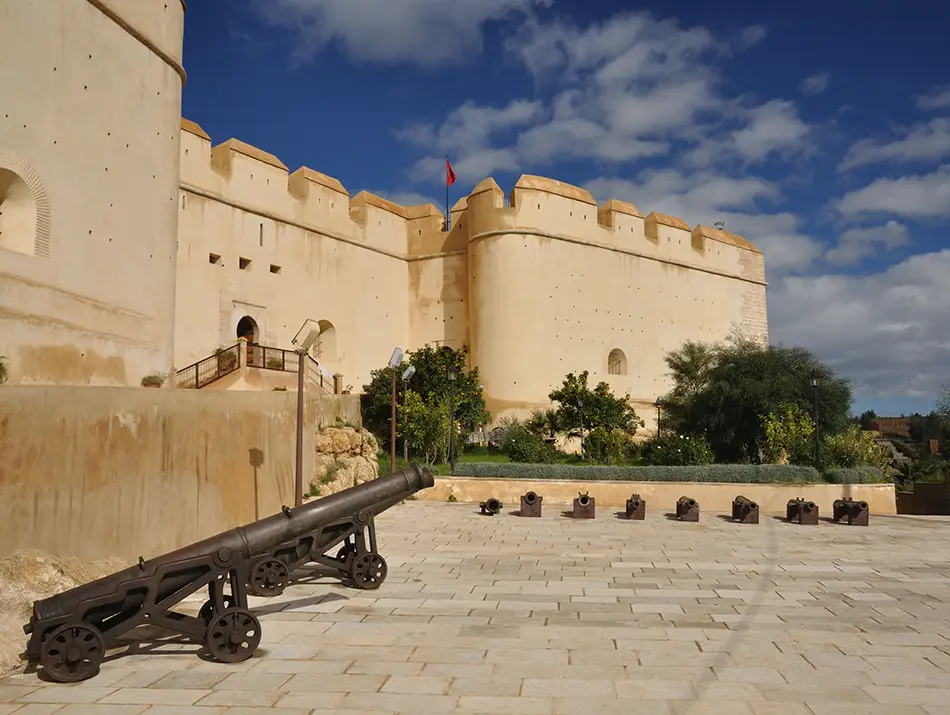
Borj Nord is a 16th-century fortress built by Sultan Ahmad al-Mansur to overlook the city. The museum inside contains a vast collection of weaponry from various eras and cultures. Exhibits include prehistoric tools, ornate Moroccan daggers (koummiya), and a massive 5-ton cannon used in the Battle of the Three Kings. The fortress architecture itself is a highlight, featuring thick stone walls and defensive ramparts.
Guests walk through the cool, dimly lit corridors of the fort to view the displays. Each room focuses on a different period of military history, showing the evolution of Moroccan defense. After seeing the artifacts, you can climb to the roof for one of the most comprehensive views of the entire Fes medina. The sight of the city from this height helps visitors understand the scale of the urban sprawl.
- Working hours: 09:00 – 12:00, 15:00 – 18:00 (Closed Tuesdays)
- Entrance Fee: 60 MAD (≈ $6.5 / €5.6)
- Combines with: Marinid Tombs
- Travel Tip: The walk up from the medina is steep; consider a petit taxi if the weather is hot.
Best Things to Do in Fes: Top Experiences and Activities
Take a Guided Walk in Medina
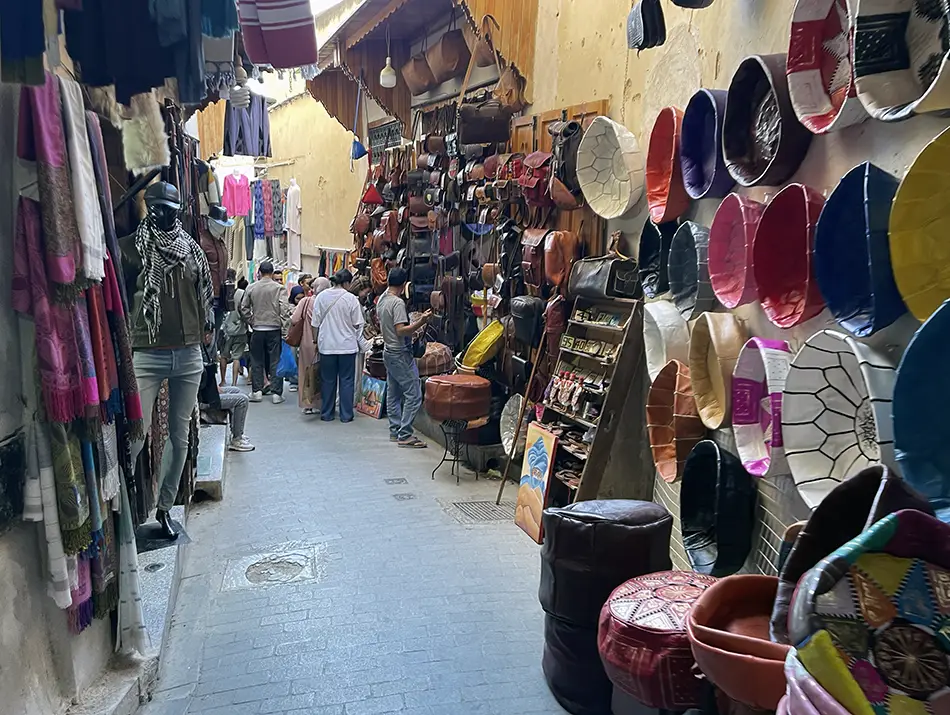
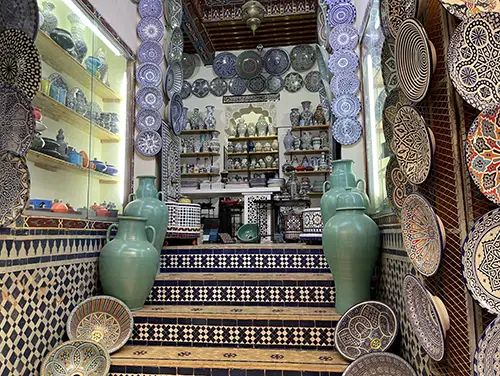
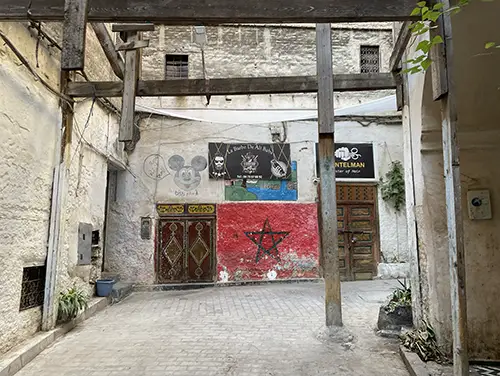
Navigating the 9,000 alleys of Fes el-Bali is difficult even for experienced travelers. A guided walk introduces the layout of the primary souks and explains the guild system that governs the city. Guides provide historical context for the architecture and help filter out unwanted solicitations from unofficial touts. This activity is the most efficient way to see the top attractions in Fes without getting lost.
- Price: ≈ 300–600 MAD (≈ $33–$65 / €28–€56)
- Time Needed: 3 – 5 hours
- Additional Info: Only hire official guides with badges provided by the tourist office.
Sunset Climb to the Marinid Tombs
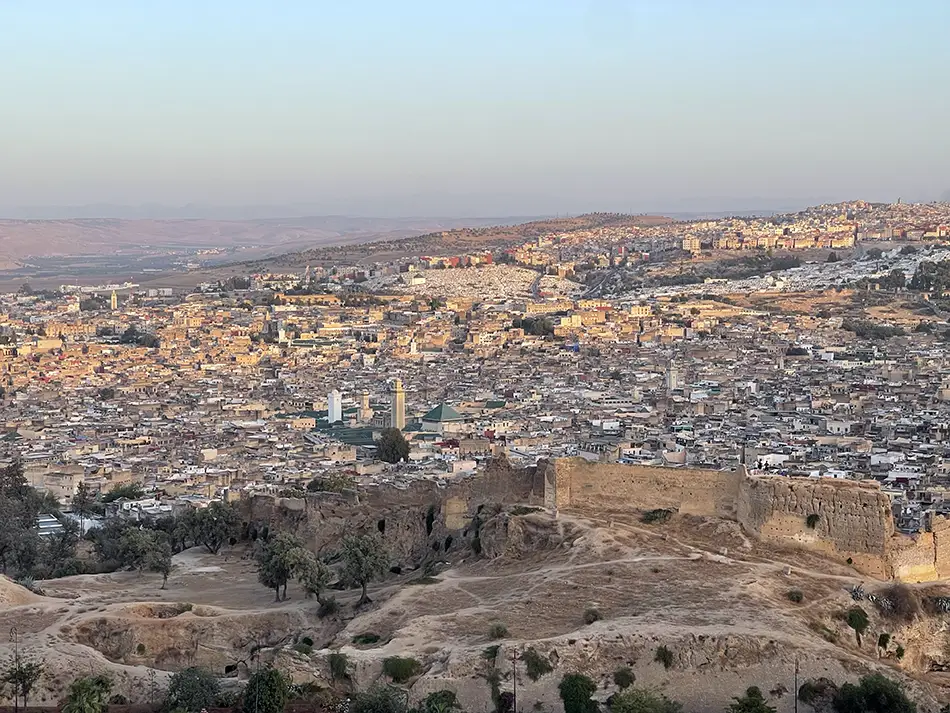
The ruins of these 14th-century tombs sit on a hill overlooking the northern walls of the city. While the tombs themselves are mostly eroded, the location provides the best panoramic view of the medina.
This viewpoint ranks among the best places to visit in Fes for those wanting to understand the city’s vast scale. At dusk, the call to prayer echoes from hundreds of minarets across the valley.
- Price: Free
- Time Needed: 1 – 2 hours
Relax on Rooftop Terraces
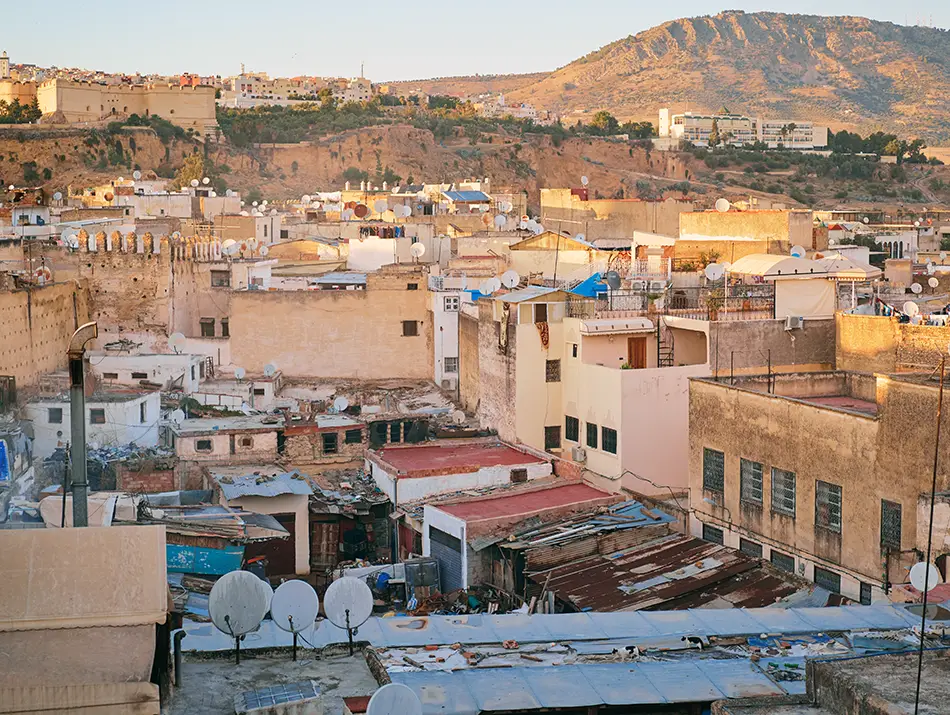
The medina is best viewed from above, where the architectural chaos resolves into a clear landscape of minarets and laundry lines. Most riads and cafes have rooftop access where they serve mint tea and snacks. This activity offers a necessary mental break from the crowded streets below. Many visitors use this time to plan their route to the next set of sights and activities in Fes.
Take a Traditional Cooking Class
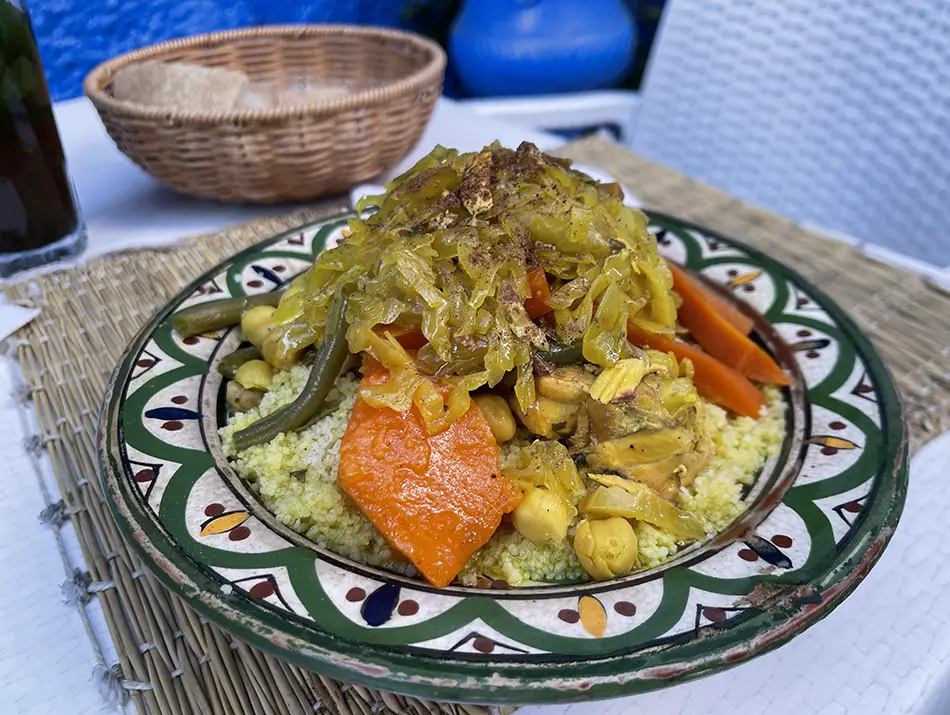
Engaging in a cooking class is one of the best things to do in Fes for foodies interested in the technical side of Moroccan gastronomy. These sessions often begin with a trip to the local market to purchase fresh vegetables, seasonal meat, and specific herbs.
Under the guidance of a local cook, you will learn to prepare staples such as Fassi salads, tajine, and traditional bread (khobz). This hands-on experience demonstrates how to balance complex spice blends like Ras el Hanout according to family traditions.
Participants usually eat the meal they prepared at the end of the session in a quiet courtyard setting.
- Price: ≈ 500–900 MAD (≈ $54–$98 / €46–€83)
- Time Needed: 4 – 6 hours
- Additional Info: Many classes can accommodate vegetarians if notified in advance.
Best Day Trips from Fes
Volubilis, Moulay Idriss, and Meknes
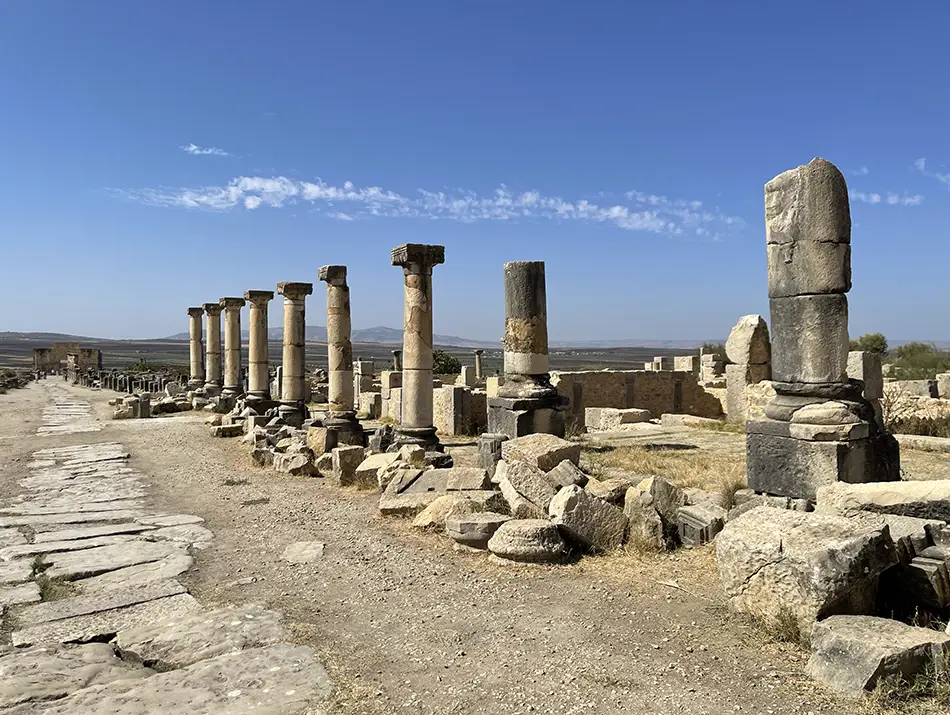
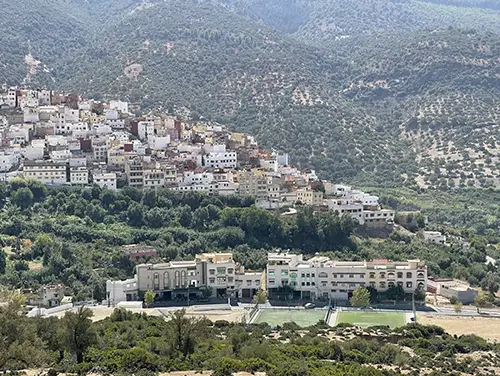
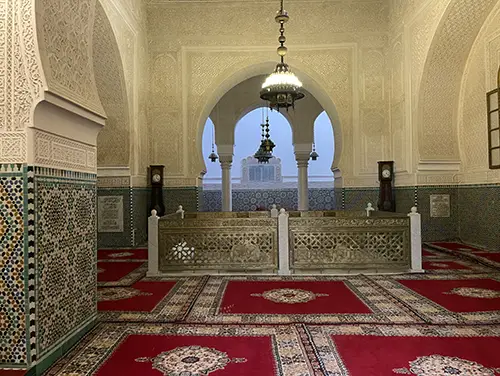
Day trips to these historical sites typically depart Fes at 09:00 for the drive to the Roman ruins of Volubilis. Visitors spend approximately 90 minutes exploring the UNESCO-listed archaeological site, focusing on the 2nd-century Basilica and the well-preserved mosaics in the House of Orpheus.
The journey continues to the hilltop town of Moulay Idriss Zerhoun for a brief stop to observe the green-tiled panoramic views of the holy city from a distance.
Travelers then spend 2 to 3 hours in the imperial city of Meknes to walk through the monumental Bab Mansour gate and visit the Royal Stables (Heri es-Souani). The tour often concludes with a look at the Mausoleum of Moulay Ismail before the late afternoon return to Fes.
This Daytrip from Fes is best done if you rent a car or join an organized tour. Managing all the logistics by taxi can be stressful and more expensive.
- Price: Organized tours cost around 215 MAD (≈ $23.4 / €20) + 100 MAD (≈ $12 / €10) for Volubilis access
- Total Time: ~ 8 – 9 hours
- Transportation Time: ~ 4 hours total driving
Middle Atlas Loop: Ifrane and Azrou
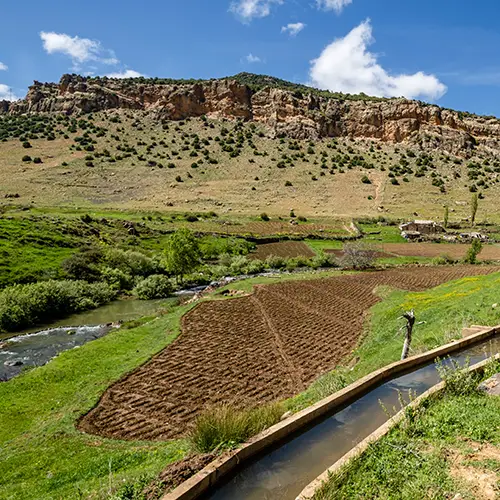
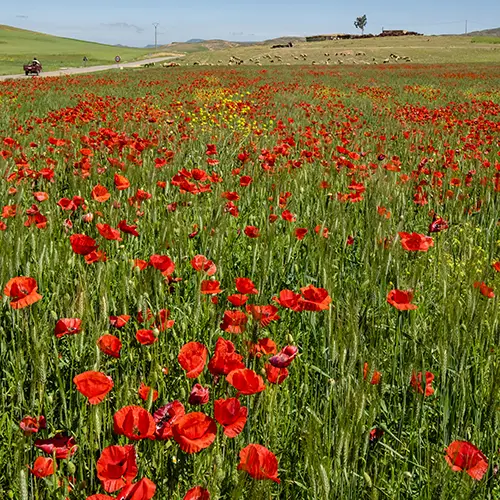
This excursion begins with a climb into the Middle Atlas Mountains toward Ifrane, often called the Switzerland of Morocco. Tours usually provide 45 minutes to walk through the alpine-style streets and photograph the landmark stone lion sculpture.
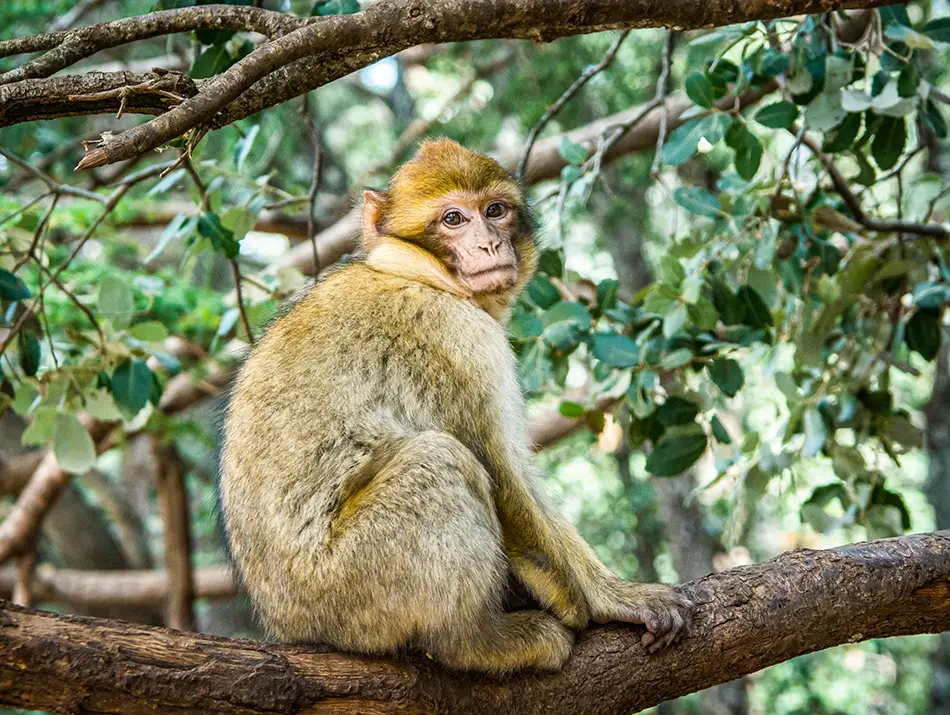
The route then leads into the expansive Cedar Gouraud Forest near Azrou, where visitors spend an hour observing native Barbary macaques in their natural habitat. Many itineraries include a short stop in the town of Azrou to see the local Berber handicraft cooperative and the prominent “Great Rock.” The return trip usually follows a different scenic mountain pass, arriving back in Fes by early evening.
It can be easily arranged independently with your own transport or taken as an organized day trip.
Price: ≈ 300–600 MAD (≈ $33–$65 / €28–€56) per person
Total Time: ~ 6 – 7 hours
Transportation Time: ~ 3 hours total driving
Additional Info: Pack a light jacket even in summer as mountain temperatures are significantly lower than in Fes.
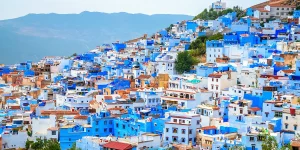
Chefchaouen (The Blue City)
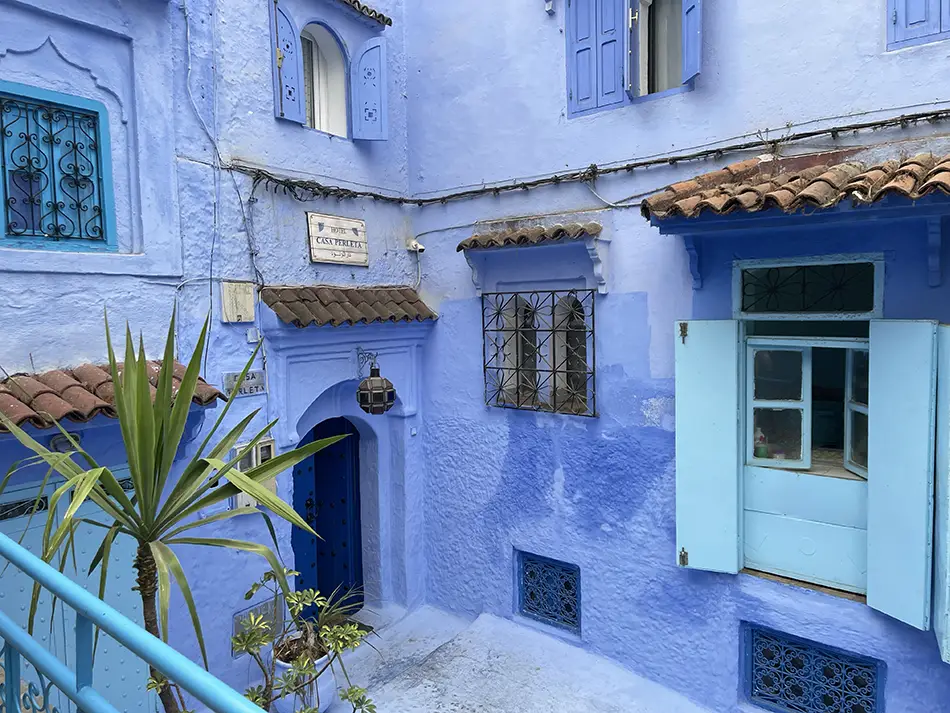
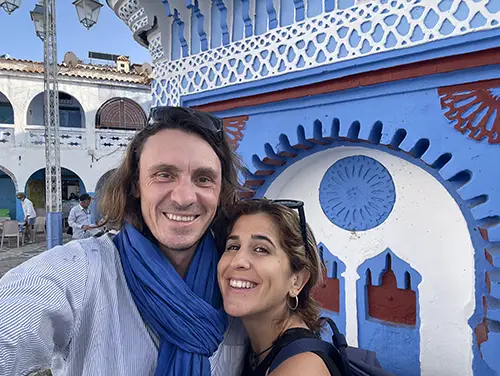
Chefchaouen is a destination better suited for a longer visit, however, people who are tight on the schedule can visit it as a day trip. Most tours depart Fes around 08:00, to manage the long drive through the scenic Rif Mountains.
Upon arrival, travelers are typically given 4 to 5 hours of free (or guided) time to navigate the blue-washed alleys of the medina independently. This window allows for a visit to the central Plaza Uta el-Hammam and the historic Kasbah before stopping for lunch at a rooftop restaurant.
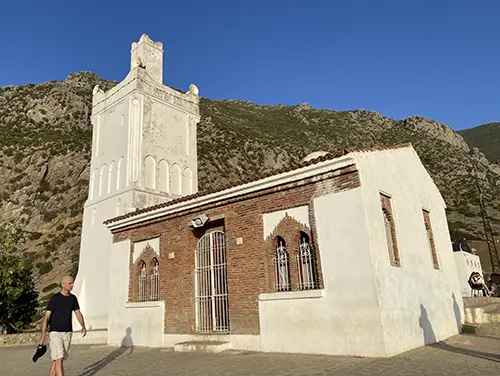
Some tours include a short hike to the Spanish Mosque for a panoramic view of the blue buildings. The day concludes with a 4-hour return journey, arriving in Fes after sunset.
- Organised Only / Self Organised / Guided: Self Organised or Guided
- Price: ≈ 200–400 MAD (≈ $21.8–$43.6 / €18.6–€37.2) per person
- Total Time: ~ 11 – 12 hours
- Transportation Time: ~ 8 hours total driving
- Additional Info: Expect a very long day with significant time spent in the vehicle.
Without the Hype: Is Fes Worth Visiting?
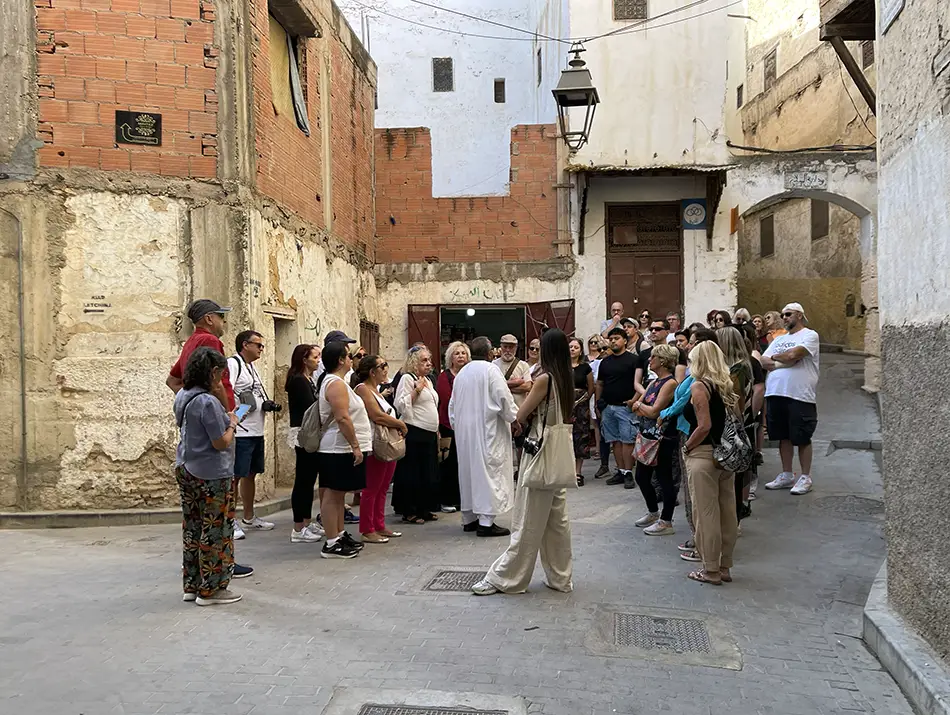
Fes offers one of the most authentic medieval experiences available globally, but it is a demanding destination. The city requires patience and a high tolerance for navigation errors and persistent sales tactics.
Travelers looking for a polished, modern resort experience should look elsewhere. However, those who value historical depth and sensory immersion will find the best things to do in Fes to be unparalleled.
You’ll like Fes if
- You enjoy getting lost in historical architecture and complex urban spaces.
- You are interested in traditional hand-made crafts and ancient production methods.
- You prefer a city that feels functional and lived-in rather than purely tourist-oriented.
You might skip it if
- You are uncomfortable with high-pressure sales environments and frequent touts.
- You have limited mobility or cannot walk several miles a day on uneven terrain.
- You prefer quiet, open spaces over dense, noisy, and high-sensory environments.
Good alternatives
- Chefchaouen: For a smaller, quieter, and more visually relaxed mountain town experience.
- Rabat: For a cleaner, more organized imperial city with a coastal breeze.
We hope that this guide on the best things to do in Fes helped to decide whether it fits travel interests. Check out our Morocco travel guides page for more info. Smooth planning and an unforgettable trip!