Finding the best surfing in Vietnam is less about chasing massive swells and more about enjoying a versatile travel experience. While the country is likely not your first choice for a holiday devoted strictly to professional-level sport, it serves as an excellent destination for those giving surfing a first try or just starting to progress.
The coastline provides safe, manageable learning conditions across multiple regions, allowing you to combine your time on the board with cultural exploration and other adventurous activities.
Because the waves are generally user-friendly, you can develop your skills without the intense pressure of high-performance surf hubs.
Best Surfing Spots in Vietnam
Da Nang
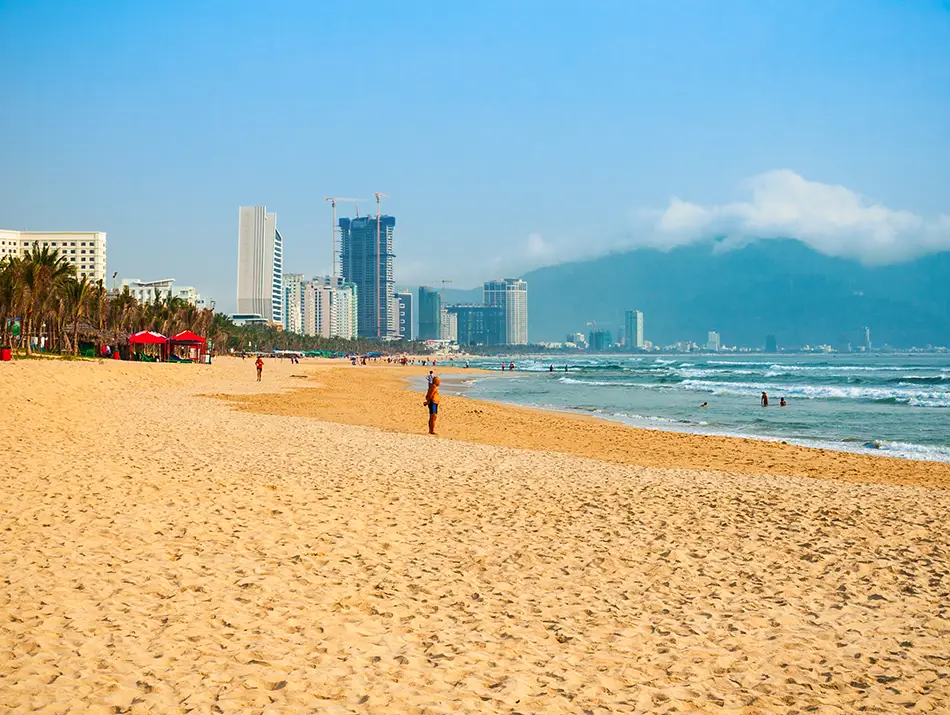
Da Nang is one of the most practical bases for surf travelers in central Vietnam and is often listed as a top surf spot due to its long, accessible city beach and clear seasonal window. In fact, at the start of 2026, the city recorded a significant surge in international tourists specifically visiting Da Nang to surf, even during periods of larger winter swells.
My Khe Beach remains the default surf zone for most visitors because it offers a wide sandy shoreline with easy walk-in entry points. Conditions here are typically wind-swell driven, so wave shape changes quickly with wind and sandbanks.
Clean surfable conditions peak most often in October, and early mornings are usually the safest bet before onshore wind builds. Expect shifting left and right peaks over sand, plus occasional stronger currents during bigger swell events.
Beyond Surfing
Da Nang is a strong base for day trips. Common options include the Marble Mountains, viewpoints on the Son Tra Peninsula, and short transfers to Hoi An Old Town. For travelers planning more than beach time, see our full guide to the best things to do in Da Nang, including nearby cultural sites and day trips.
Insider Tip
Unlike southern coastal destinations, the main surfing season in Da Nang does not fully align with the city’s best overall tourism period. The months when surf conditions are most reliable often bring overcast skies and higher rainfall.
Mui Ne
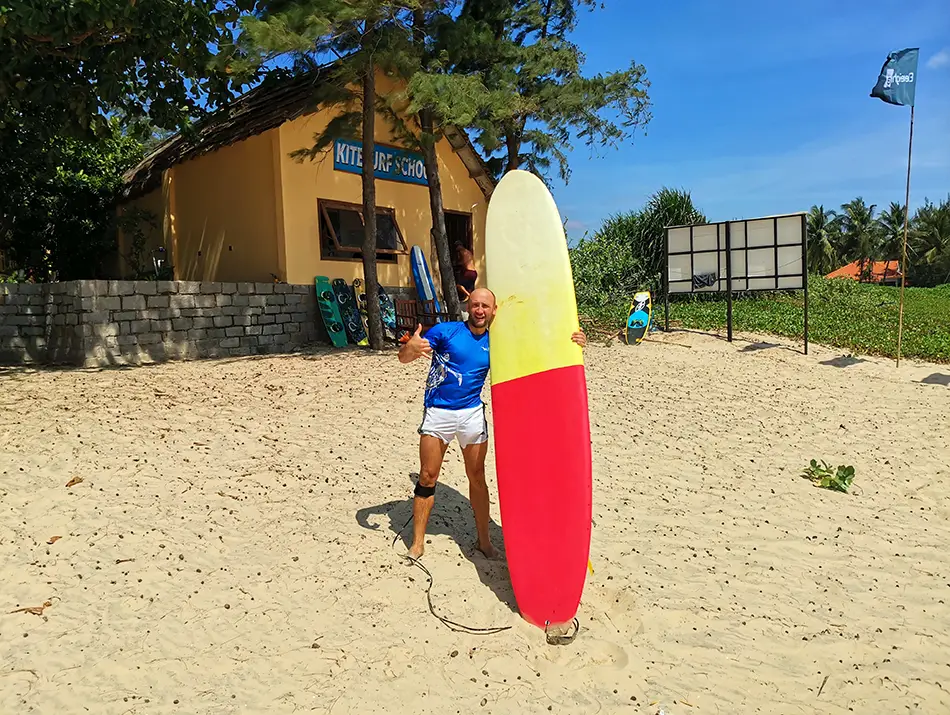
Mui Ne is better known internationally as a kitesurfing destination rather than a classic surf spot in Vietnam. Winter brings strong and consistent winds attracting thousands of kitesurfers, and this activity dominates much of the central beachfront. Surfing exists as a secondary activity, with several kite schools and independent operators offering surf lessons and board rental alongside their main kitesurfing programs.
Most beginner surf lessons take place at Little Buddha Beach where waves form along a stone seawall. This setup helps the waves wrap and peel more predictably creating long rides suitable for first time instruction and skill progression. However the limited space and popularity of the area often lead to crowding especially during peak season. To avoid this some schools bring students to beaches near Hon Rom Beach where wave shape is slightly more defined and there is more room in the water.
Beyond Surfing
Outside the water, Mui Ne is primarily a coastal stop rather than a sightseeing hub. Travelers usually visit the nearby red and white sand dunes, observe early-morning fishing activity along the shoreline, or use the area as a relaxed break between Ho Chi Minh City and central Vietnam.
If you are staying longer, our guide to the top attractions in Mui Ne covers dunes, coastal scenery, and nearby stops.
Nha Trang
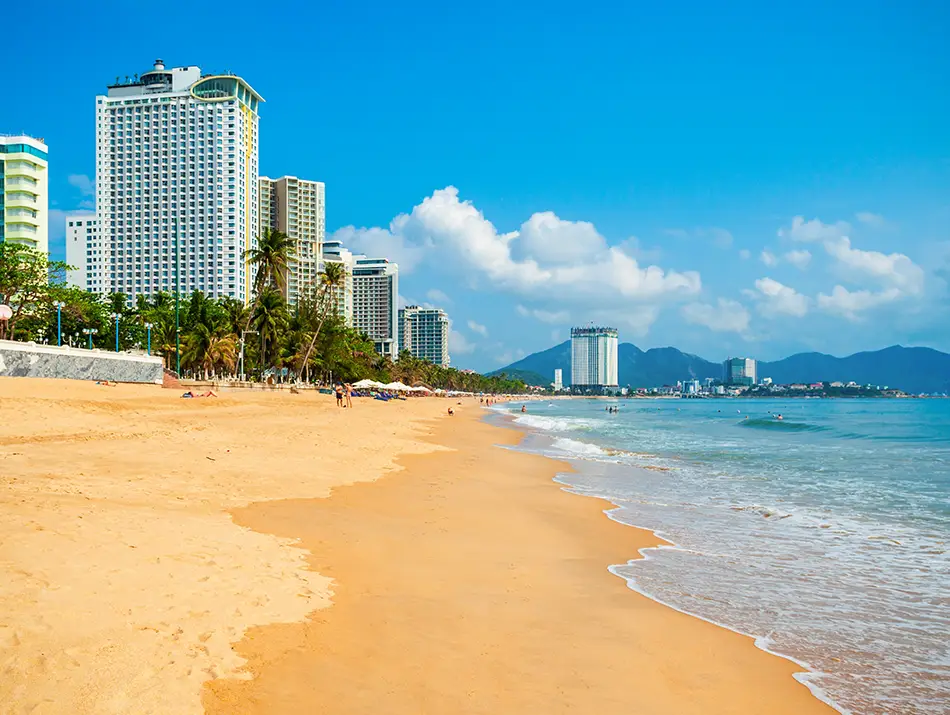
Nha Trang is not a dedicated surf destination in Vietnam, but it does offer usable conditions during winter. Outside this period, waves are usually too small or inconsistent for regular surfing. Even in season, surf quality depends on timing rather than daily reliability, so this location suits travelers who are flexible rather than those planning a surf-only trip.
The most practical place to surf is Bai Dai Beach (also called Long Beach), located about 15–16 miles (25 kilometers) south of the city. This beach is more open and less affected by buildings and harbors than the city shoreline, which helps waves form more consistently. Conditions here are generally gentle, with smaller, softer waves that work best for beginners or casual sessions.
Beyond Surfing
Nha Trang is primarily a resort city. Travelers often focus on island boat trips, snorkeling, thermal mud baths, and visits to the Po Nagar Cham Towers, making surfing a secondary activity rather than the main reason to visit.
To plan the rest of your stay, explore our guide to the best things to do in Nha Trang, from island trips to historical landmarks.
Vung Tau
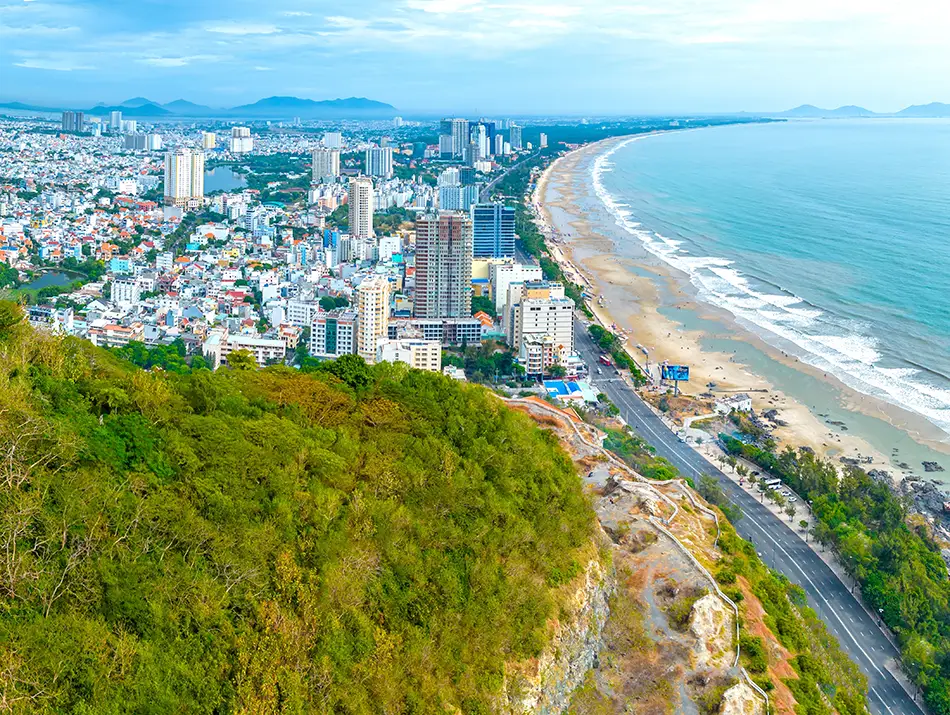
Vung Tau is the closest place to Ho Chi Minh City where travelers can find surfable waves. It is a reliable winter option during the dry season from November to March when consistent small to moderate waves form on open beaches.
Most surfing takes place at Back Beach (Bai Sau), a long sandy shoreline with easy access and no reefs. On suitable days, waves are generally small and short, making them appropriate for beginners or casual practice. Because wave quality changes quickly, local forecasts are important before committing time or travel.
Beyond Surfing
Vung Tau is mainly a coastal city escape. Visitors often walk the seaside promenade, visit hilltop viewpoints, or explore colonial-era landmarks, with surfing fitting in when conditions allow. For ideas beyond the shoreline, our Vung Tau travel guide highlights viewpoints, walks, and short city escapes.
Surf Camps in Vietnam

While city-based lessons in Da Nang or Mui Ne are common for a quick introduction to the water, a dedicated surf retreat scene is starting to take shape in quieter pockets of the coast. These setups move away from single-session tourist models to focus on multi-day progression in areas where the geography actually supports it.
A good example of this shift is Cam Lam, located just south of Nha Trang. This rural landscape of salt fields and fishing villages offers longer, cleaner, and mostly unoccupied beaches. Here, BodyVàMind, a pioneering surf, yoga, and art retreat, operates away from the tourist crowds and allows for a more focused experience in the water.
You spend the mornings surfing uncrowded breaks and the afternoons on recovery. The retreat integrates yoga for muscle relief and art sessions to decompress between tide windows.
With healthy meals sourced from an on-site organic garden and a schedule built around water time, removing the usual travel logistics. For those who want to move past the “standing up once for a photo” stage, this type of environment provides the repetitive practice and space needed to actually learn the sport.
Best Time to Surf in Vietnam
The best time to surf in Vietnam is generally from November to March, when seasonal winter winds create the most regular surfable waves along the coastline. This period offers the highest chance of consistent conditions across multiple regions, including central beaches near Da Nang and selected southern beach breaks.
December to February tends to be the most reliable part of the season. Outside these months, waves become less predictable, and many areas experience long flat periods or strong winds that reduce surf quality.
Surfing Lessons in Vietnam

Finding surf lessons in Vietnam is generally straightforward in the main coastal hubs, including Mui Ne, Da Nang, Nha Trang, and Vung Tau. While the overall scene is small compared to global surf destinations of SouthEast Asia, the presence of established schools and rental shops makes entry-level learning accessible for travelers without prior experience.
Mui Ne stands out due to its large international kitesurfing community, which has shaped the local water sports scene for years. As a result, surf lessons there are available in multiple languages, often beyond English, depending on the school and season.
Surf schools in Da Nang, Nha Trang, and Vung Tau are primarily English-focused, with fewer multilingual options. Teaching quality varies by instructor rather than by location.
From a sustainability perspective, Guides and Stories recommends choosing local surf schools rather than international chains, as this directly supports the local community. However, English proficiency can vary. Before booking, it is practical to speak briefly with your instructor to confirm that explanations, safety instructions, and feedback will be clear and easy to understand.
Typical Lesson Structure and Prices
Most beginner lessons follow a similar format:
- Short beach briefing covering safety and basic technique
- Dry practice on the sand, including standing up on the board
- One to two hours in the water
- Use of a soft-top board
Average surf lesson costs in 2026:
- Group lessons: 500,000–800,000 VND (20–31 USD / 18–28 EUR)
- Private lessons: 800,000–1,200,000 VND (31 to 47 USD / 28–42 EUR)
Prices usually include board rental and leash. Rash guards are sometimes provided, but sun protection is often the student’s responsibility.
Surf lessons in Vietnam focus mainly on whitewater practice and basic balance skills, which aligns with local wave conditions. Progression beyond beginner level is possible but depends heavily on timing, instructor experience, and daily conditions rather than structured multi-day programs.
Q&A for Surf Travelers in Vietnam

Vietnam works best as a secondary surf destination, not a surf-only trip. Waves are seasonal and inconsistent, but lessons, rentals, and access are easy in a few coastal hubs. It suits travelers who want to add surfing to a broader itinerary rather than those chasing daily high-quality waves.
Vietnam offers fewer surfable days and less wave variety than Bali or Sri Lanka. However, it also has lower crowd pressure, simpler beach access, and lower lesson costs. Vietnam is better for first-time surfers or casual learners, while Bali and Sri Lanka suit longer, surf-focused trips.
Yes. Vietnam is well suited for beginners because most surf breaks are sandy, low-power beach breaks, and lessons focus on whitewater and basic balance skills. Progression is steady rather than fast, but conditions are generally forgiving.
Vietnam has limited appeal for advanced surfers. While occasional stronger days exist, wave power, shape, and consistency are not comparable to established surf destinations. Most intermediate travelers treat Vietnam as skill maintenance rather than progression.
Why Surf Vietnam?
The best surfing in Vietnam isn’t just about the wave count. It’s about the unique setup you won’t find in world-class hubs. While destinations like Indonesia are built around a “surf-first” infrastructure of remote camps and expensive boat transfers, Vietnam offers a “city-surf” lifestyle.
In places like Da Nang, the epicenter of the scene, the breaks are literally across the street from high-end specialty coffee shops and bustling street food markets. Surfing here means you can catch a dawn session on a beach that witnessed history, then be sitting on a plastic stool eating Banh Mi or Pho five minutes later.
Because the coast is dominated by “wind-swell” rather than long-range groundswell, the atmosphere in the water is noticeably low-ego and welcoming to beginners. You aren’t competing with 50 aggressive pros for a single peak. Instead, you’re sharing wide, sandy shorelines with a small, tight-knit community of locals and expats.
If you want a trip where the adventure on land is just as high-quality as the time spent in the whitewater, Vietnam is the choice.