Witnessing the neon ribbons of the aurora borealis dancing across a pitch-black sky is a bucket-list dream for many. To help you plan this ethereal adventure, we have curated a list of the best places to see the northern lights, ensuring you find the perfect vantage point for this celestial spectacle.
For travelers, the northern lights are not just about the sky itself, but about where you experience them. Watching the aurora from a lively Arctic city feels very different from standing alone on a frozen fjord, a forest trail, or a remote tundra road.
Accessibility, weather patterns, light pollution, and local infrastructure all shape your chances of success and the overall feel of the trip. Choosing the right destination is often the difference between a rushed night out and several calm evenings spent patiently waiting under the stars.
Enhanced Photography Notice
Northern Lights photos are shot with long exposure, enhancing colors and brightness. In real life, the aurora can appear subtler and more fluid, especially during weaker activity.
The Magic of the North: Why Now is the Time to Go
The aurora borealis appears when energy from the sun reaches Earth’s atmosphere near the polar regions, where the planet’s magnetic field pulls these solar particles toward the north. As they interact with the atmosphere, glowing waves of light spread across the night sky, usually in shades of green with occasional flashes of pink and violet, slowly shifting and changing shape as the display unfolds.
Scientists predict that 2025 and 2026 will be particularly spectacular due to the “solar maximum,” a period of high solar activity that makes the lights more frequent and intense. So if you have been waiting for the perfect moment to book your trip, this is undoubtedly it.
Top Northern Lights Destinations in Europe
Tromsø, Norway: Lively Arctic Hub
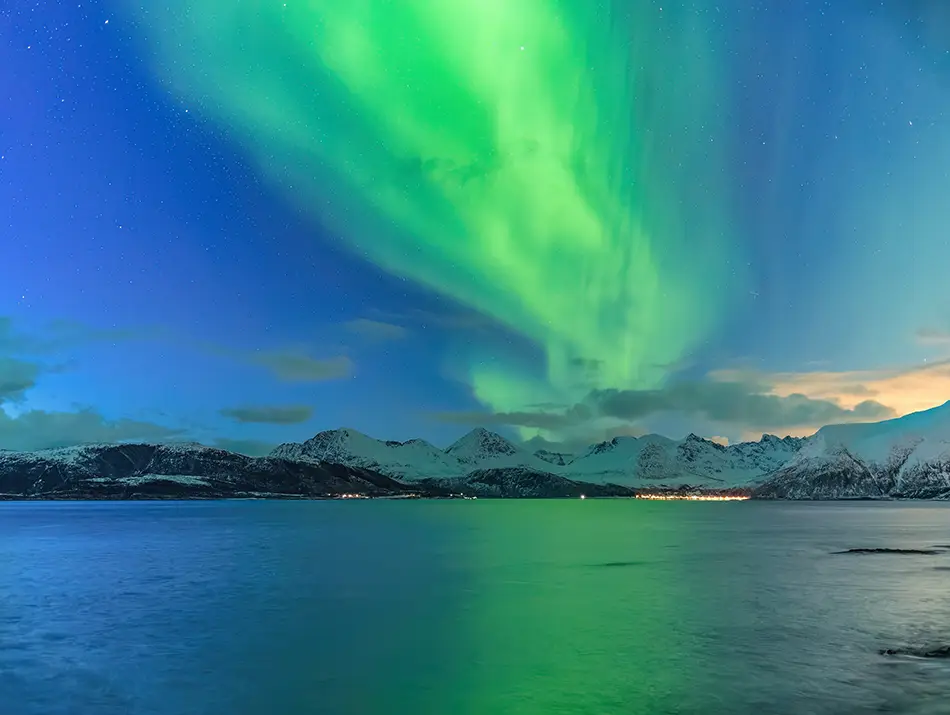
Tromsø sits above the Arctic Circle and directly under the auroral oval, which gives it frequent aurora activity throughout the winter season.
Despite its northern location, it feels like a proper city rather than a remote outpost, with restaurants, museums, and reliable transport that make planning easy even in mid-winter. The surrounding landscape opens quickly into fjords, islands, and mountain viewpoints, allowing travelers to leave city lights behind within minutes and position themselves under clearer skies when conditions change.
Why it works well:
- Good flight links from major European hubs
- Plenty of tours that “chase” clear skies by bus or boat
- A mix of city comforts and easy access to dark countryside
Lofoten Islands, Norway: Mountain Peaks and Fishing Villages
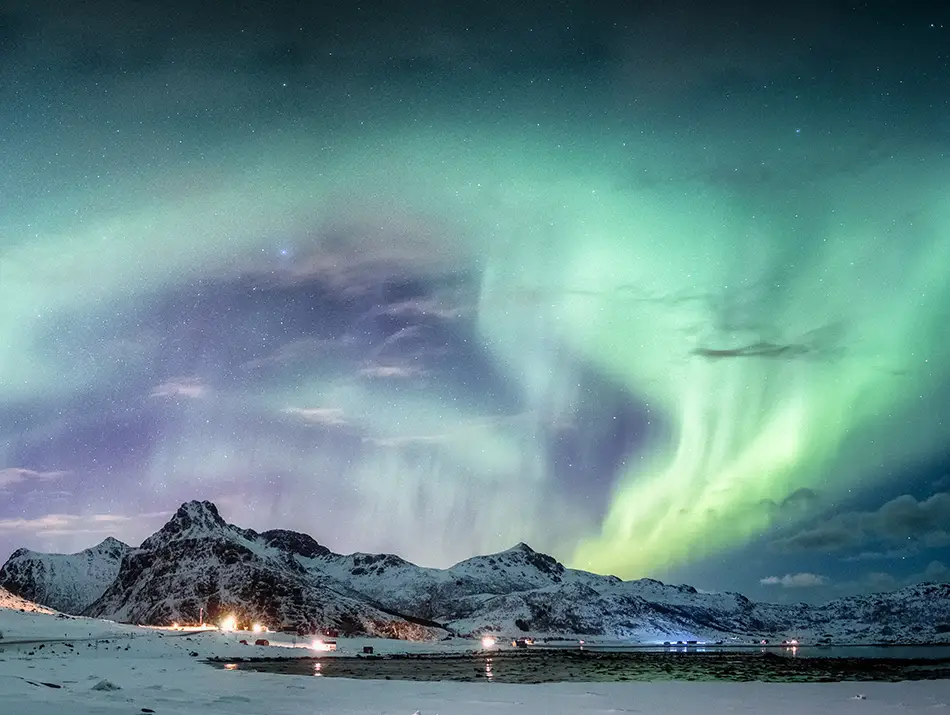
A few hundred miles (about 300–400 km) southwest of Tromsø, the Lofoten Islands combine steep mountains, sheltered bays, and low light pollution. On clear nights, the aurora can reflect on fjords and beaches, which makes this one of the most photogenic Northern Lights destinations.
Distances between small villages are short, often only 15–30 miles (25–50 km). You can rent a car and move with the cloud forecast, or join a local photo tour if you prefer not to drive on winter roads.
Why it works well:
- Very low light pollution across most of the islands
- Iconic scenery where the aurora often reflects on water, snow, and sand
- Local guides and photo tours for travelers who prefer not to self-drive in winter conditions.
Iceland: Easy Access and Big Landscapes
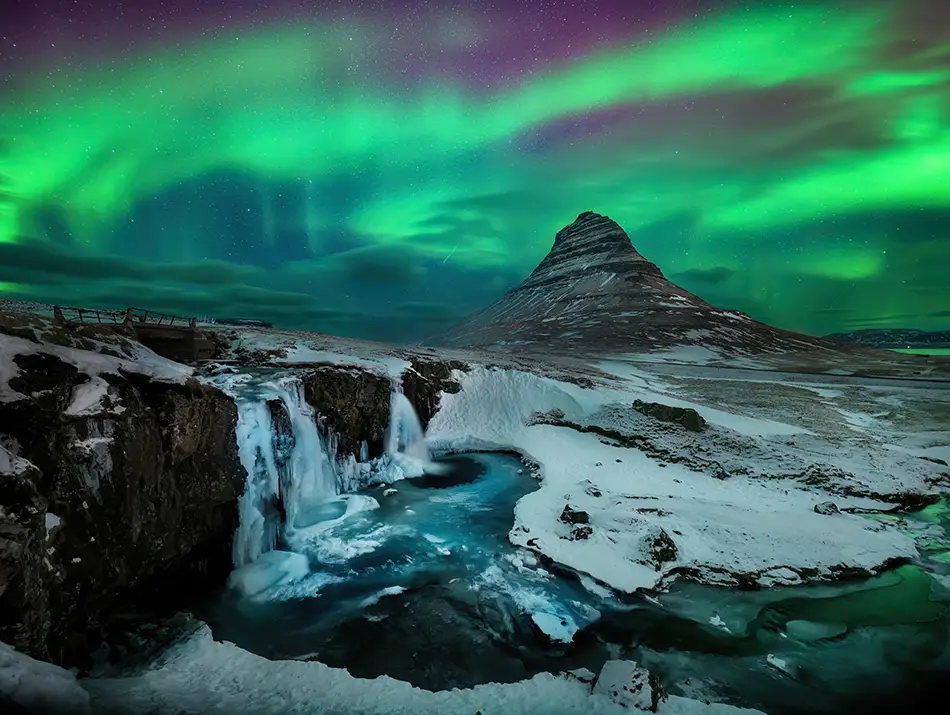
Iceland is especially convenient if you are flying from Europe or the east coast of North America. Reykjavík offers many evening excursions that drive you out to darker areas, while longer trips take you to the south coast, the Snæfellsnes Peninsula, or the north around Akureyri.
Expect fast-changing weather: clear skies in one region and heavy snow in another. For that reason, it is smart to stay at least three or four nights and plan a flexible route. The reward is the chance to see auroras above waterfalls, glaciers, and black-sand beaches.
Why it works well:
- Excellent flight connections from Europe and North America
- Wide, open landscapes with very little light pollution outside towns
- Unique natural settings where the aurora can appear above waterfalls, glaciers, and volcanic beaches
Finnish Lapland: Forests, Cabins, and Glass Igloos

In northern Finland, destinations like Rovaniemi, Saariselkä, and Inari focus on a slower, more intimate Arctic experience built around nature and comfort. Snow-covered forests stretch in every direction, settlements are small and well spaced, and winter nights are long and quiet. The region sits firmly inside the aurora zone and is known for relatively stable winter conditions, which is why Finnish Lapland consistently ranks among the best places to see the northern lights for travelers who prefer calm settings and reliable viewing conditions.
Distinctive experiences Finnish Lapland offers:
- Heated glass-roof igloos
- Riverside saunas and outdoor hot tubs
- Quiet forest clearings just a short walk from your lodge
Swedish Lapland and Abisko: Clear-Sky Specialist
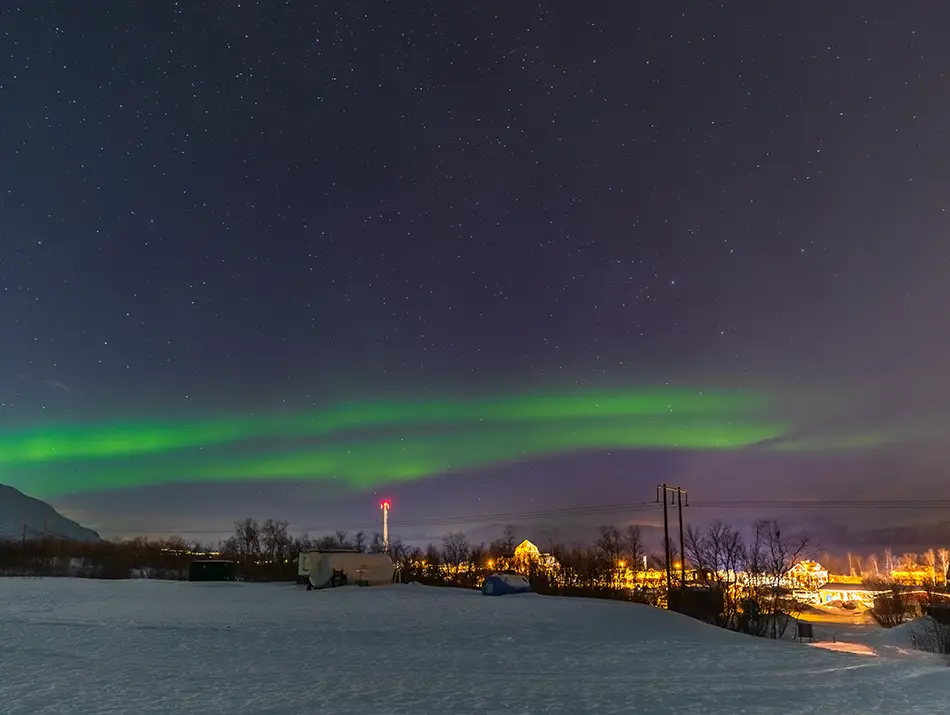
Abisko, a small village in Swedish Lapland, has a micro-climate nicknamed the “blue hole” – a patch of drier, often clearer sky over the mountains. This gives it a reputation for more consistent viewing than many nearby areas.
There is an Aurora Sky Station reachable by chairlift, plus easy trails around Abisko National Park. This area suits travelers who want a quiet base, great chances of clear nights, and a small-town atmosphere.
Why Abisko stands out:
- Exceptionally dry winter weather compared to surrounding regions, improving clear-sky odds
- Simple access via overnight trains and regional flights, avoiding the need for winter driving
- Open valley geography that allows broad sky visibility directly from the village and nearby trails
Best Places to See the Northern Lights in Russia
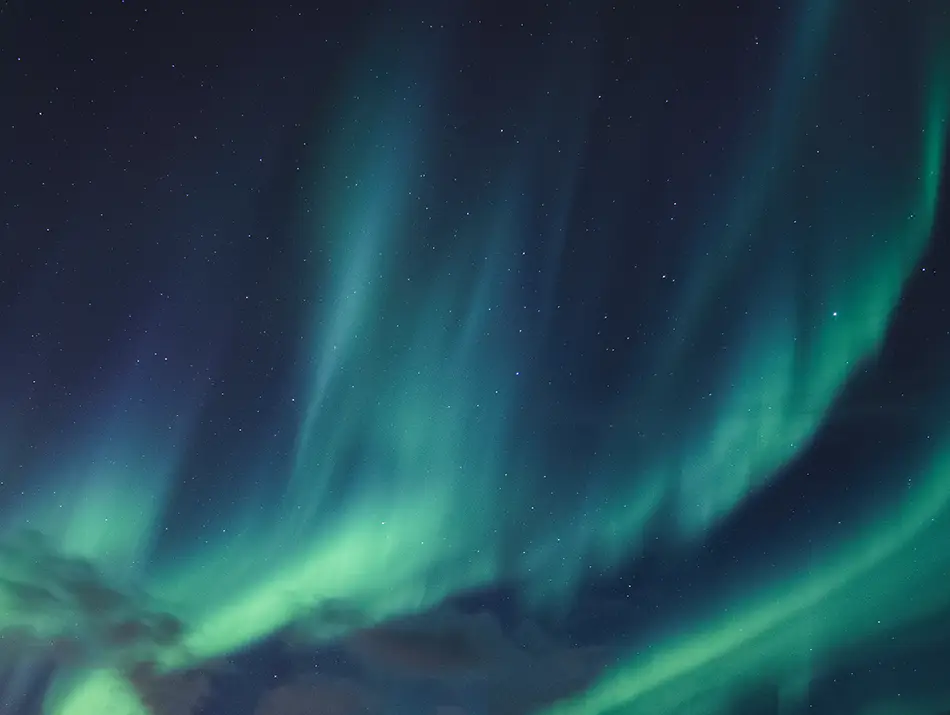
Geographically, northern Russia lies deep within the aurora zone, with strong viewing potential across the Kola Peninsula and parts of the Arctic coast. For travelers, the most accessible base is Murmansk, the largest city inside the Arctic Circle, along with nearby areas such as Teriberka, about 75 miles (120 km) away, where auroras often appear above open tundra and the Barents Sea.
What makes this region distinctive:
- Long polar nights in mid-winter significantly extend viewing hours
- The Gulf Stream moderates temperatures, making Murmansk less extreme than inner Siberia
*Citizens of 64 countries can apply online for a unified Russian e-visa, allowing stays of up to 30 days within a 120-day validity period. For visitors from countries such as the USA or the UK, Russia can be a more complex Northern Lights destination compared to Scandinavia or North America, requiring additional planning and up-to-date visa research.
Where to See the Northern Lights in North America
Alaska, USA
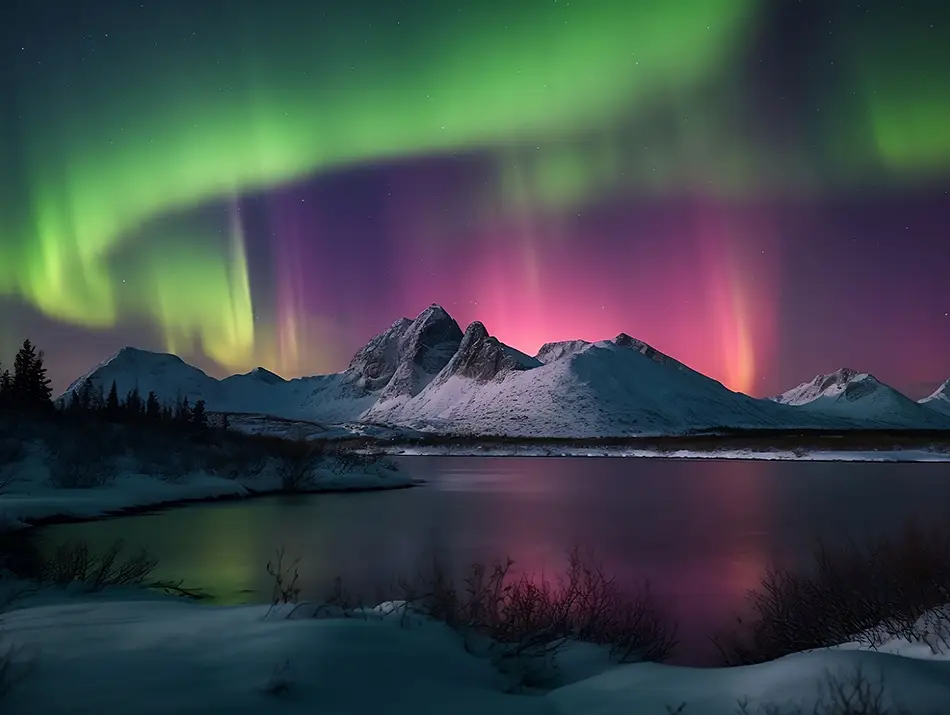
Interior Alaska lies directly under the auroral oval, especially between 65–70° north, which gives it some of the most consistent aurora activity in North America. Fairbanks serves as the main base for visitors, combining reliable infrastructure with very dark surrounding landscapes once you leave the city.
Long winter nights, dry continental weather, and open horizons all contribute to strong viewing conditions, making this region a favorite for travelers who want high chances of seeing the lights without venturing into extreme remoteness.
From Fairbanks, you can:
- Stay at aurora lodges outside the city lights
- Visit hot springs resorts and watch the sky from steaming pools
- Join tours along the Dalton Highway toward the Arctic Circle
Northern Canada: Yukon and Northwest Territories
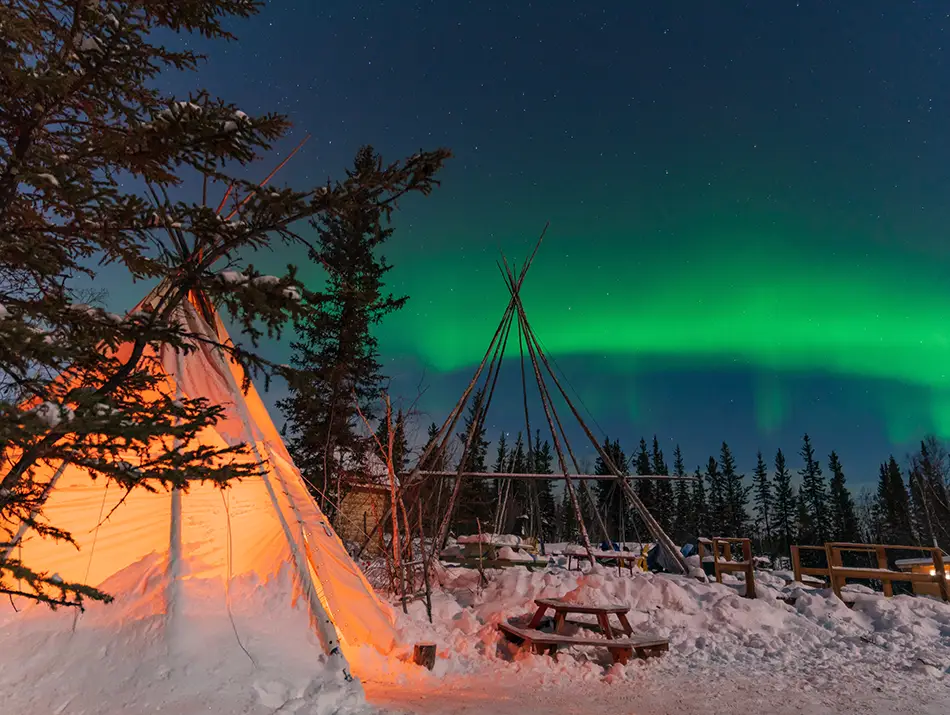
In Canada, Whitehorse (Yukon) and Yellowknife (Northwest Territories) are two of the most reliable places for aurora displays, with long, dark winters and very little light pollution. Yellowknife in particular promotes itself as the “Aurora Capital of North America,” with well over 200 nights per year when the aurora is potentially visible.
Distances in the Canadian North are large, so many visitors choose package stays at lodges that include winter clothing, guided viewing, and sometimes Indigenous cultural experiences.
Why it works well:
- Long, dark winter nights that allow extended viewing windows
- Consistently low cloud cover, especially around Yellowknife
- Well-developed aurora lodges offering guided viewing, winter gear, and cultural experiences
Greenland and Other Remote Northern Lights Destinations
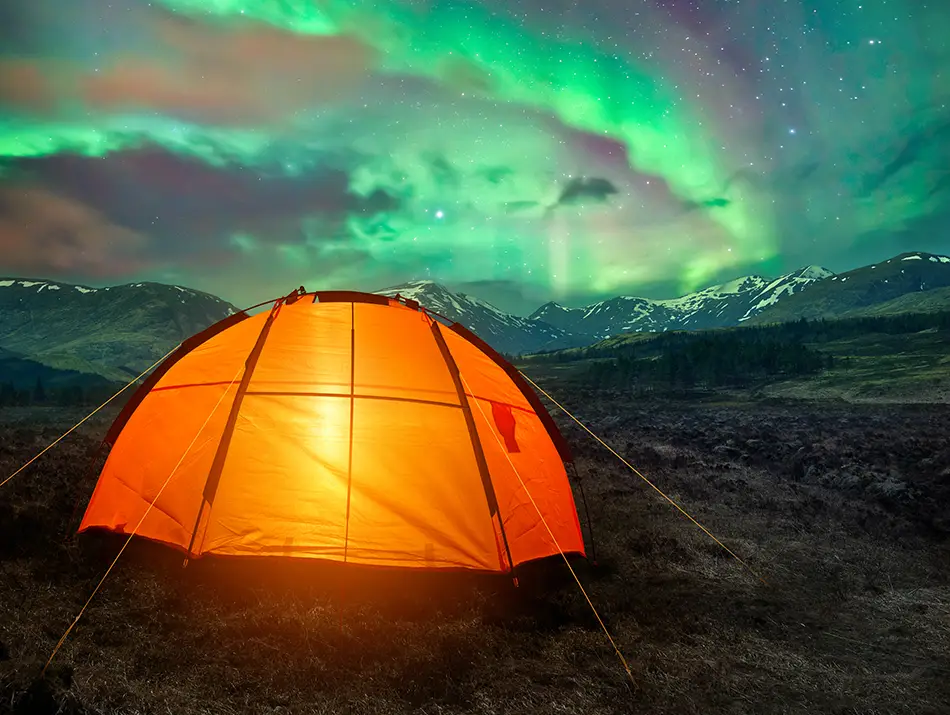
If you want the most isolated experience possible, Greenland offers enormous dark-sky areas with virtually no artificial light outside its small towns. Northeast Greenland National Park and other remote regions can deliver very strong auroras over sea ice and glaciers for those prepared for expedition-style travel.
Other fringe locations that occasionally reward patient travelers include:
- The Faroe Islands
- Northern Scotland and the Outer Hebrides
- Parts of the Baltic region during strong solar activity
These are less predictable than classic Arctic hubs, but can be a pleasant surprise if you are already in the area and watching aurora forecasts.
How to Plan a Successful Aurora Borealis Trip
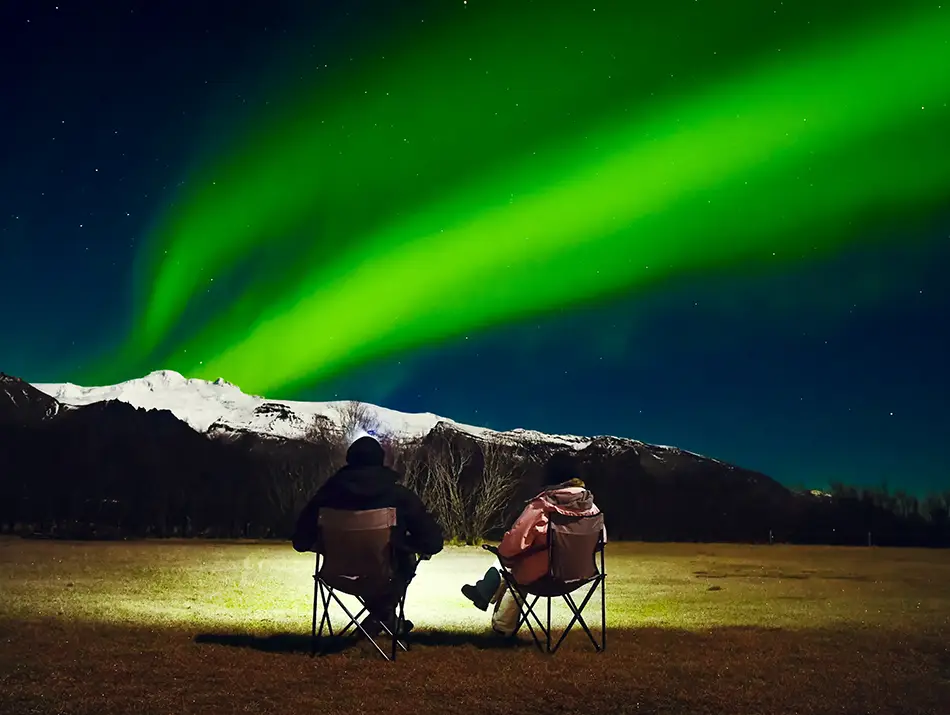
Because the aurora depends on both solar activity and weather, the best approach is to choose destinations with consistently strong viewing conditions and plan to spend several nights there.
A few practical planning tips:
- Stay at least 3–5 nights in your chosen region so you can wait out clouds and low activity.
- Check historical climate data, not just short-term forecasts. Some regions are famously clear and dry; others are beautiful but often cloudy.
- Choose a base with good daytime activities, from snowshoeing to museum visits and local food, so the trip stays enjoyable even on cloudy nights.
- Dress for stillness, not just walking: warm boots, thick socks, thermal baselayers, a fleece or wool mid-layer, a windproof insulated jacket, plus mittens and a hat that fully covers your ears. Standing still with a camera at 5°F (–15°C) feels much colder than walking at the same temperature.
- Consider guided tours if you are not confident driving on snow or ice. Local guides often know where cloud gaps form and can read short-term aurora forecasts better than most visitors.
Bringing It All Together
There is no single winner among the best places to see the northern lights. Instead, you have a menu of experiences: Norway and Iceland with dramatic coastlines, the quiet forests and cabins of Lapland, the wide skies of Alaska and northern Canada, the remote ice of Greenland, and the raw Arctic feel of Russia’s Kola Peninsula for those who are comfortable with the extra research and risk.
Whichever region you choose, treat this as more than a one-night show. Plan several evenings outdoors, build in flexibility for weather, and focus on enjoying the landscapes and cultures as much as the sky itself. Used this way, this Northern Lights travel guide is a starting point to design a trip that feels personal, well-prepared, and full of chances to look up and finally see those shifting green curtains for yourself.
Looking for more ideas? Explore our Travel Inspirations for destinations, stories, and journeys worth planning.