Vietnam contains one of the most diverse cave landscapes in the world, shaped by vast karst terrain and complex limestone formations. While the country is often associated with only the world’s largest cave, the best caves in Vietnam are defined by variety rather than scale alone.
Travelers can move through illuminated walk-in chambers, float by boat along underground rivers, kayak through flooded passages, swim in natural mud pools, camp inside vast caverns, or even ride a motorbike through a raw natural cave. Few destinations offer such a wide spectrum of cave experiences within a single country.
This guide focuses on caves that are genuinely open to tourism in 2026. Each entry explains what the cave is like, how the visit unfolds, and what level of preparation is required.
Phong Nha–Ke Bang National Park, The Kingdom of Caves (Quang Binh Province)
Phong Nha stands at the center of cave exploration in Vietnam. Dense jungle conceals hundreds of known caves, many formed by underground rivers over millions of years. Visitors encounter massive chambers, fossilized coral reefs, and well preserved stalactites and stalagmites throughout the park. This scale and concentration explain why travelers so often associate the most famous caves in Vietnam with Phong Nha.
1. Son Doong Cave
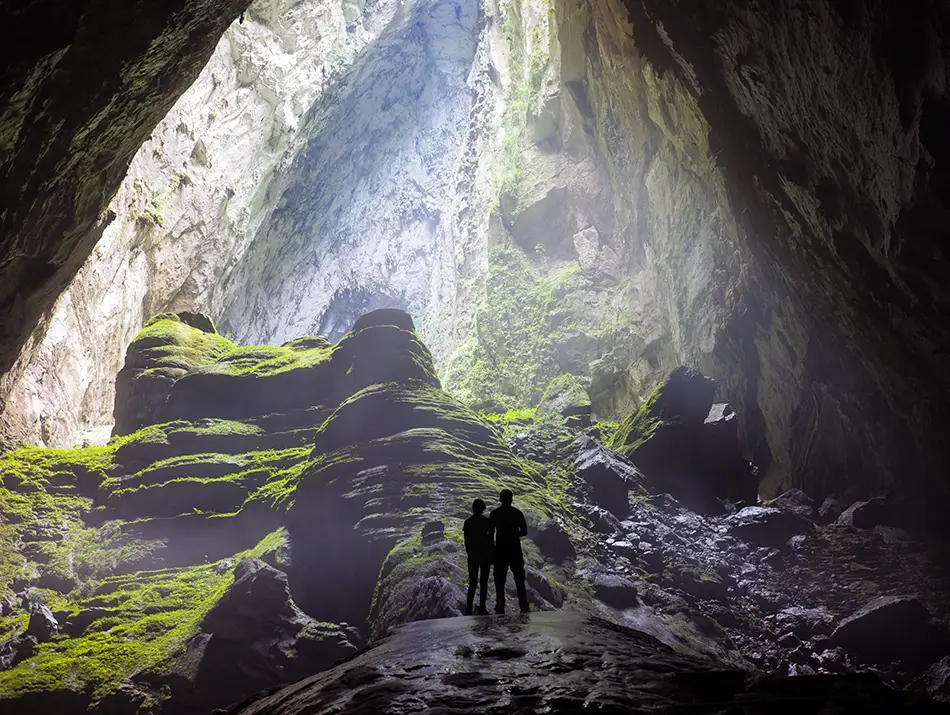
Son Doong is the largest cave in the world by volume and one of the most extraordinary natural spaces ever explored. Entering the cave feels less like sightseeing and more like stepping into a self contained landscape. Vast chambers extend far beyond the reach of light, jungle grows beneath collapsed ceilings, and mist forms where temperature differences create their own microclimate.
The journey to Son Doong is physically demanding and deliberately slow. Visitors hike through dense forest, descend steep cave entrances, cross underground rivers, and camp inside massive caverns beneath stone walls hundreds of feet high. Nights are spent deep underground, where silence is broken only by flowing water and shifting air. This is a true expedition rather than a tour.
- Visit length: 6 days and 5 nights
- Accessibility: High difficulty expedition
- Price: Approximately $3,000 per person
- Booking: Tours sell out months in advance due to strict permit limits
2. Paradise Cave
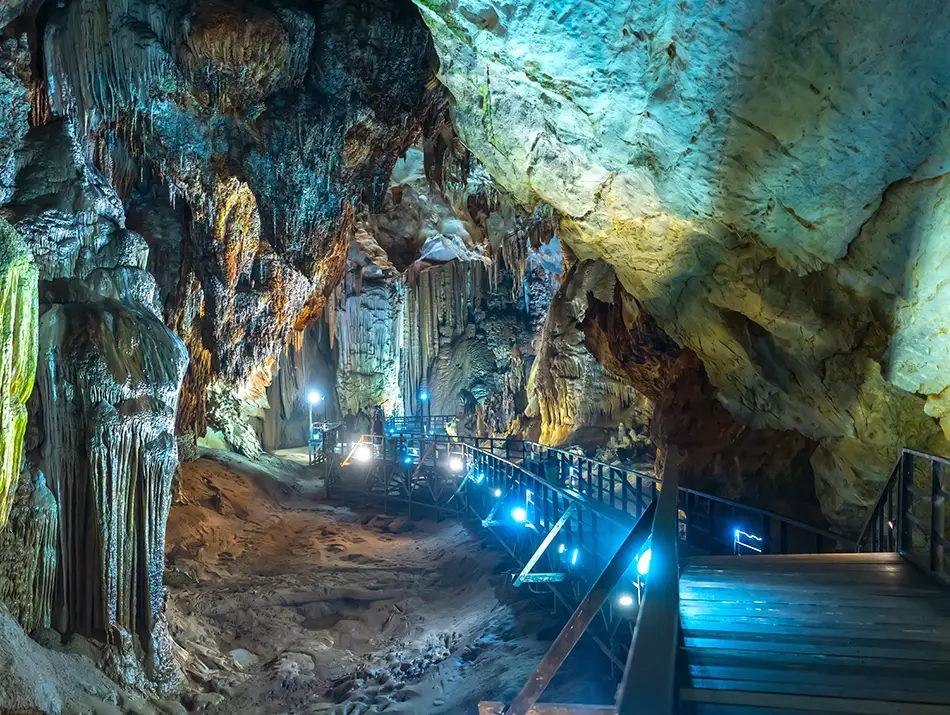
Paradise Cave offers a completely different experience. This dry cave offers vast scale without requiring physical effort. Elevated wooden walkways guide you deep into the cave, where ceilings rise dramatically and limestone formations appear in dense clusters.
Carefully placed lighting reveals textures and shapes while preserving the sense of depth. The walk is calm and immersive, allowing visitors to move slowly and observe details without rushing.
- Time inside the cave: Approximately 45 to 60 minutes
- Entry fee: 250,000 VND per adult ($10 USD / €9 EUR)
- Known for: One of the longest dry caves in Asia
- 📍Location on Google Maps.
3. Dark Cave
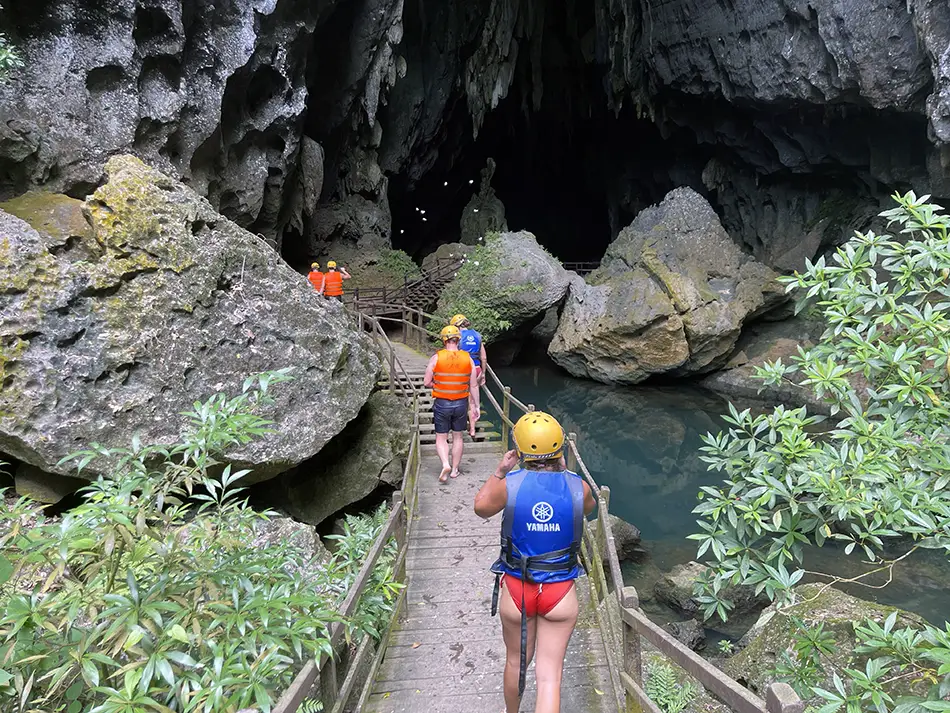
Dark Cave centers on direct physical interaction with the cave environment.The visit begins with a zipline over the river, followed by swimming into the cave entrance. Inside, there is no artificial lighting, and visitors move through darkness using headlamps.
The highlight is a natural mud chamber where visitors float and play in thick mineral rich mud. After exiting the cave, visitors kayak back along the river to the starting point and can access several floating water attractions along the way. The experience is playful and physical, designed for travelers who want hands on adventure rather than passive observation.
- Entry fee: 450,000 VND ($18 USD / €16 EUR)
- 📍Location on Google Maps
4. Phong Nha Cave
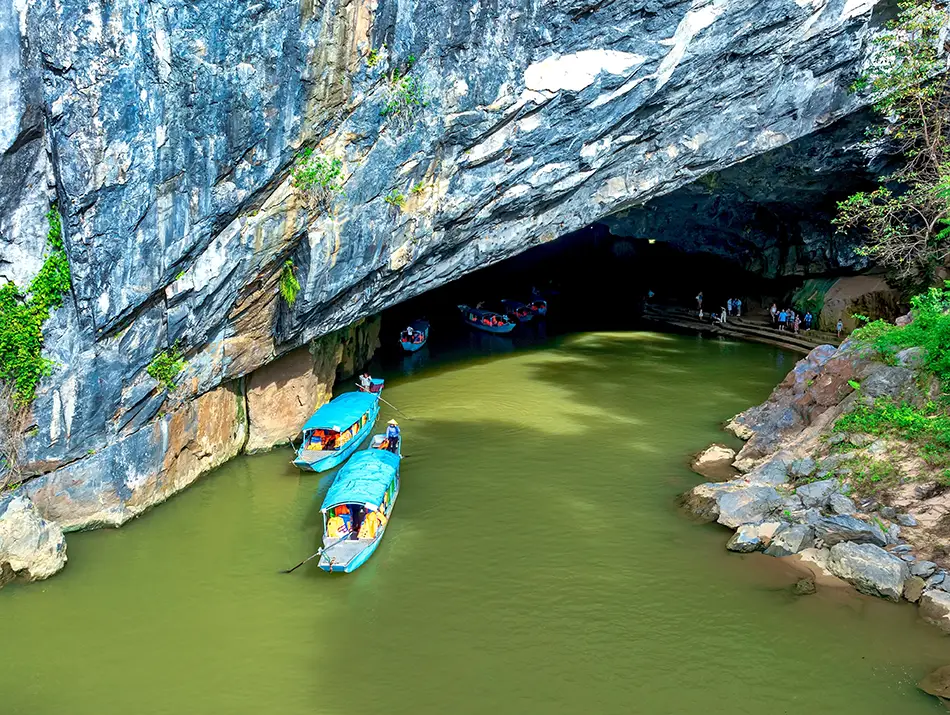
Phong Nha Cave is one of Vietnam’s classic river caves and remains one of the most atmospheric. The visit starts with a boat ride along the Son River, slowly transitioning from daylight into darkness as the cave opens.
Inside, the underground river continues beneath arched ceilings shaped by water erosion. After docking, visitors walk short distances to view chambers filled with stalactites and stalagmites. The calm pace makes this one of the easiest caves to visit in Vietnam.
- Visit length: About 1 hour
- Guide: Included with boat trip
- Known for: Long underground river sections
- Boat tour price: ~ 200,000 VND ($8 USD / €7 EUR) per adult.
- 📍Boat Station on Google Maps
5. En Cave
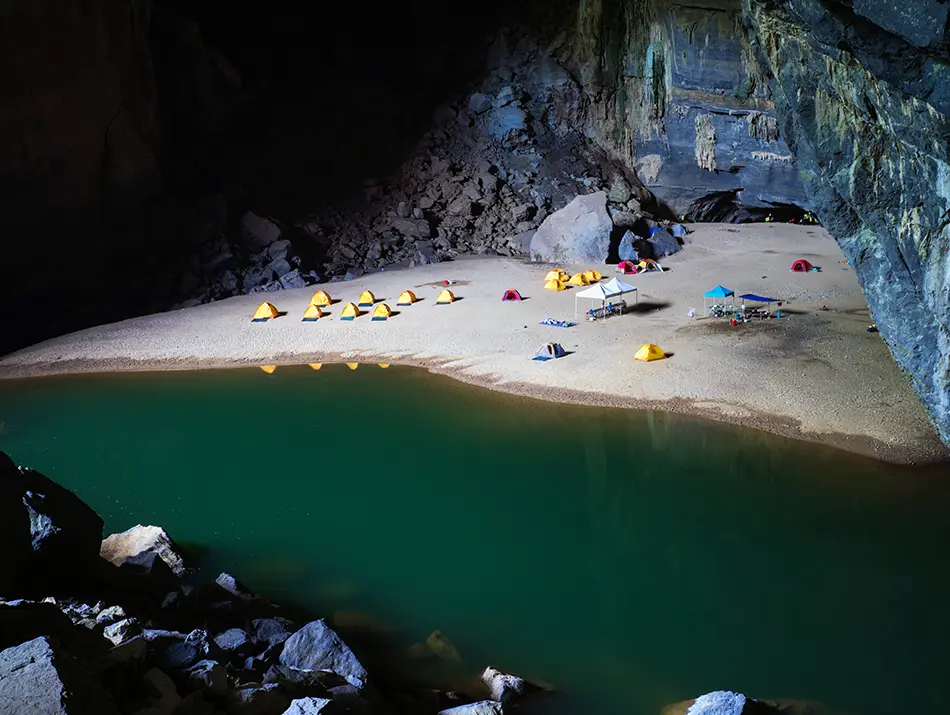
En Cave is one of the largest caves in the world and feels vast even before entering. The approach involves trekking through jungle and river crossings, followed by entry into a massive chamber where a beach stretches beneath towering rock walls.
At night, campers sleep inside the cave while light filters through openings above. The experience balances adventure trekking with moments of quiet immersion.
- Visit length: 2 days and 1 night
- Accessibility: Moderate trekking
- 2-day Hang En Cave tour: 8,800,000 VND ($330 USD / €300 EUR) per person for the full guided experience with camping and equipment included.
- Exclusive Licensed Operator: Oxalis Adventure
6. Tu Lan Cave System
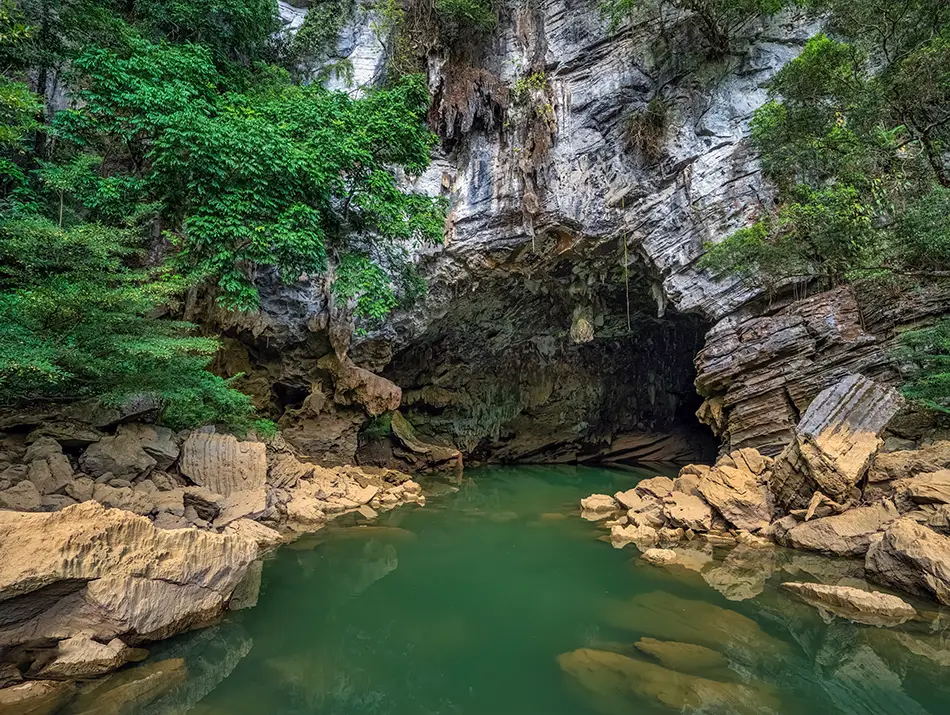
The Tu Lan system is a network of river caves connected by jungle paths. Unlike single cave visits, this experience is about movement through the landscape.
Visitors hike between caves, swim through tunnels, and float along underground rivers. Water levels, light, and sound constantly change, making every section feel distinct. This is often considered a Vietnam cave expedition for beginners who want real adventure without extreme difficulty.
- Visit length: starts with 3 days 2 nights
- Guide: Mandatory
- Tour price: starting at 7,700,000 VND ($310 USD / €285 EUR) per person.
- Exclusive Licensed Operator: Oxalis Adventure
A wide spectrum of other cave expeditions is available in Phong Nha, ranging from beginner friendly river caves to demanding multi day adventure trekking routes that include swimming, climbing, and underground camping.
Government authorities strictly regulate all serious cave activities, and only licensed companies operate expeditions. At present, Oxalis and Jungle Boss are the two authorized operators running guided cave adventures inside Phong Nha, ensuring safety standards, environmental protection, and controlled visitor numbers across the park.
Northern Vietnam’s Caves
7. Sung Sot Cave (Surprise Cave), Ha Long Bay
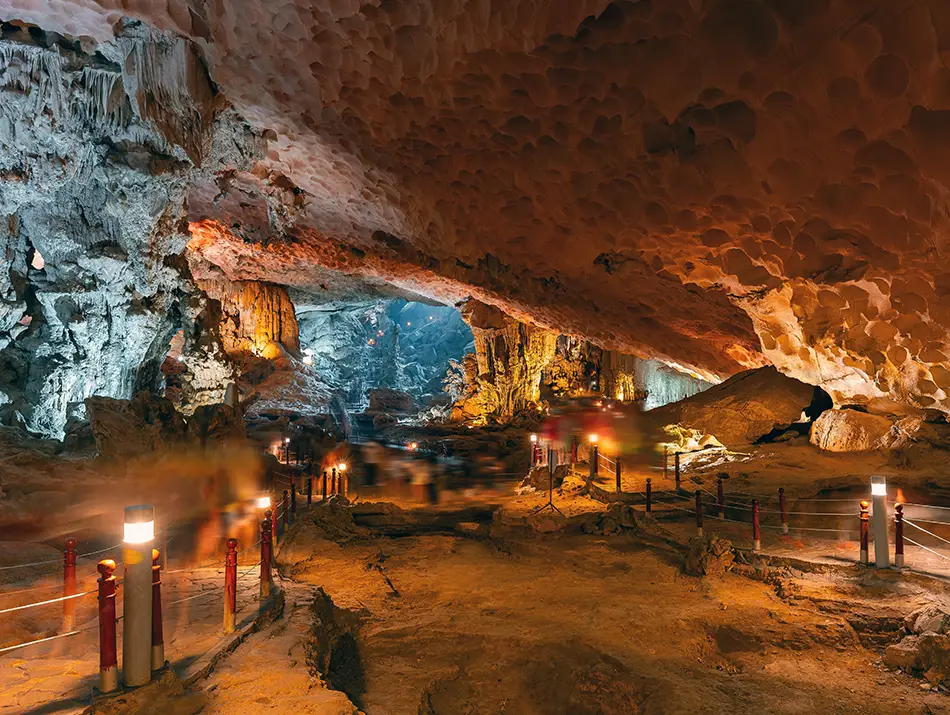
Sung Sot Cave is the largest and most visited cave in Ha Long Bay, set on Bo Hon Island in the heart of the UNESCO World Heritage area. Most visitors reach it by boat as part of a Halong Bay cruise or day tour, then climb a short set of stone steps through greenery to the cave entrance, which leads to a sequence of wide chambers filled with stalactites and stalagmites.
Inside, well-lit pathways guide you through multiple sections, each revealing more scale and geological detail, and the final exit opens to a panoramic view of the bay’s emerald waters and limestone karsts. Despite crowds during peak hours, the size and variety of formations make the cave feel expansive and rewarding.
- Visit length: About 45 minutes
- Accessibility: Easy with stairs
- Known for: Panoramic views at the exit
8. Luon Cave, Ha Long Bay
Luon Cave is less about size and more about the experience of transition. Access is only possible as part of a Ha Long Bay boat trip, with entry by kayak or small rowing boat through a low limestone tunnel where the ceiling drops close to the water. The narrow passage creates a brief feeling of enclosure before opening suddenly into a calm, circular lagoon.
Once inside, steep limestone cliffs rise almost vertically from the water, shielding the lagoon from wind and noise. The water is typically still, and the atmosphere feels quiet and contained despite the cave’s location within one of Ha Long Bay’s busiest areas.
- Accessibility: Easy
- Known for: Kayaking through a water cave
9. Trang An Caves, Ninh Binh
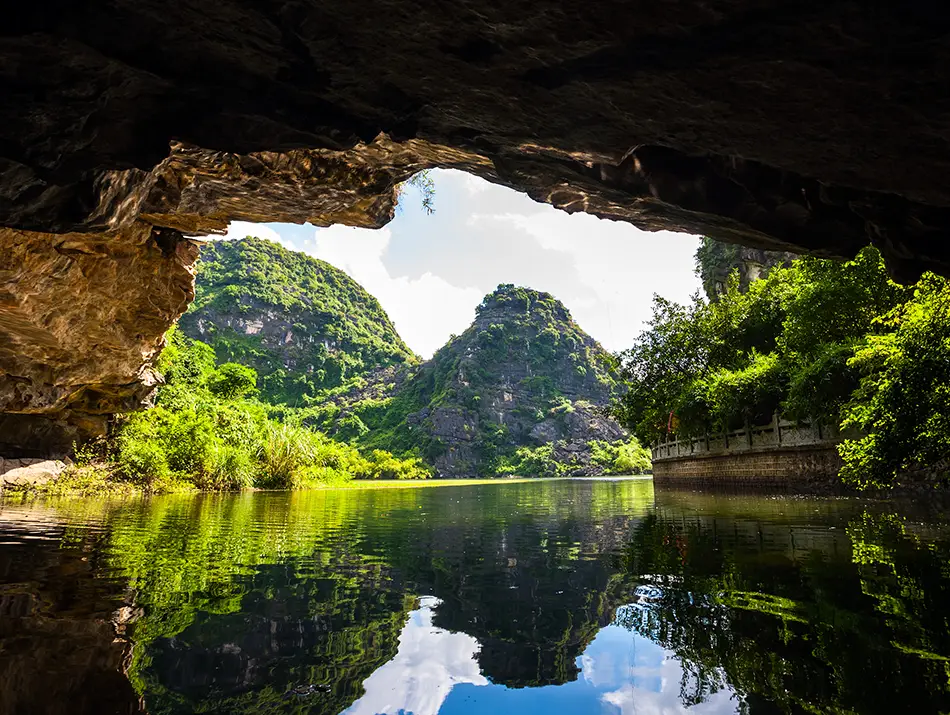
Trang An caves are experienced as part of a slow river journey rather than a traditional cave visit. Access is by small rowing boats that follow winding waterways through open valleys and into short limestone tunnels. As the boats pass through the caves, ceilings often drop low, requiring passengers to lean back while gliding beneath the rock.
The park operates several fixed boat routes, each passing through a different combination of caves, temples, and karst scenery. Depending on the chosen route, stops are made at pagodas, small islands, and viewpoints, with time to walk around before continuing. Refreshment points and simple cafes are available near some of these stops.
- Longest single cave: approximately 3,280 ft (1,000 m) – Trang An Route 3
- Entry fee: 250,000–300,000 VND ($10–12 USD / €9–11 EUR) per person, boat included
- 📍Location on Google Maps
10. Tiger Cave (Nguom Ngao), Cao Bang
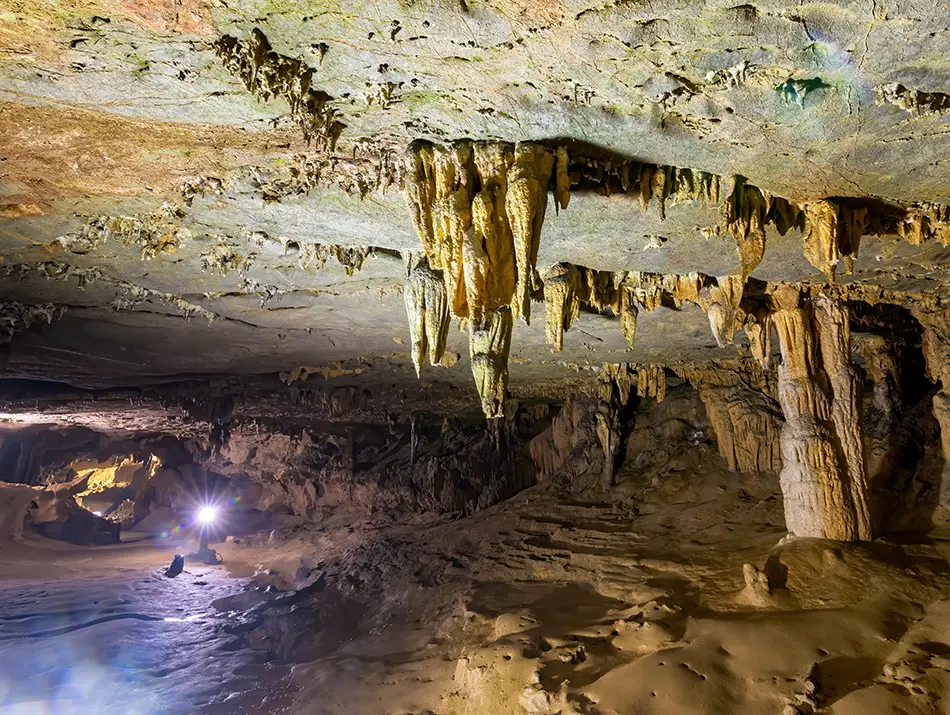
Nguom Ngao Cave is a large, well developed limestone cave with a clearly marked walking route and basic lighting. Wide paths lead through a series of spacious chambers filled with dense stalactites and stalagmites, and the interior remains noticeably cooler than the surrounding landscape. The visit is straightforward and quiet, requiring no special equipment or guide.
Located a short drive from Ban Gioc Waterfall, Tiger Cave is commonly combined with waterfall visits on the same day, making it a practical and easy addition to a Cao Bang itinerary rather than a standalone adventure.
- Visit length: about 45 minutes
- Entry fee: 45,000 VND ($2 USD / €2 EUR) per adult
- Accessibility: Easy, paved paths and steps throughout
- Known for: Dense stalactite and stalagmite formations
- 📍Location on Google Maps
11. Lung Khuy Cave, Ha Giang
Lung Khuy Cave sits compactly within the limestone hills of Quan Ba District and offers a quiet underground stop away from Ha Giang’s exposed mountain roads. The approach involves a short walk uphill through a local village, followed by a descent into the cave through a simple entrance. Inside, narrow passages lead into small chambers filled with stalactites and stalagmites, creating a close and enclosed atmosphere rather than a sense of vast scale.
The cave features installed lighting, steps, and handrails that allow safe movement while preserving its raw, enclosed character. Most visits remain brief and uncrowded, making Lung Khuy a quiet pause between long riding days on the Ha Giang Loop rather than a standalone highlight.
- Visit length: about 30–45 minutes
- Entry fee: 50,000 VND ($2 USD / €2 EUR)
- Guide: Not required
- 📍Location on Google Maps
Central Vietnam
12. Hell Cave (Âm Phủ Cave), Marble Mountains, Da Nang
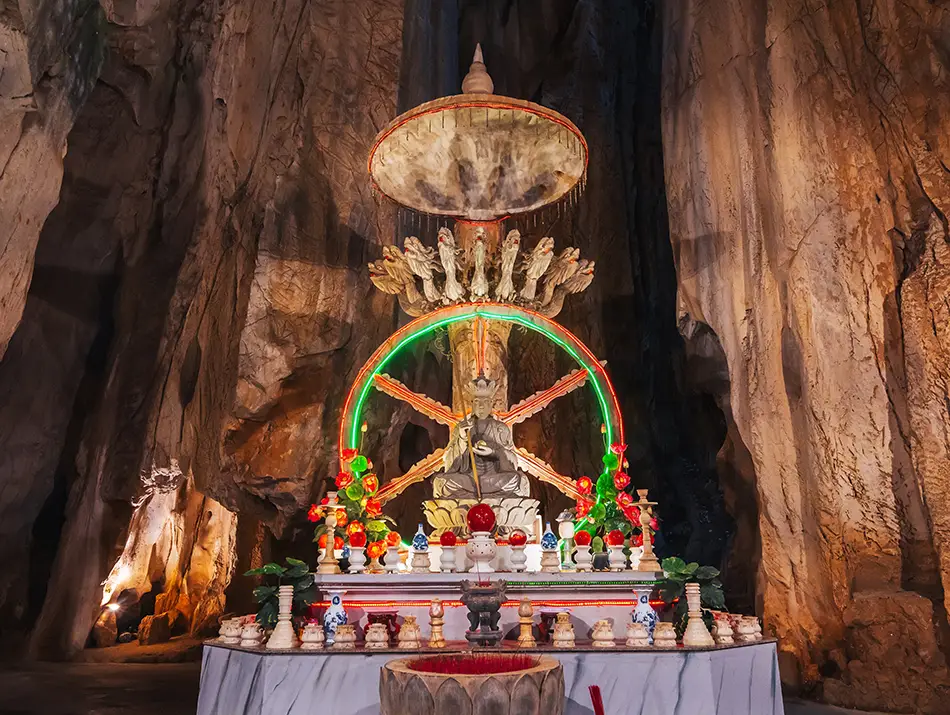
Hell Cave is part of the Marble Mountains complex near Da Nang and combines natural cave space with Buddhist symbolism. After crossing the stone bridge at the entrance, the route continues through enclosed passages that gradually widen, revealing height, depth, and uneven rock surfaces shaped by the mountain.
Altars, statues, and judgment scenes appear throughout the interior, using the cave’s natural scale, echoes, and low light to support the spiritual narrative. From the main interior section, the route splits into two paths: one descending deeper into darker areas representing hell, and another climbing steeply toward an upper exit symbolizing enlightenment.
Music, sound effects, and the scent of incense deepen the atmosphere, while the cave itself remains visually engaging through its textures, depth, and sense of enclosure.
- Visit length: About 40 minutes
- Guide: Not mandatory
- Known for: Spiritual atmosphere and light effects
- 📍Location on Google Maps
Off the Beaten Path Options
13. Chu Bluk Lava Tube Caves
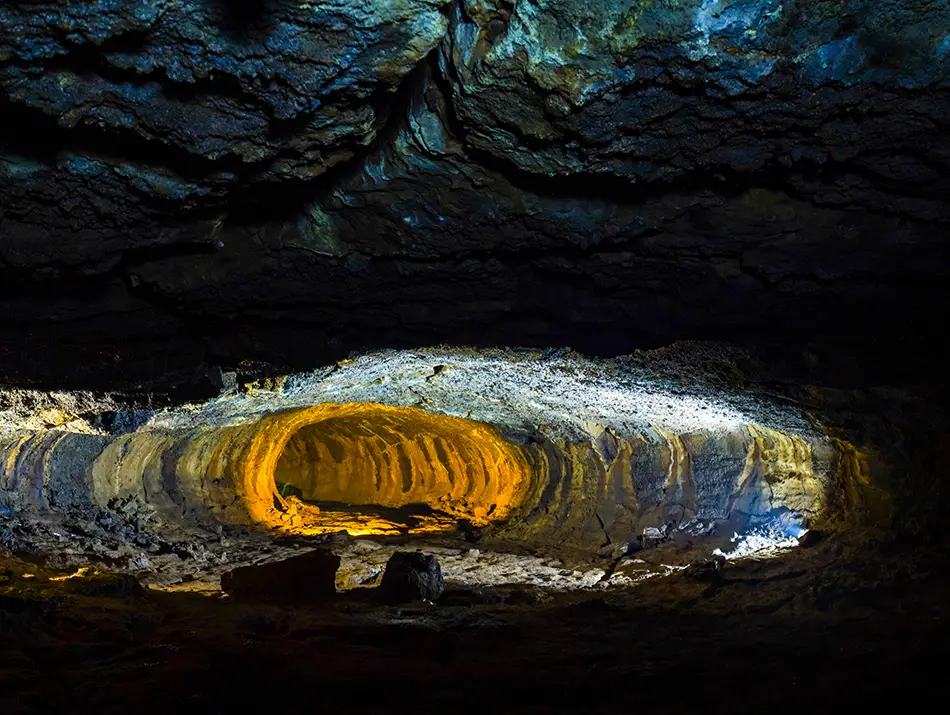
These Caves were formed by ancient volcanic flows, creating long, hollow tunnels where molten lava once drained away. Unlike limestone caves, these tubes have rough, angular walls and uneven floors, with sharp rocks, collapsed sections, and low ceilings in places. There is no lighting, signage, or constructed pathway, and entrances are often hard to locate without local knowledge.
Access typically involves hiking through forested or agricultural land, sometimes on unmarked trails, and conditions inside the caves can change quickly due to water, mud, or falling debris. Poor visibility, unstable ground, and the presence of wildlife increase the level of risk. These caves are not officially developed or regulated for tourism, and emergency access is limited, making preparation and caution essential.
- Guide: Strongly recommended due to navigation and safety risks
- Accessibility: Difficult, rough terrain and no infrastructure
- Known for: Some of the longest lava tube caves in Southeast Asia, formed by ancient volcanic activity
- Important note: Not developed for tourism, with real risks including injury, getting lost, and limited rescue options
- 📍Location on Google Maps
14. Hang Ban Tham Cave
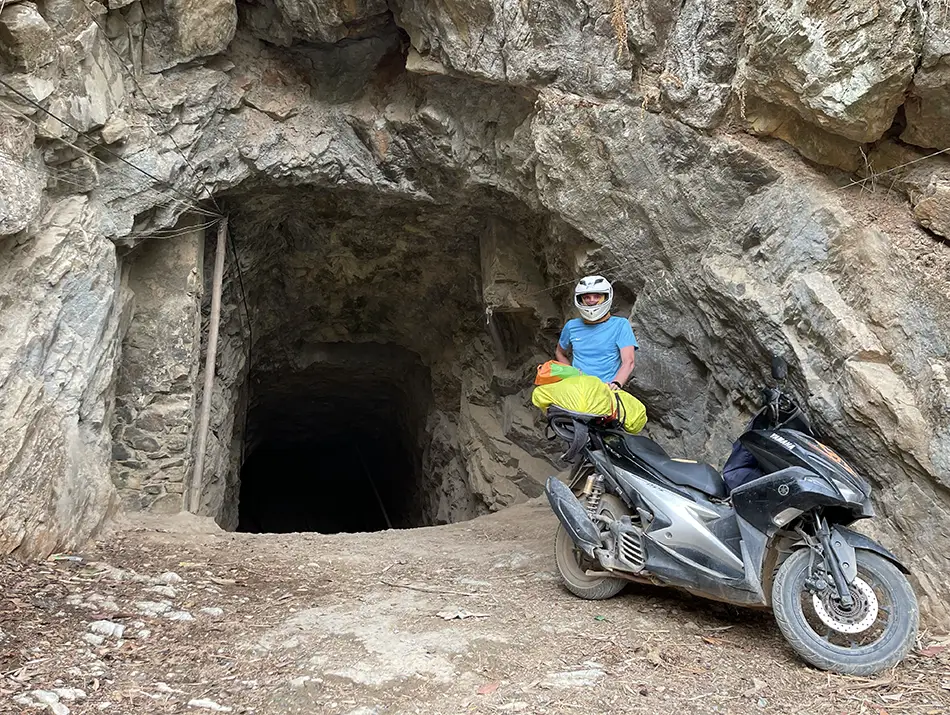
Hang Ban Tham offers one of Vietnam’s most unusual cave experiences. Riders drive motorbikes directly through a natural limestone cave with uneven ground and no light. The route is short but intense, appealing to experienced riders only.
📍Location on Google Maps
Final Thoughts on the Best Caves in Vietnam
Exploring Vietnam’s caves is ultimately about choosing the right experience rather than chasing a single highlight. Some caves are designed for slow observation and easy access, while others demand physical effort, planning, and strict safety controls. Understanding which sites allow independent visits and which require licensed operators helps set realistic expectations and avoids disappointment on the ground.
With careful planning around route difficulty, seasonal conditions, and logistics, travelers can identify what truly defines the best cave in Vietnam for their own style of travel, whether that means a brief cultural visit or a multi day underground journey.
When approached with respect for safety and conservation, these underground landscapes offer a clear view into how geology, history, and belief systems intersect below the surface.
If caves are just one part of your adventure plans, Vietnam offers far more above ground. From jungle trekking and canyoning to sand dunes, mountain roads, and water sports, explore our full guide to the most adventurous things to do across Vietnam and build a trip around movement, nature, and challenge.