


Why visit Mui Ne
Mui Ne is a small beach town on Vietnam’s south-central coast. Once a quiet fishing stretch, it now mixes simple village life with long lines of resorts, kitesurf schools, and seafood grills. Best things to do in Mui Ne focus on its dunes, fishing village, Cham heritage, and coastal road rather than a single flawless beach.
Windy days, strong sun, and uneven beach quality mean the town suits active travelers more than people seeking a perfect postcard beach. Costs stay relatively low compared with many other destinations, which helps if you travel on a budget. At the same time, some tours feel too commercial and parts of the coast show erosion and concrete seawalls.
Mui Ne originally refers to the small fishing village near the cape, which we label as Mui Ne Fishing Village in this guide. The long resort strip stretching from Phan Thiet toward that village is officially called Ham Tien, but most travel sources casually call the whole area “Mui Ne.” For simplicity and to avoid confusion, we follow that common usage here and refer to the entire beach zone — roughly from the Vipol hotel tower down to Ham Tien Market — as Mui Ne throughout the article.
Table of Contents
One Minute History Lesson
For centuries, the Cham people controlled this coastline. They were a seafaring culture and built temples like Po Shanu Cham Towers on hills above today’s Phan Thiet. Fishing villages along the bay supplied fish and squid to the region and produced the pungent fish sauce that still defines local cuisine.
In the 1990s, a few small guesthouses opened on the sand. After a 1995 solar eclipse drew international visitors, development accelerated and the palm-lined strip between Phan Thiet and Mui Ne filled with hotels, kitesurf schools, and seafood restaurants.
Mui Ne at a Glance
- Known For: Strong coastal winds, sand dunes, kitesurfing, and a working fishing village with colorful boats and basket coracles.
- Best Time to Visit: Dry, windy months from November to April suit beach time and kitesurfing.
- Getting There: Most travelers arrive by bus from Ho Chi Minh City or Da Lat.
- How Long to Stay: Works as a one-night stop on a coastal route, two to three nights for a relaxed visit, or longer if you surf, kite, or want a simple work by the sea base.
Average Daily Spending
- Budget: ~600,000 VND ($23 / €20)
- Mid-range: ~1,380,000 VND ($52 / €45)
- Luxury: ~2,630,000 VND ($100 / €86)
Best things to See in Mui Ne: Sights & Attractions
Fairy Stream
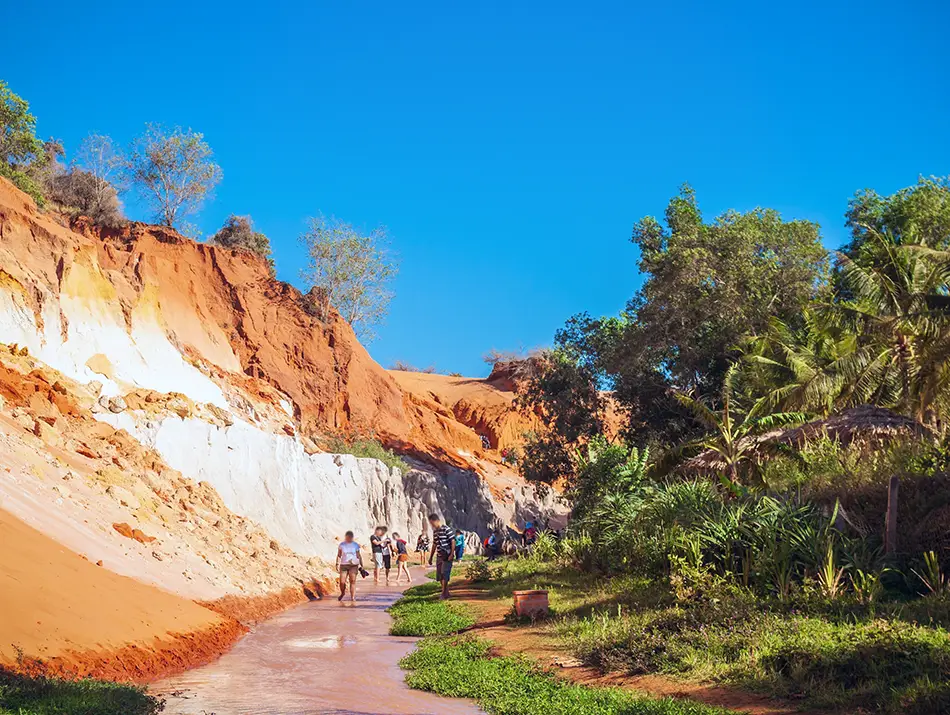
Fairy Stream is a shallow, reddish stream that cuts through soft sand and low cliffs behind the main road. Visitors walk barefoot in ankle-deep water past small formations of clay, sand, and rock. The path stays mostly flat, though some side slopes climb up loose sand for viewpoints.
For most tourists, the experience is a slow, barefoot walk that takes about around 45 minutes. You pass small stalls selling drinks and simple food near the entrance, then move into quieter sections where only the sound of water and wind carries. The colors look strongest in early morning and late afternoon, while midday heat can make the walk feel harsh.
- Hours and tickets: Roughly 6:30 a.m.–5:30 p.m. Entrance about 15,000 VND ($0.60 / €0.50)
- How to get there: About 2 miles (3 kilometers) from Ham Tien Market. Reach by taxi, motorbike, or local jeep tour.
- Time needed: 1 hour
- Combines with: Red Sand Dunes, Mui Ne Harbor Viewpoint.
- Travel Tip: Go early in the day, when tour groups have not yet arrived and sand stays cooler on bare feet.
- 📍Fairy Stream on Google Maps
Mui Ne Fishing Village & Harbor
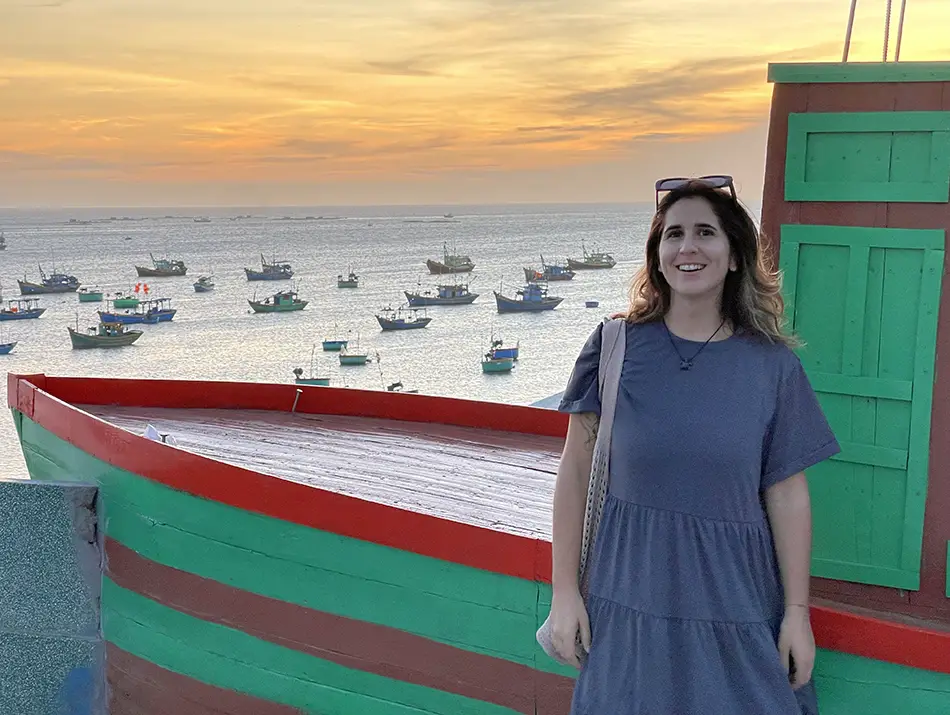
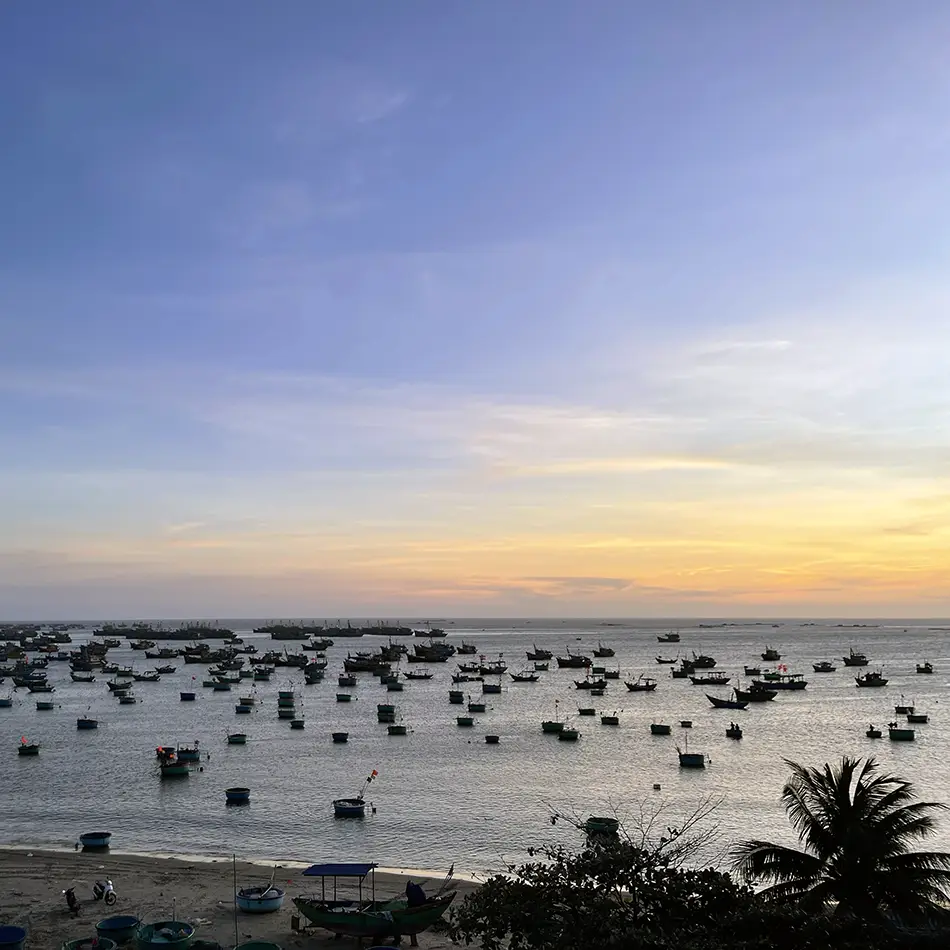
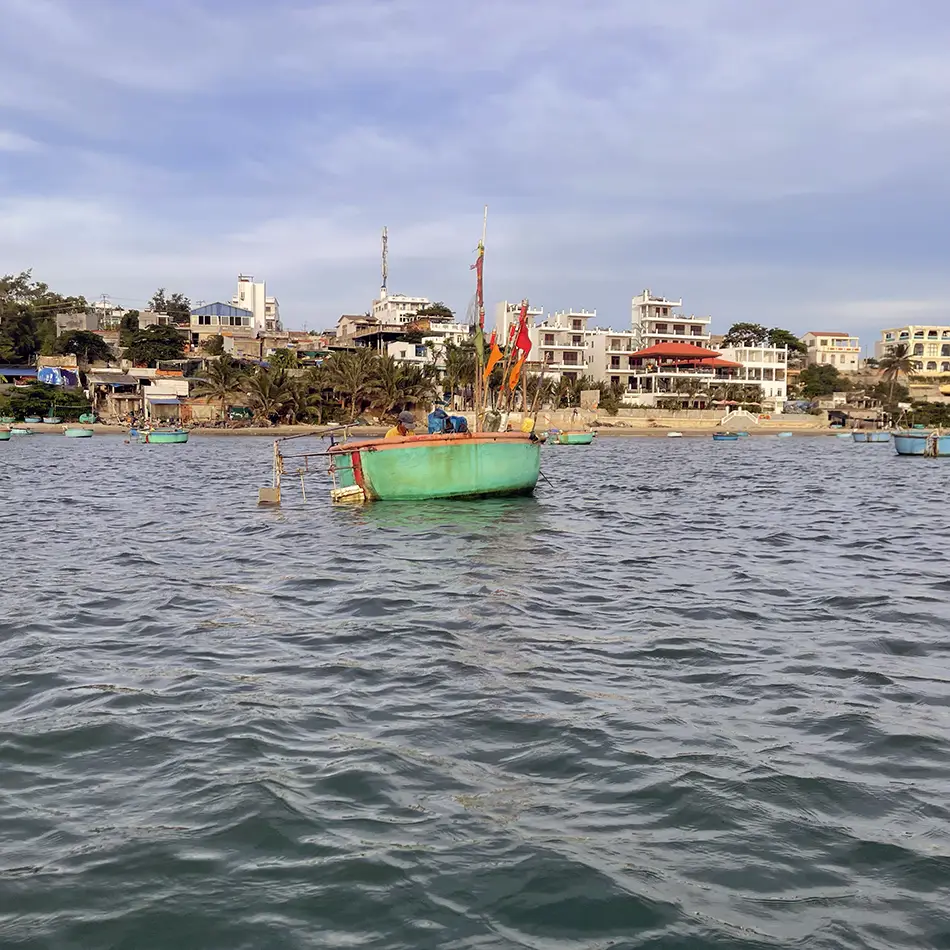
Mui Ne Fishing Village sits along Huynh Thuc Khang Street, above a sheltered bay. Colorful wooden fishing vessels and round basket coracles fill the water below. The harbor serves as a working landing point, so you see fish unloaded, sorted, and traded, especially in the early morning. Smells can be strong, and wet ground makes good footwear important.
Tourists usually walk the road-edge viewpoint first, then take the steep ramp or stairs down toward the beach to watch activity up close. The most interesting time is around sunrise, when boats return and the small market feels busiest.
- Hours and tickets: Open area, no ticket.
- How to get there: Reach by bus, taxi, motorbike, or dune jeep tour stop.
- Time needed: 45–90 minutes for the harbor and nearby stalls.
- Combines with: Red Sand Dunes, Fairy Stream.
- Travel Tip: Wear sandals that can handle fish scales and wet sand.
- 📍 Mui Ne Harbor viewpoint location on Google Maps
Red Sand Dunes of Mui Ne
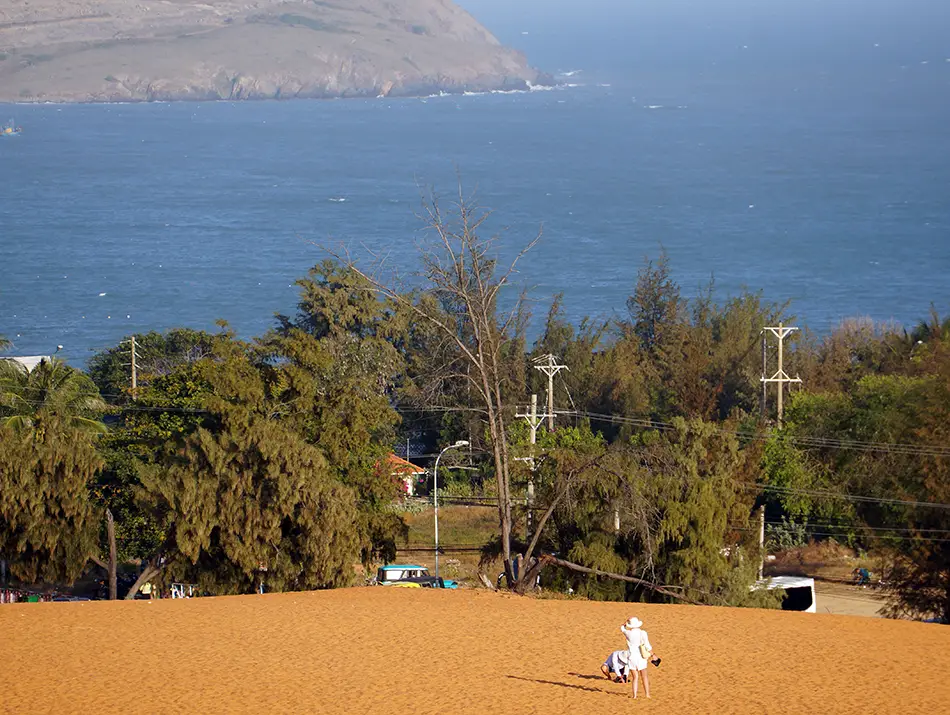
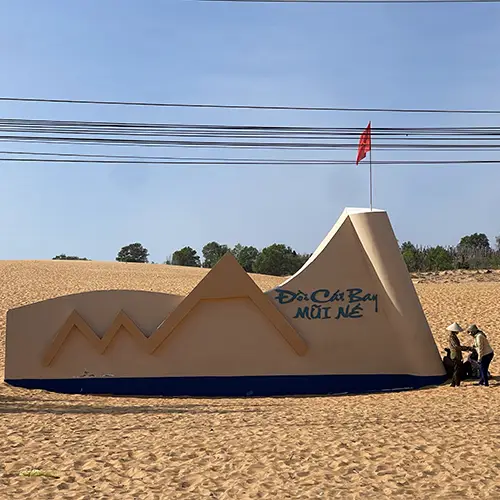
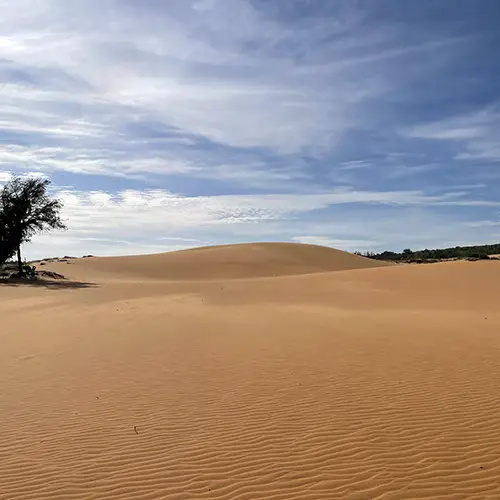
The Red Sand Dunes sit on low hills near Mui Ne fishing village and form one of the most photographed sights and activities in Mui Ne. Sand has a reddish tint, and the dunes overlook the coastal road and the sea. Surfaces change shape with wind, so paths feel loose and uneven underfoot.
Visitors usually climb the nearest dune ridge, rent simple plastic sleds, or watch the light change at sunrise or sunset.
Crowds, vendors, and litter can gather near the easiest access points, but walking a little farther from the car park often brings quieter ridges. During windy days, blowing sand can get in eyes and cameras, so glasses and lens protection help.
- How to get there: Reach by motorbike, taxi, or jeep tour.
- Time needed: 30 minutes –1 hour, longer if you wait for dusk light.
- Combines with: Fairy Stream, Mui Ne Fishing Village.
- Travel Tip: Aim for sunrise if you want cooler sand and fewer vendors compared with the more crowded sunset period.
- 📍 Red Sand Dunes Location on Google Maps
Po Shanu Cham Towers
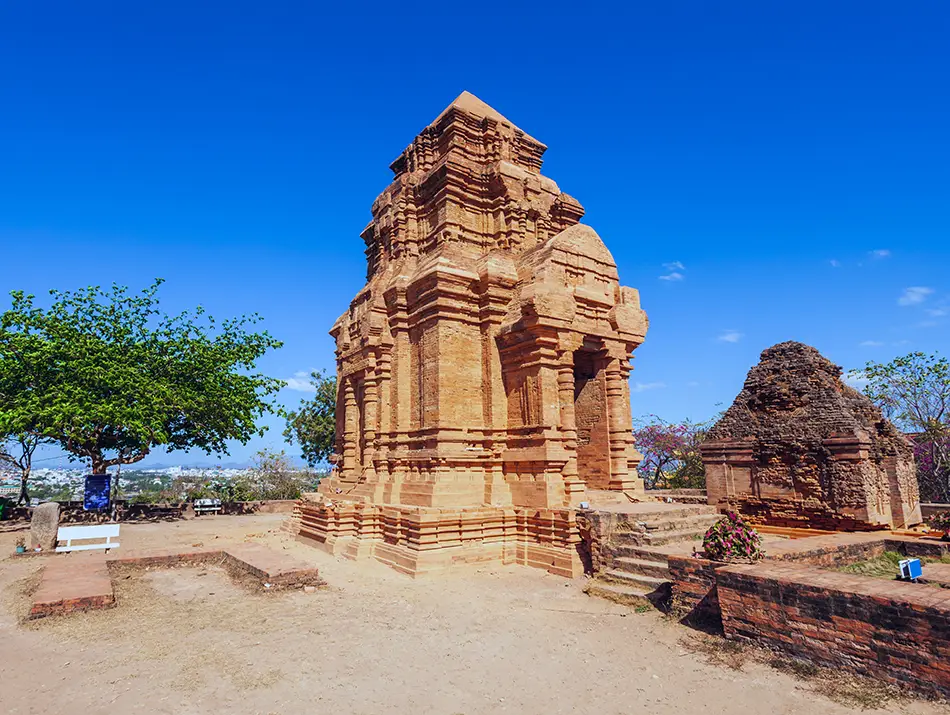
Po Shanu Cham Towers stand on a low hill in Phu Hai Ward. The brick towers date from the Cham kingdom and overlook the coast, with a small courtyard and pathways around the structures.
Tourists usually walk a short loop, pausing at information boards and viewpoints before sitting in shaded corners. The site feels compact, so you can focus on carvings, brickwork, and views without much walking.
- Hours and tickets: Daily roughly 7:00 a.m.–5:00 p.m.; entrance 10,000–15,000 VND ($0.40–0.60 / €0.35–0.50).
- How to get there: Short taxi or motorbike ride from Phan Thiet or Mui Ne.
- Time needed: 45 minutes, including viewpoints.
- Combines with: Phan Thiet city, Ong Dia Rock Beach, Old Fishing Village 3D Museum.
- Travel Tip: Visit in late afternoon for clearer sea views and softer light on the brick towers.
- 📍Po Shanu Towers location on Google Maps
Mui Ne Beach
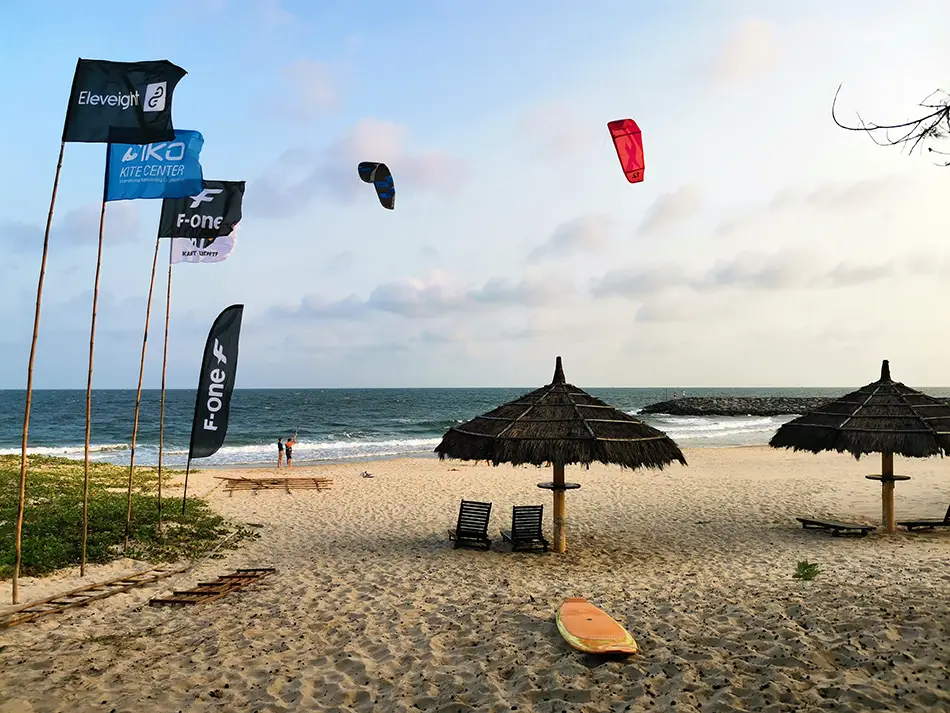
Mui Ne Beach stretches along much of the resort strip between Phan Thiet and Mui Ne village. Beach quality shifts from wide, swimmable sections to narrow strips backed by seawalls, depending on erosion, tides, and specific hotel frontage. Wind, waves, and currents change with season, so conditions can feel rough during the windiest months.
Tourist experience depends heavily on where you stay. Some guests relax on hotel loungers, swim in designated areas, or watch kites across the water, while others find only a narrow band of sand at high tide and use the pool instead. Walks along the shoreline reveal the mix of local fishing boats, resorts, and small cafés that define the coast.
- How to get there: Direct access from beachfront hotels. From inland stays, walk or use short taxi rides to signed beach lanes.
- Travel Tip: Check recent guest photos of your chosen hotel to see how much sand remains in front at different tides.
Old Fishing Village 3D Museum (Fish Sauce Museum)
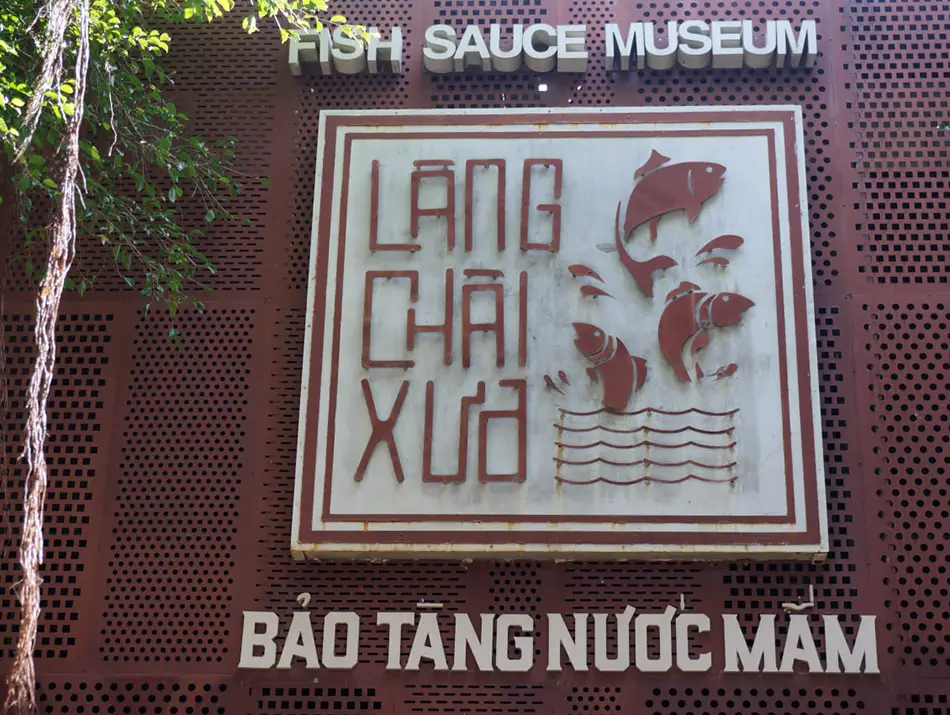
The Old Fishing Village 3D Museum covers about 17,200 square feet (1,600 square meters). Exhibits use 3D scenes, models, and artifacts to show 300 years of Phan Thiet fishing and fish sauce production history. The space divides into 14 themed zones that move from Cham times to the French period and mid-20th century.
Visitors follow a one-way route, stopping for photo spots, short videos, and staged scenes with boats, markets, and salt fields. The museum feels more like an interactive experience than a quiet gallery, and signage includes some English explanations.
- Hours and tickets: Daily about 8:00 a.m.–6:00 p.m.; tickets often in the 100,000–150,000 VND range ($4–6 / €3–5).
- How to get there: located near the Fishermen Show theater area.
- Time needed: 1–2 hours for a full circuit and photo stops.
- Combines with: Po Shanu Cham Towers, Ong Dia Rock Beach, Phan Thiet city food stops.
- Travel Tip: Visit in the hottest part of the day as an indoor, air-conditioned break between outdoor sights.
- 📍 Old Fishing Village 3D Museum location on Google Maps
Golden Lady Temple
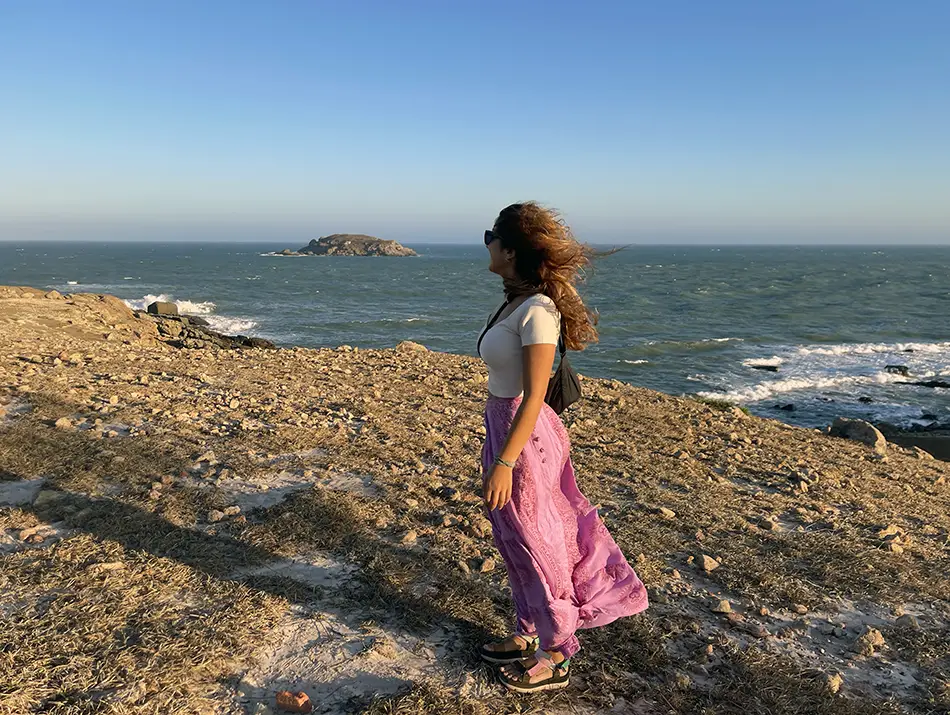
Golden Lady Temple sits on the rocky headland near the fishing harbor and faces out to sea. The shrine honors a local protective deity and draws fishermen and residents who leave offerings for safe voyages. Buildings are compact, with a mix of statues, incense burners, and small altars.
Most visitors arrive by motorbike or taxi, then continue on foot along the rocky headland for extended sea views. The shrine remains an active place of worship, so keep voices low and dress modestly. From here, footpaths follow the cliffs and open coastline for wider viewpoints over the water.
- Hours and tickets: Open access shrine.
- How to get there: Short taxi ride from Mui Ne Fishing village.
- Time needed: 20–40 minutes, plus extra time if you explore the headland.
- Combines with: Fishing Village, Red Sand Dunes.
- Travel Tip: Visit early evening when locals come to light incense and the harbor lights begin to reflect on the water.
- 📍Golden Lady Temple location on Google Maps
Best things to Do in Mui Ne: Activities & Experiences
Kite-surfing lessons in Mui Ne
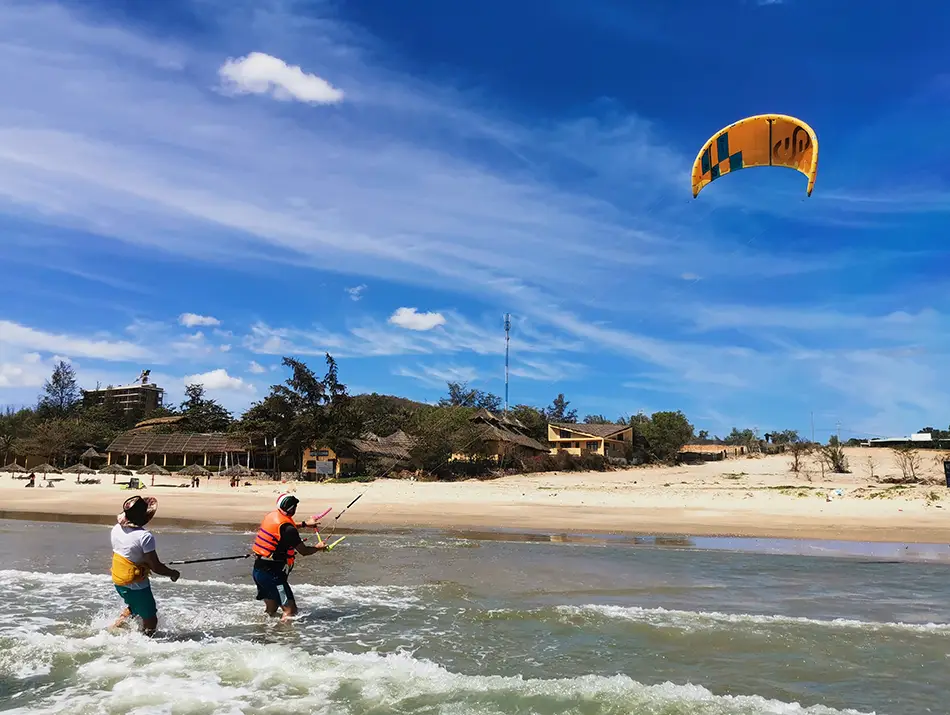
Strong seasonal winds and a long beachfront have made Mui Ne one of Vietnam’s main kitesurfing spots. Dozens of schools and centers line Mui Ne Beach, offering beginner lessons, intermediate coaching, and equipment rental. Conditions are usually best from November to April, with stronger and more reliable winds in December–February.
First-time learners usually start with kite control on the sand before moving straight into deeper water for body-dragging and board starts. More experienced riders focus on riding upwind, jumps, or wave sessions depending on conditions. The atmosphere feels sporty and informal, but launch areas get crowded at peak times, so clear communication with instructors is important.
- Pricing: Expect around 1,200,000 VND (US $50 / €45) per hour, with multi-hour and multi-day packages offering solid discounts.
- Travel Tip: Ask about wind statistics and rescue services before booking, especially if you are a beginner or traveling in shoulder season.
Surfing Classes
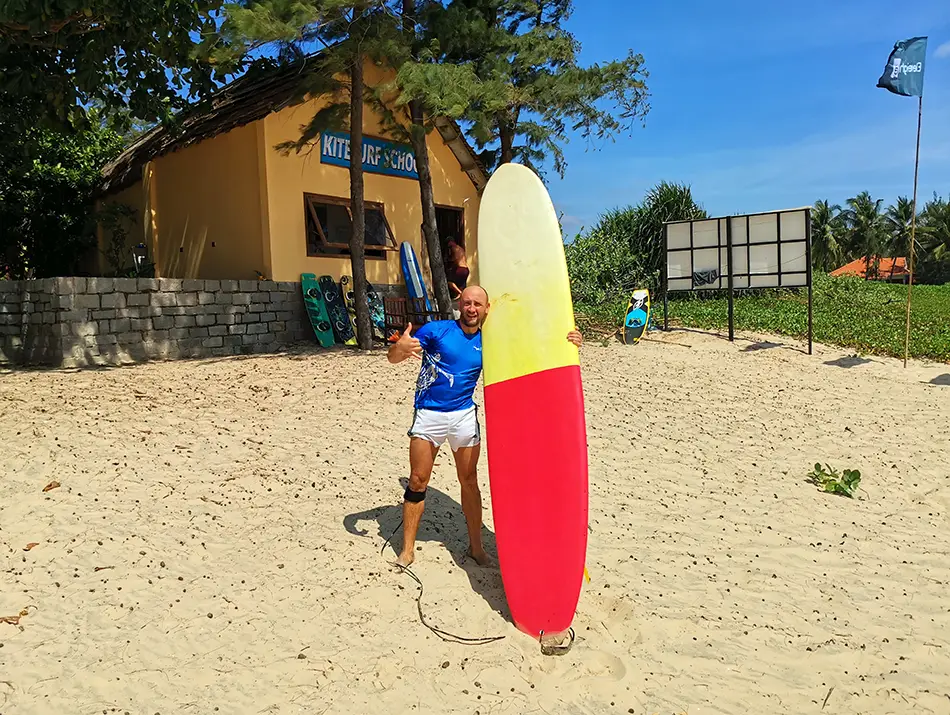
Mui Ne also offers basic surfing on certain beach sections where sandbanks form small, ridable waves. Surf shops and kite centers rent boards and run simple lessons when conditions allow. Wave size changes with season and wind, so the experience feels more like playful beach breaks than a dedicated surf destination.
Most beginners start close to shore with longboards or soft-top boards, focusing on paddling and standing in whitewater. Instructors often combine surf basics with safety briefings about currents and board control around others. On very windy days, chop can make learning harder, so flexible timing across a few days gives you better chances.
- Pricing: Expect 700,000–1,200,000 VND ($27–46 / €23–40) for a 2 hour lesson with board included.
Sunrise or Sunset SUP Tours

Stand-up paddleboard (SUP) tours use Mui Ne’s bay on calm days, with most departures from the fishing village or nearby resorts. Sunrise and sunset sessions are the most popular, when water stays flatter and light is softer. On some evenings, tours also include bioluminescent plankton, when paddle strokes trigger faint blue flashes in the water — availability depends on season and conditions, so check ahead.
During the paddle itself, you move along the shoreline with views of fishing boats at work in the morning or glowing skies in the evening, and photos and short videos are often included as part of the experience. Lifejackets are standard, but you still share water with boats and should follow your guide closely.
- Hours and tickets: Commonly around sunrise or sunset. Expect roughly 600,000–1,000,000 VND ($23–38 / €20–33) for a 2–3 hour tour including gear.
Best Day Trips and Organized Tours in Mui Ne
The easiest way to book tours in Mui Ne depends on how much planning you prefer. Travelers who like having everything arranged in advance can use booking apps, which work well for most activities and allow you to compare schedules and read recent reviews before paying. If you want better prices, you will usually find them by booking directly at small local tour offices along Nguyen Dinh Chieu Street, where rates are often lower than online listings.
Many guesthouses and family-run hotels can also arrange tours for you — sometimes at prices even better than the agencies. The only place worth avoiding for bookings is backpacker-style hostels, which tend to offset cheap room rates by selling tours at noticeably higher prices.
White Sand Dunes and Bau Trang Lotus Lake
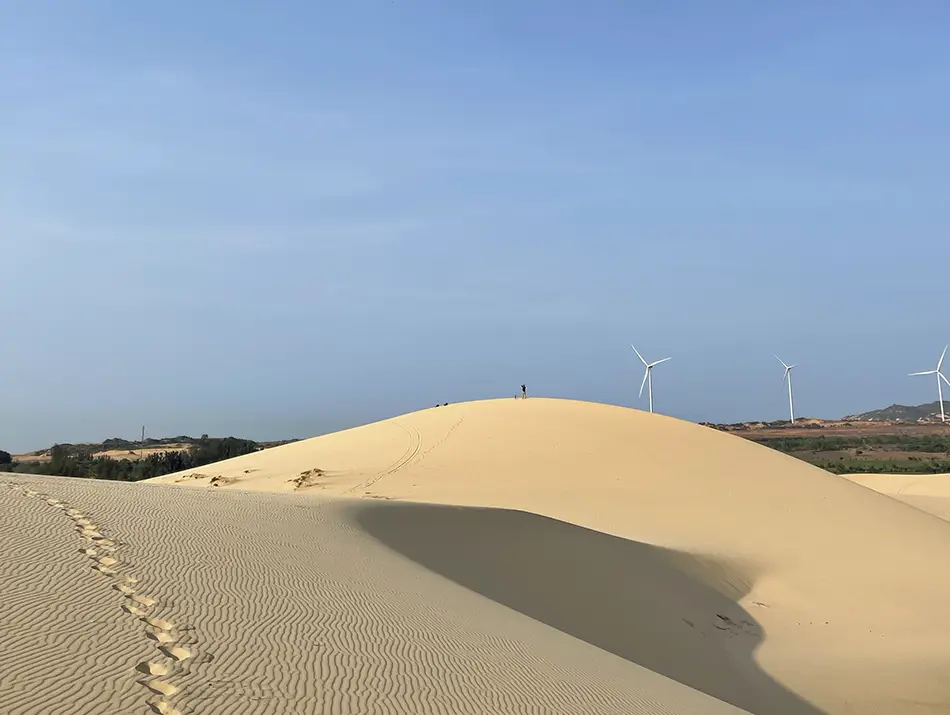
White Sand Dunes and Bau Trang Lotus Lake sit about 20–22 miles (32–35 kilometers) northeast of Mui Ne along a scenic coastal and inland road. The dunes rise higher and wider than the red ones, with paler sand and a larger sense of open space. Bau Trang, a freshwater lake beside the dunes, fills with lotus in season and adds a contrast of water and sand.
Visitors usually arrive by jeep before sunrise, then walk on the dunes or hire quad-bikes to reach higher ridges. Views look broad but exposure to sun and wind is strong, especially after 9:00 a.m.
Later in the day, coach groups and wedding photo shoots can cluster around easy access spots.
- Hours and tickets: Open landscape with some checkpoints and parking fees. Quad-bike rides usually 200,000–400,000 VND ($8–15 / €7–13) per session.
- How to get there: Jeep tours from Mui Ne or self-drive motorbike via the main coastal road.
- Time needed: Half-day minimum.
- Combines with: Mui Ne Fishing Village, Red Sand Dunes on loop tours.
- Travel Tip: If you plan to ride a motorbike, note that police checks are common on the way to the dunes. Carry your license and documents, and drive carefully.
- 📍 White Sand Dunes on Google Maps.
Ta Cu Mountain and Reclining Buddha
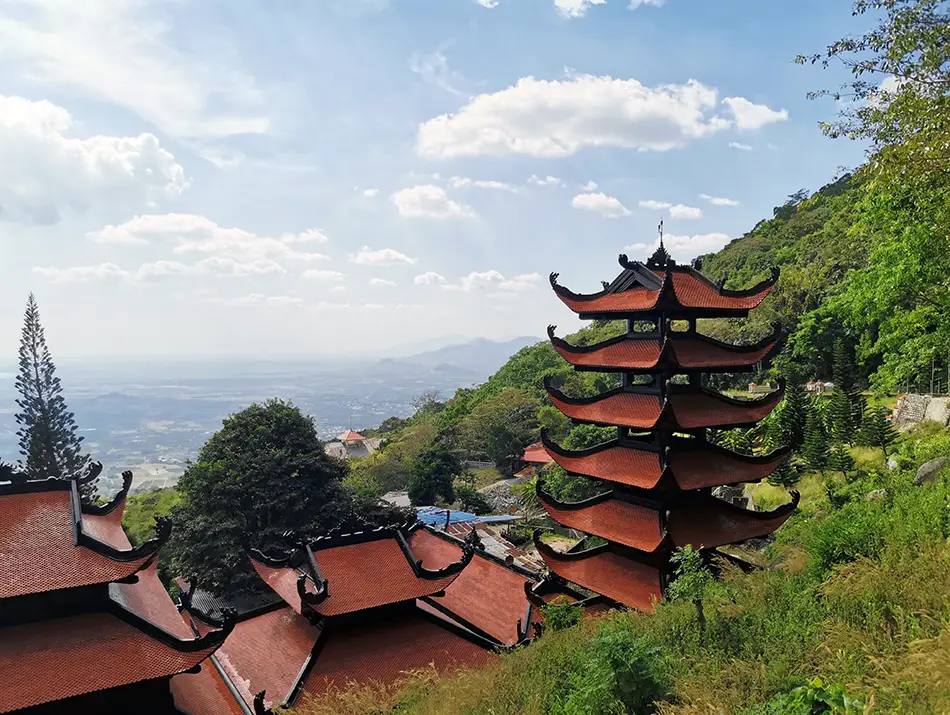
Ta Cu Mountain lies southwest of Mui Ne, roughly 30–35 miles (50–55 kilometers) by highway. The site combines forested slopes, pagodas, and a large reclining Buddha at Linh Son Truong Tho Pagoda. Most visitors use the cable car to reach mid-mountain, but you can also hike the entire route on forest trails if you prefer a physical approach.
The visit blends quiet cable-car views with stair climbs in warm, humid air. At the summit, paths lead past pagodas and terraces to the white reclining Buddha stretched across the hillside. A small cave shrine nearby adds a local legend to the walk, while shade appears in patches rather than continuously, so moderate fitness helps.
- Hours and tickets: Entrance costs 50,000 VND (US $2 / €1.85). A combined ticket including entrance and a round-trip cable-car ride costs 250,000 VND (US $9.50 / €8.70).
- How to get there: Motorbike or taxi via National Highway 1A is the fastest route. Many travelers combine the visit with a coastal detour past Ke Ga Lighthouse for a more scenic drive.
- Time needed: At least half a day from Mui Ne, including driving and walking.
- Combines with: Ke Ga Lighthouse
- 📍 Ta Cu Mountain on Google Maps.
Ke Ga Cape and Lighthouse
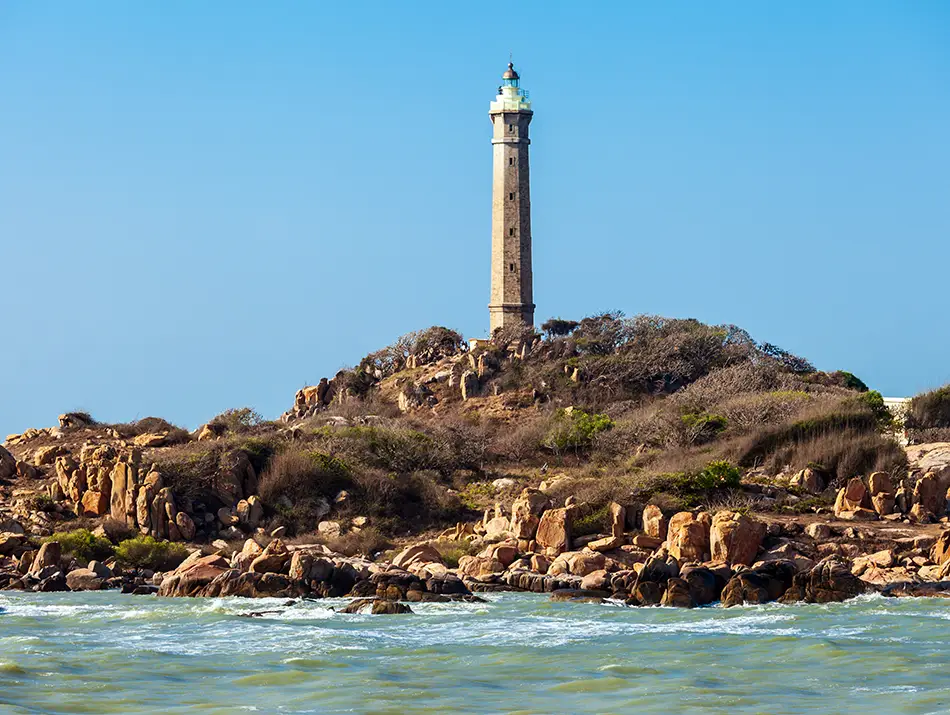
Ke Ga Cape lies along the coast, roughly 40 miles (65 kilometers) from Mui Ne. The area features a short stretch of beach, rock formations, and an offshore island with a lighthouse of about 197 feet (60 meters). Access to the island depends on tides and weather.
Visitors usually walk the beach, explore rock pools, and take a short boat ride to the lighthouse island.
- Hours and tickets: Boats often charge around 100,000 VND ($3.80 / €3.30) per person.
- How to get there: Private car, motorbike, or organized tour.
- Combines with: Ta Cu Mountain.
- 📍 Ke Ga Lighthouse on Google Maps
Sunrise or Sunset Jeep Tours
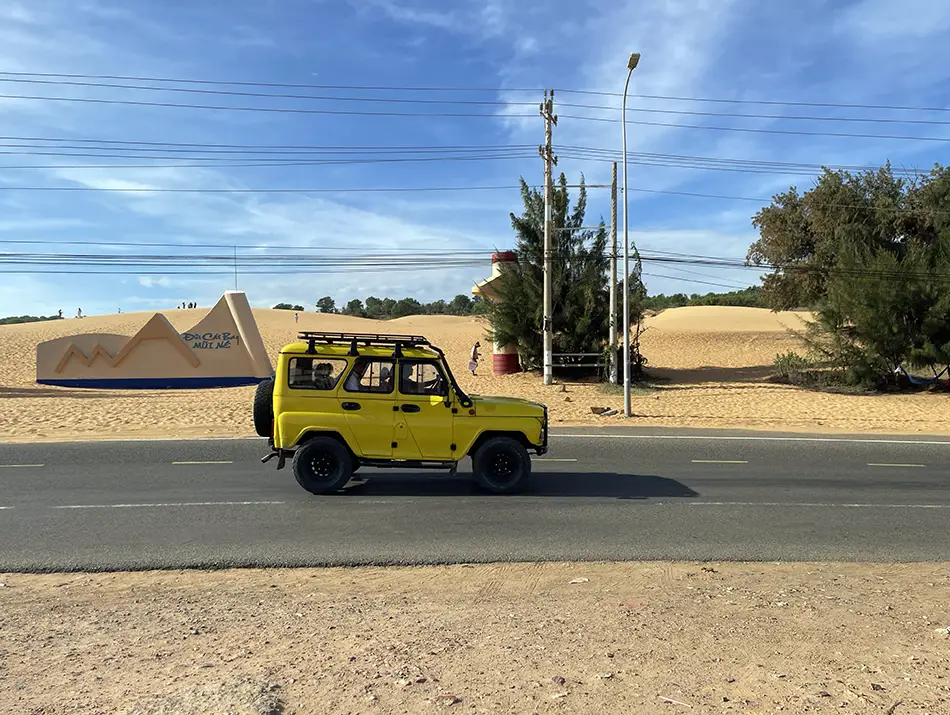
Jeep tours bundle several Top things to see in Mui Ne into a single half-day outing. Typical routes include the White Sand Dunes, Red Sand Dunes, Fairy Stream, and the Fishing Village, with hotel pick-up and drop-off. Sunrise tours start around 4:30 a.m., while sunset departures run in early afternoon.
- Hours and tickets: Private jeeps from about 550,000–700,000 VND ($21–27 / €18–23) per vehicle, quad-bike rides extra.
- Time needed: Commonly 4–5 hours per tour.
Off the Beaten Path Mui Ne
These Sights and activities in Mui Ne sit away from the resort strip and main dunes circuits. They give a closer look at everyday life and quieter landscapes, but they also demand more awareness of etiquette and personal safety. Because few tourists visit, you may stand out and should approach people and sacred spaces with extra respect.
Thiện Quang Pagoda
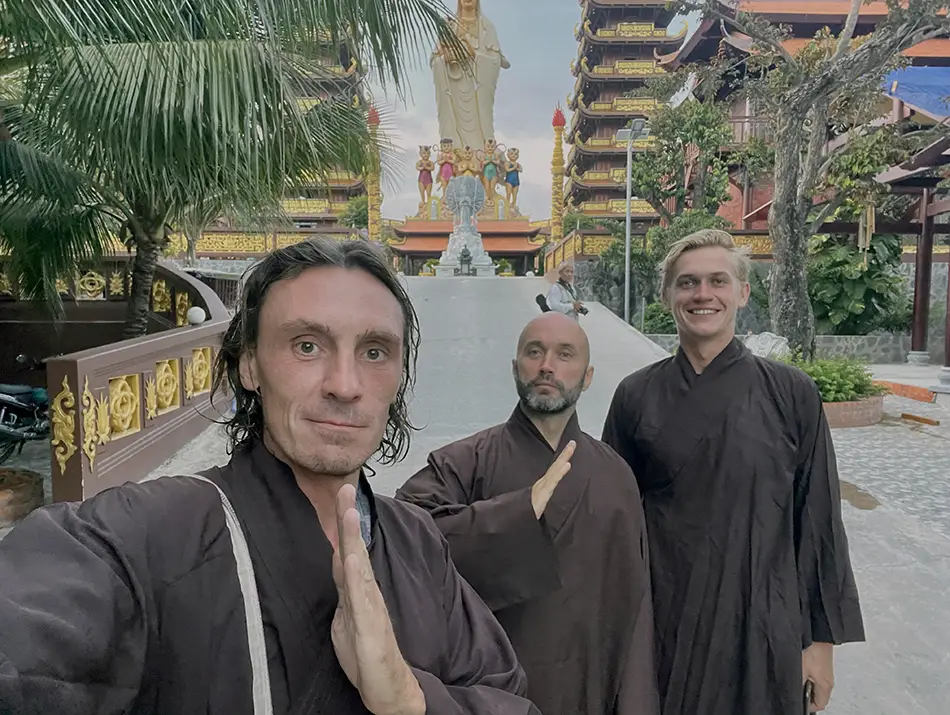
The temple complex includes a large main hall, new statues, and landscaped grounds. It serves primarily local worshippers rather than tour groups.
Tourists who visit usually walk the courtyard, observe ceremonies from the edge, and take in the scale of the new architecture. Loud behavior or intrusive photography would feel out of place, so this stop suits travelers comfortable with quiet observation. Facilities around the temple remain basic, with few cafés or shops directly next door.
- Hours and tickets: Open during typical temple hours.
- How to get there: Taxi or motorbike along rural roads.
- Time needed: 45 minutes on-site.
- Combines with: Wind Generator Viewpoint
- 📍Thiện Quang Pagoda on Google Maps
Wind Generator Viewpoint
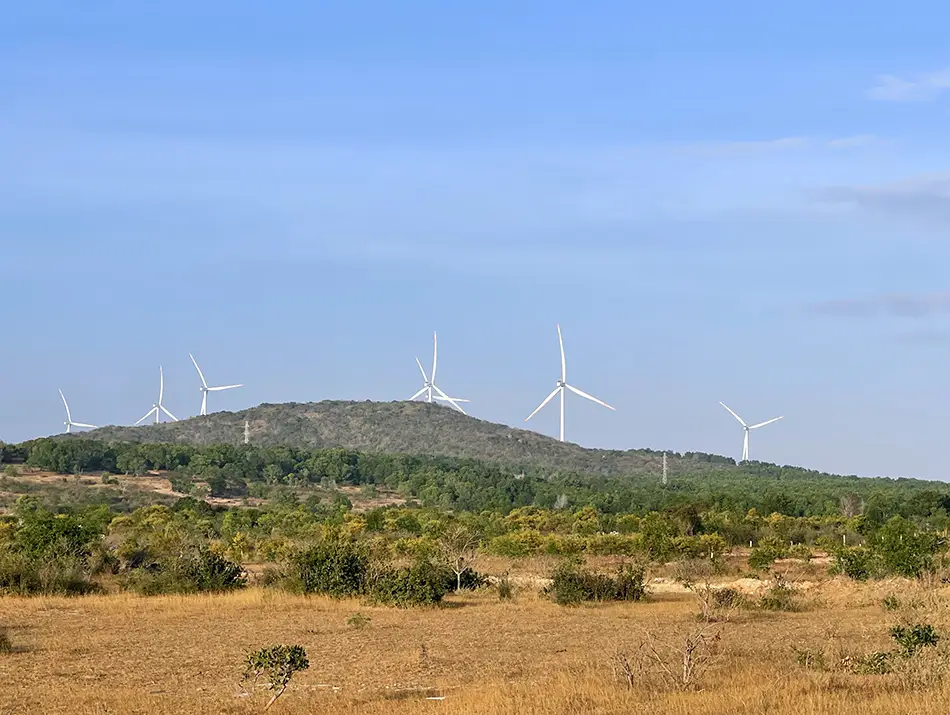
The wind turbines above Mui Ne sit on low hills overlooking the coast rather than directly on the shoreline. From here, the view opens across the fishing village, dunes, and the South China Sea, with turbines scattered along the ridgelines.
Most visitors ride up by motorbike on small paved roads and stop at several pull-offs to take in the views. The best light comes in late afternoon when the sky softens and the coastline below turns gold. The area remains quiet, with no cafés or platforms, just open space, wind, and wide horizons.
- Hours and tickets: Open access, no entrance fee.
- How to get there: Motorbike or taxi up local roads.
- Time needed: 20–40 minutes.
- Combines with: Sand dunes, fishing village, sunset loop rides.
- 📍Wind Towers on Google Maps.
Best Sunset Spots in Mui Ne
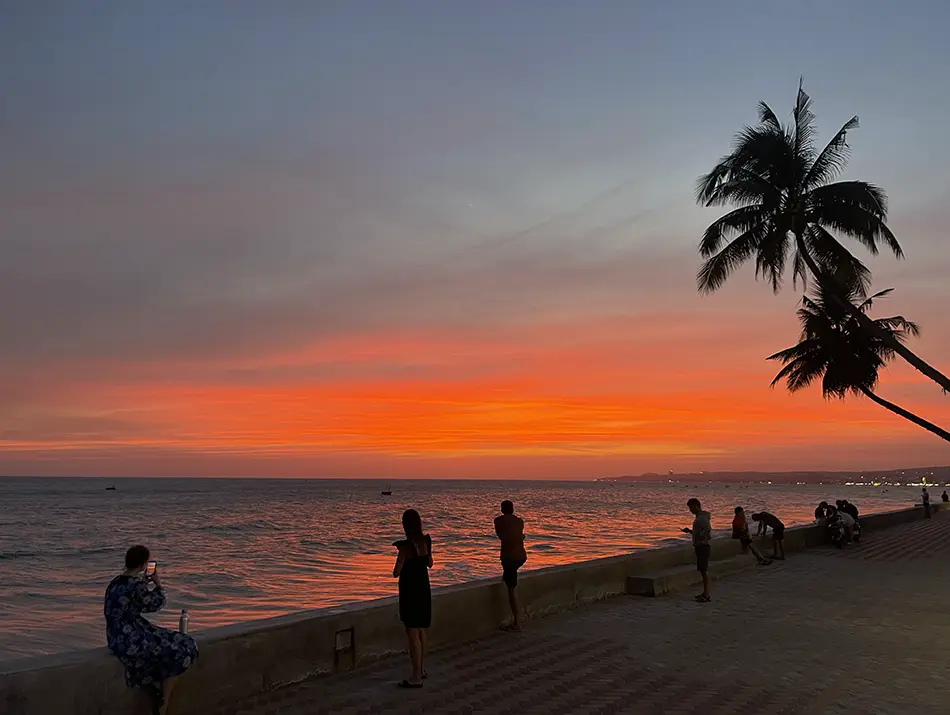
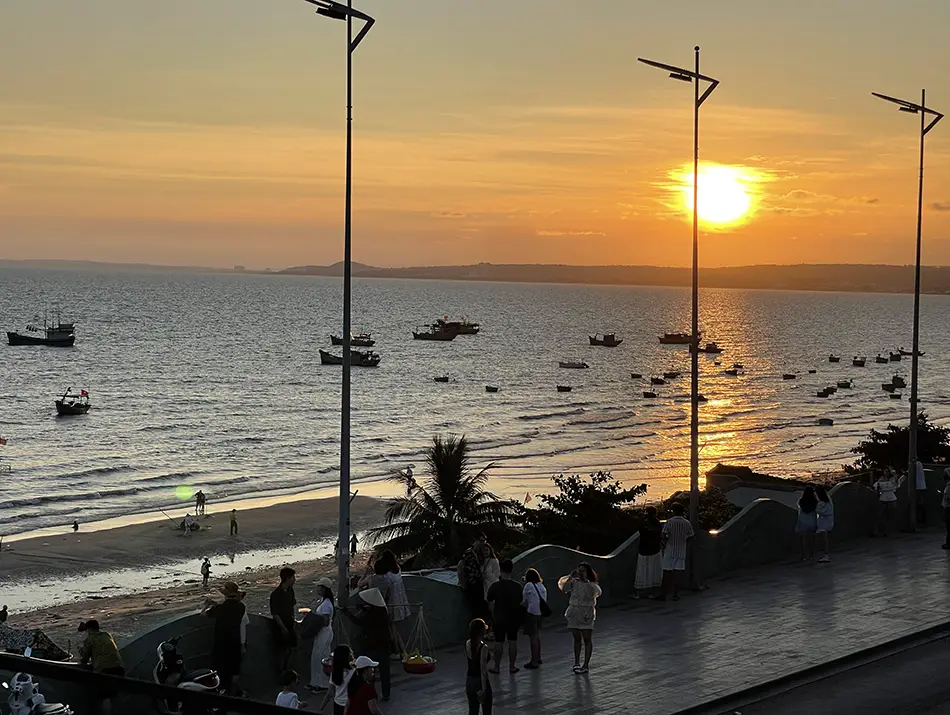
Sunsets in Mui Ne peak during high season, when dry air deepens reds and purples across the sky. Even though the sun drops behind inland hills when viewed from parts of the main beach, the colors often linger and spread wide over the sea.
Easy places to watch include the beach itself and the 📍promenade near Ham Tien market, both good for casual evening walks.
For a drink with a view, Pineapple Beach Club sits close to the water. For a more local feel, join teenagers and students who gather on elevated sections of the highway above town. Rooftop bar at the Vipol hotel offer higher viewpoint, though prices stay above average.
Food and Drinks in Mui Ne
Local Dishes: What to try
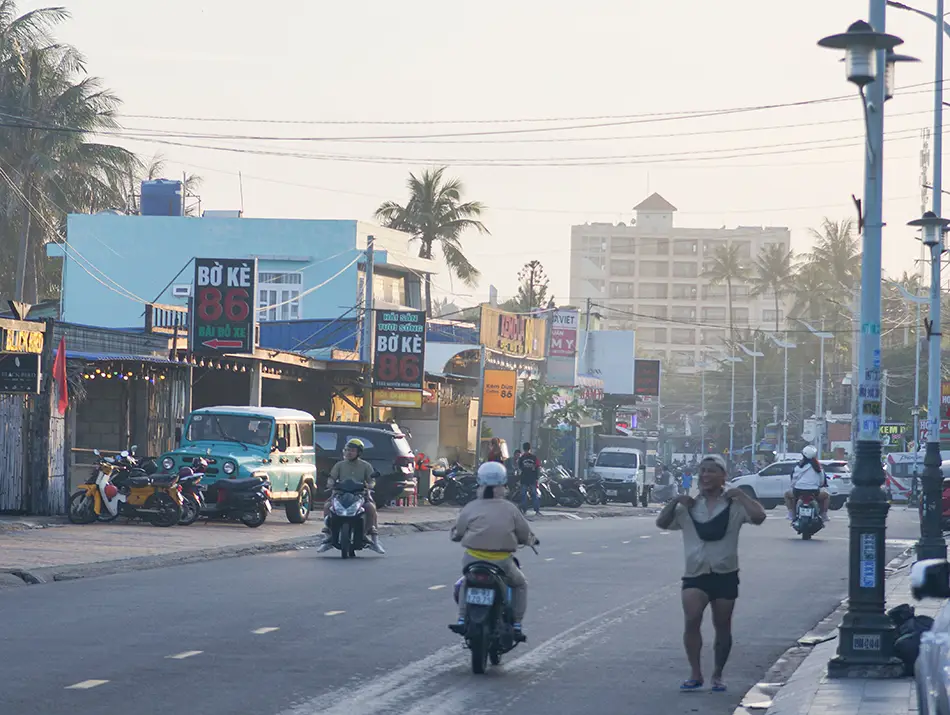
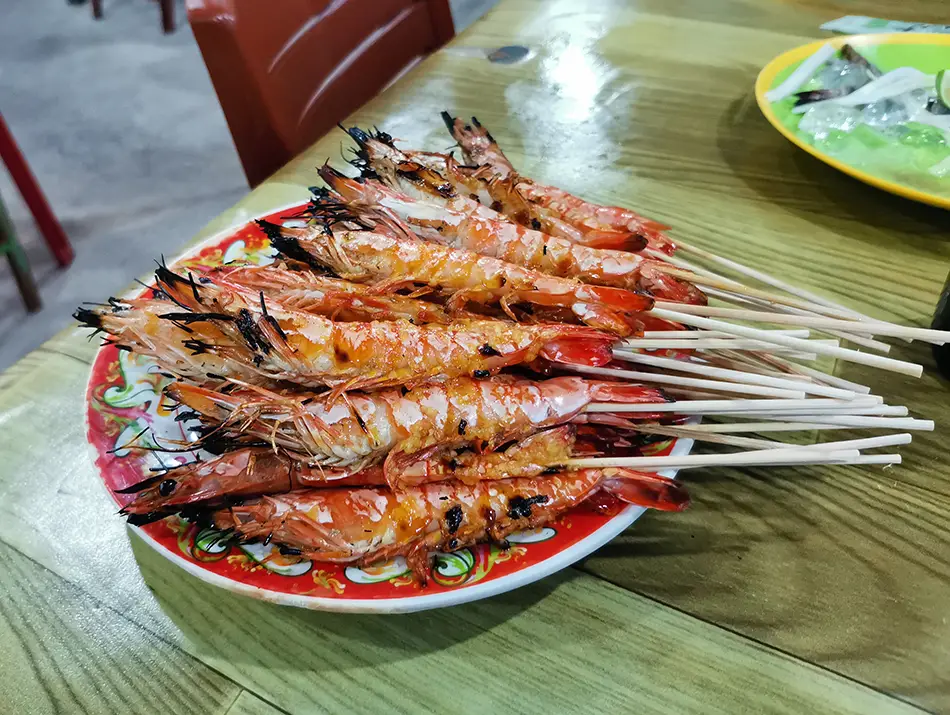
Food to try in Mui Ne mixes seafood with everyday Vietnamese dishes. You will find fish and shellfish alongside rice meals, grilled meats, and simple veggie plates. In the Bo Ke area you pick live clams, squid, crabs, and fish from tanks before they are cooked to order.
In town and at markets, look for bánh xèo pancakes with shrimp or squid, and bánh quai vạc, translucent shrimp dumplings popular across Binh Thuan Province. Also try một nắng, a local specialty of lightly sun-dried fish grilled and served with lime and chili salt.
What Is Bò Kè?
In Vietnam, bò kè refers to casual restaurants set along a waterfront embankment. In Mui Ne, the bo ke area is a row of open-air seafood places where you choose fresh ingredients by weight and have them cooked to order.
For more inspiration, see our guide Best dishes to try in Vietnam for a country-wide overview of Vietnamese food.
Where to Eat & Drink: Restaurant Areas in Mui Ne
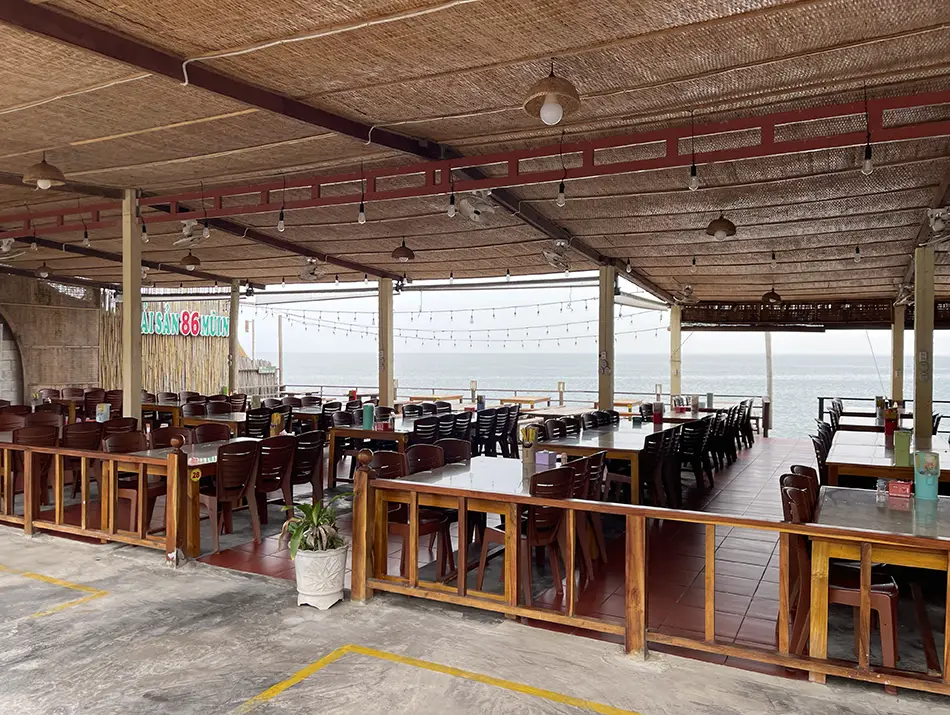
Nguyen Dinh Chieu Street has the highest concentration of restaurants and bars, from bo ke seafood places to Western cafés, vegetarian kitchens, and mid-range Vietnamese eateries. Prices target travelers, but value stays good at simpler spots that draw a mix of locals and visitors.
Ham Tien Market and the fishing village host early-morning stalls serving rice dishes and soups. Expect low prices, basic seating, and little English.
An expat favorite is Dong Vui Food Court, where you find comfort food from abroad alongside Vietnamese dishes, usually at fair prices and with reliable quality.
For specific recommendations, see our guide to the best places to eat in Mui Ne.
Evenings and Nightlife in Mui Ne: What to Do After Dark

For a place that is essentially a small fishing village turned resort strip, Mui Ne’s nightlife is surprisingly decent compared with other small coastal destinations in Vietnam. While it cannot compete with big-city scenes, it offers enough to fill an evening: a beach club, a few atmospheric bars, and two nightclubs that cater mainly to international travelers.
Pineapple Beach Club is the main beach-club option and one of the bests place to start the evening, especially at sunset, with direct ocean views and the sound of waves in the background. Hanna Beach Club is best avoided due to animal mistreatment.
For drinks later on, Kingston Bar offers a cozy setup next to the sea inside the Eva Hut hostel grounds, and long-running Joe’s Café remains a staple for travelers thanks to its live music nights and relaxed vibe.
Mui Ne also has two tourist friendly nightclubs. Mantra features DJs playing electronic and dance music, with a second-floor terrace overlooking the sea. Nirwana attracts bigger crowds and leans toward pop-rock remixes — expect familiar tracks and a lively mix of tourists, plus occasional guest DJs.
For detailed locations and current schedules, see our Mui Ne nightlife guide.
Planning Your Trip to Mui Ne
Best Time to Visit Mui Ne
Dry season from November to April brings blue skies, little rain, and the steady winds. December to February feels freshest, with lower humidity and more consistent waves, but also higher prices and fuller resorts around New Year and Tet (Lunar New Year). Late March and April get hotter and hazier.
From May to October, rain showers become more frequent, and skies greyer. Some visitors like the quieter feel and discounts, yet water clarity can drop and beach conditions vary more. Heavy storms sometimes affect Fairy Stream paths and dune access, so plan some flexibility if you come in peak monsoon months.
How Long to Stay in Mui Ne
Mui Ne fits neatly into a coastal route between Ho Chi Minh City, Da Lat, and Nha Trang. Two to three days are enoughfor most travelers, as the main sights — dunes, Fairy Stream, and the fishing village — can be covered in a single half-day tour with time left for the beach or a short activity.
Stay longer only if you plan to kitesurf, windsurf, or work remotely. In windy months, many visitors who enjoy water sports or slow evenings in small bars extend their stay to four to seven nights.
How to Get to Mui Ne: Transportation Options
Most travelers searching how to get to Mui Ne start with the Ho Chi Minh City route. Sleeper coaches run from Ho Chi Minh City (Saigon) to the Mui Ne / Phan Thiet area in about 4–5 hours, with tickets costing 160,000–300,000 VND (US $6–11 / €5–10) depending on comfort.
From Da Lat and Nha Trang, direct tourist buses and vans also take around 4–5 hours, usually in the same price range.
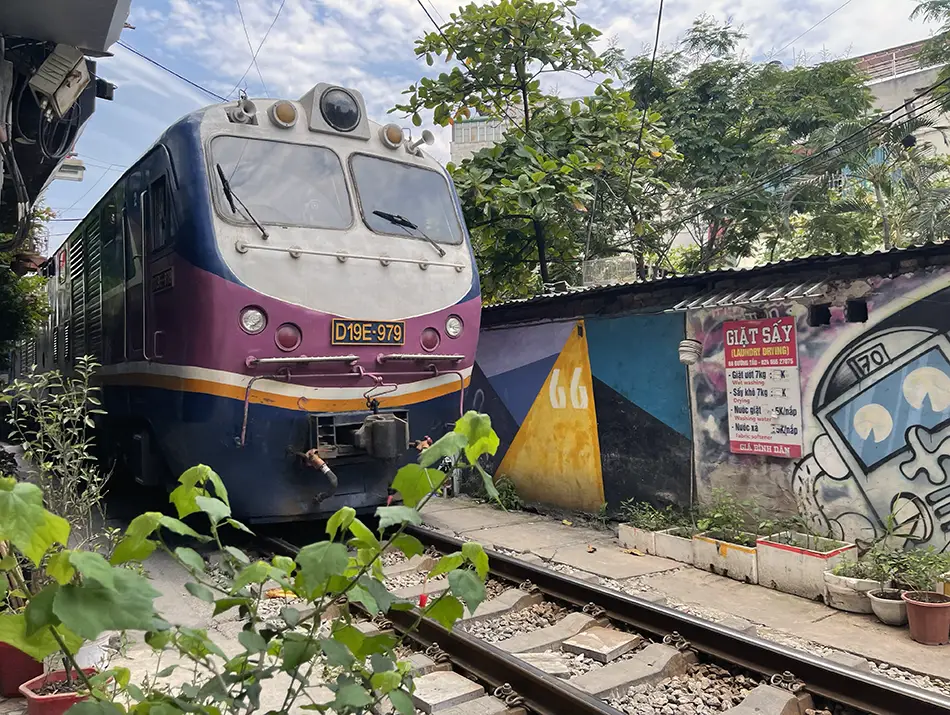
For slow-travelers, an interesting alternative is taking the coastal train from Da Nang to Phan Thiet. From Phan Thiet station, continue to Mui Ne by taxi or local bus.
Is it expensive to visit Mui Ne
Many travelers ask, Is Mui Ne expensive compared with other parts of Vietnam. On average, costs sit a bit above inland towns but below major cities.
Here are typical current ranges: (Factcheck)
- Budget double room: 300,000–700,000 VND ($11–27 / €10–23)
- Sit-down local meal: 80,000–150,000 VND ($3–6 / €2.60–4.90)
- Typical street food: 25,000–45,000 VND ($1–1.70 / €0.80–1.50)
- Local bus: 8,000–20,000 VND ($0.30–0.75 / €0.25–0.65)
- Bicycle rental (per day): 70,000–100,000 VND ($2.65–3.80 / €2.30–3.30)
- Motorbike rental (per day): 100,000–200,000 VND ($3.80–7.60 / €3.30–6.55)
- Beer in a bar: 25,000–60,000 VND /($1–2.30 / €0.80–2.00)
Getting Around Mui Ne
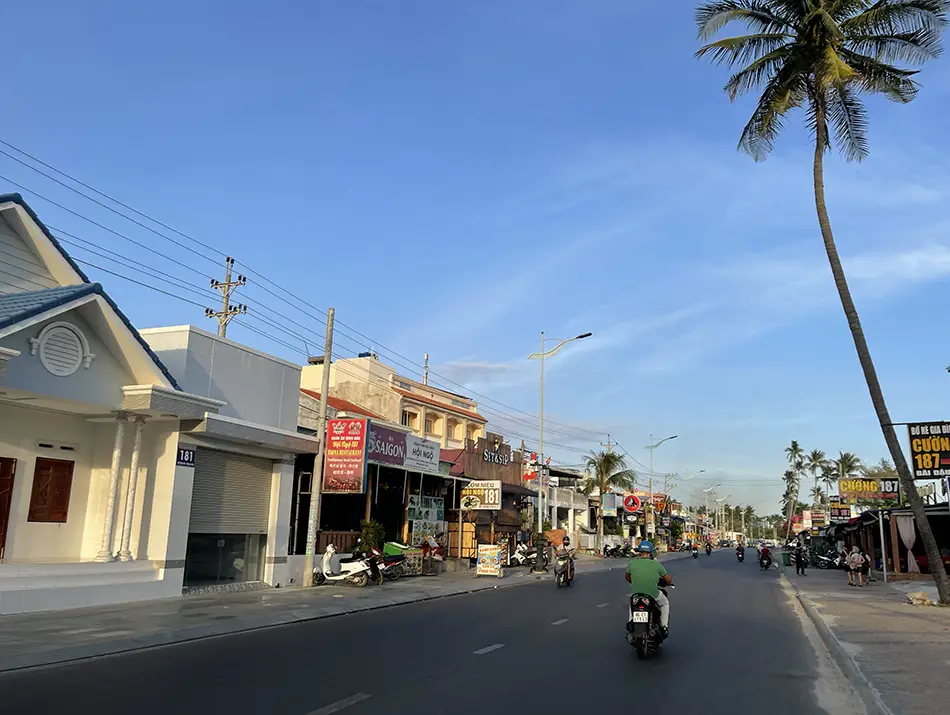
Getting around Mui Ne is easiest by motorbike, taxi, or local bus. City buses — the small red ones running along the main road — connect Phan Thiet center, the resort strip, and Mui Ne village for 8,000–20,000 VND per ride. They do not use fixed stops; you simply wave your hand to get on and tell the conductor when you want to get off.
Motorbike rentals are widely available. Quality varies, and you legally need a proper license and must wear a helmet. Taxis and ride-hailing services, mostly Grab, operate along the main road. Traffic moves quickly and sidewalks are patchy, so walking longer distances isn’t very pleasant.
Sustainable and Responsible Travel Tips
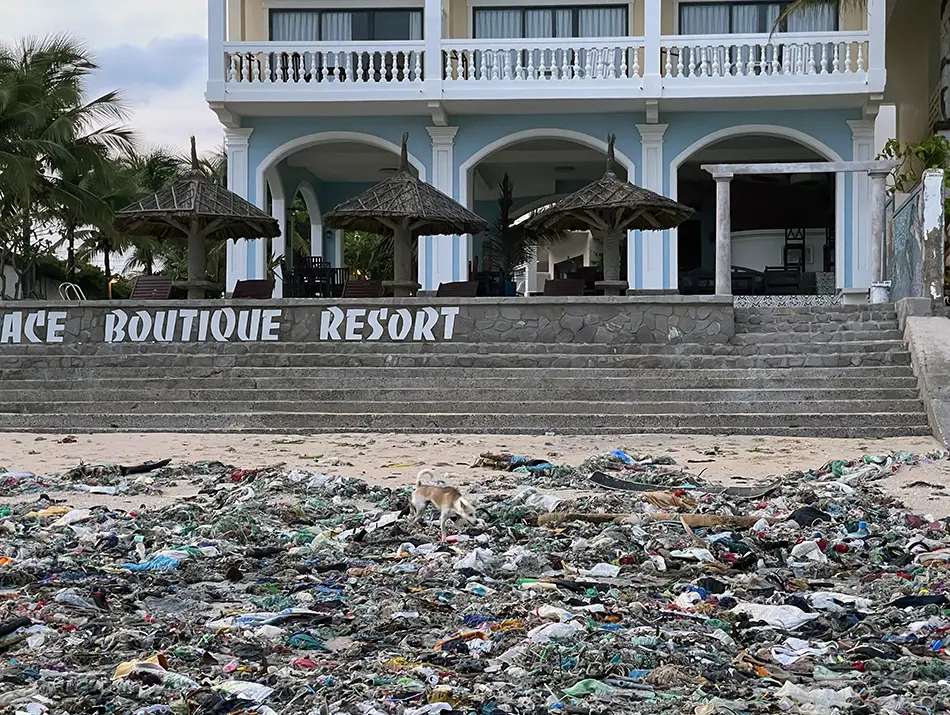
To protect Mui Ne’s unique “Little Sahara” landscape and support the local community, consider these steps:
- Opt for Low-Impact Exploration: Instead of heavy jeeps, try exploring the town and nearby coastal roads via bicycle or by using the Xanh SM electric taxi fleet. For longer distances, the local public bus (Route 1 or 9) is an affordable, lower-carbon way to reach the sand dunes from the resort strip.
- Dine at the Fishing Village: Eat at the local stalls in the Mui Ne Fishing Village early in the morning. Buying directly from the families who catch the seafood ensures your money goes straight into the local economy, bypassing large commercial intermediaries.
- Mindful Water Consumption: Stay hydrated while reducing plastic waste by refilling your reusable bottle (find stations via RefillMyBottle or mymizu).
Activities to Avoid
To be a truly responsible traveler, avoid these unsustainable and culturally insensitive practices:
- Riding the Ostriches or Camels: At the White Sand Dunes and Fairy Stream, you may see options for ostrich or camel rides. These animals are often kept in poor conditions and are not native to Vietnam; participating in this supports an industry with questionable animal welfare standards.
- Leaving Trash at the Fairy Stream: This delicate ecosystem is a shallow spring flowing through clay formations. Tourists often leave food wrappers or bottles along the banks. Never leave anything behind, and consider picking up any stray litter you see to help keep the stream “enchanted.”
- Disrespectful Behavior at the Fishing Village: The morning market is a place of work, not just a photo op. Avoid blocking the path of fishermen carrying heavy loads and never touch their equipment or “basket boats” without asking. It is their livelihood, not a prop.
For more practical ideas, see our Travel Academy guide to realistic, low-impact travel habits.
Know Before You Go
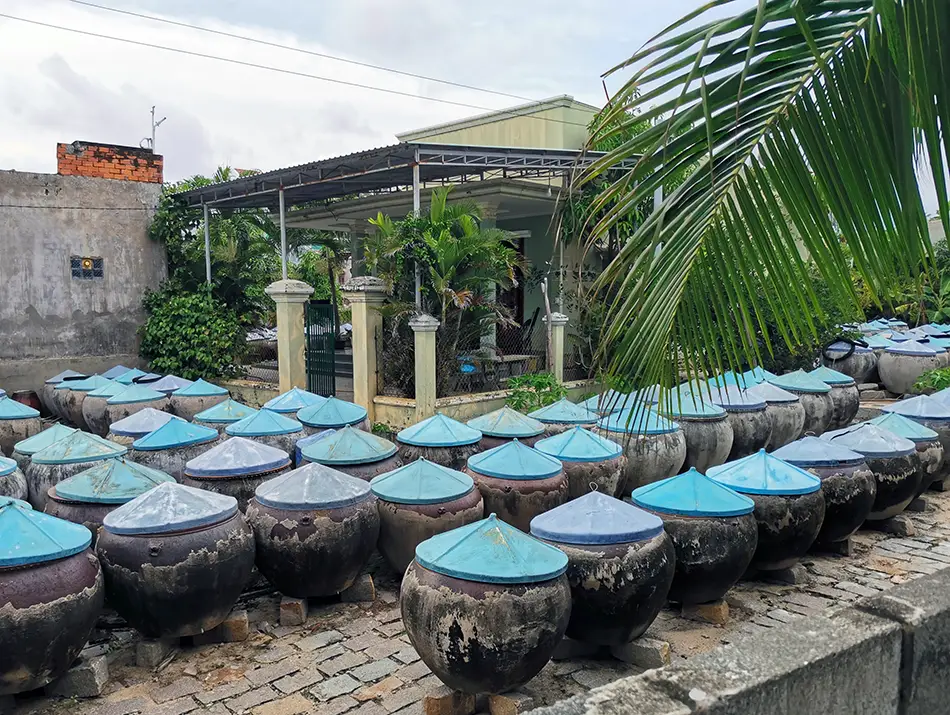
Accessibility
Accessibility in Mui Ne varies a lot between modern resorts and older infrastructure. Many beachfront hotels offer ramped access to receptions and ground-floor rooms, but beach access often involves stairs, steep ramps, or soft sand that is hard for wheelchairs or people with mobility issues to navigate.
Sidewalks along the main road can be narrow or broken, and curbs high. If accessibility is a priority, choose a resort with clear step-free room access and pool area and plan to enjoy the sea view and facilities there rather than chasing every off-road attraction.
Safety Tips
Safety in Mui Ne mainly comes down to traffic, the sea, and tour choices. The main road is busy throughout the day, and visibility drops after sunset, so wear bright clothing and cross only in well-lit areas. Always wear a helmet if you ride a motorbike and avoid riding if you lack experience.
Waves and currents vary by season, and some beach sections have rocks. Swim where locals do and avoid the water during storms.
For dune jeeps, quad bikes, and other tours, confirm all prices in advance to avoid surprises. Keep valuables out of sight on the beach and in bars, as you would in any tourist area.
Family with Kids Tips
Family-friendly activities in Mui Ne include gentle beach time, exploring Fairy Stream’s shallow water, and visiting the fishing village early in the morning when temperatures stay lower. Many resorts have pools and small play areas, which often prove more practical than the open sea for younger children.
For dune trips with kids, choose a shorter sunrise or sunset tour with clear safety rules on sandboarding and vehicle use, and bring eye protection and something to cover faces when the wind kicks up sand. Always pack extra water, snacks, and sun protection, as shade can be limited on the dunes and along the beach.
Frequently Asked Questions
Mui Ne Q&A
Mui Ne is worth visiting if you enjoy a laid-back beach town with dunes, coastal views, and easy access from Ho Chi Minh City. Travelers focused on museums, shopping, or lush scenery often prefer Da Lat or Hoi An instead.
The easiest and most practical way to get to Mui Ne from Ho Chi Minh City is by sleeper bus. Tickets can be booked in advance through apps like 12GoAsia or bought in person on Pham Ngu Lao Street (District 1), where most companies keep their offices. Trusted operators include Hanh Cafe and Nam Hai.
Mui Ne safety concerns mostly mirror the rest of coastal Vietnam: petty theft, road hazards, and sea conditions. Solo travelers find the resort strip easy to navigate, and many bars and cafés feel welcoming. Take standard precautions at night, watch your drink, and avoid riding motorbikes if you lack experience to keep Mui Ne solo travel low-risk.
Without the Hype: Is Mui Ne Worth Visiting?
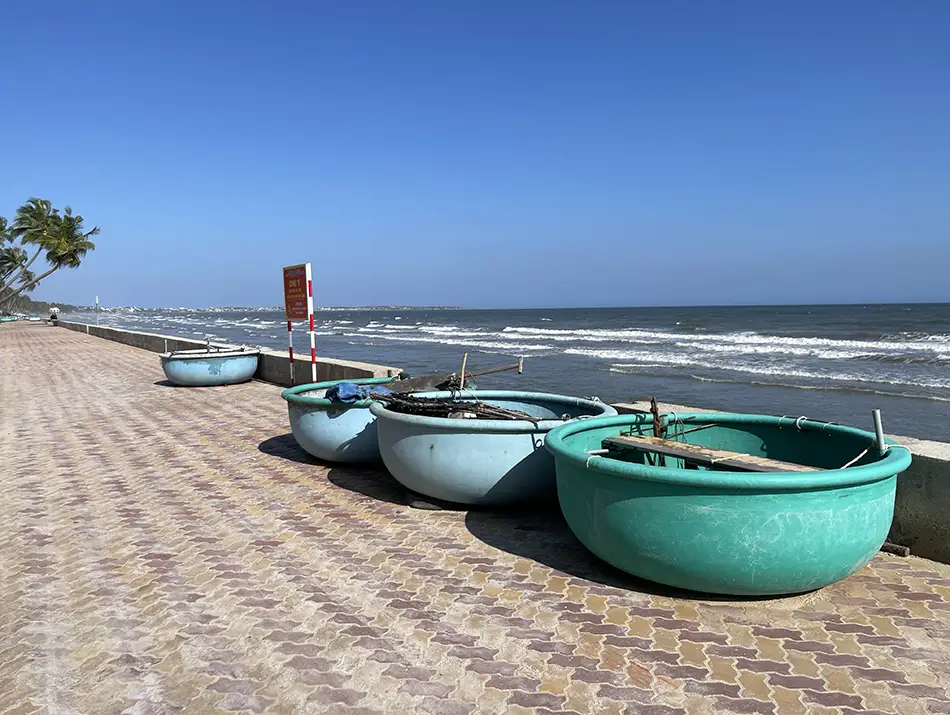
Mui Ne suits travelers who enjoy wind, wide skies, and a laid-back coastal vibe more than those seeking a flawless, soft-sand beach. The shoreline can look uneven, with seawalls and patches of narrow beach, but the atmosphere of the fishing village at dawn, long breezy afternoons, and simple meals by the water give the place its charm.
The town works best for easy coastal downtime, water sports, casual evenings, and slow walks rather than classic beach perfection. If you want more to explore, nearby day trips to Ta Cu Mountain, Ke Ga Lighthouse, and local viewpoints add variety.
You’ll like Mui Ne if:
- You want an easy coastal break from Ho Chi Minh City with clear logistics and modest prices.
- You enjoy kitesurfing, surfing, or being around water sports and windy beaches.
- You value local fishing-village scenes and simple seafood meals.
You might skip it if:
- You mostly want calm, wide beaches with soft sand and no seawalls.
- You dislike strong wind, blowing sand, and a dry landscape.
- You prefer rich cultural sights, walkable historic streets, or big-city energy.
Good alternatives:
- Nha Trang: busier city beach with more services, islands, and diving.
- Phu Quoc: larger island with varied beaches and inland forests.
- Hoi An: heritage town plus gentler beaches, but farther from Ho Chi Minh City.
We hope this guide on the best things to do in Mui Ne helped you decide whether it fits your travel interests. For more planning ideas, check out our other Vietnam travel guides, build your own route, and enjoy a smooth, unforgettable trip along Vietnam’s coast.