

Surf travel in 2026 is becoming more selective and deliberate. Many travelers are paying attention to places where infrastructure has quietly improved, crowds are still manageable, and the surf culture feels rooted rather than staged. These destinations sit slightly outside the mainstream, but not so far that logistics become an expedition in themselves.
This list focuses on regions that are gaining attention for concrete reasons: new transport links, surf-specific accommodation, local communities getting involved, or simply a shift in where experienced surfers are choosing to spend longer periods.
None of these places are presented as perfect. Instead, they are destinations worth consideration if you want strong waves, clear conditions, and a sense of discovery without unnecessary friction.
1. Ras Al Hadd and Sur region, Oman
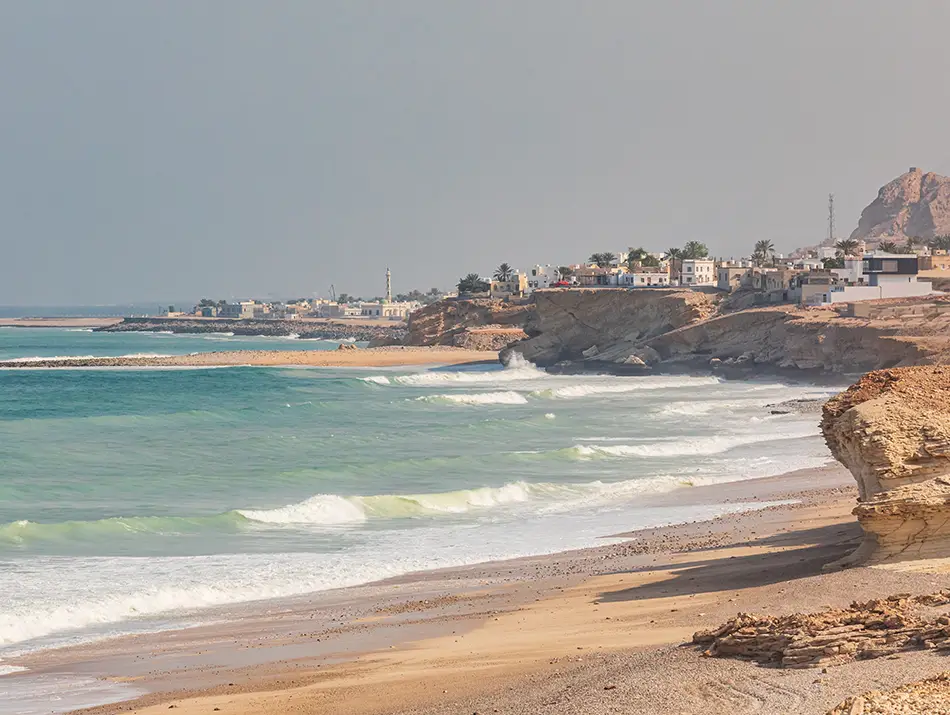
Ras Al Hadd and the nearby Sur coastline sit well outside the global surf circuit, which is exactly their appeal. Winter swells from the Indian Ocean light up exposed points and beaches, often with no one else in the water. In 2026, word is spreading slowly, driven more by independent travelers than tour operators.
Surfing here feels exploratory. Roads are paved but remote, facilities are basic, and cultural norms are conservative. Alcohol is limited, and respect for local customs is essential. The payoff is clean waves, dramatic desert-meets-sea landscapes, and a feeling of genuine distance from mainstream surf tourism.
- Best season: November to March
- Wave type: Point breaks and beach breaks
- Skill level: Intermediate to advanced
- Where to sleep: Small hotels in Sur, simple guesthouses near Ras Al Hadd
- Off the water: Visit the Ras Al Jinz turtle reserve, explore Sur’s dhow boatyards, and drive coastal roads to quiet coves and wadis (river valleys).
2. Imsouane, Morocco
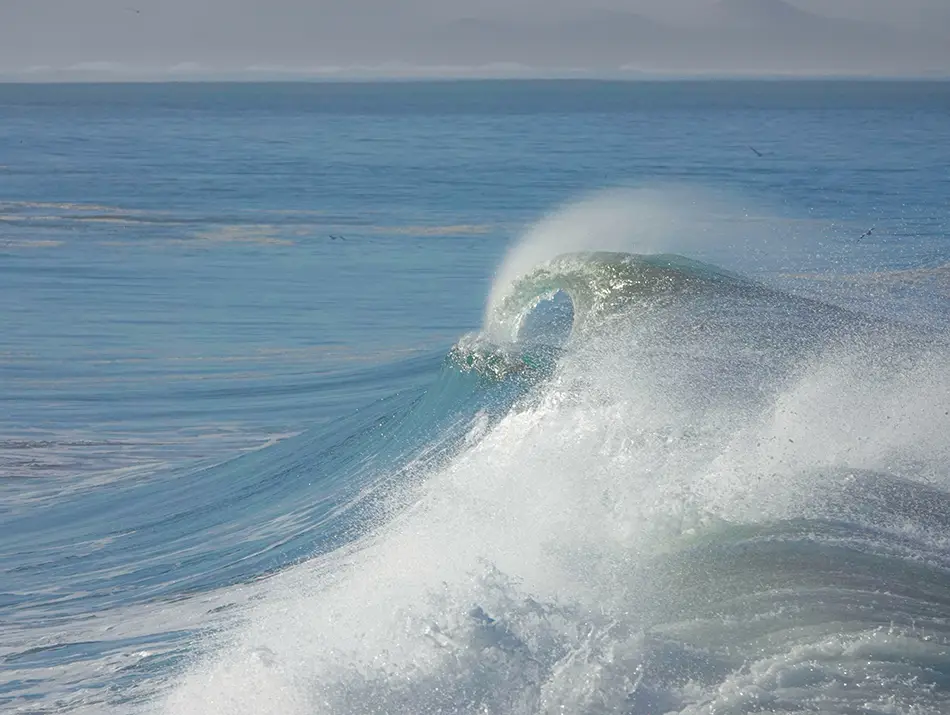
Imsouane has been known to dedicated surfers for years, but its current rise is tied to a change in who is arriving. The village offers long, forgiving right-hand rides at Magic Bay, sometimes stretching up to 1,640 ft (500 m), which appeals strongly to intermediates refining technique rather than chasing barrels.
In 2026, new boutique surf lodges have shifted the atmosphere slightly more upscale, without fully losing the local fishing-town feel. Crowds are growing, especially in winter, and the lineup can feel slow-moving. However, compared to nearby Taghazout, the pace is calmer and more focused on longer stays.
- Best season: October to April
- Wave type: Long right-hand point break
- Skill level: Beginner to intermediate
- Where to sleep: Boutique surf lodges, family-run guesthouses
- Between sessions: Watch the fishing harbor at sunrise, hike the sea cliffs above the bay, and take a day trip to Essaouira’s medina and seafood markets.
3. Obidos, Portugal
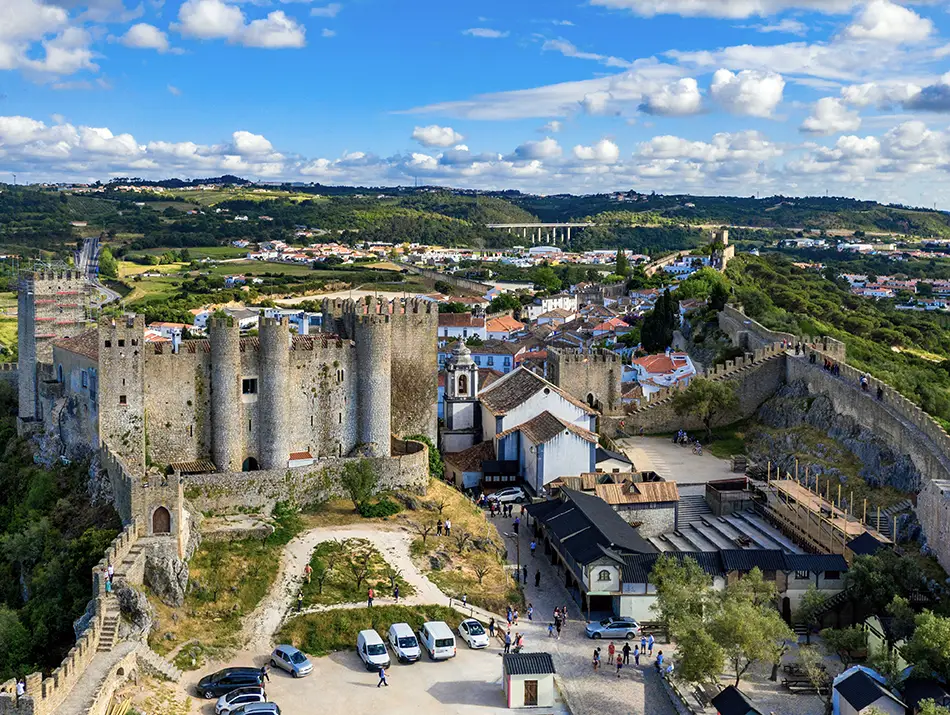
Obidos has long been associated with medieval walls and day trips from Lisbon, but the surrounding region is changing fast. It stands out because of a rare combination: access to consistent Atlantic beach and point breaks near the Obidos Lagoon, paired with the Surfers Cove Wavegarden project, which is under construction and scheduled to open in late 2026. Once operating, this inland wave facility is expected to make structured training possible beyond the main ocean swell season, especially for travelers who want more predictable sessions.
The natural surf nearby ranges from playful lagoon-adjacent peaks to heavier Atlantic setups closer to Peniche, without the constant pressure of well-known lineups.
- Best season: October to March
- Wave type: Beach breaks, reef-adjacent peaks, artificial wave
- Skill level: Beginner to advanced
- Where to sleep: Surf resorts near the lagoon, guesthouses in Obidos town
- Beyond the waves: Walk the medieval walls, sample local ginjinha cherry liqueur, and kayak or birdwatch in the Óbidos Lagoon.
4. La Libertad, El Salvador
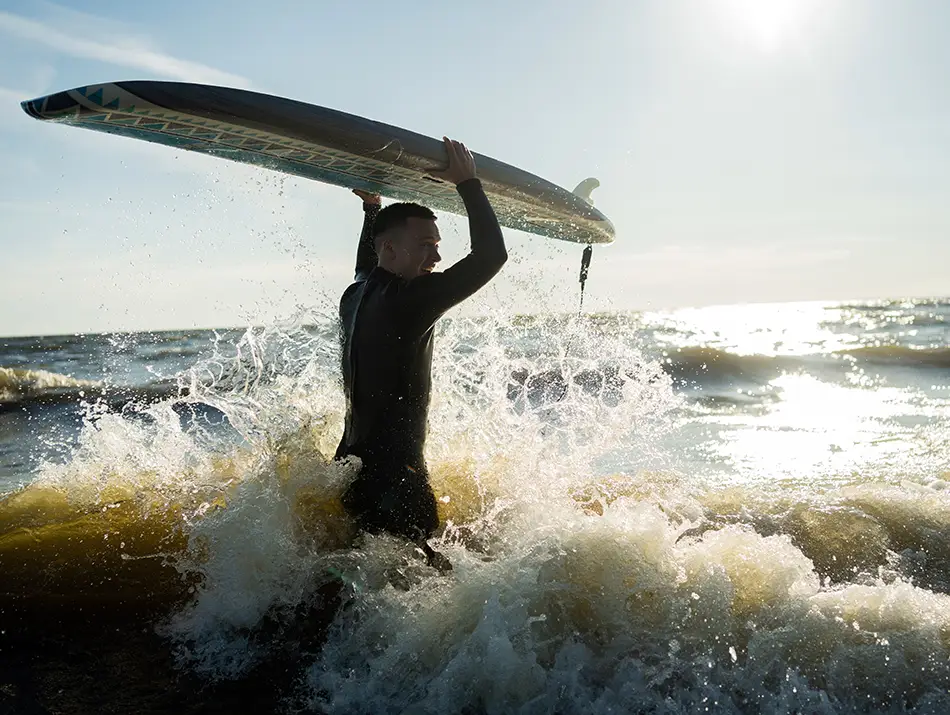
La Libertad has undergone a visible transformation under the Surf City initiative. By 2026, the infrastructure finally matches the quality of waves like Punta Roca and El Sunzal, both known for powerful, well-shaped right-hand points.
Improved roads and beachfront hotels make moving between breaks straightforward, but popularity has followed. Expect busier lineups during prime swells and higher prices than a few years ago.
- Best season: March to October
- Wave type: Right-hand point breaks
- Skill level: Intermediate to advanced
- Where to sleep: Beachfront hotels, surf-focused resorts
- Away from the lineup: Explore the Ruta de las Flores villages and coffee farms, visit Joya de Cerén, and eat along the coastal seafood stalls.
5. Cox’s Bazar, Bangladesh
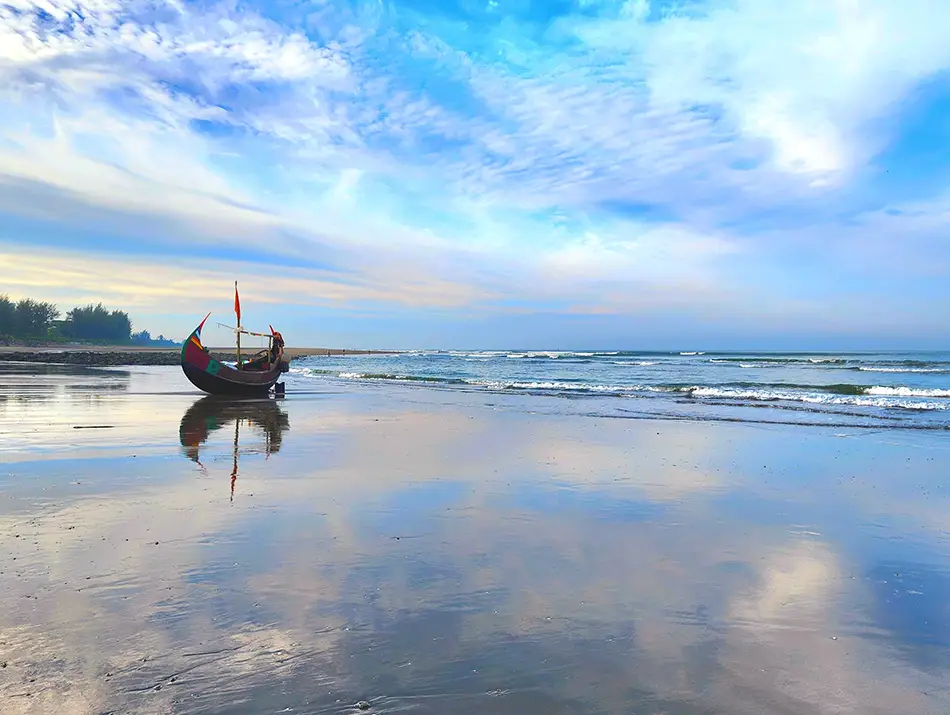
Cox’s Bazar stretches along the Bay of Bengal with a long, open shoreline where surfing fits into everyday coastal life rather than dominating it. In 2026, it appeals to travelers looking for a low-profile surf stop, where fishing boats, local markets, and early-morning beach activity shape the atmosphere as much as the waves.
Surfing here is mostly beach-break, with shifting sandbars and conditions that depend heavily on tide and wind. During the monsoon season, consistent swell creates workable faces for progression, while smaller days suit longboards.
- Best season: November to April
- Wave type: Beach breaks
- Skill level: Beginner to intermediate
- Where to sleep: City hotels, small guesthouses near the beach
- When you’re not surfing: Walk Himchari National Park viewpoints, visit quieter Inani Beach, and browse local markets for snacks and crafts.
6. The Boom, Northern Nicaragua
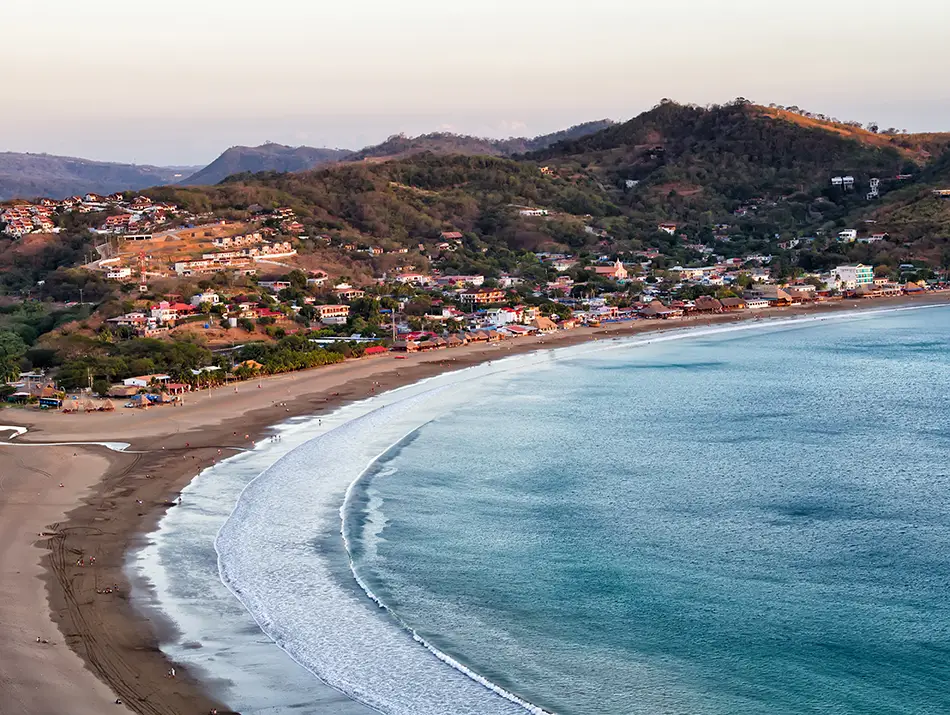
The Boom refers to a stretch of exposed coastline north of San Juan del Sur, known for heavy, hollow beach breaks. Offshore winds are common, and swell consistency remains one of Nicaragua’s biggest advantages.
This area is not forgiving. Currents are strong, and facilities are sparse. It attracts surfers intentionally avoiding nightlife and crowds, favoring early mornings and physical waves. Medical facilities are limited, so preparation matters.
- Best season: April to October
- Wave type: Heavy beach breaks
- Skill level: Advanced
- Where to sleep: Remote surf camps, eco-lodges
- Beyond the board: Take estuary boat trips for wildlife, explore nearby inland towns for local food, and day-trip to colonial León if logistics allow.
7. Midigama, Sri Lanka
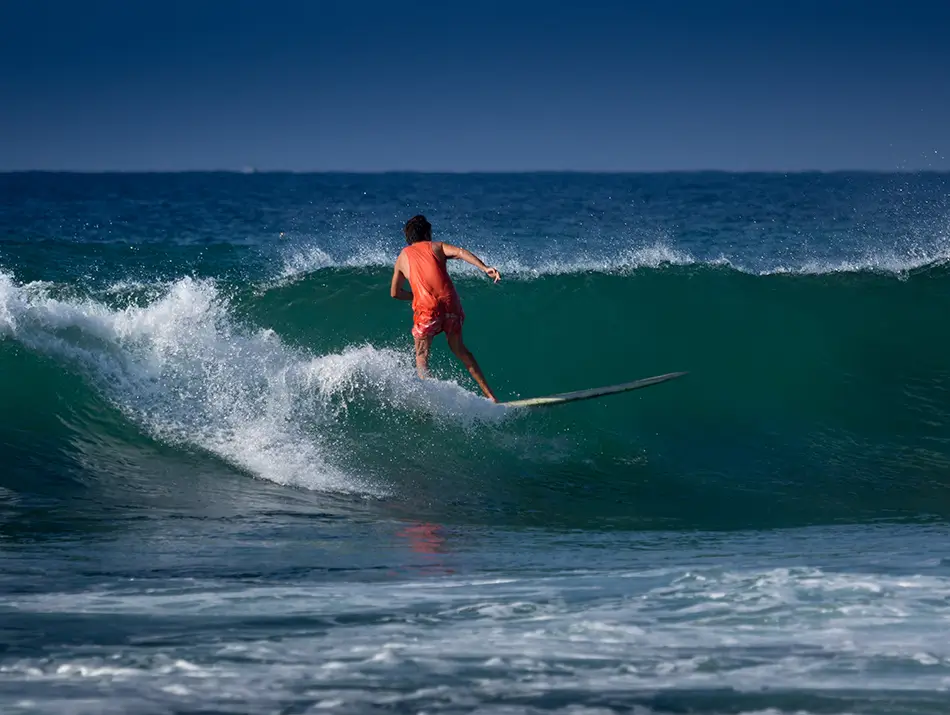
Midigama has become a practical base rather than a headline destination, valued for how efficiently it works for day-to-day surf travel. Several quality breaks sit within a 3 mi (5 km) radius, all easily reached by tuk-tuk, which makes it simple to adjust sessions based on swell direction, tide, and wind. This density of options allows surfers to avoid poor conditions at one spot and still find something rideable nearby.
The overall pace is relaxed and geared toward longer stays, though rising popularity brings trade-offs such as traffic, ongoing construction, and occasional noise, especially along the main road. Surfing here is generally approachable, with enough variety to suit progression without the intensity or local pressure found in more established hubs.
- Best season: November to April
- Wave type: Reef and point breaks
- Skill level: Beginner to advanced
- Where to sleep: Surf guesthouses, mid-range hotels
- Between tides: Day-trip to Galle Fort, snorkel nearby beaches, or head inland for tea country views and waterfalls.
8. Skeleton Coast, Namibia
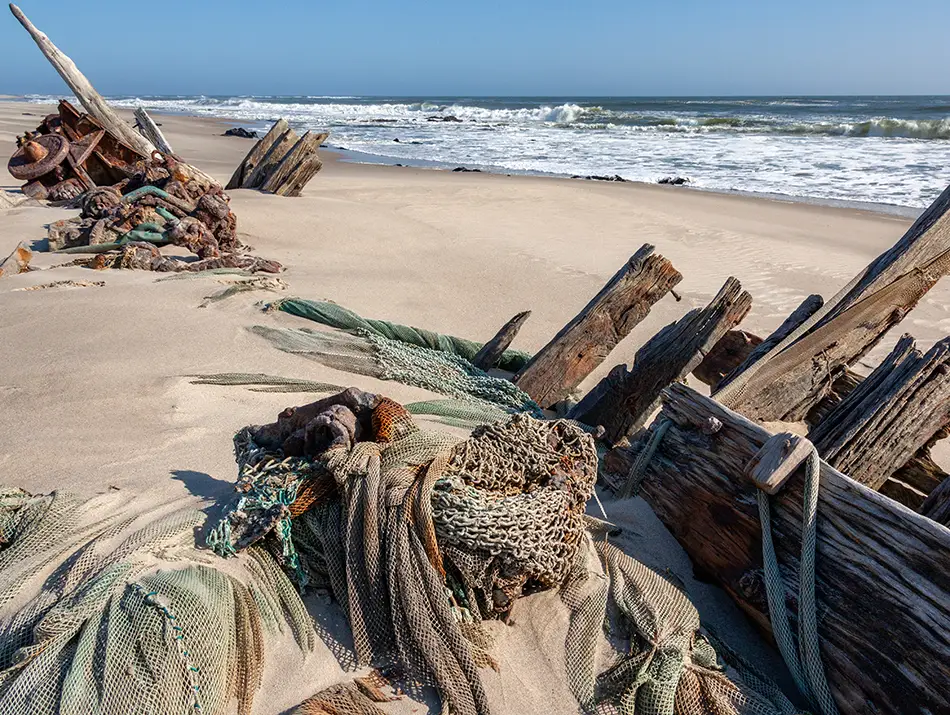
Skeleton Coast remains one of the most demanding surf destinations in the world, where logistics matter as much as wave quality. Donkey Bay is known for long, fast left handers over sand, but reaching it can require serious planning, a capable 4×4 setup, and the right timing. If your route enters Skeleton Coast National Park, you will need the required permits, and access rules depend on which section you are visiting.
Even with organized surf expeditions easing planning, conditions stay extreme: cold Atlantic water, strong winds, frequent fog, wildlife, and very limited access to medical support. This is a destination for highly prepared surfers comfortable with isolation, not a casual or flexible surf stop.
- Best season: May to September
- Wave type: Long sand-bottom lefts
- Skill level: Advanced
- Where to sleep: Guided surf camps, expedition setups
- Off the board: Join guided desert safaris to shipwreck sites, see seal colonies and desert wildlife, and stargaze under extremely dark skies.
9. Ngor Island, Senegal

Ngor Island sits just offshore from Dakar yet feels distinctly separate, offering reliable right- and left-hand breaks that often remain lightly crowded despite their quality. Access is by short boat ride, and understanding tides is essential, as conditions can change quickly around the reef.
By 2026, better organization through small surf camps and experienced local guides has made the area easier to navigate for international travelers, while infrastructure stays intentionally simple, keeping the focus on the waves rather than comfort-driven development.
- Best season: November to April
- Wave type: Reef and point breaks
- Skill level: Intermediate
- Where to sleep: Surf camps, island guesthouses
- Beyond the lineup: Visit Dakar’s museums and markets, eat thieboudienne (rice and fish), and watch sunset from the island’s rocky edges.
10. Praia de Mira, Portugal
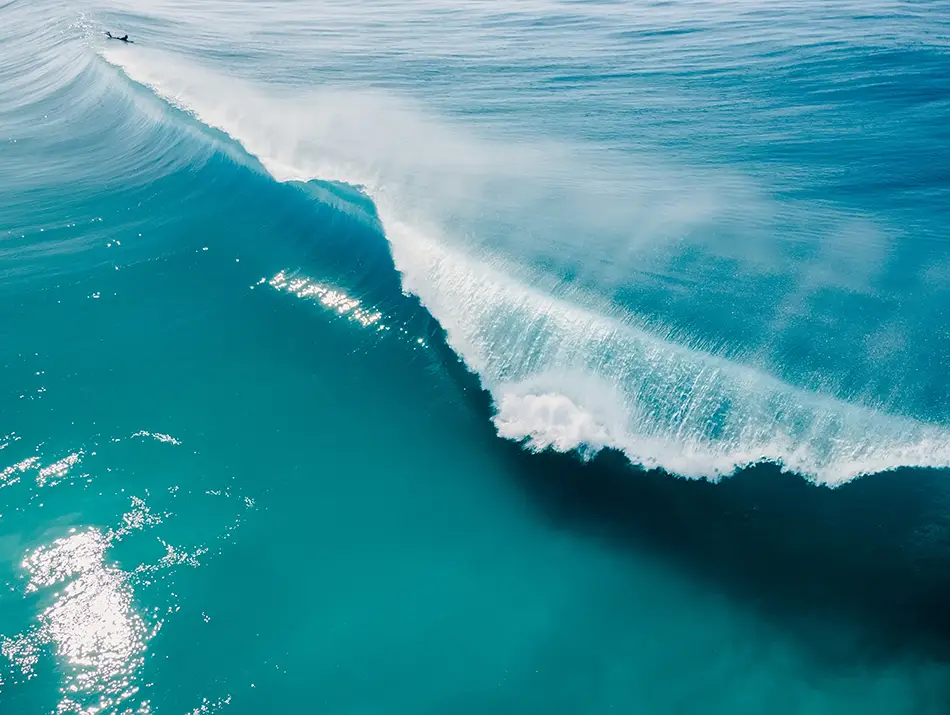
Praia de Mira offers raw Atlantic energy without the influence of mass surf tourism. The beach breaks are powerful, shaped by shifting sandbars, and often uncrowded, with a working fishing town setting the daily rhythm along the coast.
Conditions can be heavy and inconsistent, and amenities remain limited, but for surfers who prioritize space, strong waves, and a low-key environment over convenience or variety, it holds clear appeal.
- Best season: October to March
- Wave type: Powerful beach breaks
- Skill level: Intermediate to advanced
- Where to sleep: Small hotels, local guesthouses
- Away from the waves: Walk dunes and boardwalks, observe traditional fishing activity, and cycle through pine forests and lagoon trails.
11. Bocas del Toro, Panama
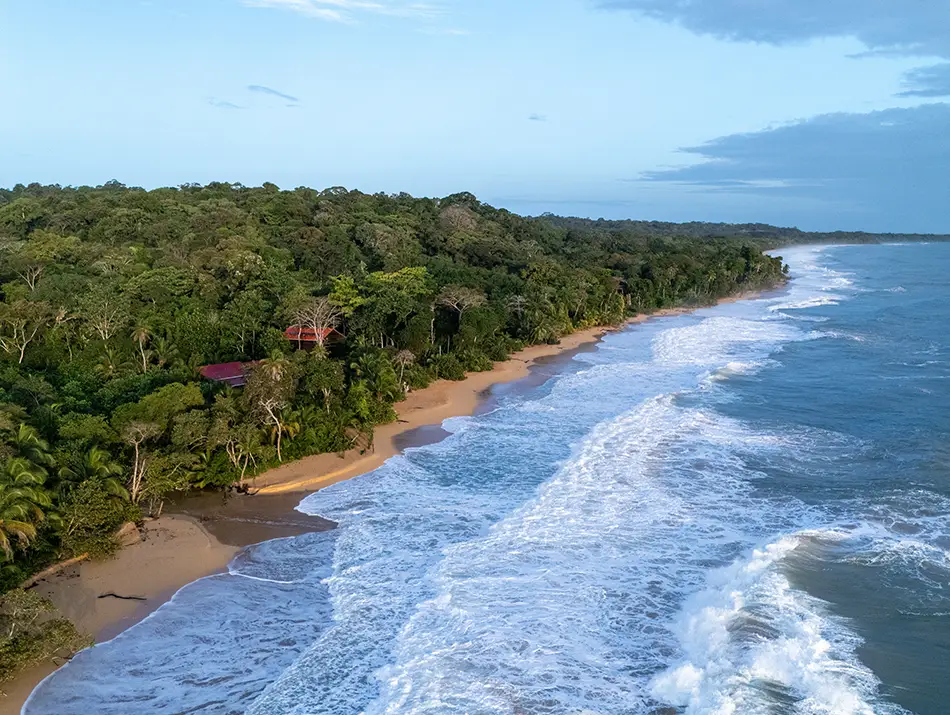
Bocas del Toro attracts surfers looking for Caribbean reef breaks, where short, hollow waves peel over shallow reef and reward precise timing and positioning. The setup favors confident intermediates and advanced surfers, with conditions that can shift quickly depending on swell and tide.
The area also supports an active island lifestyle, but increased popularity has pushed accommodation prices higher, and heavy rainfall plus crowding during peak months can affect both surf quality and overall experience.
- Best season: December to April
- Wave type: Reef breaks
- Skill level: Intermediate to advanced
- Where to sleep: Island hotels, surf hostels
- Beyond the waves: Island-hop by water taxi, snorkel coral reefs, and walk jungle trails on Bastimentos.
12. Tofino, Canada
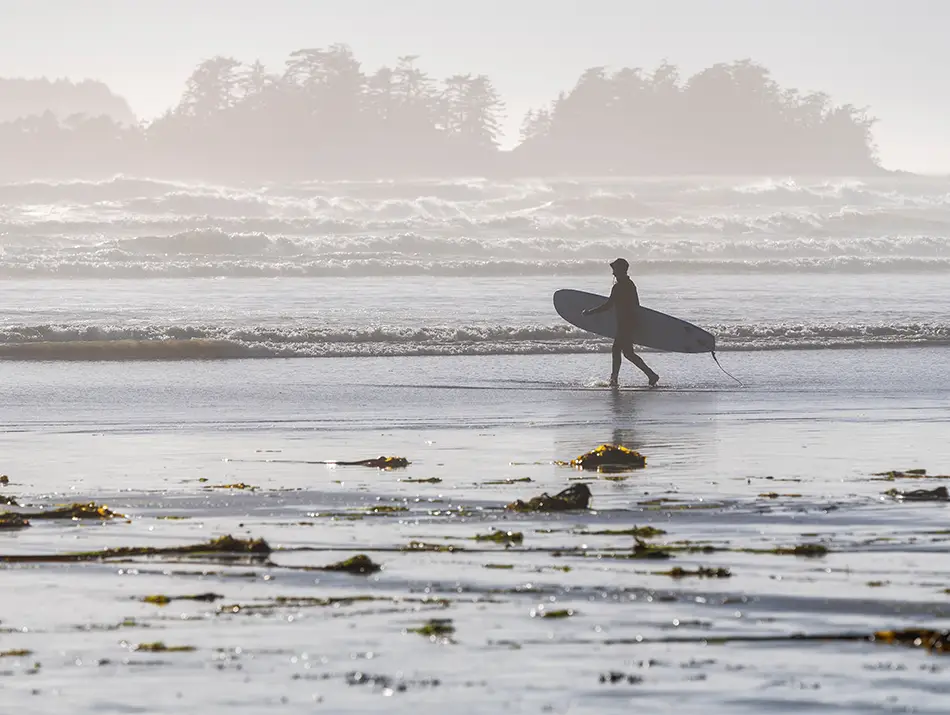
Tofino reflects the growing mainstream acceptance of cold-water surfing, supported by consistent Pacific swell, wide open beaches, and a well-developed network of surf schools and guiding services. Water temperatures require full wetsuits year-round, and weather conditions can change quickly, influencing session timing.
The area combines a structured surf scene with comfortable accommodation options, making it approachable for a wide range of surfers while still demanding respect for cold-water conditions and powerful surf.
- Best season: Year-round, strongest in winter
- Wave type: Beach breaks
- Skill level: Beginner to advanced
- Where to sleep: Surf lodges, coastal cabins
- Between sessions: Hike Pacific Rim National Park trails, go storm-watching in winter, and join seasonal whale- or bear-viewing tours.
13. Taitung, Taiwan
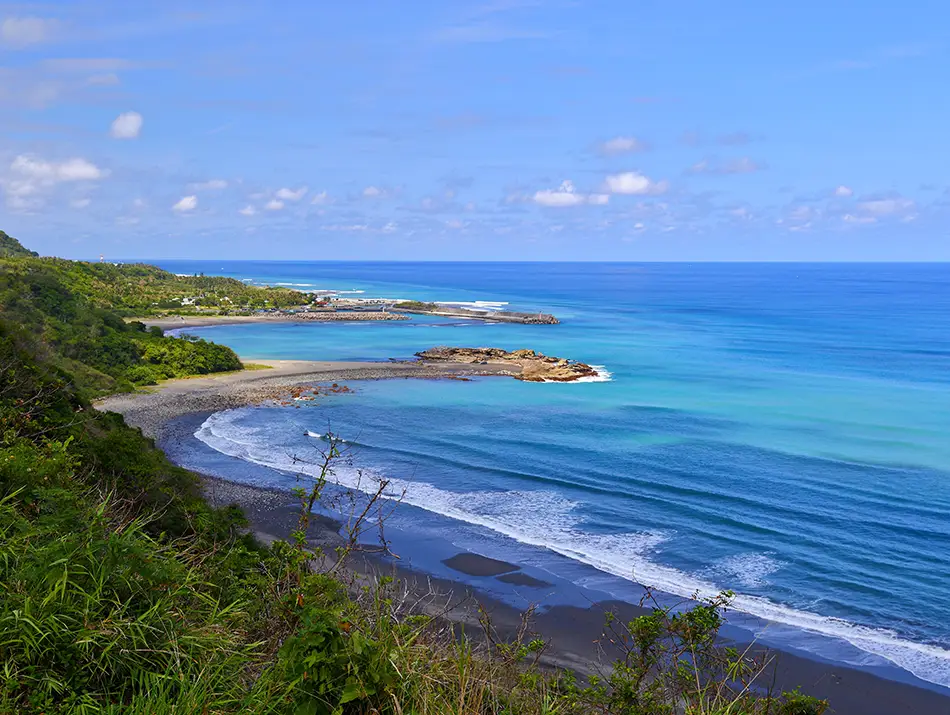
Taitung combines consistent Pacific swell with reliable infrastructure, making it a practical base for surfers seeking performance-oriented waves. Reef and cobblestone breaks deliver clean, well-defined faces, while efficient transport and strong safety standards simplify logistics along the coast.
The region remains lightly visited by international surfers, though language barriers can appear outside major towns, and nearby hot springs provide a useful recovery option after long sessions in the water.
- Best season: October to March
- Wave type: Reef and cobblestone breaks
- Skill level: Intermediate to advanced
- Where to sleep: City hotels, coastal guesthouses
- Beyond the surf: Soak in hot springs, cycle coastal routes, and hike river gorges in the East Rift Valley.
14. Hoddevik, Norway
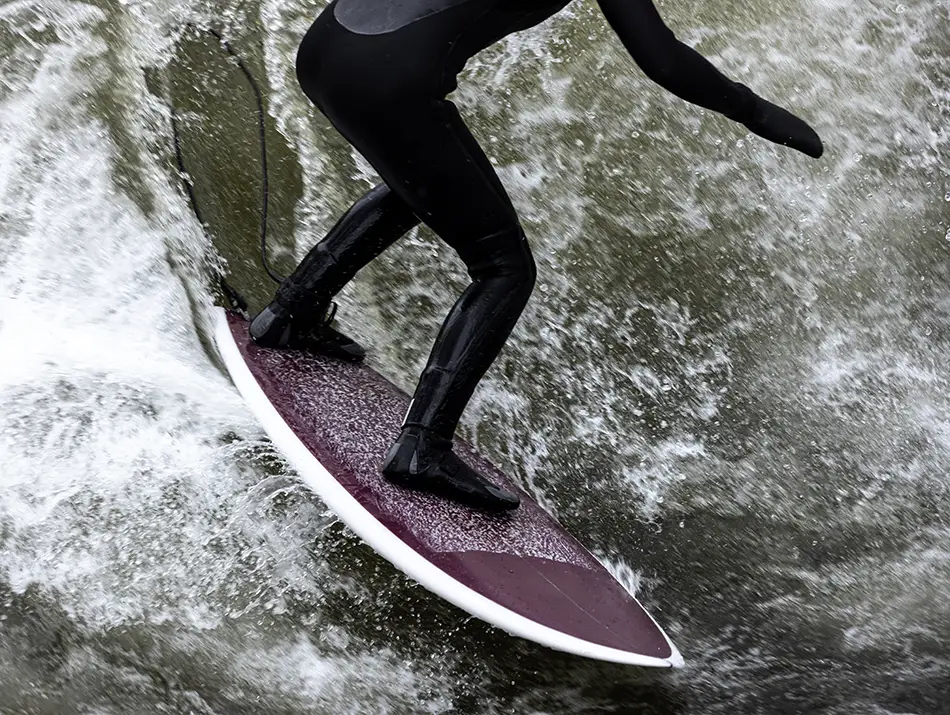
Hoddevik delivers dramatic scenery alongside cold, powerful surf, with a white-sand beach framed by steep mountains that shape both the setting and the conditions. The waves are exposed to North Atlantic weather systems, which can change quickly, and water temperatures require serious cold-water preparation.
While interest has grown in recent years, the environment remains demanding, rewarding surfers who are comfortable with variable weather, strong winds, and remote coastal settings.
- Best season: September to March
- Wave type: Beach breaks
- Skill level: Intermediate to advanced
- Where to sleep: Surf cabins, small hostels
- Between cold-water sessions: Hike short mountain trails above the bay, drive nearby fjords, and warm up in local saunas or simple cafés.
Closing Thoughts
Taken together, these destinations show how varied surf travel can be when you look beyond established circuits. Some places on this list stand out for access and infrastructure, others for isolation or cultural depth, and a few for the simple fact that their surf scenes are still evolving rather than fully formed. What they share is a balance between wave quality and context, where the experience extends beyond the lineup and into the surrounding landscape, routines, and communities.
Choosing where to go in 2026 is less about finding a single “right” destination and more about matching conditions, comfort level, and travel style. Whether that means cold-water beaches backed by mountains, tropical reef breaks with island life, or raw coastlines that demand planning and patience, these regions offer different ways to build a surf trip with intention.
For more ideas, planning context, and fresh perspectives on where and how to travel next, explore our travel inspiration articles and continue shaping trips that reflect how you want to move through the world, not just where you want to surf.