


Why Visit Hanoi
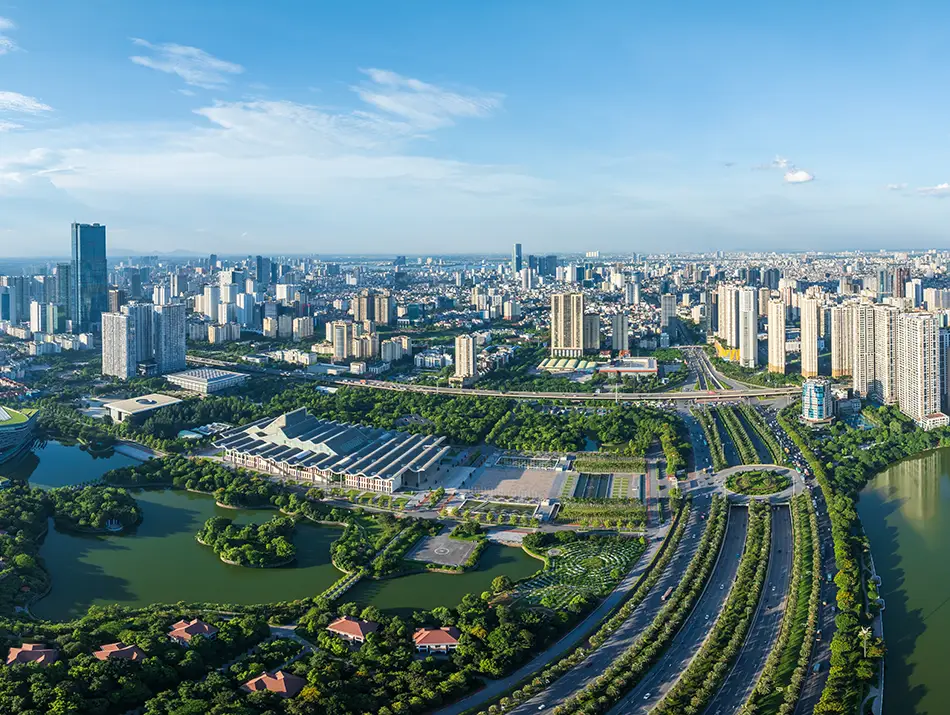
Hanoi is a city of captivating contrasts, where ancient temples sit beside French colonial architecture and tranquil lakes reflect a relentless modern energy. Vietnam’s capital buzzes with the sound of a million motorbikes, the scent of street-side pho, and the sight of history layered on every corner. This guide focuses on the best things to do in Hanoi, helping you navigate its beautiful and chaotic heart.
Hanoi appeals to travelers who thrive on sensory immersion and historical depth. You will love it if you enjoy exploring tangled alleyways, sampling complex street food, and embracing a culture that feels both historic and forward-looking.
However, this city is not for everyone. If you seek quiet, orderly streets, pristine air quality, or a slow-paced vacation, you may find the city overwhelming. The constant traffic noise and dense population can be jarring for those unaccustomed to bustling Asian capitals.
If you are mapping a wider route, start with our Best places to visit in Vietnam to see how Hanoi fits your itinerary.
One Minute History Lesson
Hanoi’s story stretches back over a millennium, beginning when it was chosen as the capital of Dai Viet in 1010 under the name Thang Long, or “Ascending Dragon.” The city endured Chinese occupations and flourished as a center of Vietnamese culture, embodied by landmarks like the Temple of Literature. The French colonial era reshaped its landscape in the 19th and 20th centuries, leaving a legacy of grand boulevards and ochre-hued villas. This period also saw the construction of the infamous Hoa Lo Prison. The city later became the capital of North Vietnam and a central stage for the Vietnam War.
In recent years, Hanoi has undergone rapid modernization while striving to preserve its heritage. A notable development for visitors is the new Vietnam Military History Museum, which fully opened its extensive new galleries in 2025, offering a comprehensive look into the nation’s past from a contemporary perspective.
Table of Contents
Hanoi at a Glance
- Known For: A chaotic Old Quarter, incredible street food, French colonial architecture, and war mueums.
- Best Time to Visit: Autumn (September–November) and Spring (March–April) offer pleasant temperatures and lower humidity. The city-wide Tet (Lunar New Year) celebrations for the Year of the Horse are a major cultural event with the official holiday period running from February 14 to February 22, 2026.
- Getting There: Easily reached by plane to Noi Bai International Airport (HAN), overnight trains from Sapa or Da Nang, and buses from hubs like Ha Long Bay.
- How Long to Stay: 2-3 nights for the main sights. 4-5 nights to explore neighborhoods and take a day trip.
Average Daily Spending in Hanoi
- Budget: 750,000–1,000,000 VND (~$30–$40 / €27–€36)
- Mid-Range: 1,500,000–2,500,000 VND (~$60–$100 / €55–€91)
- Luxury: 4,000,000+ VND (~$160+ / €145+)
Planning Your Trip to Hanoi
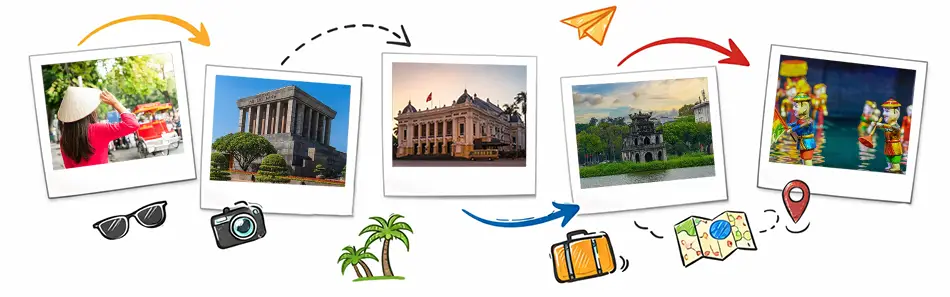
Best Time to Visit Hanoi
The most comfortable time to visit Hanoi is late autumn (October to November), when rainfall drops, humidity eases, and walking conditions improve.
Winter (December to February) is the driest period by rainfall totals, though it is often cool, overcast, and humid, with frequent mist or light drizzle.
Spring (March to April) brings warmer temperatures alongside rising moisture, including intermittent drizzle known locally as mua phun.
Summer is the worst time to visit, combining heavy rainfall, high humidity, and peak domestic tourism during school holidays, which leads to overcrowding, higher accommodation demand, and less comfortable sightseeing conditions.
How Long to Stay in Hanoi
A stay of three full days is sufficient to cover the main highlights without feeling rushed. This allows you to explore the Old Quarter, visit key historical sites like the Temple of Literature and Hoa Lo Prison, and enjoy the city’s food scene.
With four to five days, you can delve deeper into different neighborhoods like Tay Ho, visit more museums, and take a rewarding day trip to a nearby destination such as the Bat Trang ceramics village or Duong Lam Ancient Village.
A shorter two-day trip is possible but will feel hurried.
How to Get to Hanoi: Transportation Options
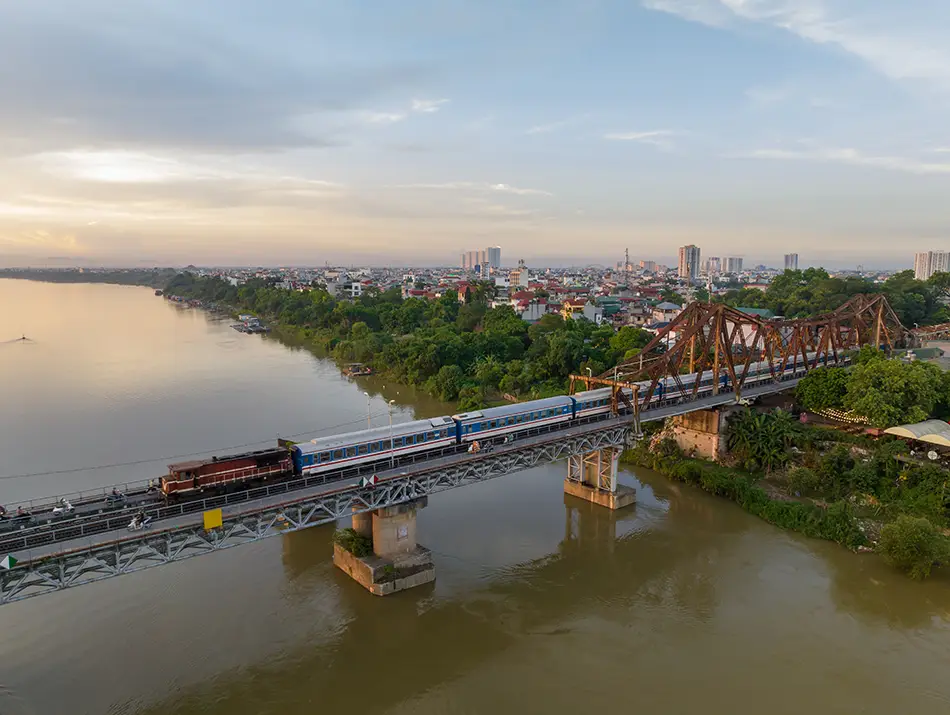
From Ho Chi Minh City (HCMC), the fastest option is a 2-hour flight into Noi Bai Airport (HAN), with numerous daily departures on airlines like Vietnam Airlines and VietJet Air. Alternatively, the “Reunification Express” train offers a scenic but lengthy 30-35 hour journey from Saigon Railway Station.
From Da Nang in Central Vietnam, a 1.5-hour flight is the most practical choice. For a more grounded experience, an overnight train takes approximately 16–17 hours from the Da Nang Railway Station and arrives at Hanoi Railway Station in the city center.
From Ha Long Bay, the most common transport is a tourist shuttle bus or private car, taking around 2.5–3 hours via the modern expressway. These services can be booked through hotels or tour agencies in Ha Long. Public buses are also available from Bai Chay bus station but are slower and less comfortable.
Getting Around

Hanoi’s core, particularly the Old Quarter and the area around Hoan Kiem Lake, is highly walkable. For longer distances, ride-hailing apps like Xanh SM and Grab are the most convenient and affordable ways of getting around Hanoi.
The city’s public bus network is extensive but can be challenging for first-time visitors to navigate.
By 2026, the new Metro Line 3 is partially operational, connecting western districts to the city center and offering a modern transit option for reaching certain areas.
Cyclos (three-wheeled bicycle taxis) are a tourist novelty best for short, pre-negotiated scenic rides.
Where to Stay in Hanoi: Accommodation Areas and Options
Accommodation options are abundant, from budget hostels to luxury hotels. The Old Quarter is the most popular area, placing you in the heart of the action with countless eateries, shops, and historical sights. However, it is also the noisiest and most crowded.
For a more refined atmosphere, the French Quarter offers wide, tree-lined boulevards and upscale hotels including the historic Sofitel Legend Metropole Hanoi and the newly opened Four Seasons Hotel Hanoi at Hoan Kiem Lake.
The Tay Ho (West Lake) district is a favorite among expats, providing a more relaxed, residential feel with trendy cafes, lakeside restaurants, and boutique hotels. For proximity to major political landmarks like the Ho Chi Minh Mausoleum, the quieter Ba Dinh district is an excellent choice.
Finally, the Hai Ba Trung district offers a more local experience, with fewer tourists and a great mix of mid-range hotels and authentic food stalls.
Where to stay in Hanoi ultimately depends on your tolerance for noise and your desired proximity to specific attractions.
Is it Expensive to Visit Hanoi in 2026?
Hanoi is one of Asia’s most affordable capitals for travelers. While it is technically the most expensive city in Vietnam for residents, the abundance of competitive hostels and street food zones makes it very friendly for visitors.
- Temple of Literature Entry (Adult): VND 70,000 ($2.5 / €2.5)
- Hoa Lo Prison Memorial Entry: VND 50,000 ($2 / €1.5)
- Thang Long Water Puppet Theater: VND 100,000–200,000 ($4–7.5 / €3.5–6.5)
- Standard Private 3-Star Hotel: VND 660,000–1,250,000 ($25.00–47.50 / €21.50–41.00) per night
- Budget Hostel Dorm Bed: VND 105,000–210,000 ($4.00–8.00 / €3.50–7.00) per night
- Meal at an Inexpensive Local Restaurant: VND 50,000 ($2.00 / €1.50)
- Motorbike Rental (Economy Scooter): VND 130,000–150,000 ($5.00–5.50 / €4.50–5.00) per day
- Intercity Transport (Hanoi to Ha Long Bay): VND 180,000–350,000 ($7.00–13.50 / €6.00–11.50)
Best things to See in Hanoi: Sights & Attractions
Hanoi’s core offers a dense collection of historical sites that reflect centuries of Vietnamese culture, colonial influence, and modern history. Most of these top attractions are located within or near the Old Quarter and Ba Dinh Square.
They are generally accessible on foot or by a short cyclo or taxi ride. Plan to navigate busy streets and allow for ample walking time between locations.
Hoan Kiem Lake & Ngoc Son Temple

Hoan Kiem Lake, or the Lake of the Returned Sword, is the geographic and spiritual heart of Hanoi. A popular path follows its perimeter, leading to the iconic red Huc Bridge . This bridge connects the shore to Ngoc Son Temple, a small but significant temple situated on an islet in the lake.
Your experience will involve a leisurely walk around the lake, observing locals exercising, socializing, and relaxing. The atmosphere changes from busy weekday traffic to a calmer weekend scene, when surrounding roads are closed to vehicles from Friday evening through Sunday night.
Inside the temple, you can see traditional architecture, altars, and artifacts. Inside the temple, you can see traditional architecture, altars, and artifacts. The site honors historical figures and features two preserved giant turtles.
- Hours: Ngoc Son Temple: 7:00 AM – 6:00 PM Monday to Thursday and 7:00 AM – 9:00 PM Friday to Sunday.
- Prices: Temple Entrance: 30,000 VND ($1.20 / €1.10).
- Time needed: 1–1.5 hours to walk the lake and visit the temple.
- Combines with: Thang Long Water Puppet Theatre, Old Quarter, St. Joseph’s Cathedral.
- 📍 Hoan Kiem Lake on Google Maps
Thang Long Imperial Citadel
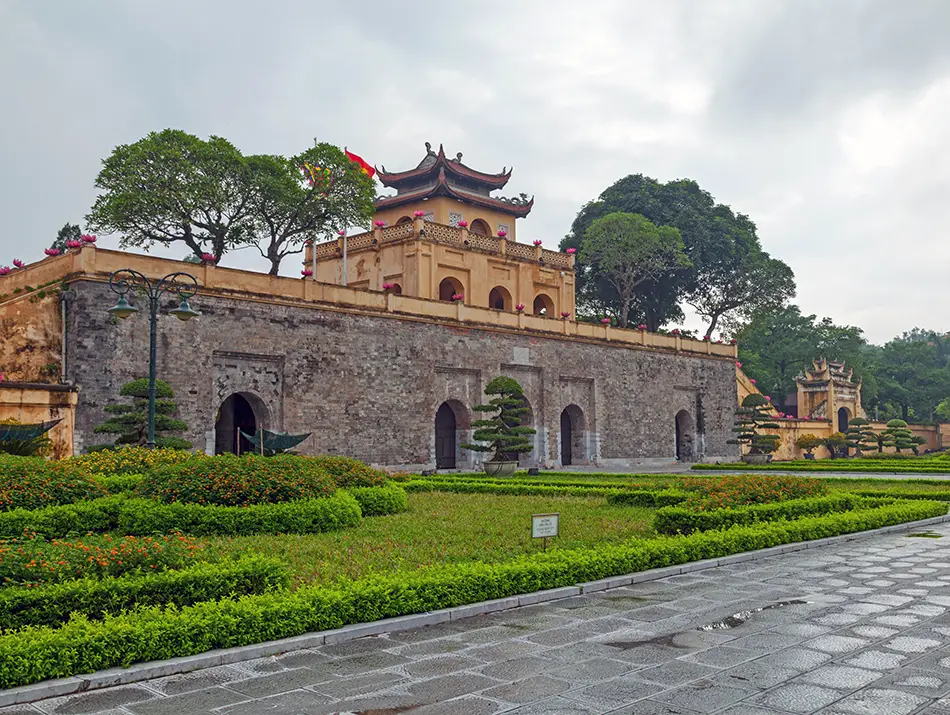
The Thang Long Imperial Citadel is a UNESCO World Heritage Site that served as the political center of Vietnam for over a millennium. The archaeological displays in underground galleries offer context on the site’s long history.
Key structures include the imposing Doan Mon (Main Gate), the North Gate which still bears cannonball marks, and the Kinh Thien Palace area where the historic dragon steps are located.
Exploring the citadel grounds involves walking across large, open spaces between structures. The archaeological displays in the basement offer context on the site’s long history.
The scale of the citadel is significant, and some areas are more preserved than others. It provides a less crowded alternative to other major attractions.
- Hours: 8:00 AM – 5:00 PM.
- Prices: 100,000 VND ($3.83 / €3.52)
- Time needed: 2–3 hours.
- Combines with: Hanoi Flag Tower, Ba Dinh Square.
- 📍 Imperial Citadel on Google Maps
Command Bunker D67
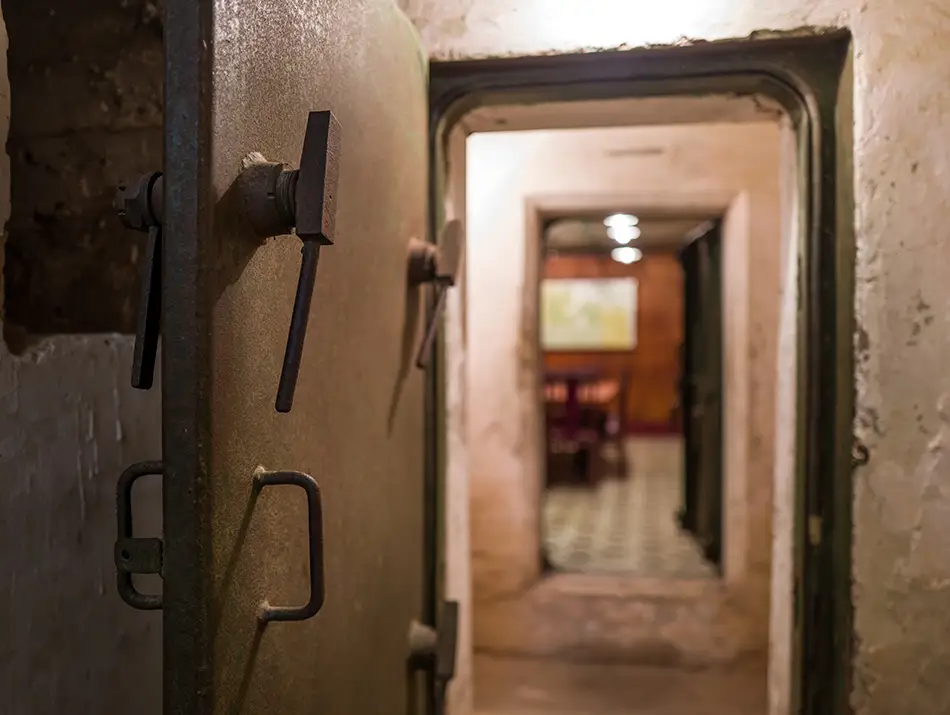
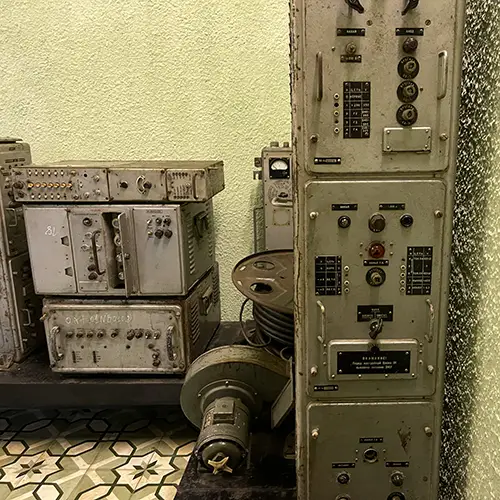
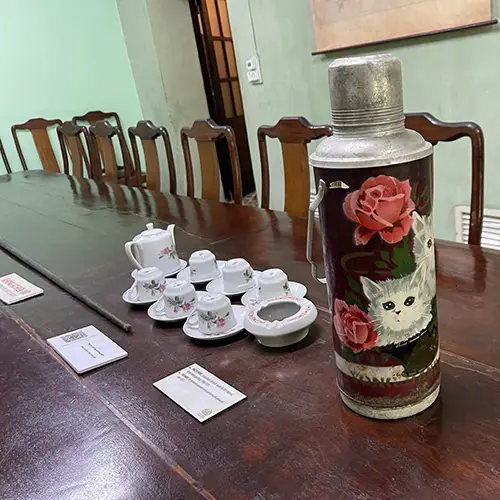
Located within the Thang Long Imperial Citadel complex, Command Bunker D67 was the military headquarters of the North Vietnamese Army during the Vietnam War.
Built in 1967, the bunker is a concrete structure with multiple rooms, including meeting areas and communication centers. Original maps and equipment are still in place, offering a glimpse into wartime operations.
A visit to the bunker is a direct walk into a preserved piece of military history. You will explore the ground level headquarters before descending a flight of stairs into a stark and functional bunker located 29.5 feet (9 meters) underground. The air is cool and the atmosphere is somber. The experience provides a powerful contrast to the ancient citadel grounds above.
- Hours: Hours: 8:00 AM – 5:00 PM daily.
- Prices: Included with the Imperial Citadel ticket (100,000 VND).
- Time needed: 20–30 minutes as part of the citadel visit.
- 📍 Bunker D67 on Google Maps
Hanoi Old Quarter


The Old Quarter is Hanoi’s historic commercial hub, known for its 36 streets once organized by trade. Today, it is a dense network of narrow lanes where many streets still specialize in a specific traditional craft or commodity like silver, tombstone carving, or bamboo goods.
The architecture is a mix of traditional houses and French colonial buildings, creating a visually complex urban landscape.
Navigating the Old Quarter is an immersive sensory experience defined by constant motion, sounds, and smells. Motorbikes weave through crowded streets and sidewalk kitchens serve local dishes. Be prepared for chaotic traffic, though 2026 city initiatives have significantly cleared many central sidewalks of obstructions to improve pedestrian access.
The atmosphere changes from busy daytime traffic to a vibrant evening scene, especially from Friday night through Sunday when an expansive network of over 20 streets becomes pedestrian-only.
- Hours: Shops generally open around 9:00 AM – 9:00 PM.
- Time needed: At least 2 hours to wander without a fixed plan.
- Combines with: Hoan Kiem Lake, St. Joseph’s Cathedral, Dong Xuan Market.
- 📍 Hanoi Old Quarter on Google Maps
Temple of Literature
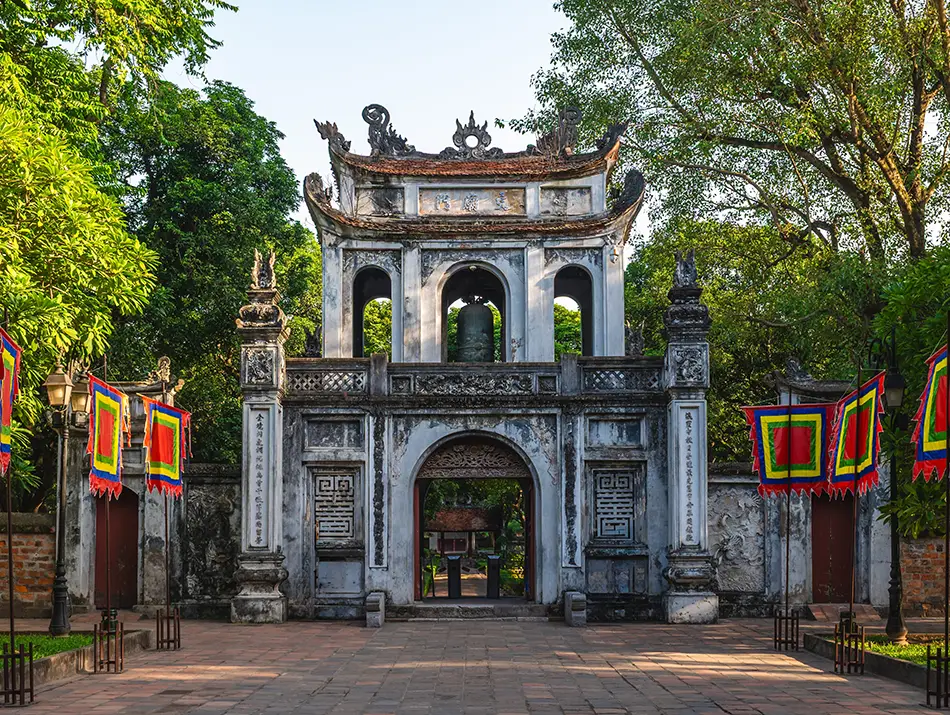
The Temple of Literature is a temple complex dedicated to Confucius and was the site of Vietnam’s first university. Founded in 1070, it consists of five courtyards with traditional Vietnamese architecture, ponds, and gardens. The most notable features are the 82 stone stelae, each mounted on a stone tortoise, which record the names of scholars who passed the royal exams.
You will walk through a series of gates and courtyards, each creating a more tranquil space than the last. The grounds are well-maintained and offer a quiet retreat from the city’s noise. The final courtyard contains the main ceremonial hall and a small museum.
The complex sometimes hosts evening cultural programs, such as the “Quintessence of Education” 3D mapping show or the newly launched “Vietnamese Resonance” music experience. As schedules can be seasonal or experimental, be sure to check for the most recent updates and specific showtimes shortly before your trip.
- Hours: 8:00 AM – 5:00 PM daily. Night show hours vary.
- Prices: Entrance: 70,000 VND ($2.80 / €2.60).
- Travel Tip: Visit on a weekday morning to avoid the largest tour groups and student excursions.
- 📍 Temple of Literature on Google Maps
Ho Chi Minh Mausoleum
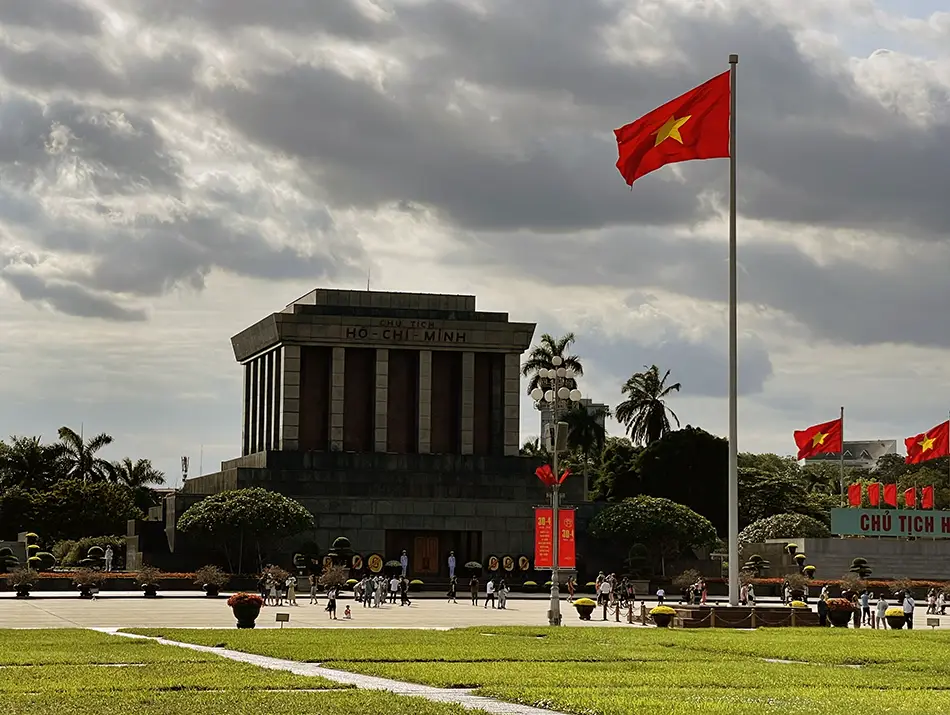
The Ho Chi Minh Mausoleum serves as the final resting place for Vietnam’s revolutionary leader, standing as an imposing landmark in the heart of Ba Dinh Square. This location holds immense historical weight, as it is the very spot where the Declaration of Independence was read in 1945. Beyond the main monument, the sprawling complex also invites visitors to explore Ho Chi Minh’s modest Stilt House and a comprehensive museum dedicated to his life and legacy.
A visit here is a deeply formal and solemn experience, requiring guests to observe several strict protocols. To show proper respect, visitors must adhere to a dress code (avoiding shorts and tank tops) and maintain total silence while following a prescribed path. The procession moves steadily through the interior, where you will file past the embalmed body of Ho Chi Minh displayed in a glass case.
- Hours: 7:30 AM – 10:30 AM from April to October and 8:00 AM – 11:00 AM from November to March, Tuesday–Thursday and Saturday–Sunday.
- Time needed: 1–2 hours, including wait times and security checks.
- Combines with: One Pillar Pagoda, Ho Chi Minh Museum, Presidential Palace.
- Travel Tip: The mausoleum is closed annually for maintenance, typically for several weeks in early autumn, with exact dates varying each year.
- 📍 Ho Chi Minh Mausoleum on Google Maps
One Pillar Pagoda

The One Pillar Pagoda is a historic Buddhist temple built in 1049. Its unique design features a small wooden pagoda built on a single stone pillar, intended to resemble a lotus blossom rising from the water. The current structure is a restoration, as the original was destroyed by French forces in 1954.
The pagoda is a small, quick stop situated near the Ho Chi Minh Mausoleum. You can view the structure from the ground and climb a short flight of stairs to see the small shrine inside. The site is more of a photo opportunity and a point of historical interest than an extensive visit.
- Hours: 8:00 AM – 5:00 PM.
- Time needed: 15–20 minutes.
- Combines with: Ho Chi Minh Mausoleum, Ho Chi Minh Museum.
- Travel Tip: The best photos are taken from the walkway a short distance from the pagoda, which allows you to capture its full lotus-like shape.
- 📍One Pillar Pagoda on Google Maps
The Note Coffee
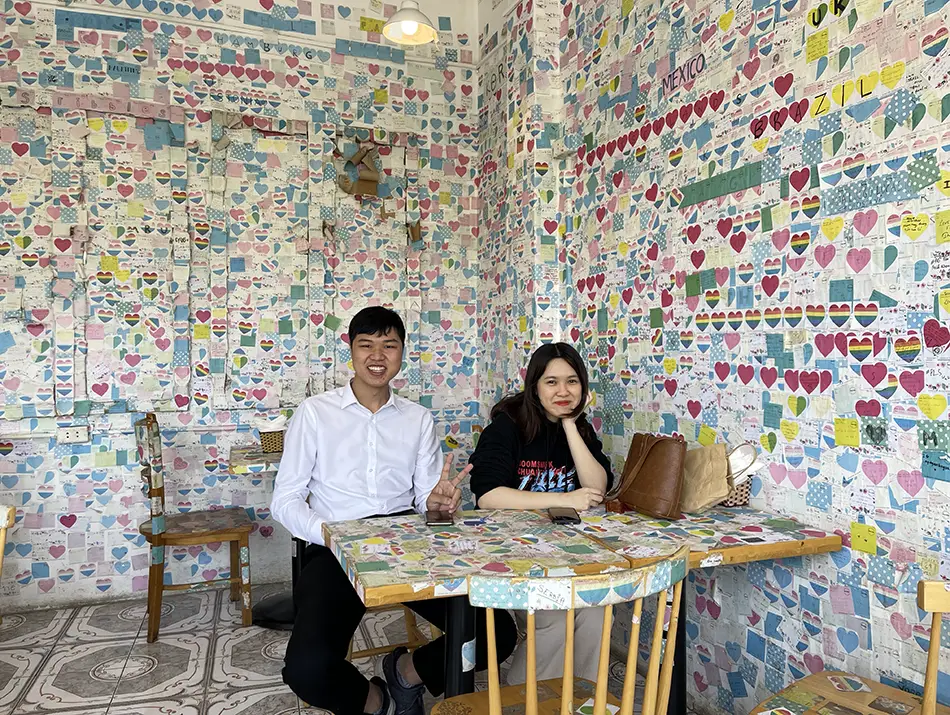
The Note Coffee is one of Hanoi’s most distinctive social spaces, located just steps from Hoan Kiem Lake. The multi-level venue is famous for its interior walls, ceilings, and staircases completely covered in handwritten notes left by visitors from around the world. Messages range from short travel reflections to personal thoughts, sketches, and expressions of gratitude.
Your visit usually begins at street level, where you order a drink before climbing narrow staircases that lead through several compact rooms. Each floor offers a slightly different atmosphere, with low seating, window views toward the lake, and dense layers of colorful notes attached to nearly every surface. The environment feels intimate and personal rather than polished, encouraging visitors to slow down, read messages, or leave one of their own.
- Hours: 8:00 AM – 10:30 PM daily.
- Prices: Drinks typically range from 40,000–70,000 VND ($1.60–$2.80 / €1.50–€2.60).
- Combines with: Hoan Kiem Lake, Ngoc Son Temple, Hanoi Old Quarter.
- 📍 The Note Coffee on Google Maps
Tran Quoc Pagoda
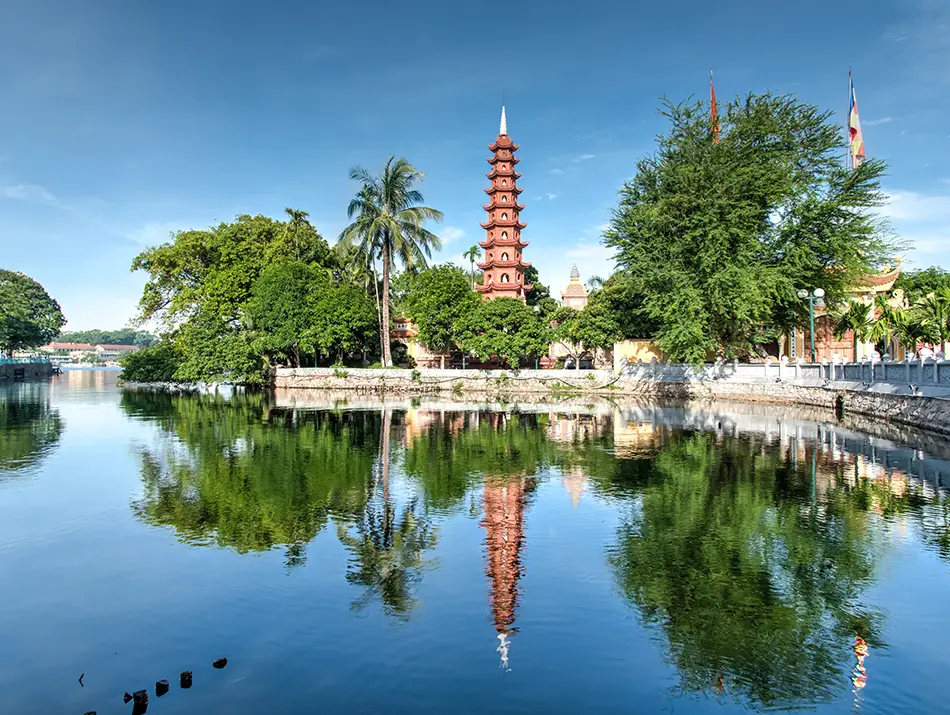
Tran Quoc Pagoda is the oldest Buddhist temple in Hanoi, with a history dating back over 1,500 years. Located on a small peninsula in West Lake, its most prominent feature is an 11-story, 50-foot (15-meter) stupa. The temple grounds contain several shrines, an incense-burning house, and a Bodhi tree grown from a cutting of the original tree in Bodh Gaya, India.
A visit involves walking across a short causeway to the temple grounds. The atmosphere is generally peaceful, offering a contrast to the bustling city center. You can explore the various shrines and admire the stupa. The lakeside setting is particularly scenic, especially around sunset.
- Hours: 7:30 AM – 11:30 AM and 1:30 PM – 6:00 PM daily.
- Prices: Free.
- How to get there: On the eastern shore of West Lake, best reached by taxi or Grab.
- Time needed: 20 minutes.
- Travel Tip: Ensure your shoulders and knees are covered to show respect when entering the temple grounds.
- 📍Tran Quoc Pagoda on Google Maps
St. Joseph’s Cathedral
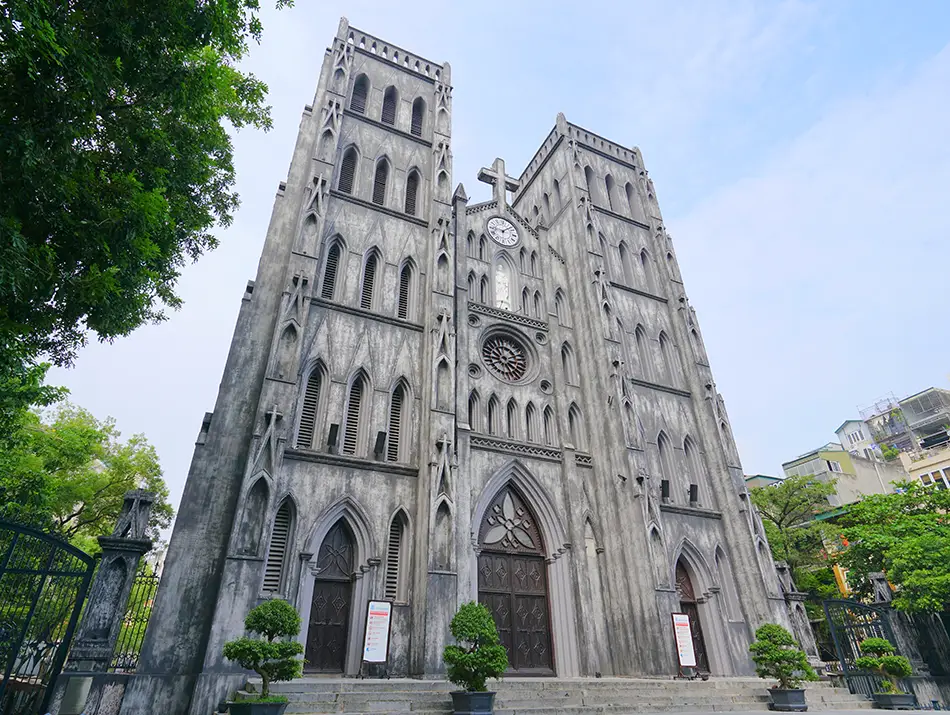
St. Joseph’s Cathedral is a late 19th-century neo-Gothic church that serves as the Roman Catholic Archdiocese of Hanoi. Its design resembles the Notre Dame de Paris, with twin bell towers, stained-glass windows, and a tall central nave. The cathedral is an active place of worship and a distinct piece of French colonial architecture.
From the outside, you can appreciate the weathered facade and architectural details. While the interior is restricted during services, it is now generally accessible to visitors during designated daily visiting hours following its recent restoration.
The surrounding area has become a popular spot with numerous cafes and shops. It is a busy hub for both locals and tourists, especially in the evening.
- Hours: 8:00 AM – 11:00 AM & 2:00 PM – 5:00 PM daily.
- Prices: Free.
- Time needed: 20–30 minutes .
- Combines with: Hoan Kiem Lake.
- Travel Tip: The small streets around the cathedral are excellent for finding coffee shops with direct views of the facade.
- 📍St. Joseph’s Cathedral on Google Maps
Hanoi Opera House
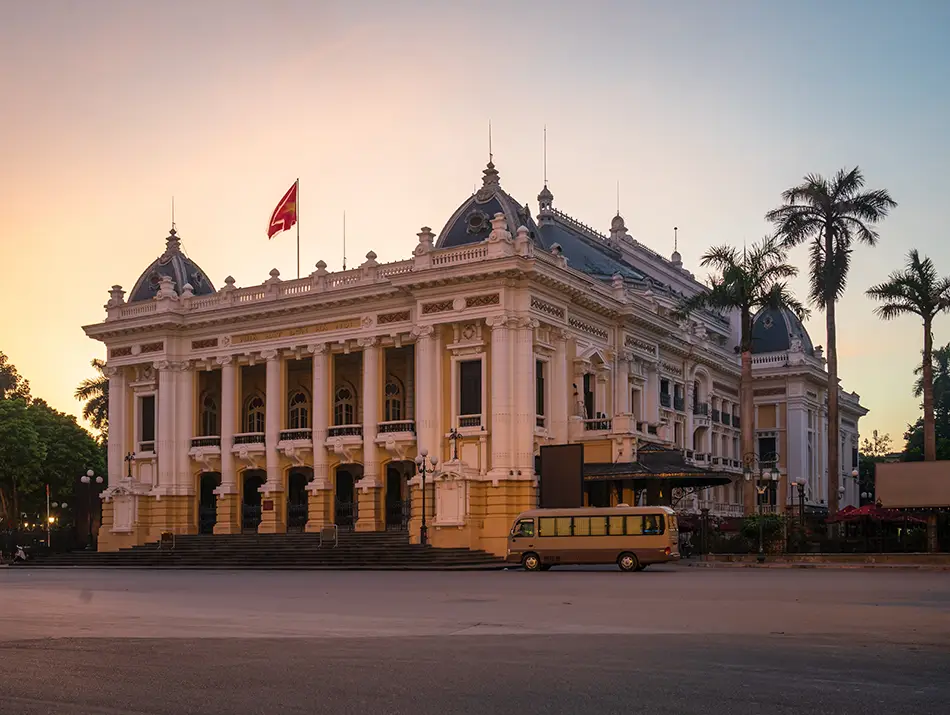
The Hanoi Opera House is an elegant theater built by the French colonial administration between 1901 and 1911. Its design was modeled on the Palais Garnier in Paris and is considered a prime example of French Neoclassical architecture in Southeast Asia. It hosts a variety of performances, from classical music to contemporary plays.
Most visitors will experience the Opera House from the outside, admiring its grand facade from August Revolution Square.
To see the ornate interior, you must purchase a ticket for a performance or a guided architectural tour. The building is illuminated at night, making it a popular spot for photography.
- Prices: Architectural Tour: 120,000 VND ($4.60 / €4.23). Tour + Performance: 400,000 VND ($15.32 / €14.08).
- 📍Hanoi Opera House on Google Maps
Hoa Lo Prison (Maison Centrale)
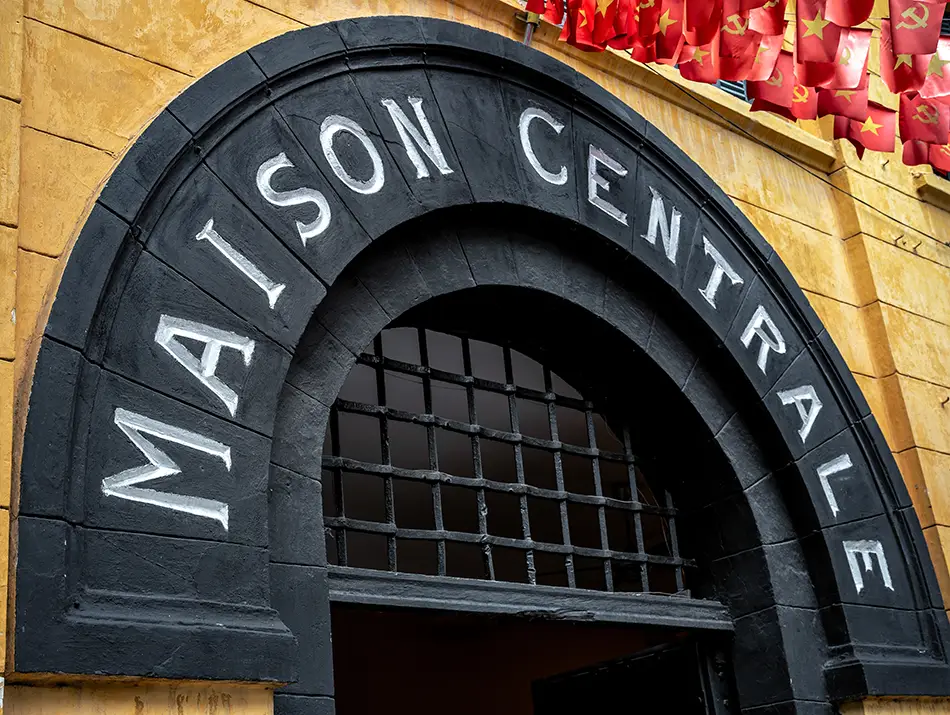
Hoa Lo Prison, also known to American POWs as the “Hanoi Hilton,” was a prison built by the French in 1896 to hold Vietnamese political prisoners. A small portion of the original prison remains as a museum. The exhibits primarily focus on the harsh conditions and resilience of Vietnamese revolutionaries held here during the French colonial era. A smaller section is dedicated to the American pilots, including John McCain, who were imprisoned during the Vietnam War.
A visit to Hoa Lo is a sobering one. You will walk through preserved cell blocks, see displays of torture instruments, and read accounts of the prisoners’ experiences. The museum’s narrative heavily emphasizes the Vietnamese struggle for independence. The section on American POWs presents a contrasting view of their treatment, which may differ from Western accounts.
- Hours: 8:00 AM – 5:00 PM daily.
- Prices: 50,000 VND ($2.00 / €1.85).
- Time needed: 1–1.5 hours.
- 📍Hoa Lo Prison on Google Maps
Train Street
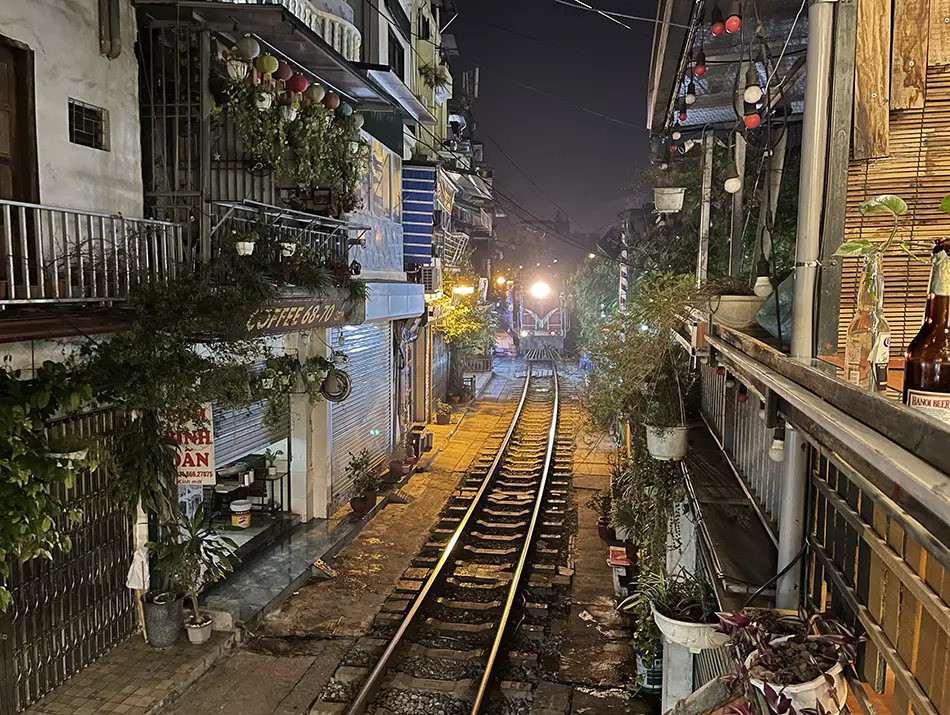
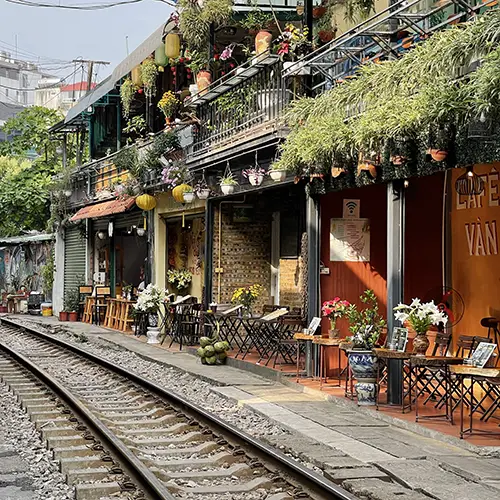
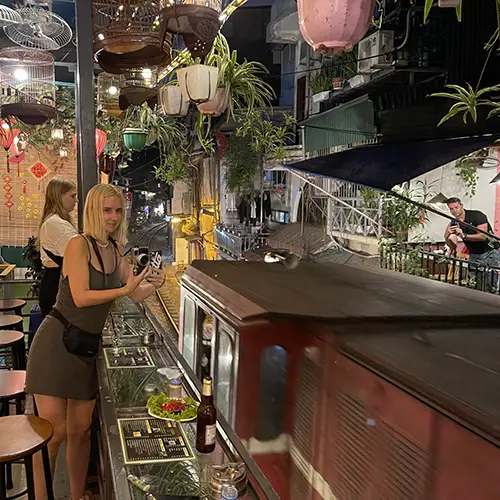
Hanoi’s Train Street refers to a narrow residential street through which a train passes multiple times a day. Homes and cafes are built just feet from the tracks. For safety reasons, access has become heavily regulated. The street is now often barricaded, with entry permitted only to customers of the cafes operating along the tracks.
The experience is conditional and unpredictable. If you gain access, you will sit in a small cafe and wait for the train. When it approaches, cafe owners instruct everyone to move back to a safe line. The train passes only a few feet away, creating a loud and dramatic moment.
The legality and accessibility of these cafes are frequently changing, so your ability to visit is not guaranteed.
- Hours: Train times vary, with more frequent passages in the evening and on weekends.
- Prices: Free to see, but you are expected to buy a drink at a cafe.
- Time needed: About 1 hour, centered around a scheduled train passage.
- Travel Tip: Do not attempt to bypass barricades or enter without an invitation from a cafe owner. Follow all safety instructions precisely as the train’s passage is genuinely dangerous.
- 📍Train Street on Google Maps
Museums in Hanoi

- Vietnam Museum of Ethnology: Displays the diverse cultures of Vietnam’s 54 recognized ethnic groups through artifacts and full-scale replica homes. (📍Location)
- Vietnam National Museum of History: Spanning two architecturally stunning buildings, this museum chronicles Vietnam’s evolution from prehistory through the 1945 revolution and continues into the modern era and the resistance wars. (📍Location)
- Vietnamese Women’s Museum: Highlights the role of women in Vietnamese history, family, and society, including their contributions during wartime. (📍Location)
- Vietnam National Fine Arts Museum: Showcases Vietnamese art from ancient times to the present, including folk art, lacquer paintings, and modern works. (📍Location)
- Vietnam Military History Museum: Chronicles Vietnam’s military conflicts, featuring large artifacts like tanks and aircraft at its new Nam Tu Liem location. (📍Location)
- B-52 Victory Museum: Focuses on the defense of Hanoi against American air raids in 1972, with wreckage of a B-52 bomber as its centerpiece. (📍Location)
- Vietnam People’s Air Force Museum: Details the history of the Vietnamese air force with a large outdoor display of military aircraft. (📍Location)
- Hanoi Museum: A modern museum with a striking inverted pyramid design, covering the history and heritage of Hanoi. (📍Location)
Best things to Do in Hanoi: Activities & Experiences
Beyond sightseeing, Hanoi Activities invite direct participation in the city’s daily rhythms. These experiences focus on culture, cuisine, and local life. They range from quiet morning rituals to engaging with the city’s vibrant street food scene. Participating in these activities offers a deeper connection to the local culture.
Visit Thang Long Water Puppet Theatre
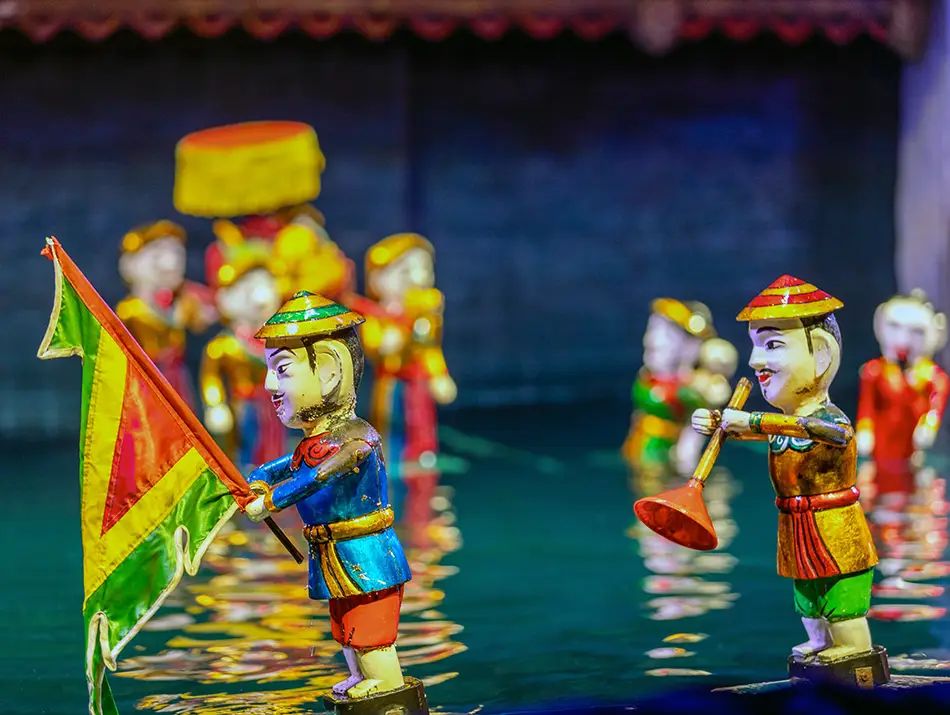
The Thang Long Water Puppet Theatre offers a traditional Vietnamese art form that originated in the Red River Delta. Puppets are manipulated by puppeteers hidden behind a screen, appearing to dance on a stage of water. The shows depict scenes of rural life, farming, and historical legends, accompanied by a live orchestra playing traditional music.
The experience is a colorful and musical performance that is popular with tourists. The show is entirely in Vietnamese, but the actions of the puppets are easy to follow. The theater is relatively small, so most seats offer a good view. It is a lighthearted cultural activity suitable for families.
- Hours: Shows run multiple times daily, typically starting in the afternoon.
- Prices: Tickets range from 100,000 to 200,000 VND ($4–$8 / €3.70–€7.40).
- Time needed: The show lasts approximately 50 minutes.
- Combines with: Hoan Kiem Lake, Old Quarter.
- Travel Tip: Book tickets at least a day in advance, as popular showtimes can sell out, especially during peak tourist season.
- 📍Puppet Theatre on Google Maps
Join a Sunrise Tai Chi Session
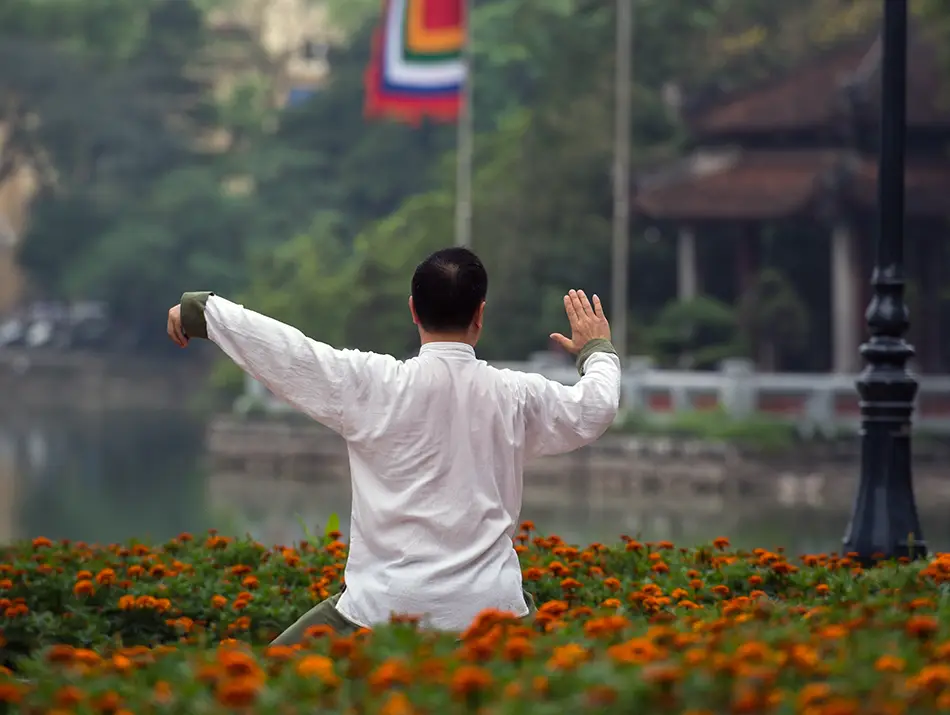
Hoan Kiem Lake is a hub of community activity, especially in the early morning. From as early as 5:30 AM, hundreds of residents gather around the lake to practice tai chi, line dance, and engage in other forms of exercise. The slow, deliberate movements of tai chi groups against the backdrop of the rising sun create a peaceful and authentic atmosphere.
You can find a spot to observe or respectfully join a group. While there are no formal classes for tourists, practitioners are often welcoming. The experience is less about learning the exact movements and more about participating in a cherished local routine. It offers a unique and calm perspective on Hanoi before the city fully awakens.
- Hours: Best between 5:30 AM and 7:00 AM.
- How to get there: Walk to any point around Hoan Kiem Lake.
- Time needed: 30–60 minutes.
- Combines with: A morning walk around the Old Quarter, an early bowl of pho.
- Travel Tip: Even if you don’t participate, find a bench and simply watch. It’s a great, non-intrusive way to observe local life.
Taste Egg Coffee at Cafe Giang

Egg coffee is a Hanoi specialty invented in the 1940s by Nguyen Giang due to a milk shortage. The drink consists of strong black coffee topped with a creamy, meringue-like foam made from whisked egg yolks and sugar. Cafe Giang, still run by the inventor’s family, is the most famous place to try it.
Finding Cafe Giang involves walking down a very narrow, unassuming alley off Nguyen Huu Huan street. Inside, you will find a simple, multi-level cafe filled with small stools. The egg coffee is served hot or iced and has a rich, sweet flavor resembling tiramisu. It is a defining culinary experience in Hanoi.
- Hours: 7:00 AM – 10:00 PM daily.
- Prices: Typically costs around 50,000–70,000 VND ($2–$3 / €1.85–€2.75), depending on whether it is served hot or iced.
- Travel Tip: Don’t be deterred by the small alleyway entrance; it is the correct path to the cafe.
- 📍Cafe Giang on Google Maps
Walk and Explore
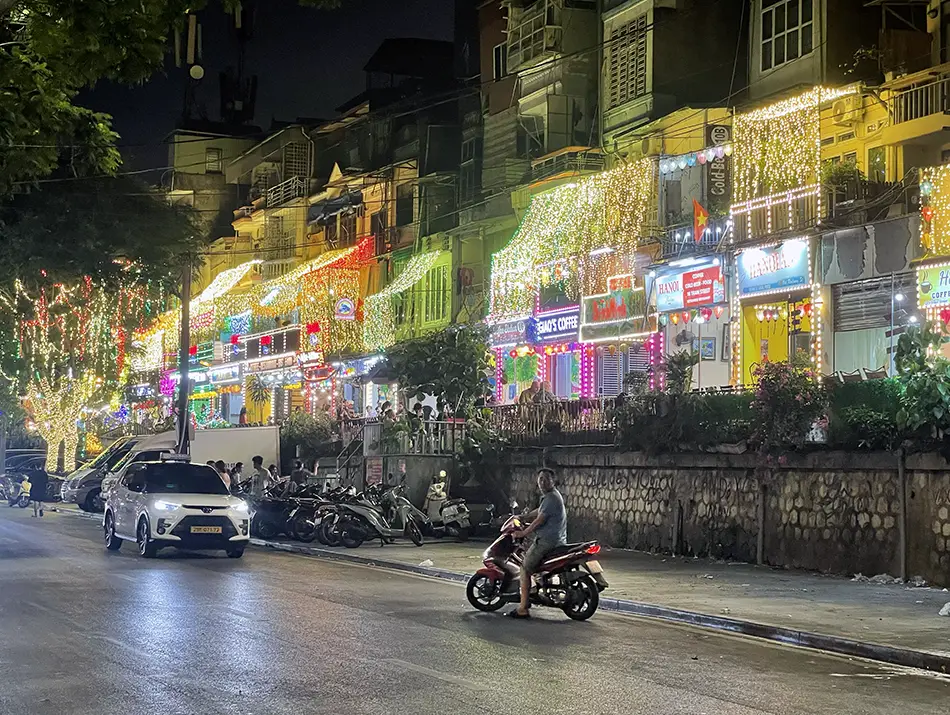
This section highlights areas that are interesting for their atmosphere and local life rather than specific, ticketed attractions. Wandering these neighborhoods offers an unscripted way to see the real Hanoi.
- The French Quarter: South and east of Hoan Kiem Lake, this area is defined by wide, tree-lined boulevards and grand colonial architecture. It houses government buildings, foreign embassies, and upscale hotels. A walk here offers a stark contrast to the Old Quarter’s density, showcasing a different historical layer of the city. Use the Hanoi Opera House as a central landmark.
- West Lake (Hồ Tây): This is Hanoi’s largest freshwater lake, surrounded by a nearly 11-mile (17 km) path. The area is a popular residential zone for expatriates and affluent locals. A walk or bike ride around the lake reveals high-end restaurants, quiet temples, and open spaces not found in the city center. The Tay Ho district on the lake’s northern side is a good starting point.
Best Day Trips From Hanoi
Hanoi serves as a convenient gateway to the diverse landscapes and cultural sites of the Red River Delta and surrounding provinces. These destinations offer a change of pace from the urban energy of the capital. Most are accessible via organized tours, private cars, or local buses.
Bat Trang Ceramic Village

Bat Trang is a centuries-old pottery village located on the banks of the Red River. The village is known for producing high-quality ceramics including household goods and decorative art. Narrow alleys are lined with workshops and kilns while a large market sells a vast array of finished products.
A visit allows you to see the entire production process from shaping the clay on a potter’s wheel to painting and glazing. Many workshops offer hands-on experiences where you can create your own piece.
The Bat Trang Ceramic Museum is a major highlight that features a striking architectural design. The building consists of seven spiral structures that resemble giant pottery wheels or traditional kilns. Inside you will find galleries dedicated to the history of the craft and contemporary ceramic art. The museum also hosts workshops and tea ceremonies and retail spaces for premium local crafts. It serves as a modern cultural hub that bridges the heritage of the village with modern artistic expression.
- How to get there: Bus #47 from Hanoi, taxi, or organized tour (45–60 minutes each way).
- Travel Tip: Explore the smaller, family-run workshops in the back alleys for a more authentic experience than the main market.
- 📍Bat Trang Pottery Museum on Google Maps
Perfume Pagoda
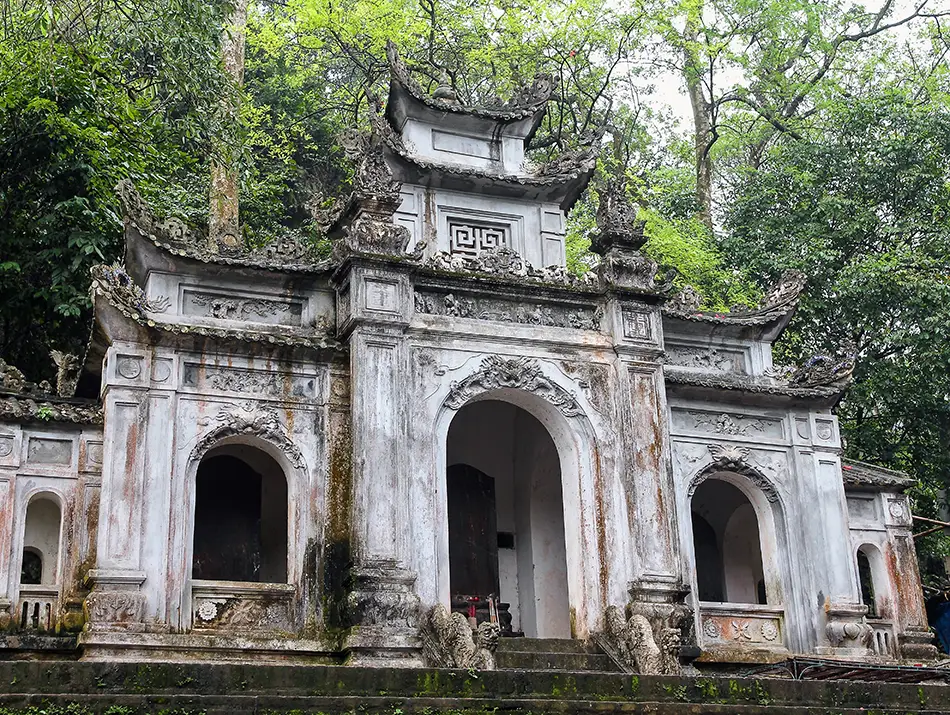
The Perfume Pagoda is a vast complex of Buddhist temples and shrines built into the limestone Huong Tich mountains. The journey itself is a key part of the experience, involving a boat ride along the Yen River through a scenic landscape of rice paddies and karst formations. The final destination is Huong Tich Cave, a large grotto containing the main shrine.
A visit requires a significant amount of walking and stair climbing. A cable car is available to take you to the top for an additional fee, which is recommended to save time and energy. The site is extremely crowded during its main festival season from the first to the third lunar month. This is a full-day trip.
- How to get there: Organized tour or a private car to the dock, followed by a mandatory boat trip (2 hours drive, 1-hour boat).
- Travel Tip: The site is exceptionally crowded during the Perfume Pagoda Festival, which in 2026 runs from late February to mid-May.
- 📍Perfume Pagoda on Google Maps
Ba Vi National Park

Located approximately 37 miles (60 km) west of Hanoi, this park covers a three-peaked mountain range that serves as a cool mountain retreat. It features diverse hiking trails and the Temple of President Ho Chi Minh at the summit of King Peak.
While many French colonial-era remnants survive as atmospheric ruins—such as the Old French Church—the site at the 1,968-foot (600-meter) level has been transformed into the luxury Meliá Ba Vi Mountain Retreat, which integrates modern comfort with the original colonial stone foundations.
The park is best explored by motorbike or car, as the road winds steeply up the mountain. The views from the top peaks are expansive on a clear day, but the mountains are often shrouded in mist. This can be a day trip or an overnight stay in one of the park’s guesthouses.
- How to get there: Best by private car or motorbike; public buses are indirect and slow.
- Time needed: A full day.
- Travel Tip: Check the weather forecast before going. The park’s climate can be much cooler and wetter than Hanoi’s.
- 📍Ba Vi National Park on Google Maps
Off the Beaten Path
Co Loa Ancient Citadel (Dong Anh)
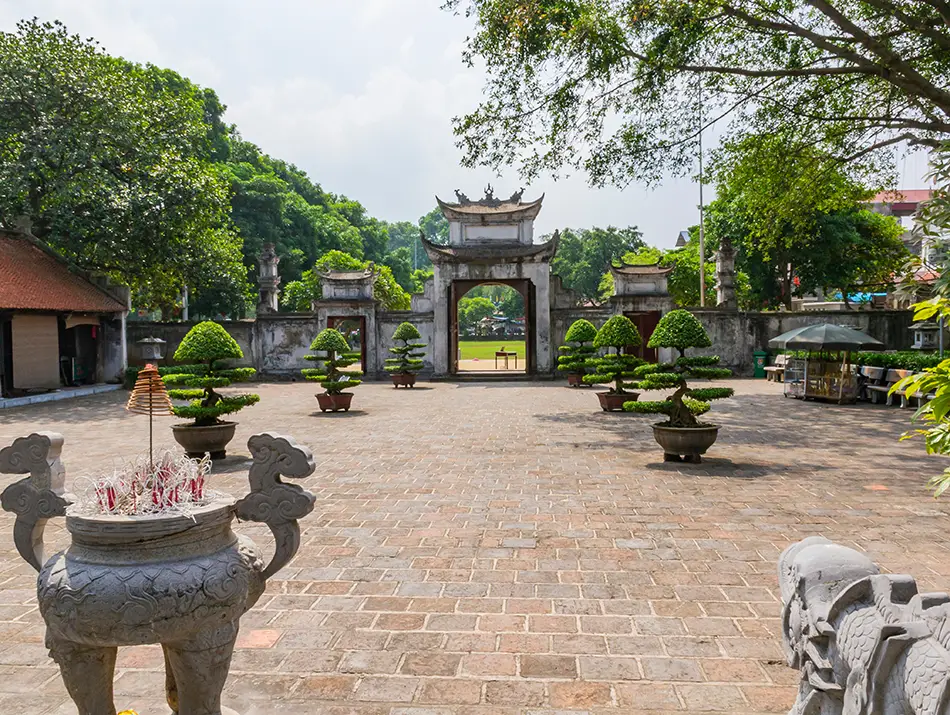
Established in the 3rd century BCE as the capital of the Au Lac Kingdom, this site is the oldest and largest citadel in Vietnam. The complex originally featured nine spiral-shaped walls, though today three main rings of earthen ramparts remain, spanning a total length of approximately 10 miles (16 kilometers). These fortifications reach heights of up to 16 to 39 feet (5 to 12 meters) in certain sections.
Visitors can explore the An Duong Vuong Temple, the Jade Well, and the Co Loa Communal House, all set within a tranquil landscape of traditional villages and rice paddies.
- Hours: Temples are generally open 8:00 AM – 5:00 PM.
- Prices: The entrance fee for the main relic complex is 30,000 VND ($1.20 / €1.10)
- Time needed: 2–3 hours.
- Travel Tip: Hire a local guide at the main temple or use a translation app to understand the history and legends associated with the site.
- 📍Co Loa Ancient Citadel on Google Maps
Huu Tiep “B-52 Lake” (Ngoc Ha)

Located in the heart of the Ngoc Ha neighborhood, this site is a formally designated National Historical Relic. Following a major restoration project, the lake now features a curated memorial space with a black-and-gold commemorative plaque and a protective stone embankment.
The centerpiece remains the wreckage of a US B-52 bomber shot down in 1972, which rests partially submerged in the small lake.
📍B-52 Lake on Google Maps
Banana Island (Bai Giua)

Banana Island is a large, agricultural island in the middle of the Red River, situated directly under the Long Bien Bridge. It is a rustic, rural area with banana plantations and vegetable gardens, inhabited by a small community living a simple lifestyle without many city services.
Accessing the island involves walking down a steep set of stairs from the Long Bien Bridge. Once on the island, you can walk along dirt paths through the fields. It is a completely different environment from the city just above. The experience is quiet and pastoral, but the terrain is unpaved and can be muddy.
📍 Banana Island on Google Maps
Best Sunset Spots in Hanoi
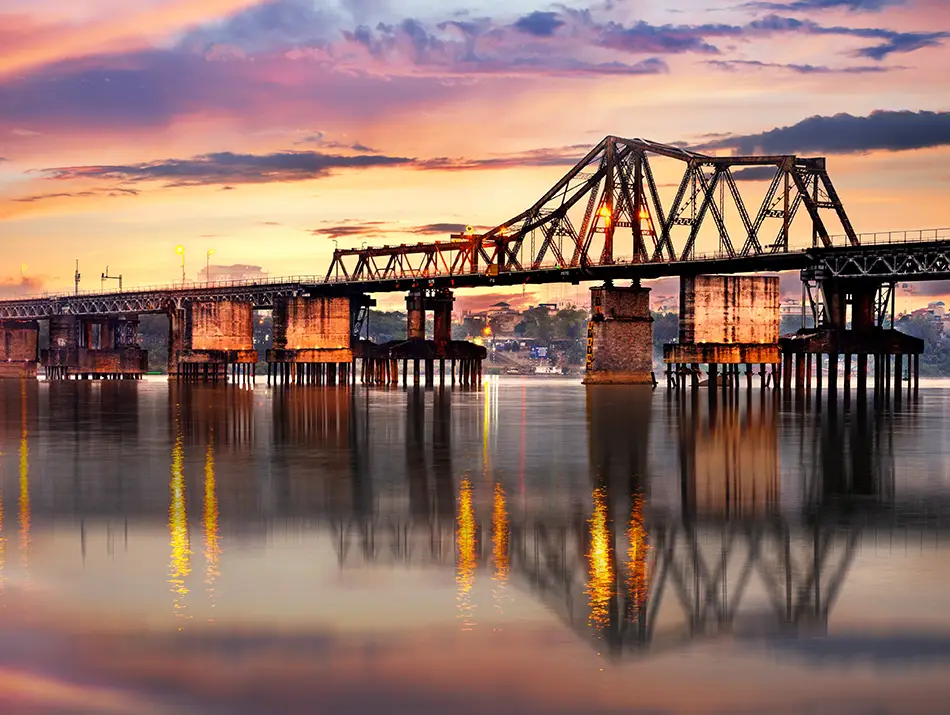
West Lake is the premier location for watching the sunset in Hanoi. Its surface area creates an unobstructed horizon where the sky shifts through shades of orange and purple. You can enjoy the view from Thanh Nien Street or the Lotte Observation Deck on the 65th floor. The observation deck provides a panoramic view of the entire city as the urban lights begin to flicker on.
Long Bien Bridge offers a historic atmosphere for the golden hour. This steel structure spans the Red River and provides a vantage point to watch the sun dip behind the skyline while trains rumble across the tracks.
For a more relaxed experience you can visit a rooftop bar. The 📍Summit Bar overlooks West Lake from the north while 📍Terraco Sky Bar offers a view over the Old Quarter and Hoan Kiem Lake. These venues allow you to observe the transition from day to night while remaining above the traffic noise.
Local Dishes in Hanoi
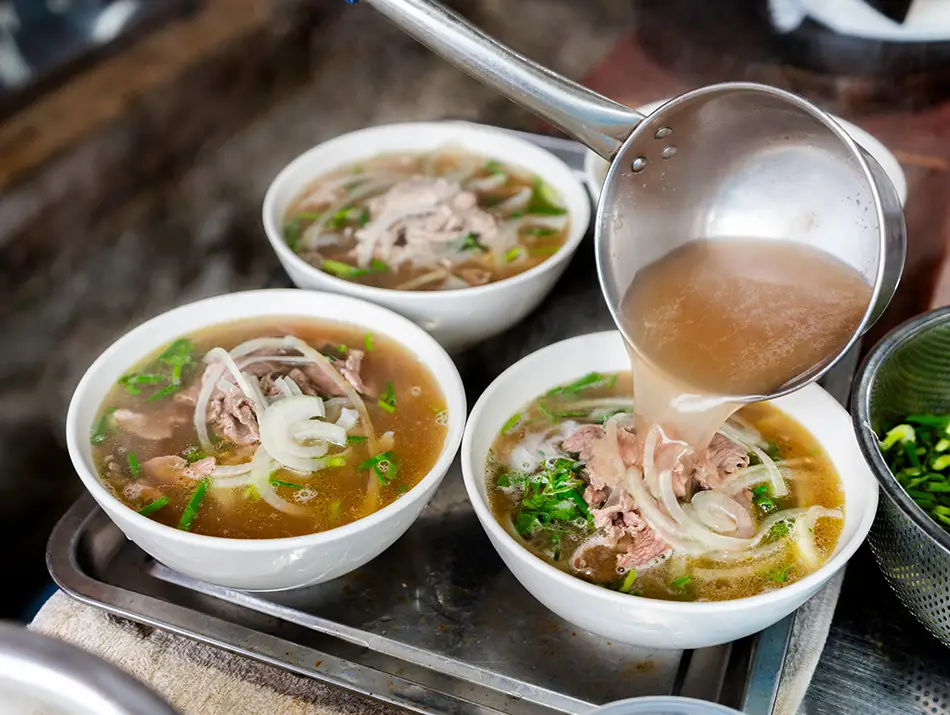
Hanoi is a paradise for food lovers, with a distinct culinary identity. Pho, the iconic noodle soup, is a must-try. Hanoian pho is known for its clear, savory broth, typically enjoyed with beef (pho bo) or chicken (pho ga). Another essential dish is Bun Cha, a lunch-time favorite of grilled pork patties and slices served in a bowl of sweet and sour dipping sauce with rice noodles and fresh herbs.
For a unique culinary experience, seek out Cha Ca La Vong. This dish features grilled fish marinated in turmeric and dill, which you cook yourself at the table with scallions and more dill, then eat with rice noodles and peanuts.
Banh Mi, the Vietnamese sandwich, is a perfect snack, with Hanoi’s version often being simpler and more focused on the classic pate and pork fillings.
Where to Find Best Restaurants in Hanoi
The Old Quarter is the epicenter of street food, where you can find the best local dishes served from small, family-run stalls in its winding alleys.
For a slightly more upscale dining experience with a charming ambiance, the French Quarter is home to many elegant restaurants set in restored colonial villas.
The West Lake district, popular with expats, boasts a diverse range of international cuisines alongside trendy Vietnamese eateries with beautiful lake views.
For a truly local, non-touristy experience, venture into the streets of the Hai Ba Trung or Dong Da districts.
For more delicious inspiration, discover the best food in Vietnam.
Evenings and Nightlife in Hanoi: What to Do After Dark
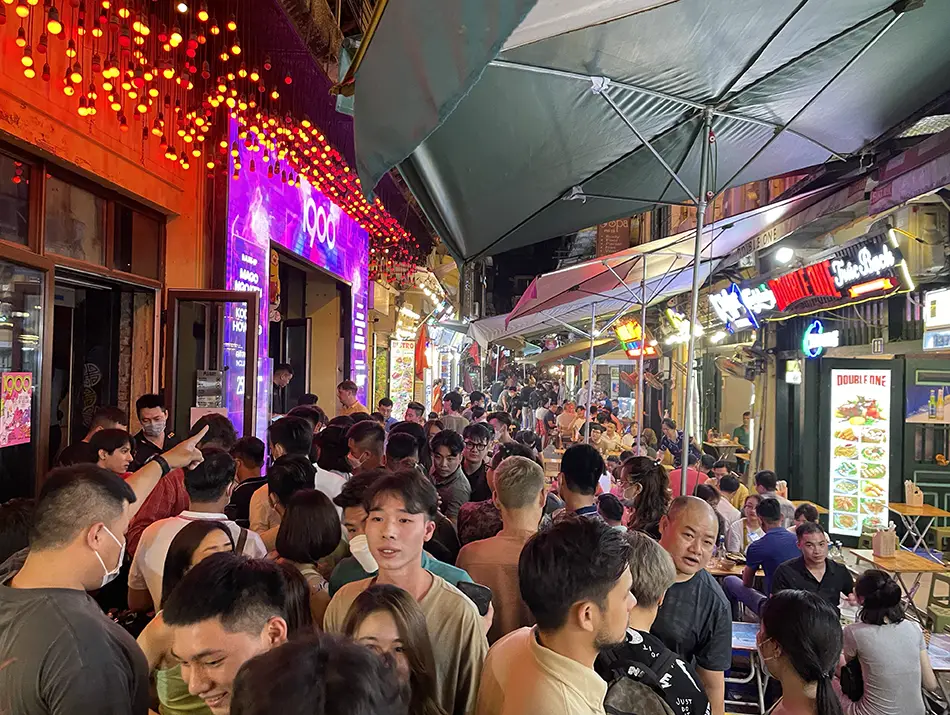
📍Ta Hien Beer Street is the undisputed center of nightlife in the Old Quarter. This narrow alley comes alive after 6:00 PM when hundreds of locals and travelers gather on small plastic stools to drink fresh draft beer known as bia hoi. The atmosphere is energetic and loud with music playing from various bars and vendors selling street snacks like grilled squid and fermented pork rolls.
On weekend evenings from Friday to Sunday the streets around Hoan Kiem Lake become a pedestrian-only zone. The area transforms into a massive public space filled with street performers and traditional games and local families.
The 📍Hanoi Night Market also opens during these nights and stretches from Hang Dao Street to Dong Xuan Market. It is a crowded and bright thoroughfare where you can find inexpensive clothing and souvenirs and a wide variety of local street food.
Hanoi on a Budget
Traveling in Hanoi on a budget is efficient because many core experiences are inexpensive. Street food stalls and small family-run eateries offer filling meals like pho and bun cha for low prices. You can find these dishes for 40,000 – 60,000 VND ($1.60 – 2.40 / €1.50 – 2.30 ).
Many of the city’s best experiences are free of charge. You can spend hours wandering the streets of the Old Quarter or watching local life around Hoan Kiem Lake. Witnessing the sunrise tai chi sessions or the nightly flag lowering ceremony at 9:00 PM at Ba Dinh Square requires no ticket. Several pagodas like Tran Quoc have no entrance fee.
Walking is the most effective way to explore the central districts to save on transport costs.
Sustainable and Responsible Travel Tips

To support Hanoi’s local economy and protect its historical sites, follow these steps:
- Dine with a Purpose: Visit KOTO (Know One Teach One) near the Temple of Literature. This social enterprise trains at-risk and disadvantaged youth in hospitality, turning them into world-class chefs and servers.
- Shop for Ethical Crafts: Avoid mass-produced souvenirs. Instead, head to Craft Link, a non-profit that ensures ethnic minority artisans receive fair wages.
- Use Zero-Emission Transport: Take advantage of Hanoi’s “Green Capital” initiatives by using the VinBus (electric public buses) or Xanh SM (electric taxi and bike fleet). For a slower pace, the Metro offers a great view of the city while avoiding road congestion.
- Practice Refill Culture: Reduce single-use plastic by carrying a reusable bottle (locate stations via RefillMyBottle or mymizu).
- Engage in Cultural Exchange: Book a walking tour with HanoiKids. They are student volunteers who provide free tours to practice their English, offering a genuine local perspective without the commercial pressure of traditional agencies.
Activities to Avoid
Be a conscious traveler by keeping these cultural and environmental boundaries in mind:
- Risky Rail Photos: While “Train Street” is famous, avoid standing on the tracks or patronizing cafes that encourage unsafe behavior. Use the designated safety zones or view the tracks from the pedestrian bridge on Dien Bien Phu Street instead.
- Inappropriate Attire at Ho Chi Minh Mausoleum: This is the most sacred site in the city. Avoid wearing shorts, tank tops, or mini-skirts here. If you are not dressed modestly, you will be denied entry to the complex.
Know Before You Go

Local Tips
Hanoi’s traffic is intense. When crossing the street, walk at a slow, steady, and predictable pace; the motorbike drivers are experts at navigating around pedestrians.
Bargaining is expected in markets but not in restaurants or convenience stores. A polite smile and a gentle negotiation are more effective than aggressive haggling.
Safety Tips
Hanoi is generally a safe city for travelers, but petty crime and scams exist. Be vigilant about your belongings in crowded areas to prevent pickpocketing.
Common safety tips include being wary of overly friendly strangers offering unsolicited help. Cyclo and taxi scams are prevalent. Always agree on a price before you start your ride or ensure the taxi driver uses the meter.
Only book tours, especially for Ha Long Bay, through reputable agencies with verifiable reviews, as fake or low-quality tour operators are common.
Family with Kids Tips
Hanoi can be a fantastic destination for families with an adventurous spirit. Children often enjoy the spectacle of the Thang Long Water Puppet Theatre and exploring the grounds of the Temple of Literature.
The Vietnam Museum of Ethnology is one of the best family-friendly activities in Hanoi, with its large outdoor space featuring traditional houses from different ethnic groups that kids can explore.
The weekend walking street around Hoan Kiem Lake provides a safe, traffic-free space for children to run around. However, the chaotic traffic and crowded sidewalks require constant supervision of young children.
Beyond the Capital: Where Next?
From Hanoi most travelers either head further north into the rugged highlands or venture south to explore the dramatic landscapes of the Red River Delta and the coast. The northern routes toward Sapa and Ha Giang offer immersive cultural experiences with ethnic minority communities and high-altitude trekking through terraced rice fields. Moving south toward Ninh Binh and Ha Long Bay provides access to world-renowned limestone karsts and ancient historical sites.
Heading North
- Sapa: This mountain town is famous for its mist-covered valleys and the Fansipan peak which is the highest in Indochina. You can trek through the Muong Hoa Valley to visit traditional Hmong and Red Dao villages or take the cable car to the summit for panoramic views.
- Ha Giang: Known for the legendary Ha Giang Motorbike Loop this region features the most dramatic mountain passes in Vietnam including the Ma Pi Leng Pass. It offers a raw and adventurous experience through the Dong Van Karst Plateau Geopark which is a UNESCO-recognized site of geological importance.
- Ban Gioc: Located on the border with China this is the largest natural waterfall in Southeast Asia and is known for its three distinct cascades. The surrounding area in Cao Bang province features calm jade-green rivers and the impressive Nguom Ngao limestone cave system.
Heading South
- Ha Long Bay: This UNESCO World Heritage site is defined by thousands of towering limestone islands and emerald waters. Most visitors book overnight cruises to explore hidden caves and floating villages or participate in kayaking through the tranquil lagoons of Lan Ha Bay.
- Ninh Binh: Often called “Ha Long Bay on Land” this province features the Trang An Landscape Complex where you can take traditional rowboat tours through narrow water caves. The area also hosts the Mua Cave viewpoint which offers a steep climb to a dragon statue overlooking the vast rice paddies of Tam Coc.
Without the Hype: Is Hanoi Worth Visiting?
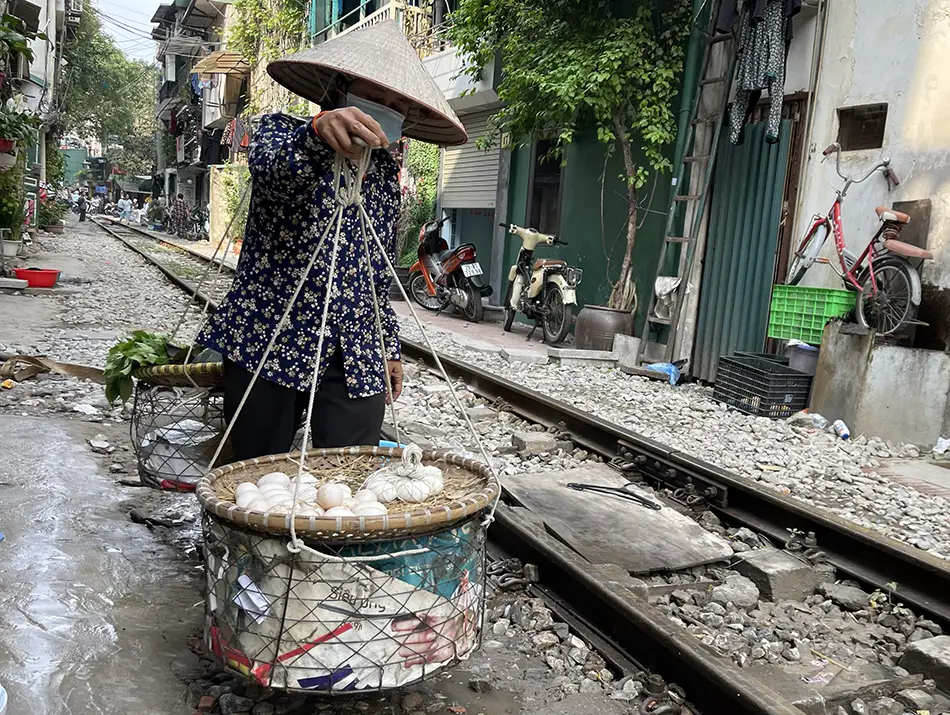
Hanoi delivers a potent dose of Vietnamese culture that is historic, chaotic, and deeply rewarding. It is a city for the curious traveler, one who finds energy in vibrant street life and beauty in layers of history.
It offers an unfiltered urban experience that feels authentic and constantly surprising.
You’ll like Hanoi if:
- You are a passionate foodie. The street food culture is world-class, allowing you to sample incredible dishes like Bun Cha and Pho right on the sidewalk for a pittance.
- You appreciate history and atmosphere. You can explore the 11th-century Temple of Literature in the morning and wander through the grand French Quarter in the afternoon.
- You thrive in high-energy environments. The Old Quarter’s blend of commerce, traffic, and daily life is a captivating spectacle for those who enjoy urban immersion.
You might skip it if:
- You need personal space and quiet. The city is relentlessly crowded and noisy, which can be draining for travelers who prefer a relaxed pace.
- Air quality is a major health concern for you. Hanoi frequently experiences high levels of air pollution, especially in winter, which can be problematic for those with respiratory issues.
- You expect pristine, orderly surroundings. The charm of the Old Quarter lies in its chaotic nature, which includes cluttered sidewalks and a constant buzz that may not appeal to all.
We hope this guide on the best things to do in Hanoi helps you decide if this dynamic city fits your travel interests. For more inspiration, explore our full collection of Vietnam travel guides. We wish you easy planning and an unforgettable trip!