


Why Visit Ho Chi Minh: A City of Unstoppable Energy
Ho Chi Minh City is a sprawling, relentless metropolis in southern Vietnam, a place where history and hyper-modernity collide on every corner. Formerly known as Saigon, it’s a city defined by the roar of millions of motorbikes, the aroma of street food, and a palpable sense of ambition. This guide focuses on navigating its electric energy, with practical advice on what to see, eat, and expect. The best things to do in Ho Chi Minh City often involve simply diving into its organized chaos. However, this city is not for everyone.
If you seek tranquil temples, pristine nature, or a quiet escape, you will be disappointed. The constant traffic, noise, and humid heat can overwhelm travelers looking for a relaxing holiday. Ho Chi Minh is a full-sensory urban experience, rewarding those who embrace its pace but exhausting those who fight it.
Table of Contents
One Minute History Lesson
The city’s past is layered and complex. French colonialism left its mark with wide boulevards and grand structures like the Central Post Office, but the defining event of the 20th century was the Vietnam War. You can feel this history at the Reunification Palace, where a tank famously crashed through the gates in 1975, signaling the war’s end. This event unified the country and led to Saigon’s renaming.
In the decades since, the city has transformed into Vietnam’s economic engine. A key symbol of this forward momentum is the city’s new metro system, which began full operations in late 2024. This massive infrastructure project, decades in the making, has reshaped how residents and travelers navigate the urban landscape, reflecting a city firmly focused on its future.
Ho Chi Minh at a Glance
- Known For: Motorbike-clogged streets, Vietnam War history, and exceptional street food.
- Best Time to Visit: The dry season from December to April offers more comfortable weather. The wet season (May to November) brings daily downpours.
- Getting There: Tan Son Nhat International Airport (SGN) is the main gateway.
- How Long to Stay: 3–4 days is ideal for major sights and soaking in the atmosphere. A longer stay of 5+ days allows for day trips to the Mekong Delta or Cu Chi Tunnels.
Average Daily Spending in 2026
- Budget: VND 900,000 – VND 1,200,000 ($37–$50 / €35–€47)
- Mid-Range: VND 1,800,000 – VND 2,800,000 ($75–$116 / €71–€110)
- Luxury: VND 6,000,000+ ($250+ / €235+)
Planning Your Trip to Ho Chi Minh
Best Time to Visit Ho Chi Minh
The weather in Ho Chi Minh City is divided into two distinct seasons: dry and wet. The dry season, running from December through April, is the most popular time to visit. During these months, you can expect warm, sunny days and lower humidity, making it more bearable for exploring the city on foot.
Conversely, the wet season lasts from May to November. This period is characterized by high humidity and short, intense downpours, usually in the afternoon. While the rain can offer a brief respite from the heat, it can also disrupt plans.
Be aware of the Tet holiday from February 14 to February 22 in 2026 when the city is festive but many businesses close and travel costs surge.
How Long to Stay in Ho Chi Minh
A stay of three to four days is sufficient to cover the main highlights without feeling rushed. This timeframe allows you to explore District 1 landmarks, experience the food scene, and take a half-day trip to the Cu Chi Tunnels while utilizing the new Metro Line 1 for faster city transit. A shorter two-day visit is possible but will be packed, focusing on central attractions like the War Remnants Museum, Reunification Palace, and the lively Bach Dang Wharf area.
A longer stay of five or more days is justified if you wish to explore the city’s diverse districts more deeply or use it as a base for multiple day trips. For example, a full-day excursion to the Mekong Delta requires a dedicated day of approximately 9 hours.
If you are planning the rest of your Vietnam itinerary, check out our comprehensive guide on the best places to visit in Vietnam to see where to go after Saigon.
How to Get to Ho Chi Minh: Transportation Options
As a major regional hub, reaching Ho Chi Minh City is straightforward. Most international visitors arrive via Tan Most international visitors arrive via Tan Son Nhat International Airport (SGN), which is located about 4.5 miles (7 kilometers) from the city center.
The city also has a direct bus connection with Phnom Penh, the capital of Cambodia. This journey typically takes about 6 to 7 hours and costs approximately VND 600,000 ($24 / €23).
Sleeper buses have become a good transportation option for nearby travel hubs like Da Lat, Mui Ne, and Can Tho. These routes allow travelers to cover long distances comfortably overnight, often for prices starting around VND 300,000 ($12 / €11) depending on the destination and the level of luxury.
Getting Around
Navigating Ho Chi Minh City’s streets is an experience in itself. Walking is feasible within compact areas like District 1, where many top attractions in Ho Chi Minh are clustered. However, the heat and chaotic traffic make long distance walks challenging.
For most journeys, ride hailing apps like Xanh SM, Grab, and Be are indispensable. They offer both cars and motorbike taxis, known as xe om, which are a fast and affordable way to weave through traffic. A typical short motorbike ride through the city center starts around 18,000 VND ($0.75 / €0.70).
The public bus system is extensive and can be navigated with the help of Google Maps, which provides reliable route numbers and stop locations. Fares are very budget friendly and usually cost between VND 7,000 and VND 9,000 (~$0.30/€ ) to per trip.
A great new option is the HCMC Metro. The Metro Line 1 is clean and efficient for connecting Ben Thanh Market in District 1 to the eastern districts and the Suoi Tien area. Tickets for the metro range from VND 7,000 to VND 20,000 ($0.29–$0.83 / €0.27–€0.78) depending on the distance traveled.
Where to Stay in Ho Chi Minh: Accommodation Areas and Options
Accommodation is plentiful, catering to all budgets. District 1 is the heart of the action, where most major hotels, restaurants, and sights are located. It’s convenient but also the most crowded and tourist-focused. For a slightly more local feel, District 3 offers a mix of charming cafes, colonial architecture, and the newly renovated Turtle Lake pedestrian zone while remaining close to the center.
Further afield, Binh Thanh District is a modern hub, home to the Landmark 81 skyscraper and upscale apartments. For a quieter and more residential atmosphere, the Thao Dien neighborhood in Thu Duc City (formerly known as District 2) is popular with expatriates and features boutique hotels and international restaurants.
Knowing where to stay in Ho Chi Minh can significantly shape your experience, from the frenetic energy of the center to the calmer pace of its outer districts.
Is it Expensive to Visit Ho Chi Minh in 2026?
Ho Chi Minh City is the most expensive destination in Vietnam, with prices for hotels and upscale dining higher than in Hanoi or Da Nang. However, it remains very affordable if you stick to street food and local transport.
- War Remnants Museum Entry: VND 40,000 ($1.5 / €1.5)
- Independence Palace Entry: VND 40,000 ($1.5 / €1.5)
- Standard 3-Star Hotel: VND 750,000–1,500,000 ($28.50–57.00 / €24.50–49.00) per night
- Budget Hostel Dorm Bed: VND 105,000–260,000 ($4.00–10.00 / €3.50–8.50) per night
- Meal at an Inexpensive Local Restaurant: VND 55,000 ($2.00 / €2.00)
- Motorbike Rental (Economy Scooter): VND 150,000–180,000 ($5.50–7.00 / €5.00–6.00) per day
- Intercity Transport (HCMC to Vung Tau): VND 100,000–320,000 ($4.00–12.00 / €3.50–10.50)
Best things to See in Ho Chi Minh: Sights & Attractions
Ho Chi Minh City, formerly Saigon, presents a layered history through its architecture and landmarks. Colonial French structures stand near modern glass skyscrapers, while solemn memorials recount a difficult past.
The top attractions in Ho Chi Minh City are concentrated in District 1, making them accessible on foot for determined visitors. These sites provide a visual timeline of the city’s political and cultural evolution.
Central Post Office

This building is a functioning post office and a relic of French Indochina. Completed in 1891, its design features a grand vaulted ceiling, historic maps of the region, and original telephone booths. The architecture reflects classic Gothic and Renaissance styles. It offers a direct look into the city’s colonial era.
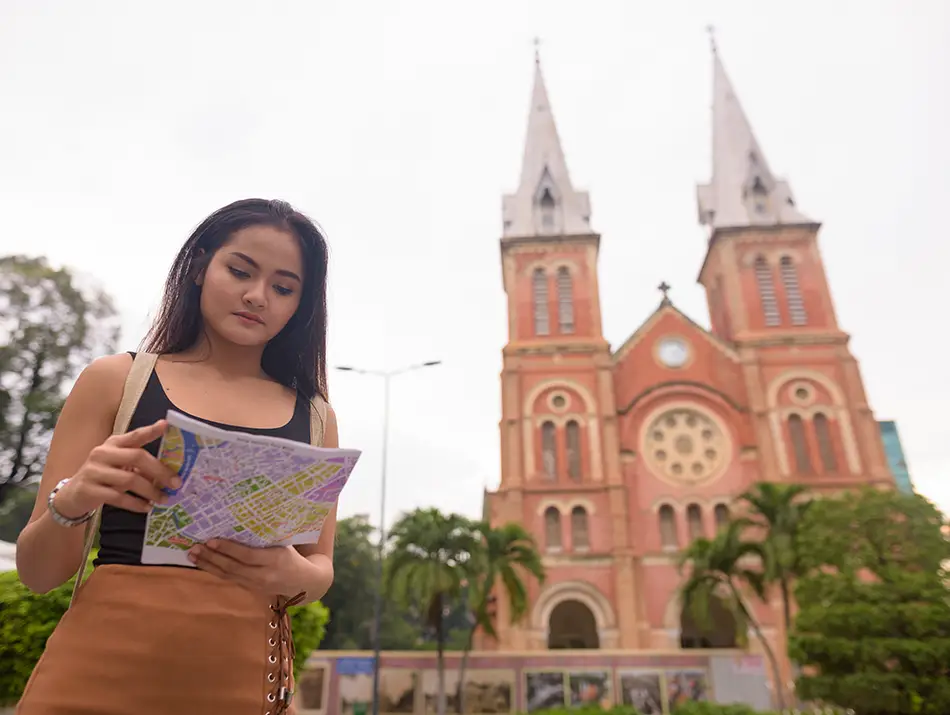
Visitors can mail a postcard, observe the daily operations, or simply admire the interior design. The large central hall is often busy with both customers and tourists taking photos. The building’s yellow facade and green shutters are notable from the outside. It sits directly across from the Notre Dame Cathedral, which is under long-term renovation and not accessible.
- Hours: 7:00 AM – 7:00 PM (Monday to Friday), 7:00 AM – 6:00 PM (Saturday), and 8:00 AM – 6:00 PM (Sunday)
- Combines with: Reunification Palace, Saigon Opera House.
- Travel Tip: Visit on a weekday morning to see the post office in full operation with fewer tourist crowds.
- 📍 Central Post Office on Google Maps
Reunification Palace
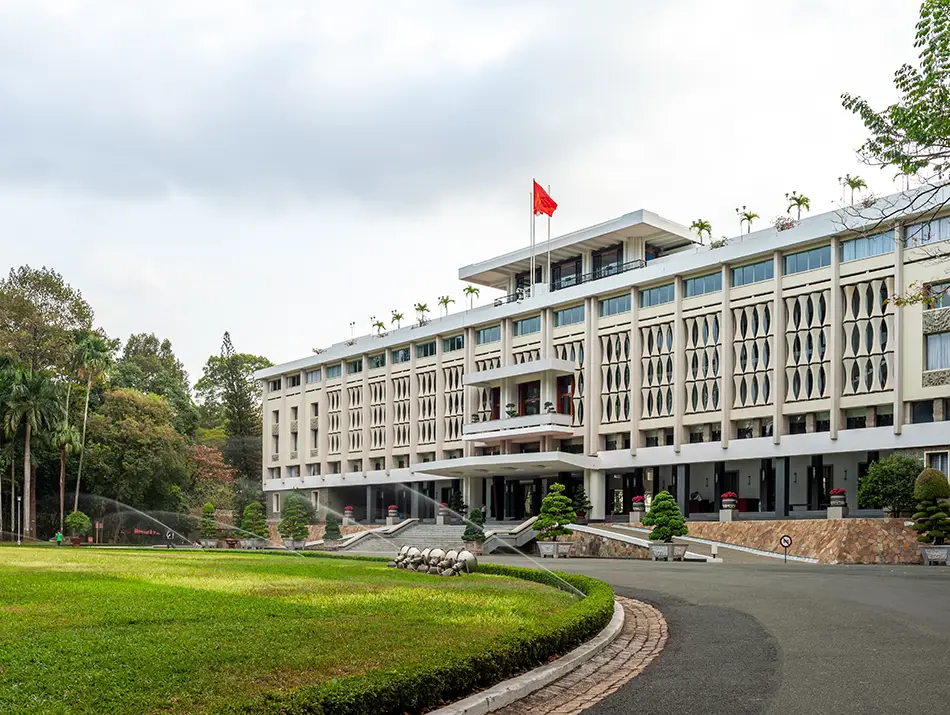
The Reunification Palace is a landmark frozen in time. It was the home and office of the President of South Vietnam during the Vietnam War. The building is most famous as the site where the war ended on April 30, 1975, when a North Vietnamese tank crashed through its gates. Its 1960s architecture and original furnishings are preserved.
Exploring the palace feels like walking through a historical documentary. You can tour the president’s living quarters, state rooms, and the eerie basement command bunker filled with old maps and communication equipment. The grounds also display tanks associated with the fall of Saigon, helping contextualize this pivotal moment in history.
- Hours: 8:00–11:30 AM and 1:00–4:30 PM daily
- Price: 40,000 VND ($1.60 / €1.50) for adults
- Time needed: 1.5–2.5 hours.
- Combines with: War Remnants Museum, Central Post Office.
- Travel Tip: Audio guides are available for a small fee and provide valuable context that the limited signage lacks.
- 📍 Reunification Palace on Google Maps
Bitexco Financial Tower
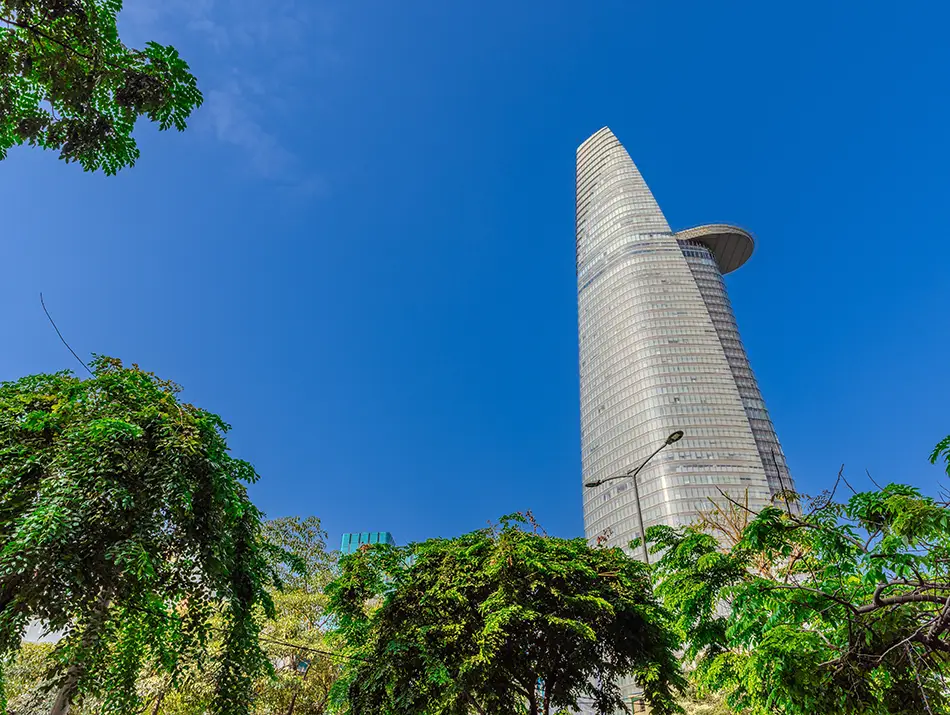
This 68-story skyscraper shaped like a lotus bud altered Ho Chi Minh City’s skyline. For years, it was the tallest building in the city until Landmark 81 was completed. The main draw for tourists is the Saigon Skydeck on the 49th floor, which offers panoramic views of the sprawling metropolis and the Saigon River.
The experience involves a high-speed elevator ride to the observation deck. The floor-to-ceiling glass windows provide an expansive perspective, though the view can be hazy on some days.
While the view is impressive, the ticket price is high compared to other local attractions. Consider visiting on a clear day to get the most value.
- Hours: 9:30 AM – 9:30 PM daily.
- Price: 240,000 VND ($9.45 / €8.70) for the Skydeck.
- Time needed: 45–60 minutes.
- Combines with: Nguyen Hue Walking Street, Saigon River Water Bus terminal.
- 📍 Bitexco Financial Tower on Google Maps
War Remnants Museum

This museum offers a stark and sobering account of the Vietnam War from a Vietnamese perspective. It is an essential visit for those seeking to understand the war’s immense impact on the country and its people. The exhibits are graphic and can be emotionally challenging for some visitors.
The museum is spread across three floors of powerful photography and artifacts. Outside, you will find captured American military equipment, including tanks, jets, and helicopters.
The indoor galleries contain exhibits on the effects of Agent Orange, international anti-war protests, and war crimes. The content is unflinching and provides little celebratory context.
- Hours: 7:30 AM – 5:30 PM daily.
- Price: 40,000 VND ($1.60 / €1.45).
- Time needed: 1–2 hours.
- Combines with: Reunification Palace.
- Travel Tip: Due to the graphic nature of the exhibits, this museum may not be suitable for young children or sensitive viewers.
- 📍War Remnants Museum on Google Maps
Landmark 81
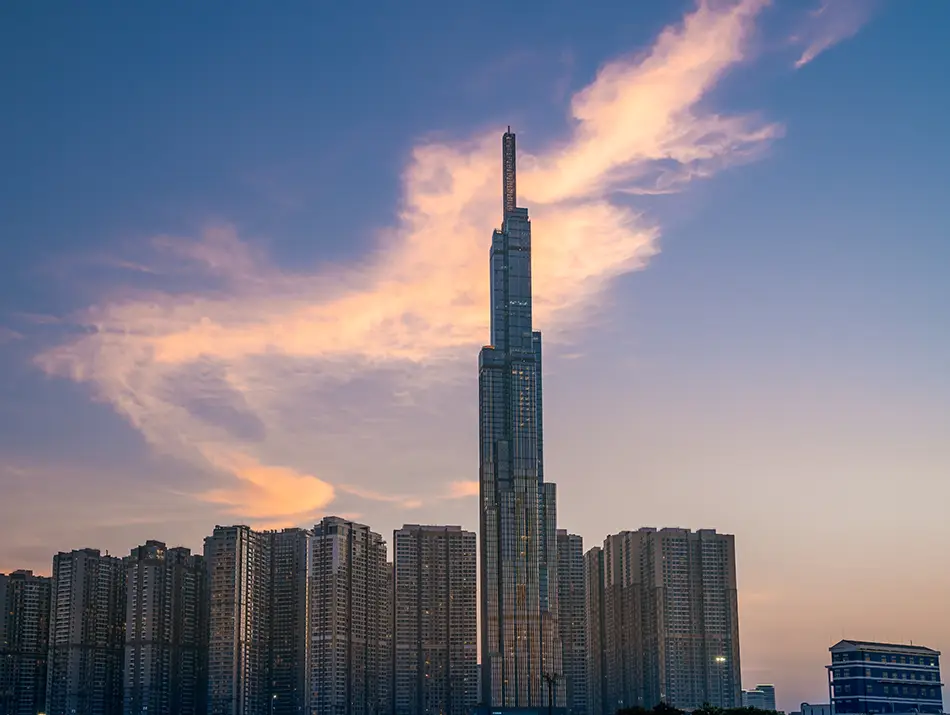
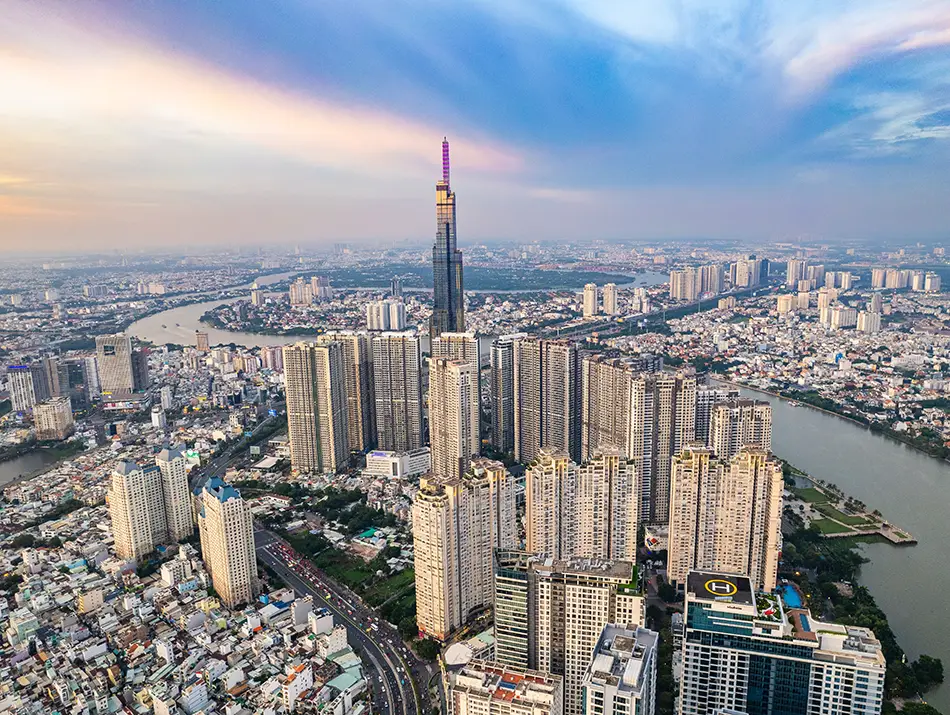
As the tallest building in Vietnam and the second-tallest in Southeast Asia (surpassed by Merdeka 118 in Kuala Lumpur), Landmark 81 is a symbol of the city’s rapid modernization. Located in the Binh Thanh District, this 81-story skyscraper contains a luxury hotel, apartments, a shopping center, and an observation deck.
The observation deck, SkyView, sits near the building’s peak and offers the highest vantage point in the city. The views surpass those of the Bitexco Tower due to the higher altitude. However, its location is outside the central tourist core of District 1, requiring dedicated transport. The building itself is part of a large, modern residential and commercial complex.
- Hours: 9:30 AM – 10:00 PM daily.
- Price: Around 810,000 VND ($31.85 / €29.35) for a standard SkyView ticket.
- How to get there: Best reached by taxi or ride-hailing app; a 15–20 minute drive from District 1. Also accessible via the new metro’s Line 1.
- Combines with: The high-end shopping mall at the tower’s base.
- Travel Tip: Visit in the late afternoon to see the city transition from daylight to night, offering two distinct viewing experiences.
- 📍Landmark 81 on Google Maps
Saigon Opera House
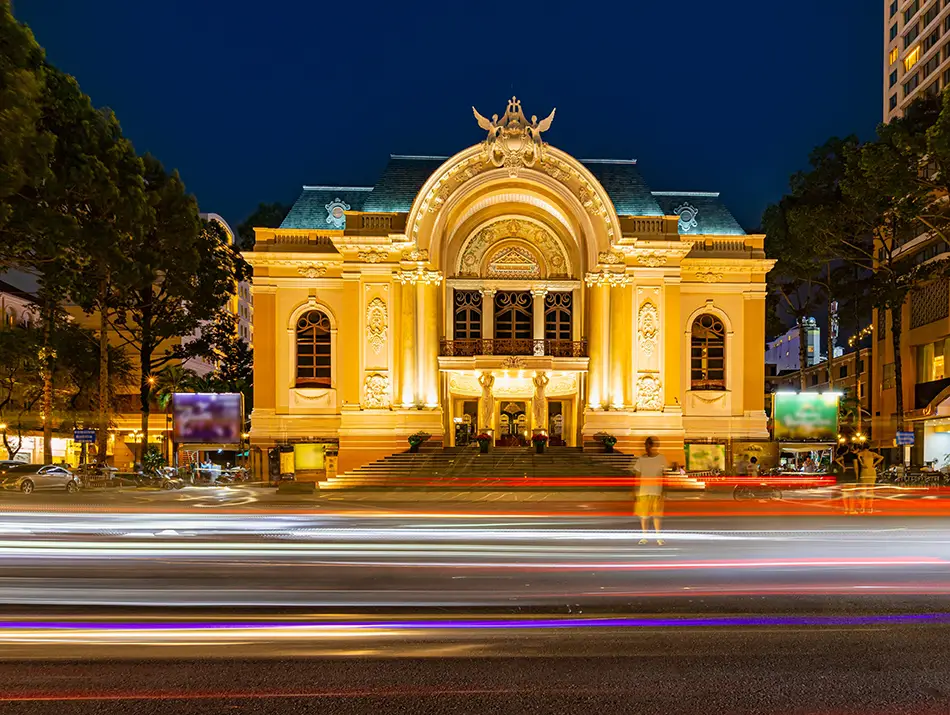
The Saigon Opera House is an elegant example of French colonial architecture in the heart of the city. Built in 1897, the building was restored in 1998 to its original form. It is primarily a venue for live performances and is not generally open for casual touring.
To experience the interior, you must purchase a ticket to a show. The most popular performance for tourists is the A O Show, a cultural performance that combines acrobatics, dance, and theatrical visuals to tell stories of Vietnamese life. Other performances include ballet, concerts, and traditional theater.
- Hours: Box office is open 9:00 AM – 4:30 PM; performance times vary.
- Price: Show tickets vary, but the A O Show starting at 800,000 VND ($31.35 / €28.85).
- Combines with: Nguyen Hue Walking Street.
- Travel Tip: Even if not attending a show, the building’s exterior is impressive, especially when illuminated at night.
- 📍Saigon Opera House on Google Maps
42 Nguyen Hue Café Apartment

This nine-story apartment building has been famously repurposed by local entrepreneurs. Each apartment has been converted into a unique café, boutique shop, or workshop. The building overlooks Nguyen Hue Walking Street, a wide pedestrian-only boulevard. It represents the creative and adaptive spirit of modern Saigon.
Visitors can choose a café and enjoy a drink while looking out from the balcony. The building has a vintage, slightly worn feel, which is part of its character. Be aware that there is a small fee to use the old elevator.
- Hours: Varies by shop, but generally 8:00 AM – 10:00 PM.
- Price: Free to enter the building; cost of drinks/food inside. Elevator fee is ~3,000 VND.
- Combines with: Saigon Opera House, Bitexco Financial Tower.
- Travel Tip: The balconies offer a prime viewing spot for events and celebrations held on Nguyen Hue Walking Street.
- 📍 Café Apartment on Google Maps
Famous Museums in Ho Chi Minh City

- 📍Ho Chi Minh City Museum: Chronicles the city’s history in a grand neoclassical building that was once the Gia Long Palace.
- 📍Ho Chi Minh City Museum of Fine Arts: Showcases Vietnamese art from ancient to contemporary periods across three buildings of colonial architecture.
- 📍History Museum of Ho Chi Minh City: Covers Vietnamese history from prehistory to the end of the Nguyen Dynasty in 1945.
- 📍Southern Women’s Museum: Honors the contributions of southern Vietnamese women in national history, development, and war.
- 📍FITO Museum: A private museum displaying thousands of items related to the practice of traditional Vietnamese medicine.
- 📍Ao Dai Museum: A private museum located outside the city center dedicated to the history and design of the traditional Vietnamese dress.
- 📍Southern Armed Forces Museum: Displays military history and equipment with a focus on the armed forces of southern Vietnam.
Best things to Do in Ho Chi Minh City: Activities & Experiences
Beyond static attractions, the best things to do in Ho Chi Minh City involve active engagement with its culture, commerce, and daily rhythms. These Ho Chi Minh activities immerse you in the city’s energy, from bustling markets to modern transport systems. They offer a hands-on way to understand the city’s character.
Visit Ben Thanh Market
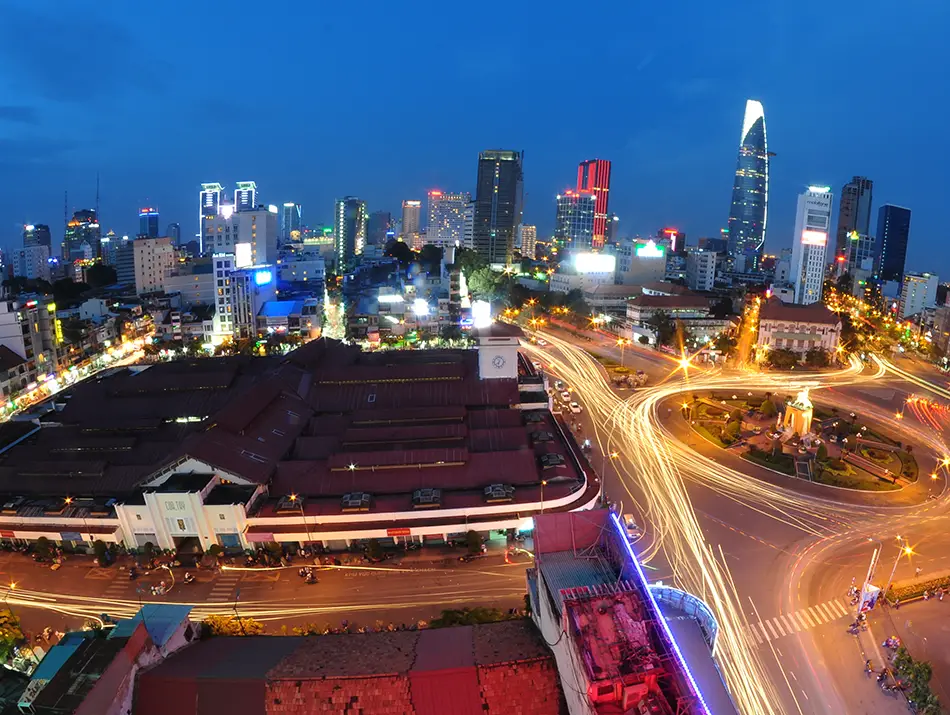
Ben Thanh Market is the city’s most famous central market, known for its clock tower and central location. It is a busy hub for souvenirs, clothing, textiles, and food. The market is geared heavily towards tourists, and prices reflect this. Haggling is not only common but expected.
Inside, you will find hundreds of tightly packed stalls. The experience can be intense, with vendors actively calling for your attention.
The market is also home to a food court that offers a good introduction to various Vietnamese street foods in a single location. The area is much calmer in the evening when the night market sets up outside.
- Hours: 6:00 AM – 6:00 PM for the main market; night market runs from 6:00 PM – 10:00 PM.
- Combines with: Reunification Palace (15-minute walk).
- Travel Tip: If a vendor quotes a price, a reasonable counteroffer is typically 50–60% of that price. Be prepared to walk away if you cannot agree on a fair price.
- 📍Ben Thanh Market on Google Maps
Explore Binh Tay Market
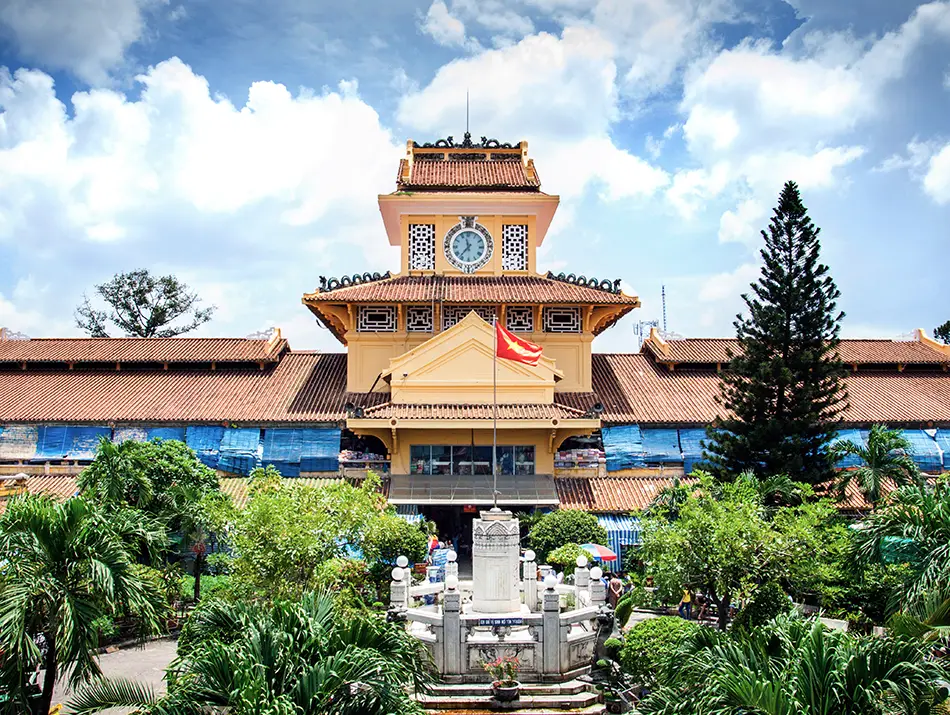
Located in the Cholon area (Chinatown), Binh Tay Market offers a more local and less tourist-focused experience than Ben Thanh. It is primarily a wholesale market where area residents and business owners buy goods in bulk. The atmosphere is functional and less frantic.
Here, you will find a vast array of goods, from spices and textiles to housewares and specialty foods. While some vendors sell single items, the focus is on wholesale. The central courtyard and its clock tower offer a place to rest. The market is a great place to observe local commerce without the high-pressure sales tactics found elsewhere.
- Hours: 6:00 AM – 6:00 PM daily.
- How to get there: Located in District 6. A taxi or ride-hailing app is the most convenient option (20–30 minutes from District 1).
- Combines with: Thien Hau Pagoda and other temples in Cholon.
- Travel Tip: Visit the small food stalls outside the main market building for authentic and inexpensive local dishes.
- 📍Binh Tay Market on Google Maps
Relax in an Infinity Pool
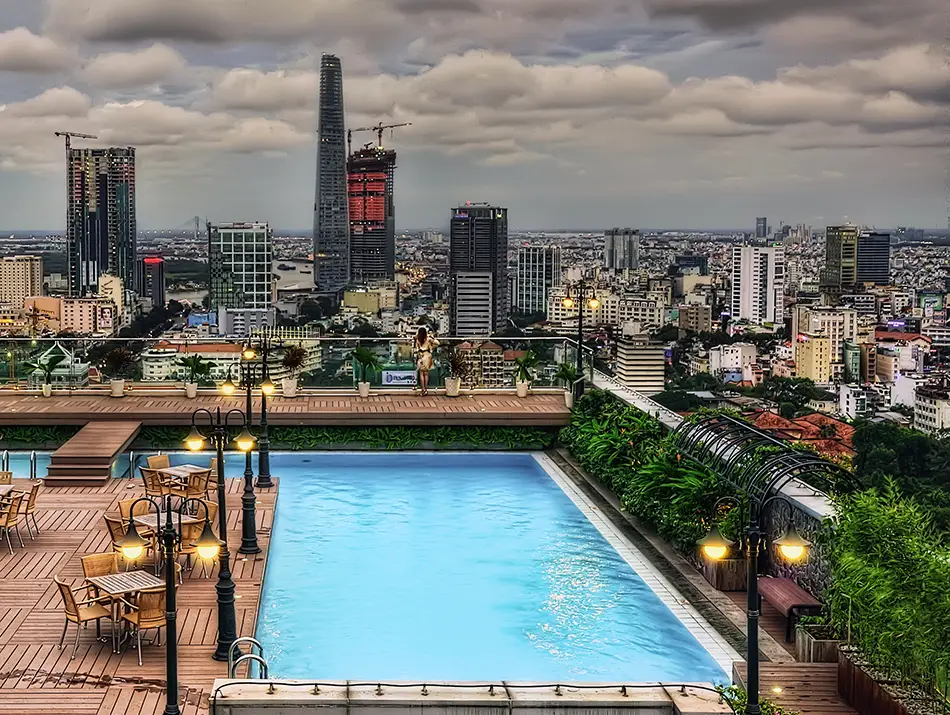
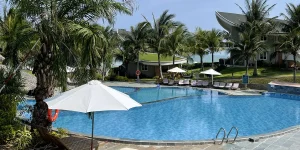
Escaping the city’s heat and humidity is a common priority. Many hotels in Ho Chi Minh City feature rooftop infinity pools with excellent skyline views. This activity offers a way to relax, cool down, and see the city from a different perspective. It is one of the more modern, fun things to do in Ho Chi Minh.
While the most exclusive 5-star properties often reserve their pools for guests, several popular hotels continue to offer day passes for non-residents. Liberty Central Saigon Citypoint remains a favorite for its sleek, central vibe. California Saigon Hotel offers one of the most accessible and casual rooftop pool decks in District 1. For those willing to travel slightly outside the immediate center, La Vela Saigon Hotel in District 3 boasts one of the world’s largest rooftop infinity pools with an unparalleled 360-degree view.
- Price: Day passes can range from 400,000–800,000 VND ($15.70–$31.45 / €14.50–€29.00), often including a food and beverage credit.
- Travel Tip: Hotels frequently update their policies regarding non-guest access based on occupancy and seasonal demand, so it is best to contact them directly a couple of days before you plan to visit.
Take a City Bus Tour

A hop-on, hop-off bus tour provides a convenient overview of the city’s main attractions. These double-decker buses follow a fixed route that connects major landmarks, including the Reunification Palace, War Remnants Museum, and Notre Dame Cathedral. An audio guide provides commentary in multiple languages.
This is a practical option for your first day in the city to get oriented. It also works well for travelers with limited mobility or those short on time. However, the bus can be slow in the city’s dense traffic, making it less efficient than a taxi for direct point-to-point travel.
- Price: A 24-hour pass typically costs 450,000–500,000 VND ($18–20 / €16.50–18.50). Single-ride tickets are also available from around 150,000–180,000 VND ($6–7 / €5.50–6.50)
- How to get there: Tickets can be purchased online or at the main departure point near the Central Post Office.
- Time needed: A full loop takes about 90 minutes without getting off.
Watch the Golden Dragon Water Puppet Show
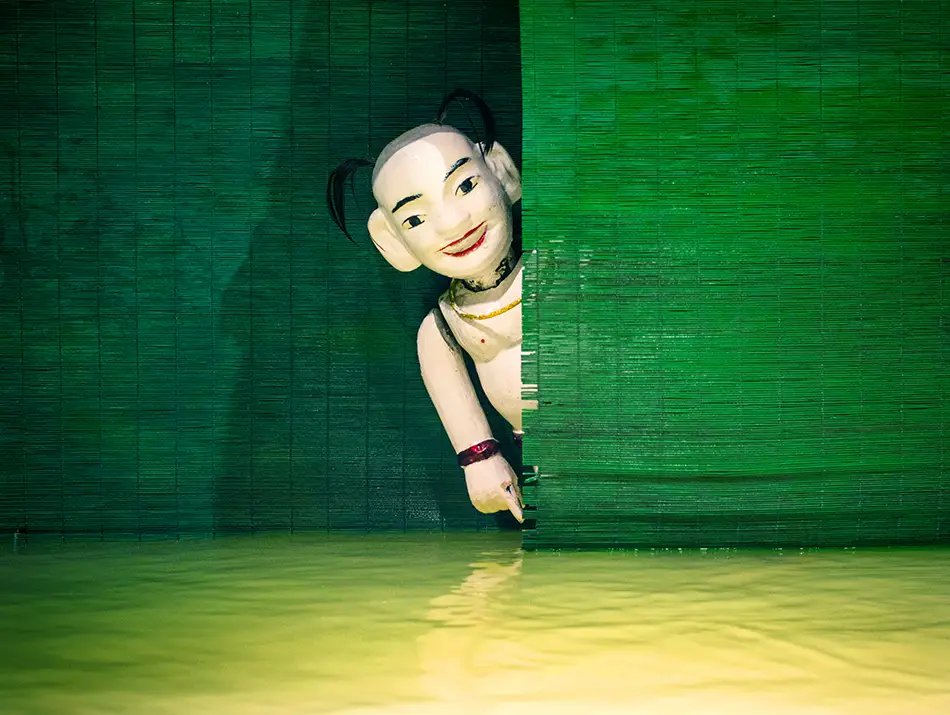
Water puppetry is a traditional Vietnamese art form that dates back to the 11th century. The Golden Dragon Water Puppet Theater offers a 50-minute show where puppeteers, hidden behind a screen, maneuver large wooden puppets over a pool of water. The performance is accompanied by a live traditional orchestra.
The stories depict Vietnamese folklore, legends, and scenes of rural life, such as farming and fishing. The entire performance is in Vietnamese, but the actions of the puppets are expressive and easy to follow. It provides a colorful and entertaining look into a unique part of the country’s cultural heritage.
- Hours: Shows are typically held at 5:00 PM and 6:30 PM daily.
- Tickets: 300,000 VND ($11.75 / €10.85).
- 📍 Golden Dragon Water Puppet Theater on Google Maps
Ride the Saigon River Water Bus
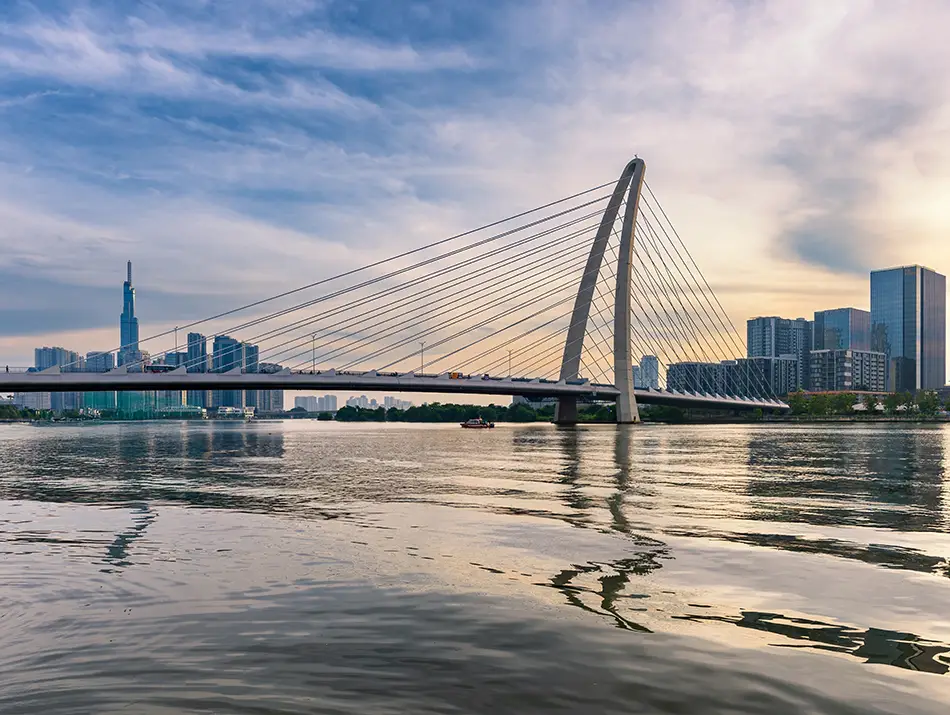
The Saigon River Water Bus is part of the city’s public transport network, not a dedicated tourist cruise. This makes it an inexpensive and practical way to see the city from the river. The boat travels between a central pier in District 1 and various stops upriver, offering views of the modern skyline and developing riverfront.
The journey provides a unique perspective on landmarks like Landmark 81 and the contrast between urban and more residential areas along the riverbanks. The boats are modern with air-conditioning. It is a relaxing break from the city’s street traffic.
- Hours: Service runs from approximately 7:00 AM to 7:00 PM.
- Price: A one-way ticket costs 15,000 VND ($0.60 / €0.55).
- How to get there: The main 📍Bach Dang pier is in District 1, near the Bitexco Tower.
- Travel Tip: Take a late afternoon trip to see the sunset over the city from the water for the best light.
Walk Explorations in Ho Chi Minh City
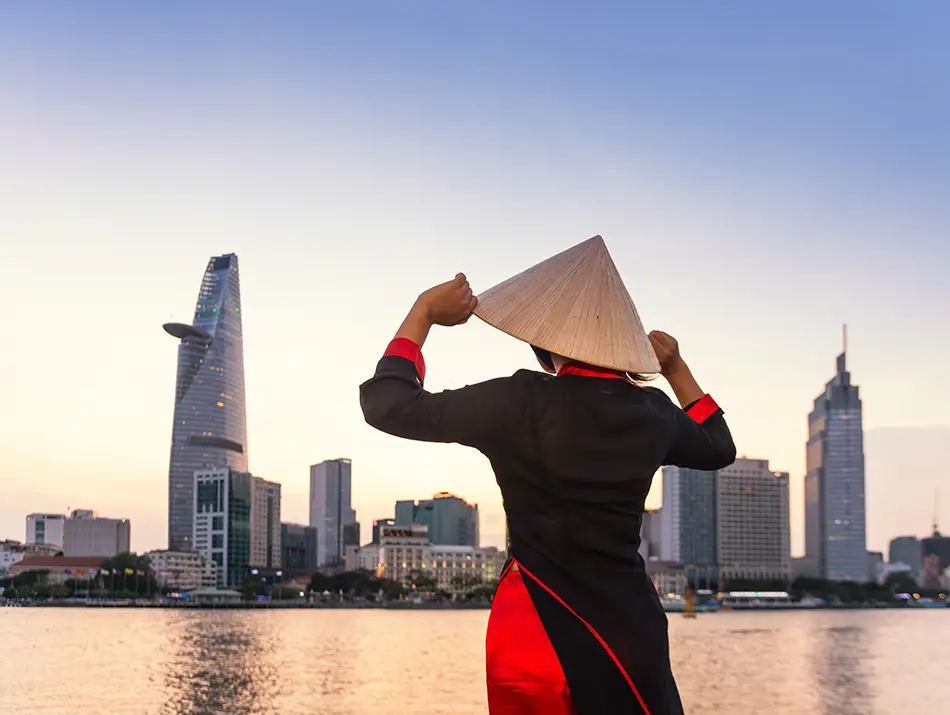
This part of our “Best Things to Do in Ho Chi Minh” guide is about wandering through areas that are interesting for their atmosphere rather than specific sights. These walks offer a ground-level view of daily life, architecture, and commerce away from the main tourist trail.
- Colonial Core of District 1: Start at the Opera House and walk along Dong Khoi Street towards the Saigon River. This area contains many well-preserved French colonial buildings, luxury hotels, and high-end boutiques. The wide, tree-lined boulevards are a remnant of the French urban planning.
- The “Hem“of District 4: Across a small canal from District 1, District 4 is known for its dense network of alleyways (Hem) and its reputation for street food. A walk here, especially in the evening around 📍Vinh Khanh Street, reveals a more local, residential side of the city with countless food stalls selling seafood and other local specialties.
- Cholon’s Medical Streets in District 5: Explore the historic herbal medicine quarter along 📍Hai Thuong Lan Ong street. This area is filled with traditional Chinese medicine shops where you can see and smell the herbs and ingredients used in these practices. The architecture has a strong Chinese influence, with many small temples and assembly halls.
- 📍Japanese Quarter : A compact pocket of the city where Japanese expats, restaurants, and businesses have shaped a distinct atmosphere. Walking these streets reveals ramen shops, izakayas, whisky bars, massage parlors, and discreet neon signage layered onto otherwise typical Saigon buildings.
- 📍Nguyen Van Binh Book Street: Located next to the Central Post Office, this short pedestrian street is dedicated entirely to books and reading culture. Independent publishers, bookstores, cafés, and shaded seating areas make it a calm pause from the surrounding traffic.
Best Day Trips From Ho Chi Minh
The areas surrounding Ho Chi Minh City offer a change of pace and scenery. These day trips provide access to historical war sites, unique ecosystems, and coastal towns. All are reachable within a few hours, though some destinations may benefit from an overnight stay for a more relaxed experience.
Cu Chi Tunnels
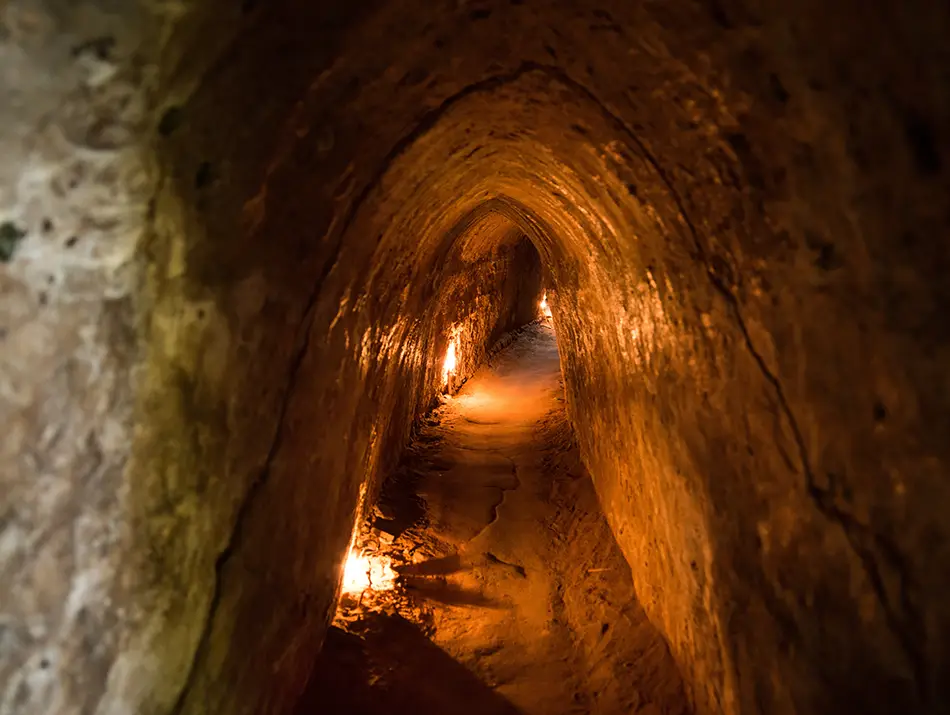
The Cu Chi Tunnels are a vast underground network used by Viet Cong forces during the Vietnam War, located northwest of Ho Chi Minh City. Visiting the site is less about extensive tunnel crawling and more about understanding how guerrilla warfare functioned under extreme conditions. The experience is structured as a guided historical walk with explanations and demonstrations along the way.
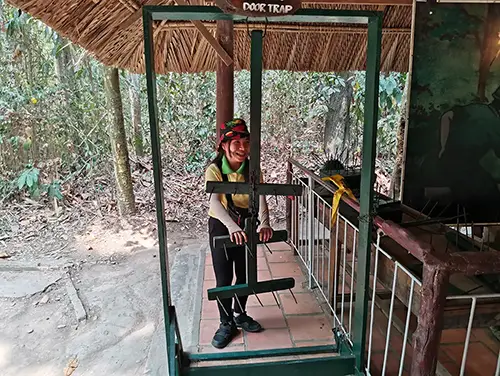
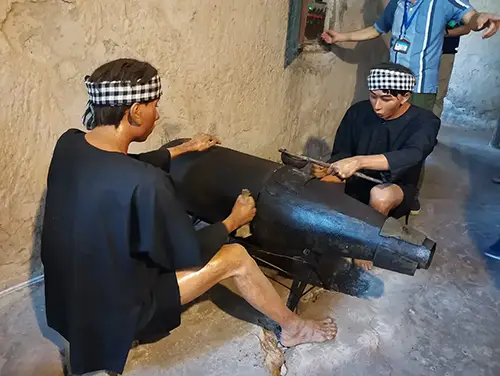
Visitors move through outdoor areas where guides explain camouflage techniques, hidden trapdoors, underground living quarters, and improvised wartime infrastructure. You can enter and crawl through very short, widened sections of the tunnels, which have been reinforced and expanded for safety and tourism. These sections offer only a glimpse of the real conditions, as the original tunnels were much narrower and far more claustrophobic.
- How to get there: Most visitors book a half-day guided tour from Ho Chi Minh City.
- Time needed: 5–6 hours, including travel time.
Mekong Delta
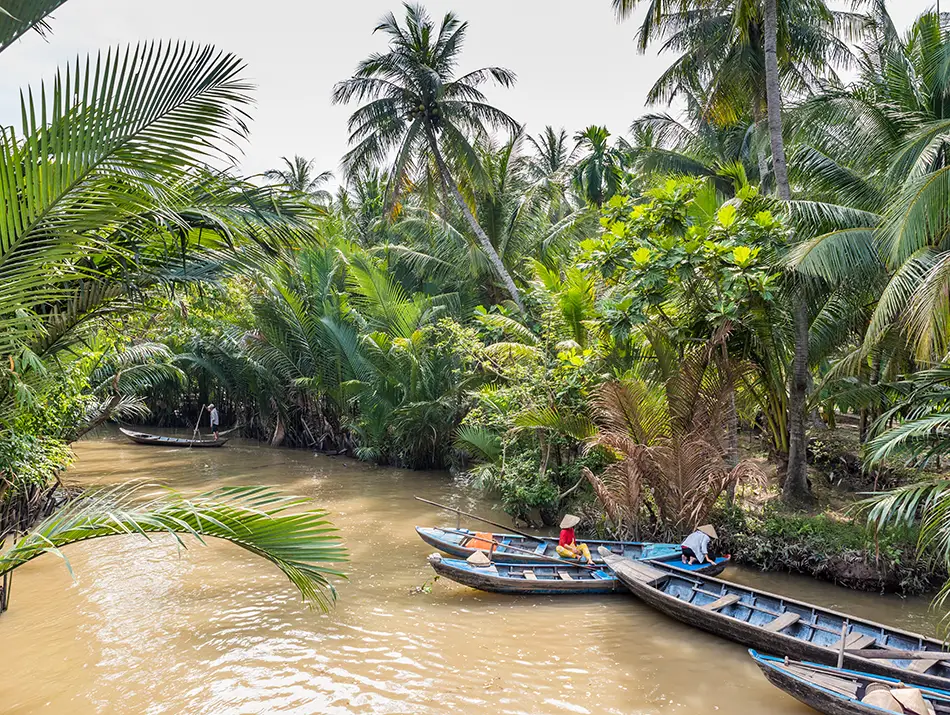
The Mekong Delta is a vast region of rivers, swamps, and islands south of Ho Chi Minh City. A trip here involves boat rides through coconut groves, visits to fruit orchards, and seeing local industries like coconut candy production.
A one-day tour provides a brief glimpse into the region’s riverine life. However, these tours can feel rushed and commercialized.
Many travelers find that the delta’s pace and character are better appreciated with an overnight stay in a less-touristy city like Can Tho, known for its larger floating market.
- How to get there: Organized bus tours are the most common method. Private cars or public buses are also options.
- Travel Tip: Choose a tour operator that visits smaller, less-crowded canals to get a more authentic sense of the delta.
Black Virgin Mountain
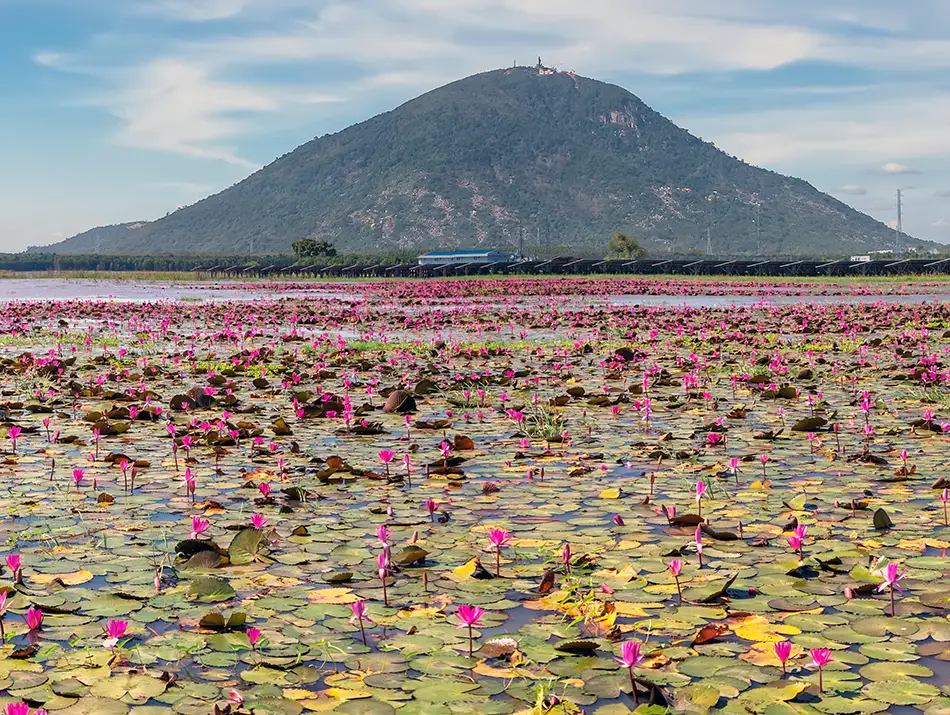
Located in Tay Ninh province, Black Virgin Mountain is the highest peak in southern Vietnam. Beyond its historical temples, the summit is now home to the world’s tallest bronze Buddha statue on a mountain, as well as an extensive, multi-level museum dedicated to Buddhist culture.
The mountain features one of the world’s most modern cable car systems, including the record-breaking !Van Son station with its surreal, Gaudi-esque architecture.
From the summit, you can experience significantly cooler temperatures and panoramic views of the surrounding Dau Tieng Reservoir and flat plains. The area is immaculately landscaped with seasonal flower gardens and grand lighting displays that illuminate the peak at night.
- How to get there: It is best visited by private car or as part of a tour, often combined with the Cao Dai Holy See, which is only 15 minutes from the mountain base.
- Cable Car Price: A round-trip ticket to the summit costs approximately 600,000 VND ($23.50 / €21.75). There are separate tickets if you only wish to visit the middle level (the Pagoda complex).
- Time needed: 7–9 hours, including travel.
- Travel Tip: The peak can be 5–8°C cooler than the city and quite windy. Even if it’s a hot day in Saigon, bring a light jacket.
- 📍Black Virgin Mountain on Google Maps
Can Gio Biosphere Reserve (Khu Du tru Sinh quyen Can Gio)
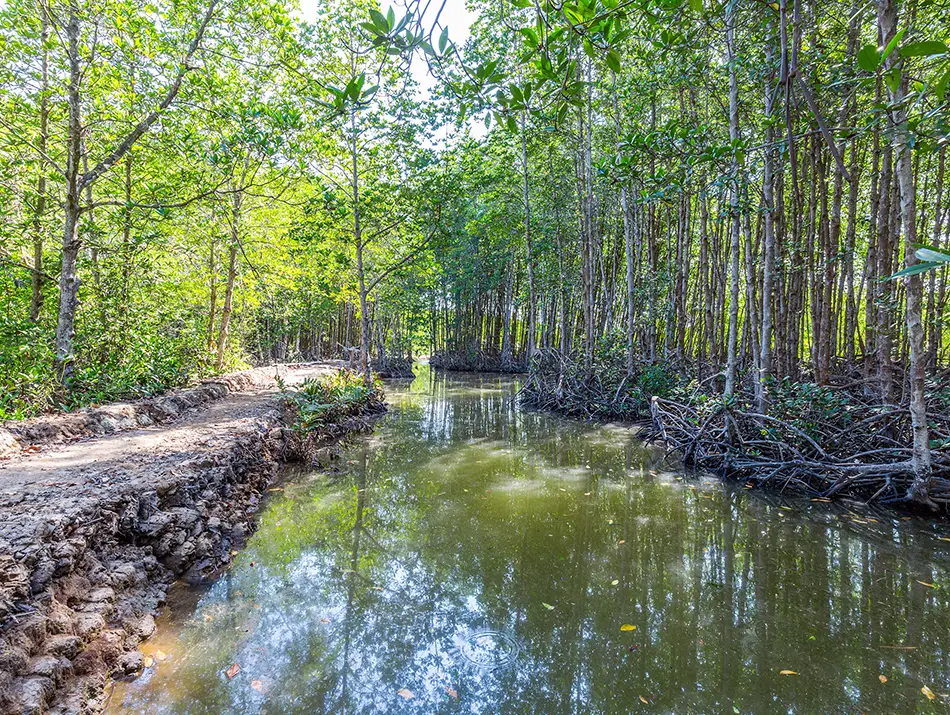
This UNESCO-recognized biosphere reserve is a massive expanse of mangrove forests located at the mouth of the Saigon River. Often called the “Green Lungs” of the city, the reserve is a vital ecosystem and home to diverse wildlife, including a large population of long-tailed macaques at Monkey Island (Dao Khi) and a sprawling bird sanctuary.
The experience centers on the natural environment. You can navigate the intricate waterways by boat, visit the Rung Sac Guerilla Base to learn about the revolutionary history of the “Sappers,” or climb the Tang Bong tower for a panoramic view of the forest canopy.
- How to get there: About a 1.5–2 hour drive from the city, including a ferry crossing. Organized tours are the easiest way to visit.
- Time needed: 6–8 hours.
- Price: Entrance to Monkey Island is approximately VND 35,000 ($1.40 / €1.30), while specialized eco-tours to Vam Sat range from VND 1,000,000 to VND 2,500,000 ($40.00 / €37.50) depending on transportation.
Vung Tau
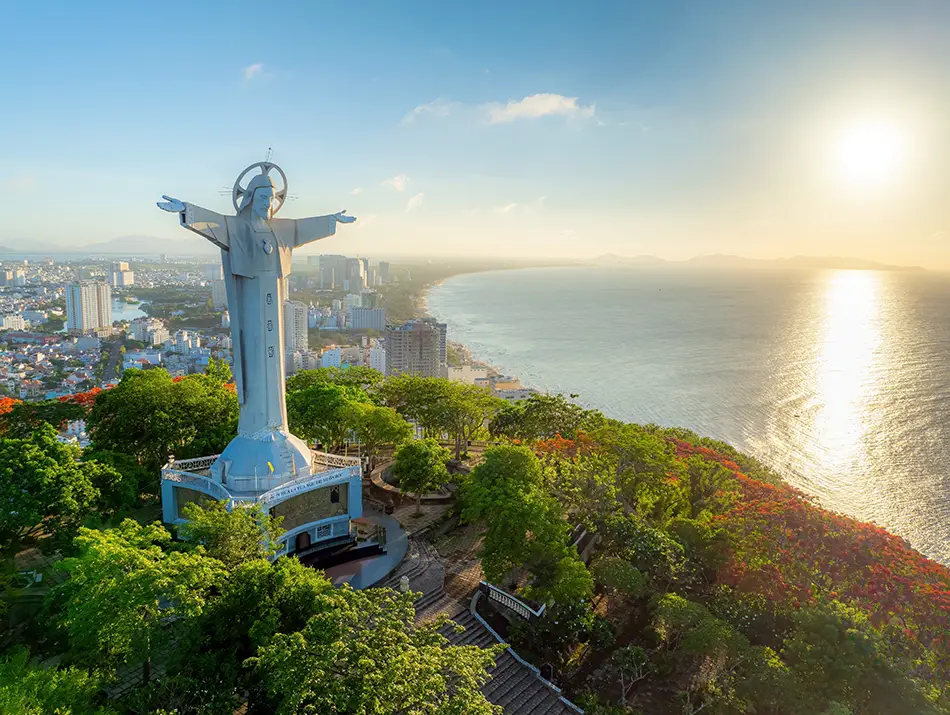
Vung Tau is the closest coastal city to Ho Chi Minh City, making it a popular weekend getaway for city residents. It offers several beaches, a large Jesus statue on a hilltop, and a lighthouse with good views. The city has a more relaxed pace than Ho Chi Minh City.
While the beaches are not the best in Vietnam, they provide a quick escape for swimming and relaxing. The city has a good selection of seafood restaurants along the coast. It is a functional beach town rather than a pristine resort destination.
- How to get there: A high-speed ferry from Ho Chi Minh City takes approximately 2 hours.
- Day trip or longer stay: Many local and expat tourists choose Vung Tau for weekend stays to fully enjoy the coastal atmosphere and escape the city heat.
- Travel Tip: Visit on a weekday. On weekends, the city and beaches become extremely crowded with visitors from Ho Chi Minh City.
- Best things to do in Vung Tau
- 📍Vung Tau on Google Maps
Off the Beaten Path
Ho Thi Ky Flower Market (Cho Hoa Ho Thi Ky)

This is the city’s largest wholesale flower market. It operates around the clock but is most active from late evening until the early morning hours. The market is a chaotic and colorful hub where vendors from all over the region sell fresh flowers to local retailers.
The experience is primarily sensory—the sights and smells of thousands of flowers packed into a dense network of alleyways. There are no tourist facilities here. It is a working market, so be mindful of people pushing carts and carrying large bundles. A small Cambodian market is also located within the same area, offering unique street food.
- Hours: 24/7, but best visited between 11:00 PM and 3:00 AM for peak activity.
- Time needed: 45–60 minutes.
- 📍Flower Market on Google Maps
14 Ton That Dam Shops and Bars
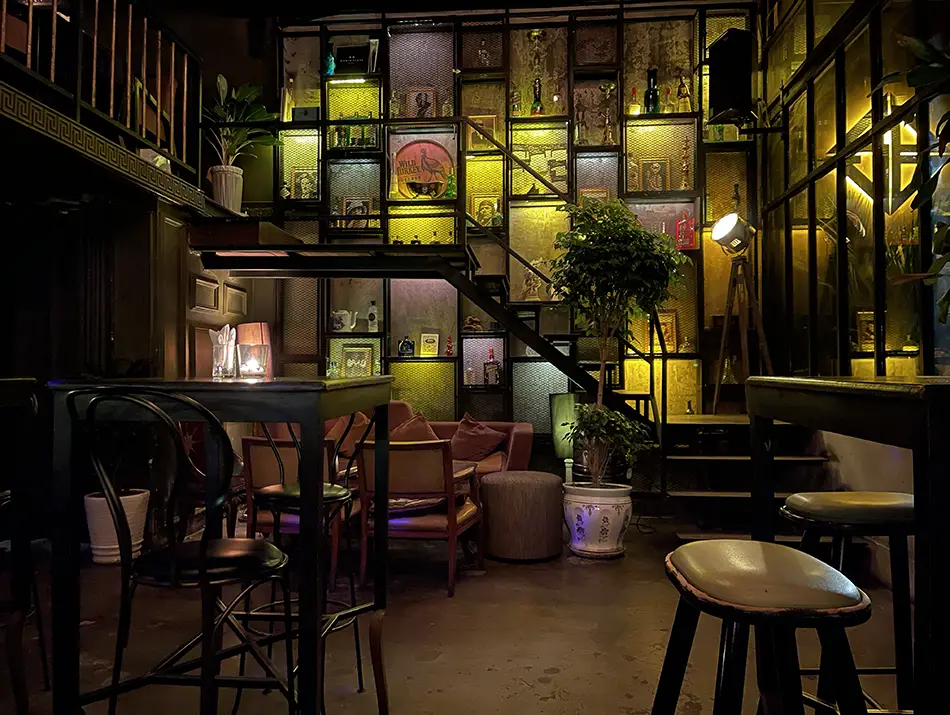
Similar in concept to the more famous 42 Nguyen Hue, this old apartment building offers a more low-key and alternative experience. Located near the State Bank of Vietnam, the building houses a collection of small bars, quirky cafes, and independent shops hidden away from the street.
Finding the entrance and navigating the building is part of the experience. The businesses here have a more local, less commercial feel. It is a place to find a quiet drink or a unique souvenir in a setting that feels less discovered than its more famous counterpart.
- How to get there: Located in District 1, a short walk from the Bitexco Tower.
- Time needed: 1–2 hours.
- Travel Tip: Look for the small, unassuming entrance next to a bank. The building is not clearly marked, adding to its undiscovered feel.
- 📍14 Ton That Dam on Google Maps
Best Sunset Spots in Ho Chi Minh
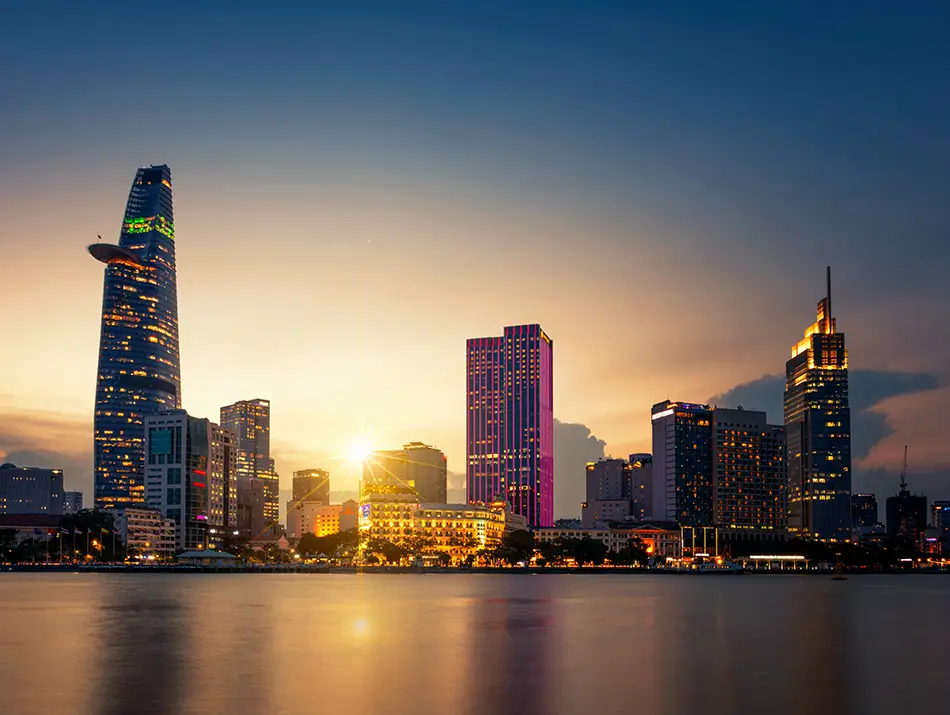
Ho Chi Minh City is a sprawling urban landscape that has recently become a premier destination for sunset vistas. While the city lacks natural hills or beaches, its unique river geography and massive vertical expansion provide stunning vantage points. The best way to see the sunset is to go vertical at one of the dozens of rooftop bars in District 1, such as Social Club Rooftop Bar, Chill Skybar, The View, or the Rex Hotel Rooftop, which offer iconic views of the Bitexco Financial Tower and the twinkling skyline.
Alternatively, for a more natural perspective, the Thu Thiem Riverfront Park is becoming the city’s most popular ground-level spot in 2026. This open, landscaped area across the water allows you to watch the sun dip directly behind the historic downtown skyscrapers from the edge of the Saigon River.
Local Dishes in Ho Chi Minh
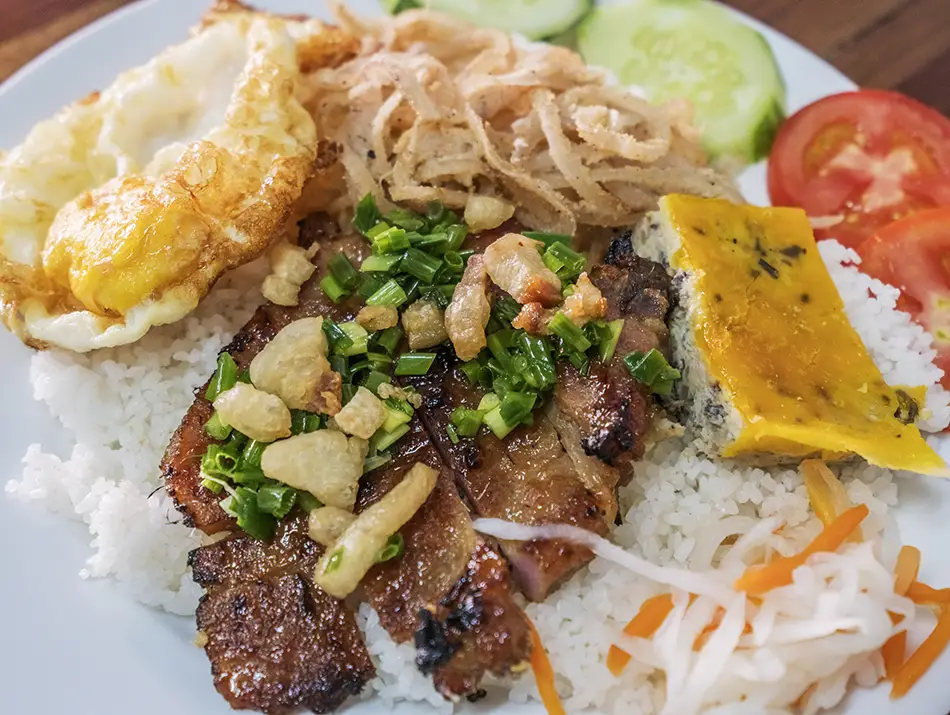
Southern Vietnamese food is characterized by its use of fresh herbs, sweeter flavors, and abundant produce from the nearby Mekong Delta. Experiencing the local food in Ho Chi Minh is a highlight of any visit.
First, try Com Tam, or broken rice. This street-food staple is served with a grilled pork chop, shredded pork skin, a steamed egg meatloaf, and a fried egg, all drizzled with sweet fish sauce.
Next, seek out Banh Xeo, a massive, crispy crepe filled with pork, shrimp, and bean sprouts, which you wrap in lettuce and herbs before dipping.
Of course, no visit is complete without sampling the city’s namesake sandwich, Banh Mi Sai Gon, a baguette packed with various meats, pate, and fresh pickles.
>> For a full map to navigate these flavors, explore our list of the 35 best dishes to try in Vietnam.
Where to Find the Best Restaurants in Ho Chi Minh
Different districts specialize in different food experiences. District 1 is packed with everything from high-end restaurants to street food stalls catering to tourists.
For a more authentic and adventurous experience, head to the alleyways. District 4 is famous for its lively evening seafood streets (Vinh Khanh Street is a must-visit). For Chinese-Vietnamese specialties, the bustling streets of District 5 (Cholon) are unbeatable.
Non-touristy eateries are found everywhere, especially down the small alleys off main roads, where most locals eat.
Evenings and Nightlife in Ho Chi Minh: What to Do After Dark
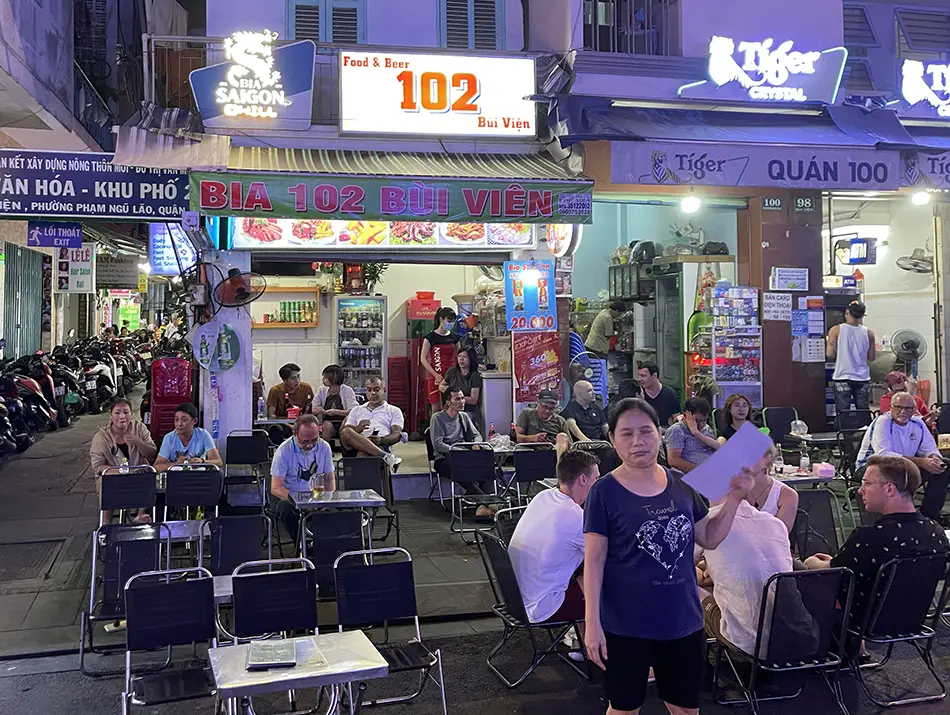
The city’s energy does not fade after sunset; it simply transforms into a vibrant nightlife scene that caters to every taste and budget. Whether you are looking for a wild street party or a quiet drink with a view, there is a district for every mood.
For a chaotic and high energy experience, Bui Vien Street in the backpacker area of District 1 is a sensory overload of loud music, neon lights, and dense crowds. It is an experience but not a relaxing one. Here, you can sit on small plastic stools and enjoy a local Saigon beer for about VND 30,000 ($1.2 / €1.1) to VND 50,000 ($2 / €1.6).
For a more refined evening, countless rooftop bars offer stunning skyline views and premium cocktails. Famous spots like Chill Skybar or the Social Club Rooftop Bar provide a sophisticated atmosphere where drinks typically range from VND 250,000 ($10.00 / €9.40). These venues often feature live DJs and a dress code that matches the elevated price point.
The craft beer scene has also exploded with microbreweries like Pasteur Street Brewing Company and East West Brewing scattered across the city. These taprooms serve unique brews infused with local ingredients like passion fruit or jasmine.
If you prefer a more local vibe away from the tourist center, head to Pham Viet Chanh in the Binh Thanh district. This area is a favorite for expats and young professionals, offering hidden gin bars and cozy pubs where you can have a proper conversation without shouting over the music.
Ho Chi Minh on a Budget
Traveling cheaply in Ho Chi Minh City is easy if you adopt local habits. Prioritize street food over restaurant meals because you can eat a delicious and filling meal for just a few dollars. Use motorbike taxis from apps like Xanh SM, Grab, or Be instead of cars for short trips, as they are significantly cheaper and faster in traffic. A typical motorbike ride across the city center starts around VND 20,000 ($0.80 / €0.75). For the most affordable transport, use the extensive public bus network.
There are also many free things to do in Ho Chi Minh. Spend time people-watching in a public park like Tao Dan Park or Le Van Tam Park. Admire the French colonial architecture from the outside, including the Notre Dame Cathedral and the Central Post Office. Strolling through the vibrant Nguyen Hue Walking Street in the evening is also free and provides a great view of the city’s modern skyline.
Wander through the sprawling Binh Tay Market in Cholon to observe local commerce without the pressure to buy found at Ben Thanh Market. Visiting local pagodas and temples, such as the Jade Emperor Pagoda or the Thien Hau Temple, is also typically free of charge and offers a quiet escape from the urban hustle.
Sustainable and Responsible Travel Tips

- Choose “Green” Transport: Skip the private cars. HCMC has a growing network of public buses, and the Xanh SM app allows you to book electric bikes or eco-friendly car options.
- Support Social Enterprises: Dine or shop at places that give back. Maison Chance supports people with disabilities, and Mekong Quilts provides sustainable income for women in rural areas. For a meal that makes a difference, visit Noir. Dining in the Dark, which employs visually impaired staff.
- Participate in Community Tours: Instead of large-scale operators, book with groups like Saigon Hotpot. They are a non-profit student organization offering walking tours in exchange for English practice, with proceeds often going to local charity projects.
- Hydrate Without the Plastic: The humidity in Saigon is intense, but you don’t need a new plastic bottle every hour. Use a reusable bottle and locate the nearest filling station.
- RefillMyBottle: The most comprehensive app for Vietnam, showing cafes and businesses that offer free or low-cost water refills.
- mymizu: A global app with an increasing number of crowdsourced refill spots across District 1 and District 3.
Activities to Avoid
To be a respectful guest, steer clear of these common tourist pitfalls:
- Photography Without Consent: While the “street style” of HCMC is photogenic, always ask permission before taking close-up photos of vendors or locals. In sacred spaces like the Jade Emperor Pagoda, avoid taking photos of people praying.
- Giving Money to Street Children: It is heartbreaking to see children selling lottery tickets or begging, but giving them money often encourages truancy and keeps them within exploitative cycles managed by adults. If you want to help, donate to established NGOs like Blue Dragon Children’s Foundation.
- Disrespectful Dress at Temples: Saigon is trendy and modern, but religious sites remain conservative. Avoid wearing shorts, tank tops, or hats inside pagodas. If your outfit is revealing, many temples provide sarongs at the entrance—use them.
- Losing Your “Face”: Public outbursts of anger or aggressive haggling are seen as a major loss of “face” in Vietnamese culture. If a negotiation isn’t going your way, simply smile and move on. Keeping your cool is the most respectful way to navigate the city.
Know Before You Go
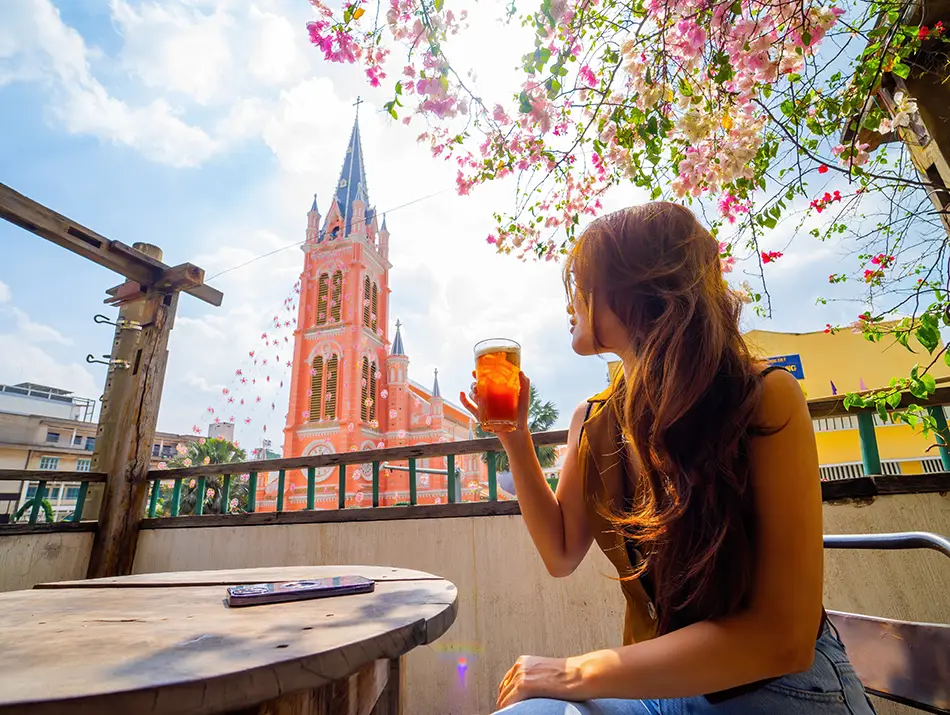
Local Tips
Crossing the street in Ho Chi Minh is an art form. The key is to walk slowly and at a predictable, steady pace. Do not make sudden stops or movements; the motorbike drivers will flow around you.
When bargaining at markets, do so with a smile. A polite and friendly approach is more effective than aggressive haggling.
Accessibility
Accessibility in Ho Chi Minh City is a significant challenge for travelers with mobility issues. Sidewalks are often uneven, blocked by parked motorbikes, or non-existent, and high curbs are common.
Many older buildings, temples, and small restaurants lack ramps or elevators. However, newer developments, major hotels, and the modern metro system offer much better accessibility.
Planning is essential, and travelers may need to rely on taxis or ride-hailing services to get between accessible locations.
Safety Tips
The primary safety concern for tourists is petty theft, particularly bag and phone snatching by thieves on motorbikes. Always keep your bag on the side of your body away from the street, and be mindful of your phone when using it near a curb.
While the city is generally safe, maintaining awareness of your surroundings, especially in crowded areas like markets and Bui Vien Street, is crucial.
Ho Chi Minh with Kids
Ho Chi Minh City is a high energy destination that offers plenty of modern and traditional entertainment for families traveling in 2026. The Golden Dragon Water Puppet Theatre remains a top cultural experience where wooden puppets perform on a water stage to live traditional music. For a modern take on art, the Artinus 3D Art Museum allows children to step into massive optical illusion paintings for unique family photos.
If you are looking to escape the heat, the newly developed areas in Thu Duc City offer cleaner air and wider sidewalks. The Vinhomes Grand Park area features the massive Tropical Island water park and extensive green spaces. For a relaxing evening, take the family to the Saigon Riverside Park in the Thu Thiem area to enjoy the skyline views and cool breezes by the water.
Without the Hype: Is Ho Chi Minh Worth Visiting?
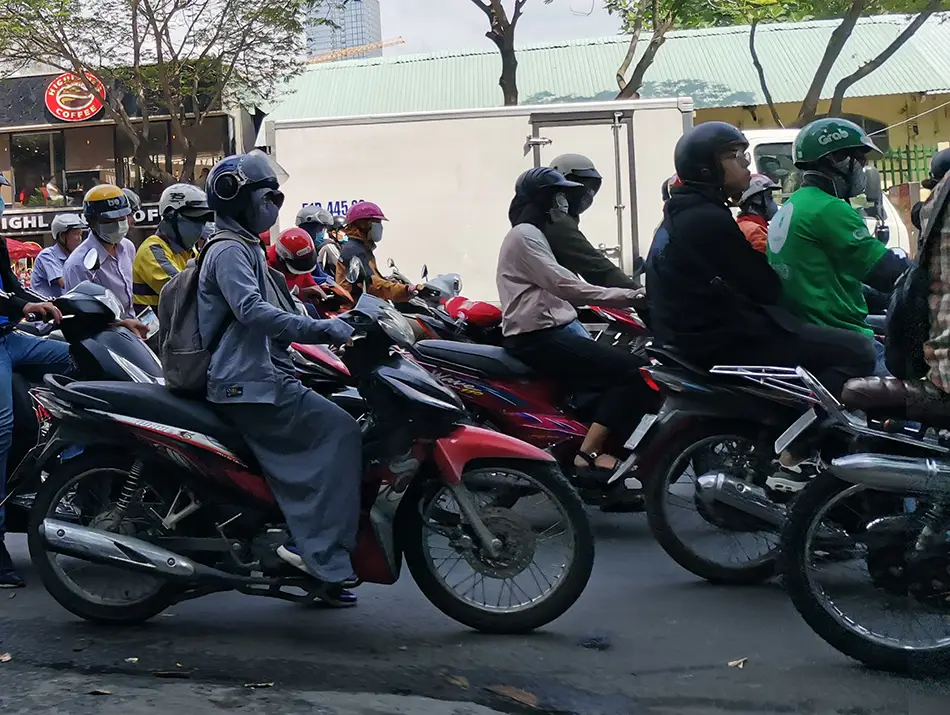
Ho Chi Minh City delivers an intense and unforgettable urban experience. It pulses with a raw energy that is both exhilarating and exhausting.
It is a city for travelers who want to be immersed in the forward charge of modern Vietnam while confronting the ghosts of its past. However, the rapid development has brought significant challenges.
The air quality can be poor during the dry season and the city faces persistent issues with flooding during heavy rains. Navigating the sheer volume of motorbikes and the noise of constant construction can be draining for those not used to a relentless urban pace.
You will like Ho Chi Minh City if:
- You are a foodie who loves bold flavors and thrives on discovering hidden street side gems down narrow alleyways.
- You have a keen interest in modern history and want to understand the Vietnam War from a Vietnamese perspective at sites like the War Remnants Museum.
- You draw energy from bustling and dynamic cities and enjoy exploring the contrast between old and new like the 19th century Post Office set against a backdrop of modern skyscrapers.
You might skip it if:
- You are sensitive to noise and crowds because the constant roar of traffic and honking can be mentally taxing.
- You are seeking a trip focused on nature and outdoor activities as the city is a vast concrete expanse with limited green space.
- Your travel style is slow and relaxed. The pace of life here is fast and the climate is relentlessly hot and humid.
Good Alternatives:
- Hanoi: For a capital city with a more traditional and historical atmosphere that feels slightly more reserved.
- Da Nang: For a clean and modern city with beautiful beaches and a much more laid back vibe.
We hope this guide on the best things to do in Ho Chi Minh City helps you decide if this dynamic metropolis fits your travel interests. For more inspiration, explore the full collection of Vietnam travel guides.